Season one, act one. Neary a wrap.
Well, we did it, we made it all the way to Sardinia as planned during our first of two, two month stints in the Mediterranean for this season.
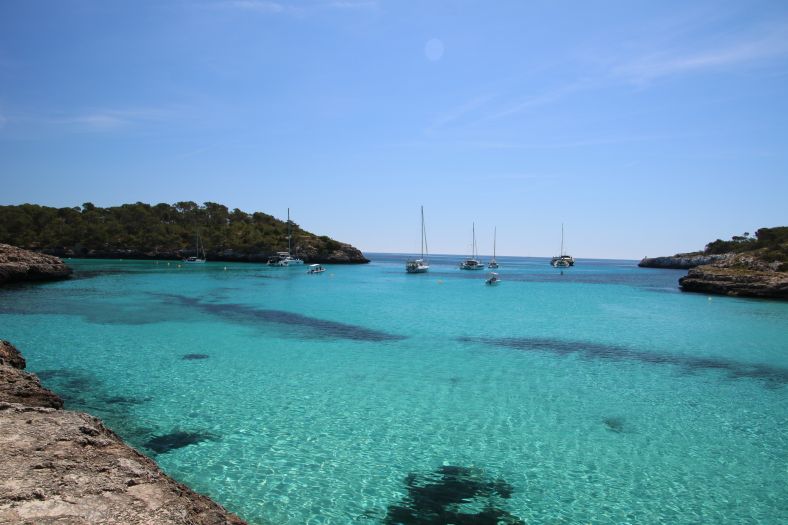
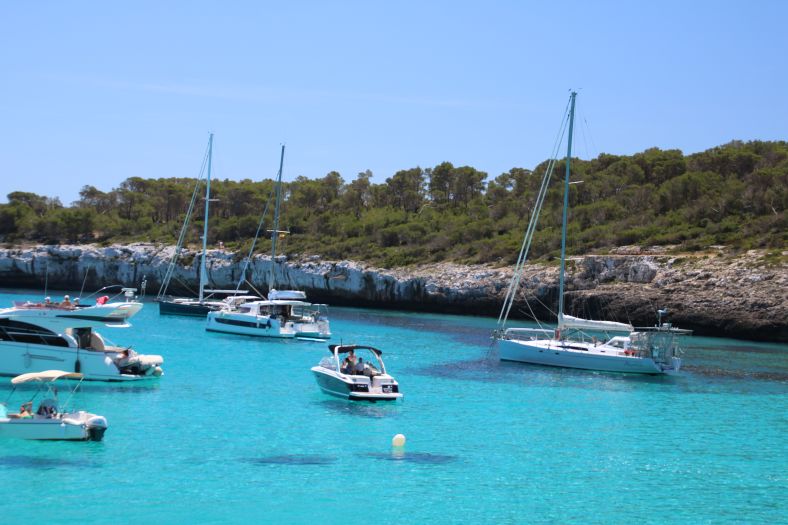
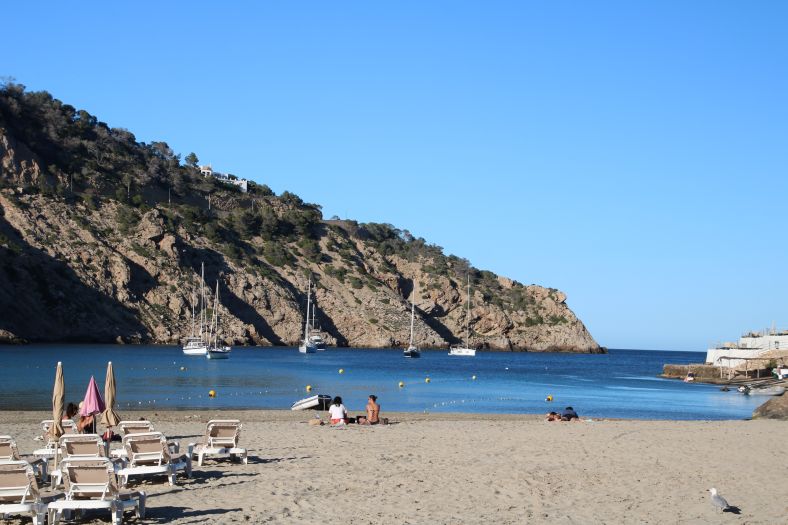
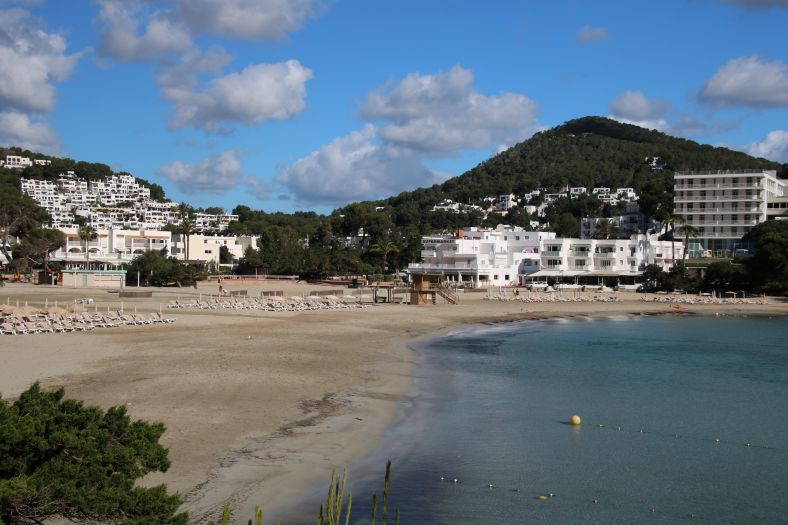
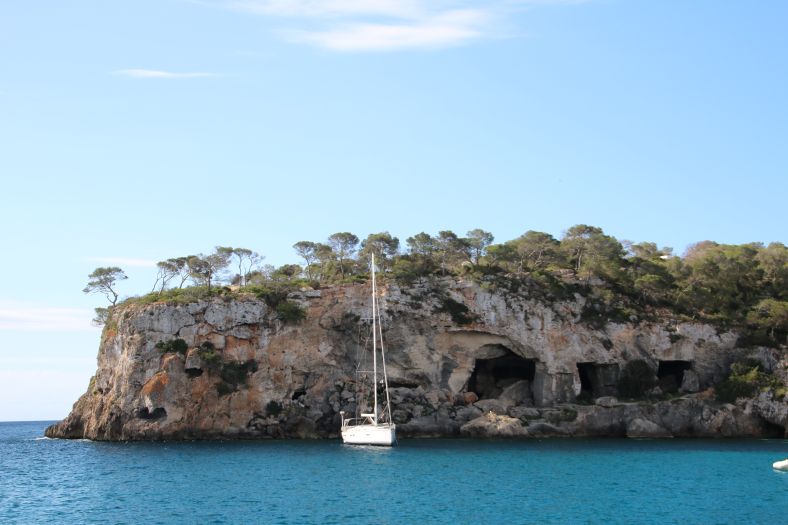
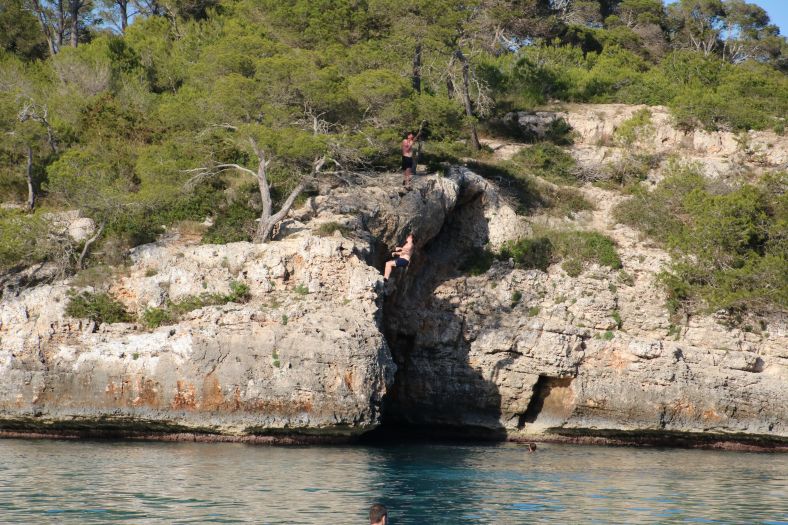
While the pace of moving along has been, shall we say “brisk”, due to the extended time in Almerimar fixing stuff, we have enjoyed visiting a number of amazing places along the way. In particular, these harbors, most had dramatic cliffs surrounding them, along with some very nice beaches. And, where there are cliffs, there are young men jumping off of them.
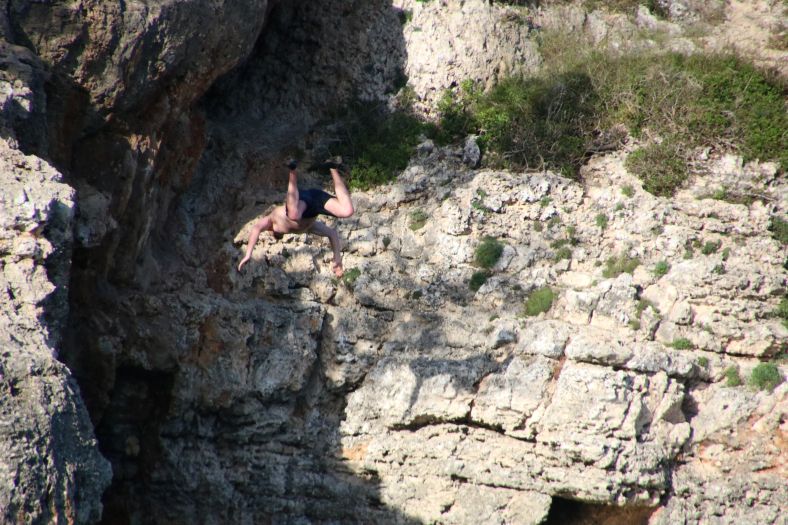
As a parent, I would be alarmed if one of my own was doing this. Me? I might do it but it would be a simple “feet first” plunge. Not so for the guys.
After several revolutions, into the water. Not Olympic gold worthy but daring.
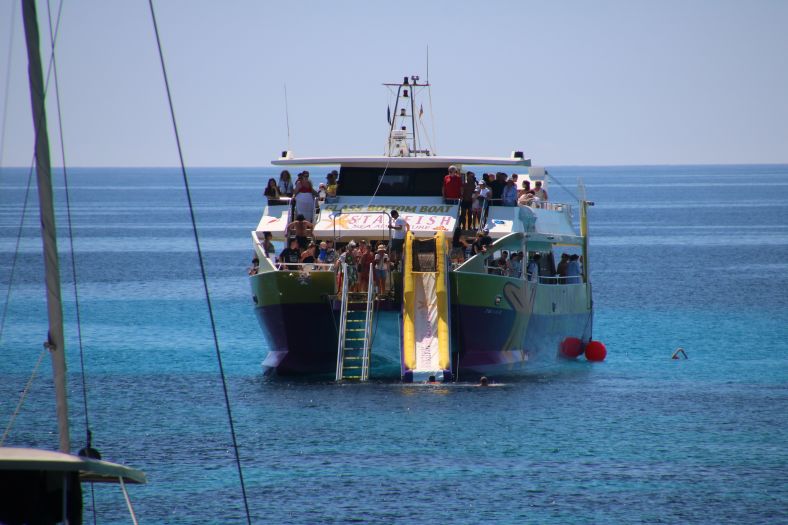
Ok, that’s the locals. We had also heard a lot about chartering in the Med and how “exiting” it sometimes gets to be in the same harbor with “skippers” with little experience. This one catamaran came in and was going to pick up what they thought was a mooring. It was a tiny buoy designed to show where the limits of anchoring were. The guy looped his mooring line around it with no idea that it was probably a small cinder block that wouldn’t even stop a dink from floating away.
I went over and explained that while I would have enjoyed watching them crash into the wall that was a boat length behind them, I thought it better warn them. Ok, good idea they agreed and moved. He pulled forward a hundred yards, slammed the boat into reverse and dropped his anchor, dragging it over the bottom for several hundred feet at full speed, only to end up on top of that buoy again. He did this time and again, each effort worse than the last.
One one of his attempts, he dragged toward several anchored boats, narrowly missing one as every other owner looked on with horror. The skipper of Chablis, no doubt enjoying his Chablis, had no idea how close his glass of wine was to being tipped over.
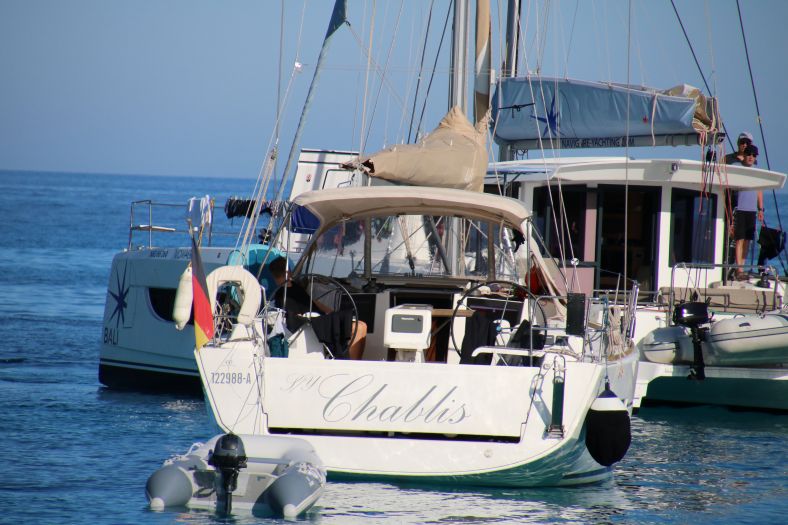
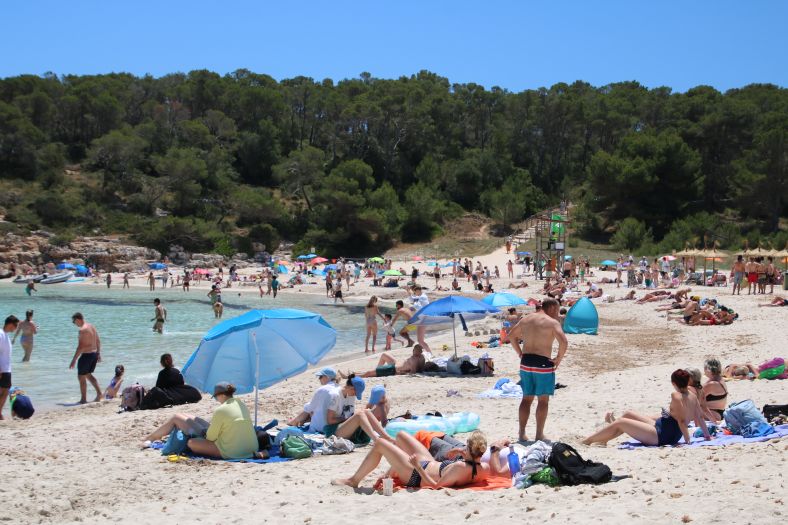
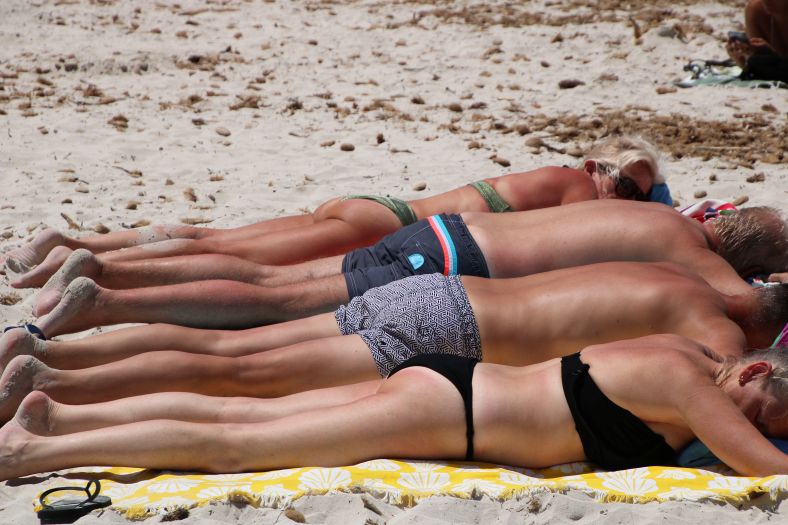
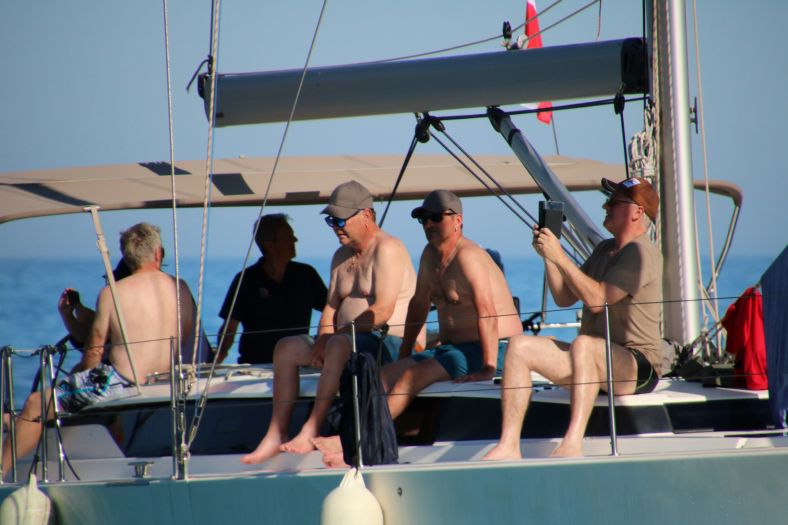
Overwhelmingly, these charter boats are jammed with many “old friends” with the emphasis on “old”. And, while being topless is common in these parts, many guys just don’t know better.
Local color aside, one thing that stands out from this first cruise is how much broken stuff we have endured, and in some cases, replaced.
Even though we have had a few weeks without anything new breaking, as we departed for our overnight run yesterday morning we discovered that the starting battery for the engine suddenly failed and no amount of charging seems to get it in shape. Fortunately, the builders had the foresight to set the system up so that there is a “combiner switch” at the helm which, when depressed, allows the engine to be started with the house bank.
And, on the very same day, the engine high output alternator completely stopped working. And, that’s the second one in a year to fail. When the last one failed, a day out of the Azores on passage to Gibraltar, I had a spare. No spare now as my attempt to get one while the boat was in Almerimar didn’t work out.
As planned, we also took delivery of the motor for the new winch, which was on back order and shipped to Milorca, but alas, it didn’t quite fit so some modifications will have to be made, hopefully by me, to get the new winch fully operational.
Fortunately, it is very sunny here and the days are long so the batteries have done pretty well so we are not at risk of having no power. Happily with 1000+watts of solar, we were fine, more or less and arrived here with 80% full batteries. When I discovered that the batteries were not charging, I was quite alarmed but we had to push on.
And, there is a long list of other projects, some large and some small, that will have to be completed while Pandora is on the hard in Bosa, Sardinia for the summer.
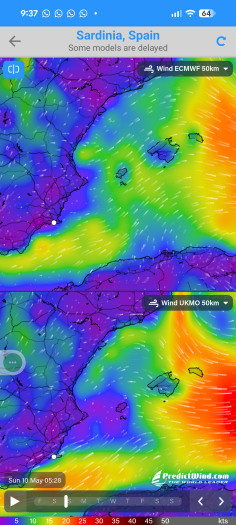
Another observation from our two months here is that there really isn’t a lot of wind in what is referred to as the “Motorterranean”. so we have basically motored everywhere with intervals of sailing. Gone are the days in the Caribbean where we motored in and out of harbors, only putting on a total of perhaps 60 hours of time on the engine during an entire season.
Since leaving Almerimar, some 600 miles, we have motored about 100 hours, also about on par for engine hours when I made a typical run from the US to Antigua, a passage that is about twice as far as this run. And, when I ran from Bermuda to Horta, in the Azores, a distance of 2,000 miles, I only ran the engine for less than 20 hours.
Anyway. we made it and arrived yesterday after an overnight run of 200 miles from Milorca. Brenda has never really warmed up to overnights or long passages, for that matter. As a result, she is very resistant to anything beyond a day passage.
However, after years of trying to figure out a plan that will allow me to get rest and yet not rely on her, I never figured out a solution, until now.
In the past my effort was to just tough it out and recover the next day, completely exhausted after a night without sleep. On this trip we have done three overnight passages and I got to thinking about folks that sail around the world solo and somehow manage to sleep and stay safe after many nights at sea.
As I have understood it, they take “cat naps”, setting an alarm to scan the horizon to determine if the “coast is clear” and then fall back asleep. So, I tried it.
I set the alarm on my phone for 20 minutes and laid down in the cockpit, as comfortable as is possible when wearing an inflatable vest and harness. Often I wasn’t able to fall asleep fast enough so after a few sleepless minutes, I would look out, scan the horizon and reset the alarm for another 20 minutes. After a bit of this I found that the alarm was waking me from a sound sleep, only to begin the process all over again. It worked and allowed me to get enough rest to feel alert and when dawn came I was able to face the day pretty well.
For sure, cat naps and all, by the next night I was ready for a full night sleep. Not ideal but this new arrangement has made Brenda a lot more willing to do the long runs. The fact that conditions here in the Med are generally calmer than the Caribbean does help. Yes, it can get really windy but those conditions are generally followed by calm so the seas don’t build like they do in strong trade winds that blow day after day, year round.
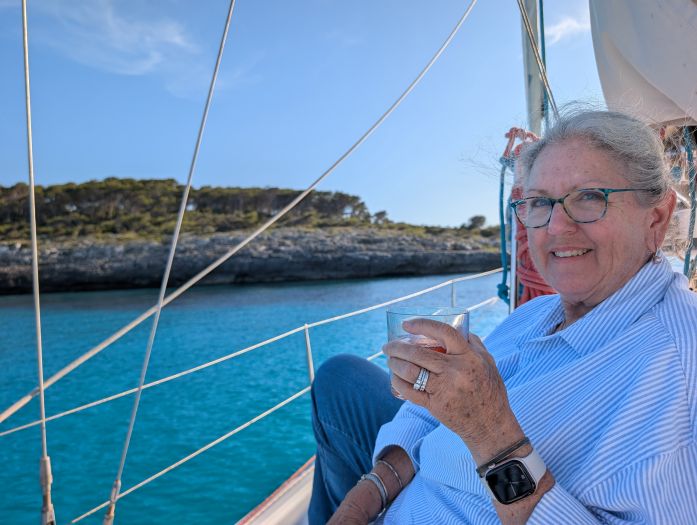
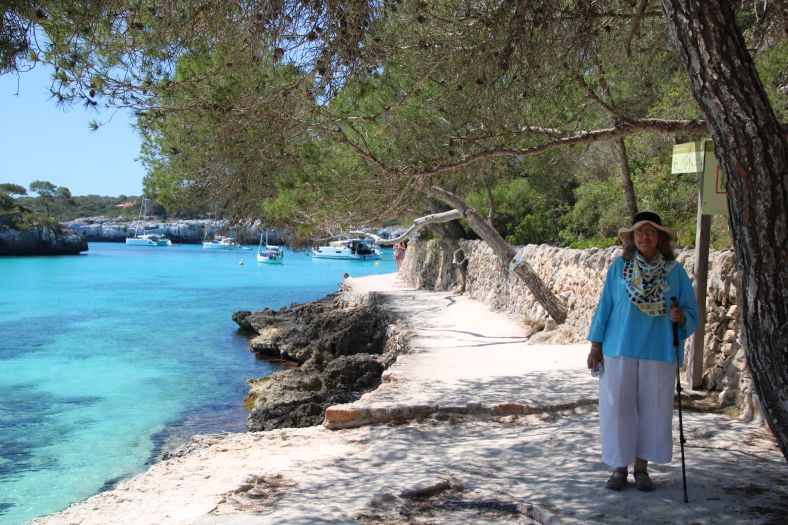
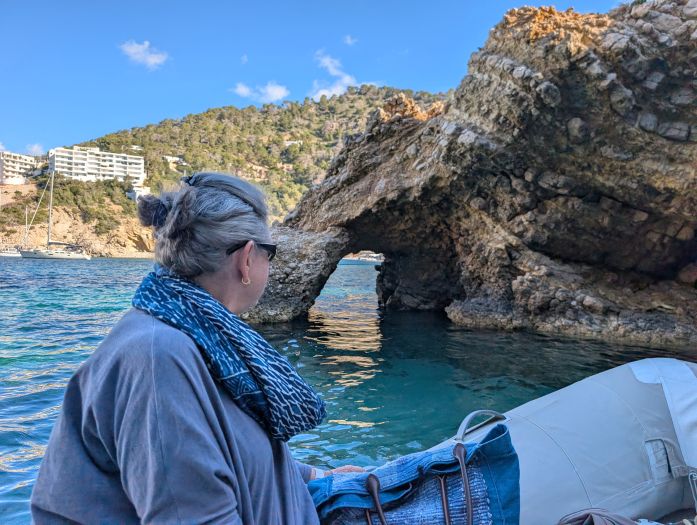
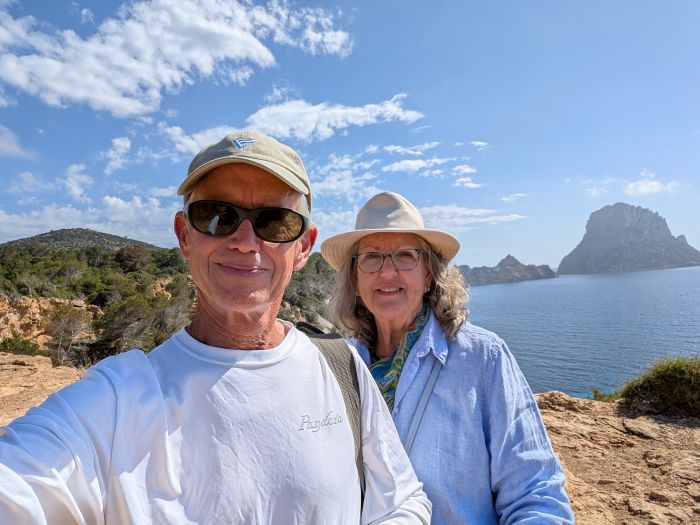
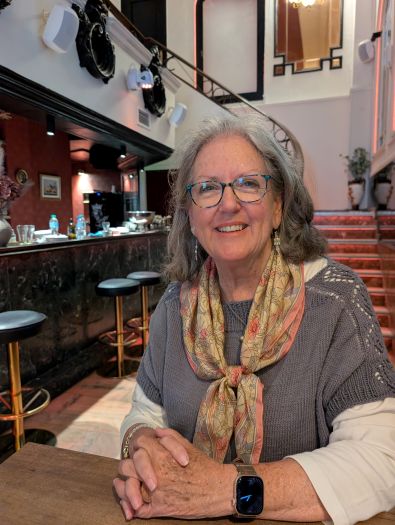
With the relatively calm conditions, Brenda did pretty well and with an audio book for company, she watched the water go by. Note the scarf? Always the Fashion Pony, that girl.
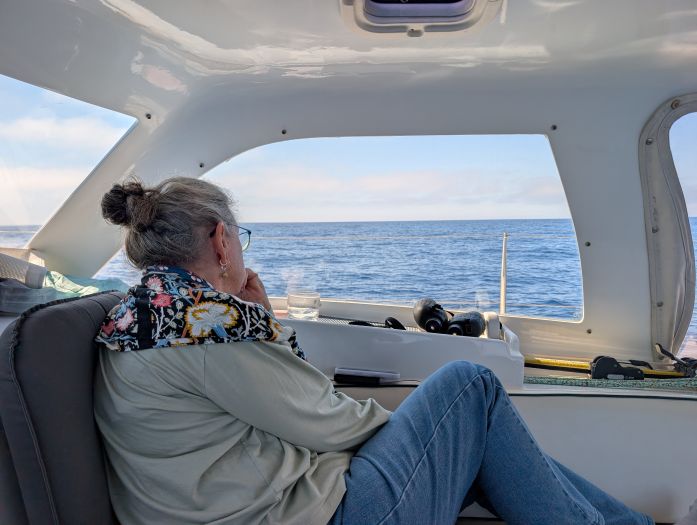
Conditions, when the winds are light are a lot calmer than the Caribbean where waves develop over thousands of miles by wind that is generally from the same direction. Yes, it can get rough here but it’s different, especially in the summer.
Several times on our run here we were visited by a tiny bird that landed and hopped around the cockpit, landing on everything including Brenda’s hand and my head. Here is Brenda trying to discretely get a glimpse of the tiny visitor.
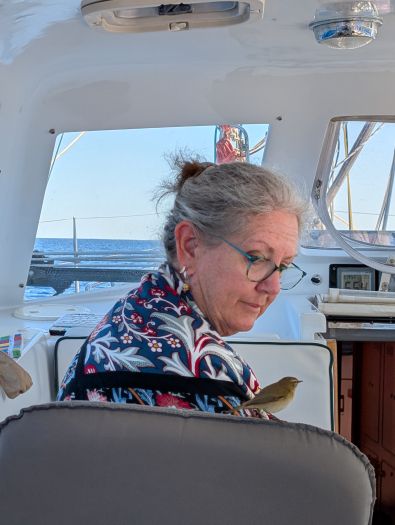
Brenda caught one of the avian encounters when the little bird landed on her hand as he/she (the bird, not Brenda) hopped around the cockpit. Check out this short and very entertaining video.
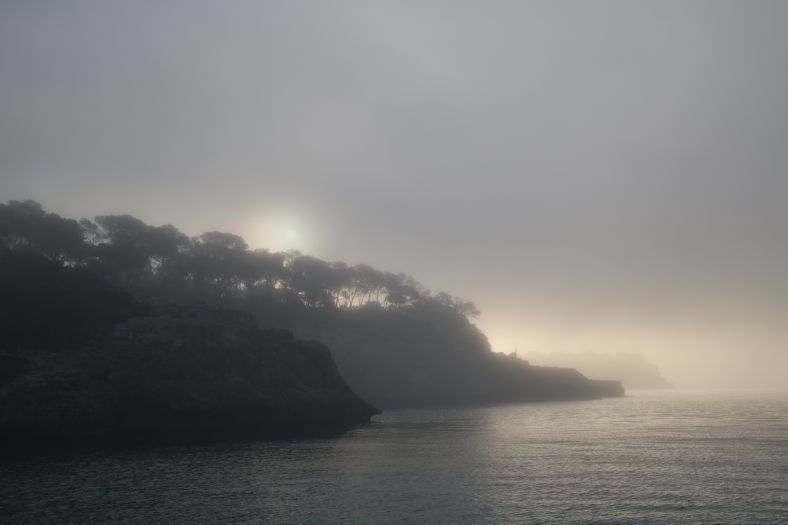
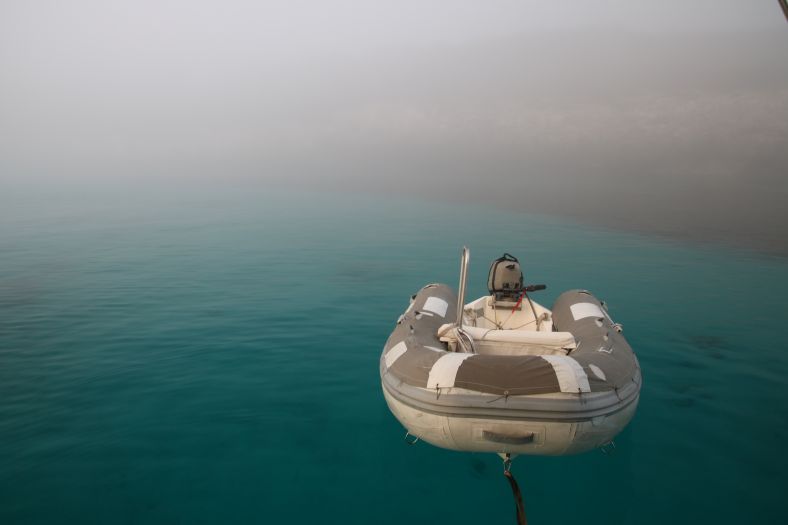
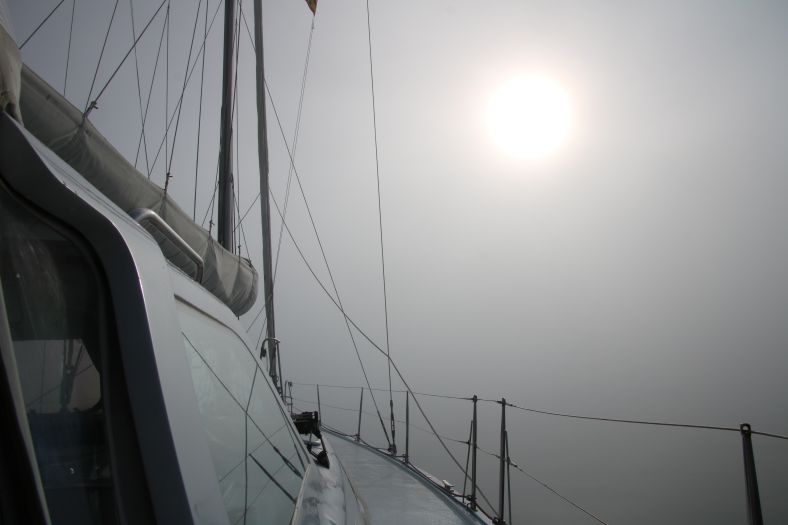
It’s been a long time since we have had to contend with fog and never in the Caribbean. However, in the early summer, when the water is cold and the air warm, fog is common here. As we began our passage yesterday morning the sky was perfectly clear and yet on the horizon we saw the edge of a dense fog bank.
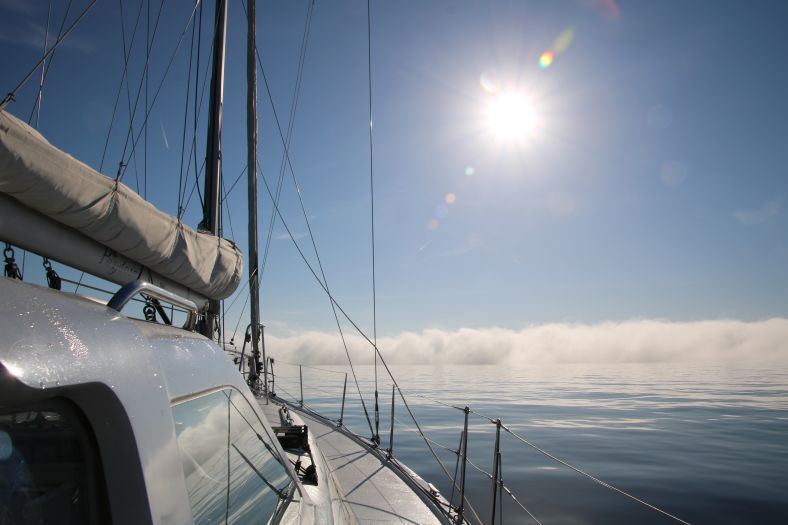
When we entered the bank, visibility abgruptly dropped to way less than a quarter mile. Ships and fishing boats passed and we could not see them at all. Very unnerving. Glad we have AIS and radar.
Another thing that is new to us is the fact that many of the harbors are not really harbors, just indents in the coastline that are only usable when the wind is from certain directions. This is also common in the Caribbean but with predictable trade winds, the “good” roadsteads safe most of the time. Not so here where the winds come from just about any direction over the course of a week. This unpredictability of when any given place is safe to anchor spawned a very useful website Navily, that gives really time estimates on the safety of any given anchorage based on it’s physical shape and the current wind and wave conditions. We use this site, www.navily.com every day to book marinas and check on the best anchorages.
Without the plotter to guide the way as we approached the coast yesterday, one part of the coastline looks about the same as any other.
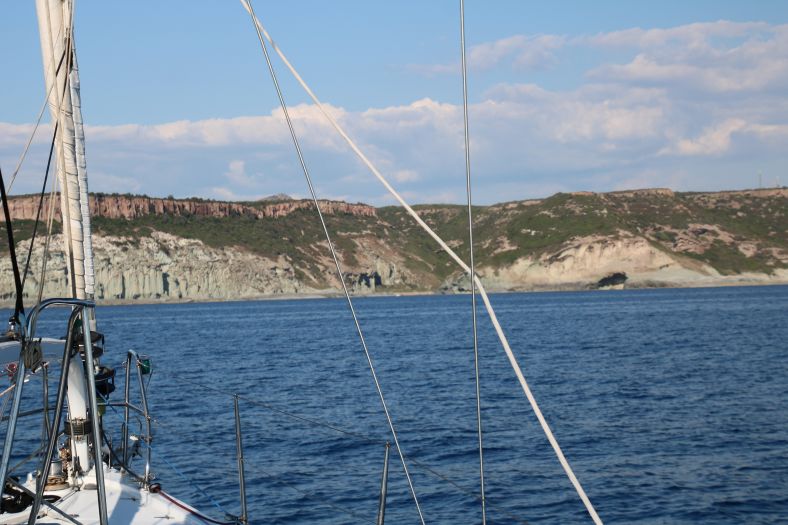
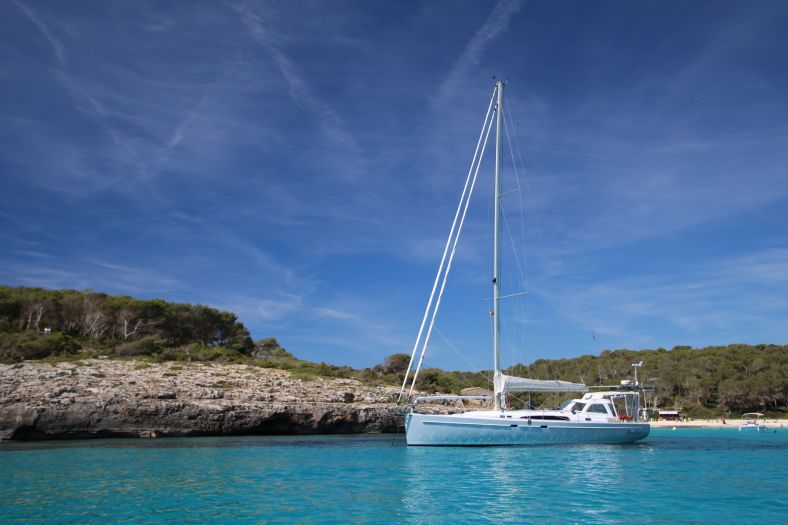
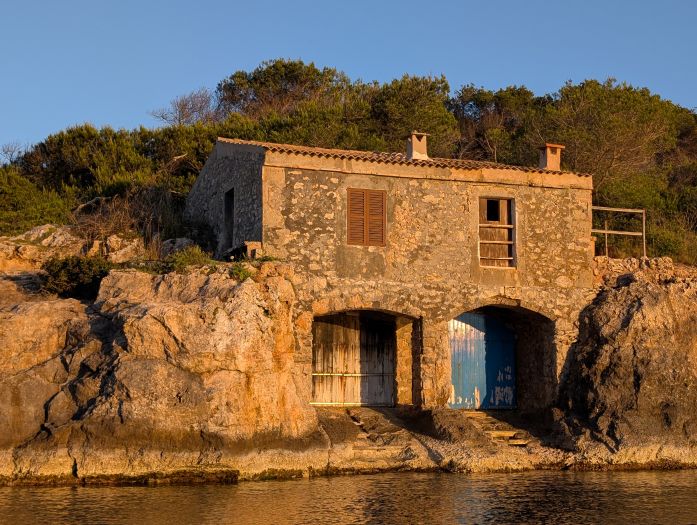
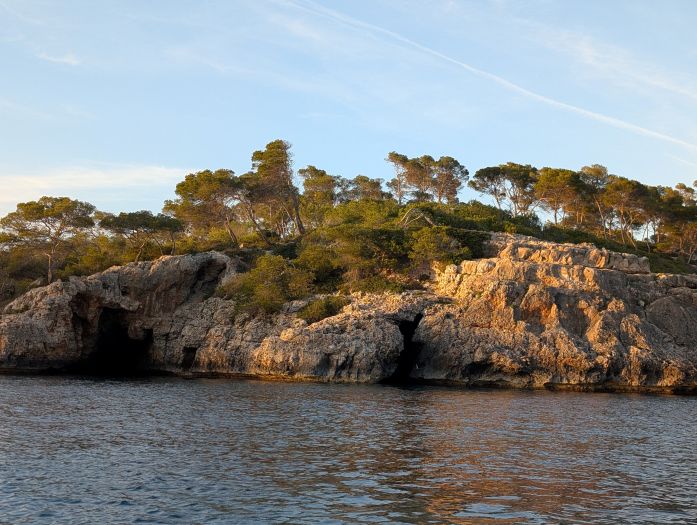
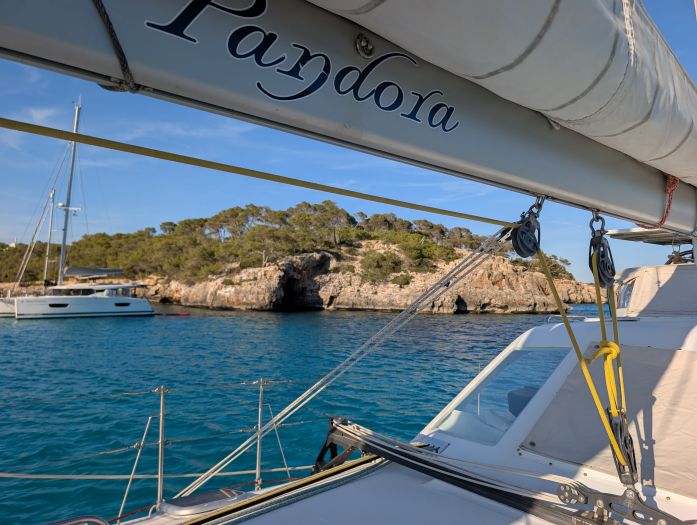
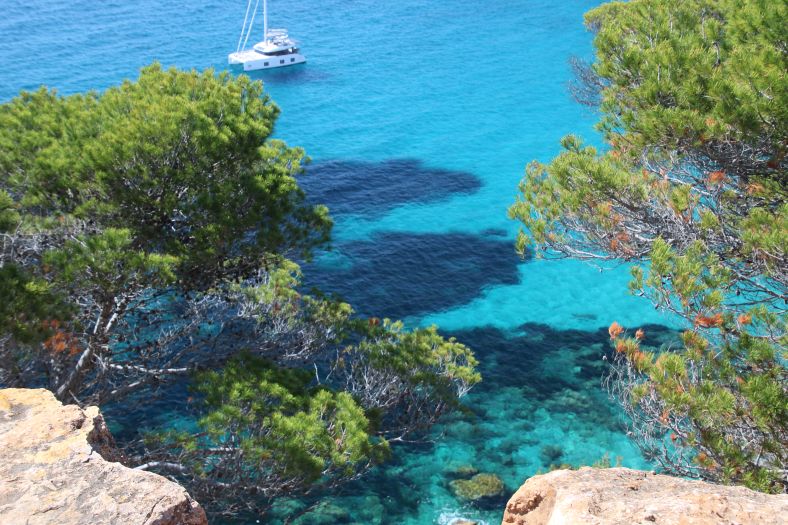
We anchored in about 25′ in soft sand and good holding, which was good as the cliffs were only a few boat lengths behind us. Even a short anchor drag would not go well for Pandora. The spot, Cala E Moro, is like so many other picturesque spots along the coast.
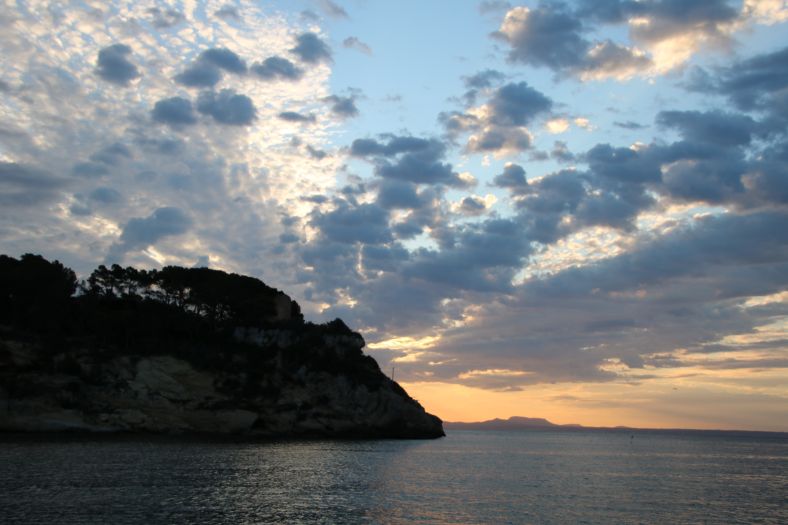
We sat up on deck to watch the changing light as the sun set. It was magical. We were alone with the exception of a young couple on a small local boat. What you can’t see is that he appeared to be applying a liberal application of baby oil to every part of her body. And that body, clearly visible when she stood up, sported only the tiniest thong bikini bottom and nothing else to hide her well lubricated body. It was very distracting, I will admit. Oh, to be young and uninhibited.
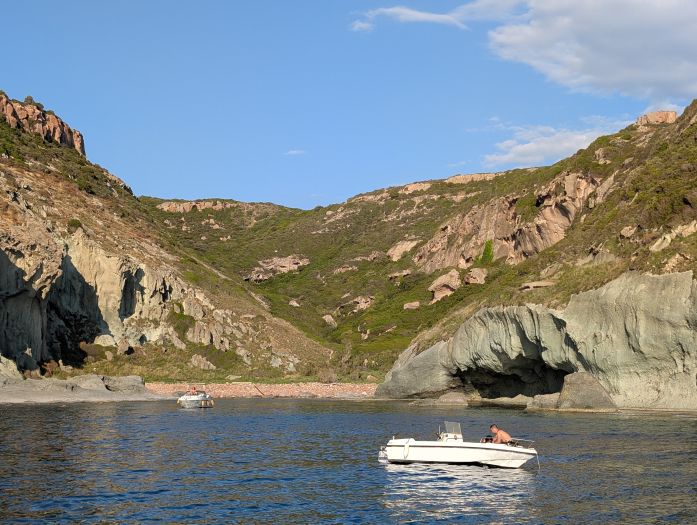
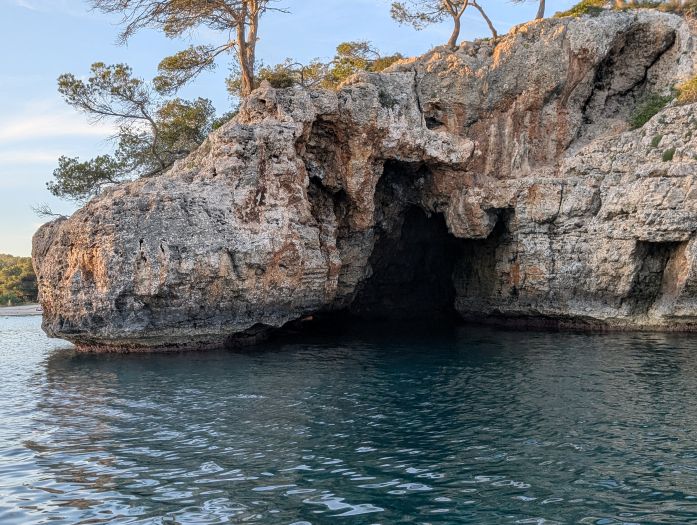
Anyway, the scenery was grand. It is hard to imagine what forces it took to wear these cliffs smooth over millions of years. For scale, note the tiny figure on the top.
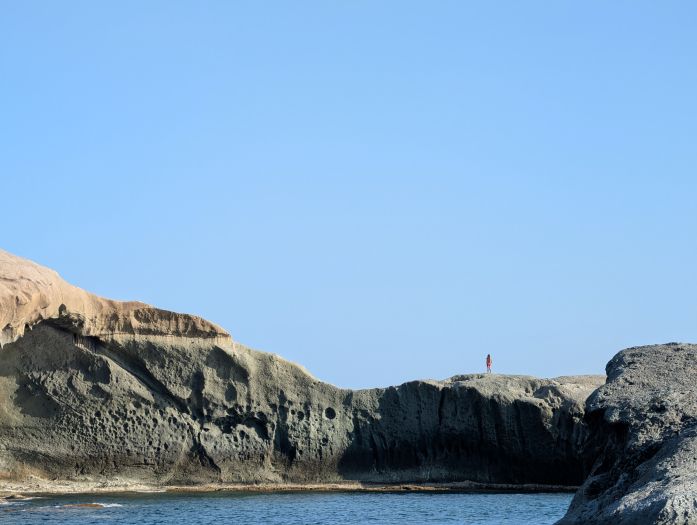
Huge cliffs just behind Pandora in the setting sun.
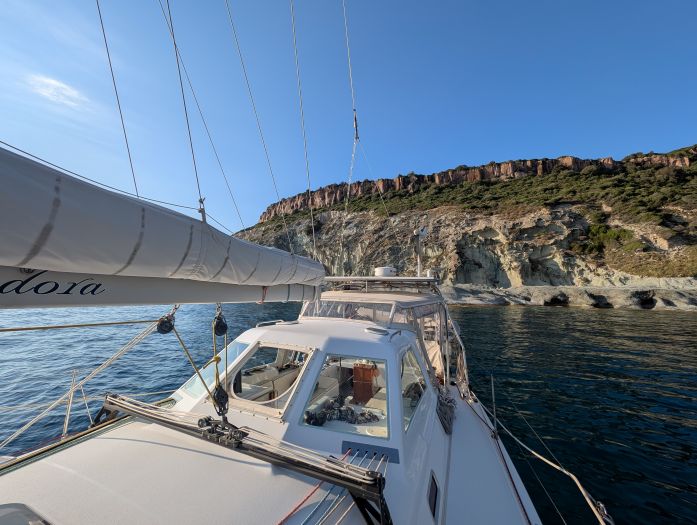
Before making the 200 mile crossing to Sardinia, we visited a number of charming harbors albeit for a lot less time than we had hoped for due to our abbreviated time left. Getting a good, or at least OK, wind for our crossing meant leaving after only one full day in Minorca. The harbor, Mahon, has been a major port for as far back as ships have been sailing the Med. It has been under control of both Spain and England over the centuries and has plenty of beautiful ruins to show for these occupations.
We didn’t have time to tour even one of the many sites, including the very first British Naval Hospital anywhere, and were bummed about that. However we did anchor in a beautiful cove. It was a large anchorage that could certainly hold two dozen boats. Even though the rest of the Mahon harbor is huge, one of the best in the entire Med, this cove, near the entrance of the harbor, is the only place that you are allowed to anchor. And, it is a two mile dink ride to town and you are not supposed to go fast. I sort of followed that rule and the run, each way takes about a half hour. Good luck to anyone that has an electric outboard. No way they would make it and it would take FOREVER…
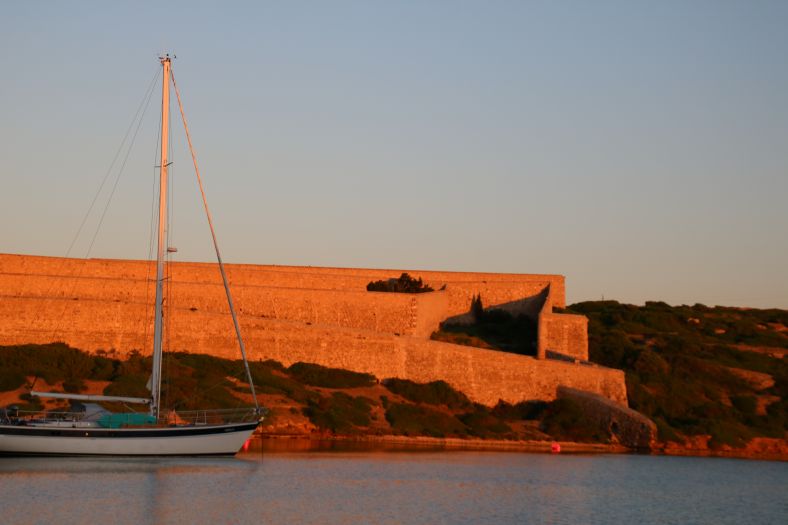
As you approach you can see examples of fortifications built by the British. Very impressive and huge.
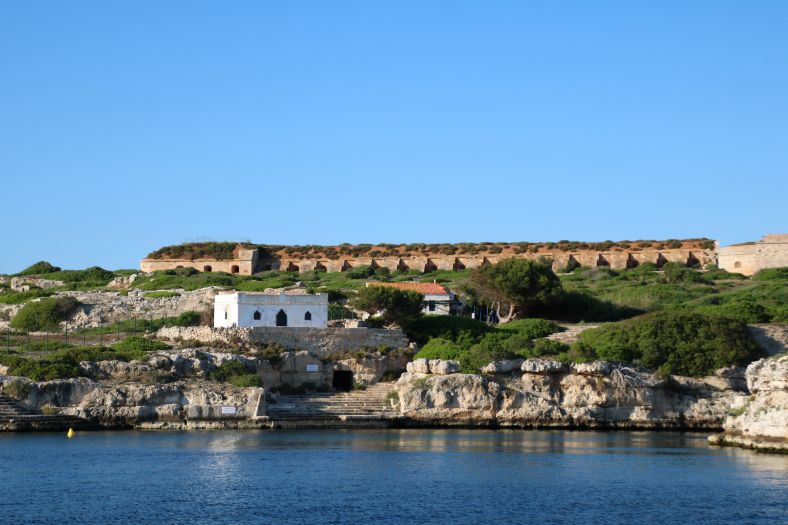
Adjacent to the harbor, an island that once was a quarantine facility built to house victims of the plague. It is hard to imagine what it took to build this all by hand. I imagine that the first plague was over by the time it was built. Clearly they took the need to contain things seriously. I guess that the govt did not think that it was “just a bad flu”.
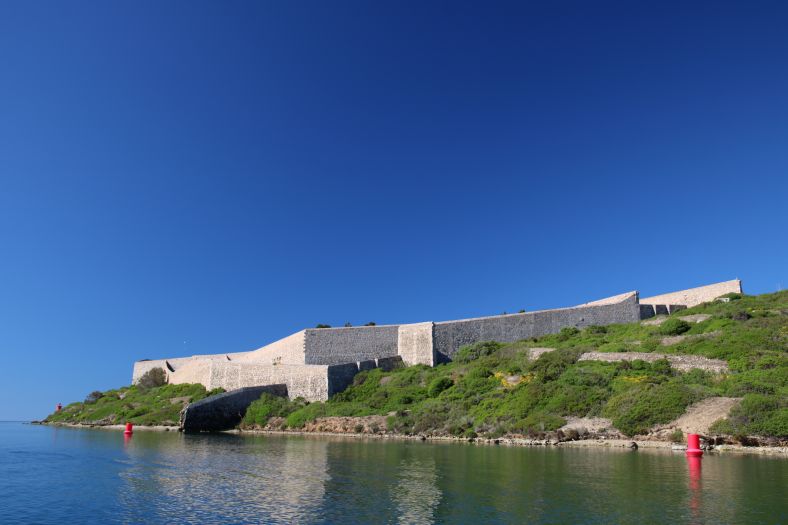
The same walls at sunset.
This is what Chat GPT had to say about this remarkable compound.
“Lazareto of Mahón — also called Illa del Llatzeret or Lazaretto Island. It sits inside the great harbor of Mahón and is one of the most remarkable quarantine complexes left in Europe.
The facility was built beginning in 1793 under King Carlos III after repeated outbreaks of plague, yellow fever, and cholera arrived by ship from North Africa and the eastern Mediterranean. Ships entering Mahón — one of the Mediterranean’s finest natural harbors — were forced into quarantine if disease was suspected.
The word “lazaretto” itself means a maritime quarantine station. Before modern germ theory, isolation was the only real defense against epidemics. Entire crews, passengers, and even cargoes of cloth or cotton were detained for weeks — often forty days, which is where the word “quarantine” comes from.
What makes the Mahón lazaretto especially fascinating is that it was designed almost like a prison-fortress devoted to public health:
For sailors arriving in Mahón today, it is easy to miss just how important this place once was. In the 18th and 19th centuries it was effectively Spain’s maritime immune system.”
Here is an arial photo of the place. The harbor where we were anchored in in the upper area of the photo.
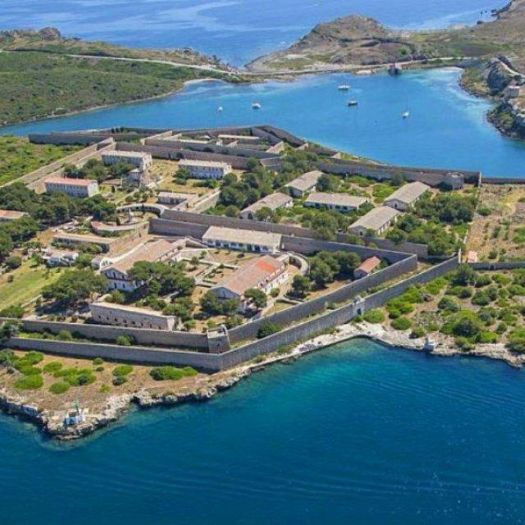
For more info check out this Wikipedia page. Fascinating. Sadly, due to weather constraints, we had to depart so we missed an opportunity to see this first hand. Perhaps next time.
We did visit town for a few hours to see at least something ashore. We also had to pick up the motor for the winch that was shipped to a local yacht club. We had hoped to spend a few days at their marina but had to cancel as we needed to leave very early the next day to head to Sardinia.
This view is from town, over the harbor and you can see how far it was to motor there. The cove was connected to the harbor by a narrow channel that is far in the distance, beyond what this photo shows.
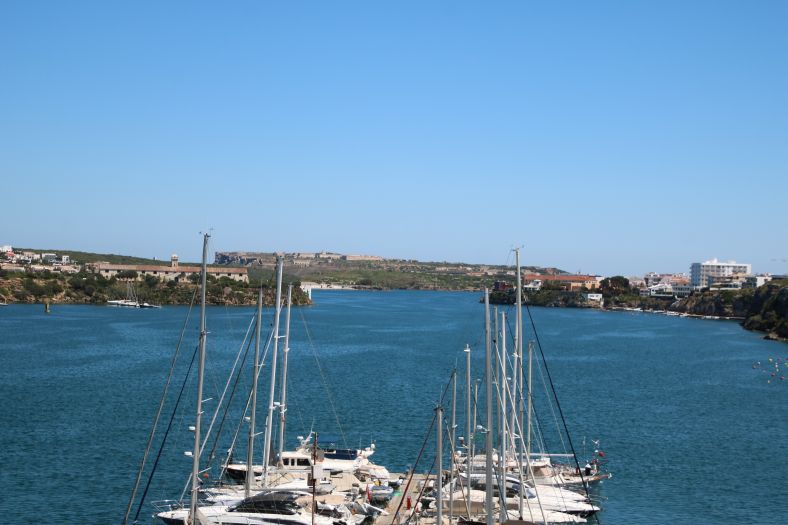
I took that photo we were in the upper level of the town. Beyond the waterfront, the main town is hundreds of feet straight up a cliff and to encourage visitors to visit more than the dock area, they have a number of outdoor elevators. My first experience with an elevator that wasn’t part of a building.
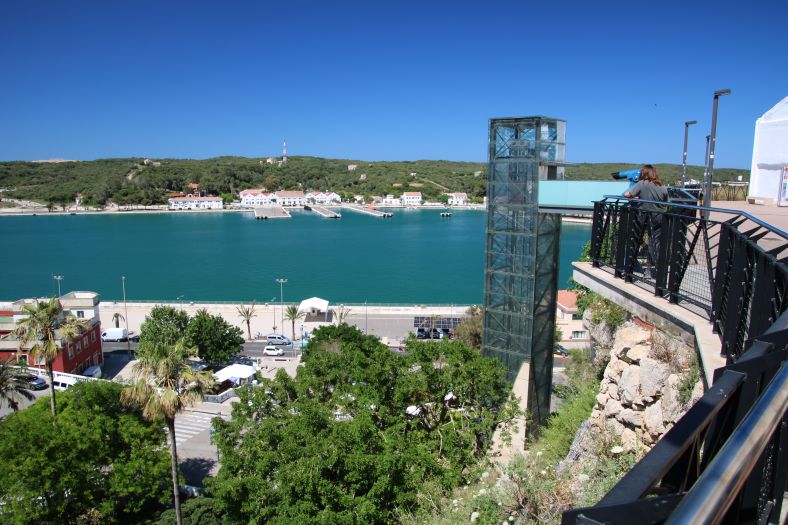
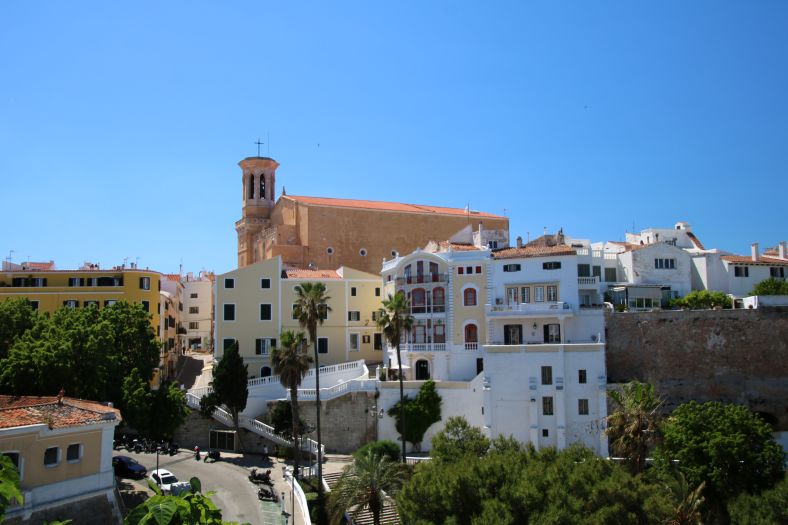
The view from up top of the old town area. We would have loved to explore if we’d had more time. Have I mentioned that I wish we had had more time? Thought so.
So, here we are in Bosa with about a week until we fly to Rome and our flight to JFK and home. Lots to do with many boat projects that need attention and hopefully some time to do a bit of touring of Sardinia.
The plan for the fall is to fly back at the end of August for two months and to do some exploring of Sardinia, Corsica and then head south for wintering in Sicily.
While it’s not quite a “wrap” yet for the first leg of our 2026 tour, we are nearing the end of our first of hopefully many visits aboard Pandora over the next few years.
Season one, act one…
Now, with some luck, the next “act” will be more adventure and include less flexing of our Visa card…
Details to come as the list is long and will surely be expensive. No complaining, at least we are in the Mediterranean.
Could be worse…