


Dog-hole ports and the Pacific Coast lumber trade.
For the last two days we have been staying in Mendocino, on the coast, with our son Christoper and his girlfriend Melody. This is the view that greeted us this morning from the kitchen. 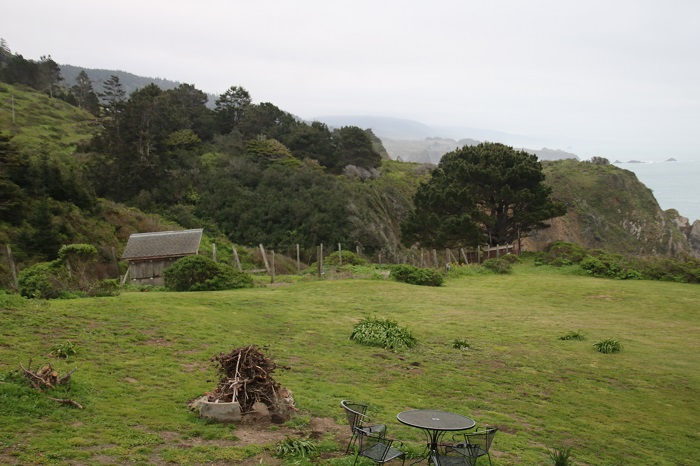 It’s been a real treat to spend a week with them, here and near their home in Oakland. They live in a lovely little studio apartment with their dog Mila. It’s way to small for us to stay with them, so off to an Air B&B for us. It’s an expensive area so I won’t comment on where we’ve been staying. Let’s just say that today’s view, well, it’s better.
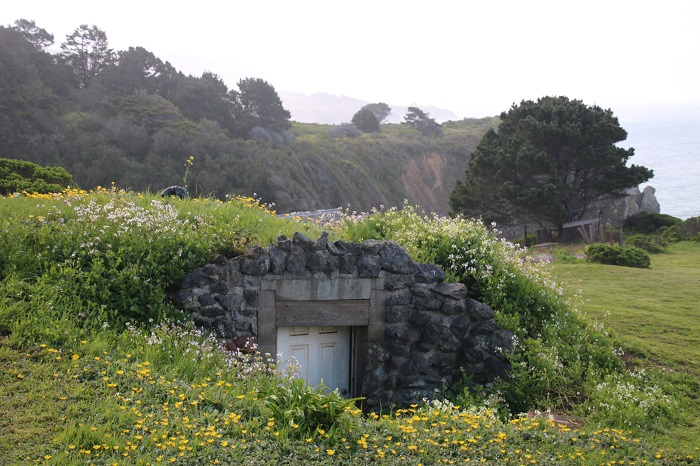
So, here we are, and it’s great. Chris and Melody set this up and are treating us to a stay with them high on a cliff overlooking the ocean. The place, and you can’t see another building from here, is located on 85 acres. Its a compound or tiny village with an eclectic mix of buildings. 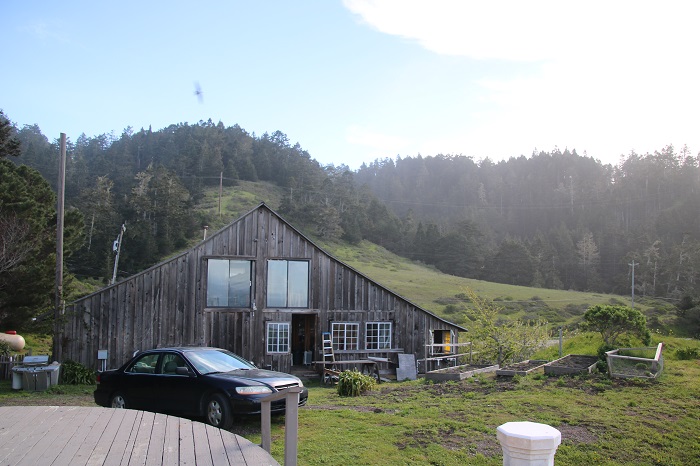 There’s even a root cellar, or is it a Hobbit House?
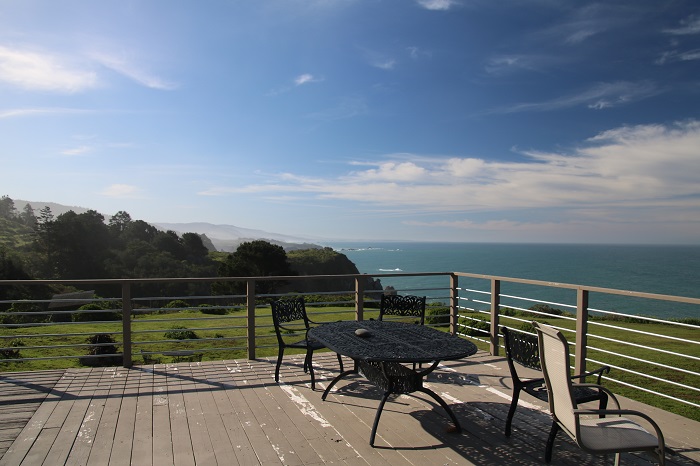
  The view from the deck on the main house, where we are staying, is pretty spectacular.
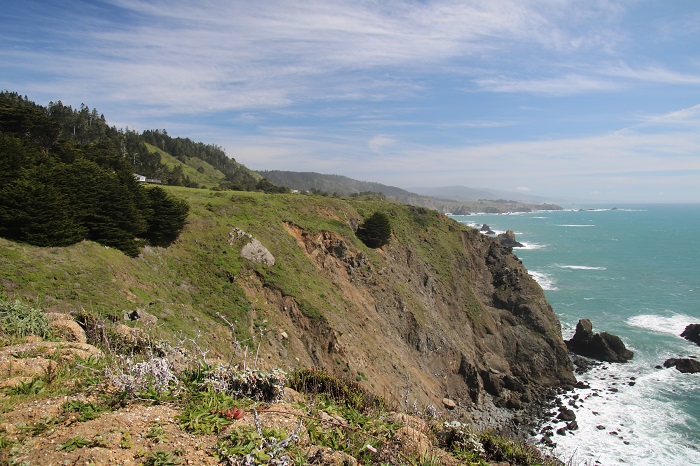
  From the northern part of the property you get a pretty good feel for the scale of the place. You can barely see the main house peaking out from the trees on the left.
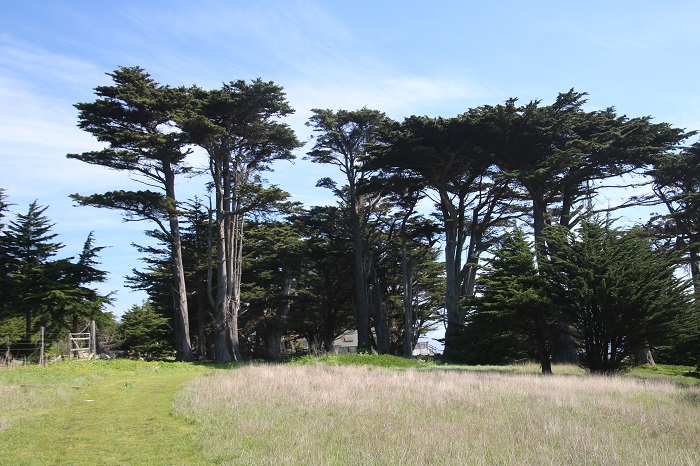
  These trees to the left on the above photo look like they have had to work hard to grow here. Craggy and I expect very old.
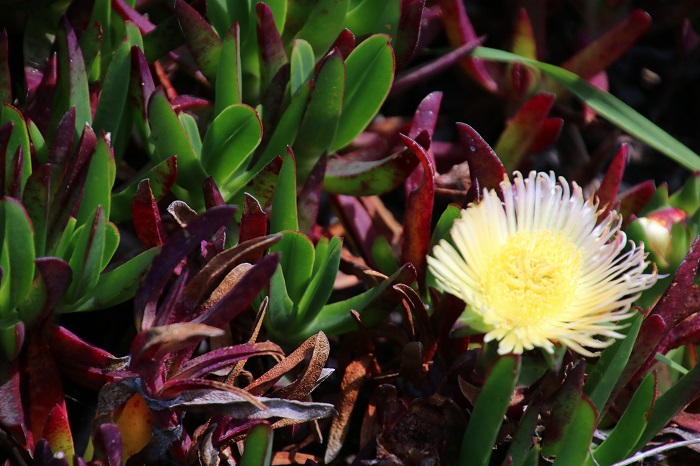
  Out on the point, near the edge of the cliff, there are some wonderful spring flowers. These low lying fleshy plants grow everywhere.
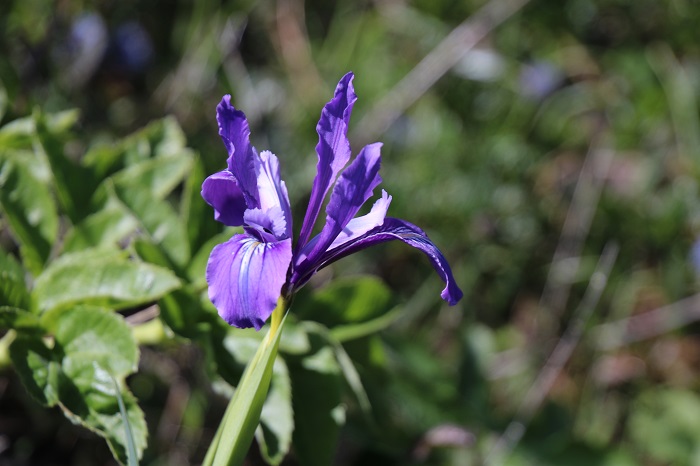
  Love the dwarf iris, not more than 6″ tall.
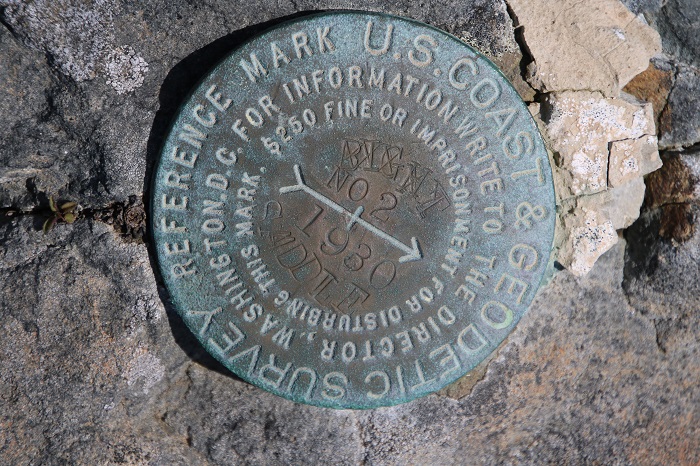
  Near the northern property line, is a government survey mark placed here in 1930. It says that to disturb or remove it will subject me to a fine of $250 and imprisonment. $250 sounds like a pretty good deal for what would be a very nice souvenir. I wonder if they would calculate inflation from 1930 into account if I take it? Not sure about the “imprisonment” part. On second thought, I’ll leave it.
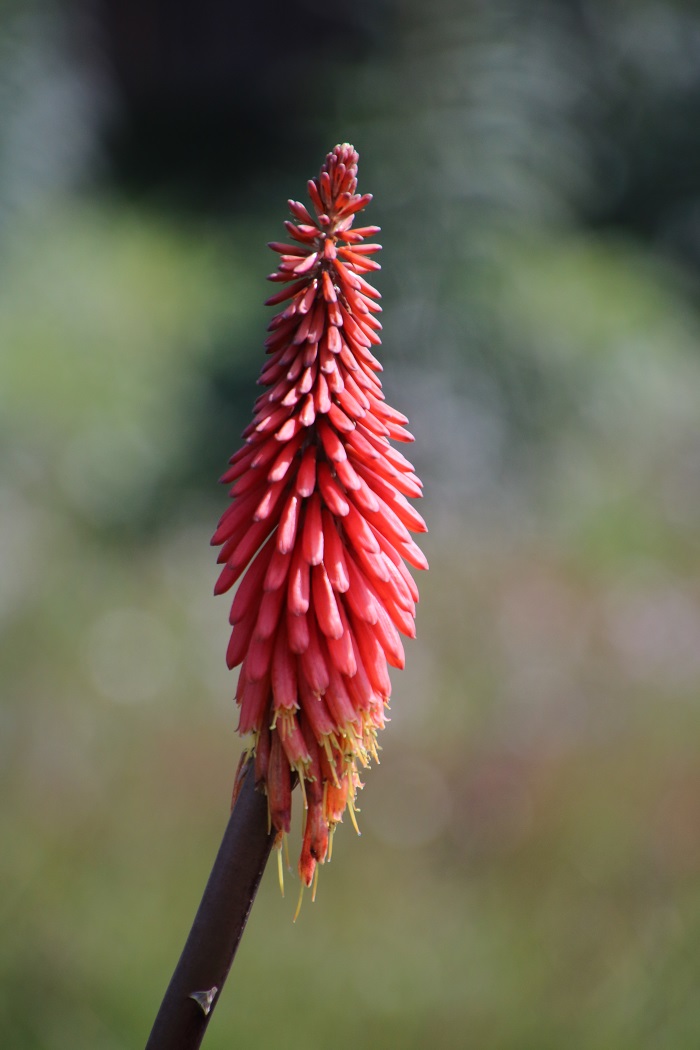
 Anyway, back to the flowers. I have no idea what this is but it is impressive with a flower stalk that is over 4′ tall.
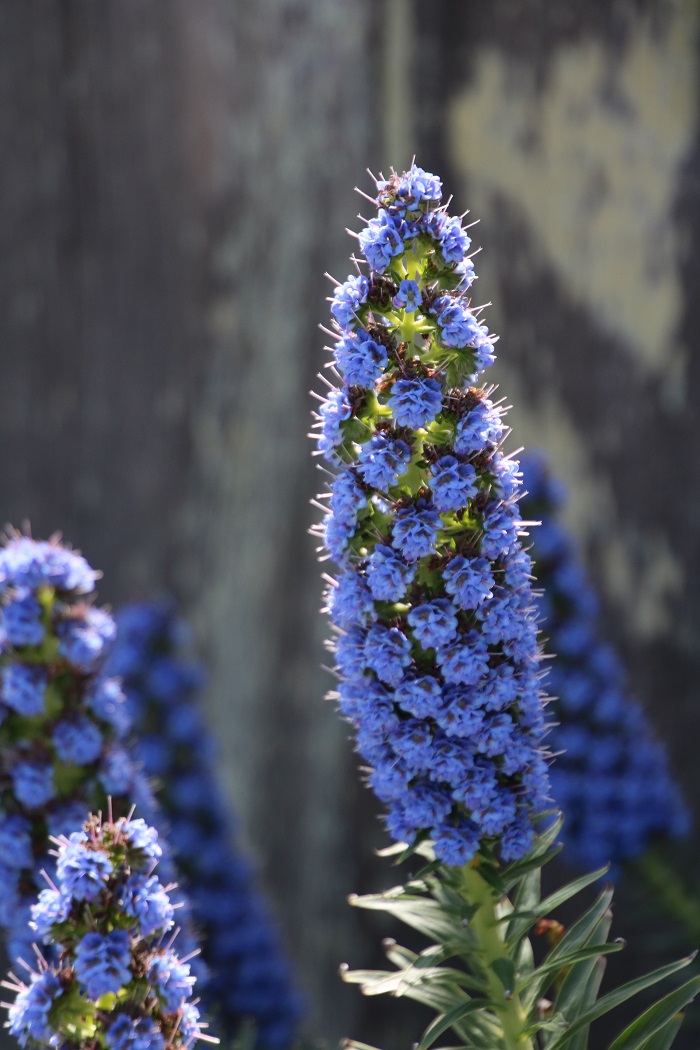
  These clusters are on a bush along with dozens more make for quite a show.
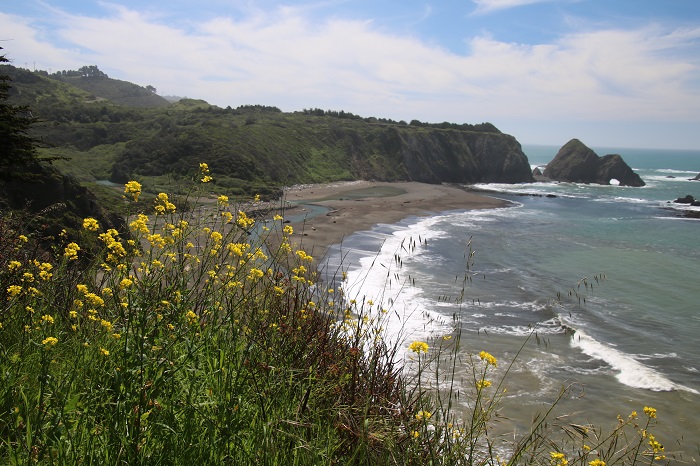
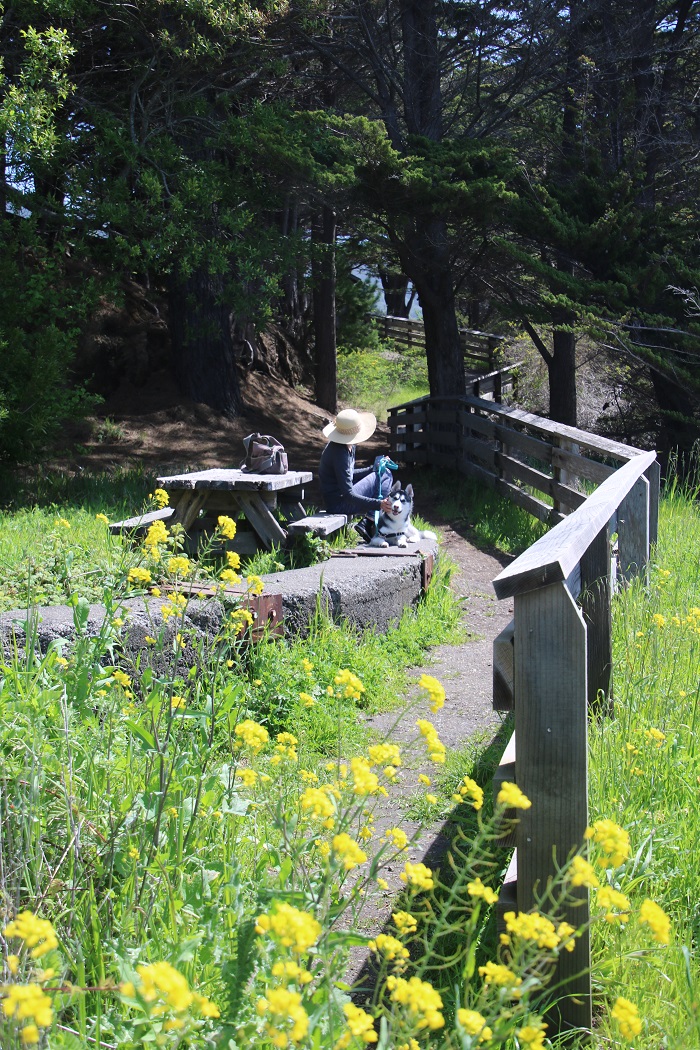
  For lunch yesterday we stopped at a tiny deli in nearby Elk, population 250. There was a lovely picnic area across the street, overlooking a beach.
 Nice spot. Mila waiting for lunch to arrive. Melody in a lovely hat. I just love hats.
  The Pacific coastline is remarkably rugged, with many miles between ports. By the mid 1800s, this area was a major source of lumber, shipped all over the world and a major source for the wood used to rebuild San Francisco following the devastating earthquake of 1906. This photo does suggest that they needed a lot of lumber.
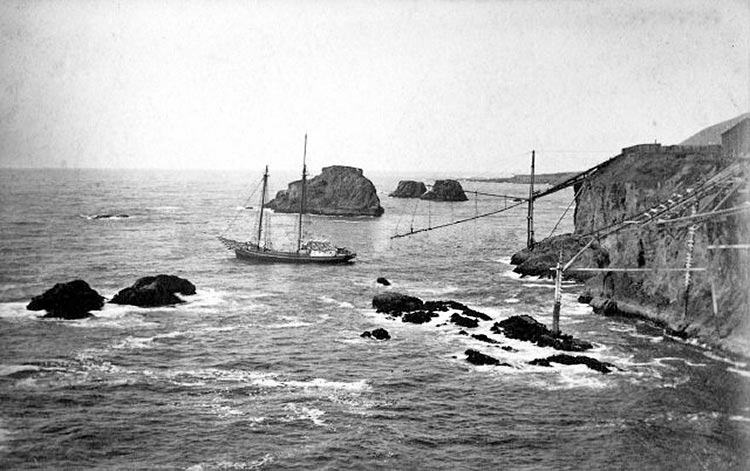
 Lumber schooners, mostly with two to three masts and easily maneuvered, were able to pull into just about any spot in the coastline that offered even a small amount of protection from the ocean swells. These harbors, such as they were, were known as “Dog-Hole Ports“, so named by the captains that used them because they were just large enough for a dog to get in and out of. There were some 400 sawmills along the northern California coastline serving these tiny ports. It’s hard to imagine bringing a ship near a rocky coastline like this, but they did.
This photo, BTW, was taken from the deck where we are staying. Amazing. 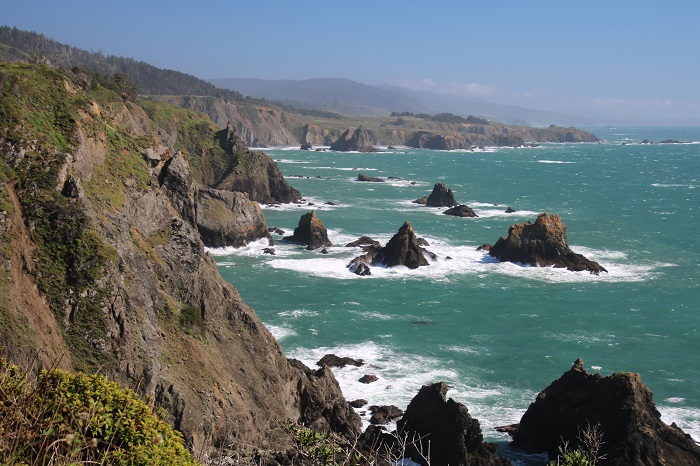 As close as we are to SF, about 3 hours by car, this areas once felt a lot more remote when it was only accessible by boat or stagecoach. In many ways, it still feels far away and very primitive. Well, primitive perhaps but with some really nice places to eat out and don’t forget about those wonderful wineries that are so close.
Yesterday evening we visited the nearby town of Mendocino for dinner. Before dinner we had drinks at a beautiful old inn from the late 1800s. I expect that our bar tab would have put us all up for a month, meals included, in the olden days. I also expect that the crowd would have been a bit rougher. “Hey you, yeah you dog face, get me another whisky and make it right quick or I’ll blow yer frigging head off! On second thought, a chardonnay if it’s not too much trouble.”
The trip here from San Francisco takes you through the major wine regions and finally winds through the redwood forest just north of the Anderson Valley, our favorite, and one area that Brenda and I have been visiting for over 30 years. It was a bit surreal for us to sit in the back seat on the way here as Chris drove us along those familiar roads. It wasn’t that long ago, well it doesn’t seem that long ago, since Brenda and I were in the area while Chris and his brother Rob were toddlers, home with their grandparents.
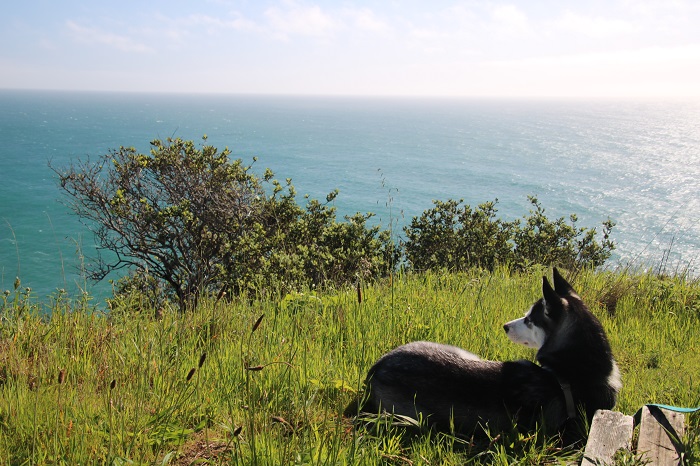
Melody and Chris just love it here. About 100 yards from the main house, there is a small deck that overlooks the very edge of the cliff. The wind off of the ocean is so strong that the chairs on the deck have to be tied with a rope to keep from being blown over the edge of the cliff. Not the most relaxing place to sit and sip wine. However, after a glass or so, the risk of falling to certain death somehow seems less of a problem. 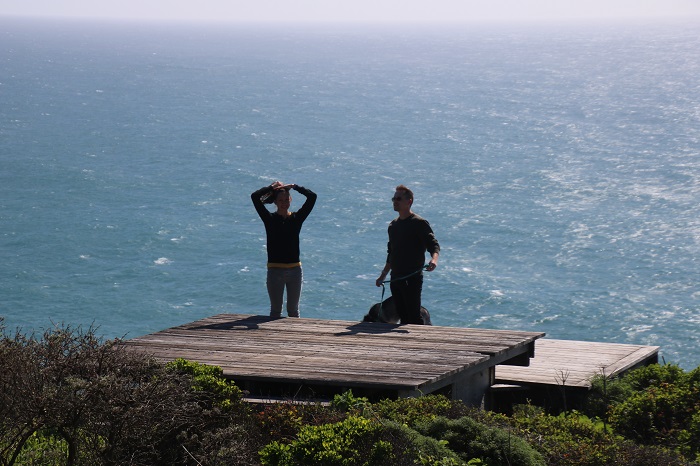 Their dog Mila loves surveying all that she can see. “Hey mom and dad, I’ll bet that cove is one of those Dog-Hole Ports. Am I right?”
  This area is very close too the dense redwood forest of the Navarro valley to the east, one of the areas that were heavily logged. As the coastline is so rugged, with safe harbors so far apart, transporting the lumber to anchored schooners involved a huge effort. Some spots, but not many, were sheltered enough to allow for the construction of a wharf that went far out into the water. Note the many lines strung from the bow of this steamer, no doubt to hold her off of the wharf in the ocean surge.
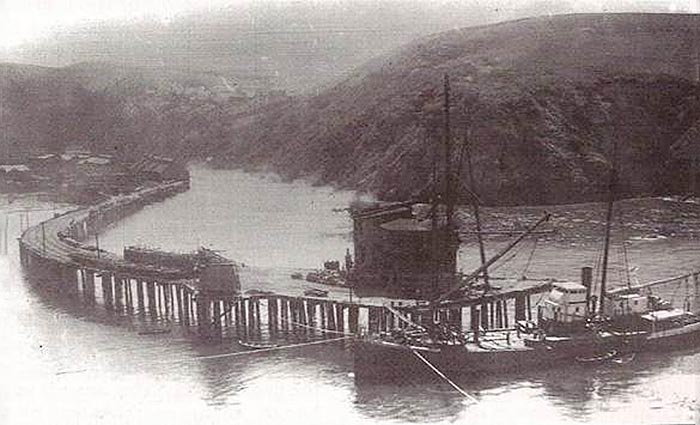 I expect that these structures did not last very long with the relentless pounding of ocean waves. However, with low cost labor along with cheap and abundant building materials, I doubt that it mattered.
The often precipitous drop off from cliff to the water posed unique challenges in getting lumber down to the ship. 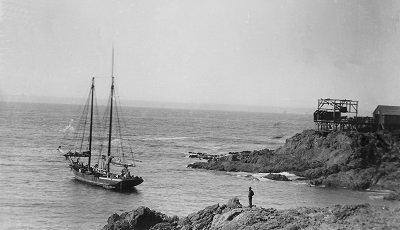 The only way, in those areas, to get materials down from high on the cliffs, was to use long lines strung from the top of the cliff or lumber shoots designed to slide boards down to the waiting schooner far below.
  As technology improved, schooners made way for steam powered freighters but creativity was still needed to board freight and passengers. “Don’t worry little lady, I’ve done this hundreds of times.”
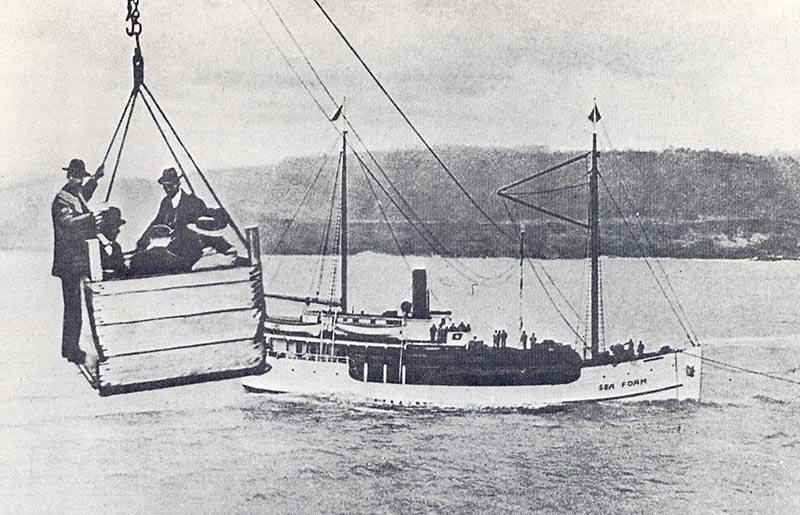 The schooners that served this area had to be very maneuverable in order to safely make their way in and out of the tiny harbors along this exposed coastline. It was easier to load the ships from high cliffs than to try and transport lumber any distance over rough dirt roads to better harbors.
The last remaining lumber schooner from that era is the C.A. Thayer, launched in 1895 in Eureka CA, not far from here. She is now preserved at the San Francisco Maritime museum. 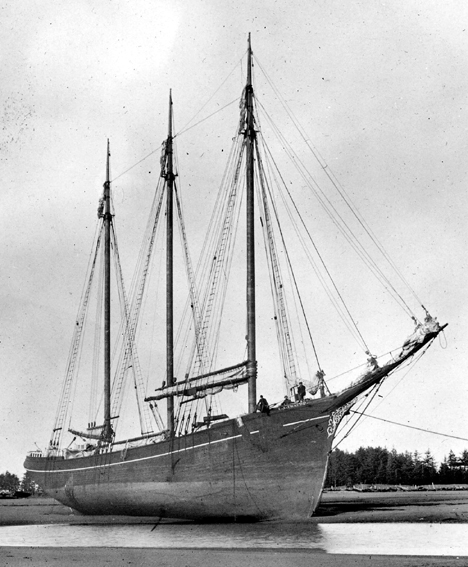 Over the years, she, along with a number of other vessels in the museums large collection, fell into an unfortunate state of disrepair but recently she has been fully restored.
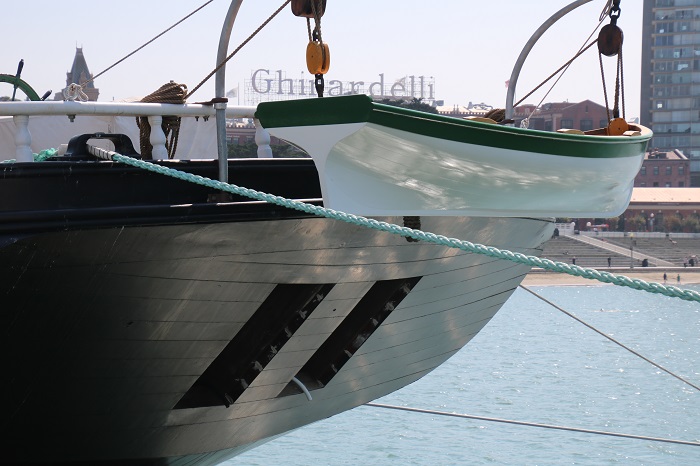
We visited her in 2017, on our last trip to SF, as they were just finishing the restoration and enjoyed a tour. She’s in great shape now. 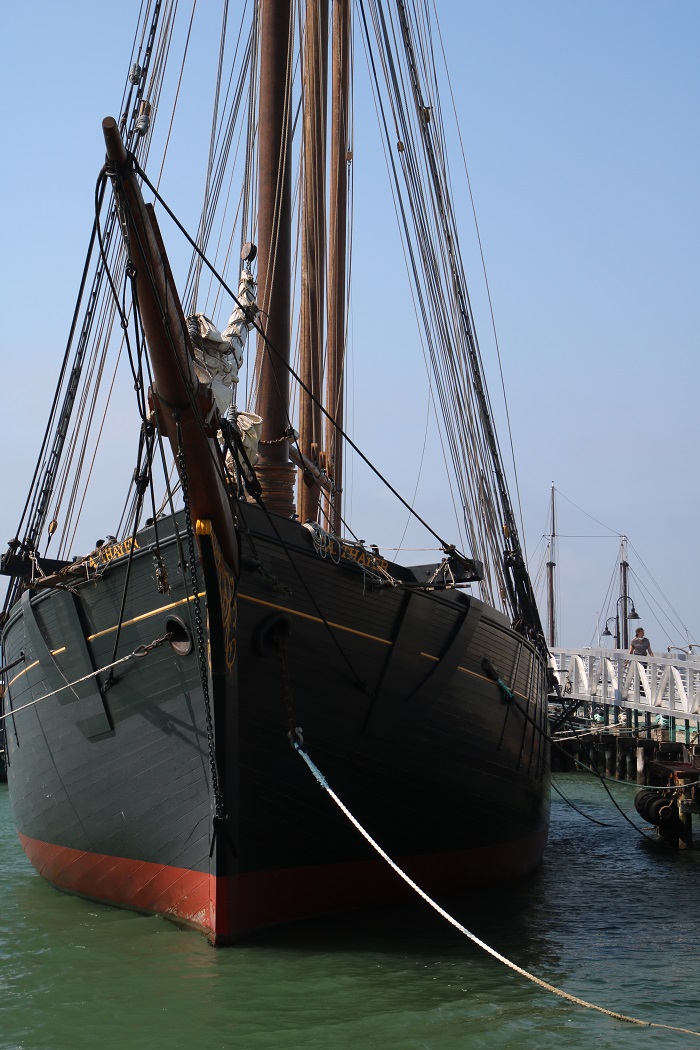 Her stern was designed with openings that allowed the loading of long pieces of lumber below decks.
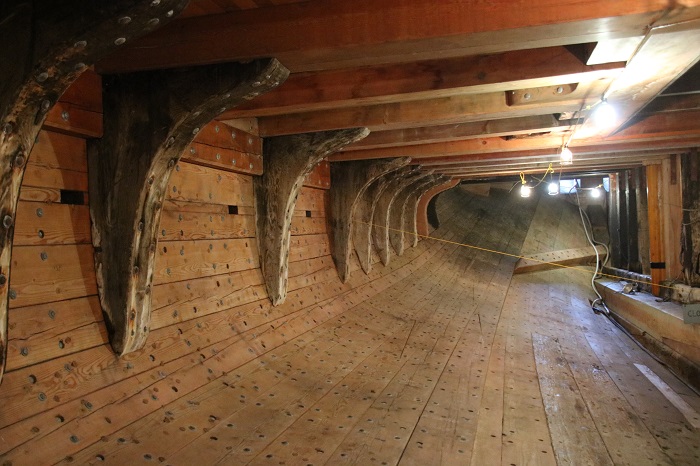
  In order to fit the maximum amount of cargo, she was designed with no bulkheads below decks.
  There were once hundreds of these schooners moving lumber down the coast to San Francisco but she is now the last remaining one and it was nice to see her restored to better than new condition.
So, here we are, in an area with so much history and along with is us Mila, who must particularly appreciate the history behind these out of the way, “Dog-Hole ports” that played such an important part of area history.
 So, here I sit. It’s early April and I have a growing list of what has to happen to get her ready for the water. It’s like the old days before I retired but at least I don’t have to get up on a Monday morning and head to the office.
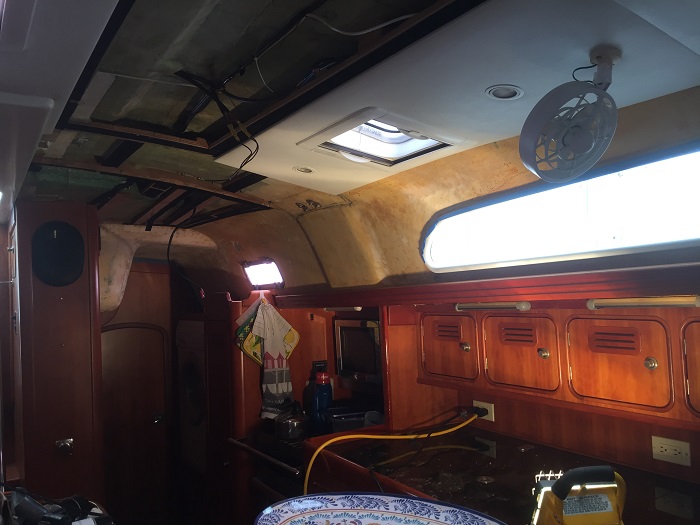
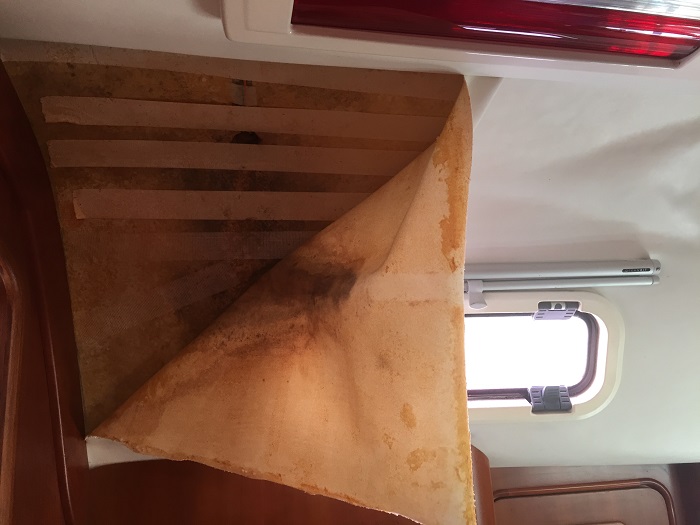 At first I thought that the problem was limited to a few areas. No such luck.
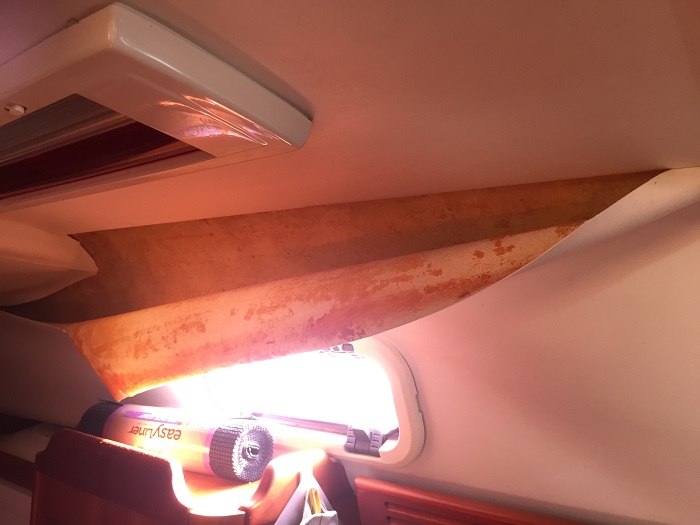 So, I decided to take nearly all of it down. It was a huge job and very messy. I consulted with Chad, the canvas maker that did a great job on my cockpit enclosure, to get advice on what to do. He suggested that I pull the vinyl down and then, with a wire brush on a drill, have at it. This is a view of the aft cabin, where I pulled down all of the vinyl. Then the drill…
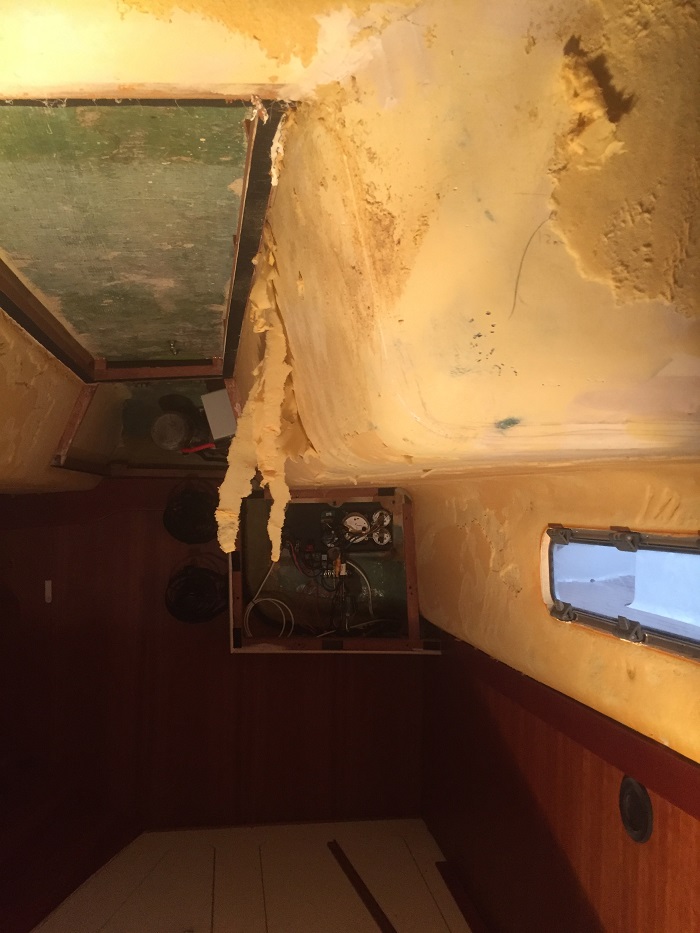 The main cabin, post wire brush. Looks like a derelict boat. Depressing. And such a mess…
 Over the weekend, I went to a sale at Defender, a discount marine supply company nearby. They have a once a year warehouse sale and it was mobbed. I purchased most of the lights I needed, along with a new
 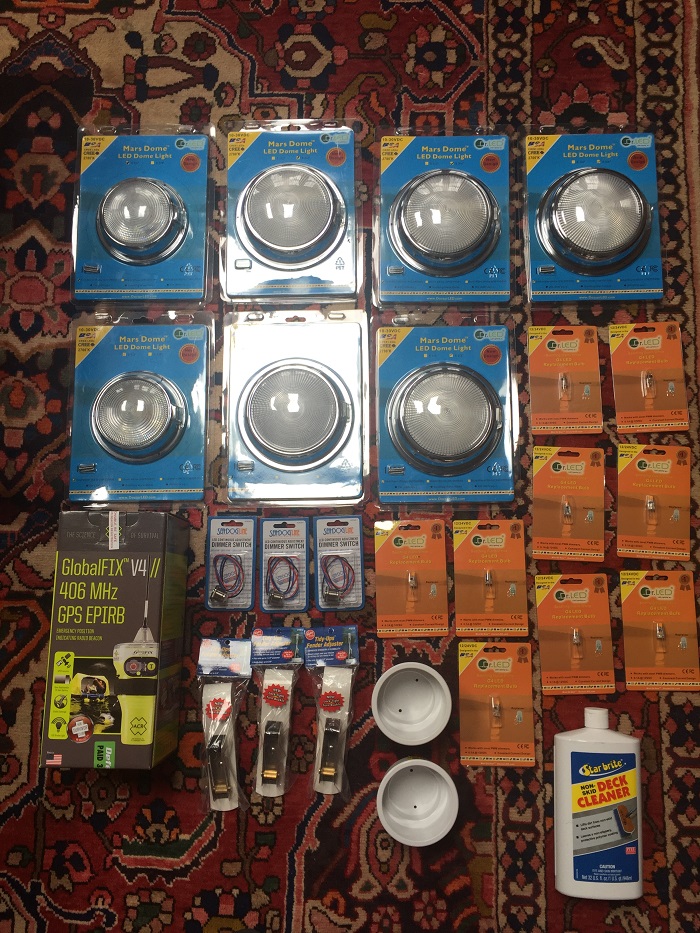 And, speaking of lights, I’ll also be replacing all of the inefficient fluorescent fixtures in the cabin and cockpit, along with all of the halogen bulbs in the overhead with LED bulbs and fixtures. The bad news is that the “footprint” of the old fixtures, and there are 9 of them, is larger than the new ones so that means that I’ll have to replace all the vinyl on other areas of the headliner that are basically fine to eliminate the old screw holes and stained vinyl in the areas around the old headliner. There are a LOT of fixtures to deal with. Fortunately, vinyl comes in many colors of “white” so we should be able to match the new to the old. Fingers crossed.
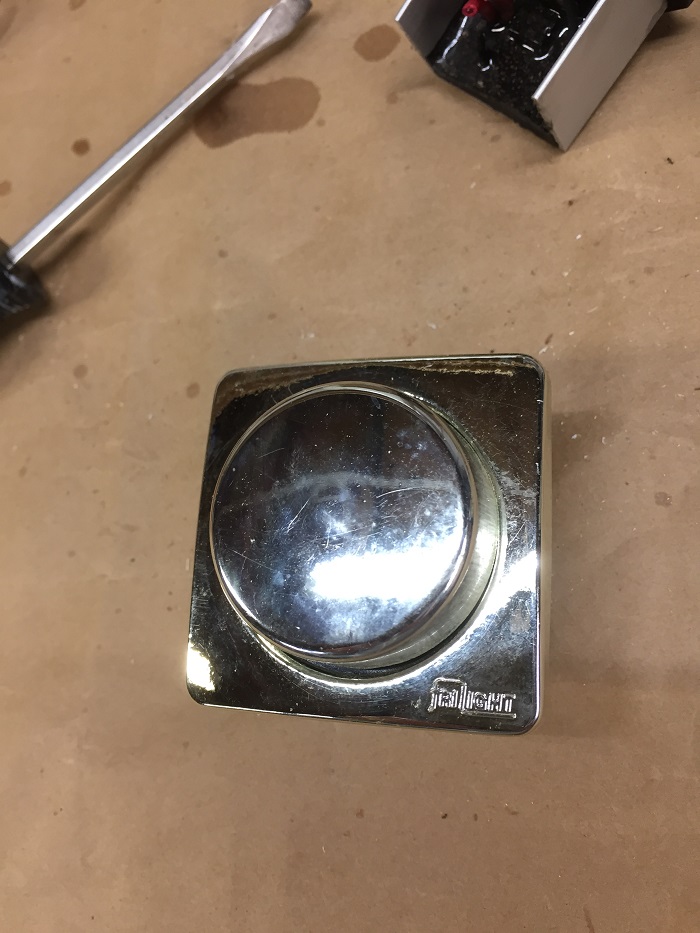 In spite of my best efforts, I could not locate new dimmers that look anything like these and would fit in the same 2″ hole. So, I decided to just “remodel” and use the same dimmer casing. So, I made up wooden inserts from scrap plywood that matched the interior.
 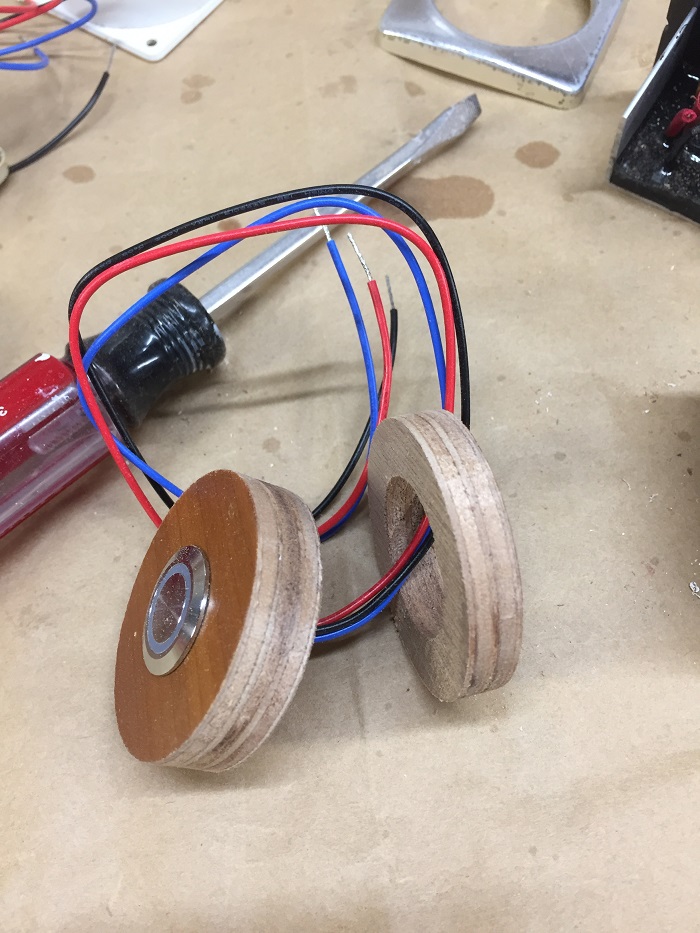 The plan will be to glue the new touch dimmer into the old housing and it will look like this. Pretty neat, right?
 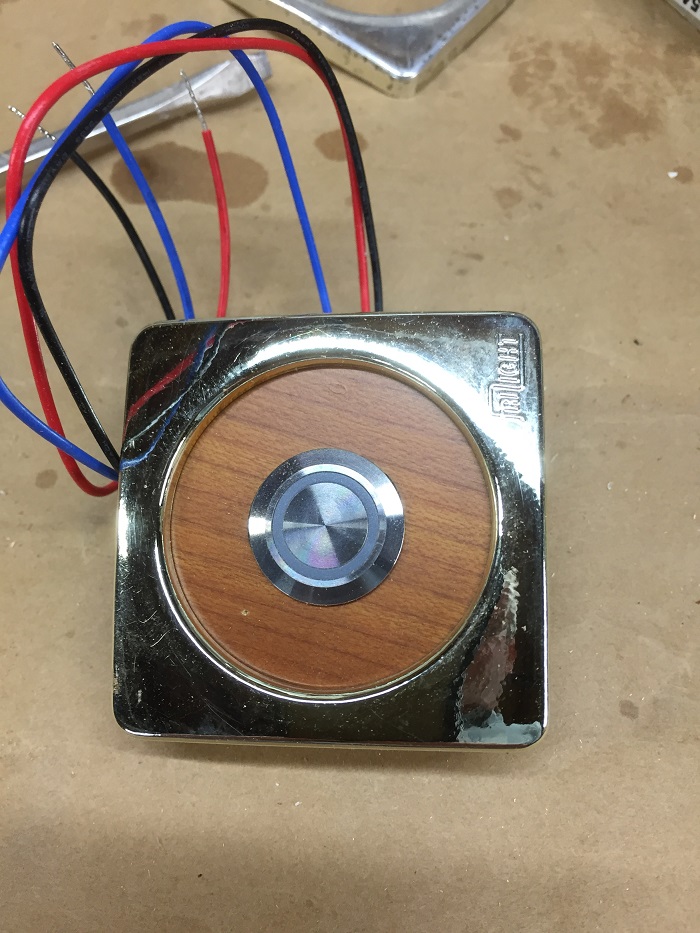 I’m pretty pleased with myself, frankly. An elegant solution that will minimize effort in matching the current holes.
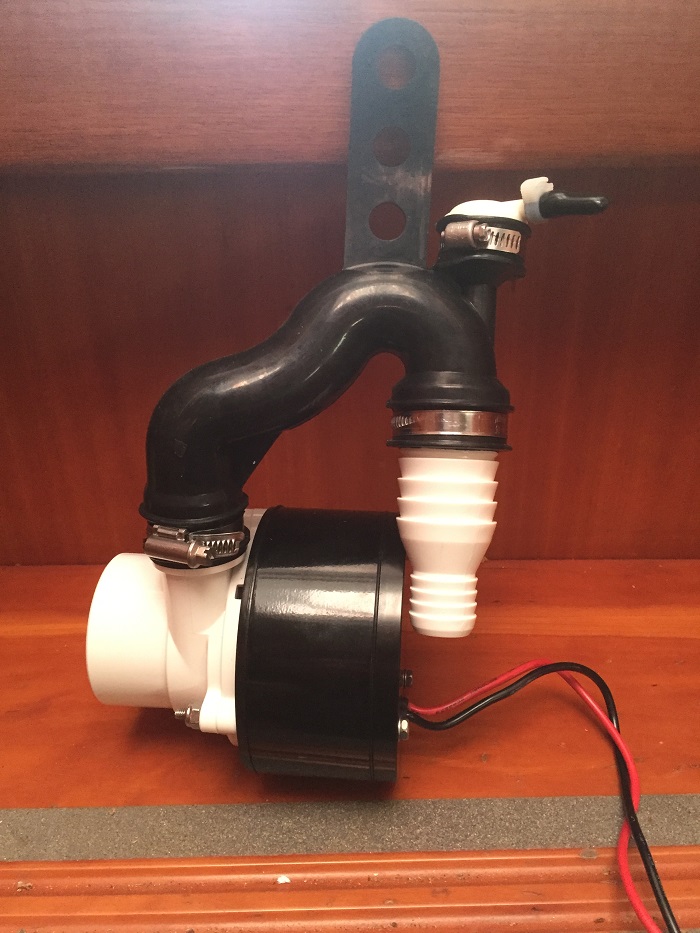
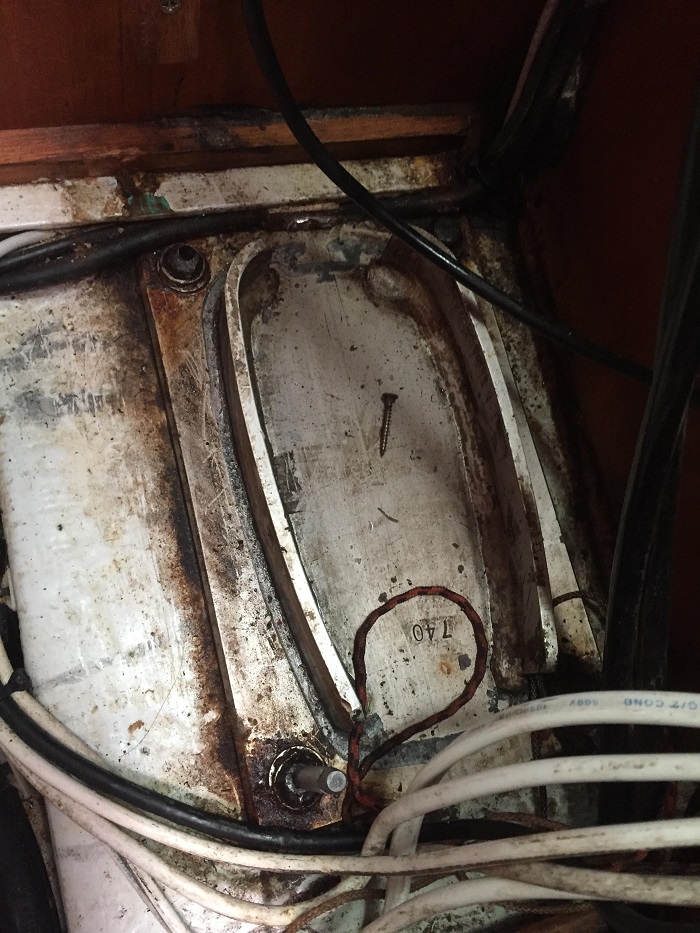 Oh yeah, one more thing. Pandora has electric toilets. Can you imagine, electric? And mixing electricity with, well, you know what, is a messy business. The toilet, head, has three electric motors and one failed on the aft head so I had to put in another. If you think that this looks expensive, it is. Fortunately, I was able to get it replaced under warranted. Let’s hope that if it decides to “poop out” it does so before a year. Motors on a head? Who knew?
  So, after a winter spent waiting for the weather to get warm enough to work on Pandora and time spent focusing on my “honey do list”, it’s time to get cracking and find a way to get Pandora back in the water and ready to cruise.
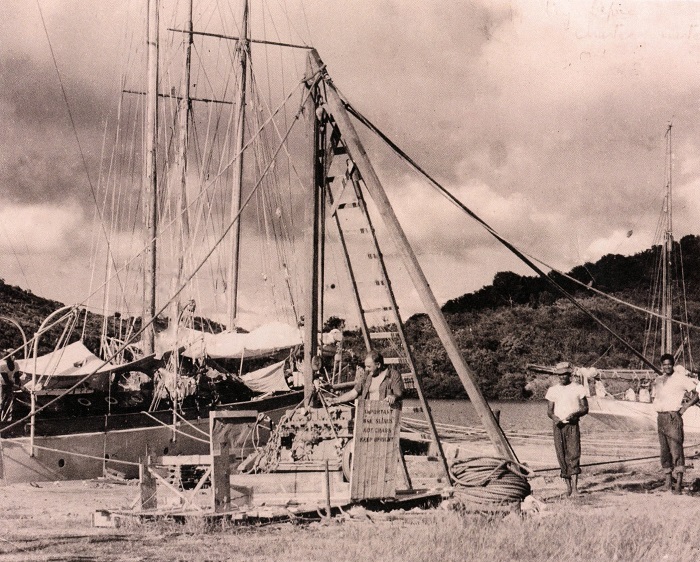
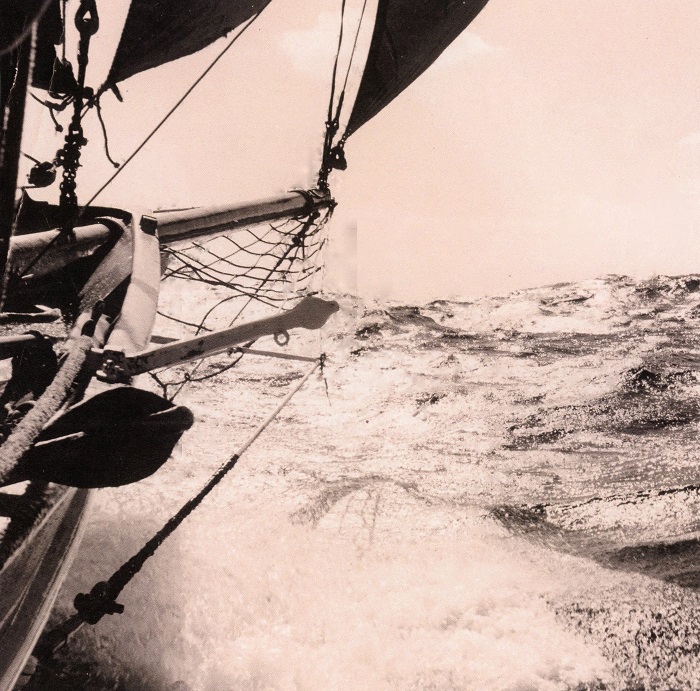 Aboard were “Commander V.E.B” Nicholson his wife Emma and their two young sons who arrived in English Harbor, the site of the then derelict Nelson’s Dockyard where they decided to make a home.
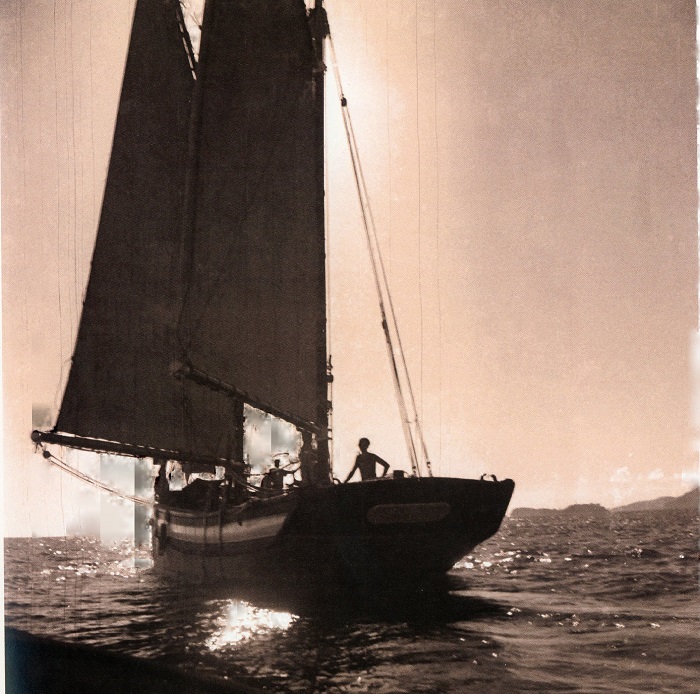 Over time, their older son, Desmond and his wife Lisa also became passionate about the historic Dockyard, looking beyond the caved in roofs and crumbling walls to envision what is today a national treasure, UNESCO world heritage site and the only operating Georgian Dockyard in the world
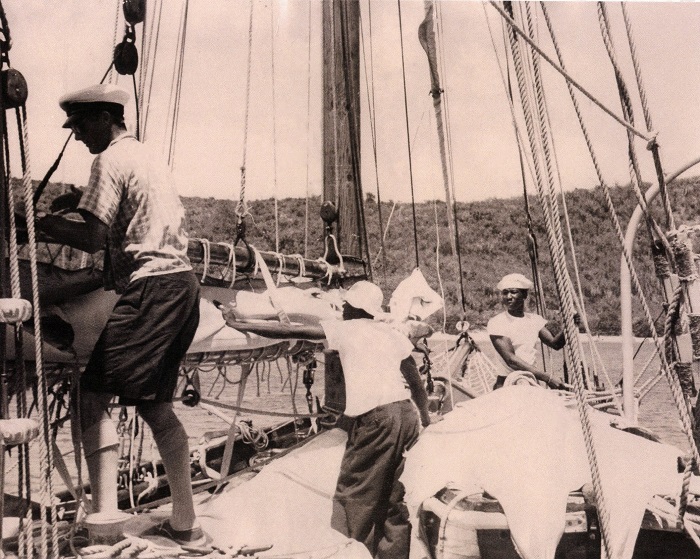 This event proved to be the beginning of the first charter business in Antigua, that lives on today as Nicholson Yachts Charter & Services.
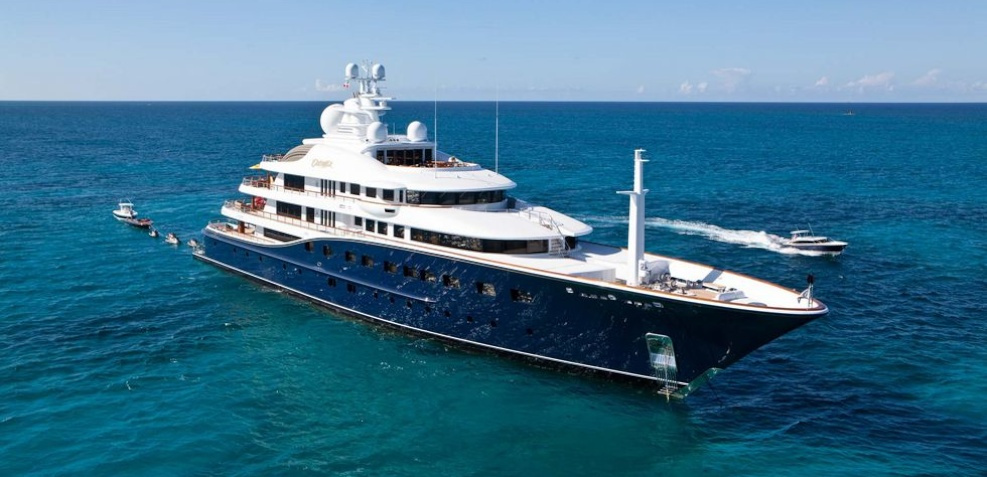
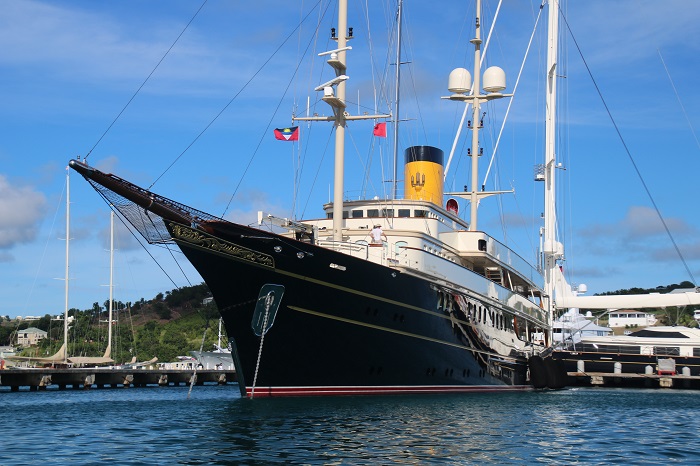
 Today the grounds and customs office are fully restored. Nearly every inch of dock space in English Harbor and nearby Falmouth Harbor are crammed with all manner of mega-yachts and cruisers. Some of these behemoths look more like ocean liners than private yachts. I was told that in January there were some 80 mega-yachts in residence between English and Falmouth harbors.
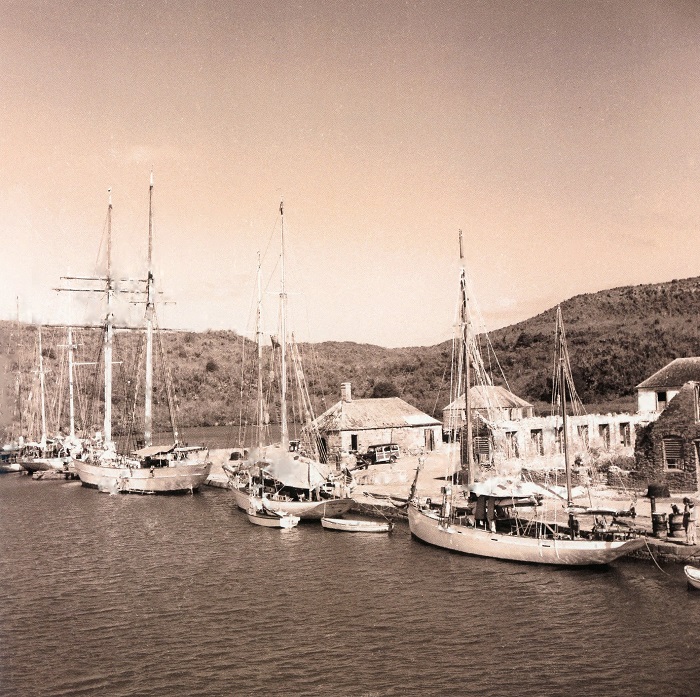
  Shortly after arriving in Antigua, the Nicholson family received permission to take up residence in the abandoned Dockyard and set about doing what they could to improve the facility. No drones in those days. These photos were taken after much of the rebuilding was done, replacing missing roofs and walls.
 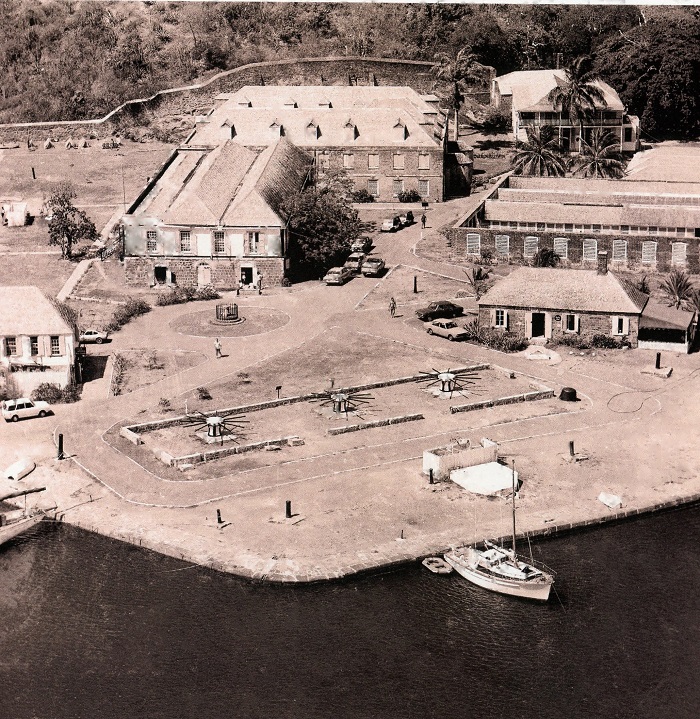 Today the look of the Dockyard is true to it’s roots and looks much like it did when it was the Caribbean base for the British Navy with all of the buildings beautifully restored. In 2016 the Dockyard was designated as a
 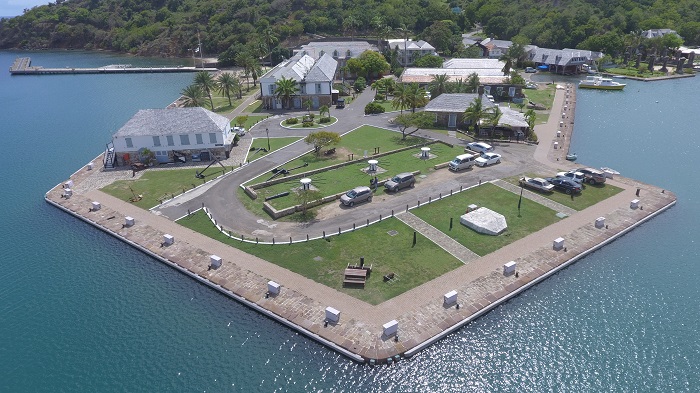 The Dockyard doesn’t look all that different these days than it did when Desmond took this photo.
 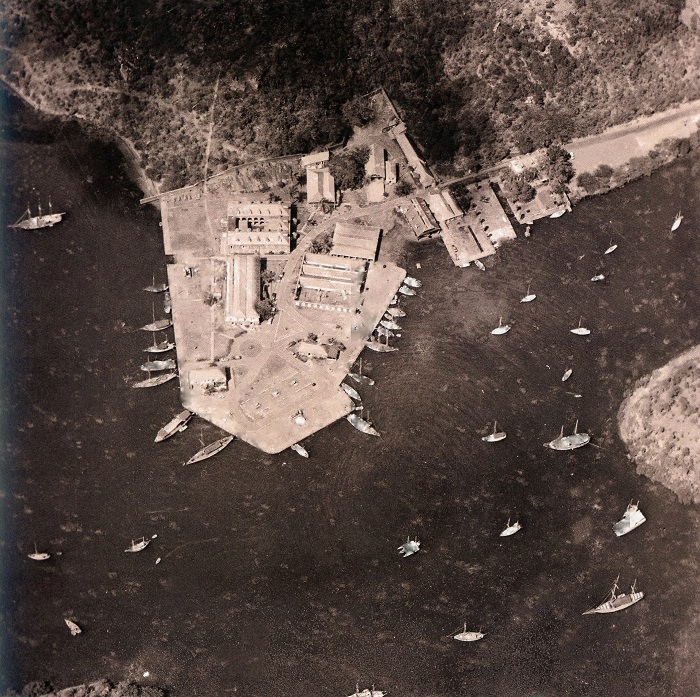 Well, one thing that is different is that there are a LOT more boats. This is a photo of boats participating in the Oyster round the world rally from a few years ago. I have a friend who had hoped to meet me there this April as they return, having completed a circumnavigation themselves as part of the rally. I wish that I could be there. Next year…
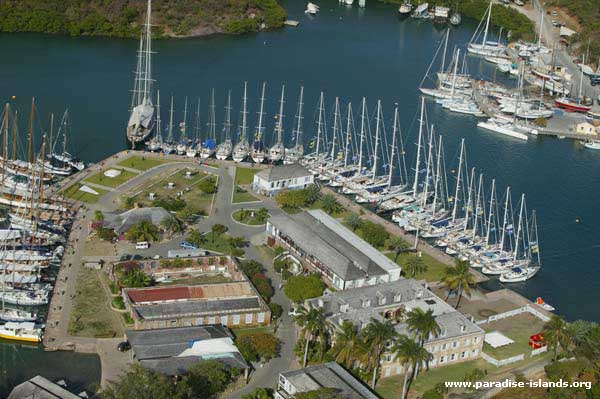 There are still remnants of the careening dock that was used to pull over navy ships for bottom work. The Nicholson family used similar equipment to restore yachts in the early years. Nowadays, right across the harbor, there is a full service yard with a railway servicing yachts of all sizes.
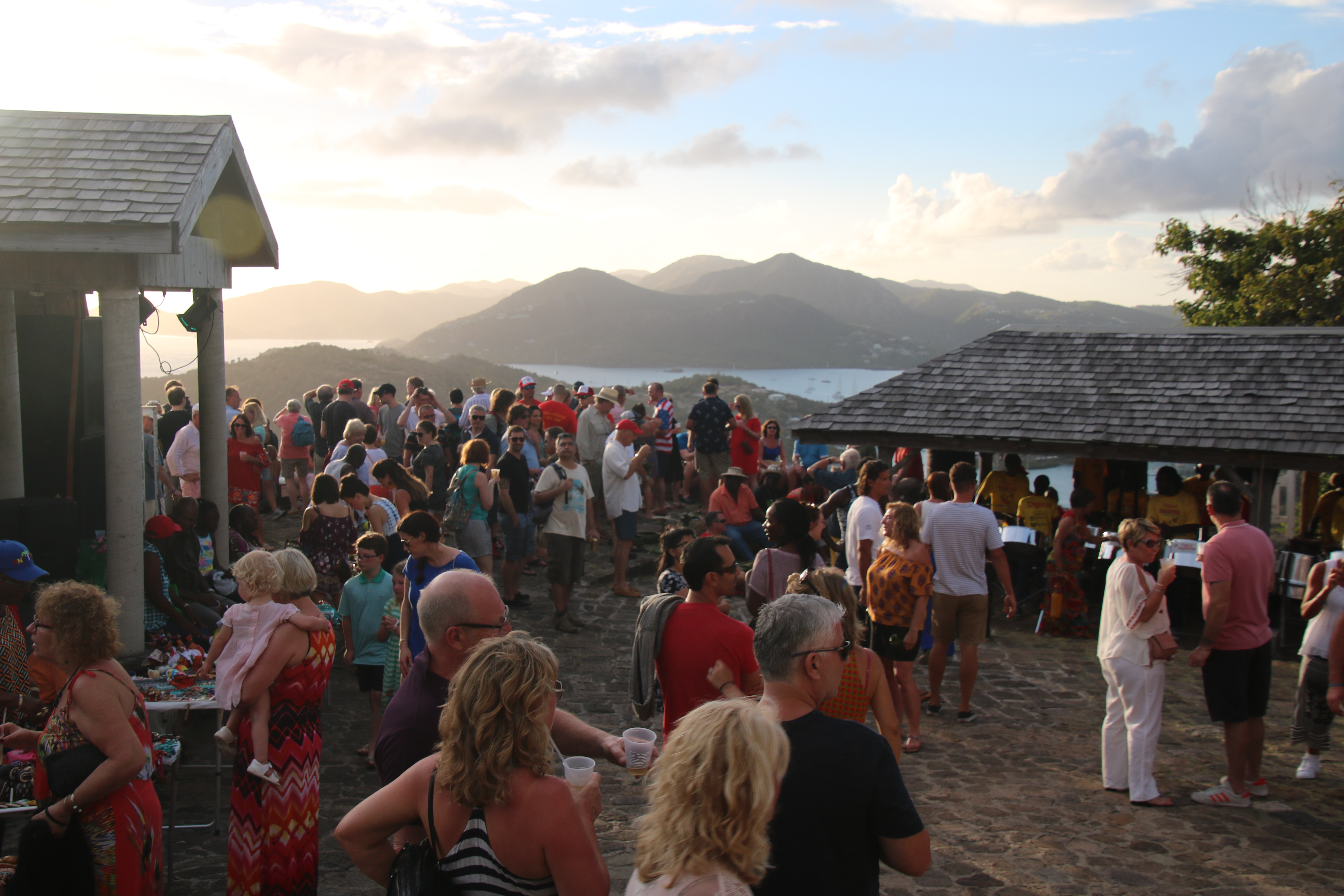
  Most everyone visiting the island makes the pilgrimage up to the British Navy era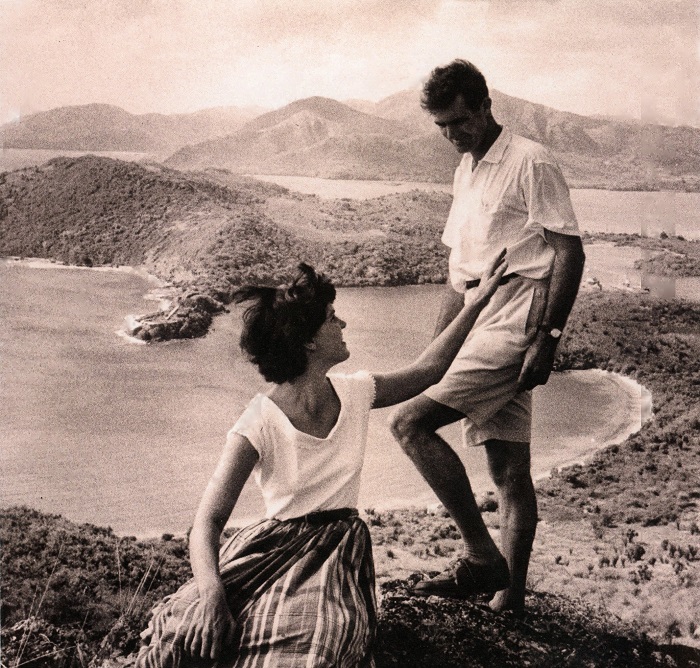
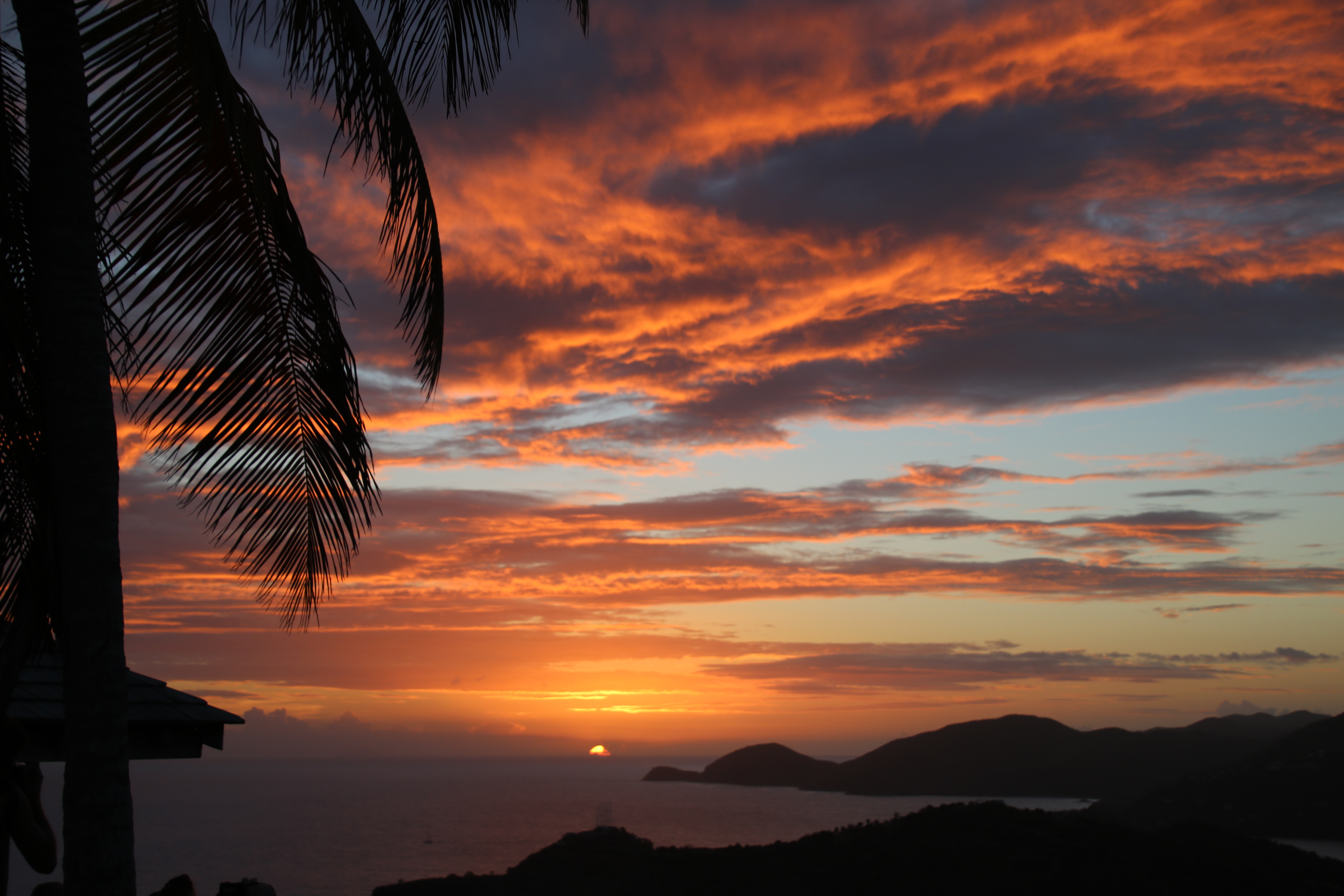
 The Lookout is still a tremendously popular spot to watch the sunset for locals and visitors alike with barbecues and bands performing at sunset every week.
  Crowds or not, this view will never be beat and no less lovely than it was when the Nicholson family first made landfall. It’s no wonder that they decided to stay and make a life for themselves on the island.
 Sail making has always been a part of the Dockyard, including during Desmond’s time. I’ll bet that the figurehead in the corner has an interesting story to tell.
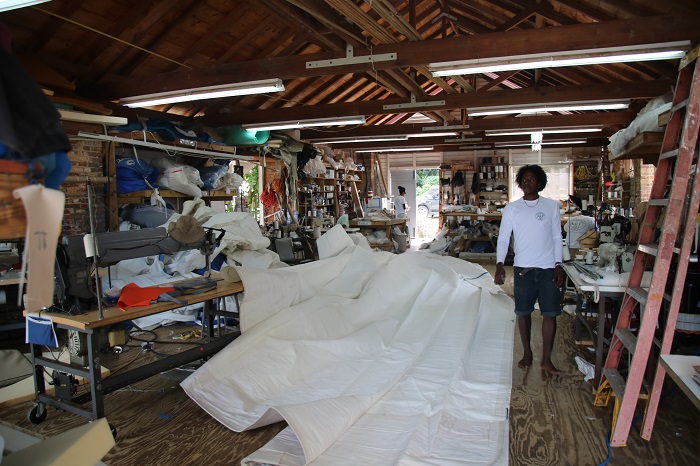
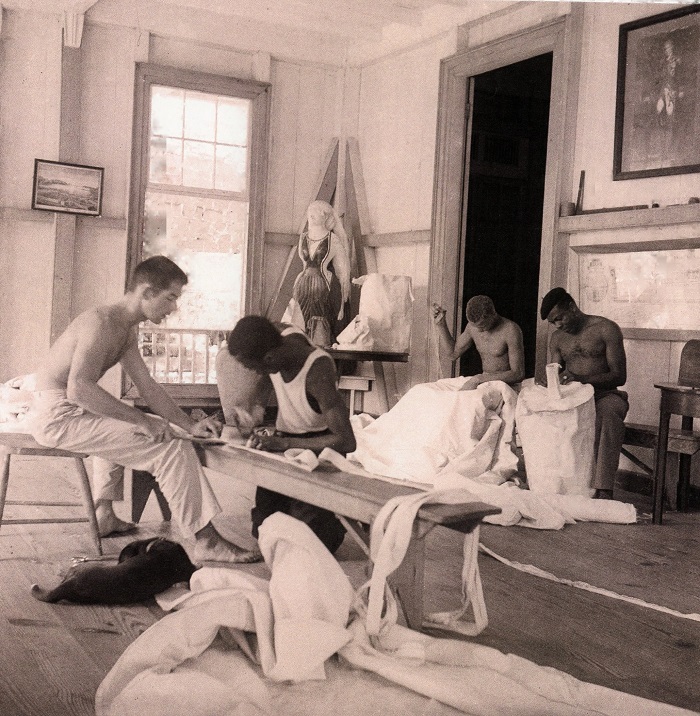 And that craft remains a vital part of the Dockyard today. A&F Sails is located in the Dockyard, owned and operated by the Commodore of the Antigua Yacht Club, Franklyn Braithwaite. He’s a great guy and has been tremendously supportive of the Salty Dawg Rally.
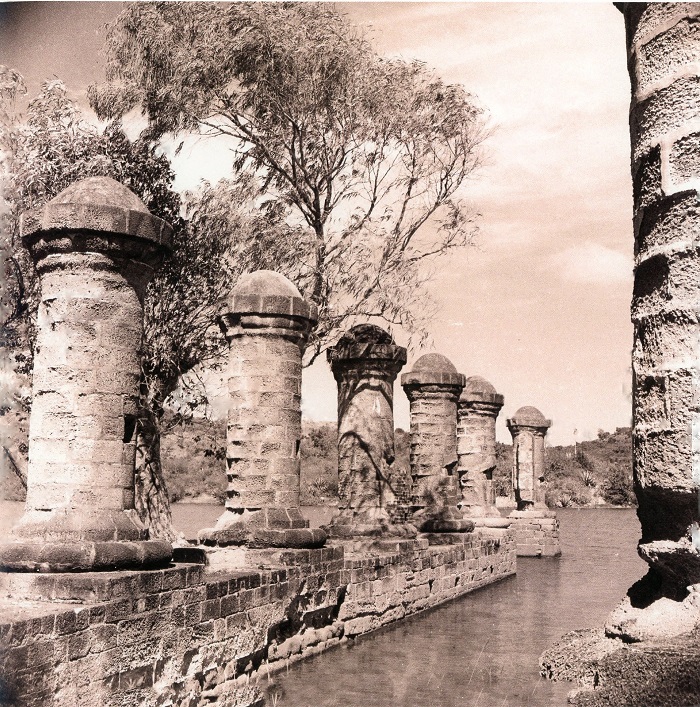
  In addition to Franklyn’s loft, the Dockyard is home to many marine related businesses. These stone pillars, now part of the Admiral’s Inn, were once the base of the loft that took care of the sails for naval ships. In Nelson’s day, the channel between the columns allowed ships’ gigs to row under the building and have sails lifted into the loft for service.
  Today they serve as an iconic backdrop for the
 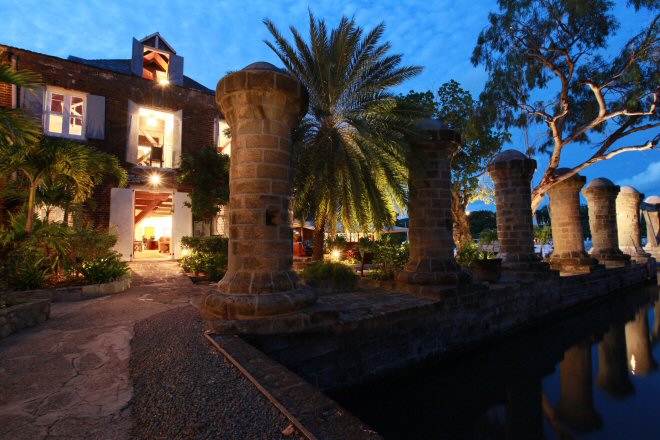 The Dockyard plays a big role in the arrival of the Salty Dawg fleet. We have a number of events in the Dockyard and cap our week of celebration with a dinner by the pool at Boom, part of the Admiral’s Inn.
 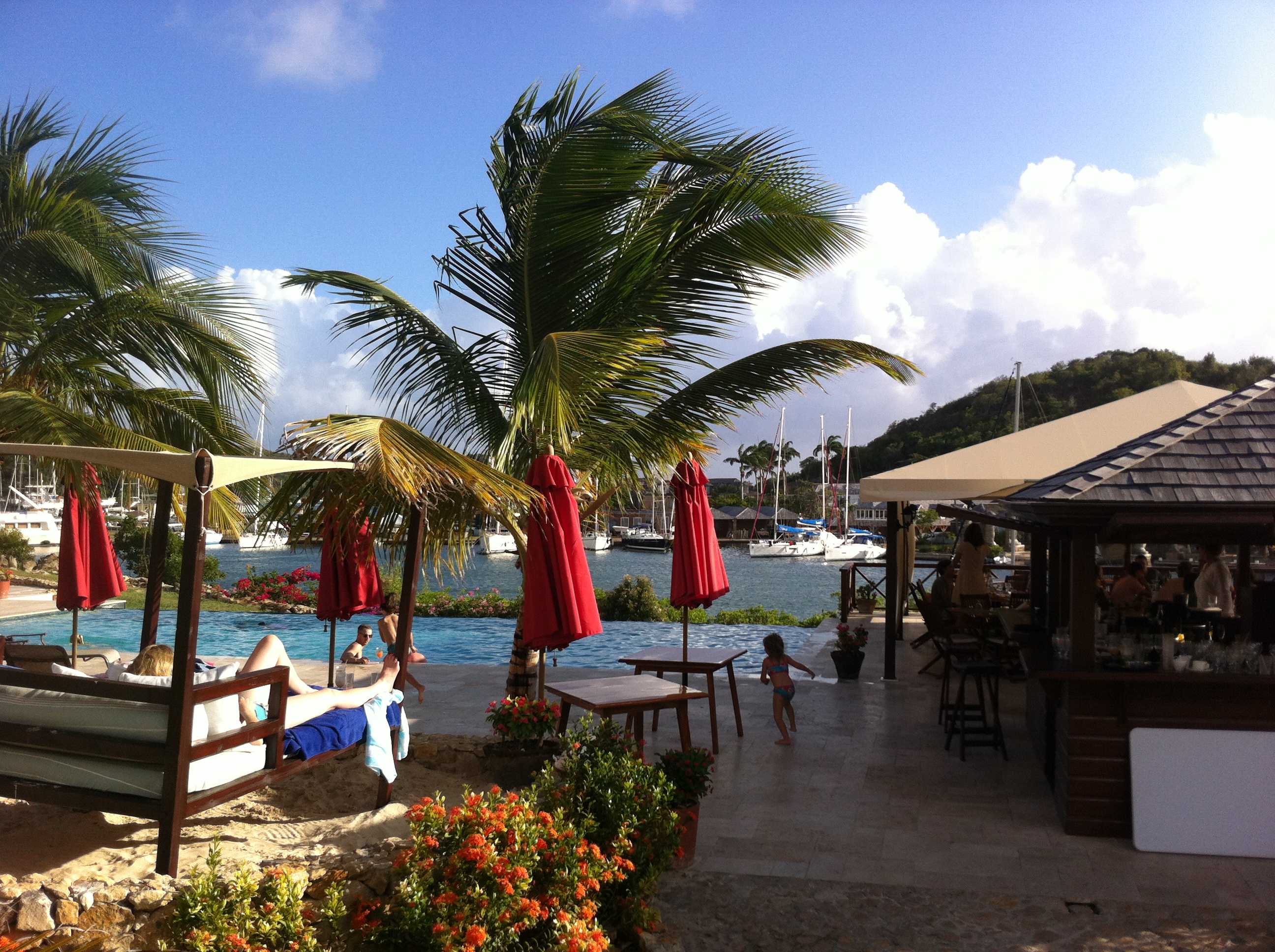 The view of the dockyard from that spot is really impressive.
 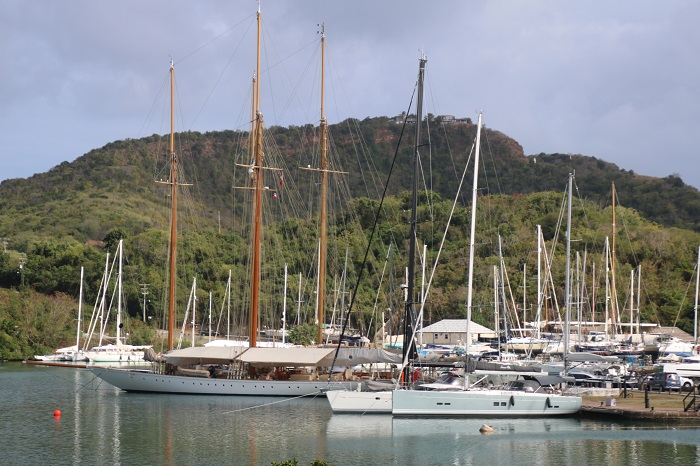 Across the harbor from the Dockyard, is
 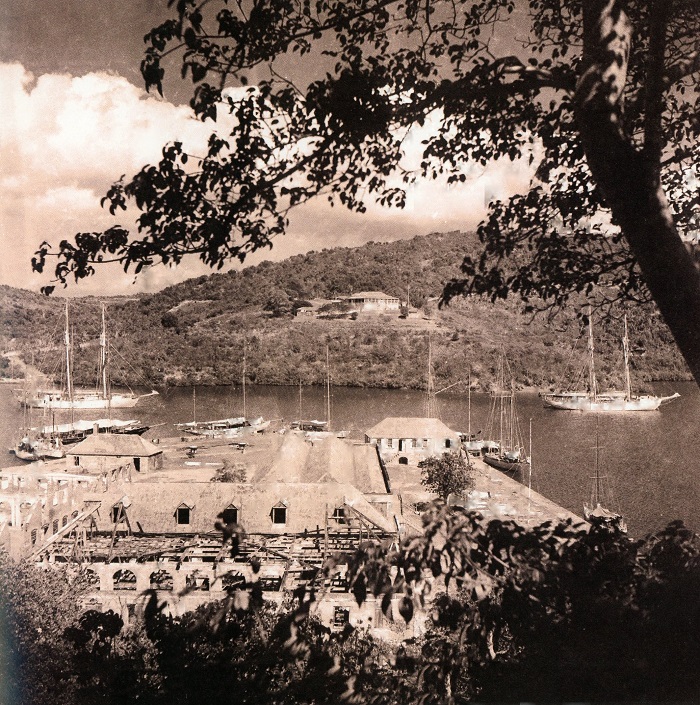 Today English Harbor and Nelson’s Dockyard remain a vital harbor for cruising and charter yachts alike and it all began with the arrival of Commander Nicholson and his family so many years ago.
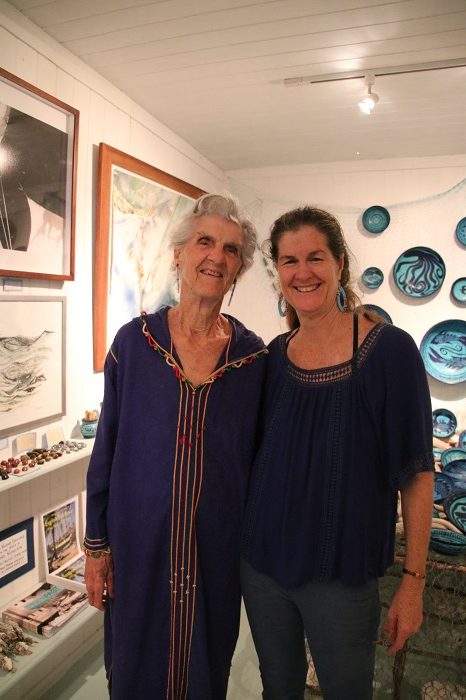 So many years have come and gone since Mollihawk arrived in English Harbor but the legacy remains, a good example of how important the vision and work of even a single family can be.
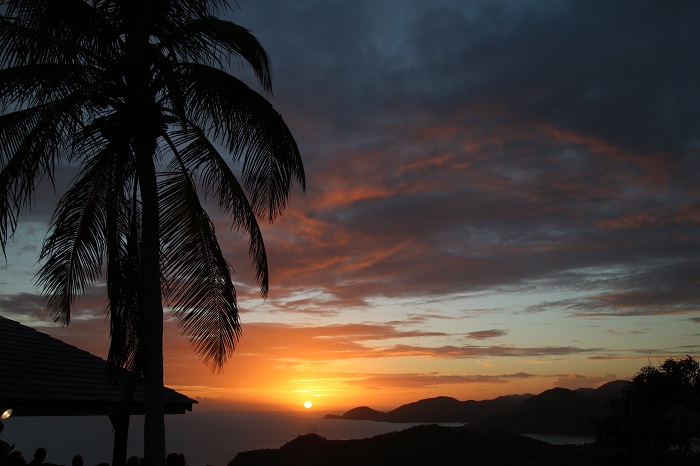 There are a number of options for heading to the Caribbean from the US east coast. Beyond where to make landfall, a key question is about how convenient it is to explore the rest of the islands once you arrive.
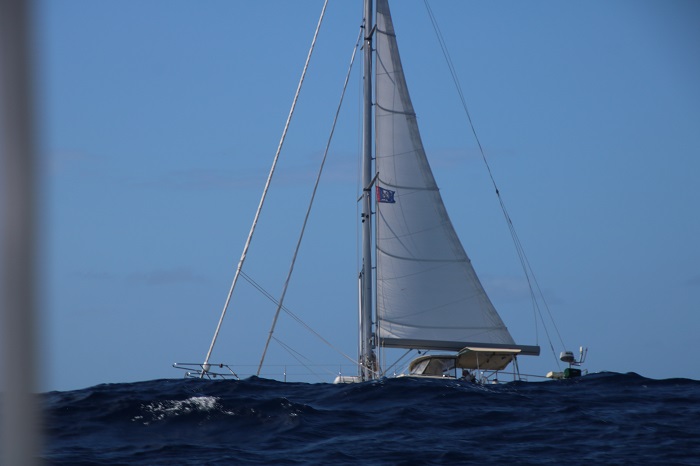 Several years ago, Brenda and I made the run between the British Virgin Islands and St Martin and in spite of light easterlies of only 10kts, it was quite an unpleasant trip, very bumpy motor sailing directly into the wind and waves that made for a VERY LONG DAY that began before sunrise and lasted until long after dark.
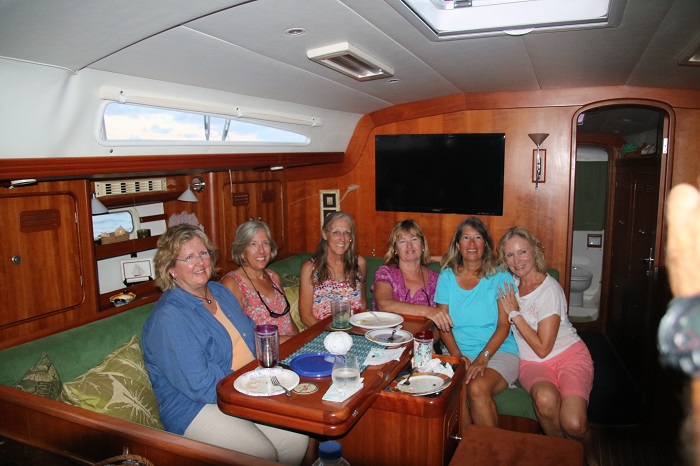 If you need a place to keep your boat when you head home for the holidays, dockage, moorings and marina storage in Antigua are a lot less expensive than you might think and flights home for the holidays are convenient and reasonably priced.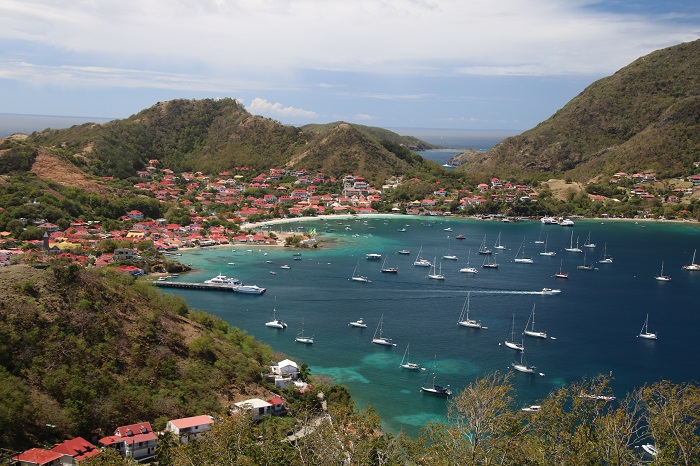
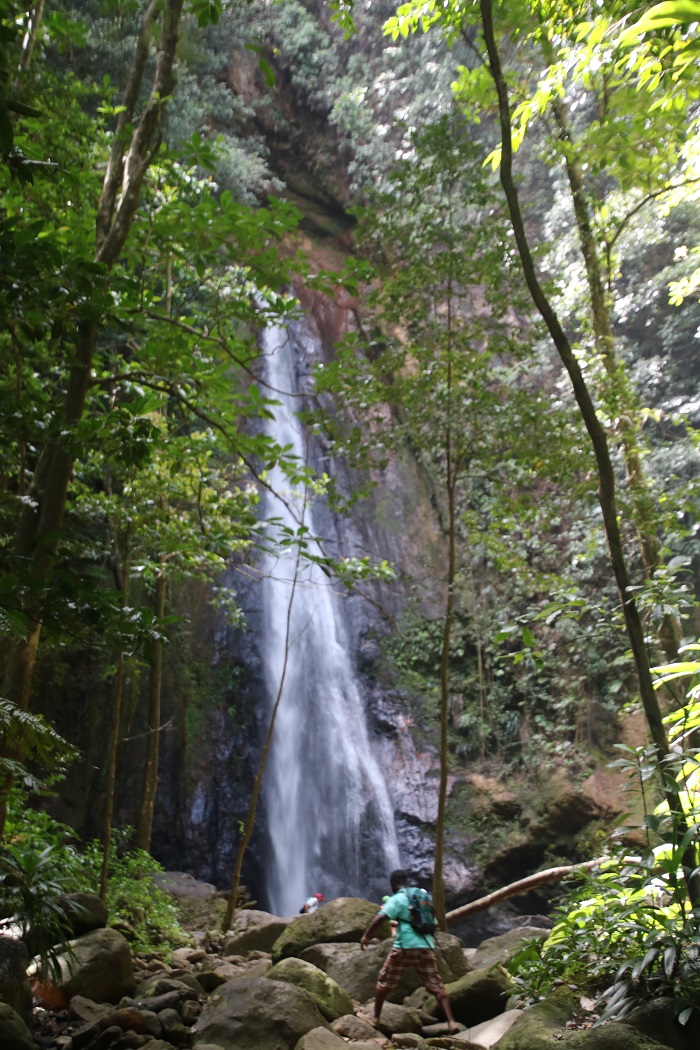
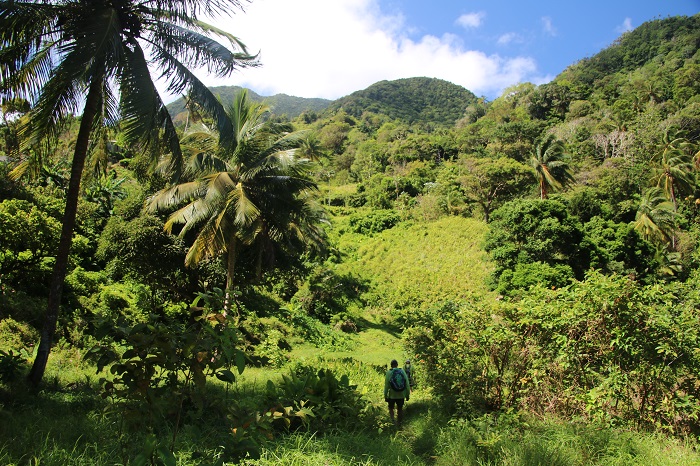 Love waterfalls? Dominica’s got that…
 There are often questions about safety and crime in the Caribbean and while it’s always a good idea to keep your dink locked when on shore and tied to the boat at night, crime is mostly concentrated in certain areas of St Lucia and much of St Vincent. A bit farther south, Bequia and the Grenadines are wonderful and safe.
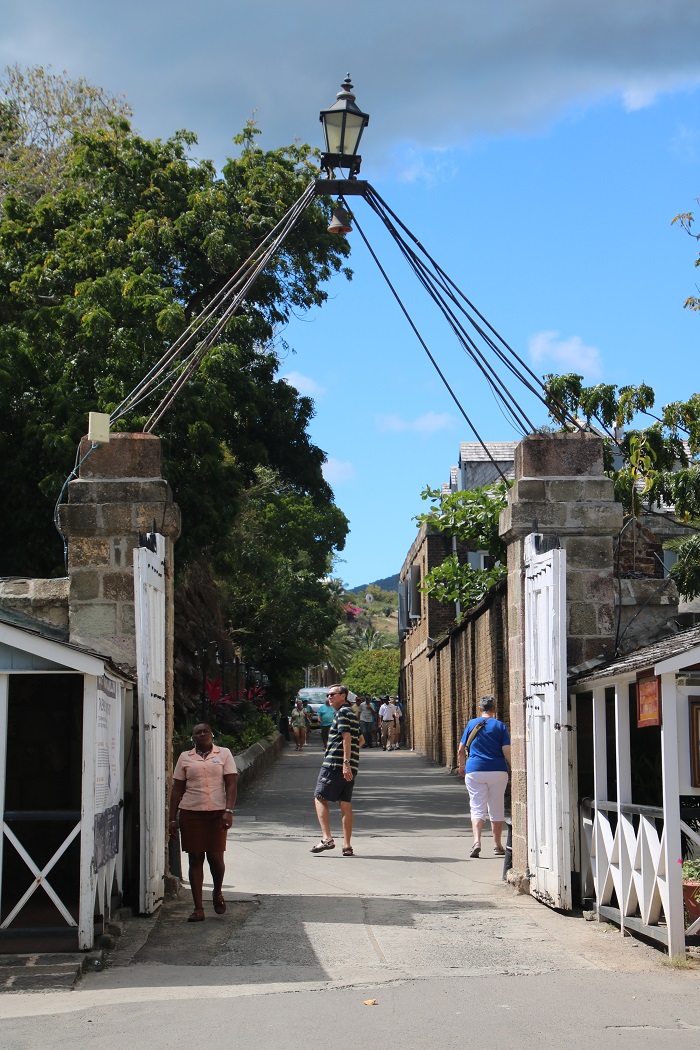 It’s a truly beautiful place.
 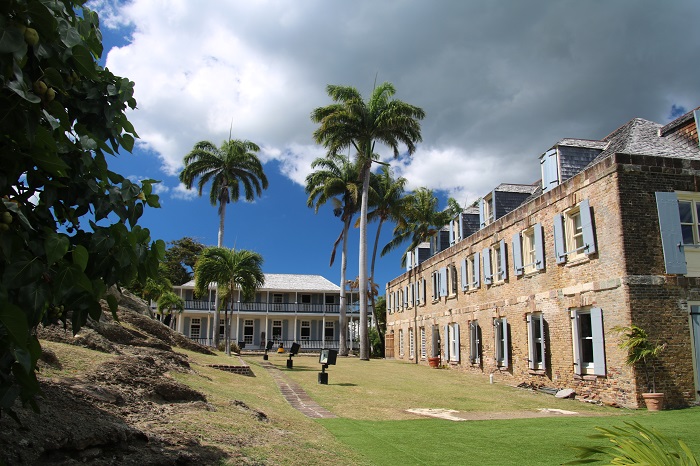 And loaded with fabulous yachts of all sizes.
 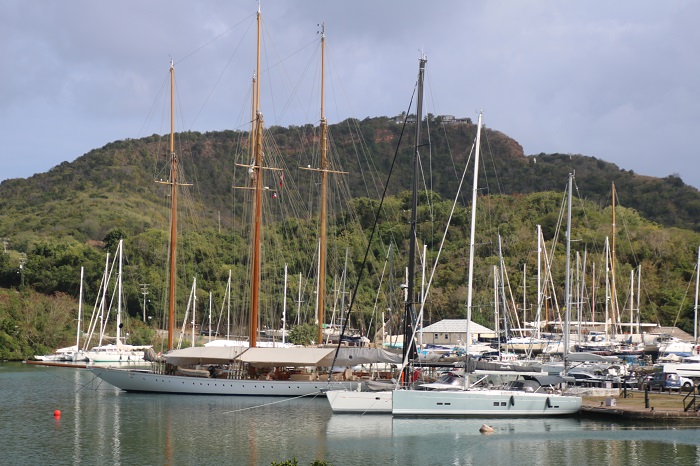 Yes, Antigua is the ideal place to begin your season and from there you can head further south without beating into the trade winds. And, as the season winds down you may choose, as many do, to leave your boat south in Grenada or Trinidad where you’ll be safe from the seasonal hurricanes.
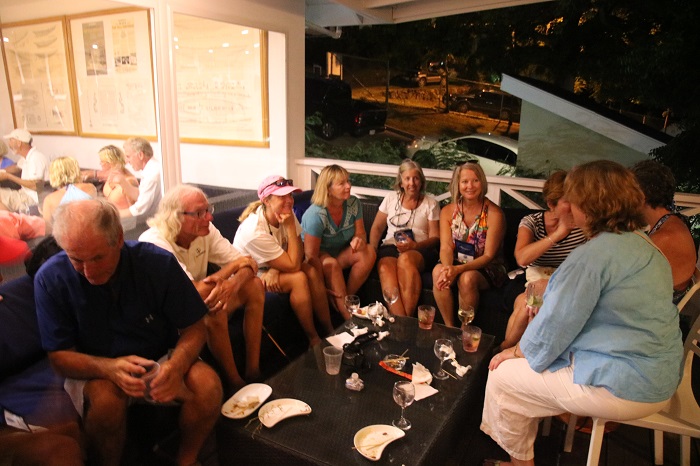 If you’ve been to Antigua in the past you know that what I am saying is true and I am sure that you won’t be disappointed by your next trip. If you are new to cruising the area, trust me, making landfall in Antigua and tying up in historic Nelson’s Dockyard for the first time will give you and your crew a thrill to be in a magical place that has hosted sailing vessels for hundreds of years, a
 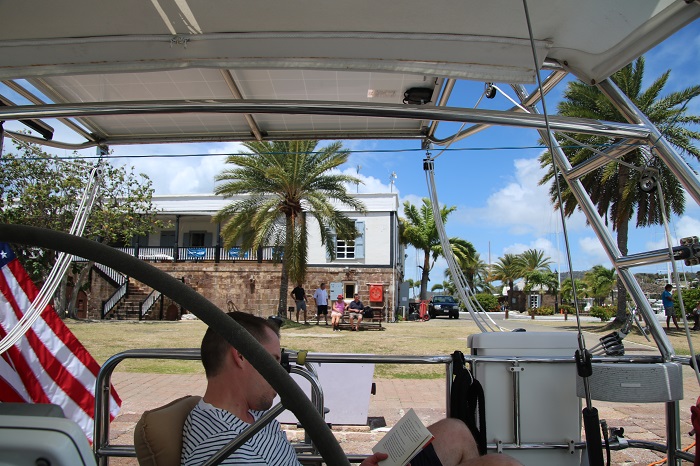 Still need convincing? Contact me, Antigua Port Captain for the Salty Dawg Rally, SDSA board member and I’ll answer your questions. Believe me, if Antigua wasn’t such a great spot, I wouldn’t be spending so much of my time working to make your arrival a great experience.
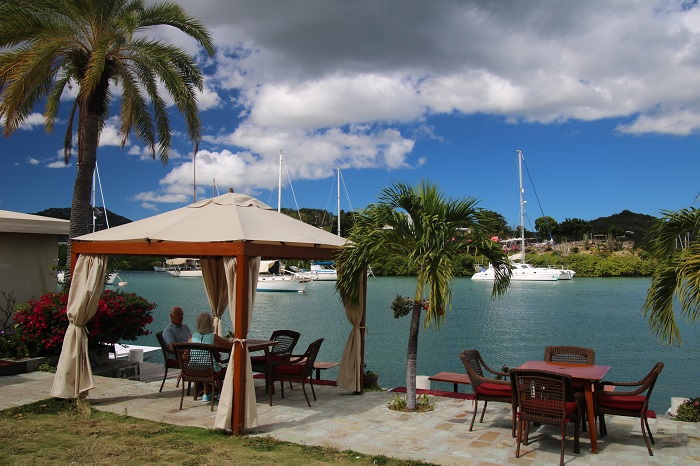 Or perhaps for a glass of wine as the sun goes down.
 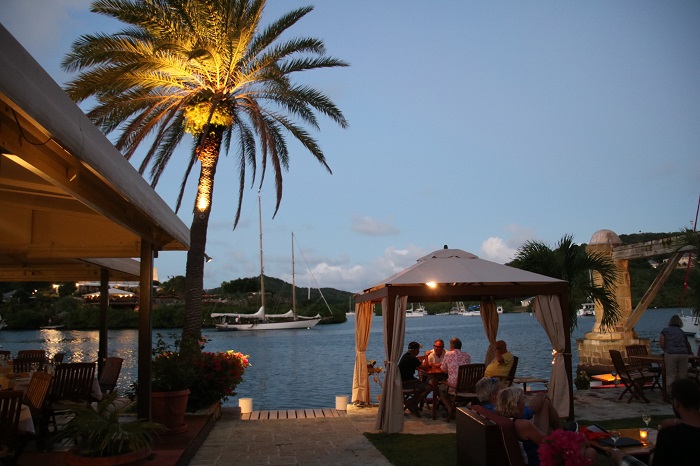 Pandora will be in the Dockyard waiting for you.
 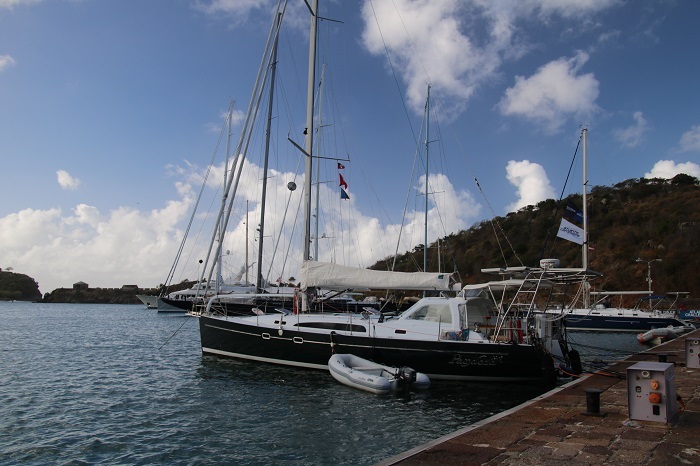 Well, that’s assuming that you don’t get there first.
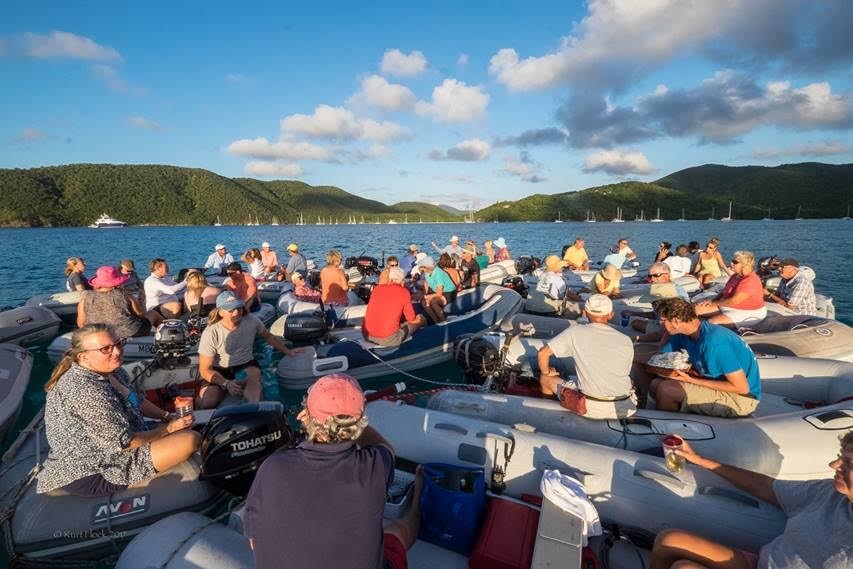 So, why would you miss out on this?
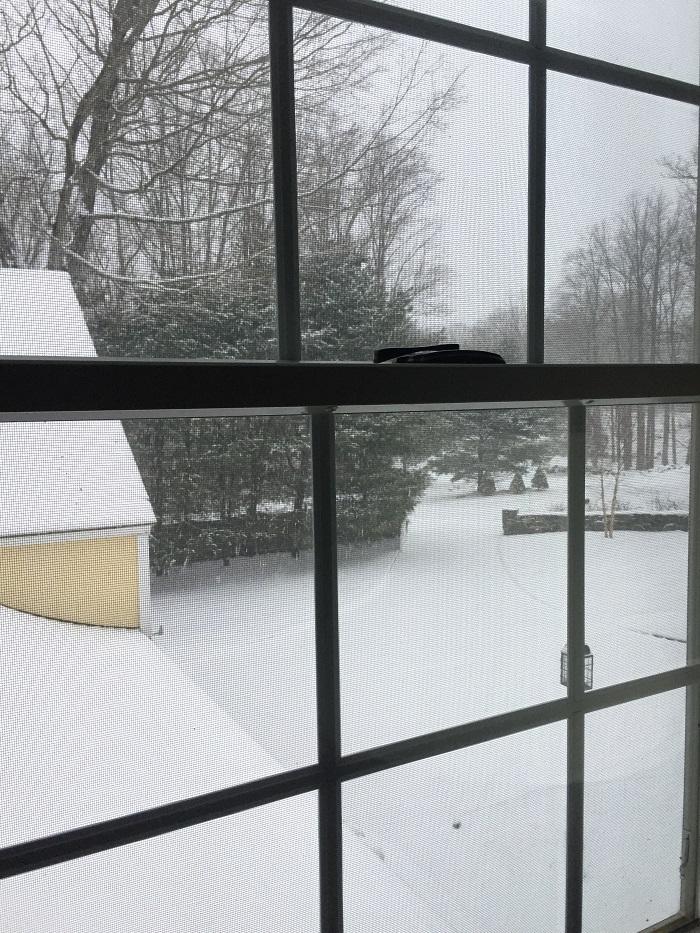 Beautiful yes, in a wintry sort of way. Me, I prefer this instead. Soon enough. It’l get better in May.
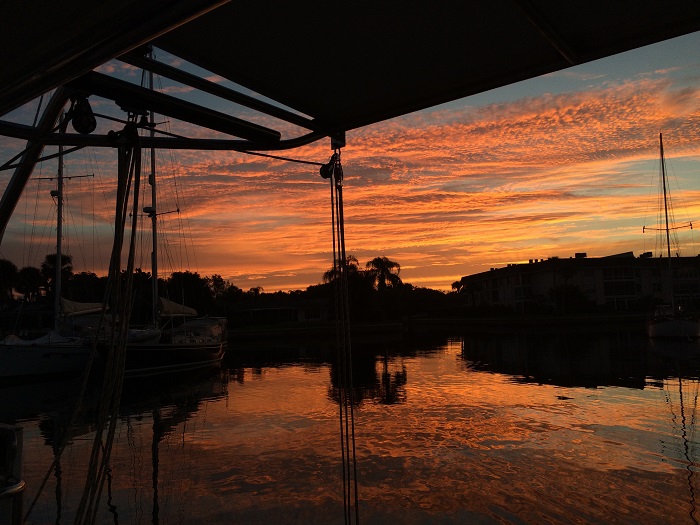 Yes, it’s been tough for me to be here in CT with the sub-freezing weather for months now but at least I have been spending a lot of time in the the shop with no windows so I can’t see outside, the bare trees and… well, you get the picture. Actually, I already showed you the picture.
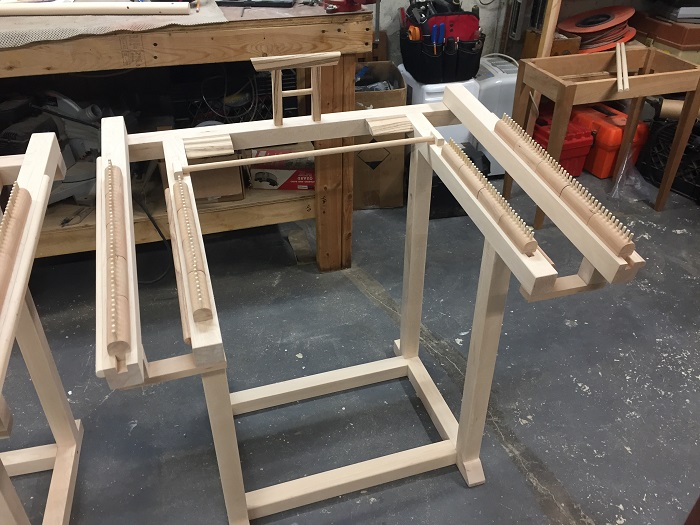 The loom looks deceptively simple, but, trust me, it’s not simple to make at all. I used some exotic materials including zebra wood. I have had a single board on hand in the shop for a decade waiting for the right project to come along.
 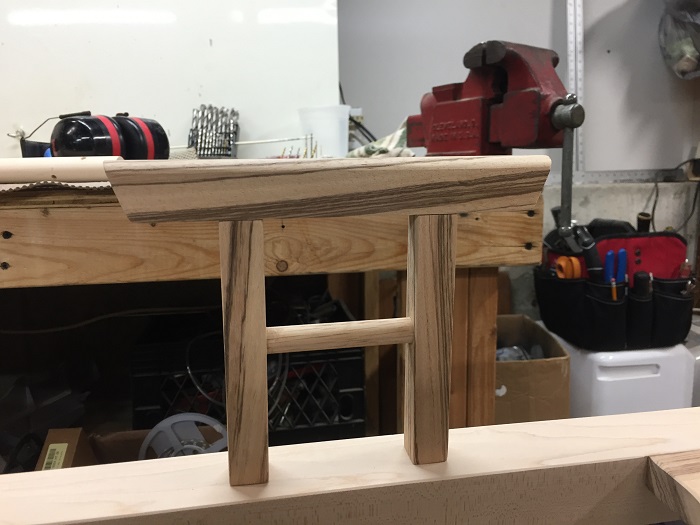 I also had to make 40 of these. They are called Koma and each one has 9 pins inserted into fiddly little holes. Yikes, talk about repetitive motion…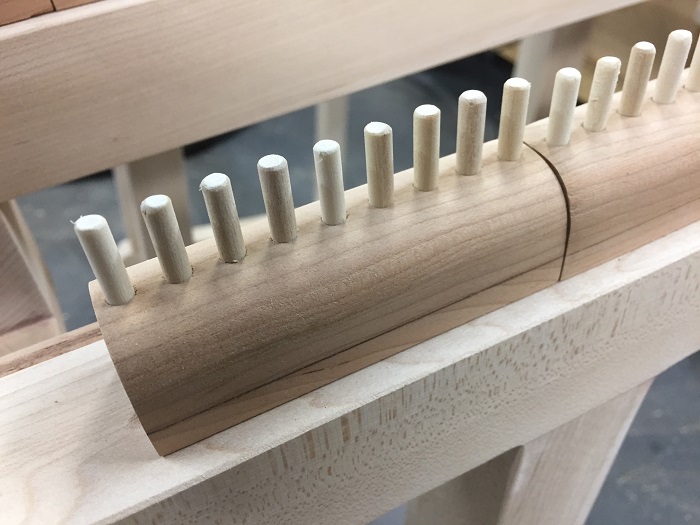
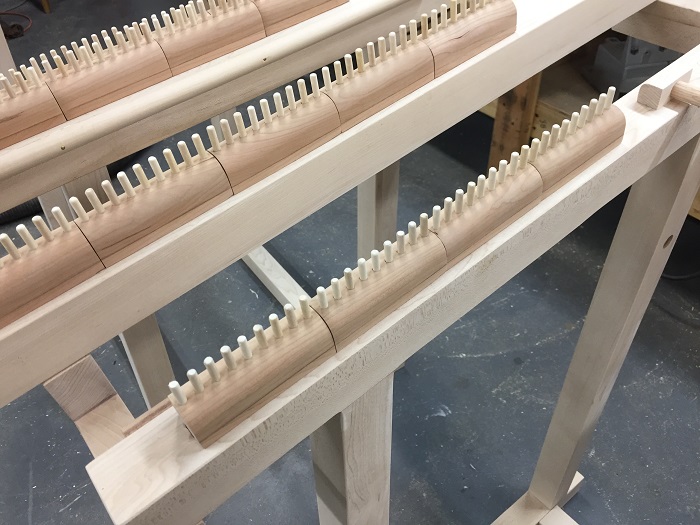 And that’s just one of the two looms I made. To set up jigs to make all the parts took plenty of time so I decided to go ahead and make two of everything. Brenda plans on selling one of them to another weaver.
 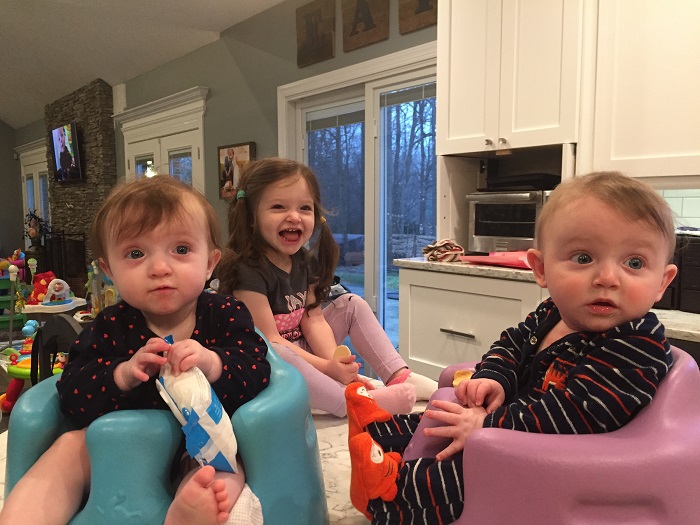 Feed me, FEED ME “Tepe”!!! That’s Tori’s name for me, Grandpa. Double adorable. The best thing about being the oldest is that you get “naming rights”.
 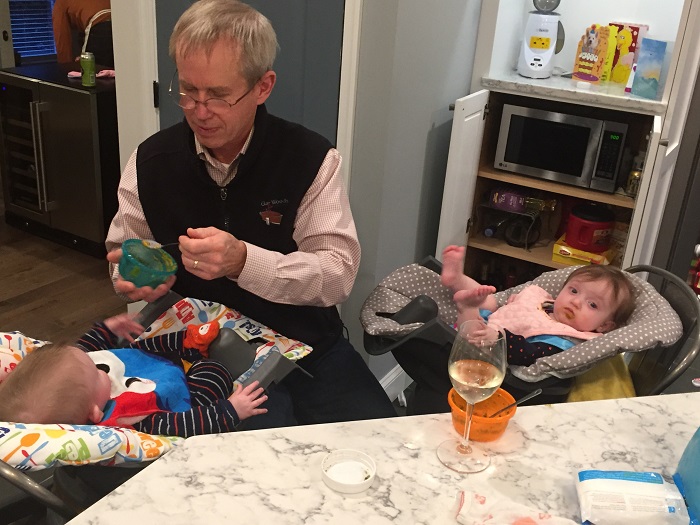 The morning after we returned home from our visit, Brenda and I both were struck by how peaceful it was to have coffee and read the paper in ABSOLUTE SILENCE. We miss them but not until after that second cup of coffee and an hour spent reading the paper. Such are the joys of being a grandparent.
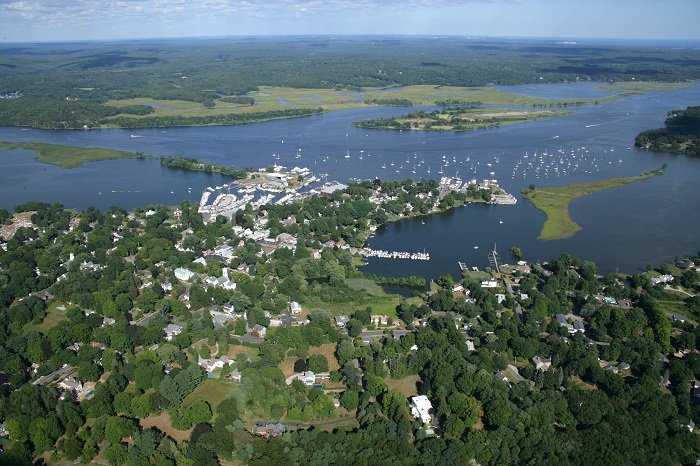 But wait, there’s more… I’ve been asked to give a talk on
  Other than that, I’m just hanging around waiting for the crocus to come up hinting that spring is just around the corner. And, now that the “takawhatervers” are nearly done, I can turn my attention back to Pandora so that I’ll be ready in time for some summer cruising.