


Yup, going to Antigua soon. And how fast can crabs run?
In my last post I reported that my crew had problems with their passports, both of them, with expiration within the minimum required six month window. However, with some fast footwork and phone calls to Antigua, they were given the “green light” to come anyway. I fully expect that we will encounter some resistance in Antigua when we check in but we “have names” and will say that we were told that it’s AOK.
Anyway, that’s all set for now. I guess all I can say is “details to come”. “Yes, officer, most excellent immigration person, we have flights booked to go home in a few days. Not to worry we will be gone before our passports expire.”
Today I address the Salty Dawg fleet regarding our arrival plans for Antigua, checking in and other mundane issues. I’ll also talk about the week of events we have planned to celebrate our arrival. I’m here to tell you that I am really excited about sharing all that.
It seems that we also have a pretty good number of kids on this trip and I’ll be reaching out to my contacts at the Antigua Yacht Club to see what we can come up with to keep the “younguns” happy. That should be fun.
Yesterday I received a note from my contact Andrew at the North Sails sail loft in Antigua. He’s putting on a reception for our group which I am sure will be great fun and now it’s going to be even better. He’s proposing that we have “crab races”. Yes, crab races. “So, Bob, what are crab races? What sort of crabs do the racing and how long is the race?”.
I have absolutely no idea but he sent me this photo of a “race”. 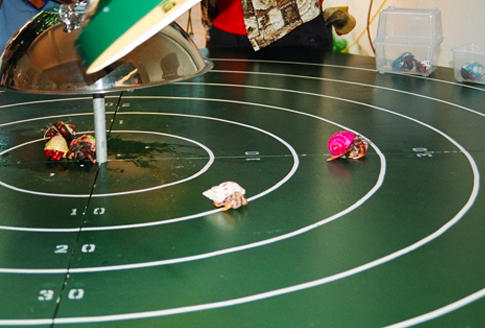 As near as I can tell, the pink one is winning, This sounds like fun and probably even more so after a few rum punches.
We have a full week of events planned and I’ll surely be gushing about each of them here as the week unfolds. Wish me luck. I’m all about Antigua. Can ya tell?
From your end, you will be able to follow the fleet along as we make our way south as each boat will be checking in multiple times a day with a GPS tracker. The page with all the boats listed will look something like this with tracks of the 70 odd boats that are making the run to various ports south. 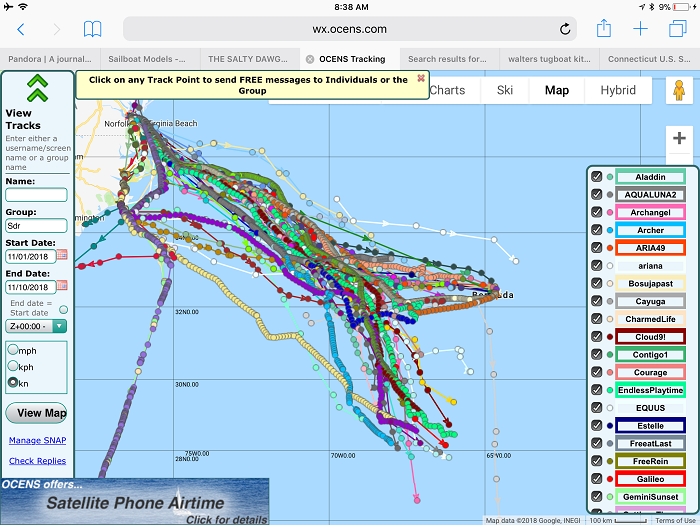 The largest group is the one going to Antigua and perhaps after my scintillating talk today, perhaps even more. That’s me, ever hopeful…
So, the page you should bookmark and refer to day and night by clicking here. When you open the page put in SDR for the “group” and see everyone or just Pandora under “name”. You can also select specific date ranges or just opt to see each boat’s most recent position.
Another option is to follow this link to see Pandora’s track alone on my Garmin page as I will be putting up a new position note every four hours for the duration of the trip. You may have to zoom in to see where I am as the page often opens up with a “world view”. Once you zoom in you can click on each position “spot” and see what our speed was at that moment.
But wait, there’s more!!!
I also plan to put up posts, perhaps as often as daily, about what’s going on aboard Pandora as we make our way south. Alas, no photos as my SSB modem is PAINFULLY SLOW so words only. If you want to send me a note along the way, feel free to send a note to my “at sea” email, WDG5288@sailmail.com. Remember that this is SLOW connection so please choose your words carefully. Als0, if it’s rough I may not be in the mood to write. If you want to get a “ping” when I post, sign up with your email.
We don’t know yet when we will be leaving as the weather picture isn’t clear quite yet. It is important that we wait for a good weather window to make our run across the Gulf Stream, which can be really nasty when conditions are not right. Not to alarm anyone, but they don’t call the area around Cape Hatteras the “grave yard of the Atlantic” for nothing. Don’t worry, we will be careful.
So there you have it and today we begin our daily weather briefings so I expect that I will be able to put up more details soon.
And about that crab racing and exactly how fast can they run? I guess we will both have to wait to find out.
 Well, perhaps it will be more than a few hours. As they say “time heals all” well, most of the time anyway.
 I had mentioned that I put on a new vane steering, which I used for a while on the run from Essex to Annapolis. I still have to figure out to balance the boat better so that it can keep a good track but it did work quite well when I set up the boat properly. Details to come on that point. Here’s a shot of the unit, mounted on the stern, sans the big red wind vane that goes on the top of the unit when in use.
 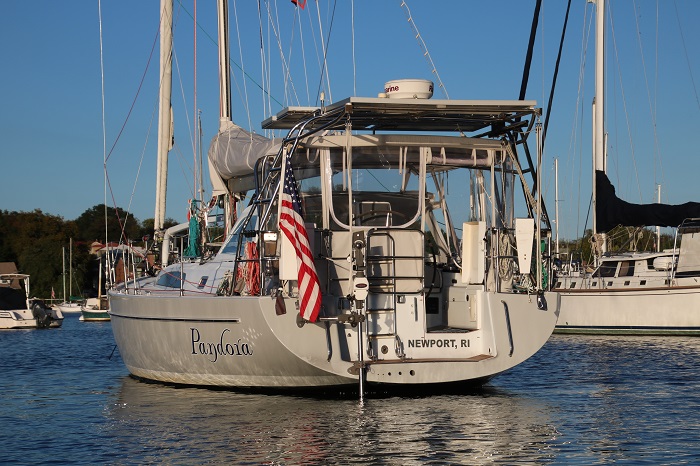 In the creek nearby was a Pearson Invicta yawl, sister ship to my old Artemis. I have always liked the lines on this design, penned by Bill Tripp back in the early 60s.
 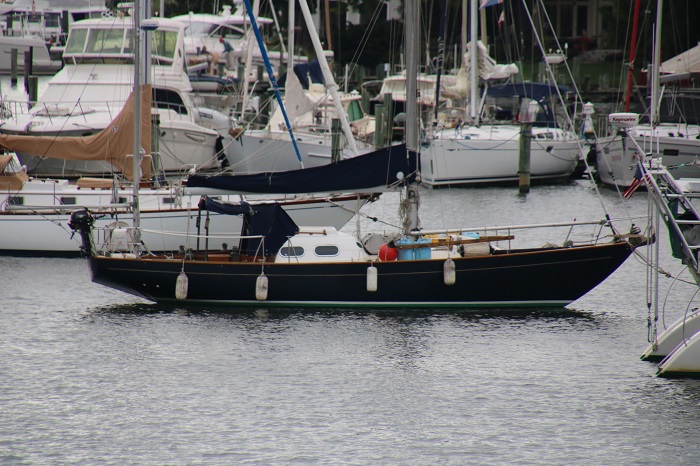 Nearby a smaller sistersjip, a Medalist, somewhat smaller but in perfect shape. I was told that the owner of this beauty purchased the boat new.
 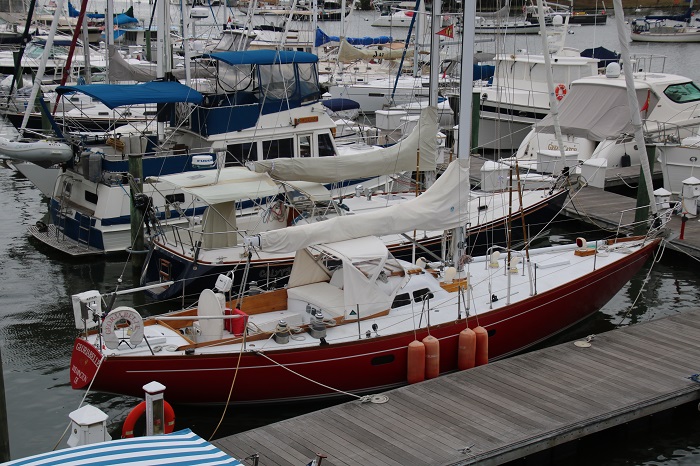 As a member of the Essex Yacht Club, I was able to register to use the facilities at the Annapolis Yacht Club and enjoyed a meal there with Brenda and more than a few drinks at the busy bar. The clubhouse burned to the ground a few years ago and has been completely rebuilt and is better than ever. It’s a spectacular venue.
 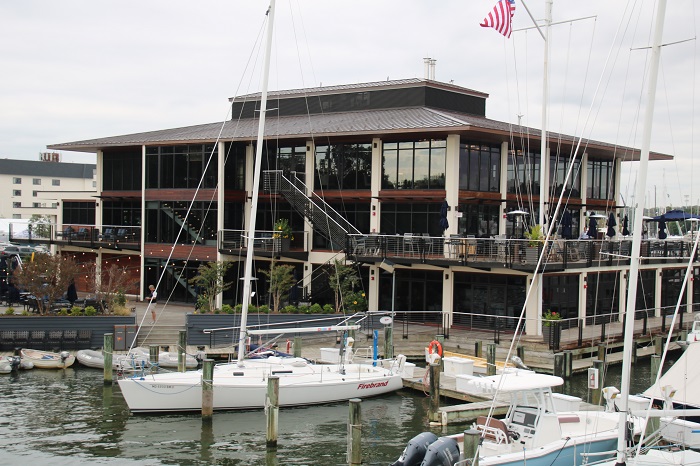 The burning of the clubhouse, sparked by a short on their Christmas tree, was a tragic turn of events with so much history lost.
 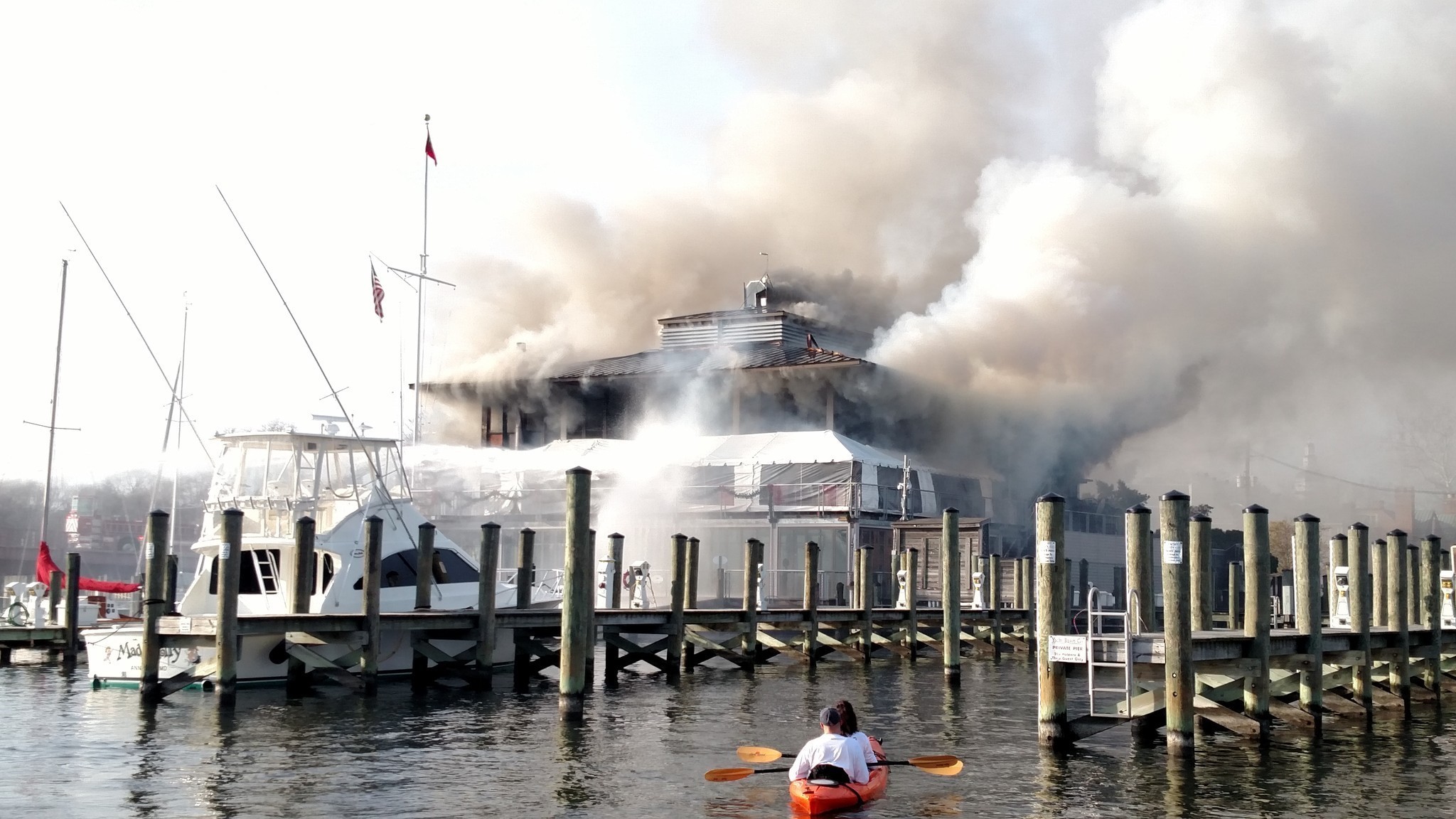 However, it’s back and more beautiful than ever.
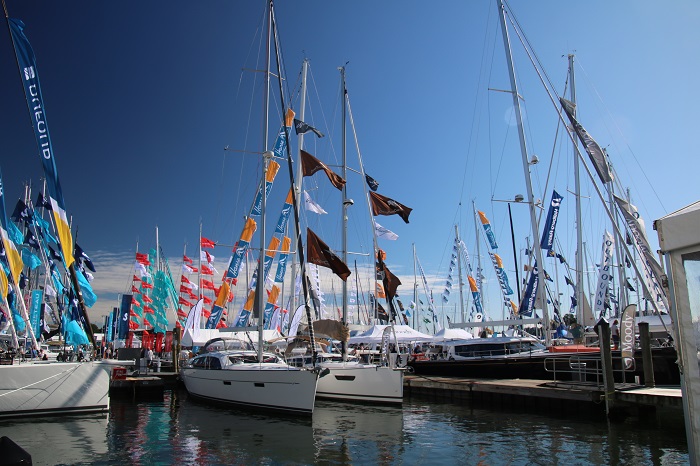 We’ve heard a lot about global warming and while some seem to view it as a “hoax”, it seemed real enough when a particularly high “spring tide” came up during the show.
 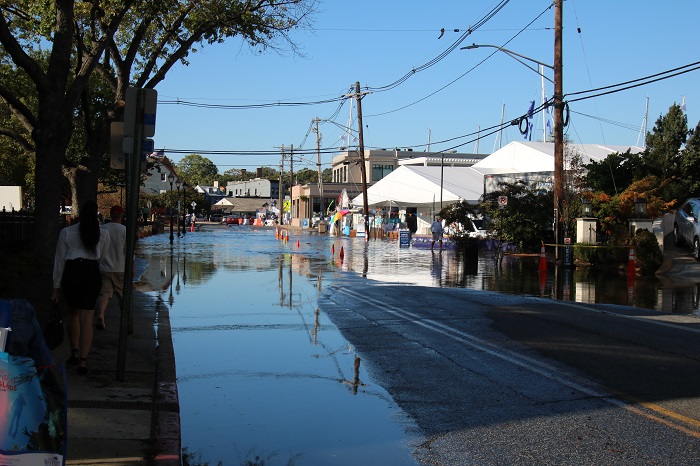 Flooding downtown Annapolis has been a problem for years during storms or when the wind is particularly strong from the south but this is the worst that many have seen and I expect that it will only get worse as the years roll by. In the 50 years of the show, it’s the first time flooding was so bad that they had to close the show early on two days.
 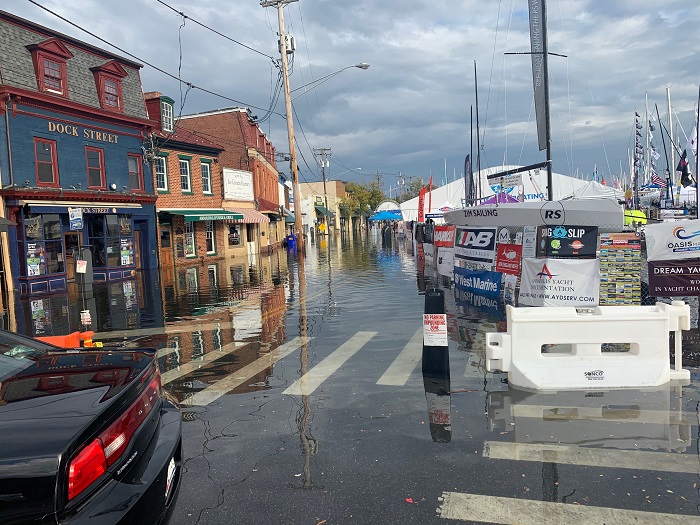 Even Alex Haley was up to his knees. I wonder if the kids at his feet lost interest in his story as the water reached their chins.
 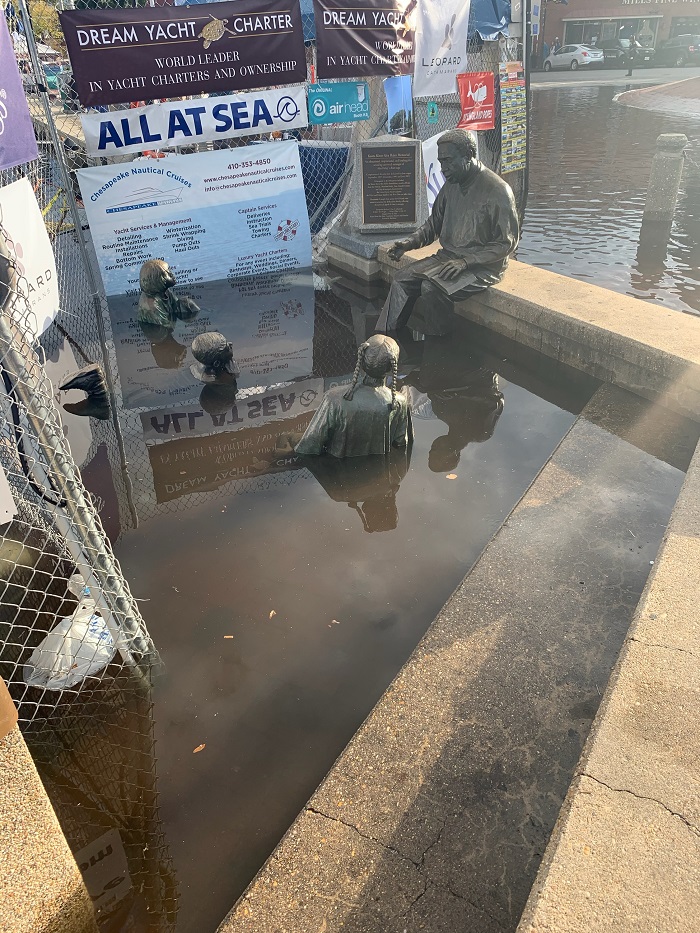 And speaking of Alex, author of the famous book Roots, this quote somehow seems particularly fitting given the threat of rising seas.
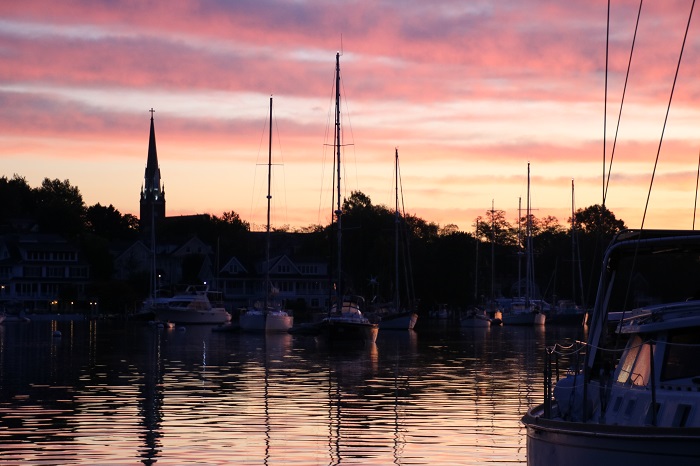 Winter is on the way but this is what is ahead for Pandora.
 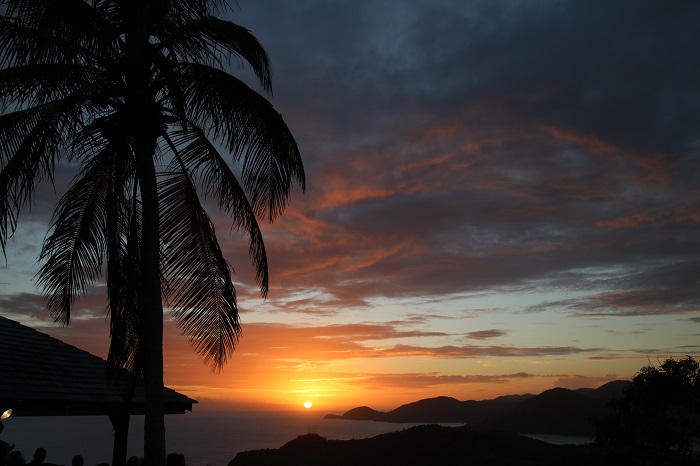 Yes, this is what a sunset should look like in the dead of winter.
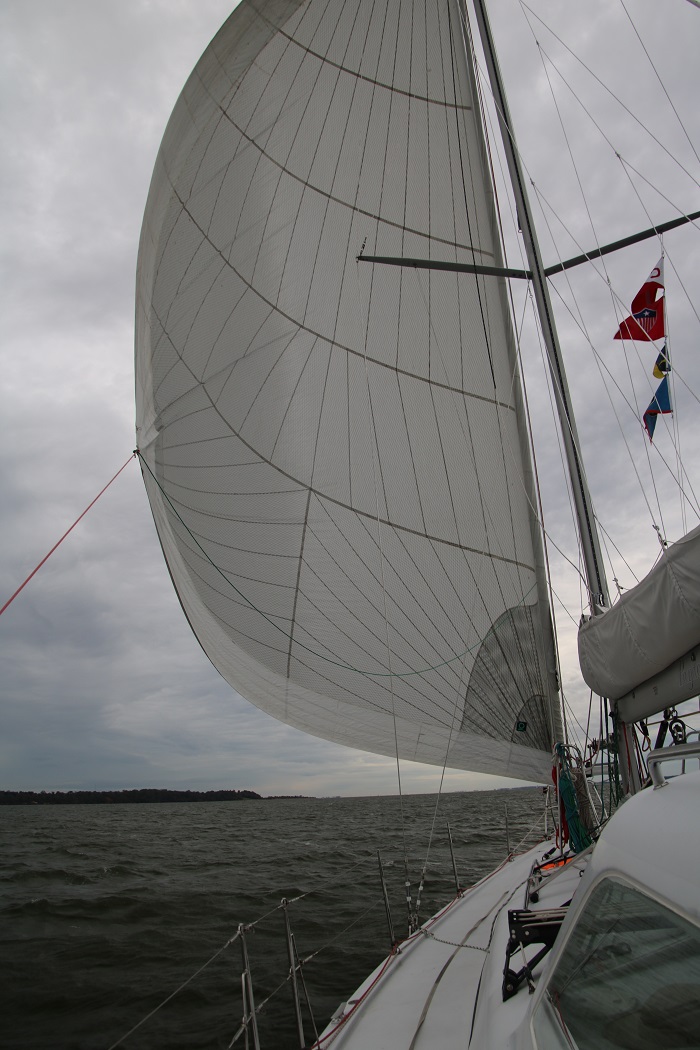 Today we are on the final leg of our delivery from the Essex Yacht Club where she was on the dock for nearly a week as we packed her with provisions for our winter season aboard. Of course, my little truck, better known as “Pandora’s box truck” did the heavy lifting to the club.
 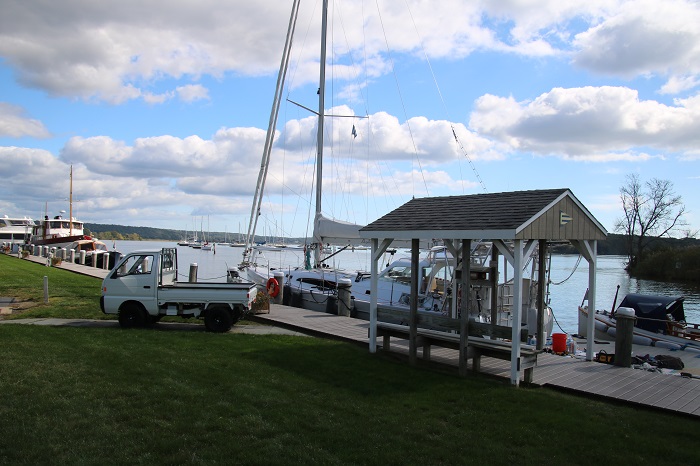 We cast off Pandora’s lines at the Essex Yacht Club on Saturday morning at 04:00 and picked our way down the river in the pitch dark. On board are my crew including Jim, who has sailed with me from the Caribbean along with Shawn, who works for Chris Parker the weather router. Shawn wanted to get some offshore experience and Chris asked if I could bring him along. A fourth, Steve joined us to get some offshore experience as well, Steve has been sailing for years but has not spent a lot of time in blue water.
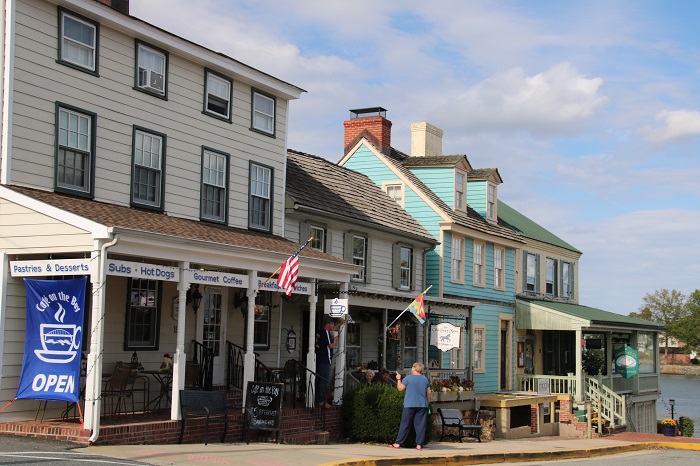 The view from the town green of the harbor shows how quaint a spot it is, with plenty of space to anchor.
 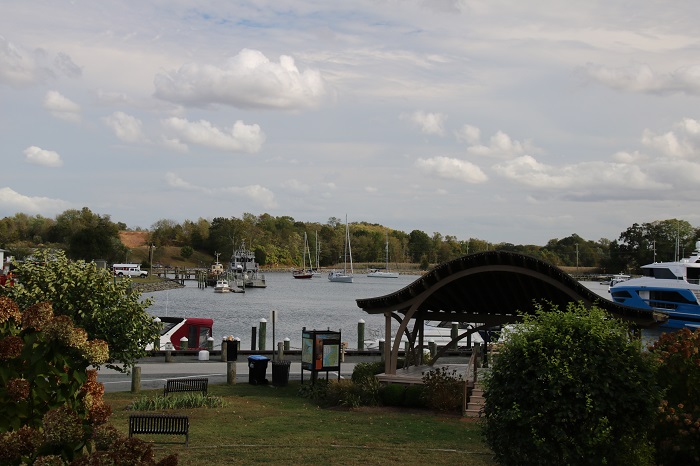 Pandora riding comfortably in this tiny harbor.
 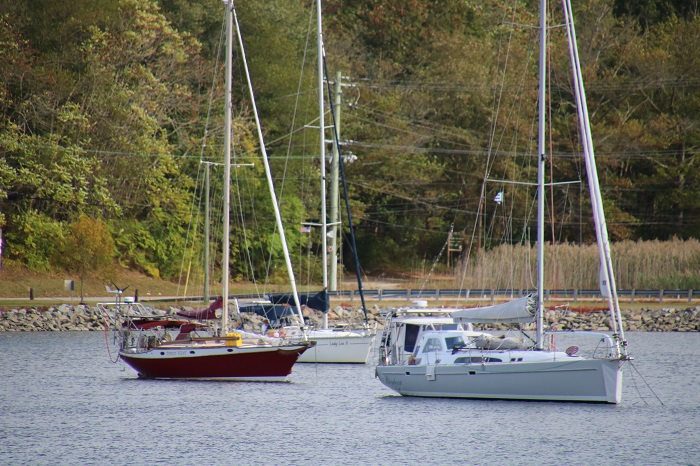 The bridge that towers over the village is a dramatic contrast to the colonial era homes. I’ll bet there was plenty of controversy when that bridge was proposed. On the one hand, it made the town much more accessible so perhaps it was welcomed.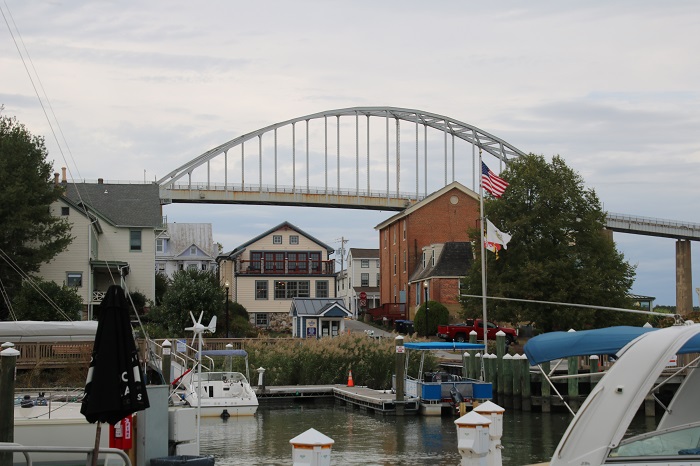
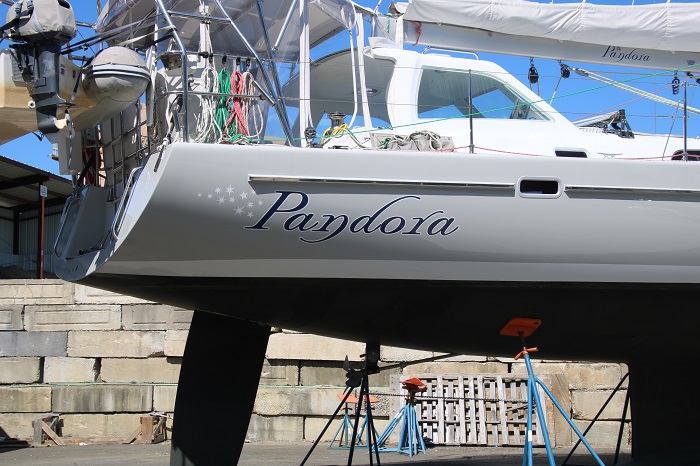 On the port side, it’s fine.
 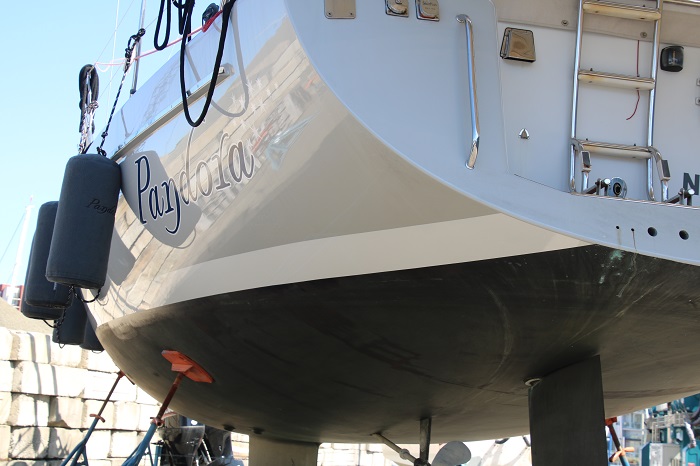 Anyway, I had the boat launched, correct or not, as I didn’t have time to leave her for another week. I don’t know what will happen, but I still owe a small amount on the original job which can probably get it fixed elsewhere if required.
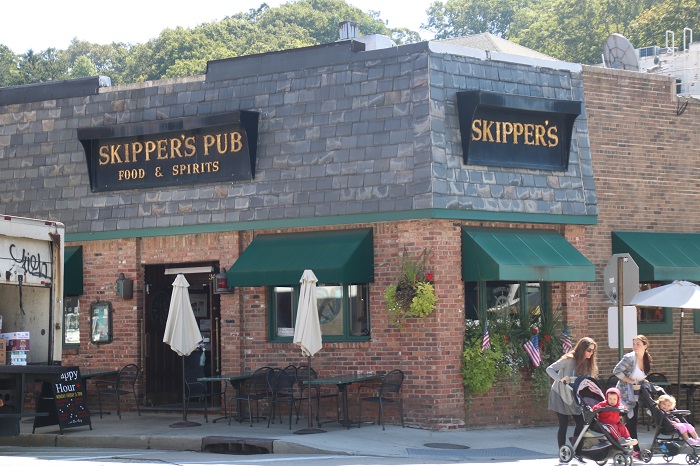 I can’t recall if we had a credit card as it was over 30 years ago and we hadn’t even had kids then. Anyway, we were mortified and expected that we’d be in the kitchen doing dishes to work off our debt. However, they released us and we sent a check. Dick and I had dinner there and this time I had no problem paying my bill.
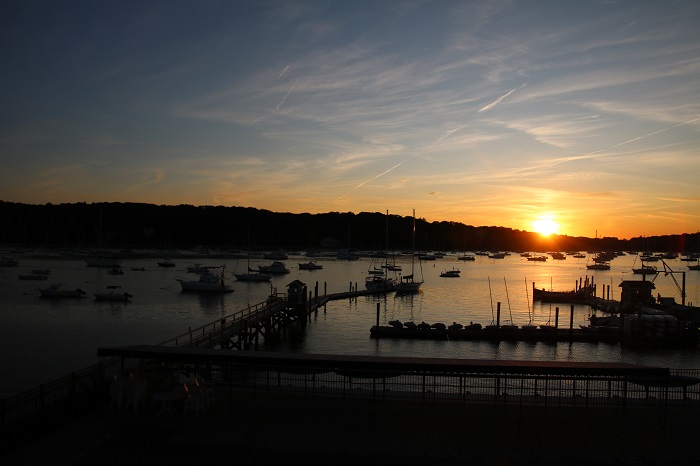
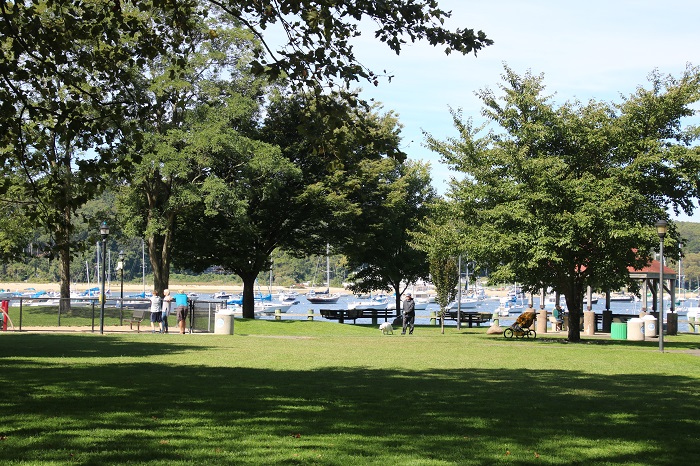 We also had a very nice visit to the Northport Yacht Club and a beautiful sunset.
 The next day we headed over to Oyster Bay, another spot that I haven’t visited for more years than I can count. It’s a beautiful harbor lined with huge homes.
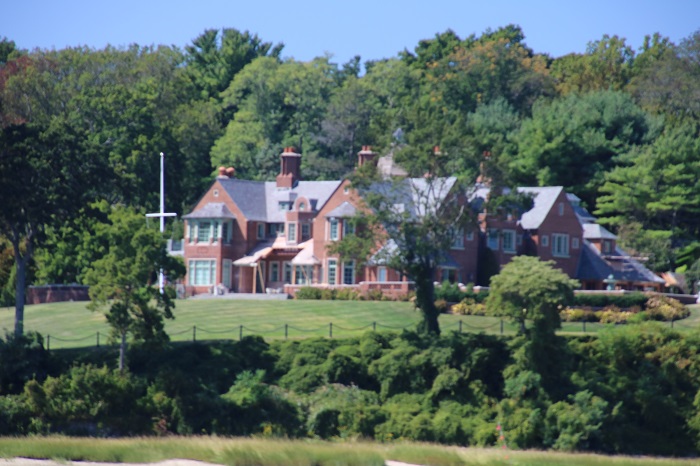 While there are a lot of docks on the harbor, there has been a moratorium on new dock construction due to the establishment of a nature conservancy that took place before Joel moved in. In spite of his best efforts for years, he was not able to get the dock approved.
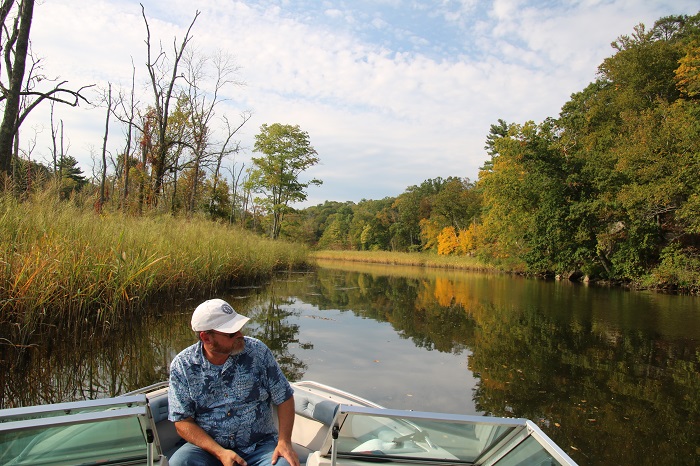
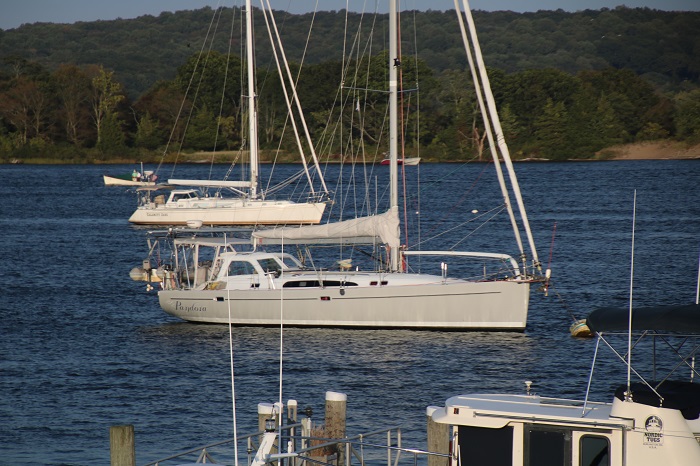 My brother Bill, who lives in PA recently purchased a runabout and brought it to Essex earlier this week. We spent a few hours running around on the river which was great fun. In particular, we headed to Selden creek, a favorite spot of mine, as we have been visiting the spot since the 80s. The only boat we haven’t visited on is the current Pandora as she’s a bit too long to fit in the narrow creek.
 I can’t believe that summer is nearly over and it’s time to begin the migration south to warmer climes.