Sail Pandora

When spring commissioning becomes a refit…

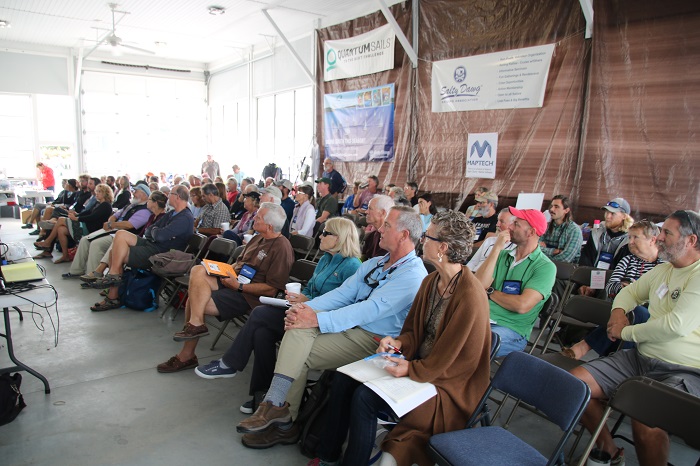
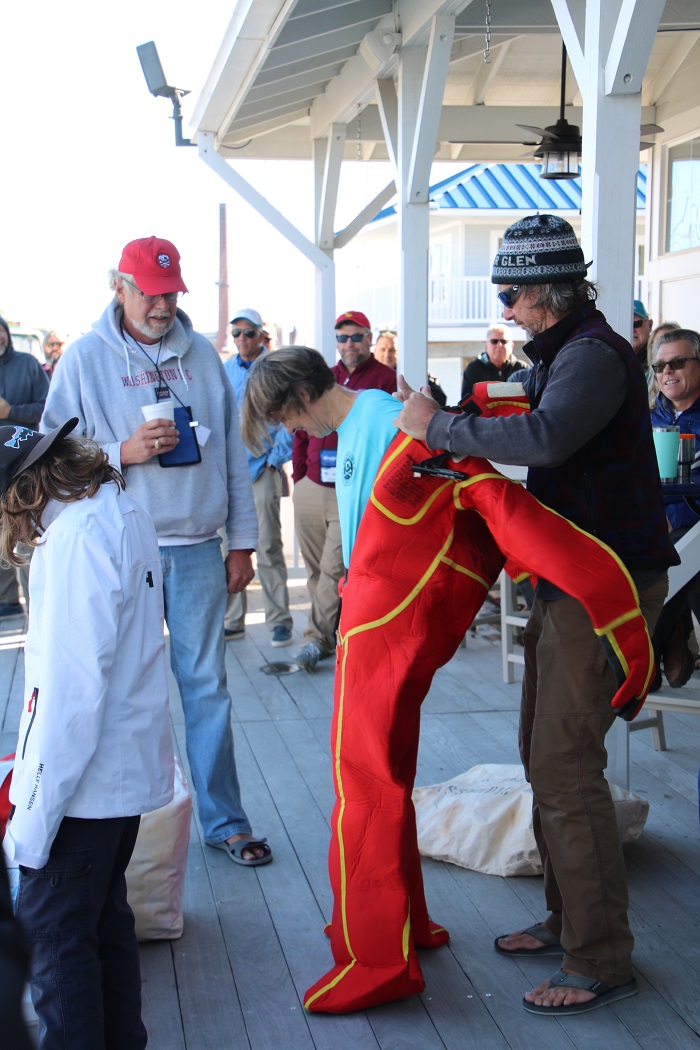
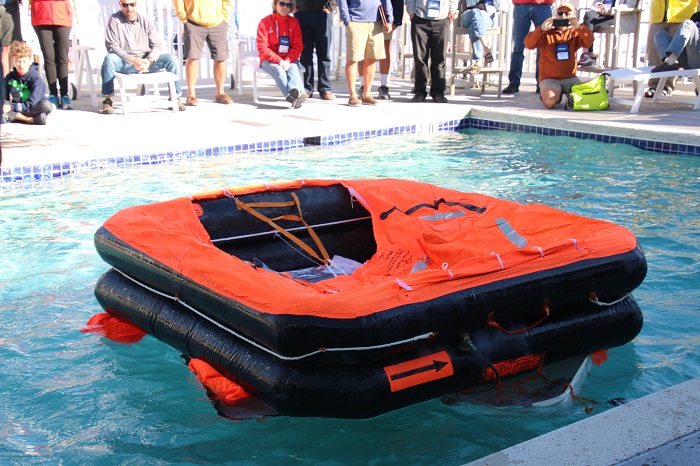
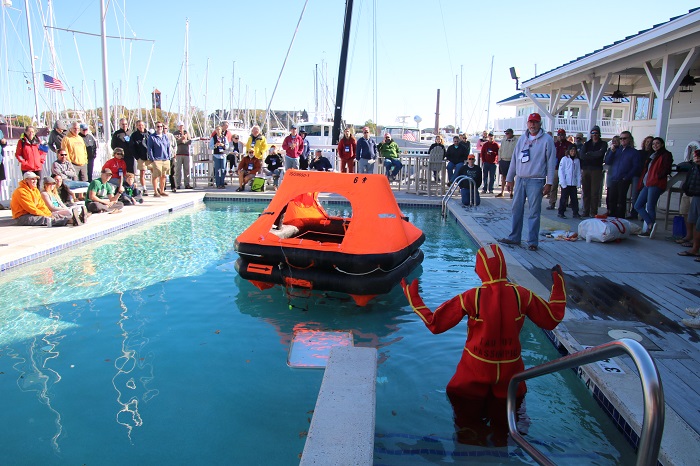
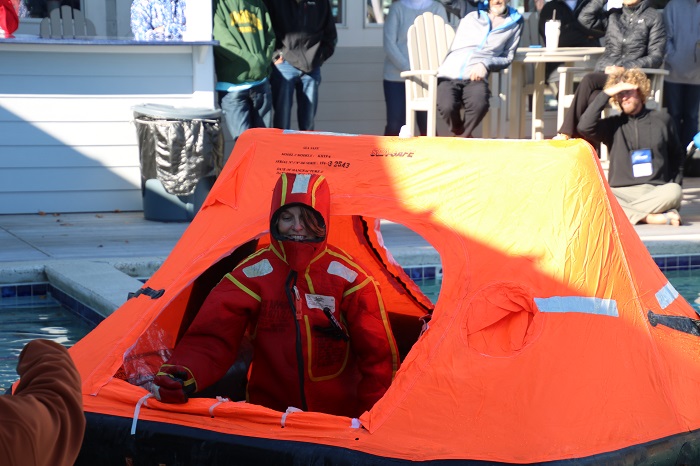
Well, It’s getting close to launch time for Pandora and what a long road and winding road to the water it has been.  Perhaps she’ll go in tomorrow or Wednesday.   Fingers crossed.   I sure hope so, as I want to bring her to my event at the Essex Yacht Club this weekend, the Open Blue Water Boat Weekend.    It’s going to be a great event with a capacity crowd of 100, our biggest event yet in seven years.

Here’s her cover coming off last week. There have been so many projects and new “stuff” since she was last in the water.  The mast and new standing rigging (last fall) is all set up and ready to step when she splashes.  As the owner of the mast to the right from a J30 said to me, “that’s a mast and a half, you’ve got there.”   I agree.Her cushions and area rugs are clean and ready.  I was grossed out to see the nasty dirt that was sucked out of them and equally amazed with how bright and new they look. It took a surprising amount of time to do this seemingly simple job.  That’s a lot of parts.  The unbelievably frustrating and painful mast step fix is done and back in place.  That’s if a lowly step can be beautiful, this one is.  Well, it’s beautiful to me given the months of sweat that went into the effort of summoning the nerve to do it, removing the screws, cleaning up and refinishing and putting it back in place. Look simple?  Lest you forget, dear reader, this is what I started with.  All the old halogen and fluorescent fixtures are gone, panels recovered with new vinyl and fixtures replaced with LED lights and lovely LED white/red dome lighting.  I expect that these lights will be somewhat brighter.  That little detail should be a big hit with Brenda who has long suffered with poor lighting while attempting to do delicate hand work in the evenings. Below, two of the nearly 20 new lights.We will be warm and toasty while we are under power, on those evening passages in the fall and while we are in Maine this summer, compliments of our new engine driven heater.  Brenda will love her potty again with her shiny new evacuation pump, one of the three pumps that it takes to run her potty.  Who would have guessed that a potty needs three motors?Dining aboard will be just a bit more civilized with our newly varnished dining table. And there should be fewer, I hope none, drips below as I have pulled and re-bedded just about everything that went “drip in the night” and a few that didn’t, just to be sure. And, speaking of drips, the newly installed drip-less prop shaft seal, all blue and shiny and newly “restored” CV joint, to the right.  That CV joint was a big job, let me tell you.  And that’s saying something as my contribution in getting it done was limited to writing a check, ditto for the seal. I really tried to address every little detail to make Pandora ready to be her best, down to polishing the plexi hatch panels.  If it’s possible to see beauty in a flat piece of plastic, these are worthy now.
And even the tiny details of putting plastic shims under the ends of the solar panels to be sure that they are perfectly level did not escape my attention.  No more aft drooping solar panels for Pandora.  Yes, I know, her stainless needs polishing.  I’ll get to it soon, I promise.And, of course, who could forget newly renewed caulk on the dodger windows.  And that took several years for me to even build up the nerve to tackle.  It wasn’t easy but less daunting than I had feared. And, I even found a way to re-use the old dimmer switch holders, the only way I was able to fit a “round peg (dimmer) into a square hole”, in the bulkhead.  Pretty nifty, if you ask me.  They took a lot longer to do than their humble looks, would suggest.   And, they even have a lovely colored ring around the button, green, blue or orange, depending on which state the lights are in, on, off or dimmed.   So, exciting?  To me they are.New chaps, engine cover and seat, in matching grey, of course. And, speaking of matching, who can forget Pandora’s new “clothes”, a lovely grey paint job.  If you follow this blog, you will recall that I really beat the “color thing” to death, with renderings of her in multiple colors.  Just to be sure.  I even had small panels painted “just to be sure”.  I even have new fender covers on order, monogrammed of course, and in grey to compliment and protect that expensive paint.

Oh, so many things to obsess about, my specialty.

And, under the category of “how did I break that?”, I was working on my binnacle compass the other day and dropped it.  Broken you say?  Not a problem as I was able to purchase repair parts.  However, when I looked for the compass to fit the new parts to, I was UNABLE TO FIND IT, in spite of tearing every conceivable area on board and at home apart, no compass.

I ultimately had to purchase a new shiny compass.  Here it is in place.  Looks grand.  However, if you look closely, you’ll see that the sun cover doesn’t fully retract as it hits the instrument cluster above it.  No problem, all I have to do is to move that cluster up 1/2″.   Isn’t it ALWAYS SOMETHING?   Today’s project.  Well, solving that problem is just one of today’s projects.Alas, all is not lost as Pandora looks great.  Isn’t she shiny?  You can even see my little truck reflected in her so shiny paint.Ok,  I’ve admitted it, I have done plenty of obsessing about getting Pandora just right” and with nearly a year to think about what needed to be done, there was  ample time to obsess about every little thing.  While “obsessing” perhaps overstates the point, I have also found myself wondering, for the past few months, no make that the past year, as Pandora’s “to do” list continued to grow, is when does spring commissioning becomes a refit.

The company that painted Pandora last summer promoted themselves as a “refit company” prepared to do whatever repairs or upgrades would be needed.    This term, “refit” is often used to describe what happens when a superyacht is put into a yard for months of upgrades.  Somehow, that just sounds more impressive than “ashore to fix broken stuff”.

So, the question is that as Pandora about to be commissioned, and it had better be in the next two days, after being out of the water for the better part of a year, is it spring commissioning our was it a refit?

Now that I look back on all that I accomplished over the winter, on our home, Pandora and for Brenda, especially those projects for Brenda as that gains me “Time aboard Pandora points”,  I realize that I was able to catch up on a great deal of “deferred maintenance” both at home and aboard Pandora, perhaps the term “spring commissioning” really doesn’t apply.

So, what about all that happened with Pandora while she’s been “on the hard”, was it a refit or commissioning?  In including the mix of items I detailed above, here’s a mostly complete list of what was done to Pandora, in the last year and especially since last spring when I returned from Antigua.

The list, in no particular order…

The stuff I hired out.

  • Topside painting, changed from hunter green to light grey.  She looks awesome!  A clear number one on the “boat dollar” scale.
  • Standing rod rigging replaced, also consuming an alarming number of boat dollars.
  • Zipper sail cover (new in Antigua, Spring, 2018)
  • Dripless seal on the propeller shaft
  • Rebuilt CV shaft bearing on prop shaft.  Replacement not available. but that would have been way cheaper.
  • Shaft warp cutter repaired and upgraded.  Spurs Unit.
  • Pandora logo on boom along with larger graphics on hull
  • Full cockpit enclosure (new in 2018)
  • Main and jib serviced, twice actually.  New Jib to come this fall.  Brenda’s thrilled about that.
  • Canvas chaps, for dink, engine cover and seat with pocket (Bequia, May 2018)
  • Refurbished plotters, Raymarine E-120 with new LED back-lighting
  • Rebuilt bilge pump for bow thruster compartment.   I removed and re-installed.
  • New hydraulic fittings on lines going to the boom.

The stuff I did myself.

  • Lazyjacks, new line.and several hundred feet of it, no less.
  • Engine driven cabin heater, in addition to a diesel heater that was there already.
  • Upgraded battery box and two new AGM batteries for bow thruster
  • New AGM starter battery.
  • Most of interior head liner renewed.  I did a huge amount of prep work on this but the headliner materials will be installed by Chad, the guy who did my great enclosure.  This was a huge job, still not done but it’s supposed to be done tomorrow, none too soon.
  • All halogen puck lights replaced with dimable LED.  This involved a good deal of new wiring.  Sound simple?  It wasn’t.
  • New LED compatible dimmers for three sets of puck lights.
  • All overhead fluorescent lights replaced with white/red led domes.  With all those red lights, down below at night will look like an outtake from “Hunt for Red October”.
  • Interior trim kits for all opening Lewmar ports.  This upgrade sounded like it would be easy but is turning out to require a great deal of careful fitting, and there are 8 of them to fit.
  • Resealing of three tempered glass windows in hard dodger.
  • Upgraded supports for solar panels on radar arch.  Small change using a very tall ladder, but looks much better to me.  They were not perfectly level.  Bugged me to no end.
  • Polished all plexiglass on hatchway
  • Rebuilt electric head.  Yes, they are electric.  Who knew?
  • Re-tapped screws in binnacle compass, removed it, dropped it, purchased new parts, lost the compass (I have no idea where it is now) and had to purchase a brand new replacement and it doesn’t quite fit.  Details, details…
  • re-varnished cockpit dining table
  • re-varnished main dining table in cabin.
  • Shampooed all interior cushions and carpet
  • Removed and reset mast step.  That was a particularly painful job.

Whew!  It’s exhausting just to write the list.

So, when does commissioning become a refit?  I present that what I have done to Pandora over the last year is best described as a refit and oh boy, has it taken a lot of boat dollars and “me hours” to accomplish.

Yes, it’s been quite a slog to get Pandora ready but it’s almost time to splash and begin some cruising.  In a day or two?  Details to come.

As far as getting Pandora into the water, she was supposed to go in last week, then today so perhaps tomorrow.

Details to come is all I can say.

So, commissioning or refit?  I don’t know what you think but it sure seems to me that the work has securely tipped into the “refit” category.

And, all the while I have been working on my Blue Water Weekend at the Essex Yacht Club that’s happening this weekend with many details to deal with and a sold out crowd of 100.

So,spring commissioning or refit?  What do you think?

90% preparation, 10% execution and showing up.

It is often said that most projects in life are 90% preparation and 10% execution, not to mention that some suggest that 80% of success is often just showing up.  Combined, this suggests that a lot of work goes into a project just preparing for the job.

So, as I think back on all of the projects that I’ve done on Pandora, it does indeed take a REALLY LONG TIME to prepare for just about any project.

First, as there were only three of these boats built and the company folded up shop shortly after commissioning Pandora, hull #3, there is nobody to call and ask about what is attached to what or how the boat was put together.  This means that I often have no idea of what I am getting into and what “lies behind the curtain.”   In every way, and I’ve said this before, working on Pandora is a scavenger hunt.

Last fall I showed the rigger the corroded heads on the bolts that held the mast step in place and after only a moment he said “They don’t look to good Bob, you’d better pull one and check it”,  Ok, got it but that proved to be way easier said than done.   For the first order of business I spent months sweating about exactly how I was going to do that as the space where the step is housed is impossibly tight with wires and hoses snaking every which way and all very close to the bolts that needed to come out.

Obviously, the first thing to do was to put a wrench on the bolt and try to back it out.  No good, as the heads were pretty well corroded and the wrench just turned and turned.  No movement at all. So what to do?  Finally, after several months of “thinking” but not “doing” along with a good deal of applications of  various products designed to release corroded bolts, I decided to drill into the head of one a bolt and tried to pull it out with a screw remover, a sort of reverse screw that you thread into a hole drilled in a stuck bolt, used to “extract” the bolt.

I know that I have gone over much of this already in prior posts and you might be asking yourself “Why Bob, why go over this all again now?”

Because, of all the projects that I have done on Pandora this was one of the toughest and surely the most frustrating I  have done.  More than once, over the winter, I left the boat after hours of frustrating work, without making much progress, feeling like Pandora was “executing” me.   How many times I said to myself and anyone who would listen that “I wish I had never tried to get those bolts out” they were so well secured it was clear that they would NEVER come out on their own, a fear that motivated me to tackle this “fix” in the first place.

However, I kept going as the idea of the base of the mast coming loose and banging around down below was a terrifying thought.

In order to get a decent purchase on the bolt with a wrench, I drilled into the bolt heads and pulled with an extractor, drilled bigger holes and put in larger extractors and pulled some more.  I tried everything I could, abrasive cutters, cobalt drill bits, all broken and still the bolts wouldn’t move.  There was simply nothing that I could do would loosen them. and it wasn’t until I just gave up and ground the heads off of all four bolts, with a carbide burr run by an air compressor, that I was able to lift the step up and cut off the remainder of the bolts flush with the step.

Finally, FINALLY, I was able to get the step out of the boat but the old bolts were still there, if ground down flush and I still had to somehow reinstall the step.  This meant that I now had to drill new holes immediately adjacent to the old bolts and do that in a very tight location.  First I took the aluminum step to a welder who filled the old holes.  Then I ground them flush.  They didn’t look pretty at all and there was some electrolysis from the stainless bolts that had not been properly bedded against the aluminum. As I could not get the old bolts out, I had no idea about how thick the mast step was.  First I marked the step to be sure that I could drill the new holes as close to the old bolts as possible and yet not too close to the edge of the step casting.

The rigger predicted that the fiberglass step would be at least 2″ thick, perhaps more.  I drilled and he was right, 2.5″.   With that in mind, I used 2.5″ lag bolts.  I marked the spots where the old bolts were and drilled as close to them as I dared and “dry fitted” the bolts in place.   Everything fit.  Good to go…One of the problems with the old stainless bolts and why they corroded so badly, is that they had not been properly bedded to insulate them from the aluminum in the step.   Stainless is a more “noble” metal, and when you attach two different types of metal, the one that is “less noble” looses.  In this case, the stainless bolts won and the aluminum corroded badly.  That is caused by a mild electric current that flows between two dissimilar metals.  The result of this is a process of “electrolysis” that causes a lot of corrosion to both metals, especially with aluminum, which it did.

There are products that can be used to “isolate” dissimilar metals and keep them from corroding and I lubed up the bolts carefully before snugging them in place.

All done.  Note the electrical cable in the upper right.  That’s to direct power to the sea, from the mast, in the event of a lightning strike, something that I don’t want to think about.

Anyway, the step is back in place and it took less than an hour. Wasn’t that easy?

No, not really, and a perfect example of how many things in life are indeed 90% preparation…

I guess that goes double for boats and with Pandora add the fact that I have nobody to call for advice so I have to just stumble my way around.  Well, at least I can take satisfaction in knowing that the job is done and I did it myself.   Yea, I cling to that.

Next project.  The lists is long and time is short.   Less than two weeks till launch.

Sure hope that the canvas guy shows up on Tuesday.    Talk about 90% prep.  I don’t even want to think about how many hours it took to prep for the replacement of the headliner.

As I’ll be paying him to put it all back together, let’s hope that it’s only 10% of my prep time.

Fingers crossed…

It’s becoming clearer now, sort of…

It’s the long Memorial Day weekend, the traditional start of summer on the water, and Pandora is still on the hard.  Land locked or not, as the days tick by, plans for the summer are, sort of, coming into focus.

There’s a lot of activities in the pipeline for Pandora in the coming months beginning with my event, the Open Blue Water Boat Weekend, June 21st to 23rd in Essex.

As we have, for the past six years, my friend George and I will be hosting cruisers from all over at the Essex Yacht Club for 2+ days of events, kicking off with a rendezvous in Hamburg Cove, about a mile up the river from the club.

In past years we have done this event with the Seven Seas Cruising Association, a group that I credit with helping me and Brenda gain the experience and nerve to head out on our first long trip down the ICW and on to the Bahamas way back in 2012.  Since then we have cruised further afield, to Cuba and for the last few years, the eastern Caribbean.

I mention this as it was because of the wonderful support that we received from members of SSCA that I decided to do an event with the intent of “paying it forward” to help cruisers as others have helped me and Brenda for so many years.

For this years event, George and I decided that we’d also extend an invitation to members of the Ocean Cruising Club and Salty Dawg Sailing Association.  That proved to be a very good decision as the response has been just terrific and we reached capacity six weeks before the event.  I have to say that we are very disappointed to be turning people away and while we decided to rent a small tent we still had to start a waiting list.   One person, who missed signing up, said he’s coming anyway with the hope that there is at least one last minute no-show.

Unfortunately, to expand attendance beyond about 100, it would complicate things a lot and require renting a tent for thousands of dollars as well as getting police and fire departments involved.   That would be just too much for us to handle given our “committee of two” handling all of the logistics, promotion, speakers.

So, here I am, with only a few weeks until the event begins, working hard, in between gardening, home projects etc, to get Pandora ready to go in the water.

Now that I was finally able to get the mast step out of the boat, I am now in a good position to put it back with new bolts.  After so many hours of grinding it doesn’t look like much, just a bare area of fiberglass.On Wednesday I will take the step to to a welder to have the old holes filled.  After that, I’ll drill new holes adjacent to the old bolts that have been cut flush with the step.  Even though the remains of the old bolts are still in place, the rigger says that this is a perfectly fine approach as the bulk of the pressure is downward and only a small amount of shear force.  I’ll be sure to install the new bolts with some sort of release agent or caulking like Life Seal, which is what the rigger recommends if I want the step to be removable in the future.  Additionally, I’ll spray a thick lubricant/sealer like Microlube on the heads to keep them from becoming corroded.  Frankly, I doubt that I will own Pandora when it’s time to deal with corroded bolts again.

There’s one thing for sure, I don’t want to ever have to tackle this project again.    You wouldn’t think that something so simple could take so long. I’ll post photos of the step installation as I put it in, probably in my next post.

The big project that continues to hold things up is the installation of the new head liner, and I have been having trouble getting the canvas guy to commit to a date to take care of it.  It looks terrible, like some sort of derelict boat.  I am optimistic that he will be able to do it this coming week when the all important Memorial Day Weekend will be history.  For now, Pandora’s salon looks like a construction zone.  Or should I say storage container? I am also renewing the caulk around the large tempered glass windows in the dodger.   I was able to dig the old caulk out with a tool that I made from an old metal file.  I heated up the narrow end with a torch, bent it 90 degrees and ground it to a sharp edge.  It worked well to remove the old caulking but it still looks messy.  And, with something like 30′ of caulk to renew, it’s a big project.  It took hours for me to clean out all the old caulk.  I should have actually taken the windows out completely but I didn’t have the nerve so I’ll just renew the exposed caulk for now and try something more severe when things decay further, down the road. As far as what to use to replace the caulk, I spoke to someone who specializes in renewing hatches on boats and he recommended Sika 295 caulking along with a special primer and a cleaner to prepare the surface.  The primer was nearly $100 for a one pint can.  I hope it works.   The caulk is made for industrial use, specifically for glazing and sticks much better when it is put on a surface that is well prepared.  Or, so I am told…

I also decided that “while I’m at it” I’d do some varnishing and removed the salon dining table, which I got from a furniture store like Home Accents II furniture. It was done in a matte finish and I thought it would look better with a high gloss.  It’s been tough to get a good finish as it had been sprayed with furniture polish so many times over the years that the varnish kept flattening out and developing “fish eyes” in the finish.  I would lay on a perfect coat of varnish and then some spots would would develop and look terrible.  I sanded the entire top again and again, three times, before I got it right.  This photo doesn’t show the problem all that well but the white smudge to the left of the long white reflection is one of the flat spots.   The long white streak is a reflection. However, it looks pretty good now and I am going to call it done, even though there are a few dust specs here and there.  I  used gloss Epifanes, varnish, the best you can buy.  Great stuff and quite a shine, if you ask me. So, there’s a lot left to do but I am making progress, slowly but surely and am finally feeling like I can make it toward launching on a timeline assuming that the canvas guy finishes the headliner.

Speaking of timelines, I hope to launch on or about June 14th and then spend a week getting her ready and the mast back in and stepped.  Remember that I had new standing rigging put on her last fall.

Following the launch, I’ll take her to the Essex Yacht Club and our event where she will be on display as one of the “blue water equipped boats” for the event attendees to tour.

Then,  off to Bridgeport to have her waterline “adjusted” to better reflect the actual trim of Pandora fully loaded with the dink in the davits.  I am told that it will take a week for the paint work and then back to Essex for a few days of provisioning and on to Maine for much of the summer.  I also will be giving a talk at the Camden Yacht Club as part of their summer speakers series, on July 23rd.

After spending some time in Maine, I’ll either take Pandora to Annapolis for the fall boat show, where I am also giving a talk as part of Cruiser’s University, or directly to Hampton VA where Pandora will stay until I head to Antigua in November.

Other than that, not much going on, just sitting around eating bon bons.

All of this has to be done according to a strict timetable as we have the first birthday for our twin grandchildren in July.  Off to MD for a party.  That will be fun.  Aren’t they cute?Well, there’s lots to do and that doesn’t even get me to the point of preparing for the run to Antigua in November.

Oh yeah, one more thing.  Remember the work I was having done on my little red car with the cracked head and rebuilt transmission?  Well, it’s all done and she runs much better with her rebuilt transmission, fixed head, valve job, rebuilt radiator, distributor and the list goes on and on.  I’m happy to have the car back and she cost, well let’s say it was more than I had expected. Isn’t that always the way it?  Doesn’t she look great up against Pandora in spite of still having her winter cover?  Big boat, little car. I am not sure if everything is clear but at least things are beginning to come into focus.  Let’s hope that the canvas guy can fit me in or all this will seem more like wishful thinking than a plan.


The burning of the socks and a stitch in time saves, well, boat dollars.

Well, it’s getting a lot warmer and I am feeling even more pressure to get Pandora ready for the water.    Just a quick look out of my office window, now green and sunny, suggests that it’s time.Not too long ago, it looked like this and I felt like there was no need to rush. And, speaking of spring, I participated in another tradition at the Essex Yacht Club a few weeks ago, the burning of the socks.  The idea is to get rid of those old socks, the ones you won’t need when it’s warm outside.

Spring or not, it’s not quite warm enough to shed my socks just yet.  Well, at least compared to the last six winters in the tropics where sandals were my footwear of choice.

However, being a “joiner” I had to be part of the fun and true to my “Yankee” upbringing, I only tossed “widowed” socks.  You know, the ones without a mate.  I also made sure that they were “environmentally responsible” socks, cotton only please.   It’s a fun tradition but one that happens in the early spring when I should really be in Antigua, not New England.  Next spring I plan to miss this particular rite of spring.

I understand that this tradition was cribbed from a similar practice that is followed in the sailing hub of Annapolis MD.  So, here I am, nearly in the second half of May and there’s plenty still to do to get Pandora ready.

“So Bob, tell us more.  How are those myriad projects going anyway?”

Well, some well and some not so well.  That pesky mast step, well, it is defying me and I am running out of ideas on how to remove the bolts.  Last week I was finally able to grind off the heads of the two that were more exposed but the two in the back corners are so tight that they are proving to be very tough to get at.  Oh, how I wish I had never gotten into that…

This is an old photo of the step.  Now the two on bolts the left have had their heads removed but the two tucked in the corners are defying me.  Bit after drill bit have broken and still, they won’t budge.   My friend Paul, at the local machine shop, lent me a burr to grind the heads off, when attached to an air powered grinder.  I purchased a  grinder along with a long extension hose for my compressor and loaded it into the back of my tiny truck.   I’ll snake the hose down below and let you know how it goes.  I don’t have much experience with air tools so caution and patience will prevail…  Details to come. And speaking of air tools, I was exposed to some of these metal working gizmos on Friday when I drove to a machine shop near Hartford to pick up the engine head from my 1962 MGA MkII.  Yes, I realize that this blog is supposed to be about boats and not cars but hey, it’s actually pretty interesting.  Well, to me anyway.  I guess you’ll have to be the judge.

Anyway, when we purchased our little red car shortly after moving to CT I knew that the syncro for second gear was shot and after grinding my way into second gear for six years, I decided that it was time to have the transmission rebuilt. That didn’t seem to be a terribly daunting project except that the entire engine needed to be removed to get at the gear box.   It’s all rebuilt now and looks as good as new. That circa 1962 engine, well it didn’t turn out to be very happy and that it’s issues went way beyond the gear problem.  Indeed, it gets worse.  “While we’re at it and the engine is out of the car, let’s check everything and see what else needs attention”, says the mechanic.   And, he did and found that the cam shaft was worn and it also needed a valve job.   Ugg…

Anyway, this has absolutely nothing to do with boats except that I learned something really interesting about fixing engines which matters unless you are one of those rare ones that believes that sailboats should ALWAYS be sailed, so read on…The head, now removed as you can see from the photo above, turned out to need love so off to a machine shop it went for a valve job.  As luck would have it, they discovered that the head had a number of cracks.  Not good, I thought, wondering how many “boat dollars” would be siphoned off to the MG.

I had always heard that a crack in cast iron was a death sentence but now know that may not be the case at all.   It turns out that there are folks out in the world that can fix this sort of problem.   Complicating all of this is the fact that my MG is an hour away at the repair shop, the head an hour away in a different direction at a machine shop and the head needed to go to yet another shop and a guy that fixes same, two hours farther away.  This guy Frank, it seems, does nothing but repair cracks in old cast iron engine parts.

Beyond wondering how much that repair was going to cost me, I also wondered how much it was going to cost to have someone deliver the cracked head to the specialist and then drive back and pick it up.  So, being a good boat dollar pinching Yankee, I decided to devote Friday to being a “cracked MG head delivery service” and resigned myself to spending the entire day in the car.

Anyway, not to get too much deeper into the weeds about all this, but it turned out to be a really fascinating day.   First I drove the hour to the machine shop tucked inside an old brick mill building on the edge of a waterfall.  While all of his equipment is powered by electricity, some of the machines in his shop looked like they were made only shortly after water power was replaced by electric.

It was really a cool place, greasy and dirty and the beaming smile on the face of the owner Mark made it clear that he was thinking about how much he’s making fixing all of those old engines.  There were engines everywhere I looked, in various states of disassembly along  with some really shiny newly rebuilt engines.  Perhaps my favorite, all ready for the owner to pick it up, was a beautiful 12 cylinder red monster, on the right, from an antique fire engine.   Awesome! So, I loaded my sad little cracked MG engine head into the car and off I went to that special place that heals sick engine heads in MA.

There I met Frank Casey, a guy that does nothing else but fix cracks in cast iron parts.  His shop was tucked away in the basement of this little tiny house at the end of a road in a residential neighborhood.  There was a button on the jam of the garage door that said “push button and hold”, so I did and a moment later I was greeted by Frank who reminded me of Giuseppe of Pinocchio fame, leather apron and all.

His business card says that he does “metal stitching of cast iron”.   That’s it, the only thing that he does, aside from finding cracks that need stitching, of course.

His shop, impossibly crammed with tools and engine parts, had a wood burning stove happily chugging away only adding to the Giuseppe image I had in my head.  Notice the temperature gauge on the smoke pipe for the stove.  This was clearly the workshop of a very precise guy. Amazingly, he agreed to fix the head in a few hours and instructed me to head to a local mall for lunch and to return at 12:30.   I did and returned just in time to watch him finish up the repair.

The key point, I learned, is that you can’t apply heat to fix a crack in cast iron, it needs to be fixed by a cold process using a mix of threaded rods and heat-proof adhesive.   First he confirmed the location of the cracks, all located in the number 1 cylinder, and set to work.

This involved drilling into the crack, first at the inside or terminus of the crack.  It was important to stabilize the crack and keep it from getting any longer, something that he says is inevitable once a crack begins.  Frank carefully drilled, threaded in some sort of special metal rod and then filed off the remainder flush to the surface of the head.  He then followed with additional holes and plugs that overlapped and connected to the prior threaded insert.  After filing the inserts flush, he used a pneumatic “tapper” to peen the metal in even more securely.  I was exacting work.
And, all of this very precise work was in great contrast to a chaotic riot of stuff everywhere I looked. In his “operating theater” a wall of tools in perfect order.  Interestingly, he doesn’t bother to switch bits or grinding heads as that takes too long.  Instead, he has every tool dedicated to it’s own pneumatic drill or hammer.  It’s the picture of efficiency, in every way.   Frank is the picture of precise time and motion. 
When he was confident that the cracks were filled and secure, he took multiple clamps, metal wedges and temporary gaskets to cover each of the cooling chamber openings in the head so that he could pressure test the casting and be absolutely certain that his repairs were perfect.   It was hard to follow with his quick movements but it was clear that he knew exactly what he was doing.He turned up the pressure to see if it held.  While the head was pressurized, he applied a liberal coating of WD40 to check for bubbles of escaping air from problems in the head casting.  There were none.  As expected…The whole process took about an hour and was fascinating.  It surely demonstrated that it pays to have work done by someone that does this sort of thing every day and in Frank’s case, all day, every day.

Fortunately the cracks the head were very short, about a half inch long so the repair was simple, well simple for Frank.  He’s fixed a lot worse and proudly showed me a photo of a repair that was huge on what he labeled as a “409 blk”.   The repairs show up like a nasty scar on Frankenstein.   Pretty impressive. Frank is a remarkable craftsman, clearly knows what he’s doing and is proud of his work.  He told me that parts are shipped to him from all over including many from cars that are worth a fortune, the sort shown at Pebble Beach.   I’d put a link to the guy but he doesn’t have email and certainly nothing like a newfangled website.   

You have to know the right people to find him and I guess that I do.  I called Frank yesterday to tell him that I’d be writing about him and would like to send a link but, he doesn’t have a computer or a cell phone, much less e-mail.   I am here to say that if you find yourself needing a “stitch” Frank’s you’re guy.  He’s located in Millbury, MA, and can be reached at 508-865-6613.

As fascinating as this was, the day did absolutely nothing to move Pandora closer to launch but now I know that if somehow we end up with a crack in her engine, perish the thought, well, Frank is standing by and ready to fix it.

As they say, “a stitch in time” saves, well I expect that it saved me at least one boat dollar”, and that’s a good thing as, with Pandora, they keep piling up.

Or, put it another way, unlike my socks, I don’t want to see to many “boat dollars” go up in smoke.


Finally, putting it back together.

It’s been a very long winter, for me anyway, having to wear closed toe shoes for months now.  Can you imagine?  Well, it’s getting warmer now and happily, yesterday was a first of the season and Brenda and I were able to sit outside on the deck.  What a welcome change.  Things are looking up even if it wasn’t warm enough for sandals.   Even the hummingbirds have returned from their winter in the tropics.

After months of tearing things apart on Pandora I am happy to say that I am now beginning to put things back together, bit by bit.

I finished the installation of the cabin heater and was pleased to find that I had done everything right after it was checked by the mechanic at the marina.  He also pressure tested the engine and found that the source of the anti-freeze leak was limited to a single loose hose clamp.  I had feared the worse, perhaps a bad water pump.

As I have mentioned before, the basic plumbing for an auxiliary heater was installed when the boat was built but I was a bit unclear as to whether it was installed on the boats’ cooling system in the correct way.   Fortunately, it was.

Here’s a shot of the system in place.  It looks pretty tidy but getting it there was a bit of a knuckle buster given the tight confines.   To keep fluid flow even, they recommend that I make the bends in the cooling hoses as gentle as possible.   There’s the heater itself, on the right.  And, the starter battery on the left.  I wonder if it’s time to replace that too?This is the switch to control the heater fan.  There are three fan speeds and two vents.    It’s located on the front of the settee in the main salon so it will offer easy access.  I hope that it won’t be “easy breaking” as well.   I am hopeful that the cushion, right above it, will keep it out of harm’s way.   That’s also the vent, right below it.  It can be opened and rotated to direct the, hopefully, hot air. As I have mentioned in prior posts, a lot of the overhead panels were badly damaged from dripping water coming from badly bedded fittings on deck.  The granny bars, near the mast were particularly bad offenders.  Here’s quite a stack of panels that needed recovering, about a dozen.The vinyl on each panel was held in place by hundreds of staples, something like 500 per panel, many rusted beyond hope.  I had to pry each one loose with a screwdriver and then pull it out with a pair of pliers.  Talk about repetitive motion injury.

I ended up with some blisters after two days tedious prying and pulling.   There were staples literally every half inch in the velcro and many more under that holding the vinyl.   This was one of the better panels.  Others were so badly rusted that the velcro just pulled off.   Of course, that left a mess of bent rusted staples behind. Many of the panels are scored to allow them to bend to follow the curves of the ceiling.  In many cases, they were cracked so I had to reinforce them with even more staples, stainless steel now. All of the panels are cleaned up now and out for recovering.   I was going to recover them myself at the canvas shop but Chad decided that he didn’t have room for me to spread out and is going to handle this himself.   Oh boy, this process is going to get even more expensive.  Let’s hope he can finish them fast, really fast.

After he’s done I’ll take them to Pandora and decide how to affix the new LED lighting fixtures.  Oh yeah, I had to remove all of the puck lights from the panels.  Not a great move so now I get to add even more new lighting to the list of purchases.   I hope it’s not too obvious that the new ones don’t match the others.  I am hoping that if I put the new fixtures in the forward cabin that will minimize the difference.

The main reason that these panels were damaged was because of leaking from deck fittings, the traveler and granny bars, as I have mentioned previously.    I was fearful that the traveler would prove to be a challenge to remove and fortunately, it came off fairly easily.    It was alarming to see what it looked like when I was in the thick of it.  I was also surprised with how little bedding compound there was under each fitting.  Also, the traveler is held on by a dozen fastenings.   That nasty leak over the galley should be gone, for now anyway.

All better now. The list is still long and winding but at least I am moving forward instead of two steps back.

Oh yeah, remember that mast step problem?  The corroded bolt heads?  Oh, how I wish I had never started that project and left well enough alone.  I really don’t think that the corrosion was particularly problematic and now I am weeks into messing with them and still can’t get them out.   Yesterday I tried using a much larger $18 extra hard drill bit to just remove the head of the bolt.  No luck, the bit bound in the hole that I had already drilled broke off after less than a minute.  I’ll bet that I have trashed nearly $100 in bits so far.

Next step, a grinder or some other type of cutter.  Details to come, I guess.  This is a great example of where hiring it out might have actually saved money.  It would surely have saved anxiety.

I think that I now know that they may be fastened from the underside of the mast step with nuts and washers.  Unfortunately, to get at that would mean pulling up the floor in the forward cabin, a big job to say the least.   I had hoped that they were lag bolts.

Now, I’ll need to determine next steps and purchased a nifty video scope that will allow me to look through a small hole and see what it looks like on the underside of the step.   I fear that I will find bolts and washers, not doubt, nasty and corroded.   If so, how to get them out?

I purchased this nifty video scope on Amazon from one of the Chinese sellers for a remarkable $35.99 and free shipping.  The instructions were obviously written by someone who’s first language wasn’t English.  I expect that they just loaded the Chinese instructions into Google Translate, Chinese in, garbage out.

Fortunately, the iPhone app worked immediately.  I couldn’t believe it was that easy.

The instructions, such as they are, included this enlightening segment…

“Note 1:  if not necessary, we do not advise our customers to change the original WiFi SSID and WiFi password for stabler using experience.  if you forgot the modified password, pls use a clip to press the resent hole and restart the endoscope and re-join its WiFi.    When connected well, the blue wifi signal LED will flick, if not, it means it failed in connection, please charge wifi box through DC5v 2A portable battery or computer USB, or the box battery will be burned.”

Burned!  Yikes!  That did not sound promising at all.

Alas, it worked so the instructions, such as they are, weren’t needed.  And, no battery burning at all or should I say, so far.

But wait, there’s more.  It even illuminates what you are trying to look at with a very bright but dim-able LED.  Note:  I did not come complete with a gold fishy.  I guess that means it’s waterproof too.

Believe me, you need one of these too.  And it even came with some nifty attachments, including one that looks around corners.  Wouldn’t it be fun to drill into an adjacent hotel room wall with this?  So, this afternoon I will “scope” out the mast step situation and see what I have to do to get those bolts out.  Wish me luck.

Well, there’s still plenty to do and it’s nice to see at least a glimmer of light as I begin to put it all back to together.

I sure hope that isn’t the headlight of a train racing toward me.  No,  I’m hoping that it’s just the light on the end of my new nifty scope.


Scroll to Top