


After more than a decade of seasonal cruising along the U.S. East Coast, the Bahamas, Cuba, and the islands stretching from the U.S. Virgins to Trinidad, we decided it was time for something entirely different. Of course, each new cruising ground had been an adventure, but taking Pandora across the Atlantic to Spain was in another league altogether. We were leaving behind not only familiar waters, but nearly everything that had become comfortable.
As I’ve noted in earlier posts, continuing our cruising life aboard Pandora, our Aerodyne 47, was far from certain. Brenda had made it clear that selling the boat and spending more time in Essex on the Connecticut River was a very appealing alternative.
After a lot of conversations with fellow cruisers who had spent time in the Mediterranean, we decided to give it a whirl.
At the time I was President and Rally Director of the Salty Dawg Sailing Association and proposed organizing a rally to the Azores. The Board embraced the idea, and I had the privilege of leading the fleet from Bermuda to Horta. As I write this, the second running of that rally has concluded, and plans are already underway for another next June.
After crossing from the Azores to Spain—and surviving our encounter with a pod of orcas—we spent several weeks exploring southern Spain before storing Pandora for the winter in Almerimar. We returned in late March intending to spend more than two months working our way toward Sardinia before hauling the boat for the busy, and expensive, Mediterranean summer.
Unfortunately, equipment failures delayed us in Almerimar for nearly a month, forcing us to shorten our time in the Balearics before making the 200-mile crossing to Sardinia. It became something of a forced march, and I worried that the constant schedule changes would sour Brenda on this whole Mediterranean experiment.
I am happy to report that I couldn’t have been more wrong. She now tells anyone who will listen how much she loved it. Whew!
Despite the delays, we covered an amazing amount of ground in that compressed time and experienced more than many can in decades of vacations. And yet we’ve barely scratched the surface.
The greatest surprise was that cruising the Mediterranean gave me an entirely different sense of time.
Brenda has always been fascinated by the history of this region, having studied in both Italy and Greece during her undergraduate years. She returned this spring with a deep appreciation for the civilizations that have shaped these shores over thousands of years. I’ve always viewed history through a much more American lens.
As America celebrated its 250th anniversary, I found myself looking at our country differently.
Back home, two hundred and fifty years feels like an important milestone. We proudly preserve buildings that are two centuries old and celebrate a nation that has endured for a quarter of a millennium.
Then I stood on the heights above Cartagena, overlooking the Roman theater and gazing across the same harbor that first attracted the Phoenicians more than 2,200 years ago, my perspective began to shift.
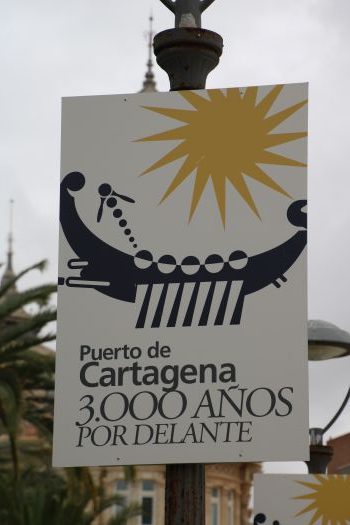
As a resident of Essex, Connecticut, I’ve always taken pride in the Griswold Inn, founded in 1776 and proudly claiming to be America’s oldest continually operating tavern. Then you arrive in Cartagena, where entire neighborhoods are nearly twice that age, Roman ruins are simply part of the streetscape, and two hundred years begins to feel like yesterday.
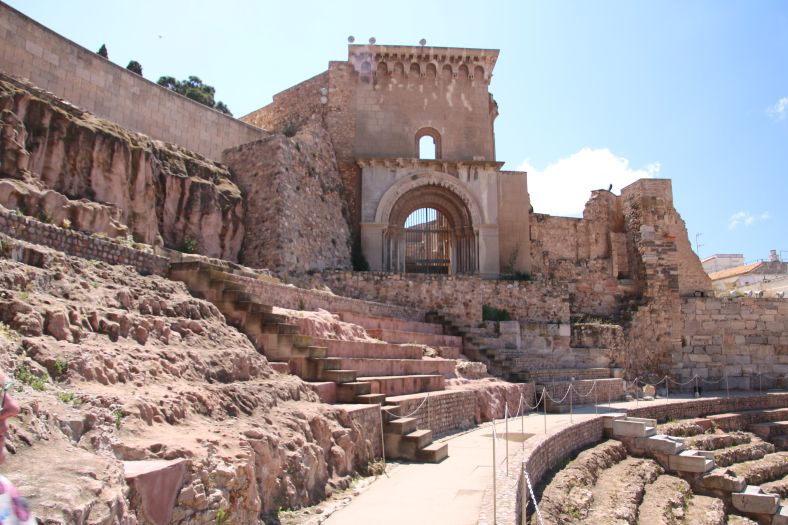
The United States has existed for only a small fraction of Cartagena’s history. Over those twenty-two centuries the city has been Phoenician, Roman, Visigothic, Muslim, Christian, and Spanish. Some civilizations ruled for generations, others for centuries, but every one of them eventually yielded to another. Looking back, it’s easy to imagine that each believed its time would last indefinitely. History had other plans.
Yet the harbor remained. And even a spot for Pandora.
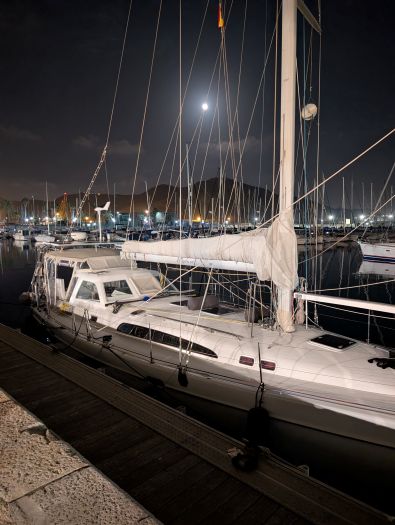
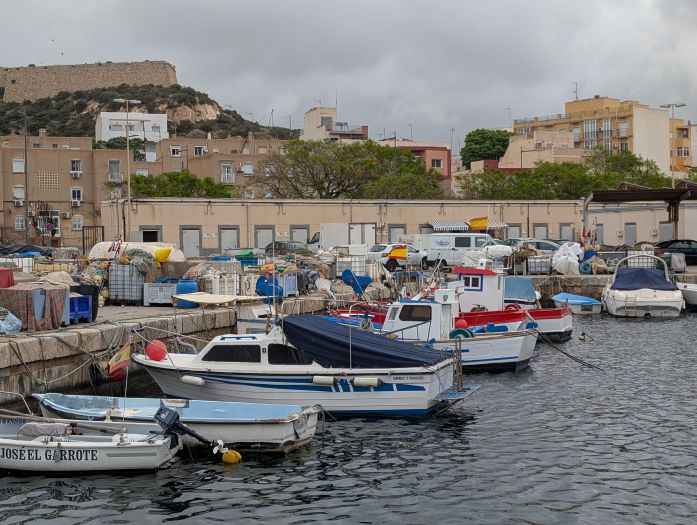
Once filled with trading vessels from across the Mediterranean, today it welcomes fishing boats, cruising yachts, naval ships, and an endless procession of cruise ships. The faces have changed. The flags have changed. The purpose has evolved.
Standing there, it was difficult not to think about Lincoln’s warning that “a house divided against itself cannot stand.” He was speaking about slavery, but his words remind us that the greatest threats to a republic often come from within. A nation’s strength lies not only in its economy or military, but in its shared commitment to common institutions and common purpose.
That thought stayed with me throughout our travels. While cruising the Mediterranean, I never flew our American ensign. I worried that it might be interpreted as a political statement rather than simply the flag of our home. After conversations with many people we met along the way, however, I realized my concerns were largely unfounded. Most people could distinguish between our country’s politics and its people far more readily than I had expected.
Traveling aboard Pandora has made me appreciate more fully how much our understanding of history is shaped by where we live. To many Americans, two hundred and fifty years seems like a very long time. In the Mediterranean, our history seems pretty modern. Walking Roman streets one day, exploring a medieval fortress the next, and then tying Pandora alongside modern yachts beneath eighteenth-century naval fortifications compresses history in a way that is difficult to describe.
America’s story begins to feel less “finished” and more like one that is a continuing evolution.
Rather than diminishing what our country has accomplished, that realization has deepened my appreciation for it. Two hundred and fifty years is something worth celebrating, but it is also a reminder of how young our republic really is. Cartagena has watched civilizations come and go for more than two millennia. Our hope should not be that America somehow escapes history, but that we learn from it.
As we celebrate our own 250th anniversary, I hope we remember that preserving our republic may ultimately prove every bit as important as creating it.
Cruising the Med will forever change what “history” means to me and I can’t wait for the next chapter coming this fall.
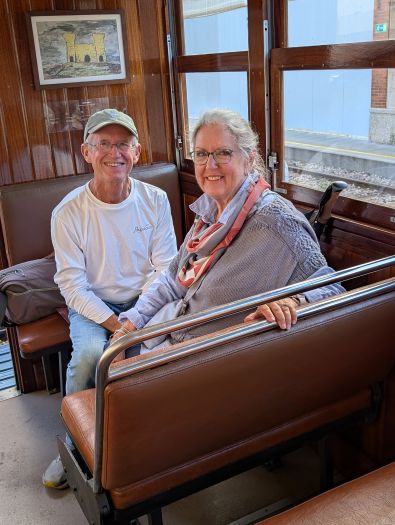
So far, she likes the Med! Me too.
Bob,
I’m glad you concluded that our 250 years are worth taking note of. Let’s look at it from another viewpoint. Aside from our constitution, the average length of a constitution is 17 years. It is a tribute to our founders for their experience and foresight in crafting a document that has served us for two and a half centuries.