


How we get around, or don’t…
Well, we are still here in Martinique, splitting our time between the busy harbor of Le Marin and the more quiet nearby St Ann. Both have their charm but the water is clearer and the town much more charming in St Ann so here we are in St Ann again.
Le Marin, I am told, boasts the largest harbor and marina in the Windward Islands. I believe it. The harbor is a sea of masts with dockage for something like 1,000 boats (Med Moor) and 100 moorings. 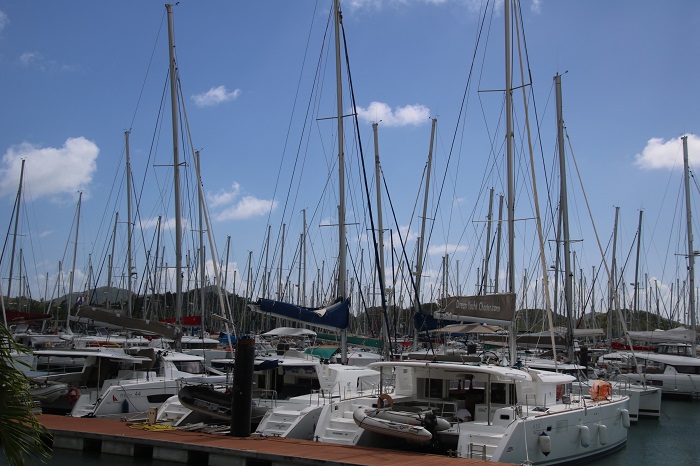 It’s been both sunny and rainy for the last week or so with a seemingly constant parade of showers every few hours interspersed by intense beating tropical sun. Rain or not, the sun outweighs the rain many times over. At night we are often awakened by a pounding rain that requires us to jump up and close the hatches.
Rain or shine, the silver lining is that each daytime shower is followed by a rainbow, or two. This one greeted us this morning shortly after sunrise.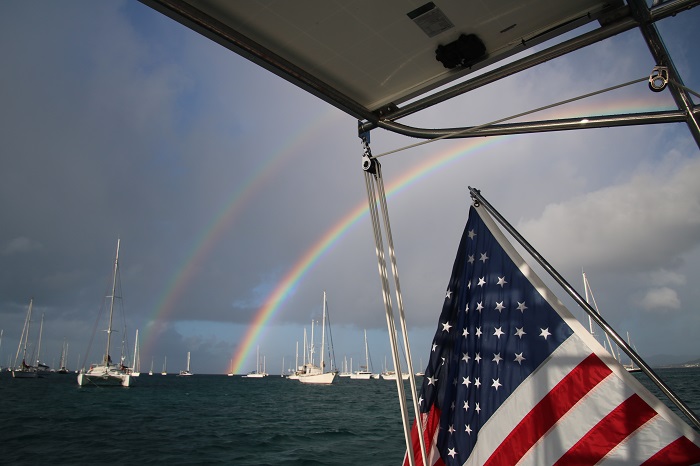 Many cruisers love St Ann and it seems, hang out here for months at a time as evidenced by the algae growing on their anchor snubber lines, a sure sign that they haven’t moved for quite some time.
I have posted photos of some remarkable boats over the years so perhaps it’s time to post photos of some more humble ways to get around on the water.
How about this? Care to speculate on what this is all about? More to the point, which end is the bow? Try the “blunt” end to the left. See the pilot’s head sticking out of the top?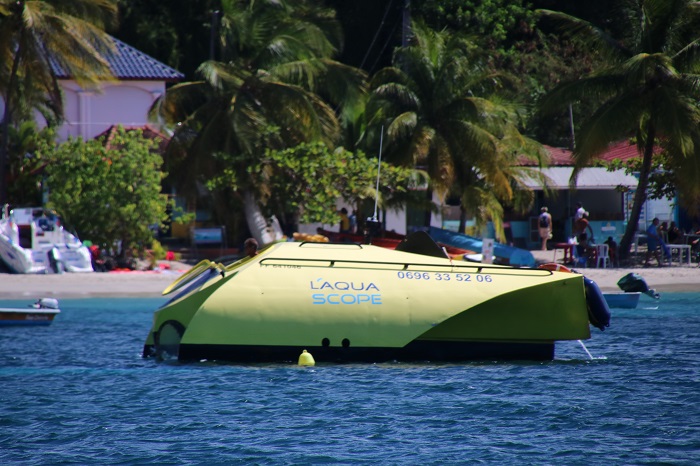 Laqua Scope? How about a “glass bottom boat”. Viewed from the bow?, you can sort of see the large glass portholes in the center hull. This contraption gave tours of the harbor, teeming with sea turtles, to all comers. It was out and about all day long ziging and zaging past dozens of snorkelers, including me. Want to go for a spin? Check out this on Trip Adviser.
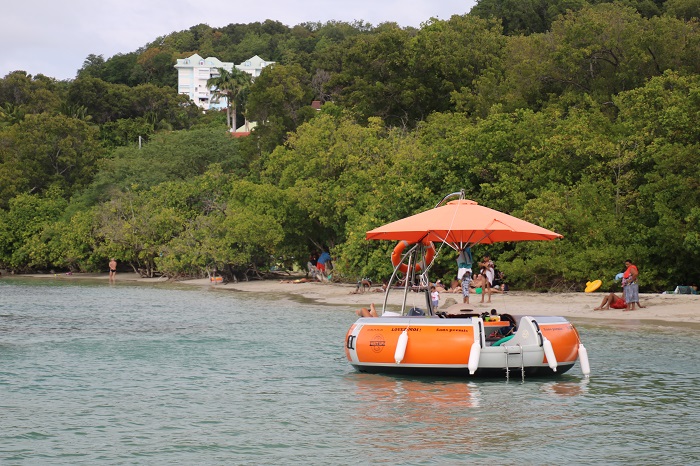
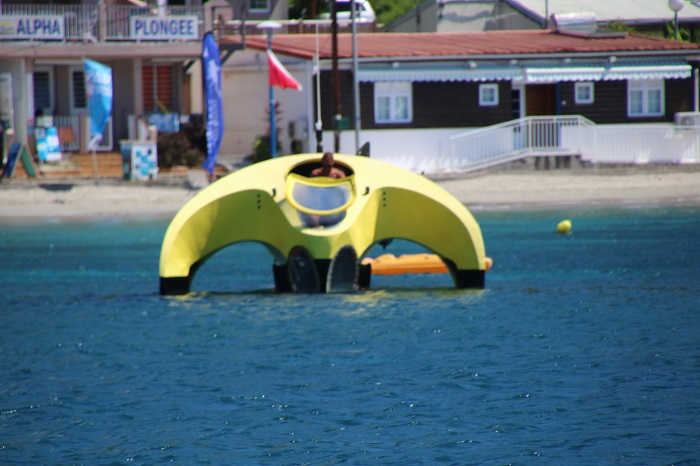 If you followed my posts last winter you saw a photo of one of these “donut boats” from France. They come complete with a grill, outboard motor and umbrella. Admit it, you need one of these. Besides, they hold ten. Personally, I can’t imagine admitting to ten friends that I have one. I wonder where the 10 PFDs go.
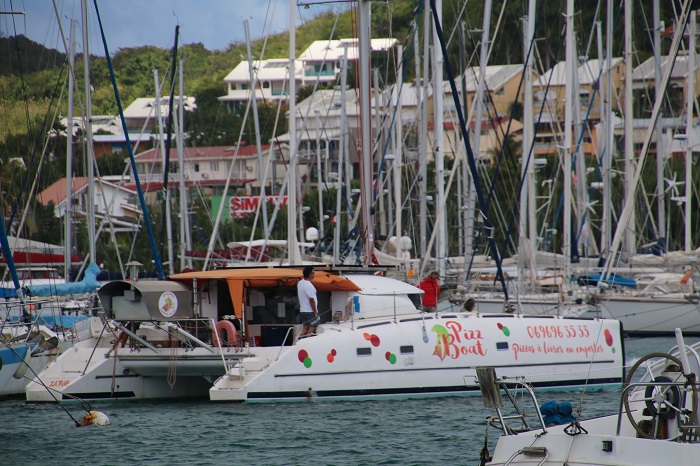
 This boat proves, once and for all, that anyone can start a business as long as they are creative about it. How about the appropriately named “pizza boat” a mobile pizza oven on a catamaran? Brenda’s wondering if it’s safe to move about with a huge 500 degree oven and loads of compressed flammable gas.
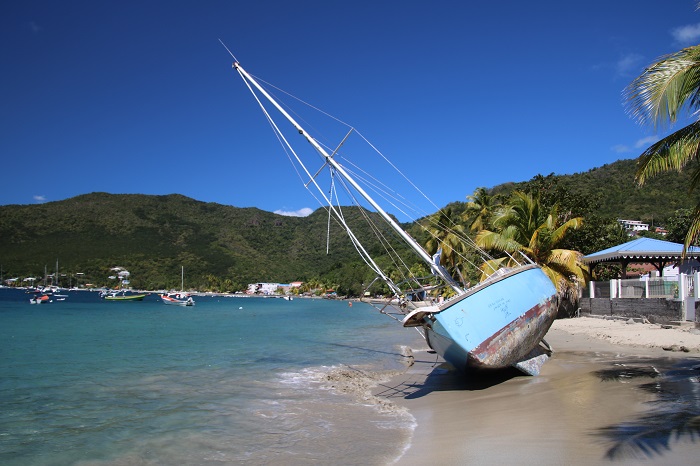
 Of course, like many cruising grounds, it’s important to pick your time to cruise in the right season. It seems like just about every harbor has at lease one of these “parked” on the beach. In this case, it’s right up against someone’s home on. Nice view.
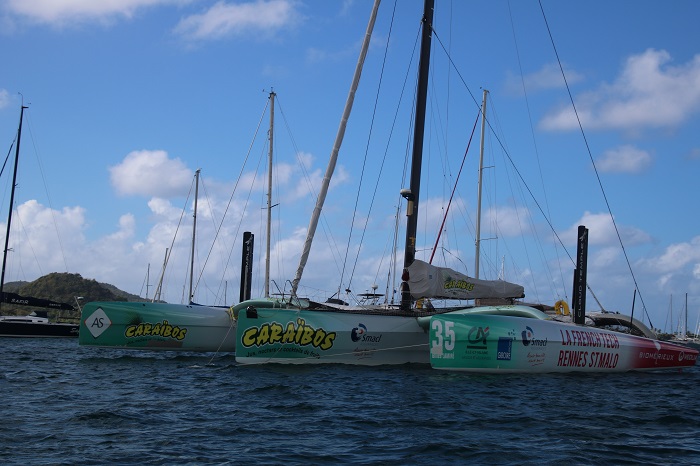
 Of course, if you are in a big hurry to get there, the Prince de Cancale, is for you. There are ton of really racy looking cats and tris in French waters to choose from. She’s had a very active racing career most recently sporting the colors below. With all the sponsor graphics, I had a hard time figuring out what the name of the boat was. I guess she’s done well as she has a lot of sponsors. This link shows her in all her various colors over the years. She looks like a screamer with a very successful career since her launching in 2010. She’s currently on a mooring in Le Marin awaiting her next race.
 Of course, to simply mess about in boats, or water, all you really need is your dad.
 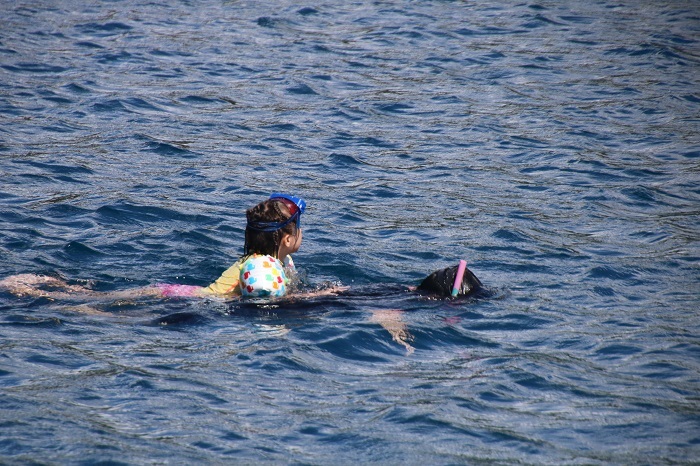 Don’t want to risk your feet in the water? He can pull you along with your older sister pulling guard duty.
 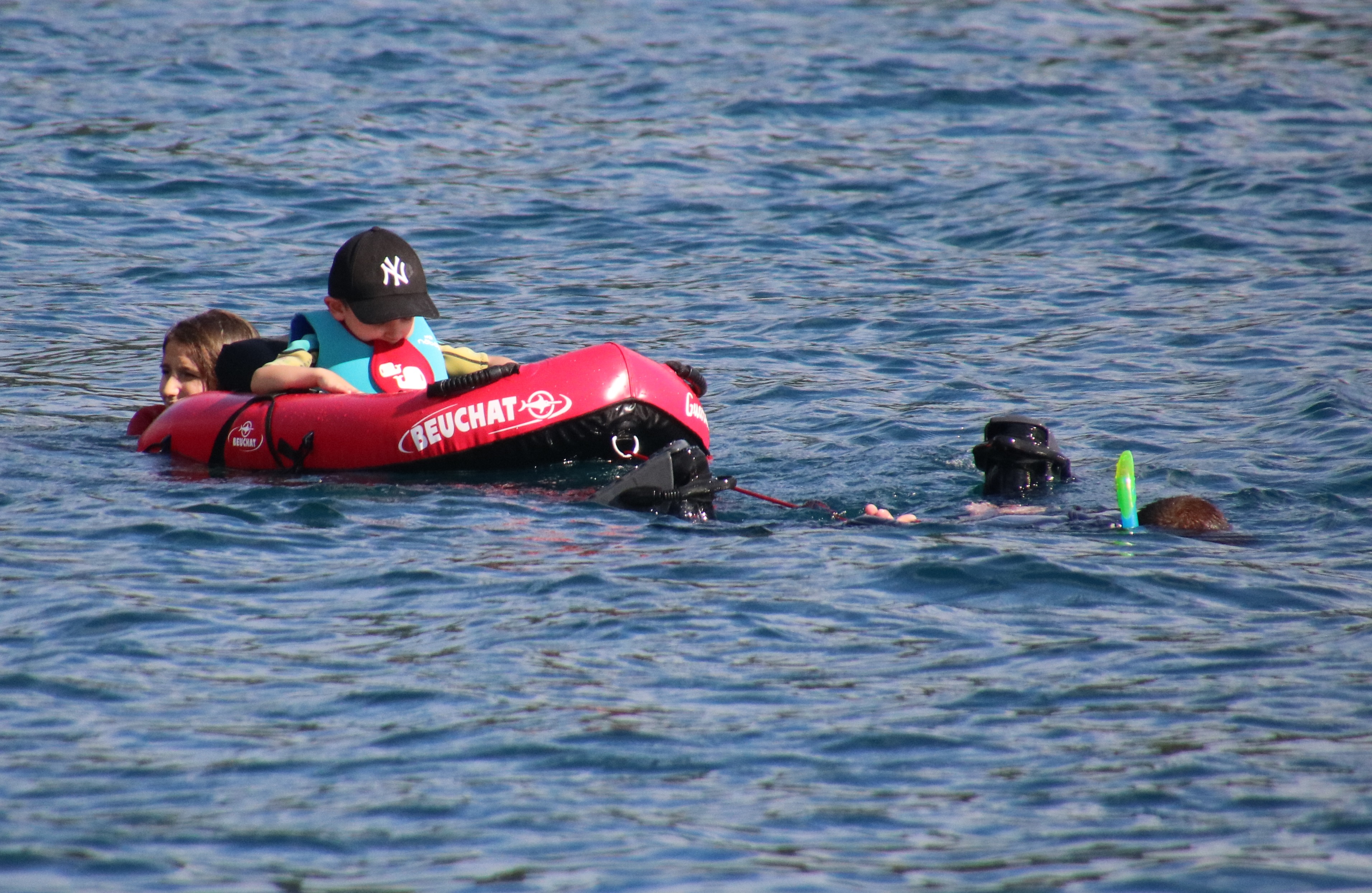 One way or the other, there are a LOT of boats around these parts and as these photos show, they come in all sizes, colors and some aren’t even able to hold the water out.
OK, there you have it. A post of little importance. But hey, it’s about boats.
Oh yeah, one more thing. I have been having problems with my site, in particular, with the “new post alert” function. It’s being fixed, for a fee, or might be already, so if you had signed up to get alerts, do it again soon as the “tech” is going to delete you and the 8,000 phony “followers” that have signed up over the last few months so we can set things right.
If you are a “real” reader, I so hope that you will re-subscribe and continue along with me.
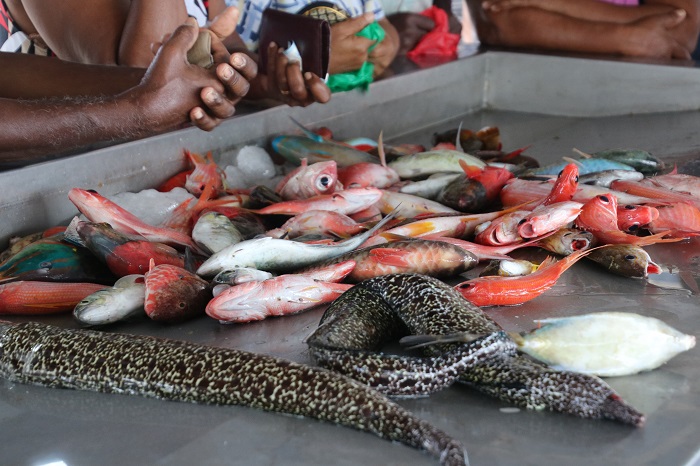 Lion fish, an accidental invasive import from SE Asia have decimated the reefs in all areas of the Caribbean and are becoming a popular food fish. This shot isn’t very clear but it’s a pile of Lion fish. I have speared a few in the Bahamas and they are indeed very tasty. You have to be very careful of their colorful spines as they are venomous and very painful if you are pricked by one.
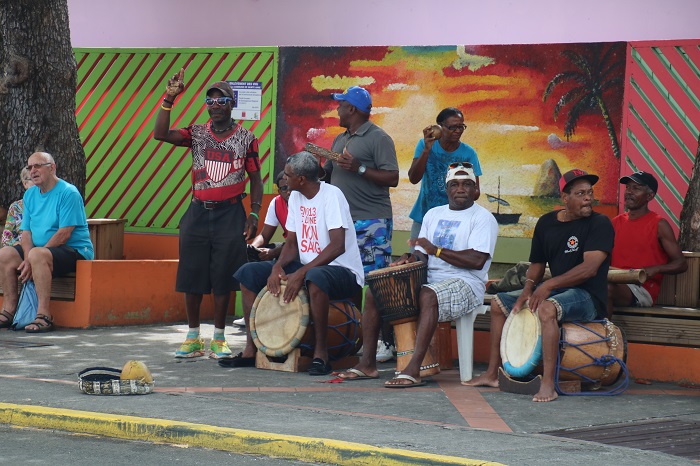
 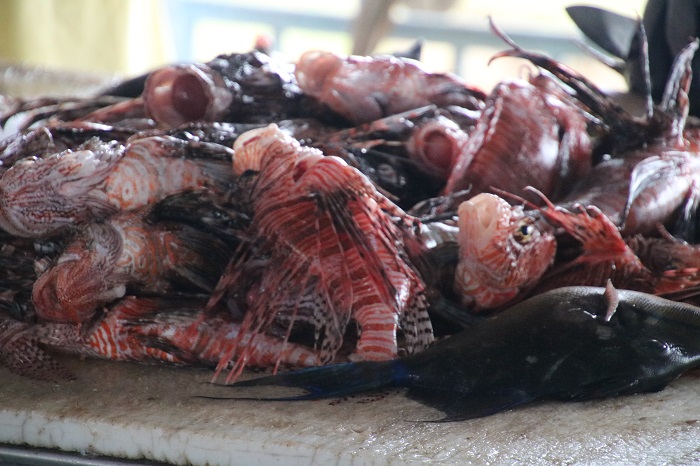 The market has a very festive atmosphere with vendors selling most anything from T shirts to spices. There was a fun Caribbean band playing that livened up things nicely.
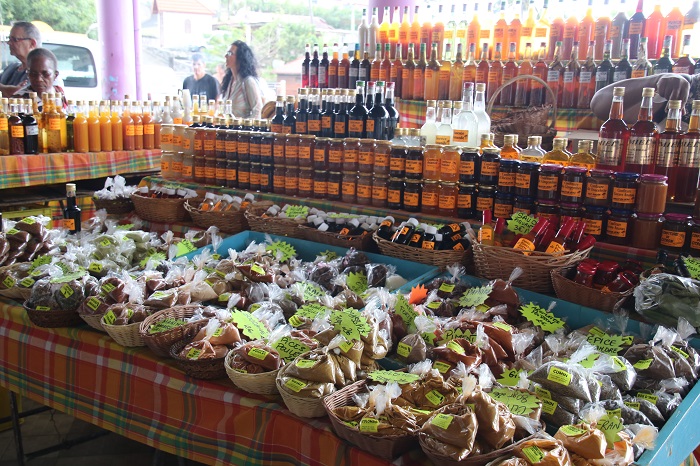
  It’s amazing to see the wide variety of spices and liquors that are available here. Hey, perhaps that’s why these islands are known as the “spice islands”.
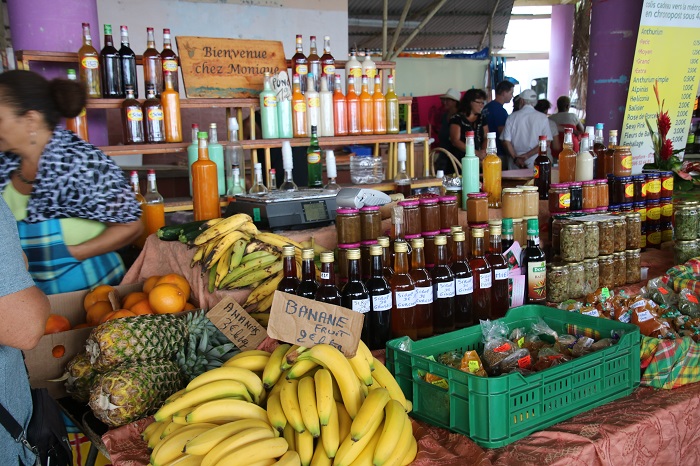
  It must take hours to set all this up for sale.
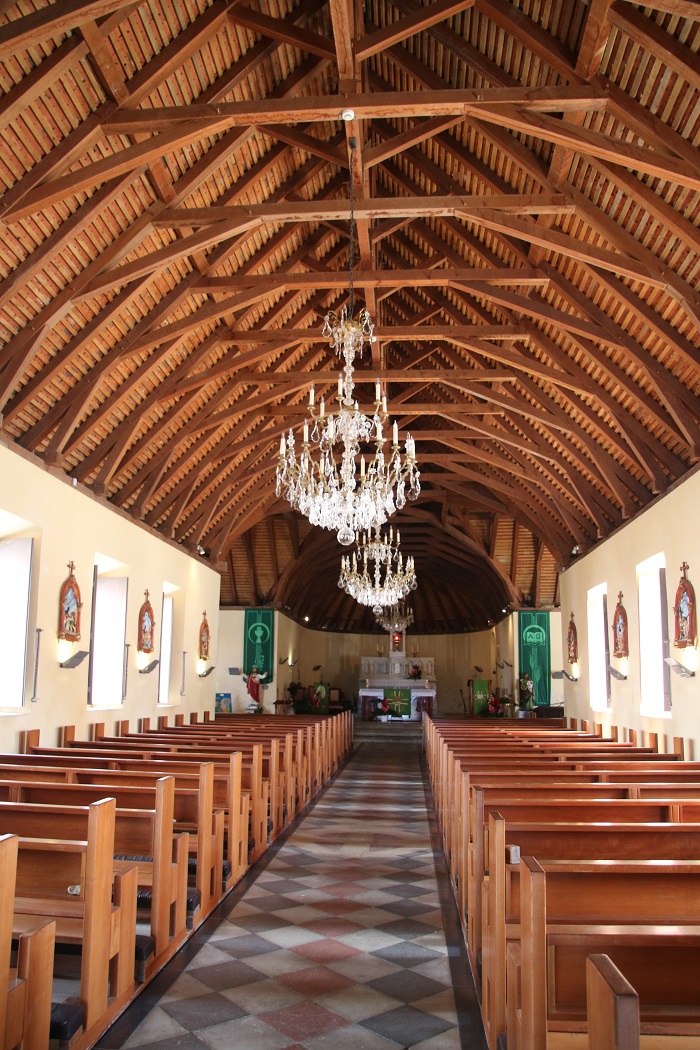
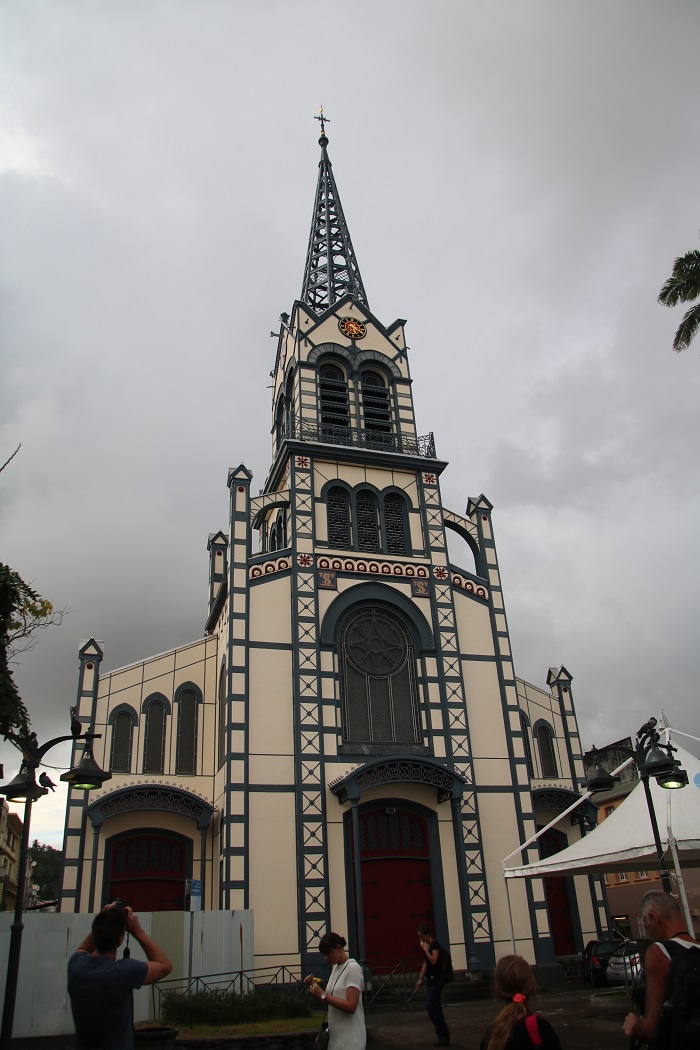
 The center of the town is dominated by the Catholic Church. Oops, crooked photo. Fire that photo editor!!! It’s lovely, the church, not the photo, if you” get the picture”.
 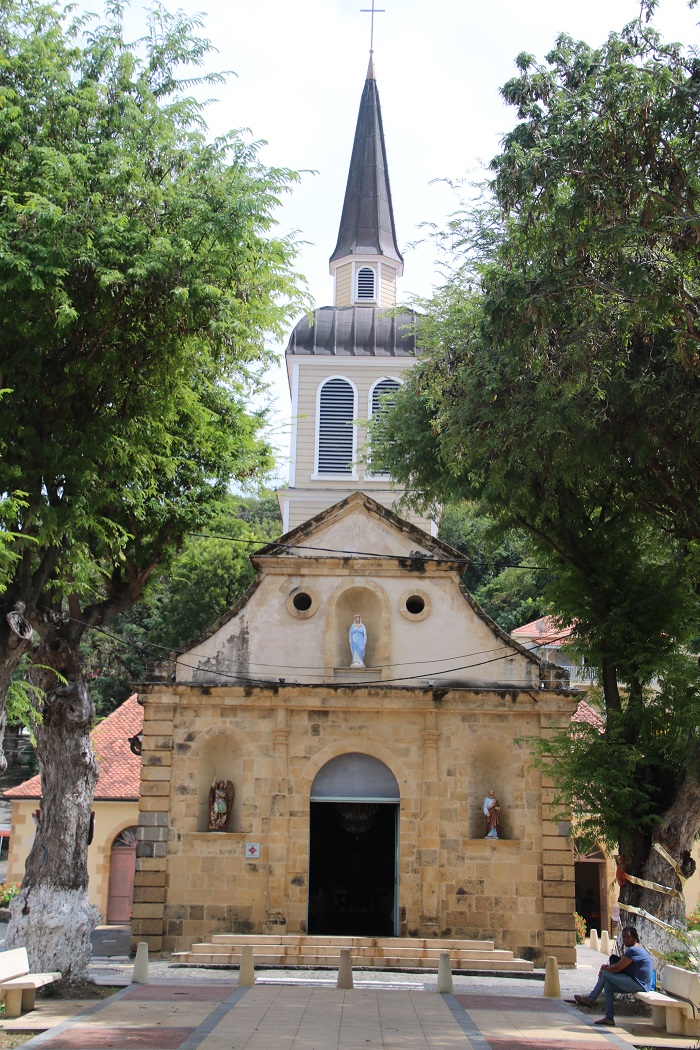 From the outside, it’s stone. Inside, an impressive use of timber.
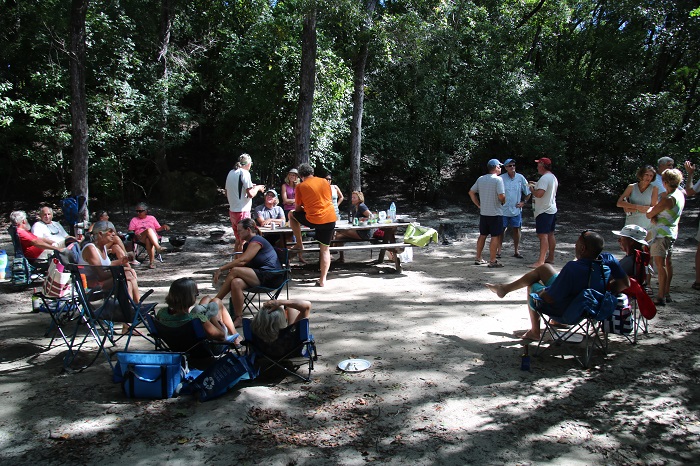
  I mentioned that there are something like 350 boats anchored off of the beach here and where cruisers congregate they get together for meals and “sundowners”. The same day we arrived we were invited to a beach barbecue by a friend who’s been coming here for years. They get together at noon each Friday for a cookout. The folks here seem to know each other well and are from all over. Nice group.
 Well, that’s about it for now. Lots to think about for the rest of the season and next year’s cruising plans, such as they are. For sure, St Ann will continue to be on cruiser’s plans as it does have a lot to offer. Nice spot.
 This is the view as you enter the garden. Beautifully arranged and very inviting.
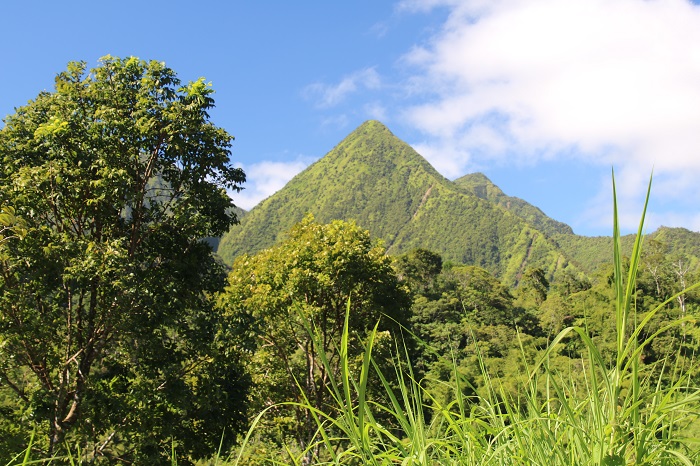
 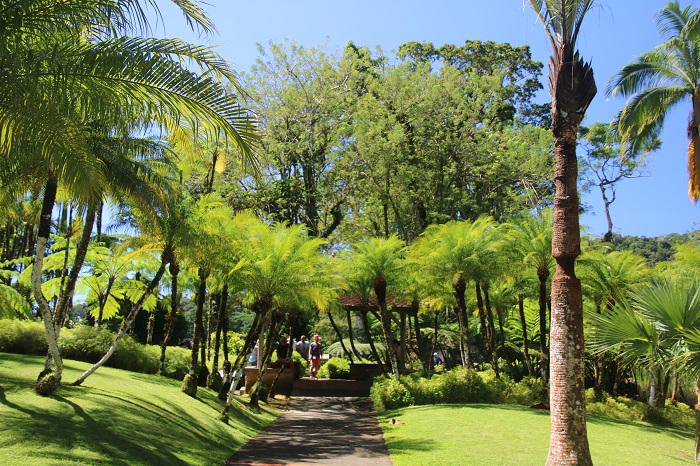 In the distance mountains give scale to the garden nestled in between valleys.
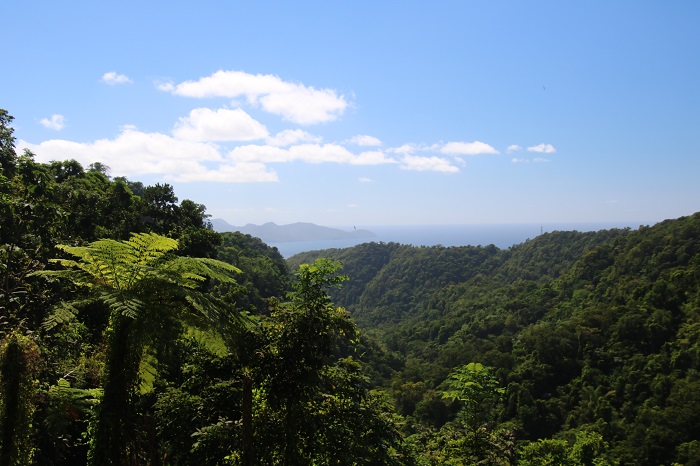
  With views of the ocean just outside the harbor where we were anchored.
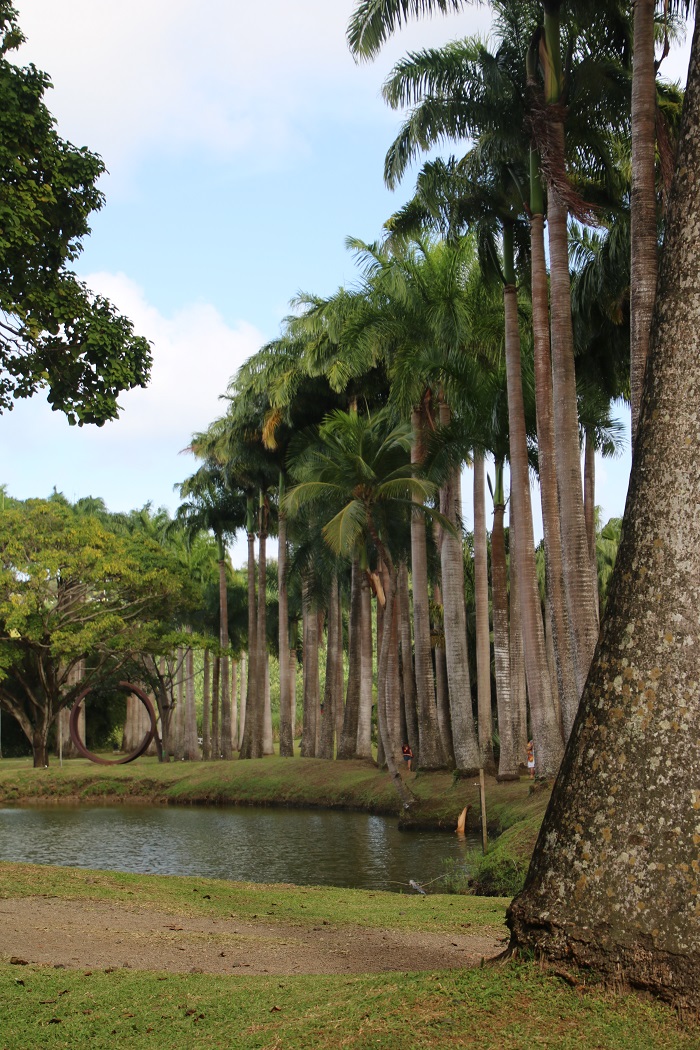
  The way that the “artist” as he’s described in the audio tour, used plants to create visual patterns, like this row of palms, is stunning.
 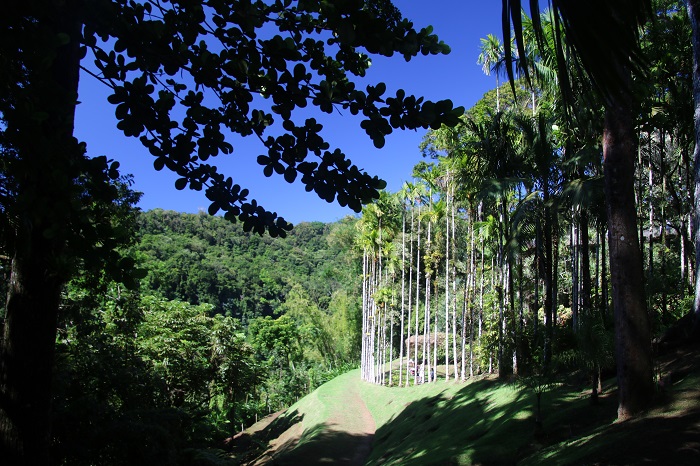 From another angle it looks very different. The close cropped grass and moss looked like green velvet.
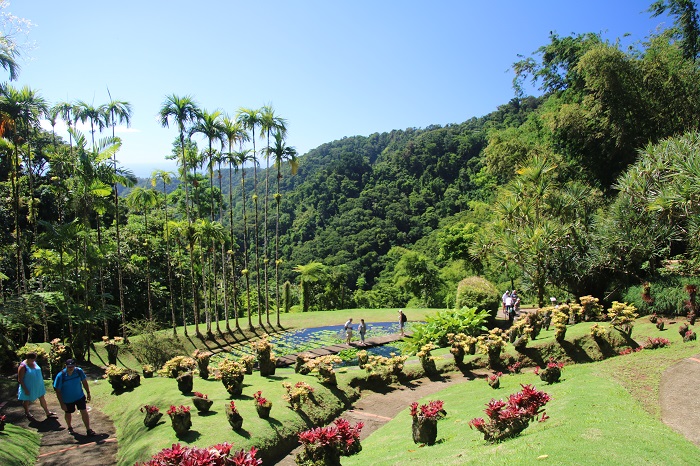 How about a view from the treetops?
 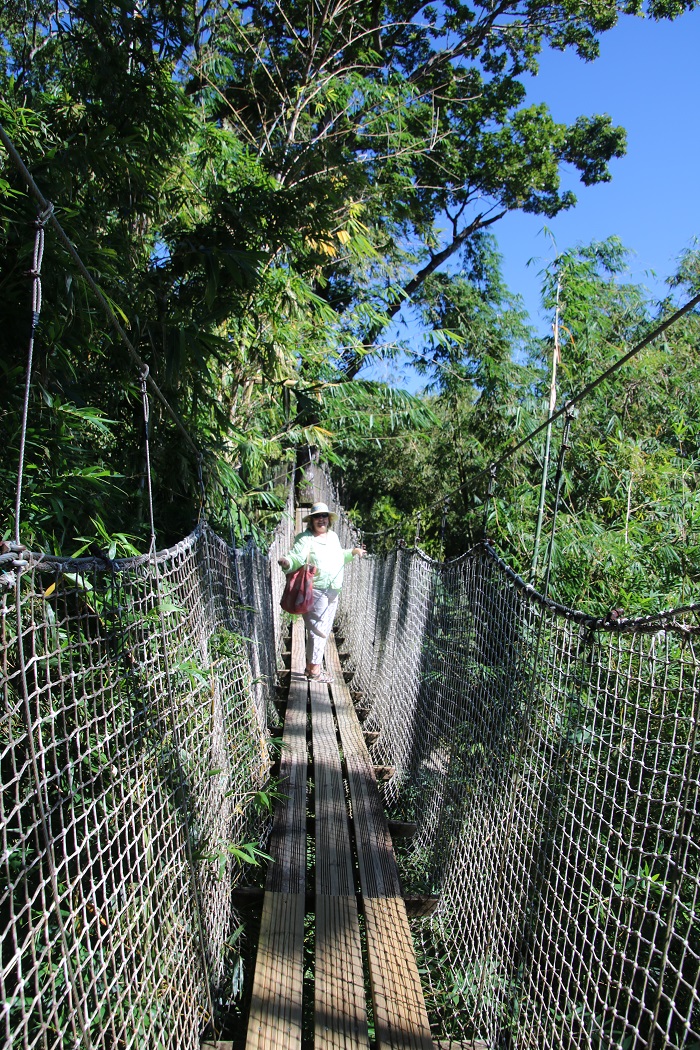 Prefer terra-firma? Even up close, everything was perfect.
 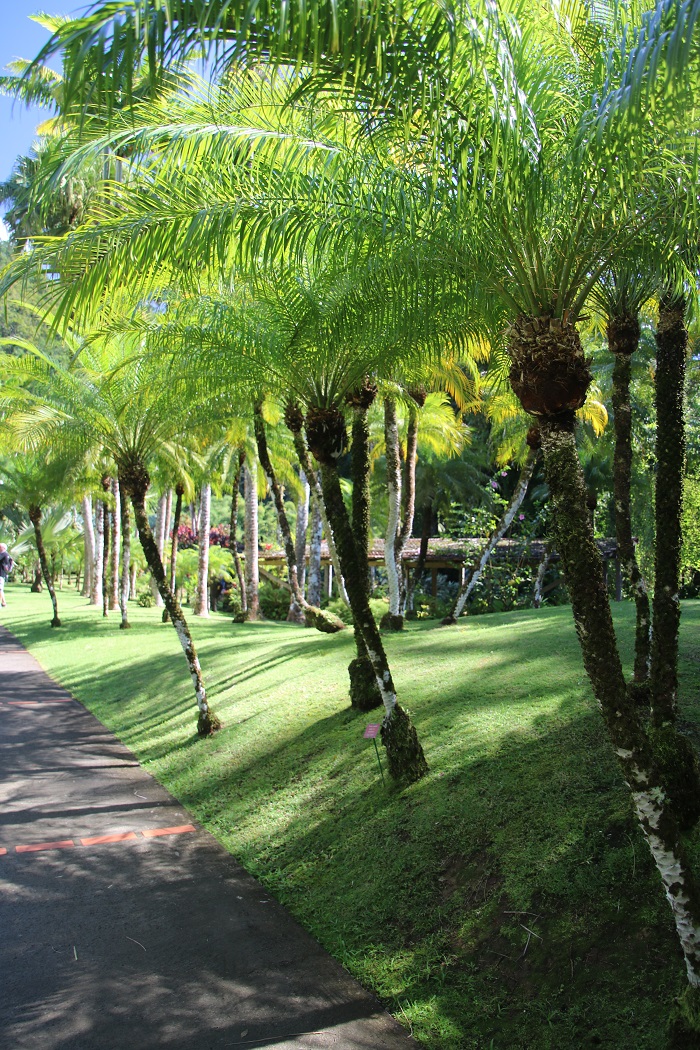 Everywhere I looked called out as a wonderful photo like this bamboo lining a path.
 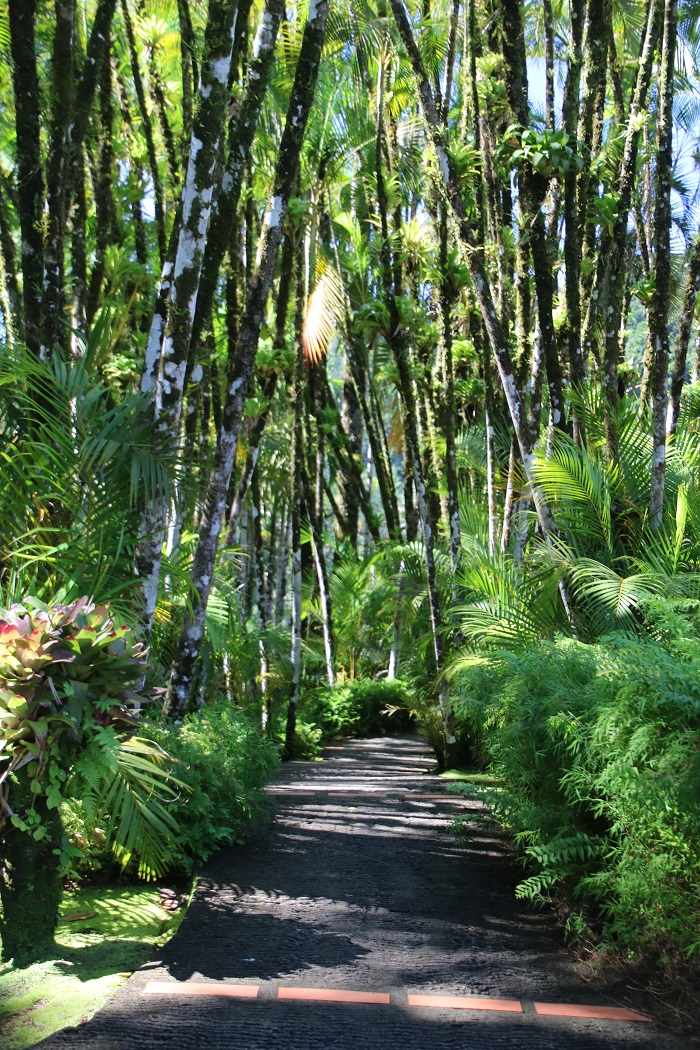 I loved the visual patterns.
 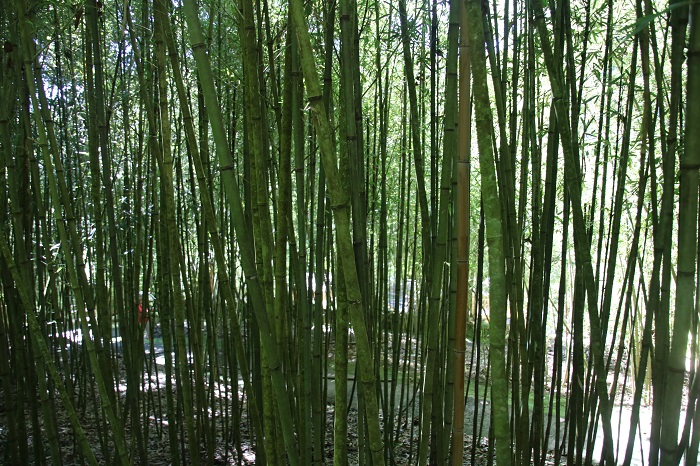 Some so tiny you’d miss them if you didn’t look closely.
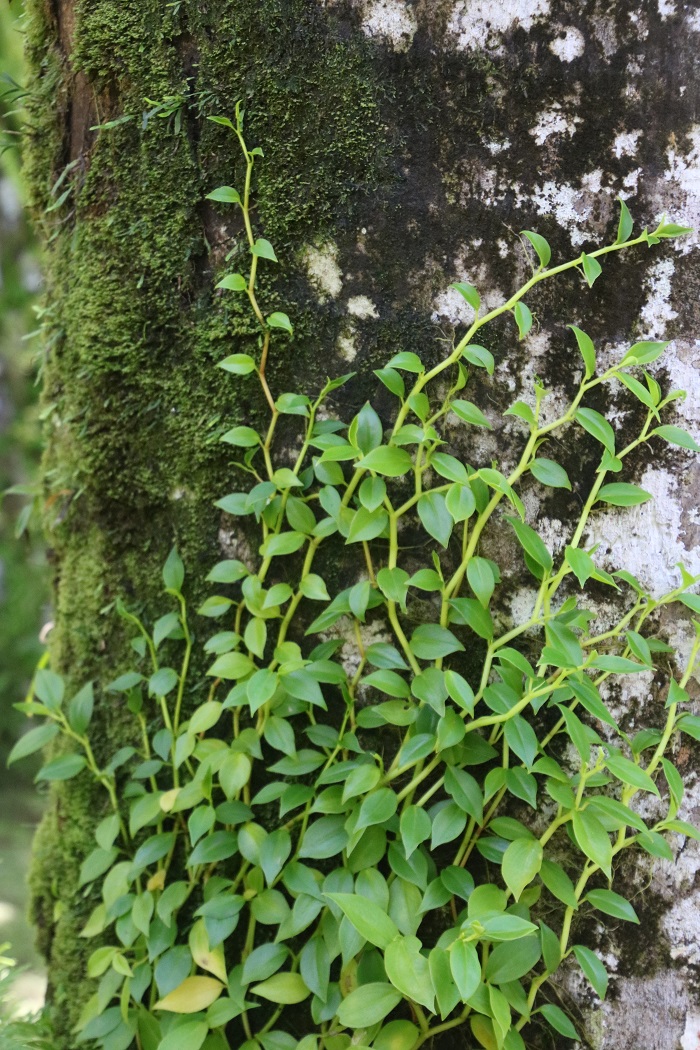 Wonderful patterns in the foliage.
 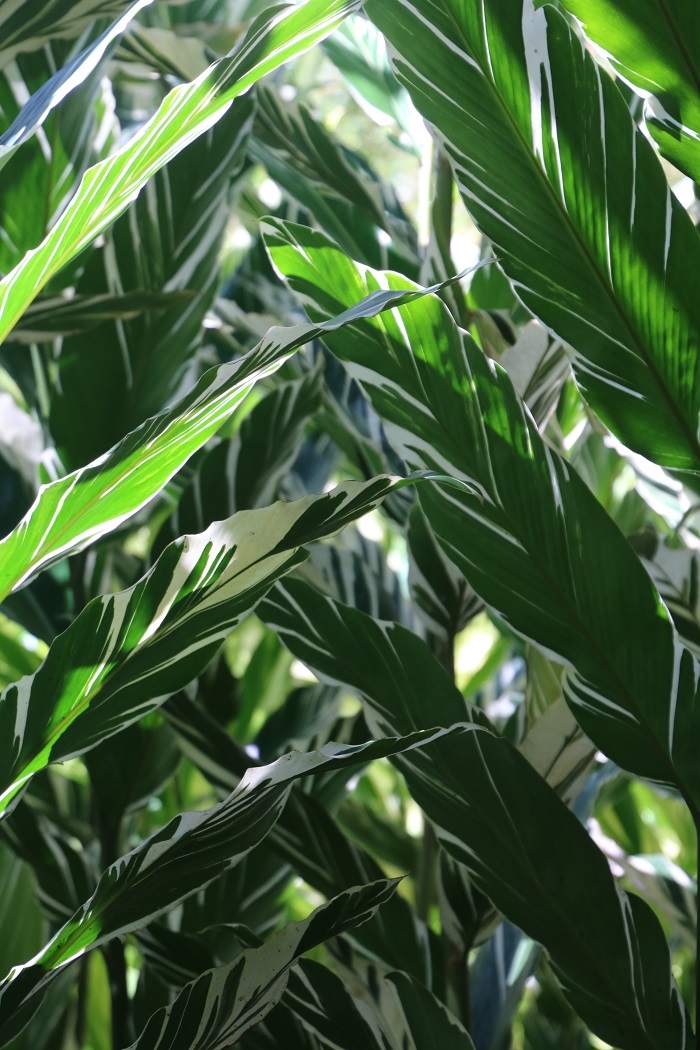 Clusters of colorful bromeliads growing on a trunk of a tree fern.
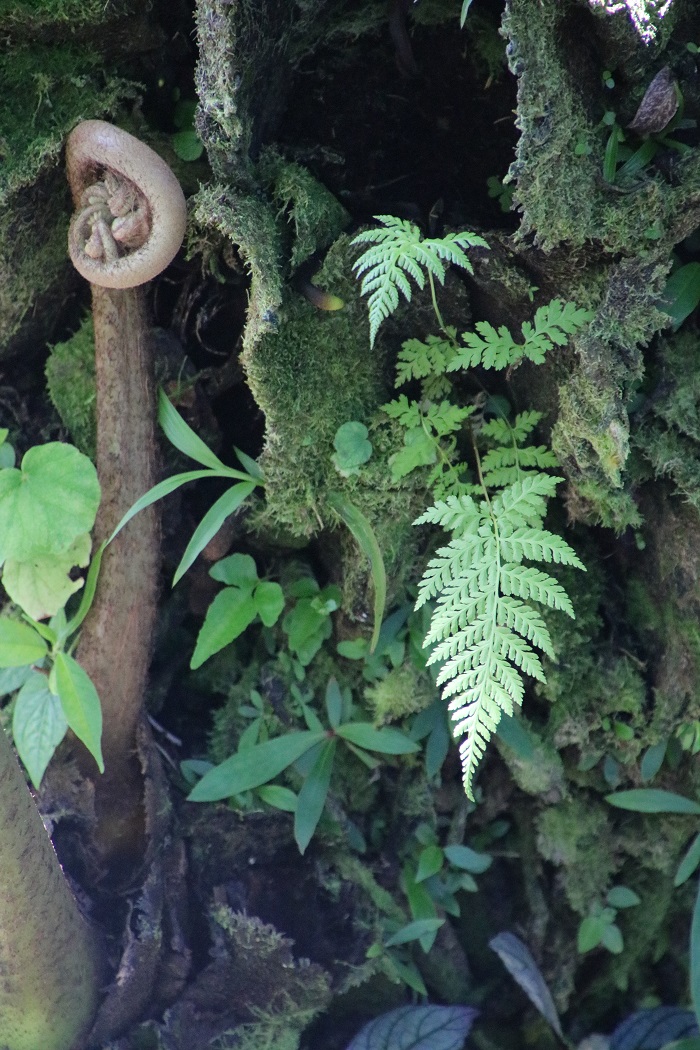
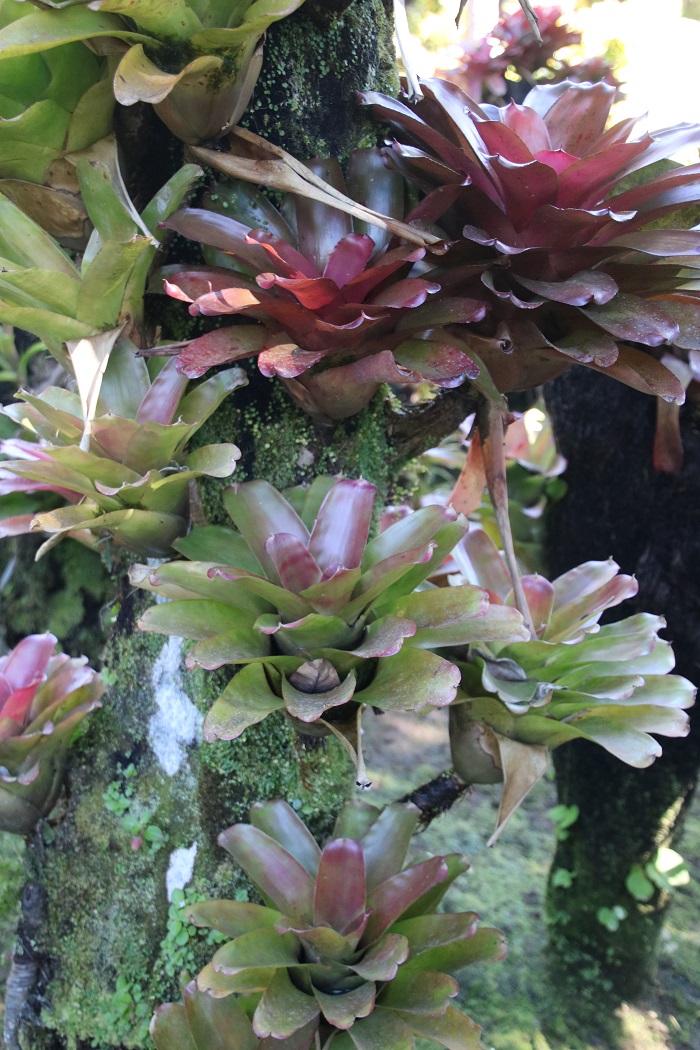 Fiddle heads, destined to tower over your head, emerging as thick as your wrist.
 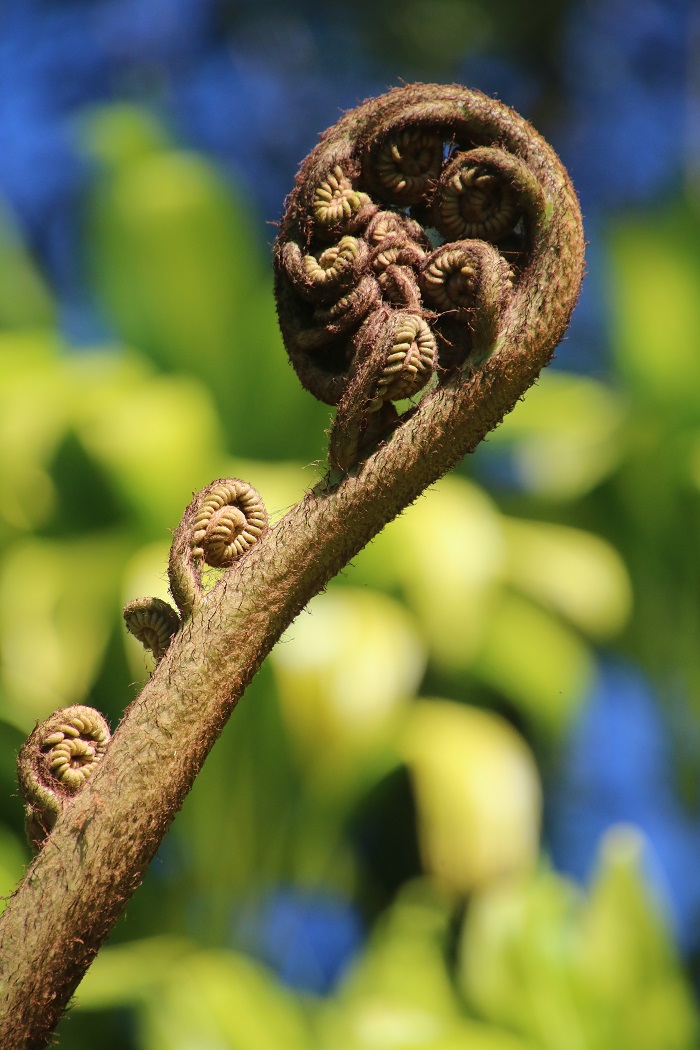 Ferns so large you expect to see T Rex in the distance.
 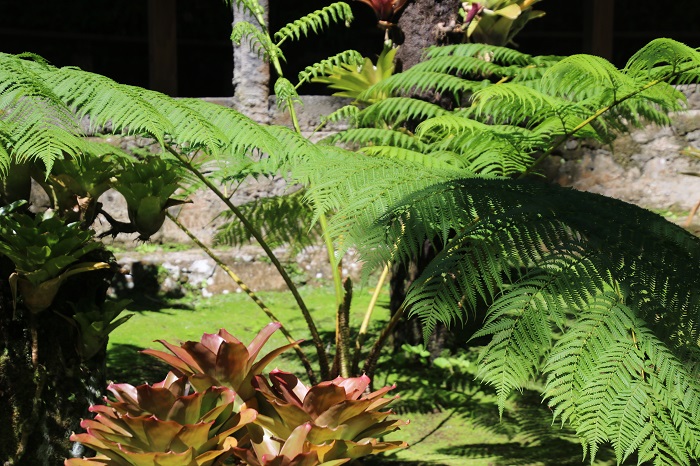 Wonderful mix of textures and colors.
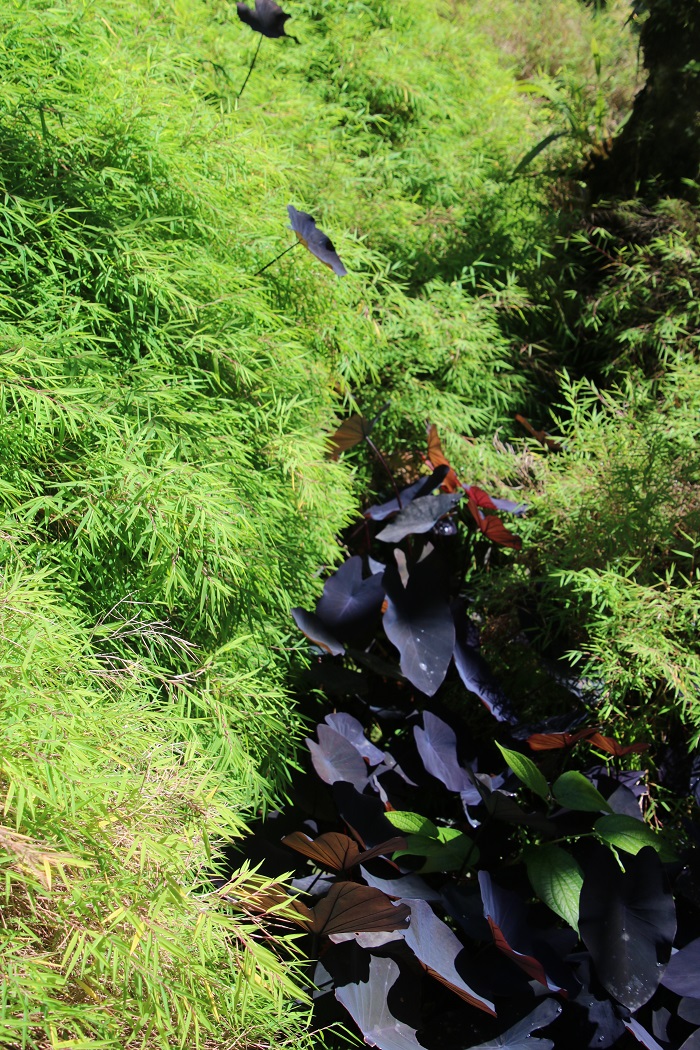 Glorious subtle patterns of green.
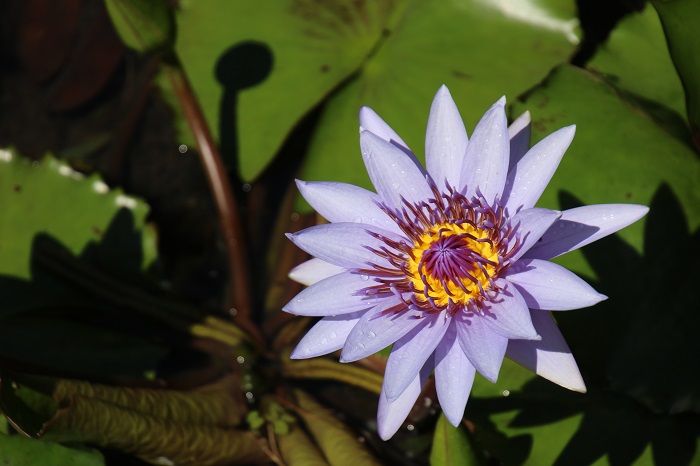
  Serene water lilies facing the morning sun.
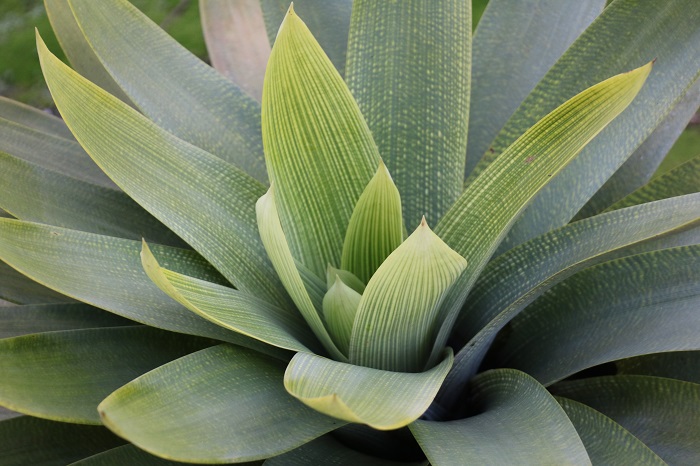
  Everywhere plants competing for space, constantly adjusted to perfection by the gardeners.
  Flowers so perfect they don’t look real. This one stands shoulder height and is the size of a melon.
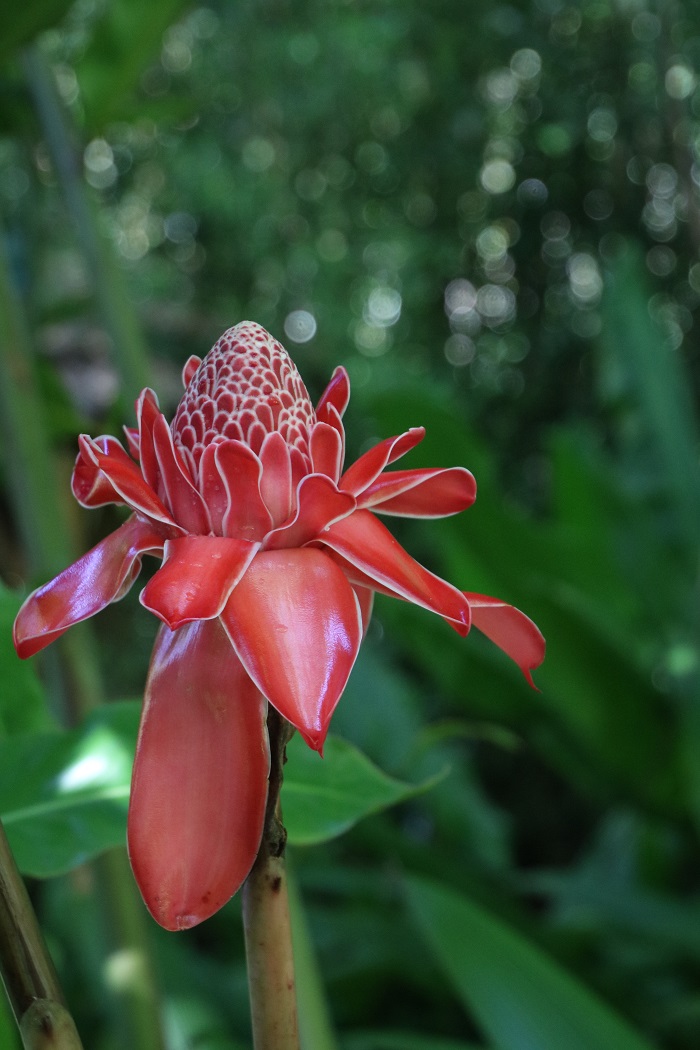 Hard to imagine that this is real.
 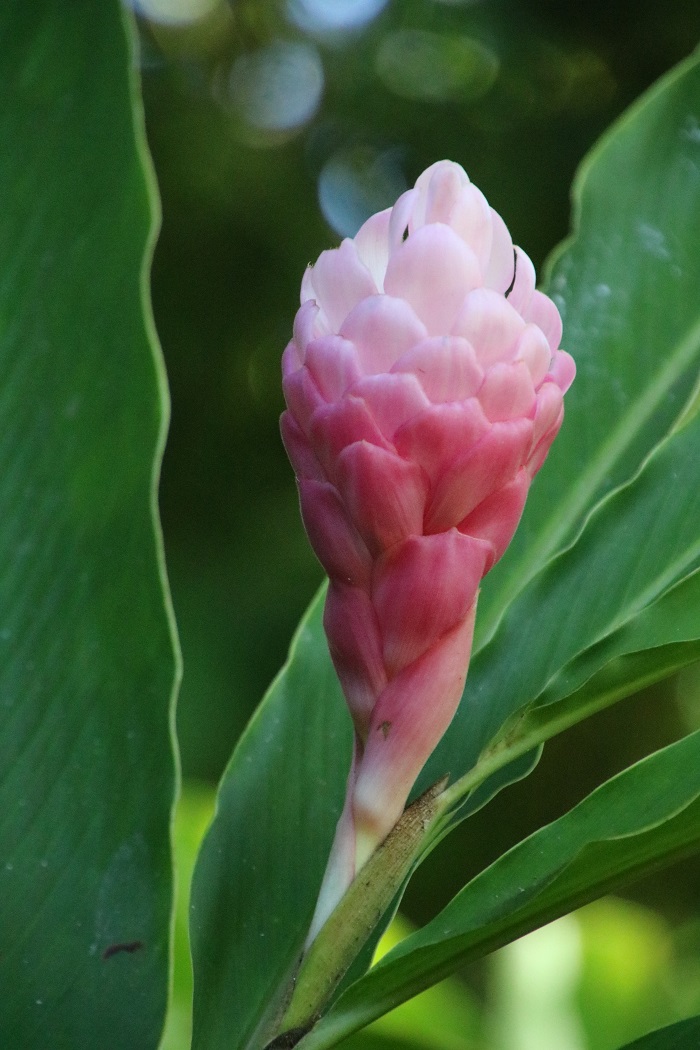 And, the familiar.
 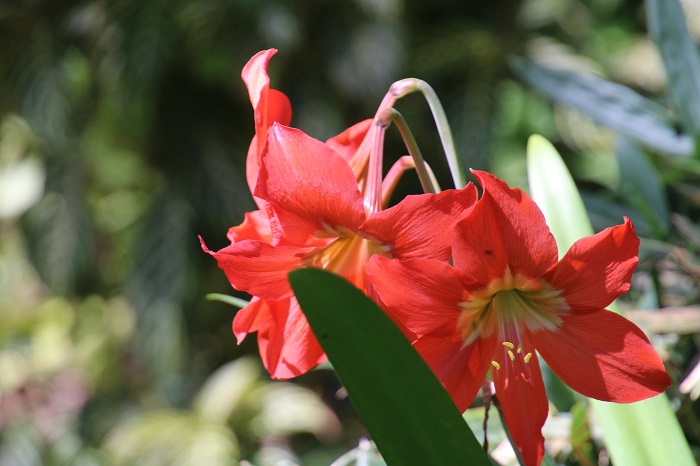 Some much more dainty but equally beautiful.
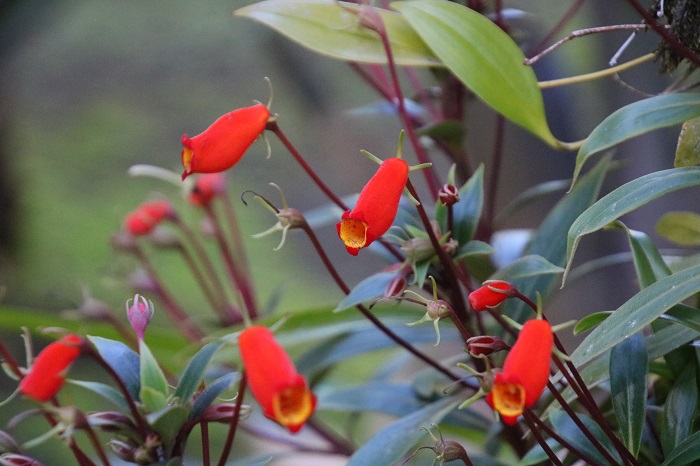 All and all, a wonderful place and unlike any other garden we have visited. Very “painterly” where the plants are the artist’s medium to create his ever changing palate.
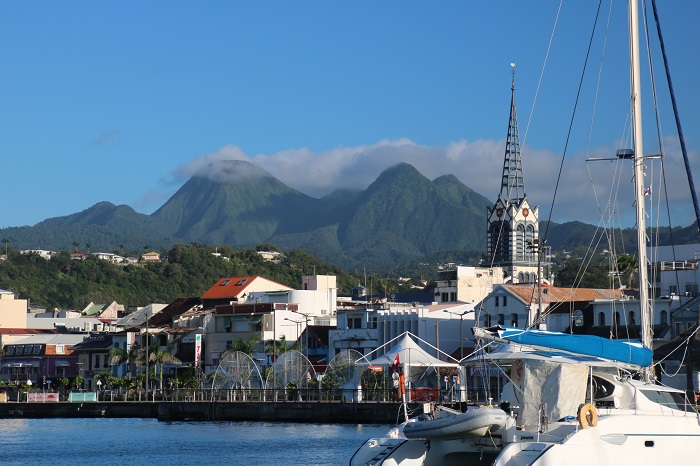 So, back to our outing. Fortunately, Ted agreed to drive so I could focus on the passing view as well as the many rums that we tried along the way. In the interest of complete disclosure, I did inhale and sip but didn’t completely finish any one of the many samples that were offered.
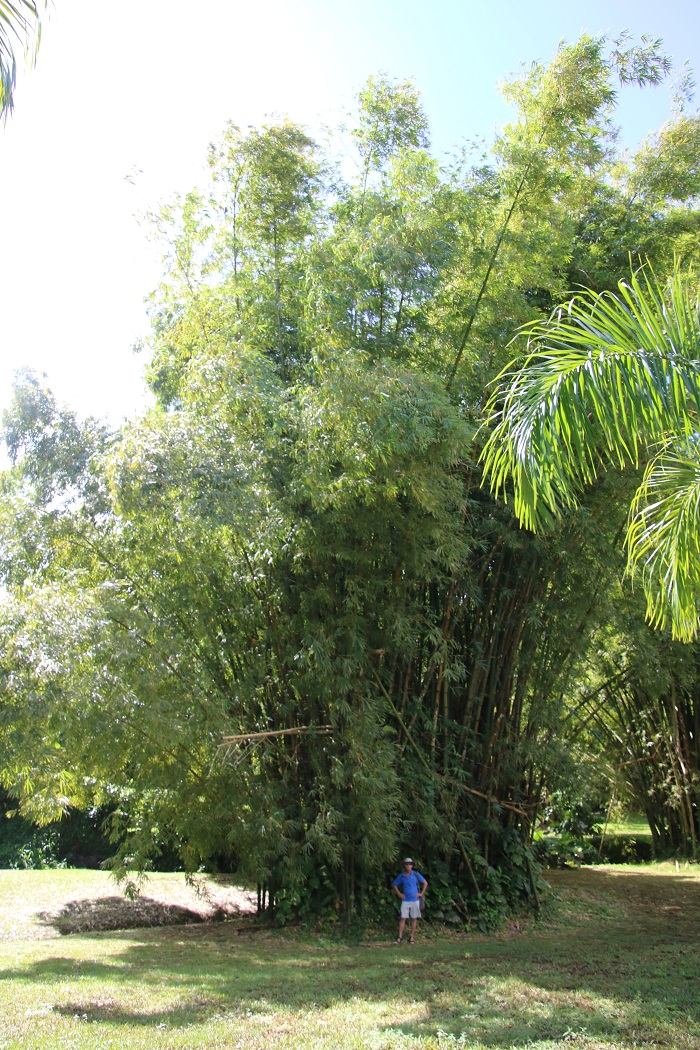
 I may be a “compact” guy but this stand of bamboo is really impressive and big by any standard. I wonder how they deal with old dead canes. Brenda and I had bamboo in our yard for many years and I had to use a hammer chipper to grind up the dead canes and mine were only about 1″ in diameter. You could build a bridge with this stuff.
  Unlike some of the lower lying islands that we have visited, Martinique has high mountains that reach into the clouds wringingout moisture so there is plenty of rainfall to grow sugarcane. Along the way we drove through many beautiful lush forest and overlooks with beautiful views of the countryside.
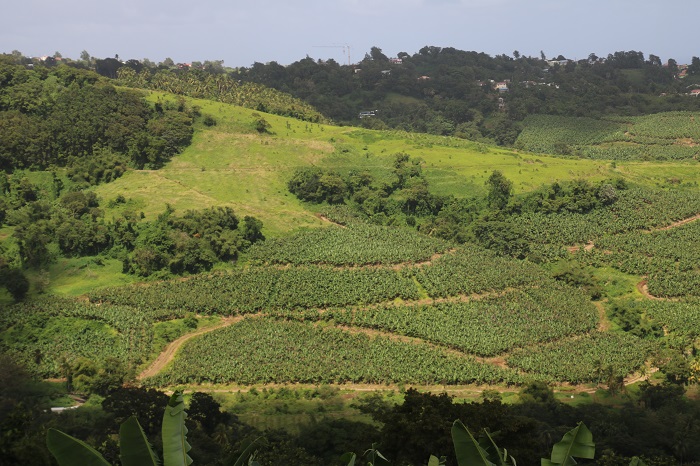
  Everywhere we went there were views of cultivated fields like this banana farm.
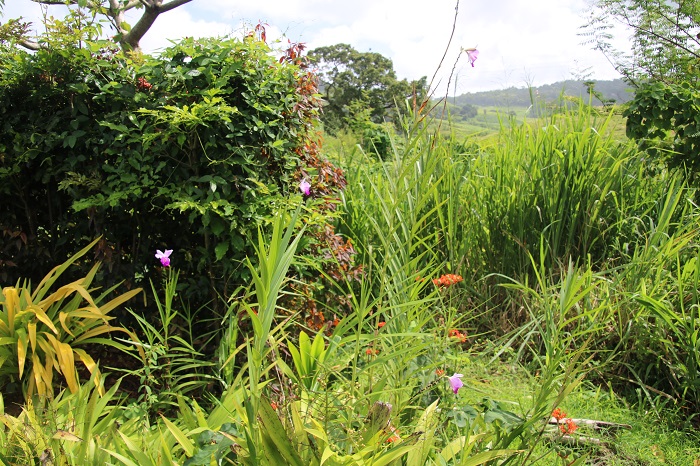
 “Stop the car! I see and orchid 0n the side of the road”!
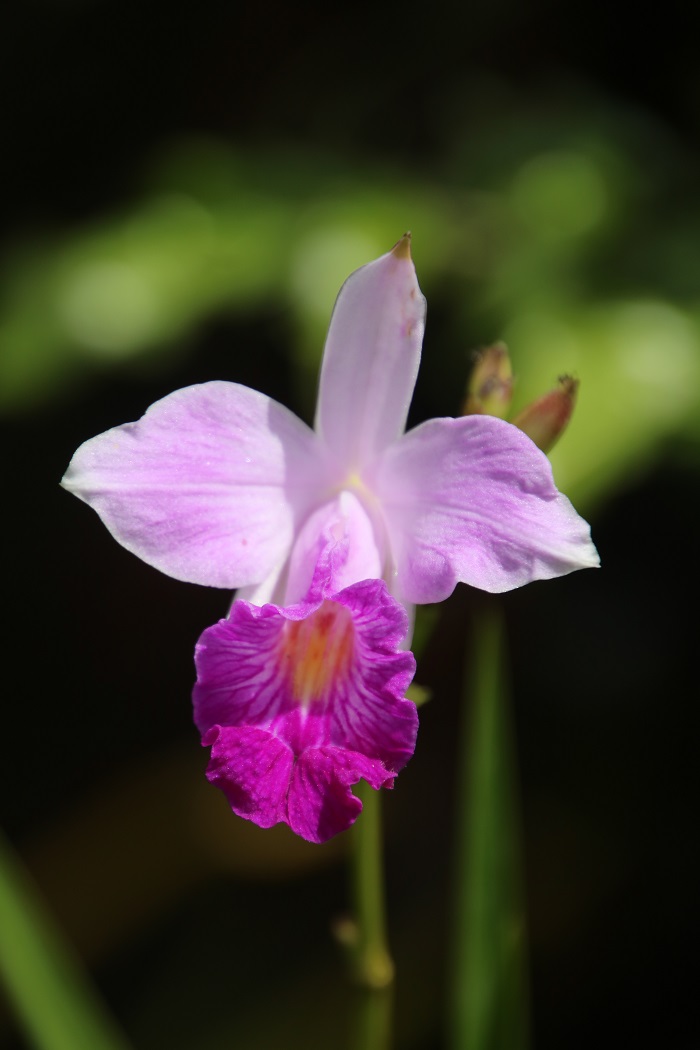
  A beautiful solitary flower on the top of plants that grew to 4′ in height.
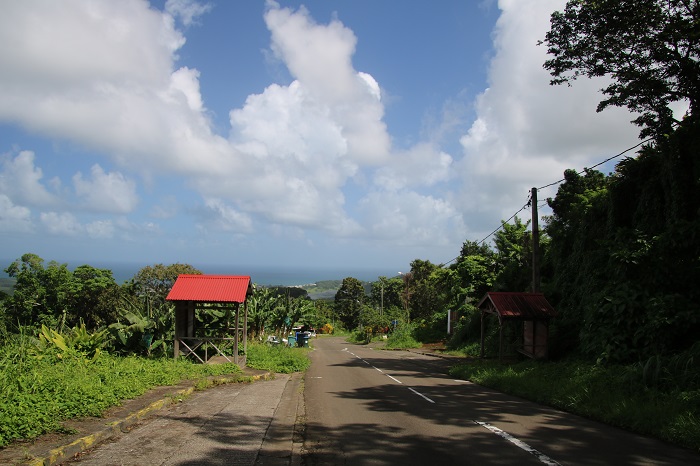
  As we drove up and down the mountains, the roads wound one way and another through countless switchbacks. Not a lot of straight roads here.
 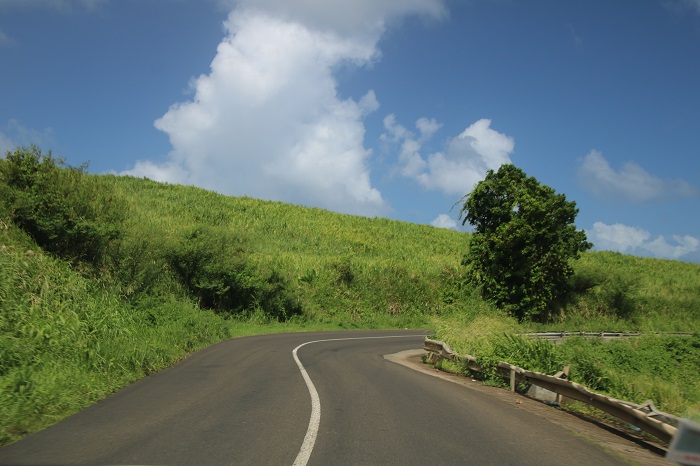 The same was the case of old railroad tracks that predated roads as the key way to get the sugarcane to the distillery for processing as quickly as possible.
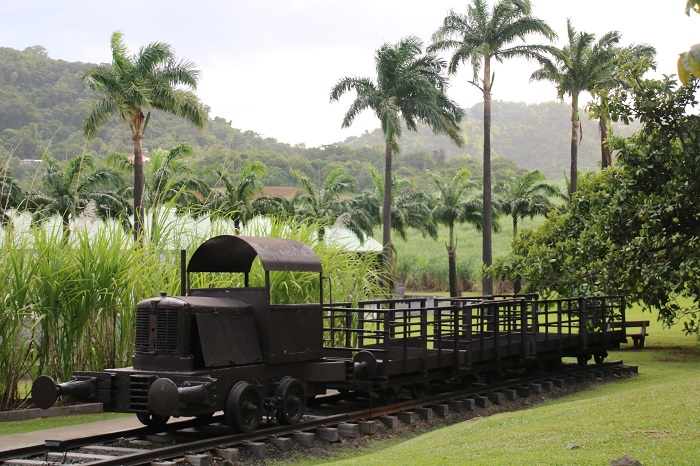
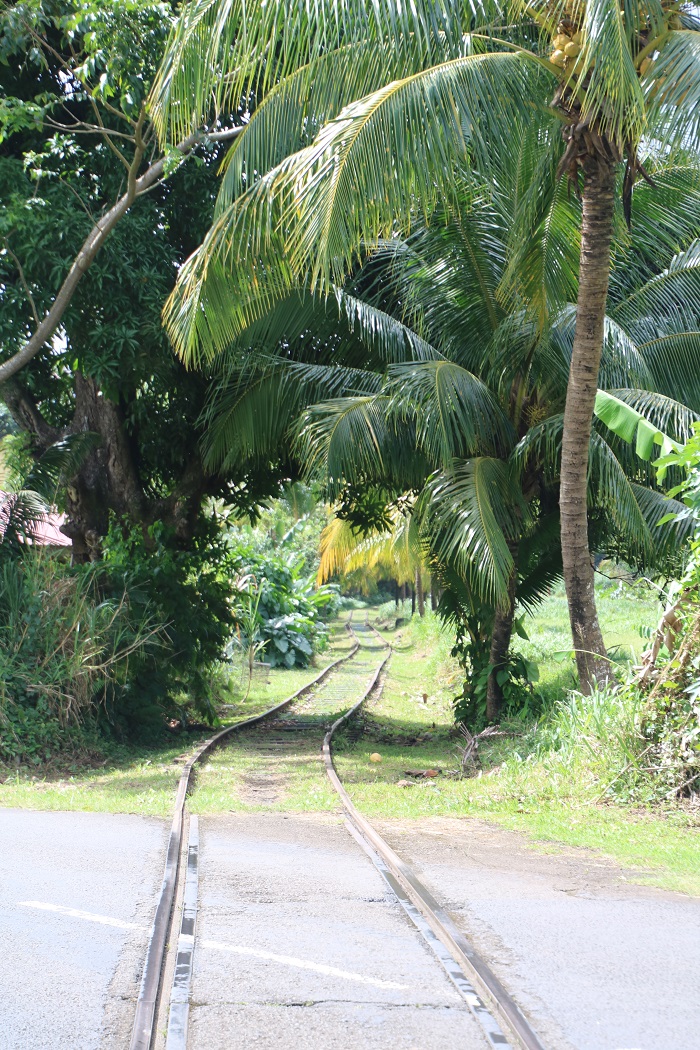 Tracks like these supported steam powered trains and later, diesel like this one on display at one of the distilleries.
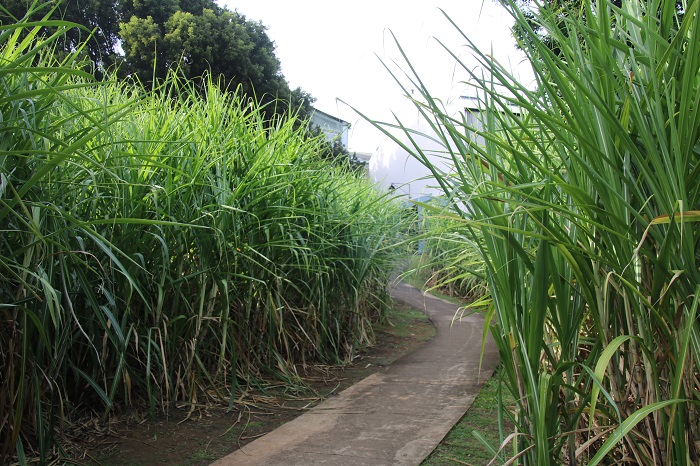
  Unlike rums made from molasses, a byproduct of sugar production, rums on Martinique are made directly from the fresh juice squeezed from sugarcane. It seems that there are a number of varieties of sugarcane, hybrids better suited to different types of rum. Sugarcane is a perennial plant and is harvested once a year. While slave labor was the mainstay of cane and rum production for hundreds of years, none of the distilleries that we visited focused particularly on the human toll of this industry.
  Fortunately, following the abolition of slavery, the industrial revolution and today’s heavy machinery have found ways to mechanize the industry that for so long relied on forced labor. I have no idea what this machine does but it sure looks like it means business.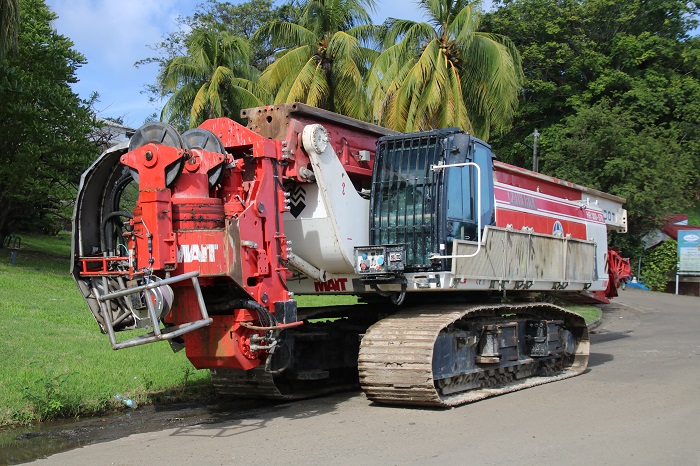
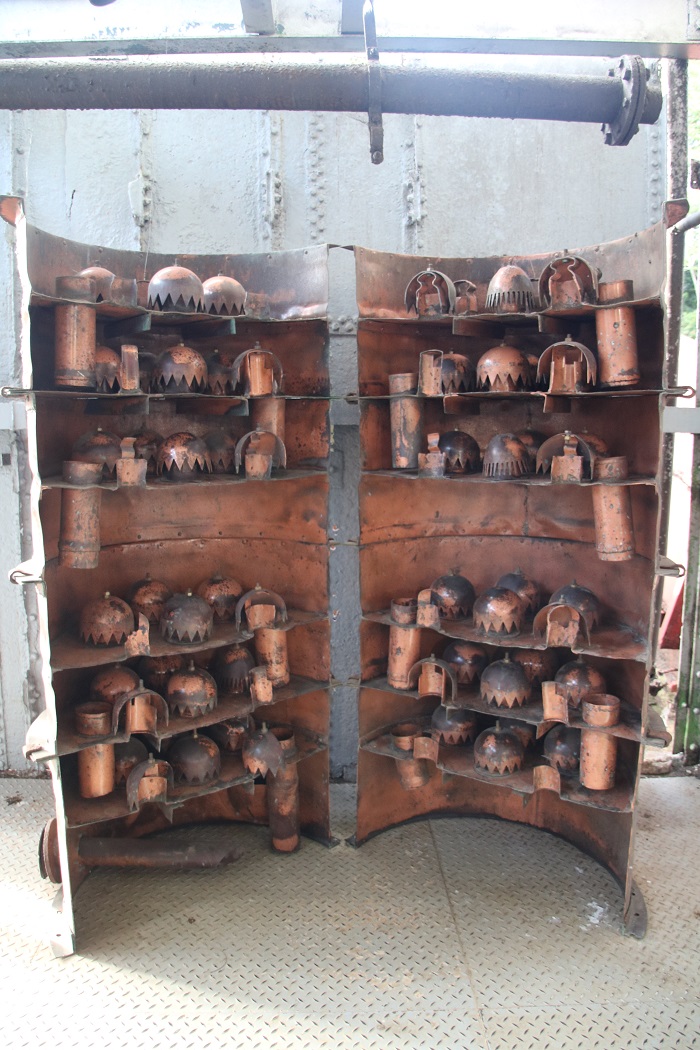
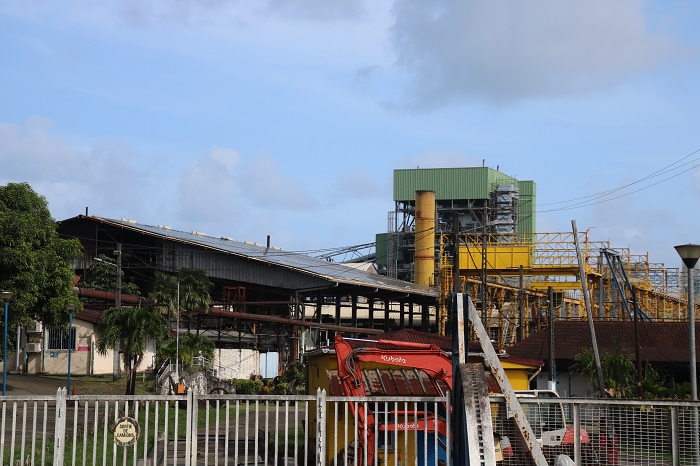 The basic physics of the equipment used for distilling rum hasn’t changed much but today’s plants use much larger and more sophisticated versions of this antique copper distillation tower, cut away to reveal it’s inner workings. It operates on the same principles as today’s massive “crackers” for refining gasoline and, of course, making rum.
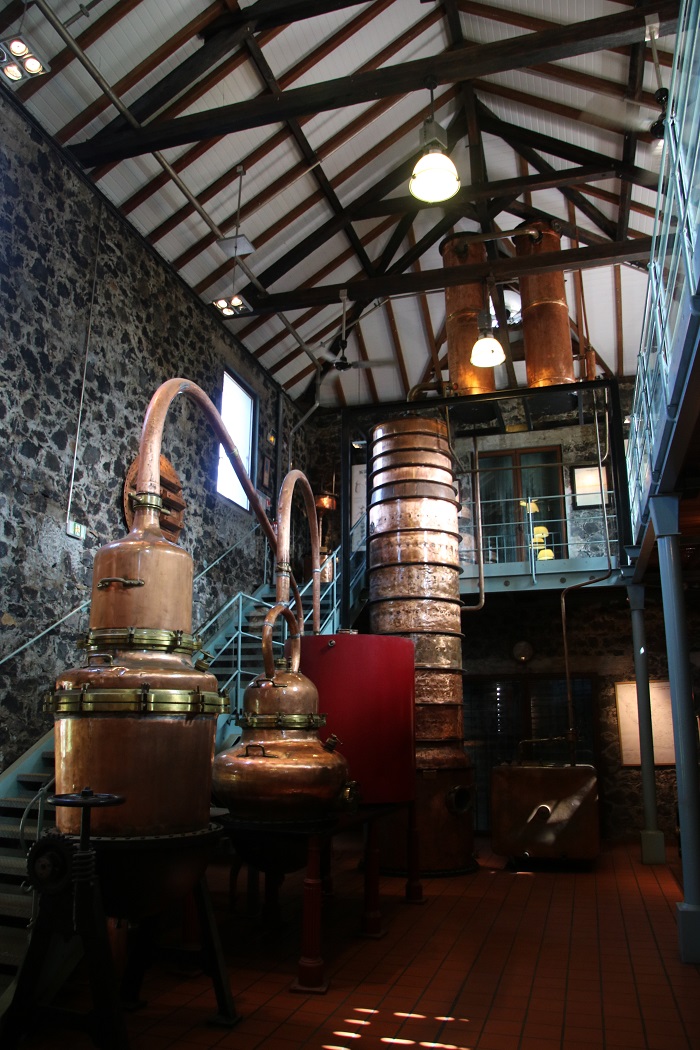
  Much of the equipment used in the traditional crafting of rum looks more like art than industrial equipment.
  Some of the equipment looks terribly dangerous. I can only imagine how it was to work around these huge gears as they spun under the power of powerful steam engines.
 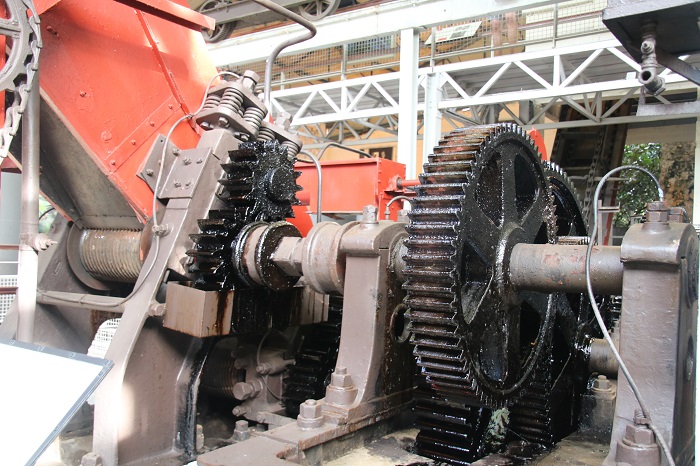 Rum production has always been big business and has always been associated with prominent families, who’s products still carry their name as they have for generations.
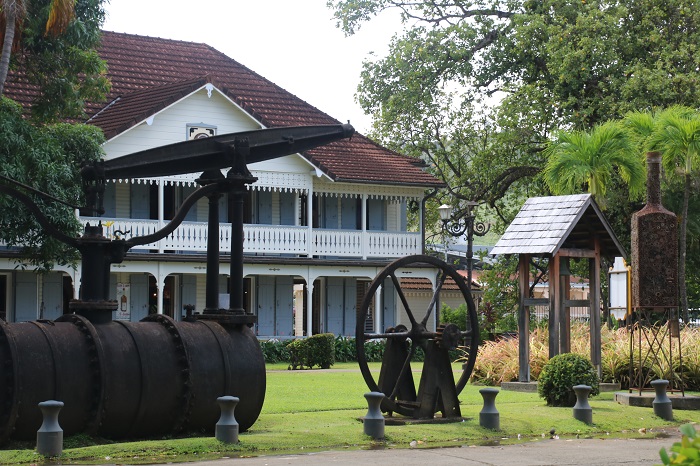
 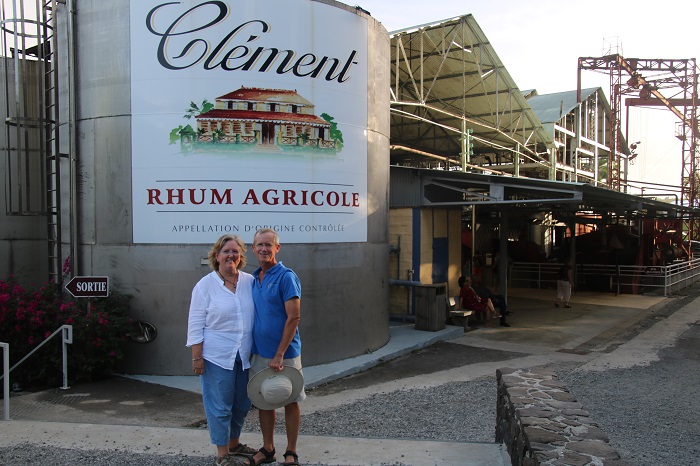 However, the factories were once much smaller and buildings located on the grounds also served as home to the owner and his family. Generations of the Clement family lived here until the mid 80s.
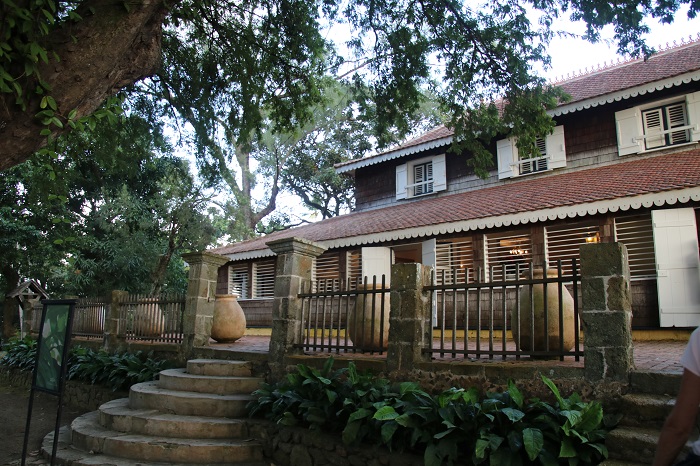 They lived very well and hosted dignitaries such as George Bush Sr, in their home. I’ll bet they served the president some really great rums.
 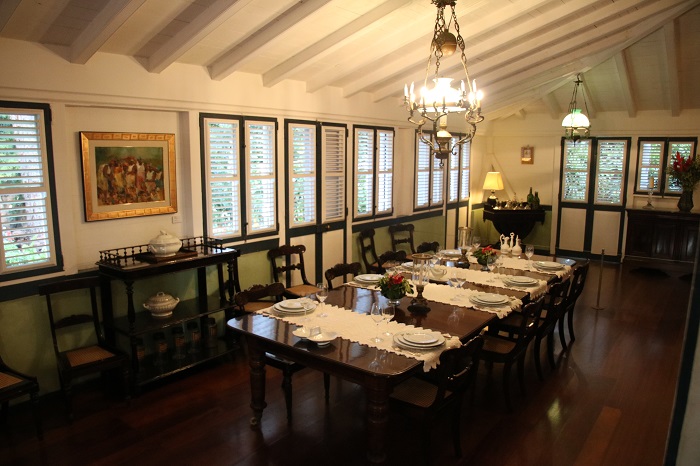 This home now serves as a tasting room and museum.
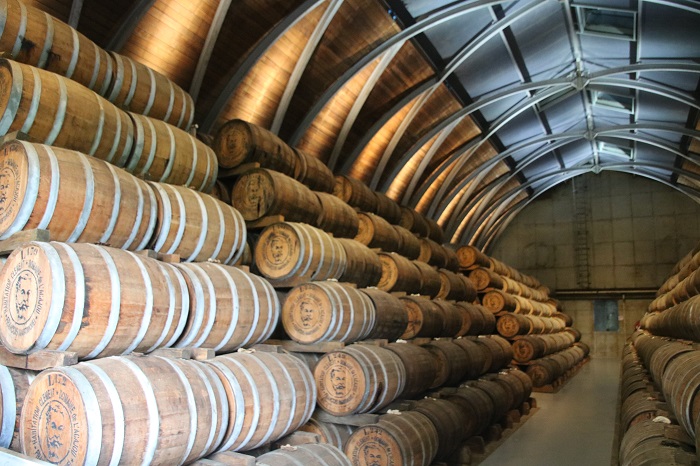
 However, modern production techniques or not, rum is still aged in oak barrels and the length of time it is aged and the type of barrel used, gives the rum it’s distinctive flavor and color. Rum also ages much faster in the warm humid climate of the Caribbean and they say that one year of aging here is equivalent to 4-5 years in a more temperate climate. That’s one reason, beyond being close the raw material source, that rum has always been associated with the Caribbean.
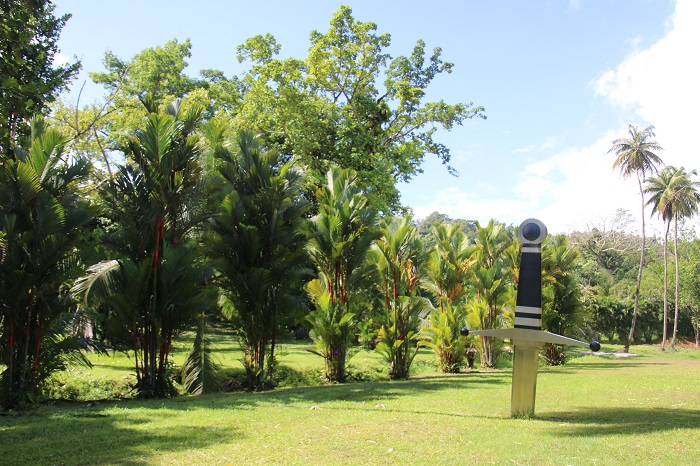
  There is big money in rum and the families behind the brands became very wealthy. The “tasting rooms” and surrounding estates are very elaborate and often include substantial art collections. This “King Arthur deal” is 10′ tall.
 Each estate had buildings, new and old that were more impressive than the last. Makes you want to buy rum. Right?
 Good thing as there is always a nicely appointed tasting room ready to serve and serve us they did.
 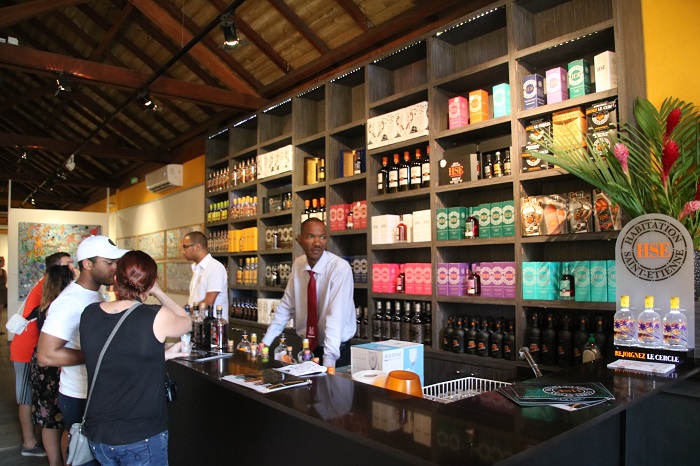 Well, I could go on all day about this but I hope you get the picture. I purchased rums from each distillery and plan on bringing it home aboard Pandora. Want to know first hand how it tastes? Come and visit us and you’ll find out for yourself.
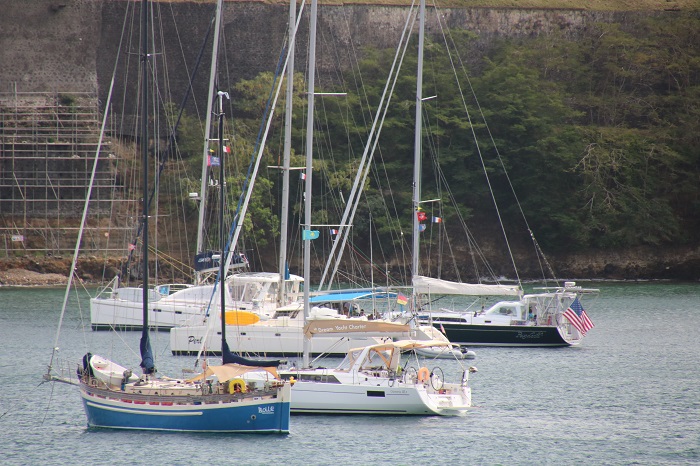
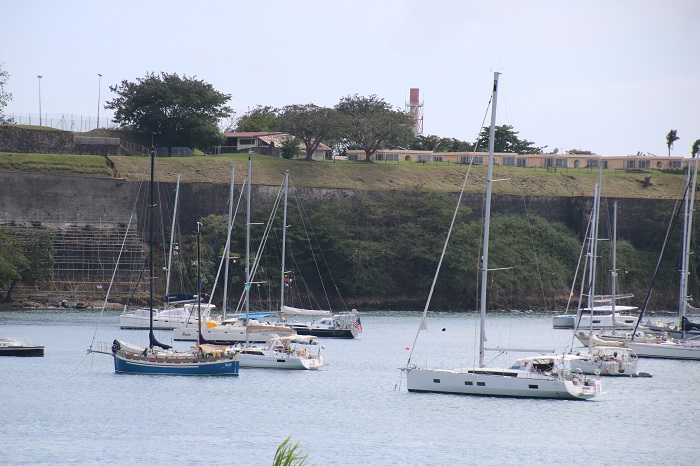 Of course, as the bottom drops off quickly as you get further from shore, the anchorage is tight, and yes, we are as close to the other boats as this photo appears. However, tight anchoring works here as the wind is so consistent with the easterly prevailing winds. The catamaran just in front of us is Raven, with our friends Barbara and Ted aboard. They are from Austin TX and have been living aboard for the last two years.
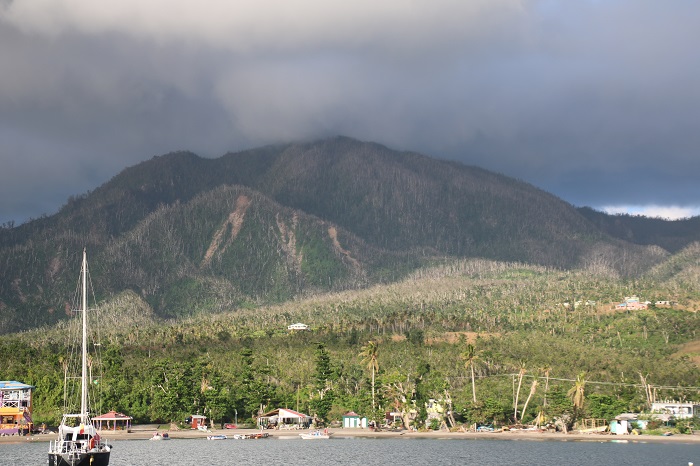
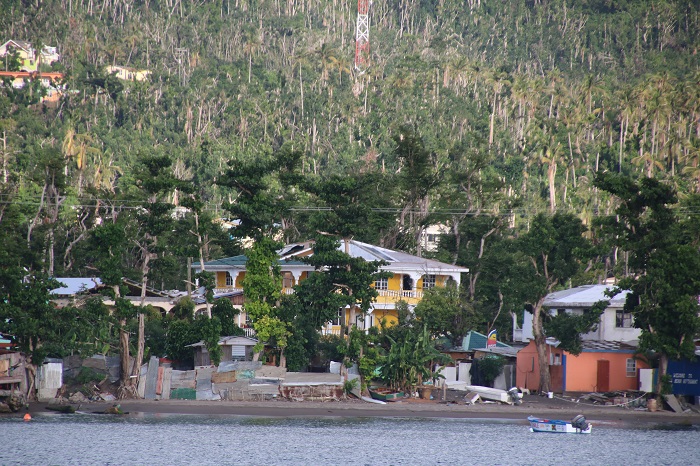
  We arrived here a few days ago after an overnight stop in Dominica, a very rural island that was trashed during last seasons hurricanes. We only stayed there and didn’t even clear in, to break up the trip to Martinique. It was sad to see the devastation that they have endured. Leaves had been stripped from the rain forest. When we were here last winter it was a dark green and very lush. We were told that this is much improved compared to a few months ago when the hillside was completely barren.
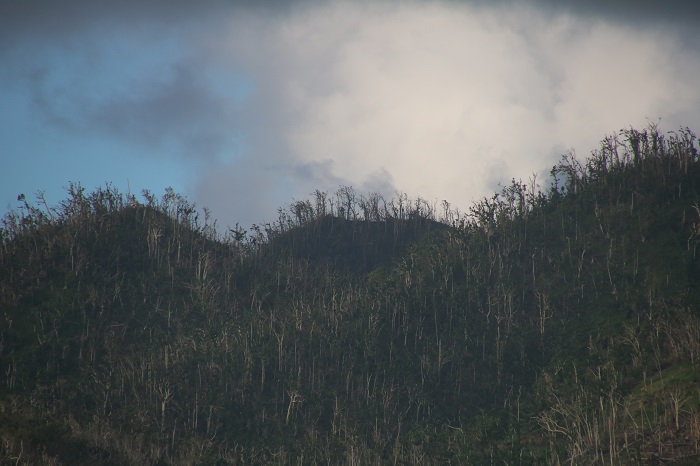
  This closeup really gives a feel for how barren the trees are.
 While a good deal of cleanup has been done, there is still a lot to be done to get things back in shape ashore. There are signs of damaged boats and buildings everywhere.
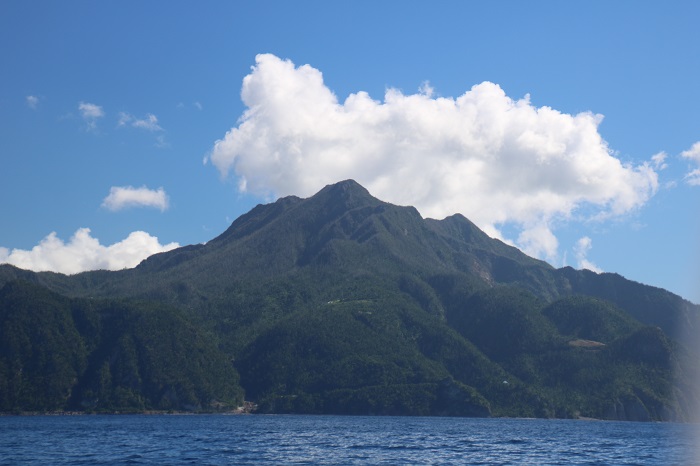
  What’s remarkable is that just 30 miles south, as you approach Martinique, the forest is lush and untouched. And, speaking of lush, we rented a car with Ted and Barbara yesterday to tour some of the rum distilleries and countryside as we drove around much of the island. It was really beautiful. Details to come on that in my next post.
  Anyway, we have also explored the city near the waterfront and it’s a unique mixture of old and modern. There are many lovely streets in the historic district.
 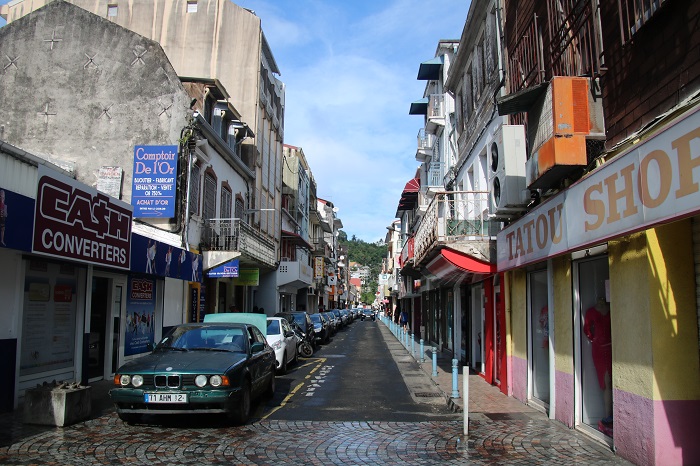 With colorful shops selling most anything from marine supplies to island themed fabric.
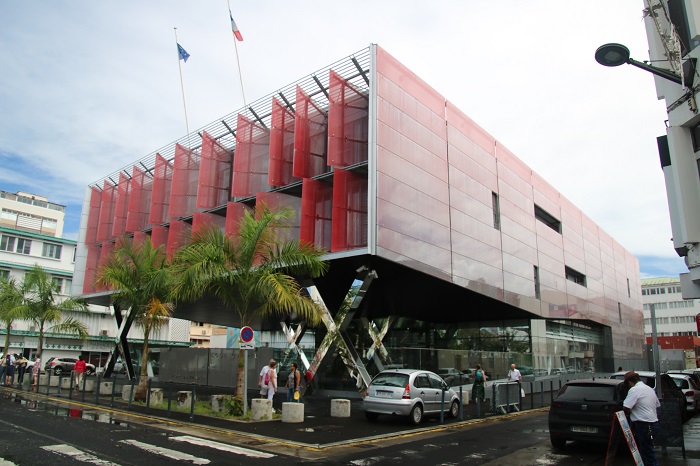
 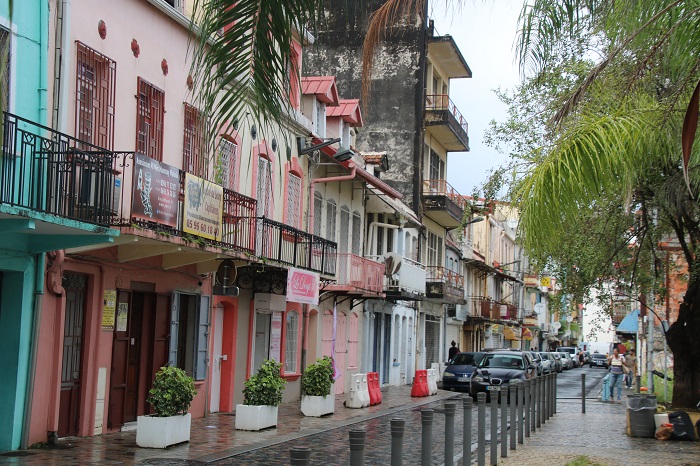 And, stirred into the mix are some really modern buildings. Somehow it all works.
  There are a few real standout buildings including the
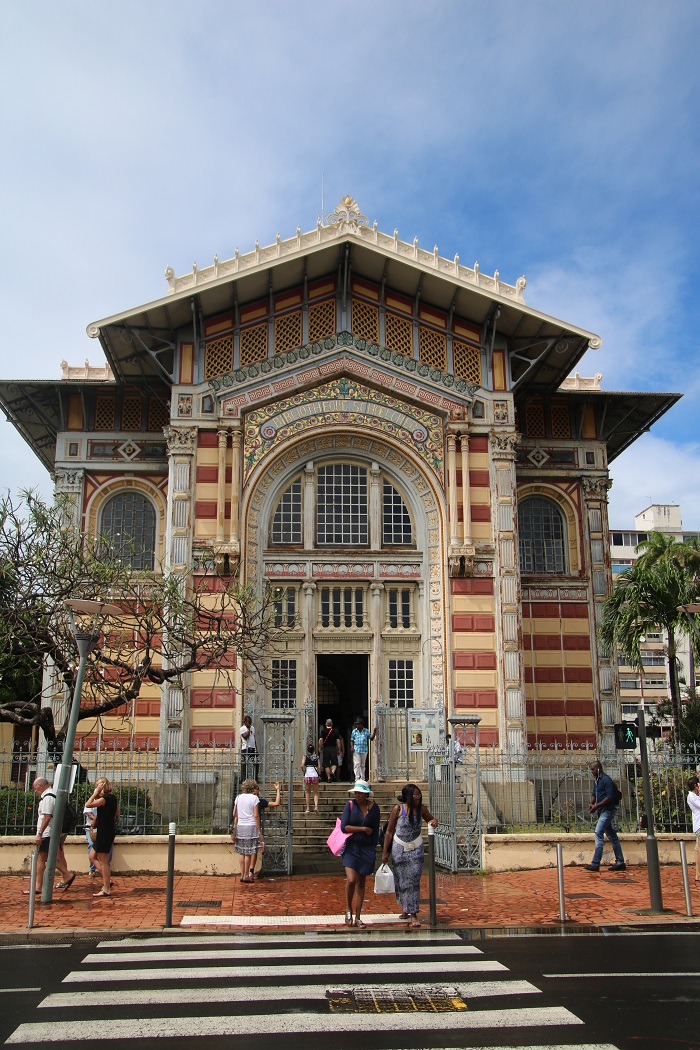 Inside is impressive with a soaring ceiling.
 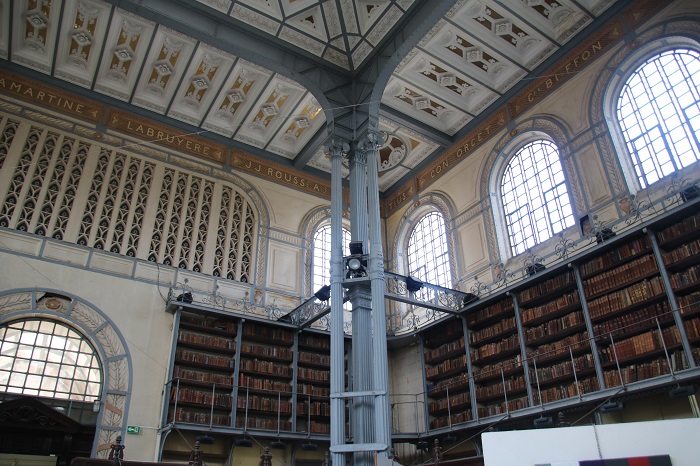 And an impressive collection of old books and manuscripts. Remarkably, this is open to the street so the books are not being stored in a climate controlled environment. Wonder how they will do over time exposed to the humidity.
 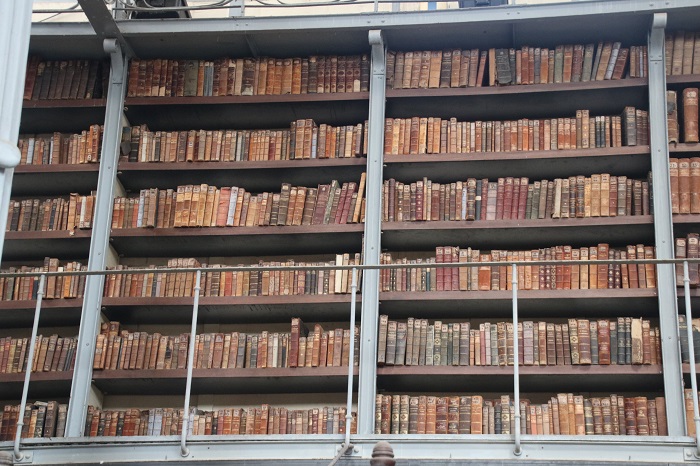 Nearby the
  There’s lots more to tell but too much for a single post so you’ll have to stay tuned. Fort de France is a remarkable spot and I expect that we will stay here for a while before heading further south.