Well, here we are, still in Dominca after a week, the longest we have stayed during our three visits to the island. The last time we were here was for a short visit following hurricane Maria that devastated the island, stripping nearly everything green and leaving the mountains looking more like New England in February than the lush tropical island that it is.
So, here we are again, two years later, and what a transformation there has been. While the forest, that covers 75% of the island still has many dead trees poking up above the new growth, the island forests have substantially recovered from the horrible damage that Maria, the category 5 hurricane, wrought.
A few days ago, Brenda and I, along with a dozen of our closest cruisers friends, hired a driver to take us around the island. Our destinations included, a tiny family run chocolate factory, a beautiful waterfall with a perfect swimming hole in the heart of the mountain rainforest, a dip in a family run hot spring and a terrific lunch overlooking a river and yet another waterfall.
It’s not hard to find waterfalls in Dominica as we were told that the island boasts some 365 rivers, one for every day of the year. Funny, how that magic “365” number works, Antigua supposedly has the same number of beaches. A coincidence?
Whatever the number of rivers, the island is beautiful and what a day it was.
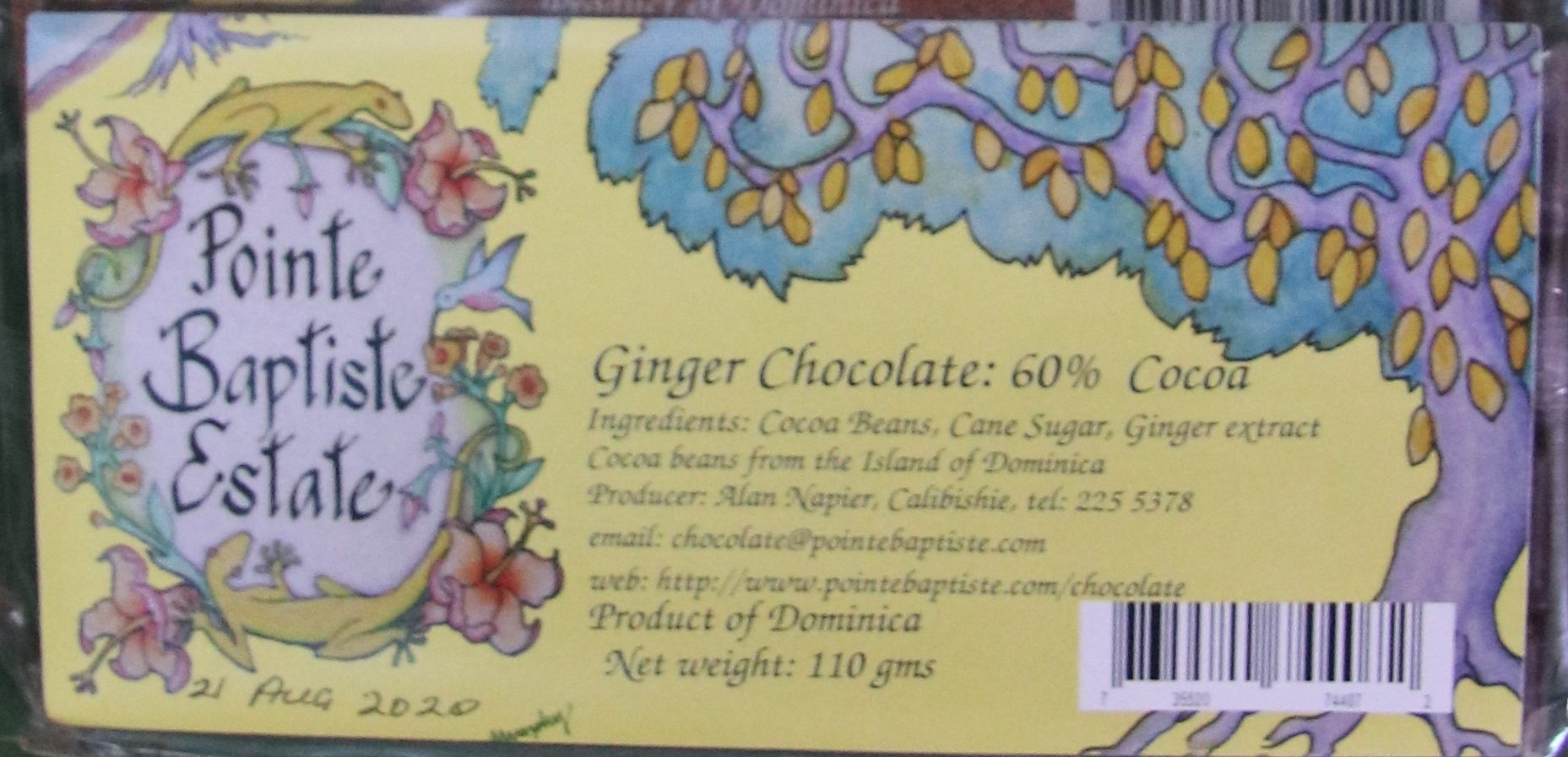
Our first stop, after about an hour in the bus from Falmouth, winding our way around switchback to switchback high up into the rain forest, finally arriving at this tiny “factory” tucked in among the trees with a beautiful view of the ocean in the distance. 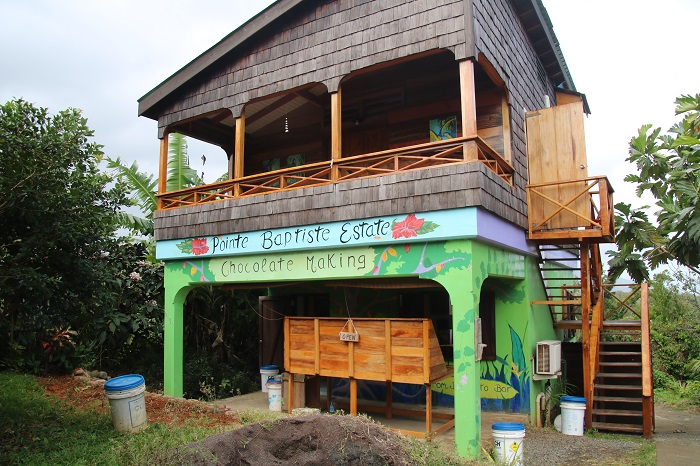 This little family run business makes terrific chocolate, all of which is sold here on the island. a total of 2,000 lbs per year, in many creative flavors.
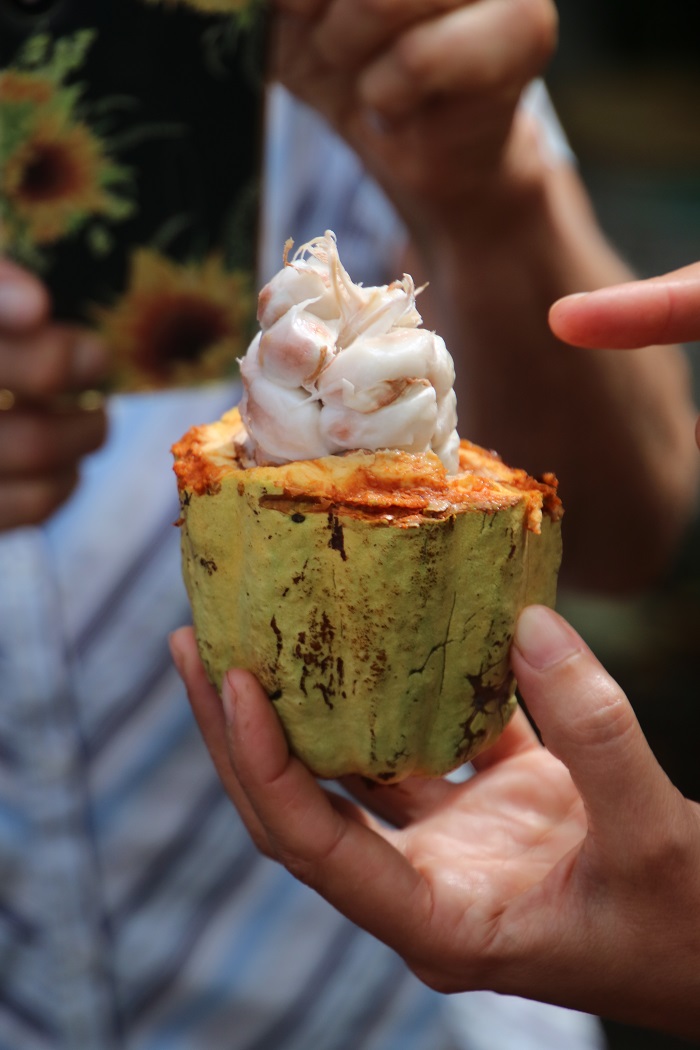
Interestingly, the higher percentage of cocoa that is in the bars, the less sweet it is with the balance of ingredients primarily cane sugar making up the difference. So, chocolate labeled 100% cocoa is bitter and not sweet at all and milk chocolate having the largest percentage of sugar. 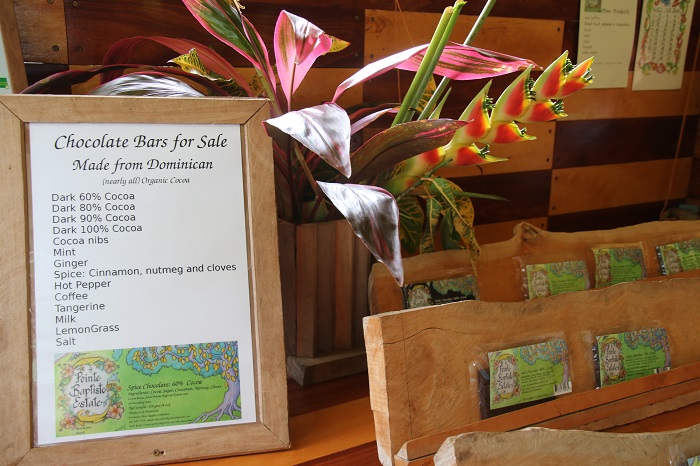 They grow cocoa beans and coffee on the property. This is what a raw cocoa seed pod looks like. The white soft material is sweet and covers the cocoa beans, each pod has a cluster of beans inside.
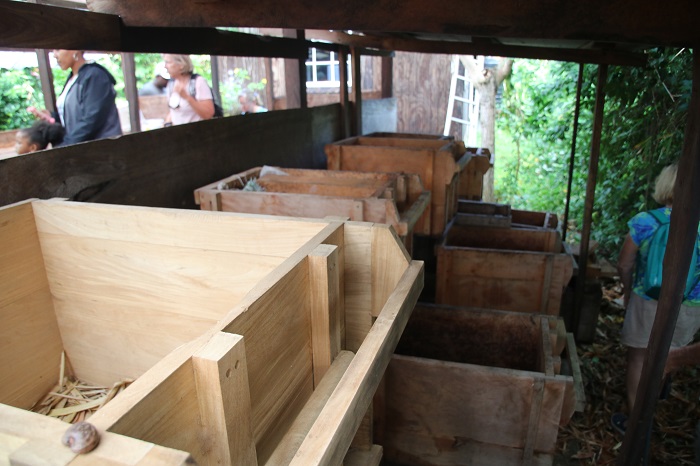
  The wet raw beans are put into these wooden bins, covered with banana leaves where they are left to ferment for a several days.
  The beans are then separated from any liquid from the fermentation and spread to dry on open racks.
 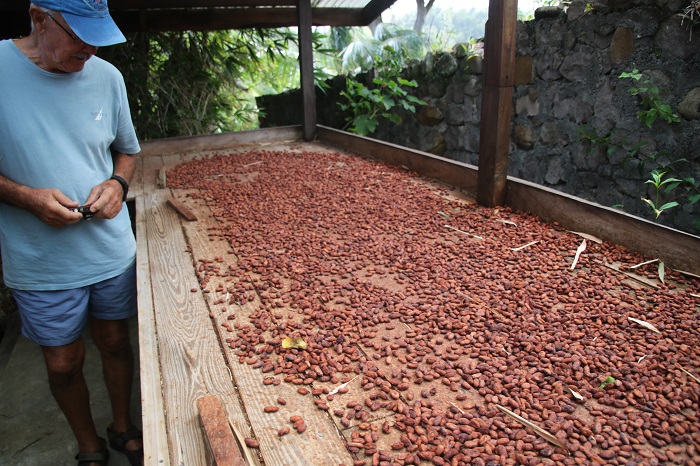 The dry but still raw beans are about 1/2″ long and already smell like chocolate.
 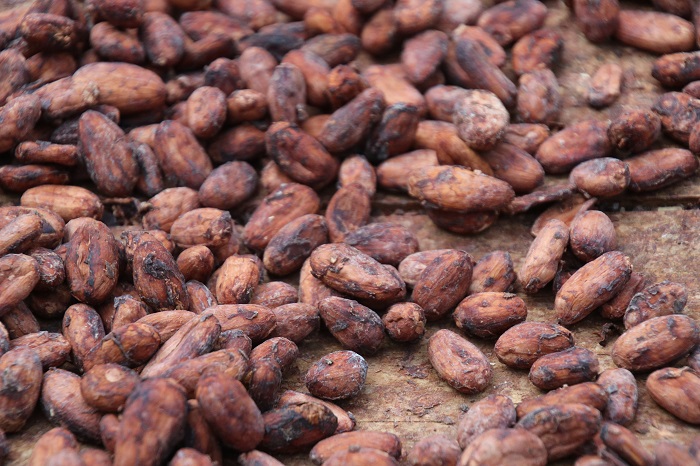 Then the beans are roasted in a special oven at, I think, 250 degrees F.
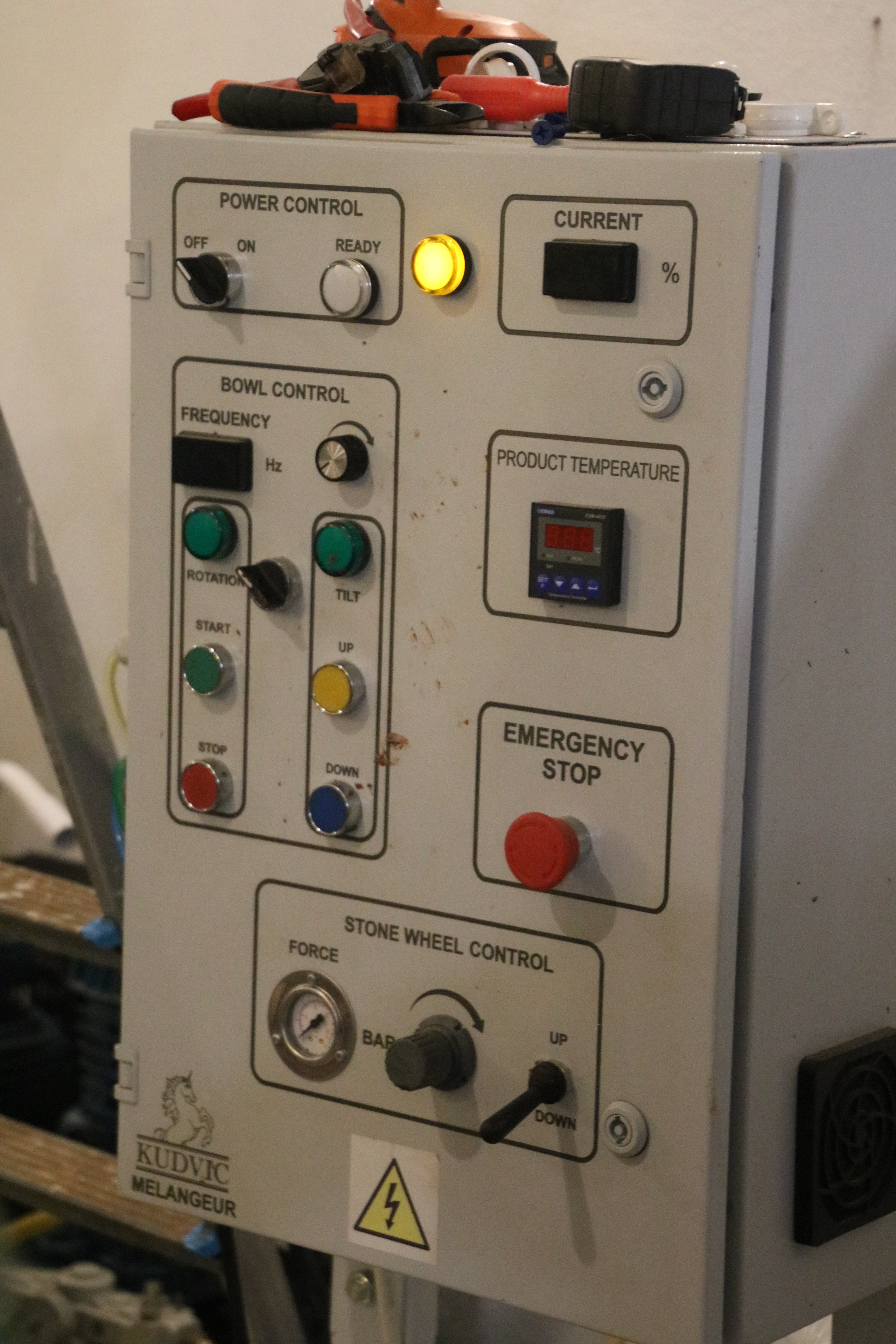
 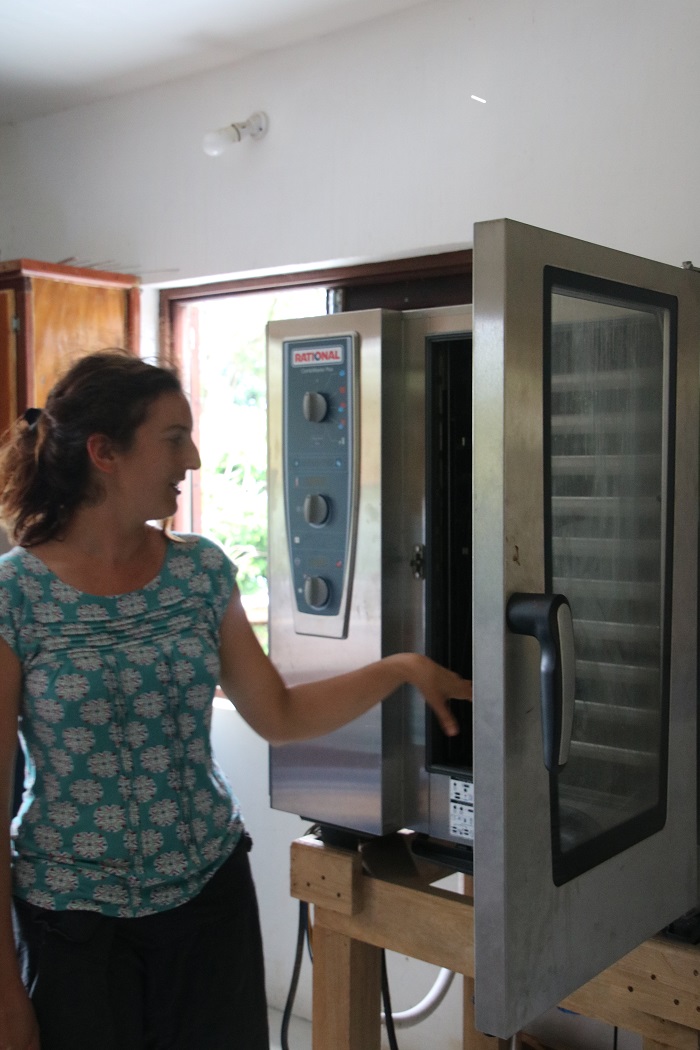 While the process is fairly primitive, it is carefully controlled by modern equipment. I wonder if the “emergency stop” button sets off an alarm meant to keep someone from eating too much chocolate? Hmm…
 After roasting the beans are roughly cracked to separate the outer hull from the meat of the bean.
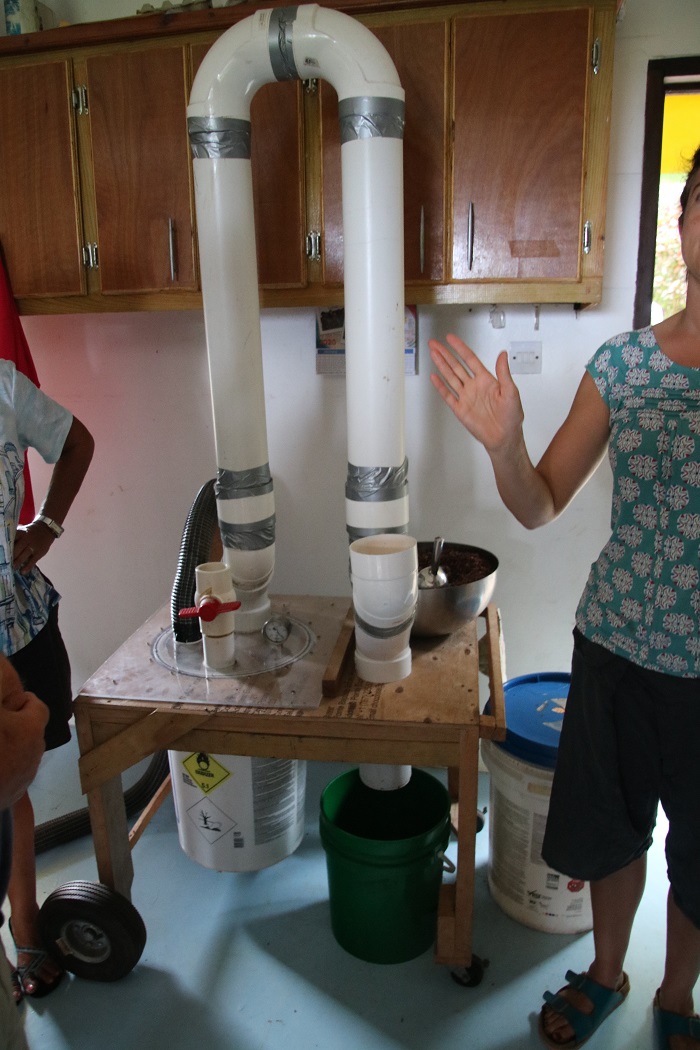
 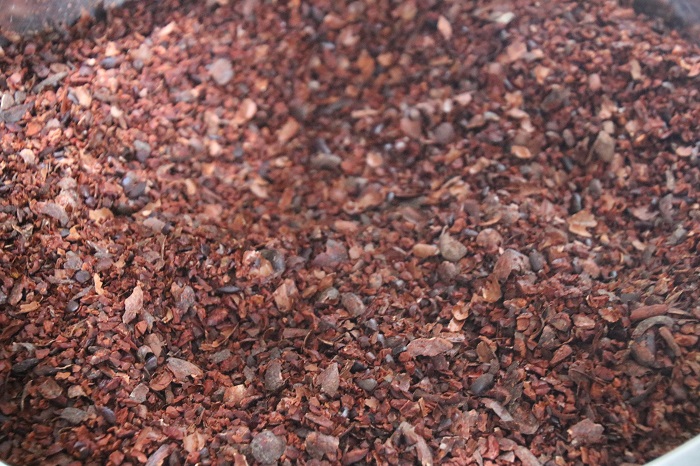 Then they are put into this machine, where air is blown into the pipe, the force of air carrying the lighter husks up and away, separating, as you might say, “The wheat from the chaff”. It’s simple and ingenious and effective. The “good” stuff, which is heavier, falls into the black bin and the “chaff” goes up the tube and down into the white bucket.
  Next the “cleaned” beans are ground into a rough paste by rollers that turn around in the bucket. At this point, they really smell like chocolate.
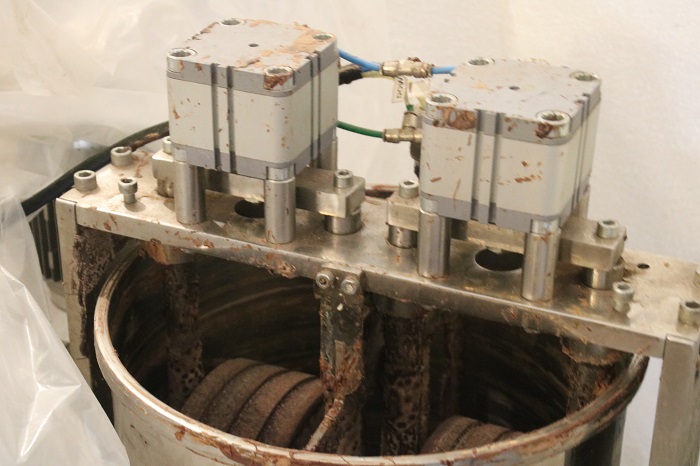 An additional step puts the chocolate into an even finer grinder/roller that smooths things out into a very smooth paste. Finally, depending on the particular flavor that is planned, they mix in the appropriate amount of cane sugar and any flavoring that might be needed, like ginger or hot pepper, two examples. Then the mixture is poured into molds to harden, prior to packaging and labeling.
 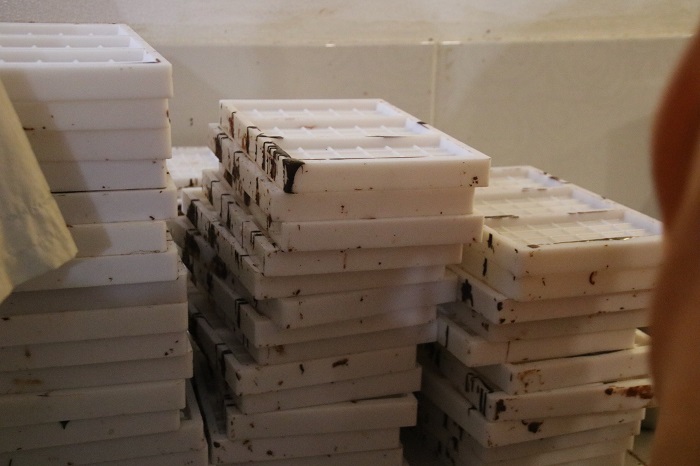 They produce many flavors and we tried nearly all of them. Hungry for more? Unless you are in Dominca, or good friends with Brenda, your’e out of luck as their product is only available on the island. Of course, you too can take a tour as they happily welcome visitors.
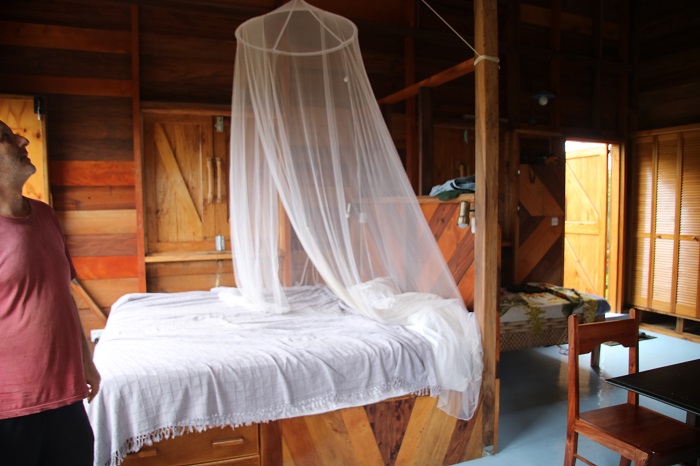
  This chocolate is very much “home made” as the father/daughter owners have actually built a home above the “factory” where she lives with her boyfriend. I was quite taken by the design of the house and tropical woods used in the construction, wood that was cut from trees knocked down during the hurricane.
The wood, and I understand that it goes by it’s local name of the Galba Tree, and looks a lot like mahogany, if a bit heavier. While he didn’t mention it to me, it seems that this tree is fairly rare. I purchased two 4′ long boards from him. It’s not quite enough to make a table from but perhaps I can make some cutting boards out of the pieces. It’s a beautiful wood. 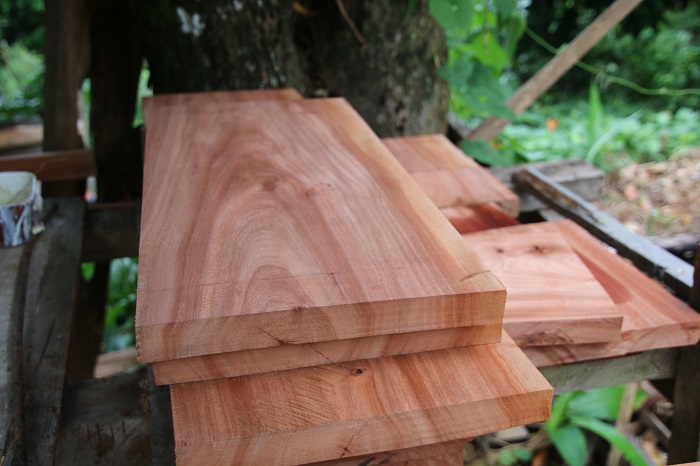 After hearing of my interest in the wood and how he built his home, I was invited up to take a look inside. It was like visiting an enchanted tree house in the forest.
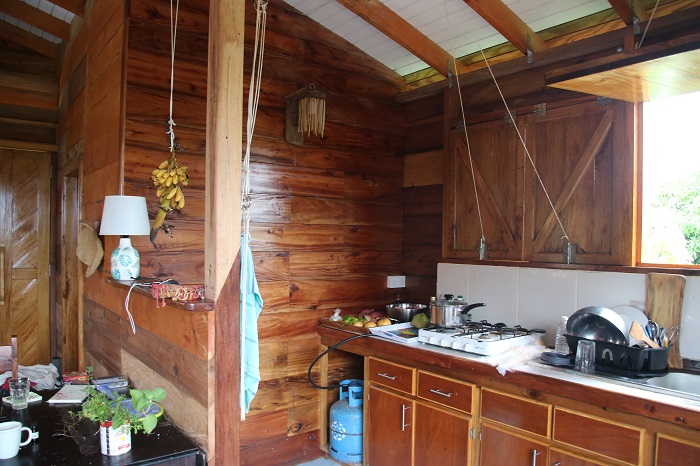
  A very nice functional kitchen.
  And a spectacular view of the ocean in the distance.
 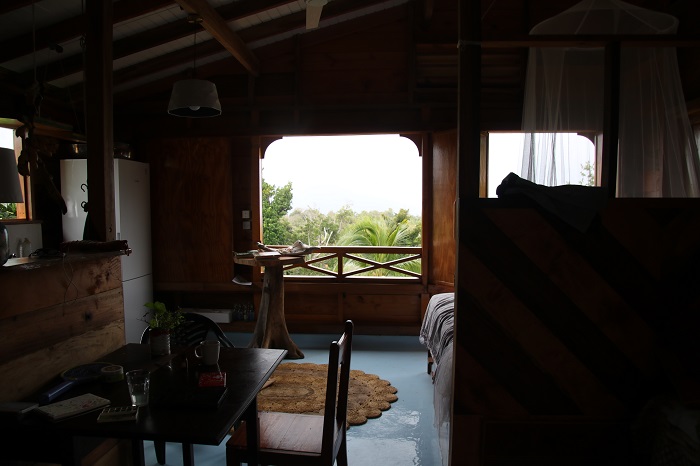 What a wonderful spot. If you ever get an opportunity to visit, I recommend you do. A small business living off of the land and yet respectful of the forest which sort of sums up things here in Dominca, the nature island.
But wait, there’s more!
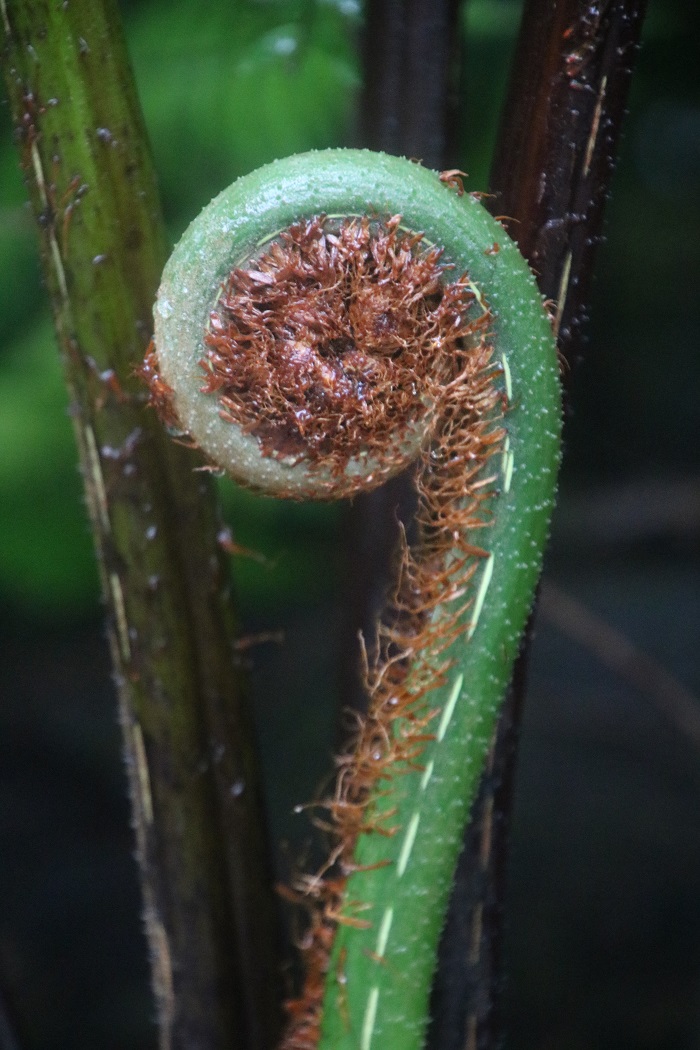
From there we headed deeper into the rain forest, winding our way, switchback to switchback, to visit what is locally known as The Emerald Pool, a swimming hole deep in the wilderness and yet still accessible with a short walk on a well groomed path. 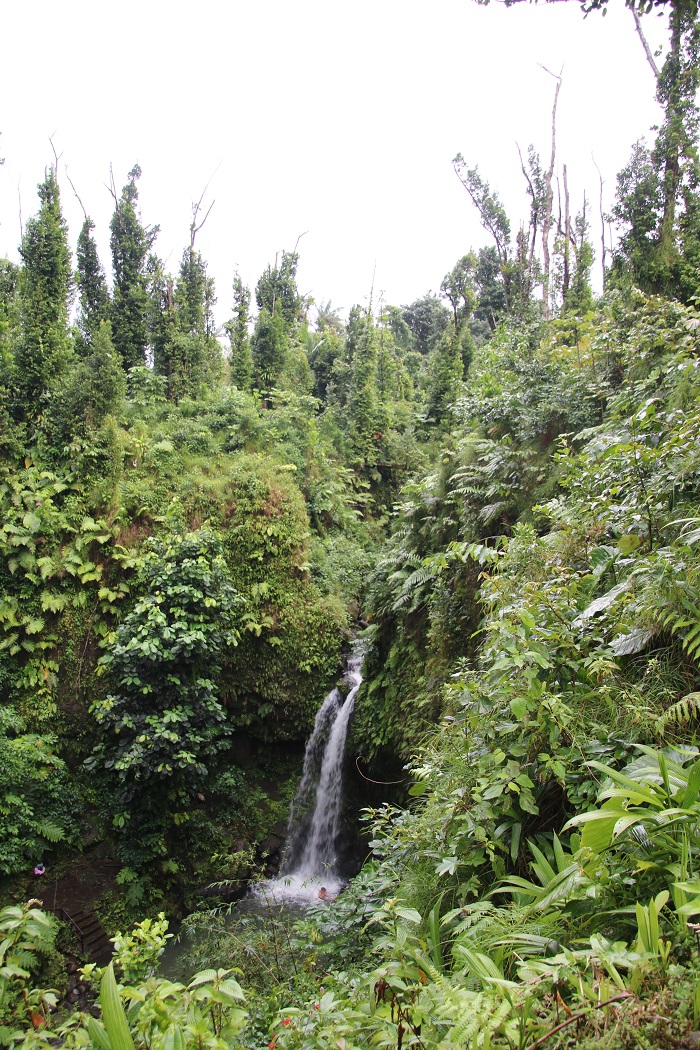 I am always struck by the lush plants of all kinds. This tree ern “fiddle head” is much larger than it looks, the thickness of a broom handle.
  The path to the pool meanders a short distance past rapids to an observation area and then you are there.
 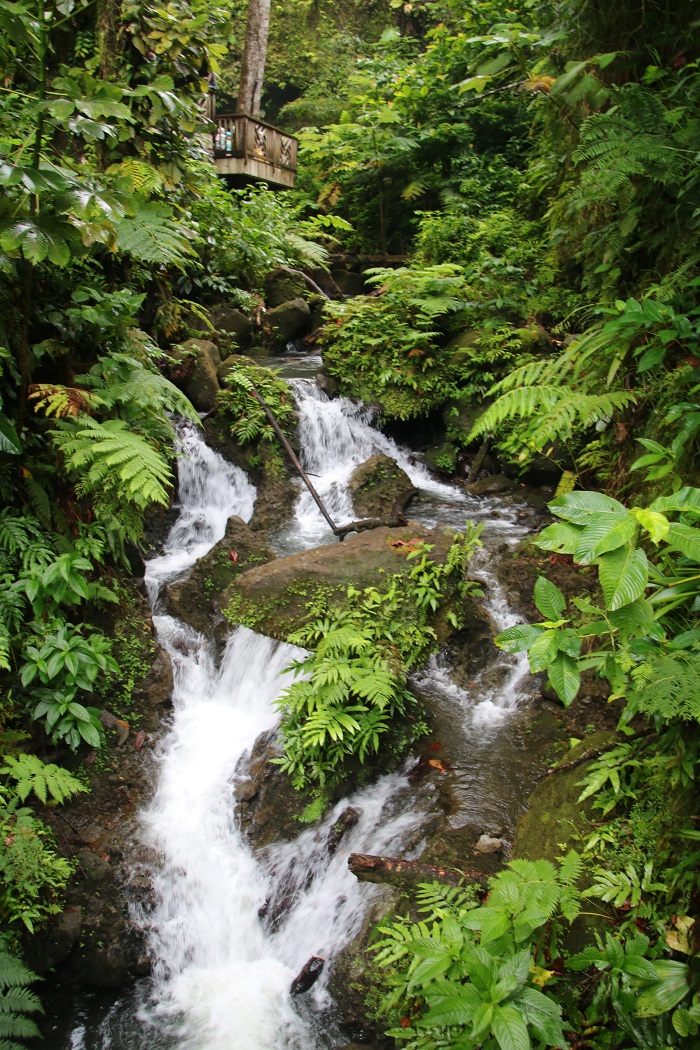 The water, while not “martini” cold, will make you catch your breath when you dip in, is a lot cooler than the surrounding air as it thunders down into the pool.
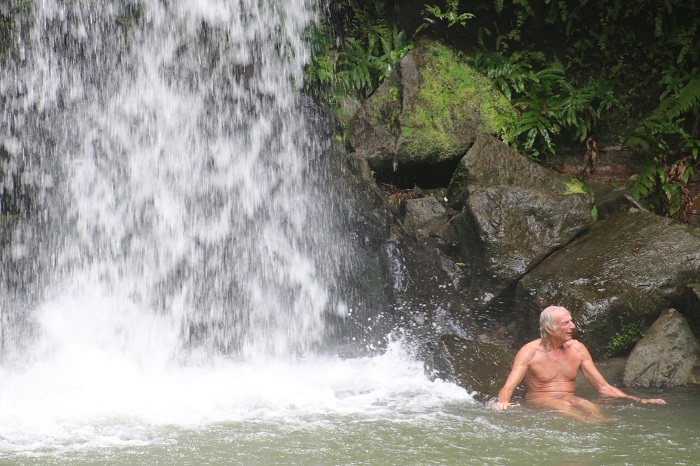
You have to be careful not to get to close to the falling water as it packs quite a punch during it’s 40′ drop and will drive you under. Here I am, close but just far out into the pool. The noise was deafening. 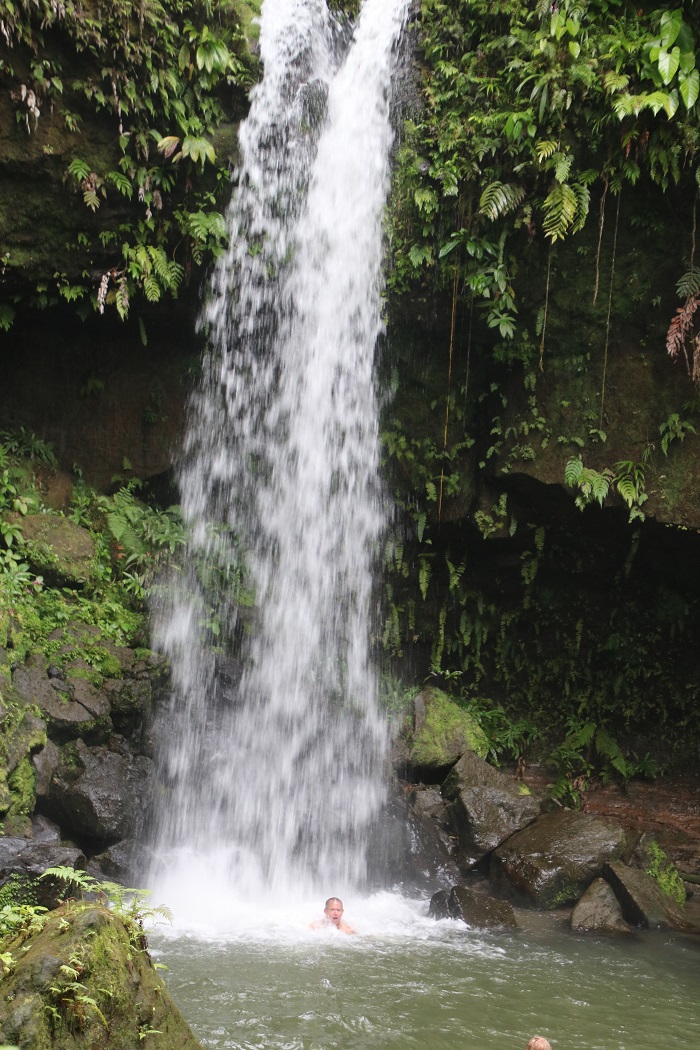 Maureen, can you hear me now? What?
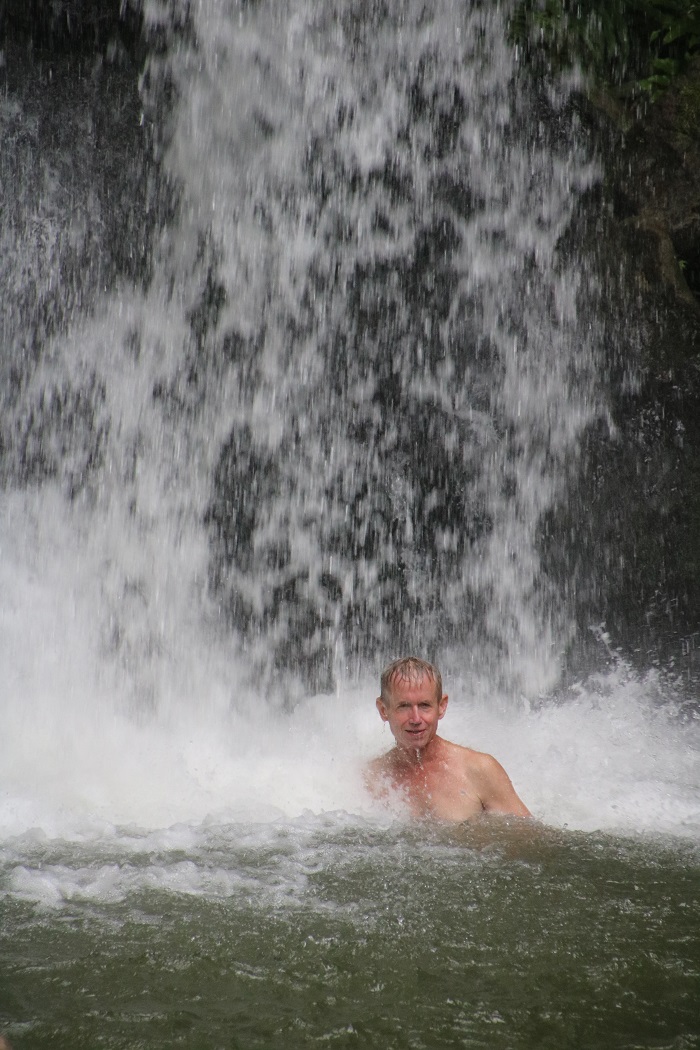 My friend Bill, looked like he was thinking about auditioning for a part in Pirates of the Caribbean, much of which was filmed on the island. Unlike many of the cruisers on the French boats, Bill is wearing a bathing suit. At least I think he is. Bill? Hard to tell…
 As you would expect, where there are mountains and lots of water, there is hydro power. This setup, with a large pipe running vertically down a cliff, powers a small turbine generator. And, with some 300″ of rainfall each year, there is a constant supply of water to run the turbines.
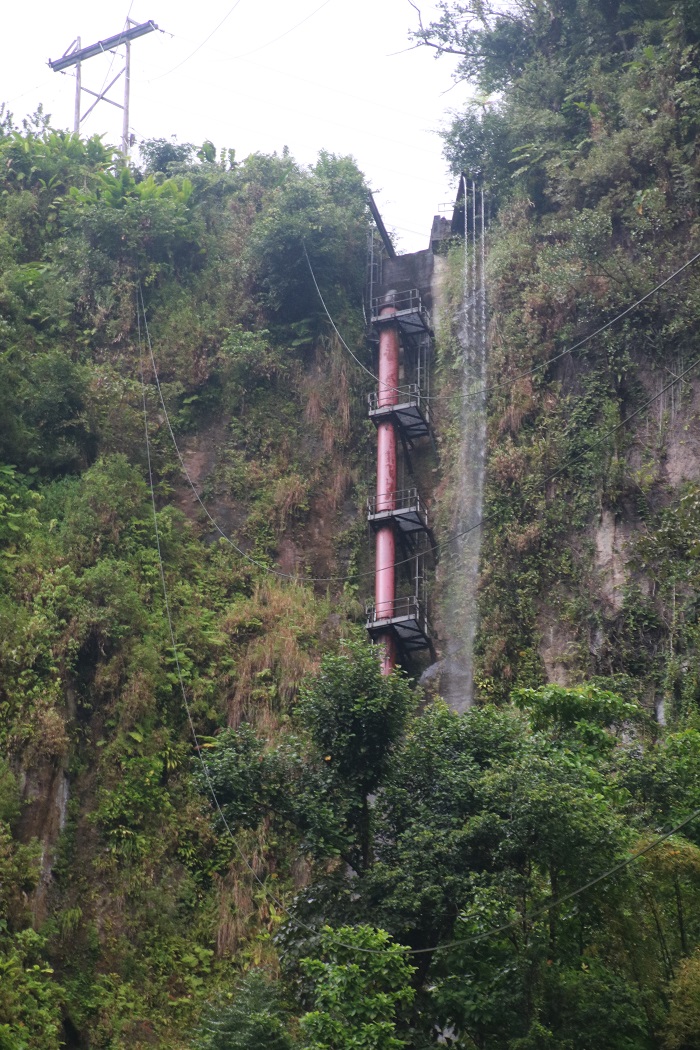 Unfortunately, in spite of the abundant sunshine, wind and water, only about 1/4 of the energy produced on Dominica is renewable. Hopefully, this will increase in the coming years.
Our stop for lunch was a remarkable spot perched on the side of a ravine, just down the hill a bit from the Pool. The food was quite good and the view even better. 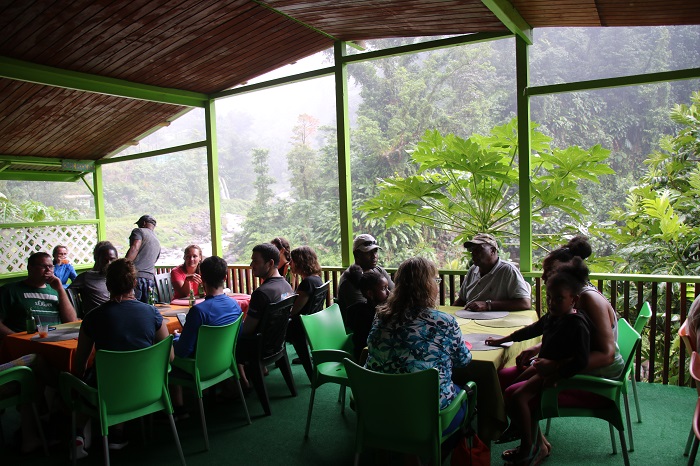 In the distance you can see the double exit spouts from the hydro generator.
 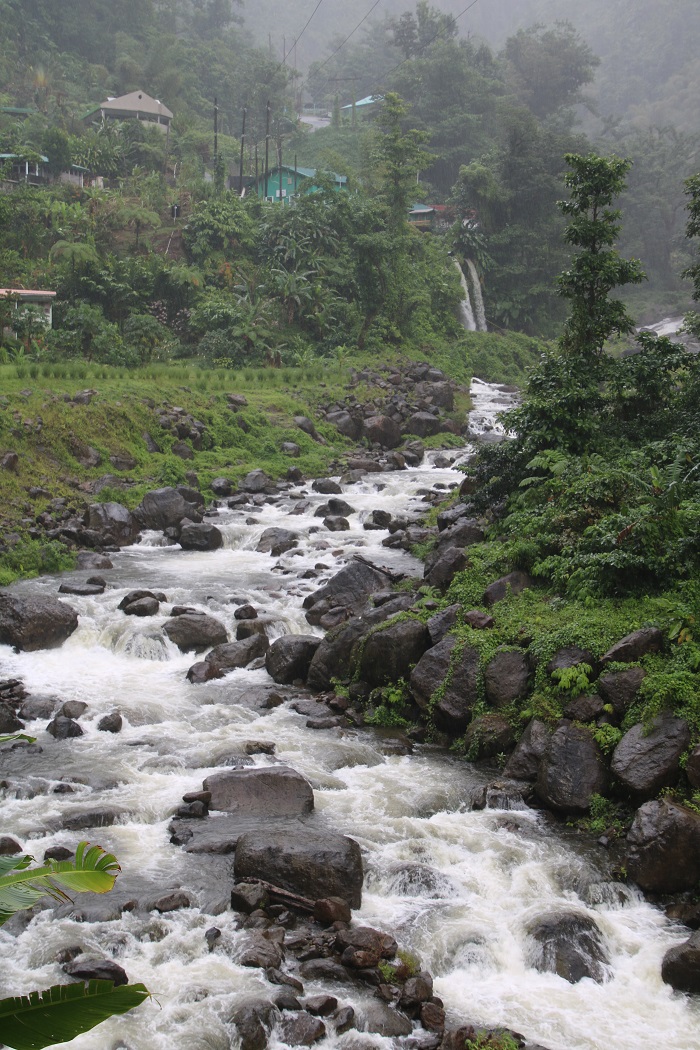 Ok, so our last stop of the day, and by this time we had driven around 3/4 of the island, was a natural hot spring. The charming spot was run by a local family and tapped into naturally hot springs. The island has a number of active volcanoes and what they call “boiling lakes” where the water coming out of the ground is so hot, it boils.
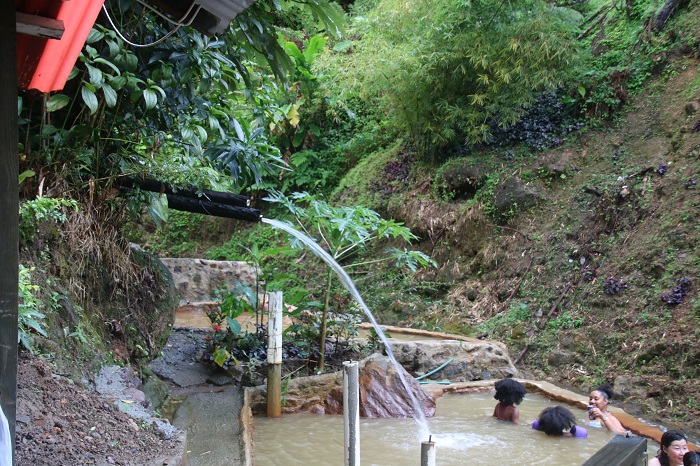
The water was muddy and warm, but fortunately, not boiling. 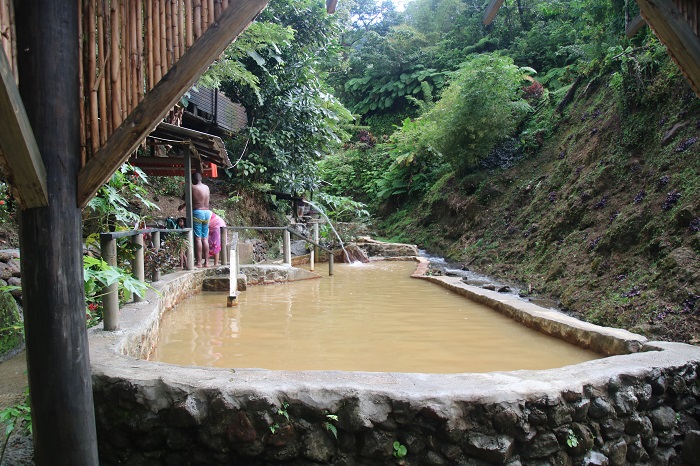 There were three pools, each progressively smaller, and each with water that was a bit hotter but still a good temperature for a tropical mountain soak. As we were up in the mountains, where the air was cooler, it felt good to be in the warm water. You can see the spout that is pouring warm/hot water into the pool. The water was almost to hot to touch and quite murky. I didn’t want to think to hard about what sort of “bugs” might be growing in the pool. However, the pools were not crowded and had a good amount of water flowing into them so I guess it was ok. No odd skin lesions yet… Bill, Maureen? Any boils breaking out? Brenda?
 All and all, we had a wonderful day and even though we were visiting some of the most popular spots on the islands, they weren’t crowded. No surprise on an island with only about 600 hotel rooms.
We won’t be heading south to Martinique for a few more days, still hoping for a break in the strong winds. In the mean time, we will be spending time with our cruising buddies and in a day or two will visit a reservation where the descendants of the once mighty Carib Indians live.
These people, once known as fierce warriors, are now known for their beautiful baskets and other hand crafts and it will be fun to see how they practice these skills. Brenda purchased a particularly exquisite example of one of these baskets a few days ago and wrote about that and other observations about the cruising lifestyle and our visit to Dominica. It’s worth reading so click here.
I expect that we will both have plenty more to say after we spend another day touring Dominica, where the love of nature is indeed King and Queen.



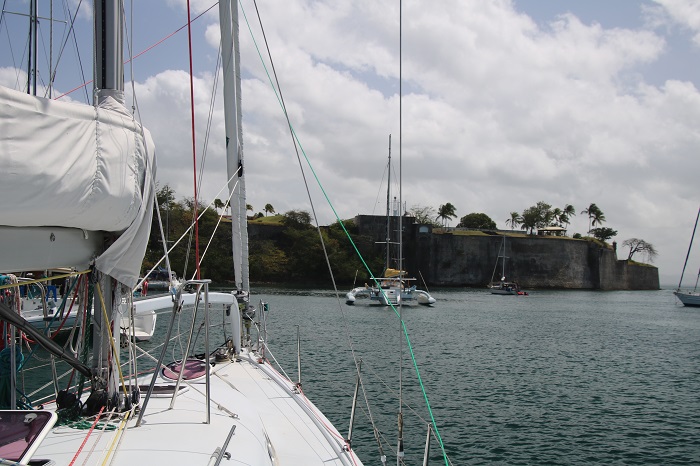 And a modern city on the other.
 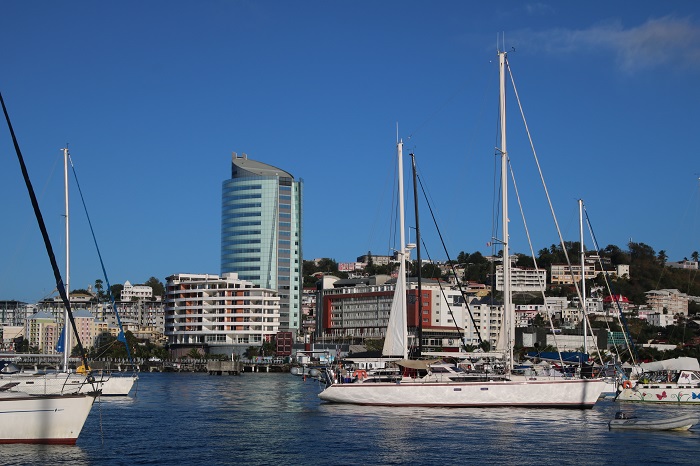 Big city or not, the view in the distance is a constant reminder that we are still in the tropics with distant mountains shrouded in clouds and mist.
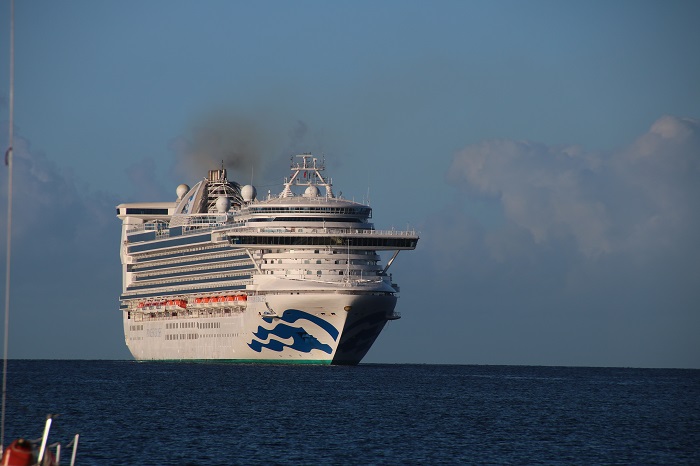
 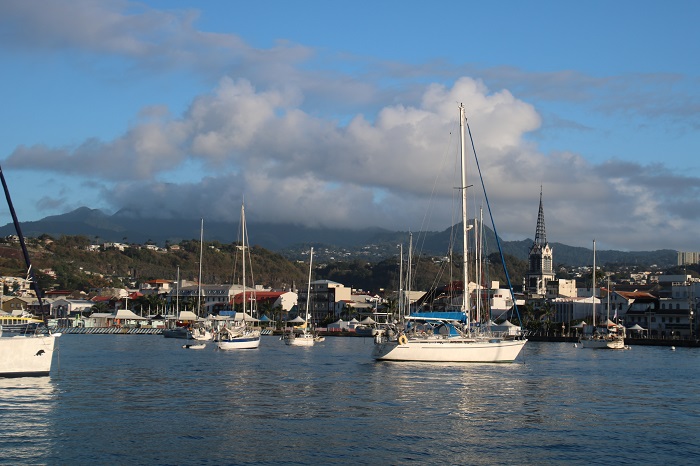 The harbor is busy and very rolly during the day with a constant stream of ferry boats leaving big wakes and cruise ships, sometimes 5 a day, coming and going.
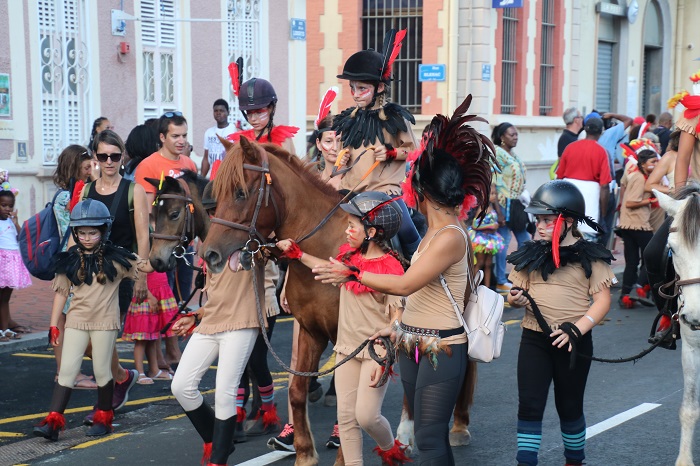
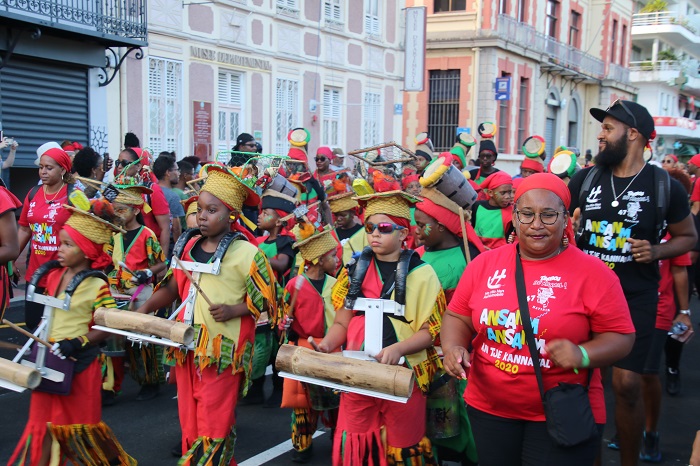
  Yesterday was the first day of carnival, a four day festival of parades and fun that runs though next Wednesday. The fun begins each afternoon at 4:00 and continues well into the we hours with near constant drumming and firecracker detonations late into the night.
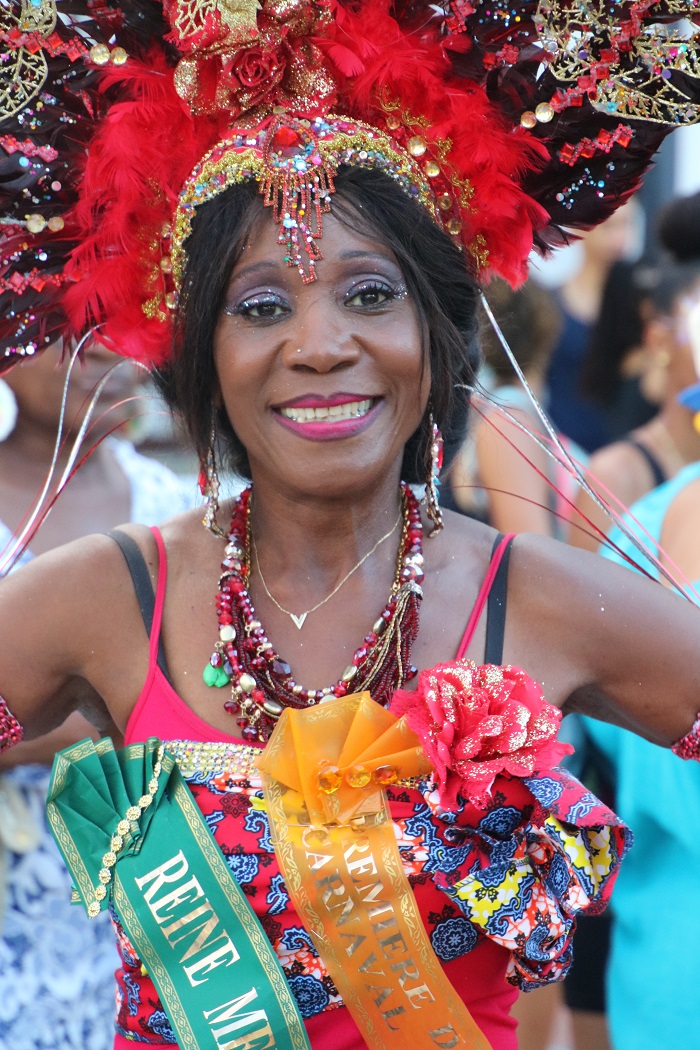
 This lady was clearly not a newcomer to such events and knew that she was indeed “looking marvelous”.
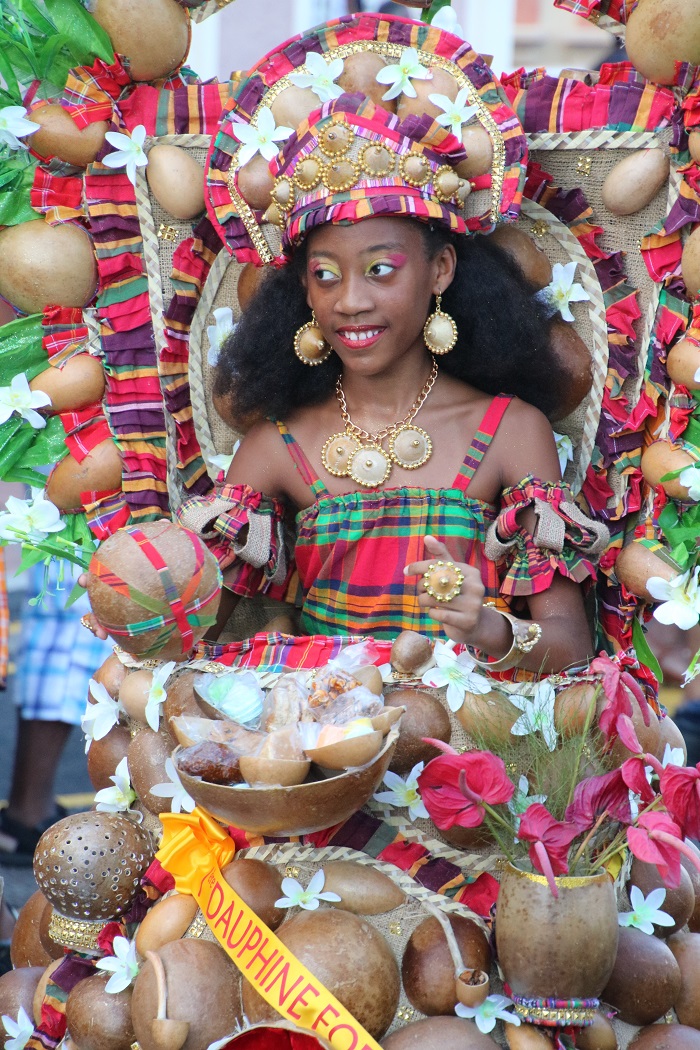
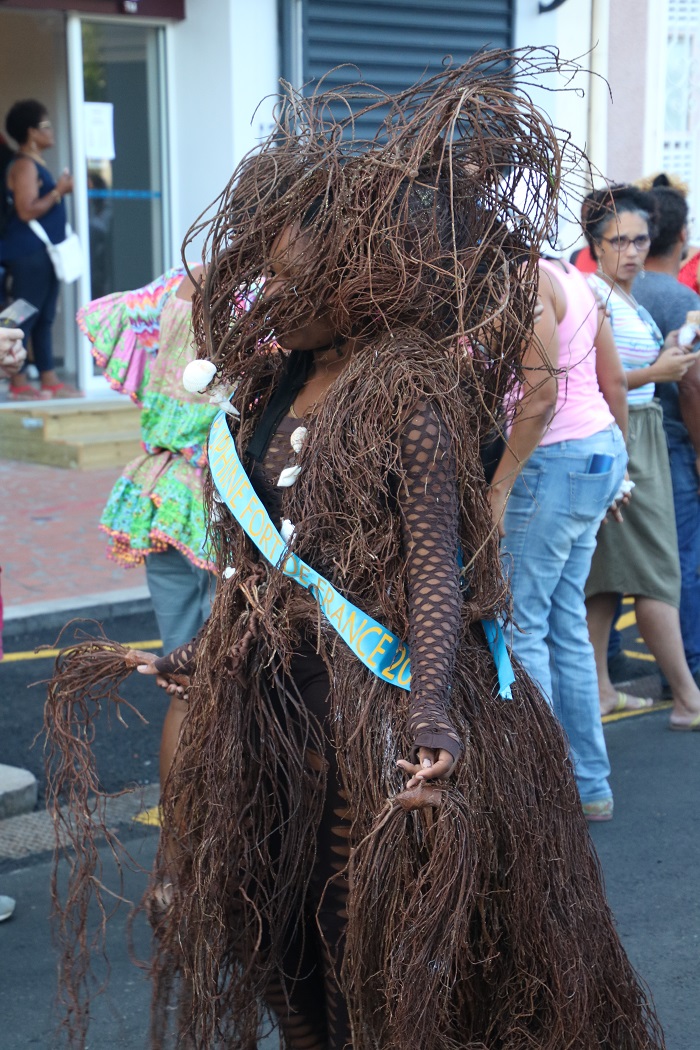
  Not sure what this costume was all about, very elaborate and festooned with with coconuts.
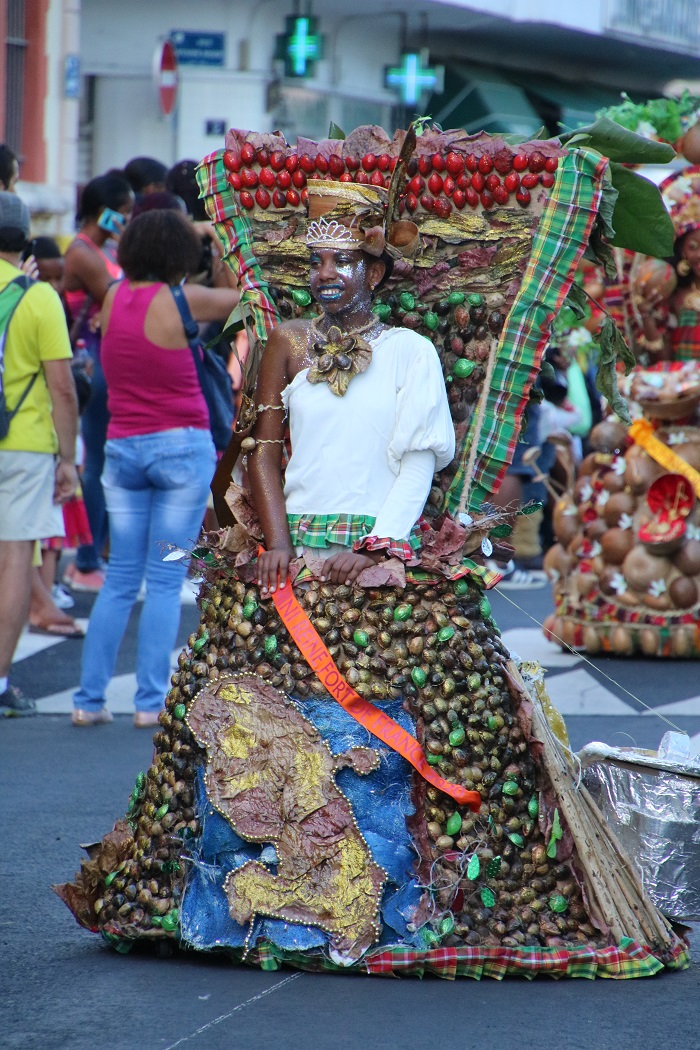
  This one was, well, I’m not sure but it was, but it was very elaborate.
  And an enthusiastic group with REALLY LOUD drumming.
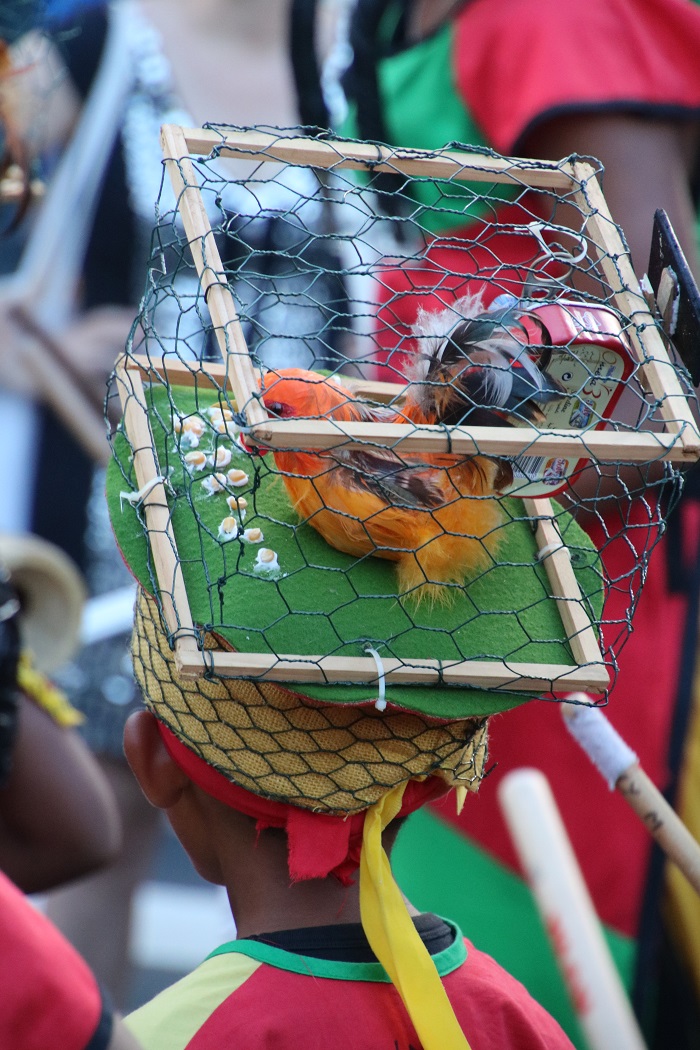
  Many of the children in the group sported these hats. What were they all about? I have no idea.
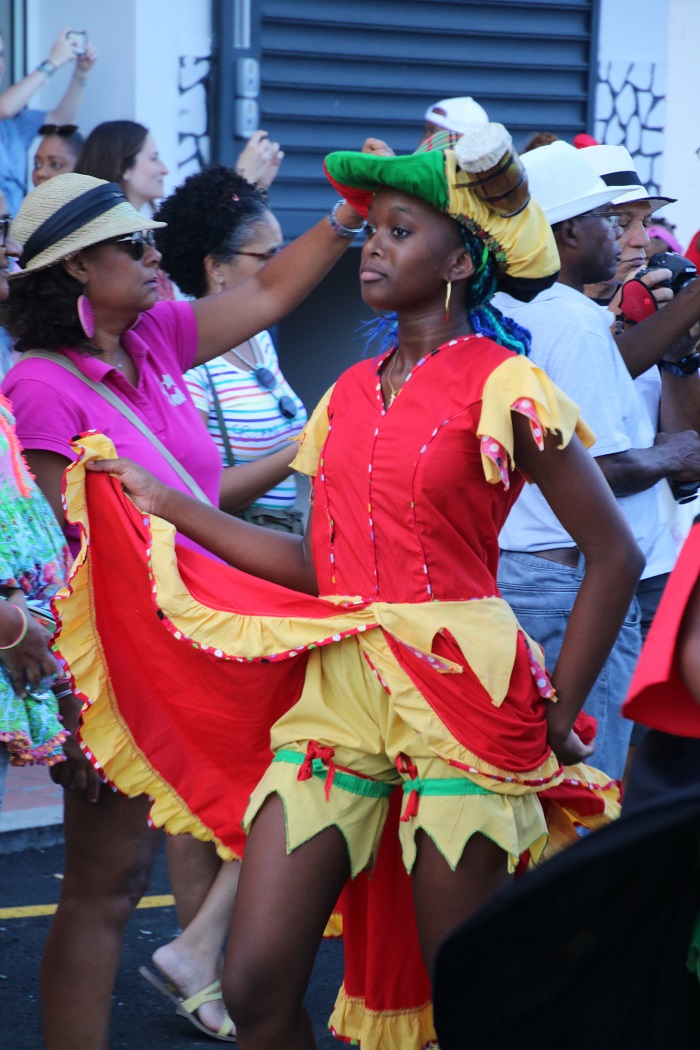
  This young woman was clearly having a great time.
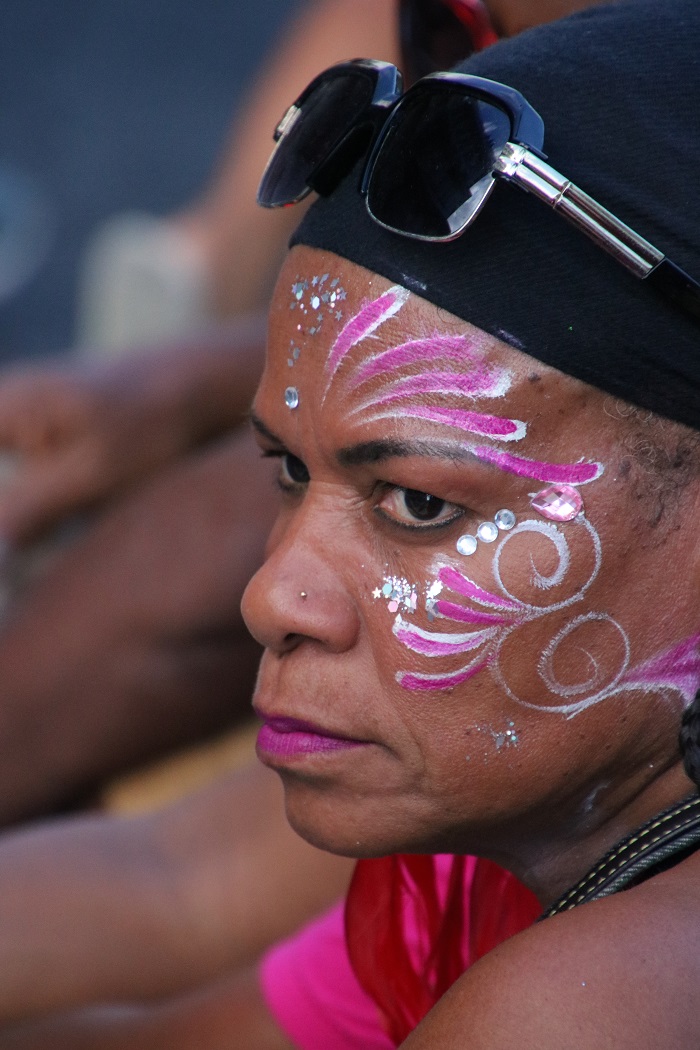
  Spectators, many decorated with face paint, lined the route.
 But this guy was perhaps the winner. Of course, he, like everyone else, had his smartphone. No pockets I guess.
 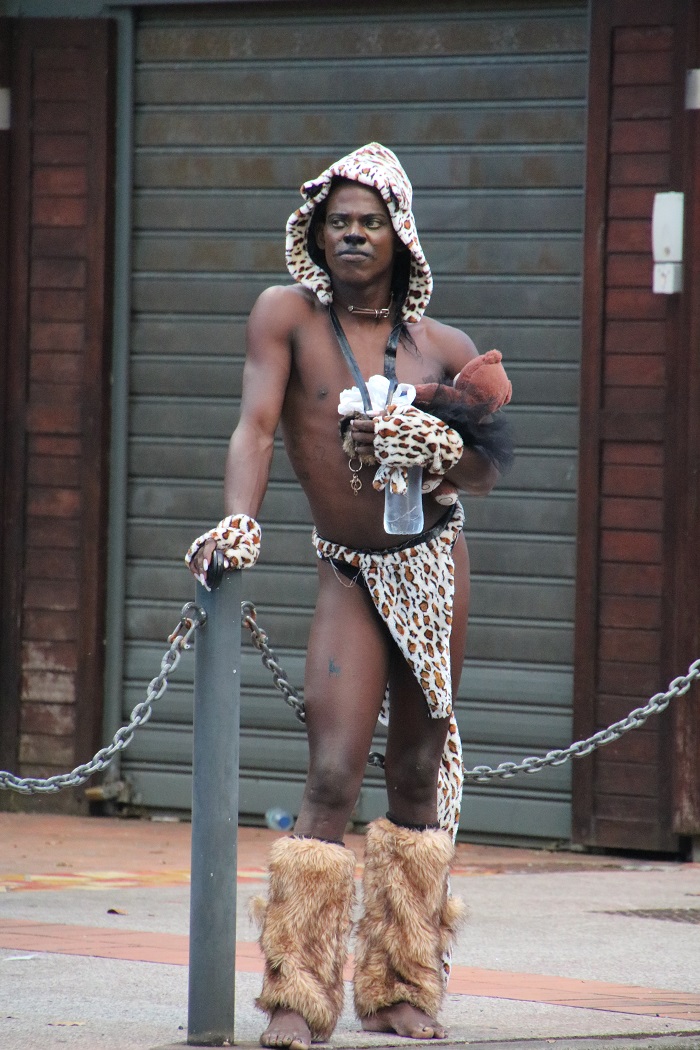 There was something about going in drag was a common theme. What is it about guys and bikinis? I’ll have to ask Brenda what she thinks. A g-string and feather boa? Is it me?
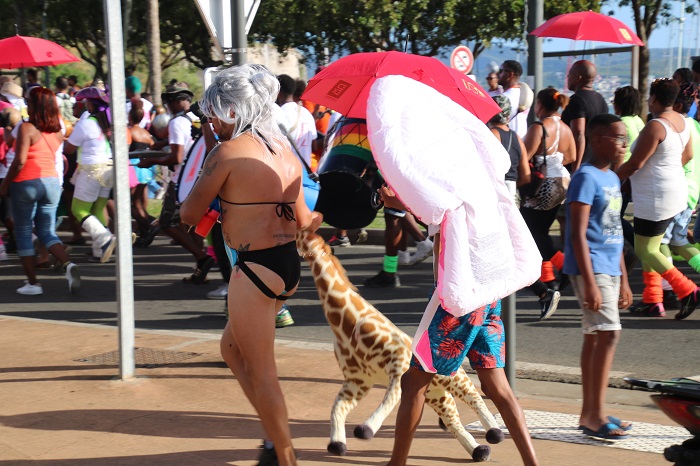 Umbrellas were clearly a theme for this large and LOUD group.
 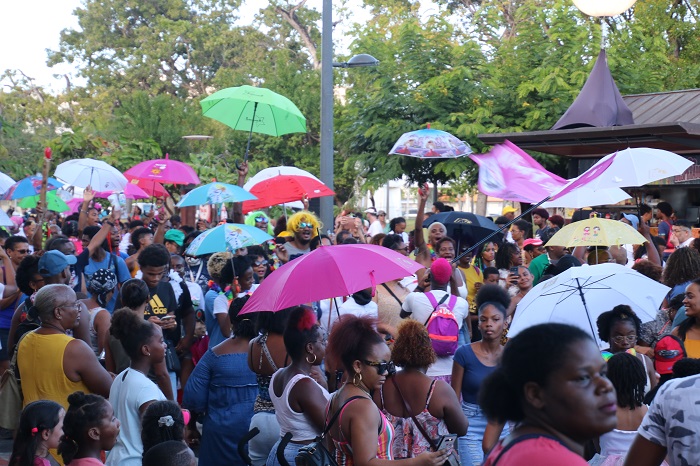 The noise of this VERY enthusiastic drummer set off Brenda’s Apple watch alert that she was being exposed to damaging noise in excess of 90db.
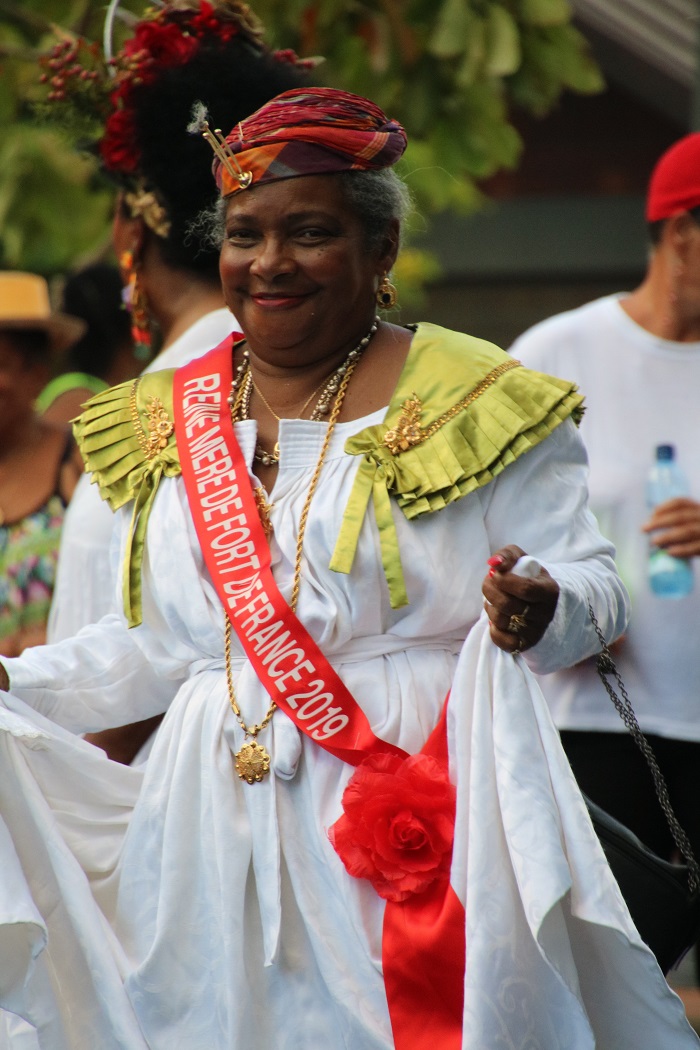
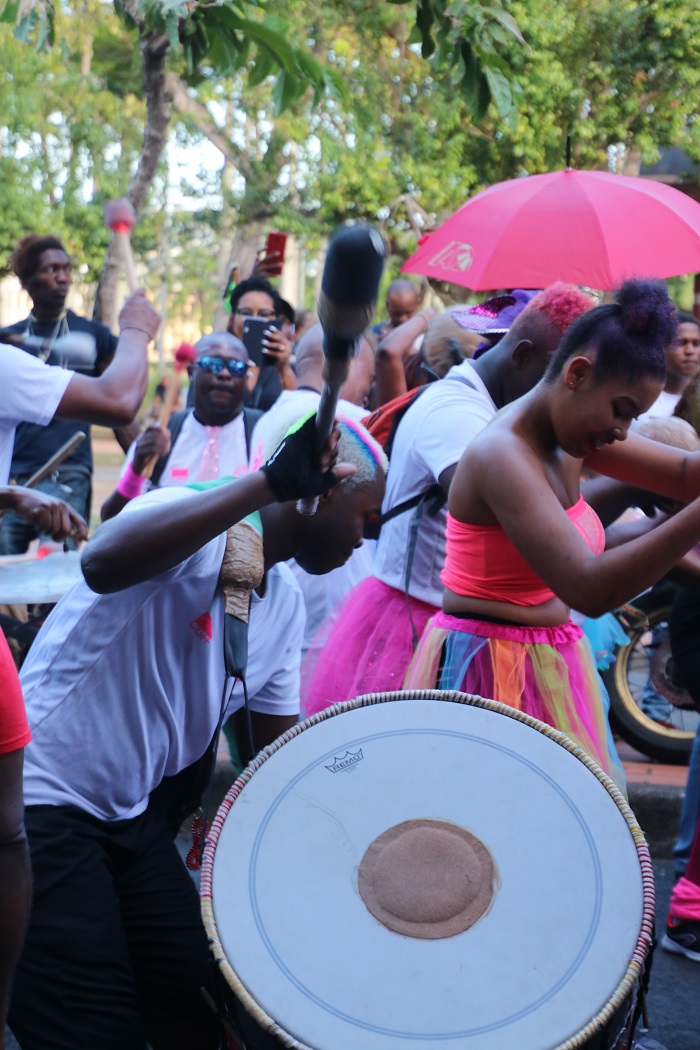 Clearly feeling the beat, this particularly well put together lady was clearly enjoying herself and posed every few feet for photographers.
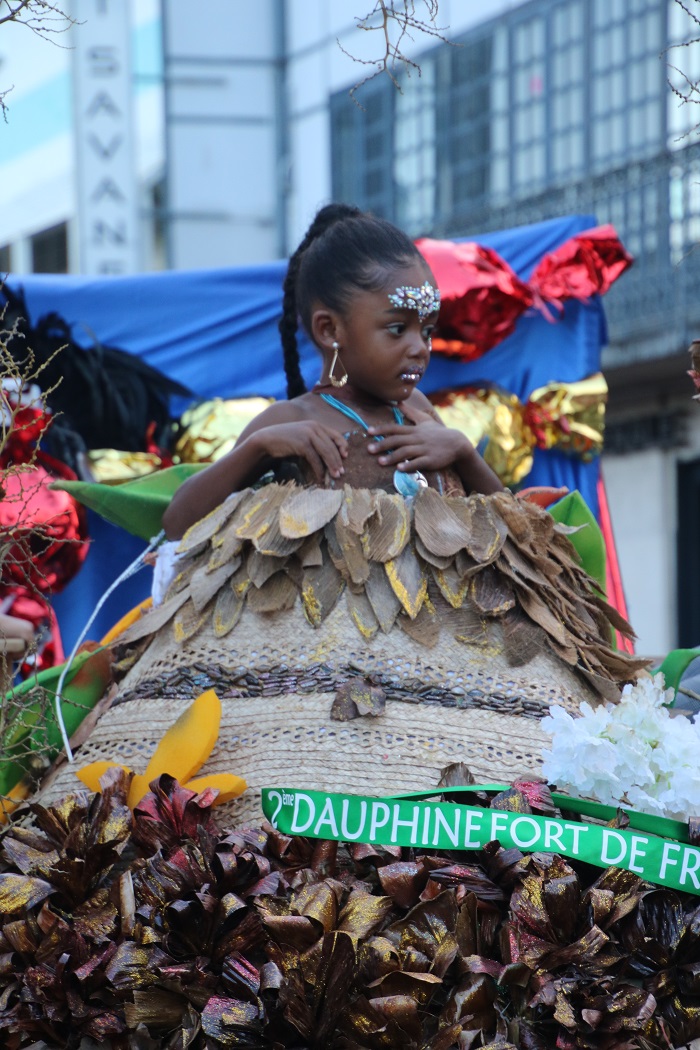
  This young lady seemed a bit insecure in her costume. Her “get-up”, like many of the others, was so heavy that it had wheels to help her along as well as an “escort” to give her a shove when she was hung up on rough pavement.
  Her costume looked vaguely sinister. Perhaps a rain forest queen?
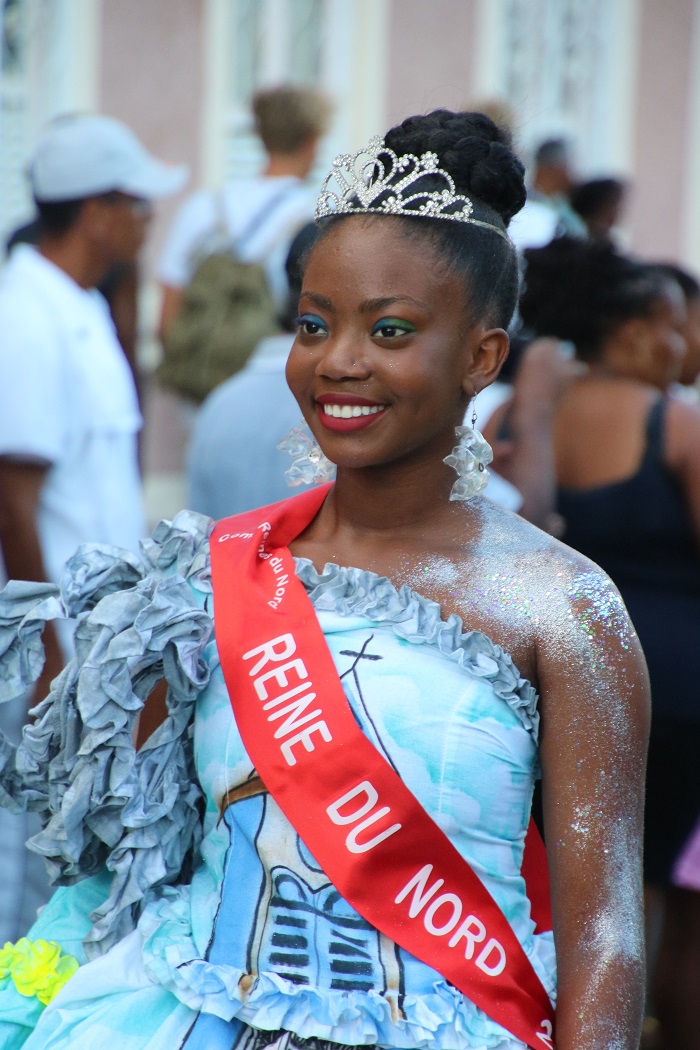
 This young woman carried herself in style, never letting her radiant smile fade for even an instant, well perhaps not until she passed us for the third time.
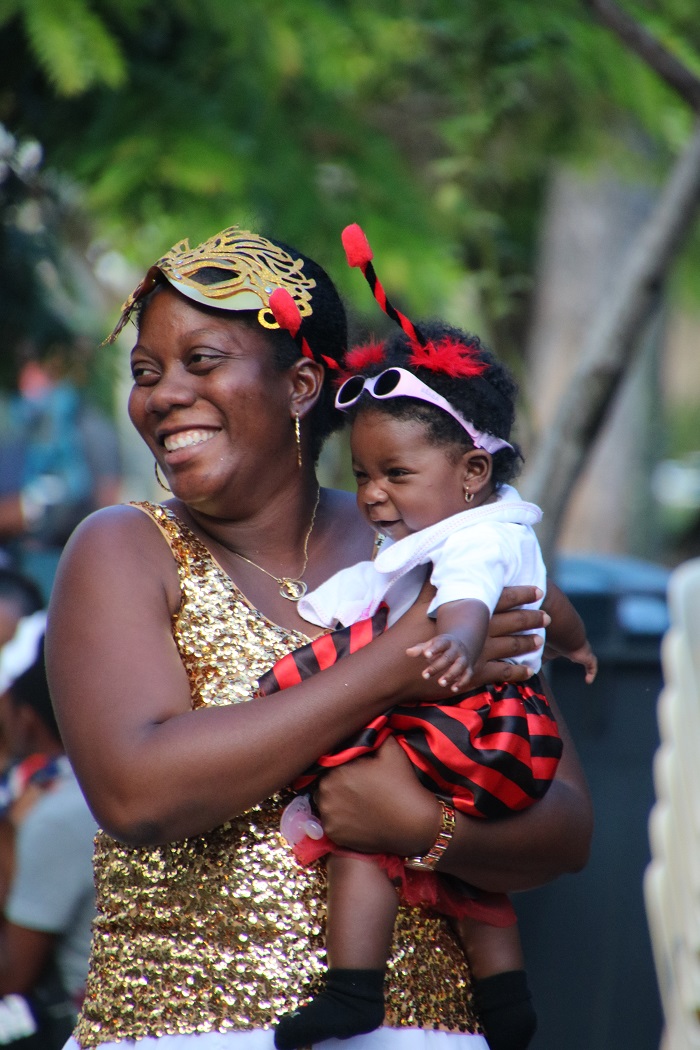
  This photo of a mother and daughter pretty much sums up what it was like to be there. I can’t wait till tonight to see what is in store.
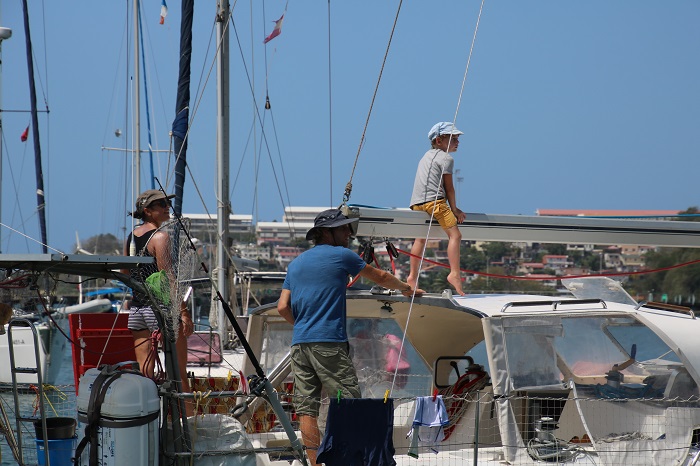
 And, with all the fun in town the harbor is getting crowded as more cruisers arrive each day. This is what I woke up to this morning after the wind shifted direction over night. And yes, they were as close as that. They were a nice couple from Denmark, taking time off from work to cruise with their two children. Can I borrow a bit of Grey Poupon?
 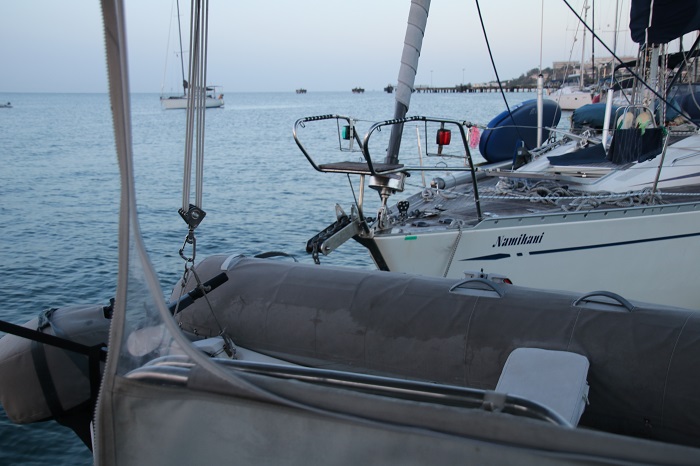 It’s great sport, watching newcomers look for a spot to anchor and it seems that there is always, sort of, room for one more.
 It’s pretty clear that the people of Martinique really know how to put on a party. Brenda and I can’t wait to see what tonight will bring.
 I had gotten a taste of some of the exotic hardwoods available on the island when we visited the chocolate factory and now wanted to see for myself, how the wood was salvaged. When I asked about how he cut logs into boards he told me that he just used his chainsaw and free-handed the log into boards. Now that I had to see…
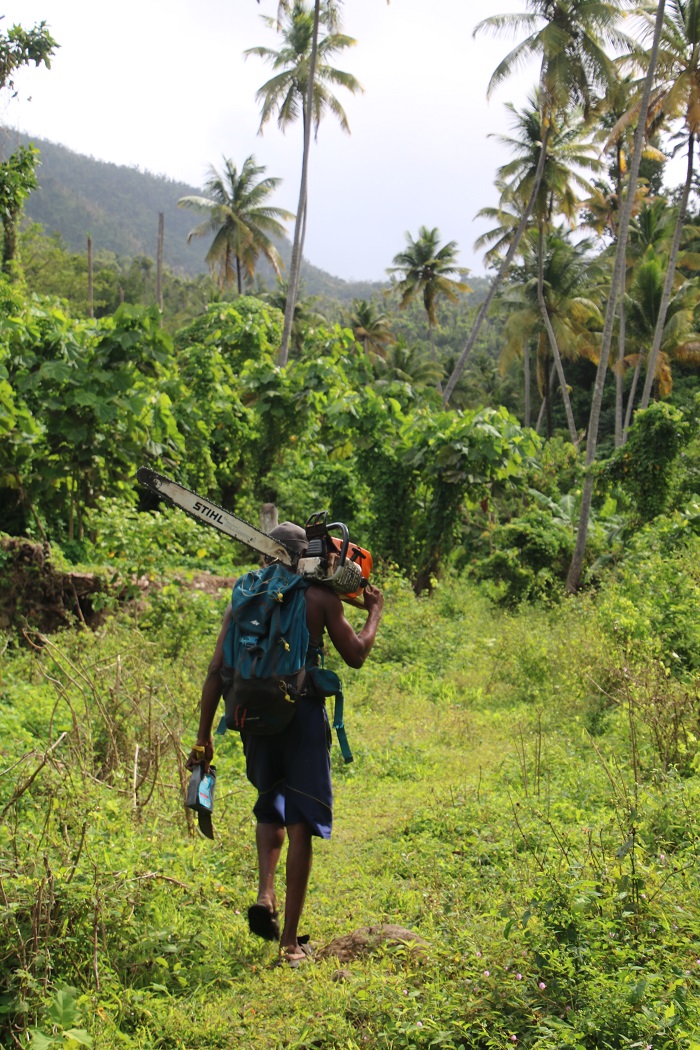 Over the years, I had seen portable sawmills that can turn a log into boards using a really long chainsaw that was guided by rails and other equipment that made the cuts quite precise but the idea of someone cutting logs into boards by eye and a steady hand was something I found hard to imagine.
 Humty selected a promising log, some 20″ in diameter and sat down to sharpen his saw, one tooth at a time with a round file. 30 minutes later he was ready to make his first cut.
 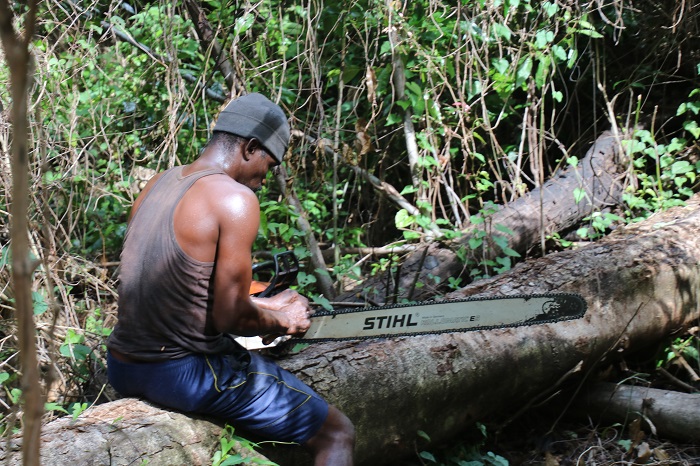 Then he marked the log to a bit over 5′ and removed a section. His newly sharpened saw went through it like soft balsa.
 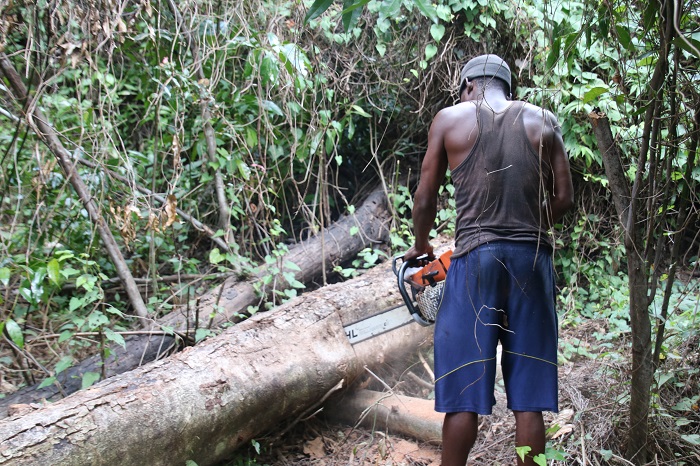 After rolling the newly cut log onto a base of smaller logs and bracing it up against a small tree, he proceeded to carefully run his saw down the length of the log, marking it for the individual boards he planned to cut, each about 1 1/4″ thick. The cuts were more precise than this photo suggests.
 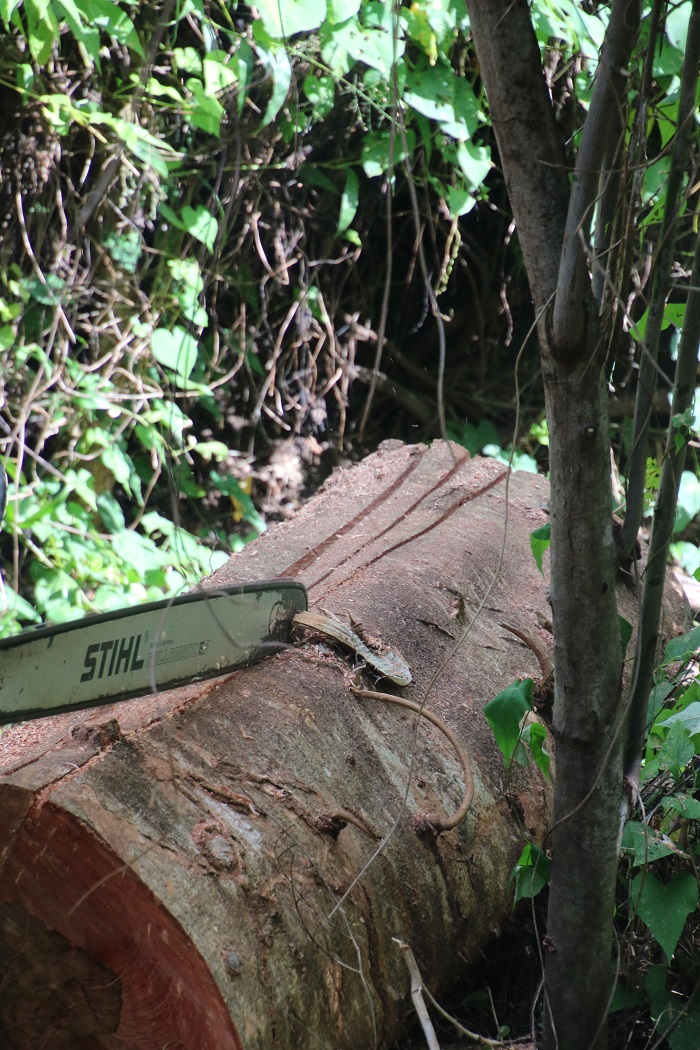 He began at the end of the log closest to him and progressively drew the saw from end to end, each cut only a fraction of an inch deeper than the last.
 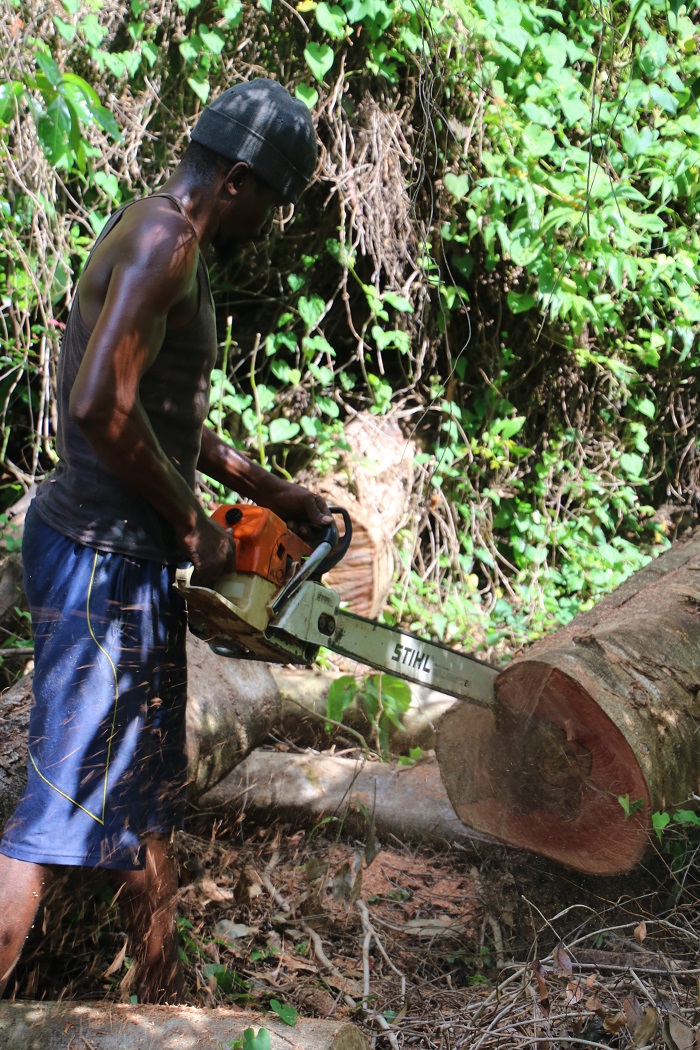 Beginning on the left, after marking all of the boards, he slowly cut deeper and deeper until the board was only supported at the far end by a small uncut wedge of wood.
 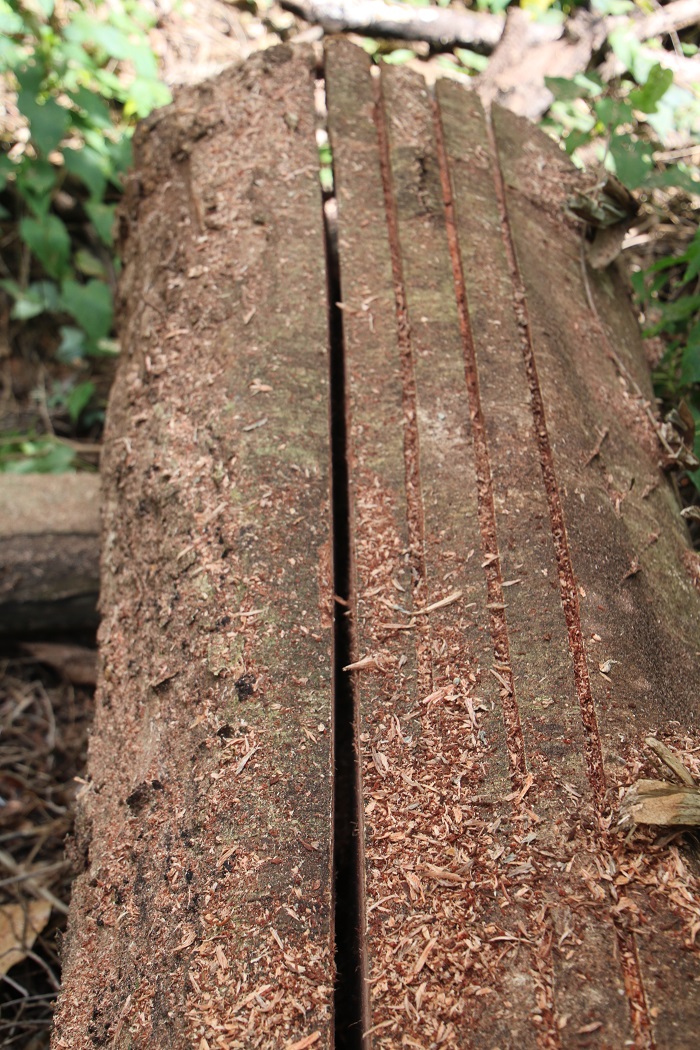 The process of cutting all the way through the log, end to end, took more than two hours and in the end he had three boards. He paused once to resharpen his saw, a few gulps of beer and puffs.
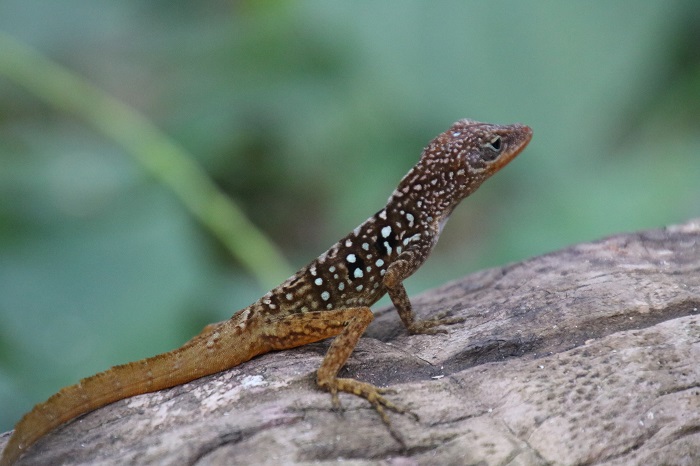 He paused from time to time to check his measurements.
 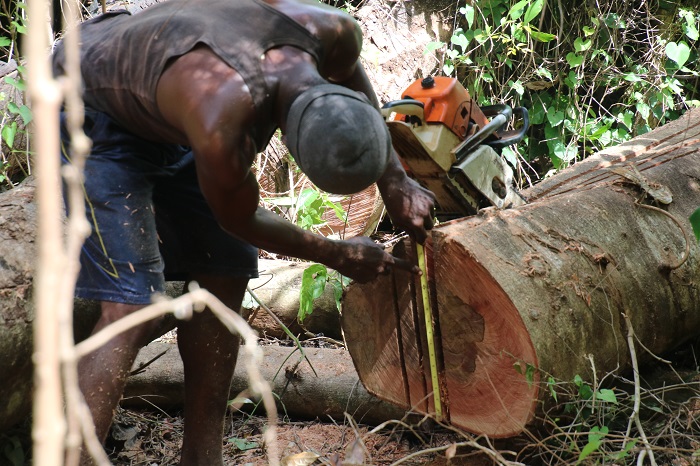 As one cut was mostly finished he moved onto the next, from left to right.
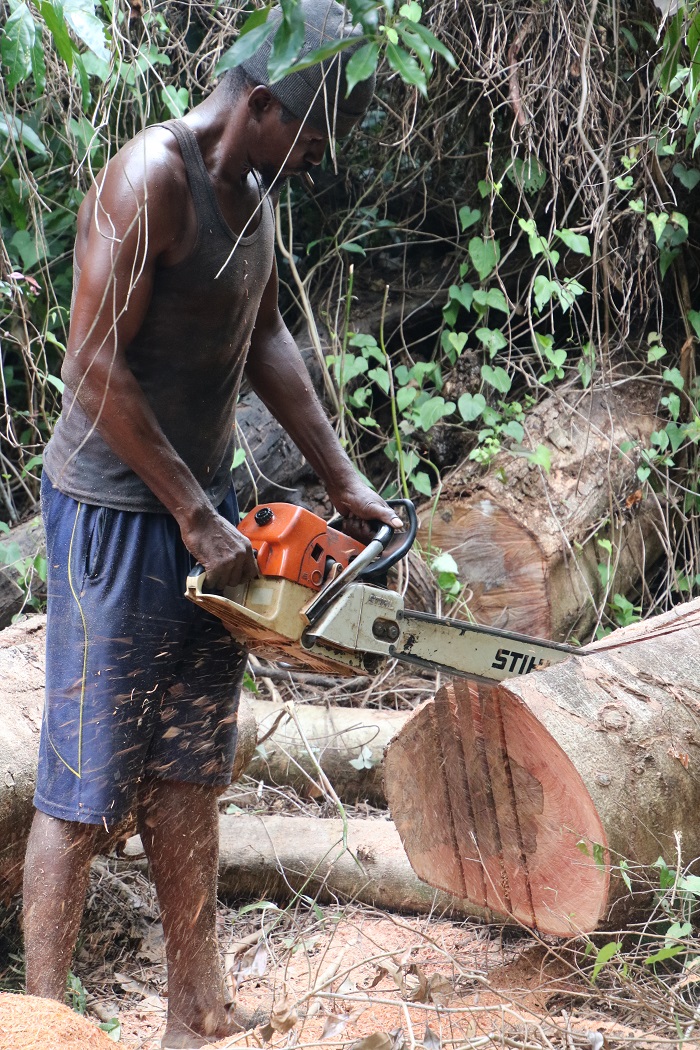 Once the four cuts were complete with only a small sliver of uncut wood on the end of each board he made the final cut, beginning on the left and the boards fell away.
 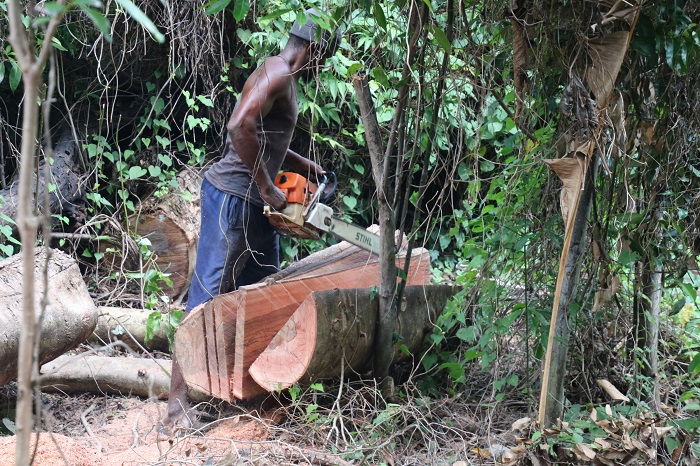 These finished cuts were remarkably consistent and all done by eye.
 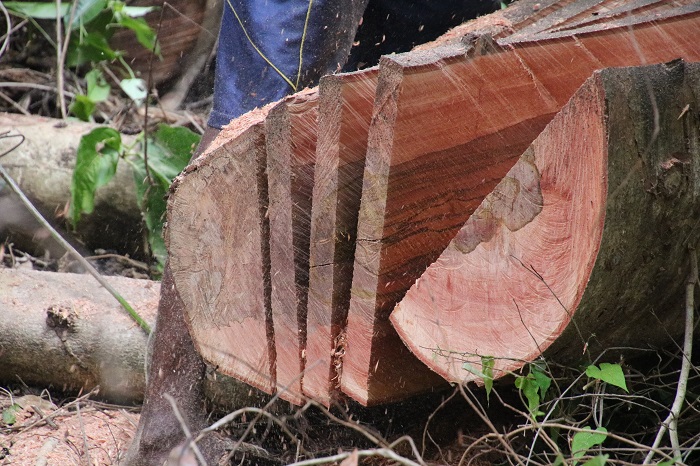 What was left of the log could have yielded a few more boards but I had asked for three so that’s what he cut.
 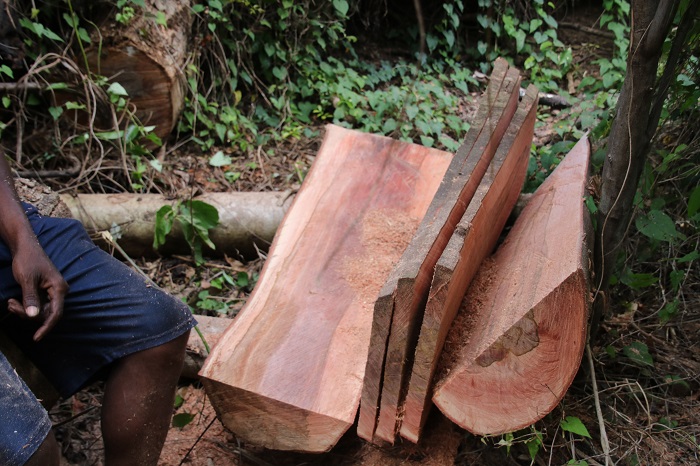 The boards have beautiful figuring.
 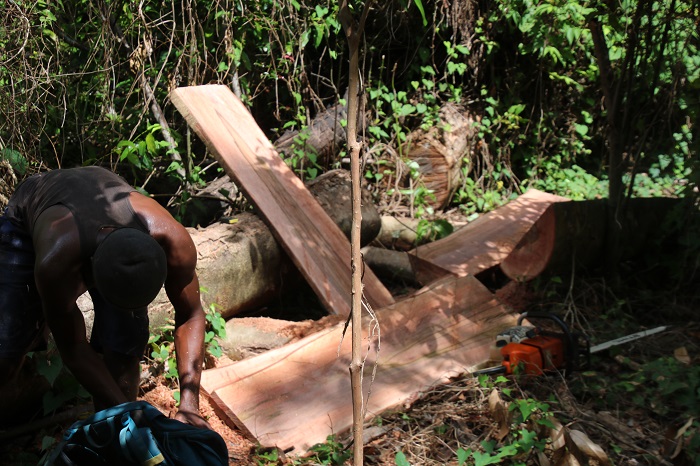 The dark markings are not water staining or rot, it’s the way the trees grow. Notice how smooth the cuts are. You would never know that he had just held the saw and cut them freehand.
 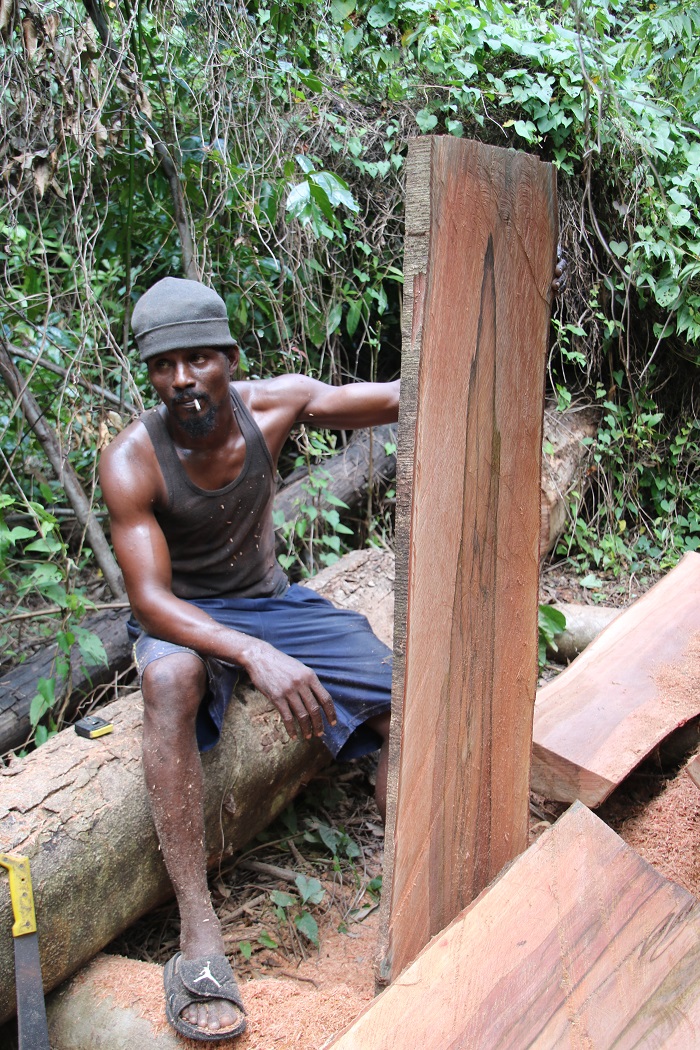 I have no idea what I will make these boards into but they are remarkable and I’ve never seen anything like it. The wood is very dense and HEAVY.
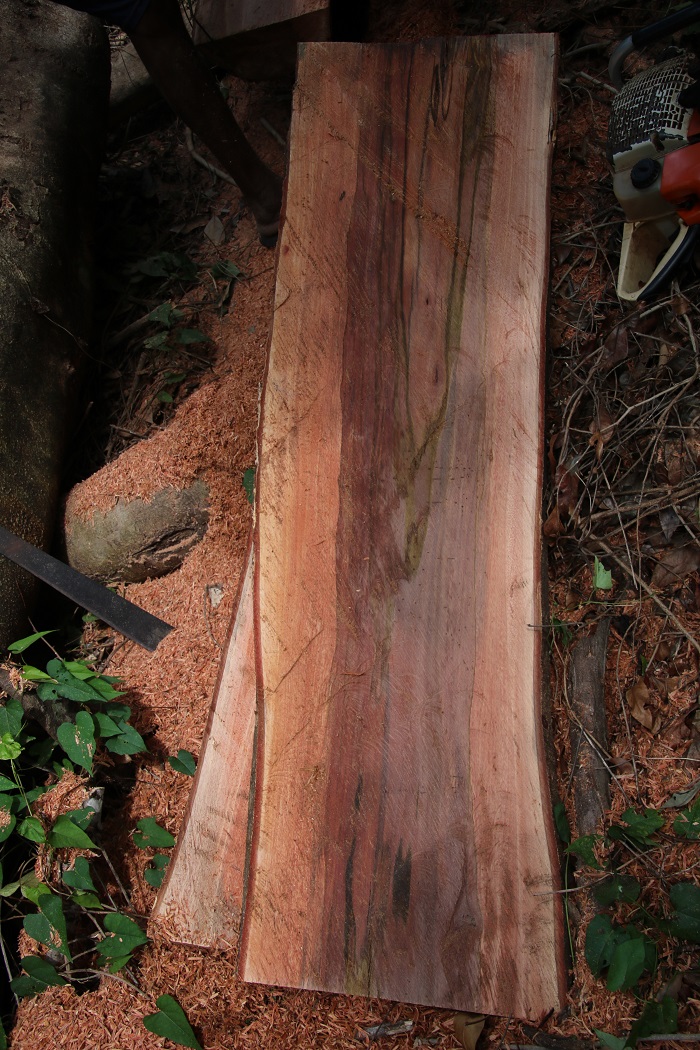 Even though the wood had fallen nearly three years ago, there was not rot but OMG, they are heavy, perhaps 70lbs each.
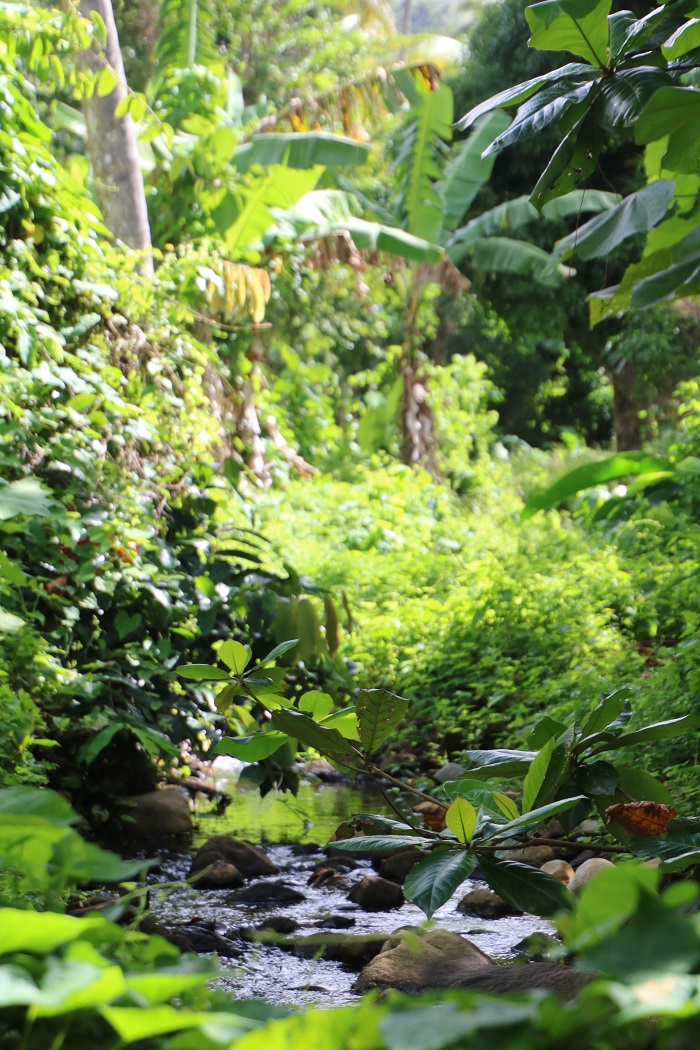
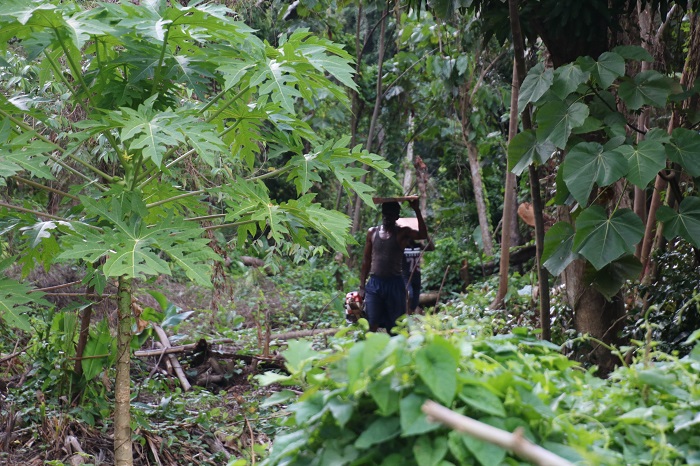 He didn’t miss a beat as he forded down into the stream and up the other side.
 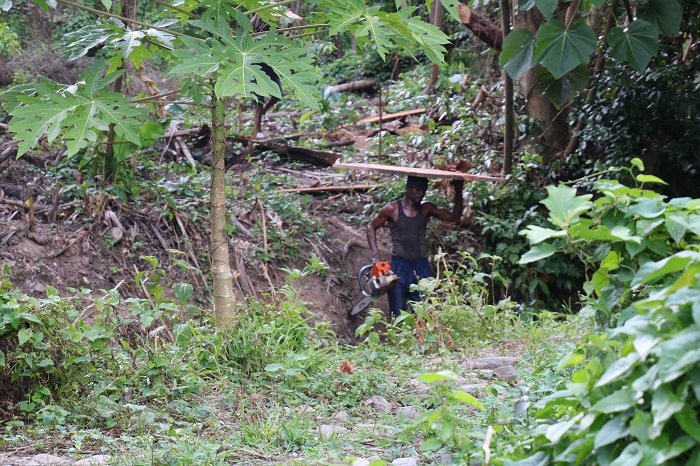 As I write this we are now in Martinique and for the time being, the boards are still at Humty’s home on the beach. I am hoping that they will dry out a bit so that they aren’t quite so heavy and I’ll need time to think about how I am going to secure a few hundred pounds of boards down below the cockpit. I sure don’t want them to come loose along the way as I can only imagine what sort of damage they would do if they started crashing around making a mess of my autopilot and who knows what else when the going gets rough on the trip home, which it always does.
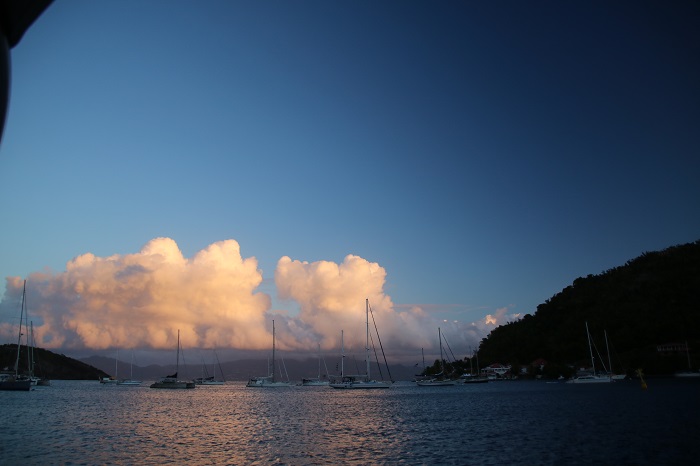
 This harbor, Portsmouth Dominica, is on the very north west part of the island and while it is wide open to the west, like most harbors in the Windwards, it is wonderfully protected from the strong trade winds and waves and as the wind comes out of the east for about 99% of the time.
 And, speaking of “flocks”, I spied this growing family when I visited the local bakery to pick up come baguettes the other day. I can’t imagine chickens wandering around a restaurant in the US.
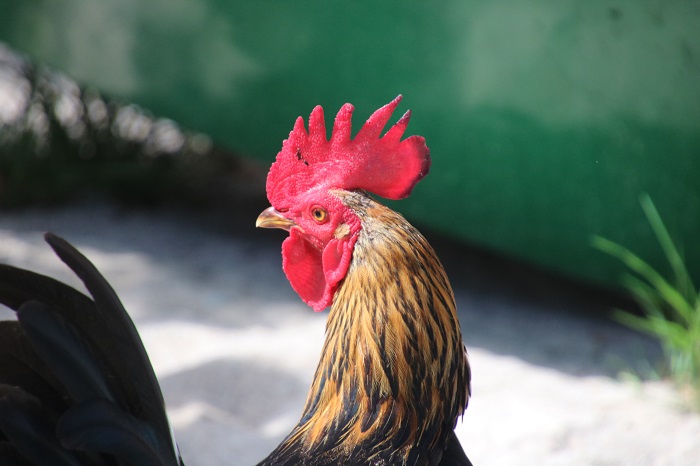
 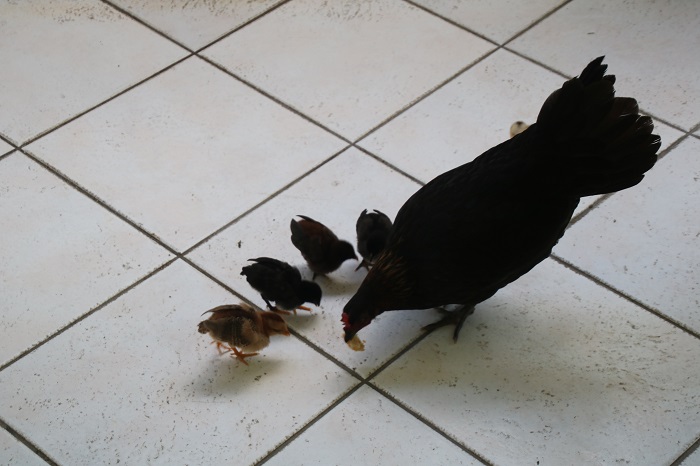 And, of course, where there a chicks, there are roosters.
  The views along the beach are very colorful with homes and boats are painted bright, happy colors.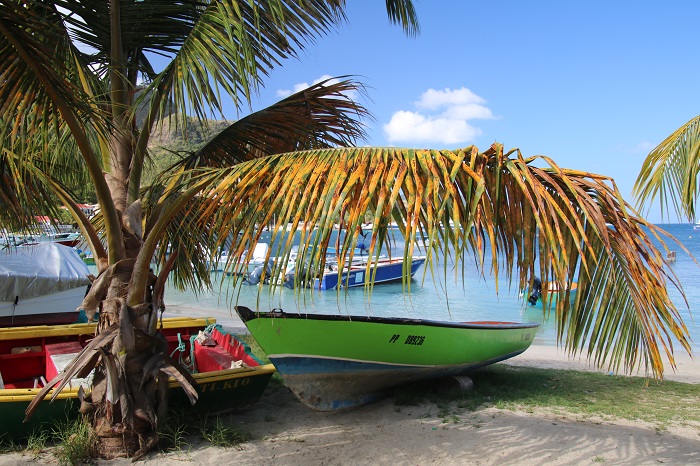
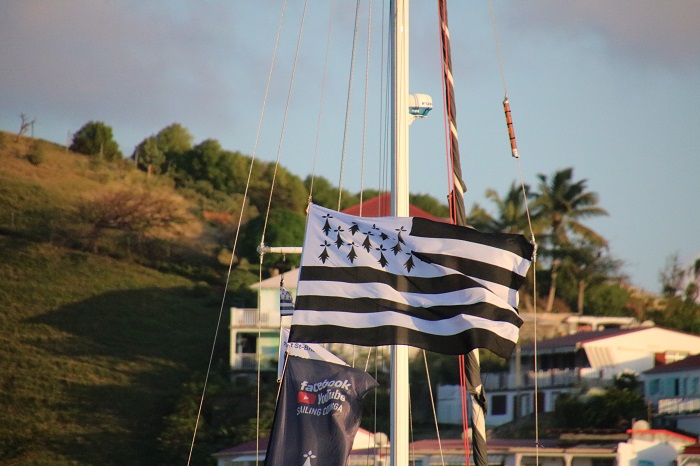
 We see flags from many countries. Do you know where this one is from? Flags that are black and white are very rare. I believe that only two countries have flags that are this color. Double gold stars if you know the name of both countries or, and this is a hint, the flag of a region of a particular country.
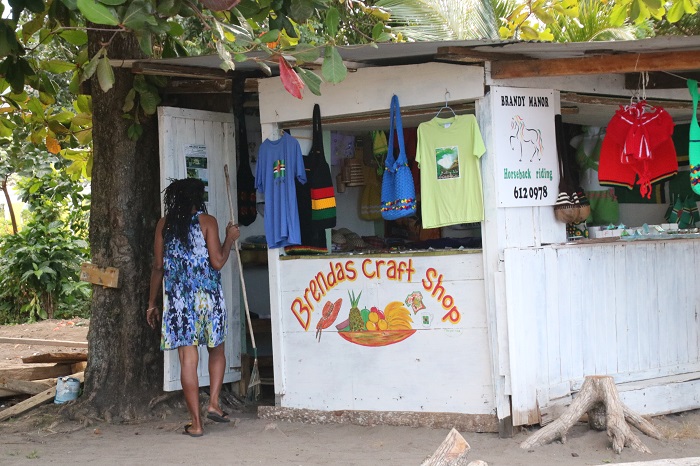
  A few days ago, I went ashore to check out the tiny town here in Dominica and was impressed with the locally made baskets. In the interest of full disclosure, I was also looking for ice cream. Success on both counts.
 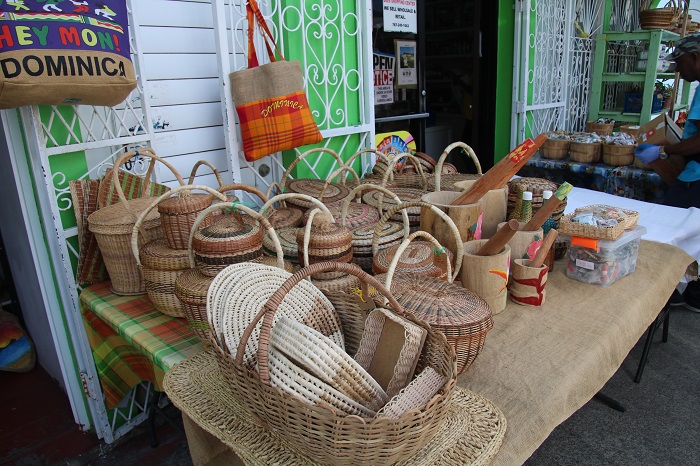 Brenda and I returned to the shop the next day. She ended up buying an exquisitely made one at another store. Along with all that she does, Brenda is also a very accomplished basket maker.
 Anyway, I expect that we will be here in Dominica for at least a week the trades are up and it’s even rougher in the ocean than it was when we arrived here from Les Saintes, with seas running at nearly 10′. When the weather router, Chris Parker, describes conditions as “very salty”, Brenda, in particular, feel that it’s best to stay put.
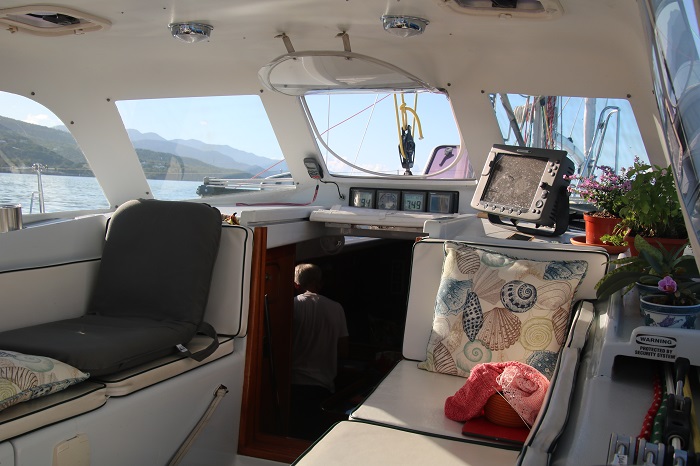
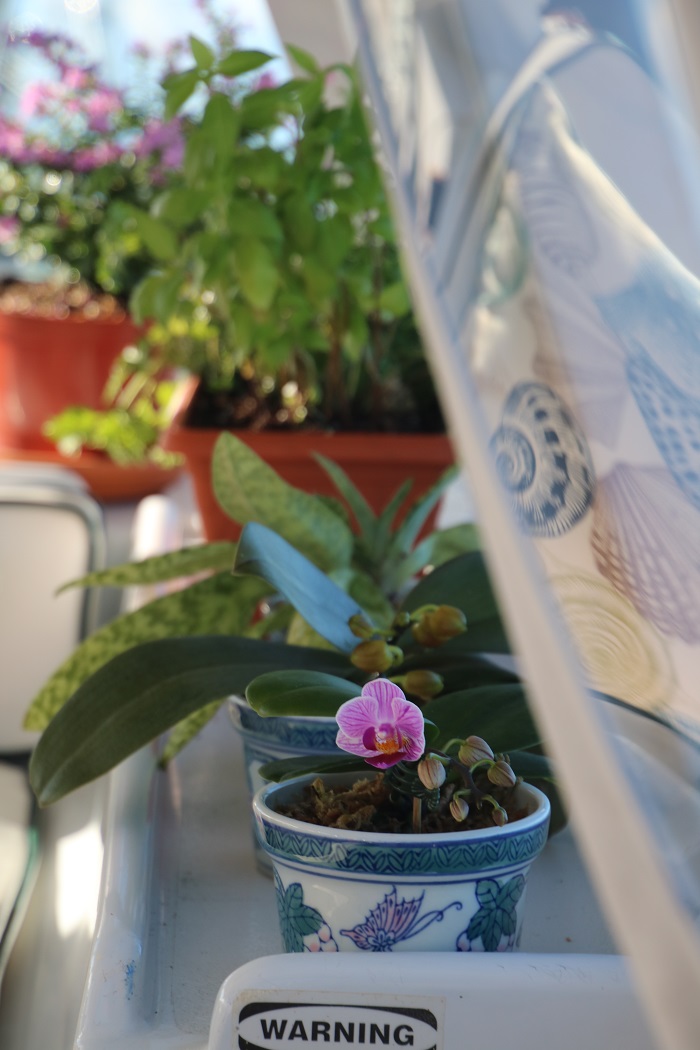 Pandora’s hard dodger can be a bit hot when the winds are calm which is almost never and offers a welcome respite from the strong tropical sunshine. Brenda took this shot, while I made coffee down below, as we made our way south along the west coast of Guadeloupe on our way to Les Saints the other day. In the lee of the island the waters are very calm and the wind, not so much.
  The view of Deshais from our stern shows how tiny the cove really is, with a lone sailboat just peaking out, more of an indent, than a harbor.
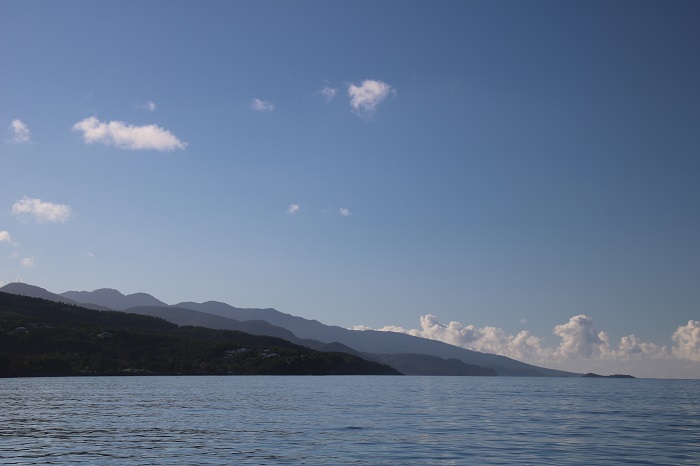
 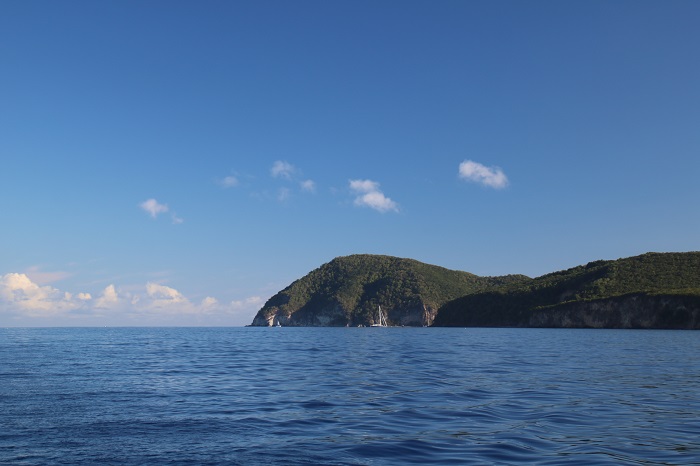 And the mountains of Guadeloupe in the morning haze to the south were beautiful.
  Here in Les Saintes we spend some time most days hunting for groceries, a rewarding effort as there is a remarkable selection of wonderful French food to choose from, and many places to purchase fresh bread,
 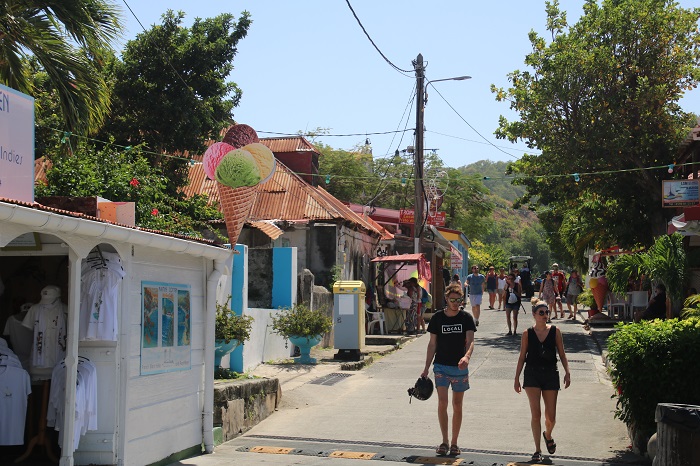 The waterfront is so charming with a very convenient dock to pull up our dink.
 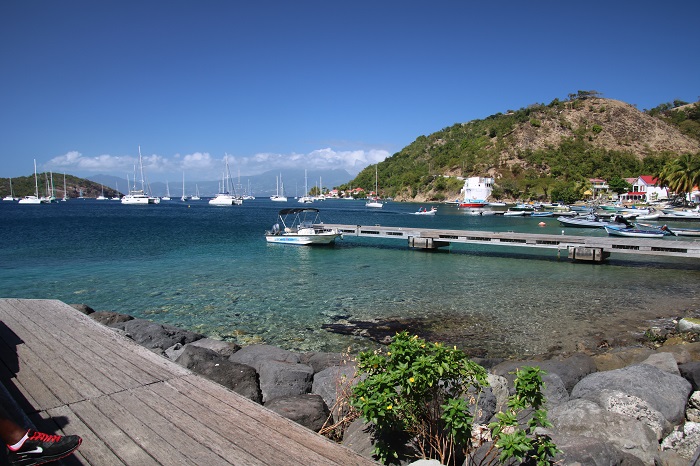 The waterfront looks like a tiny little village on the Mediterranean.
 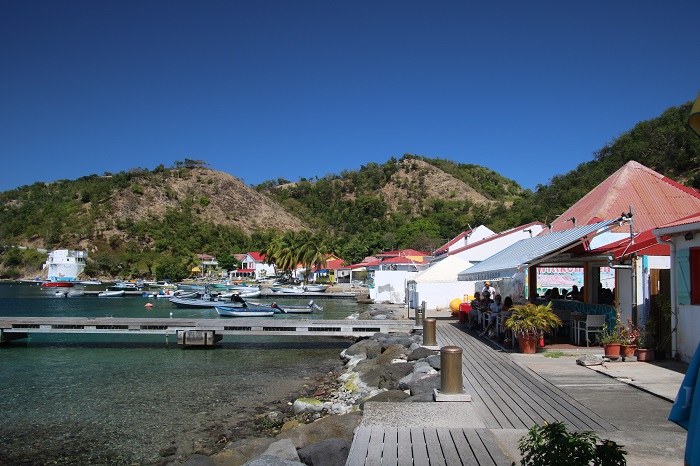 Every view better than the last.
 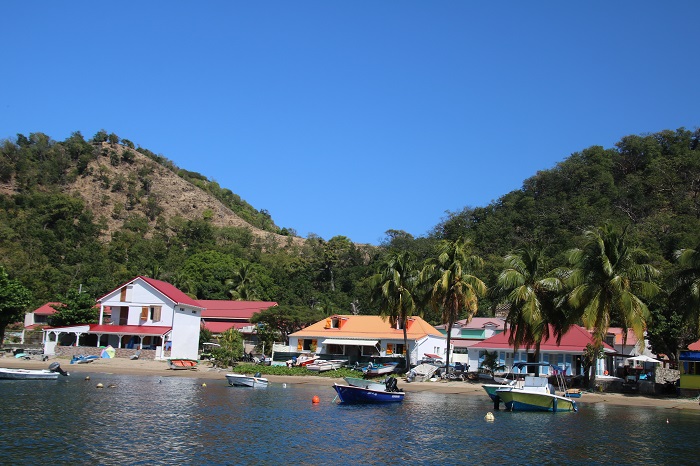 The
The 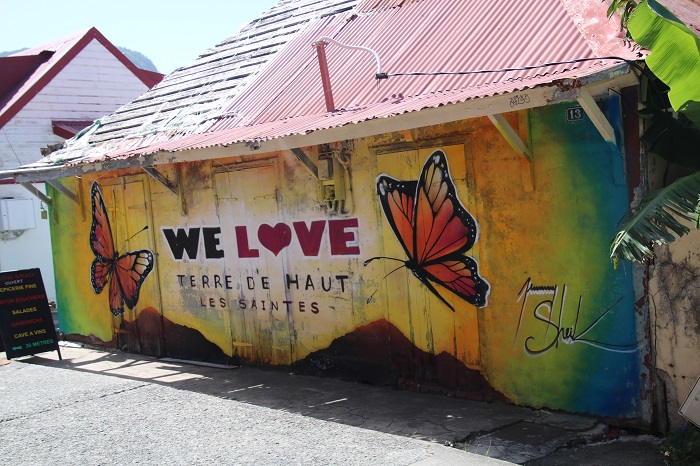 There are plenty of reasonably priced places to enjoy a terrific French meal.
 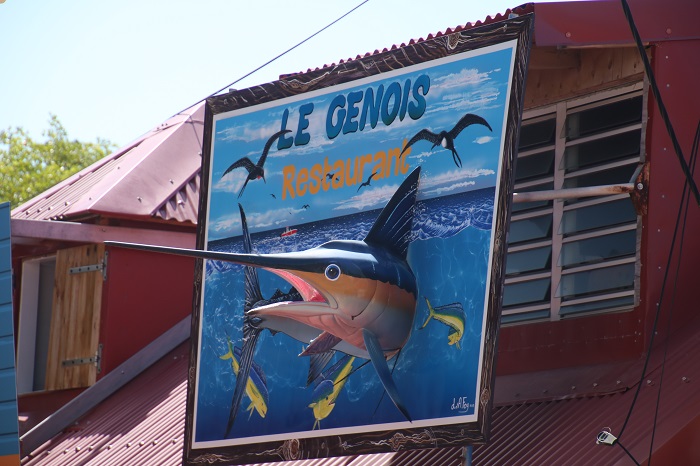 Last evening we went out for dinner with our friends Mark and Lynn from Roxy and had an amazing dinner of fois gras and lamb chops. Yum.
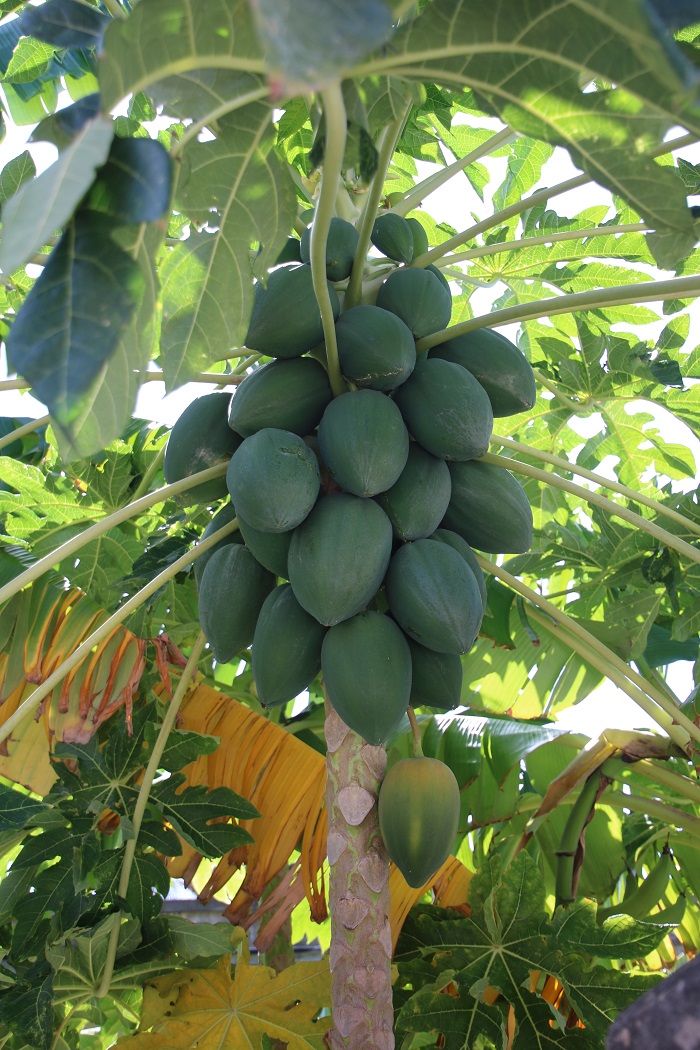
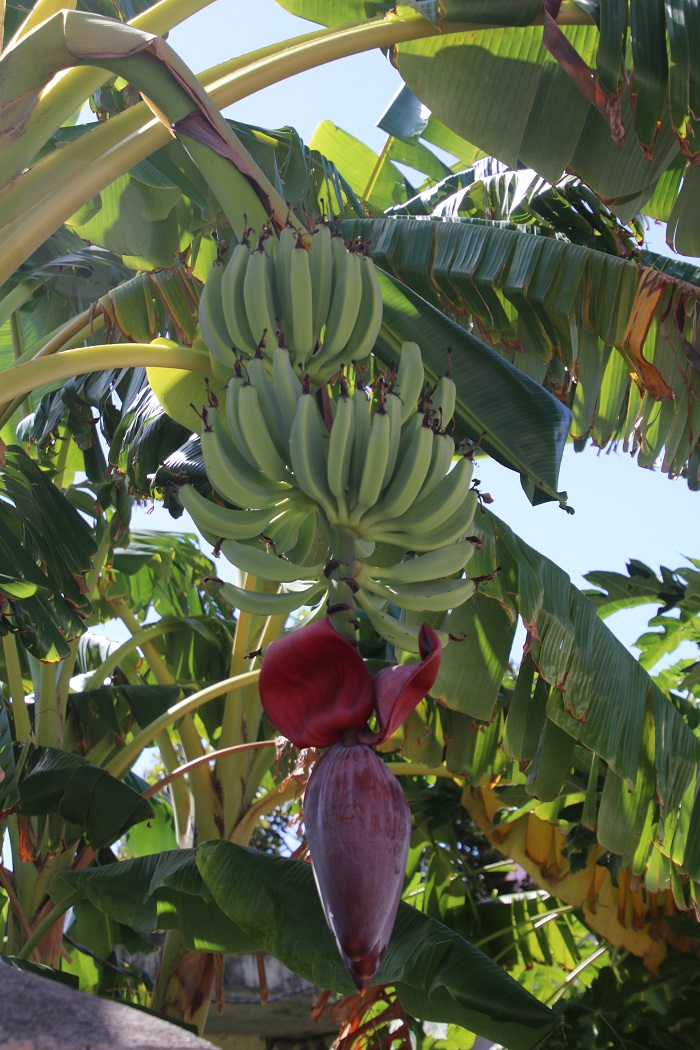 Papayas so big you could never finish even one.
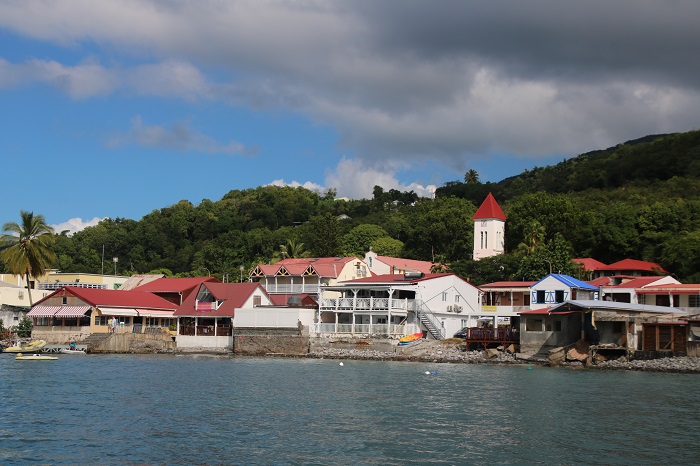
  Our first stop after leaving Antigua, before Les Saintes was Deshais, a tiny fishing village on the Northwest coast of Guadeloupe. The harbor can be pretty rolly with a wrap-around swell and the swell was up when we arrived. Fortunately, the swell dropped after a day and made for a pleasant visit.
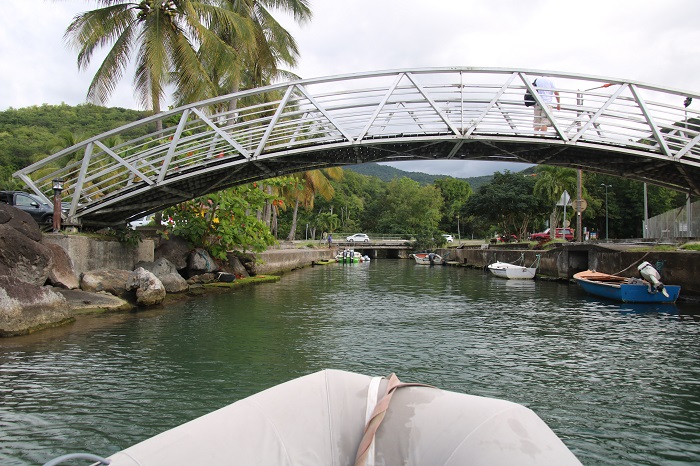
 The town dock can be a bit tricky when the surf is on, as it was during our visit so we took our dink down the little canal on the Deshais river. We were told that the week before we arrived the waves were breaking at the mouth of this canal. The swell in the harbor can be so bad that they have to remove the top of the dock to keep it from blowing off with the waves crashing against the shore. Even when it’s calm, the town dock can be a bit of a challenge to land on.
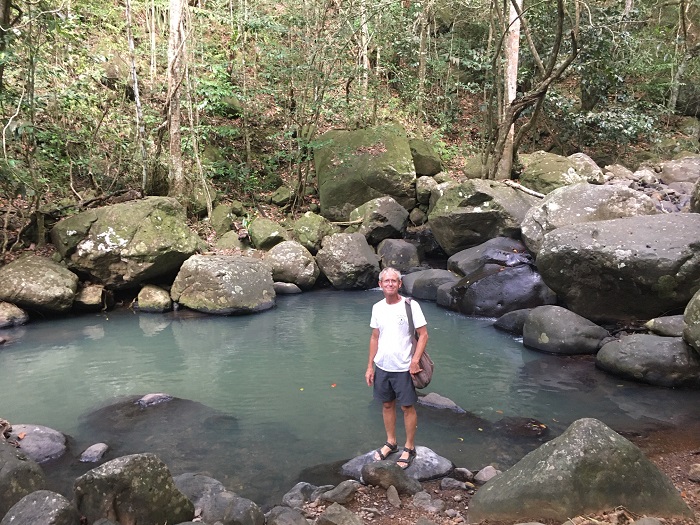
  You can walk a short distance up the river and swim in one of the small pools between the cascades on the river, more of a stream, actually. The water is a bit milky and I expect that is because the water leaches out of limestone springs. As it is coming directly down from the mountains I doubt it’s polluted. After this I went in for a swim. It was chilly but what a change of pace. Fresh Water!
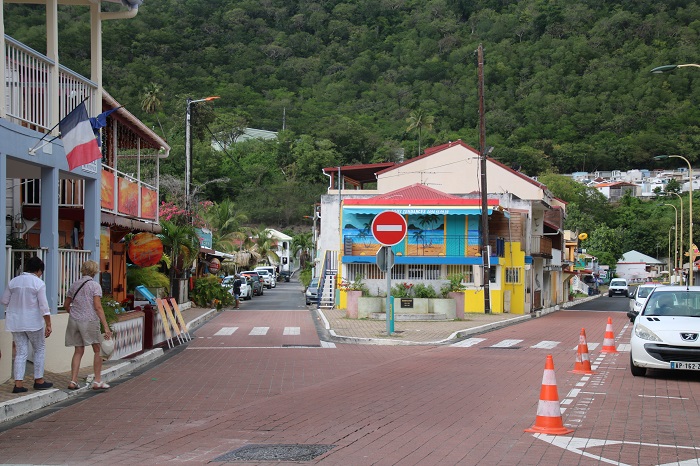
 The main street in town is lined with colorful restaurants and shops.
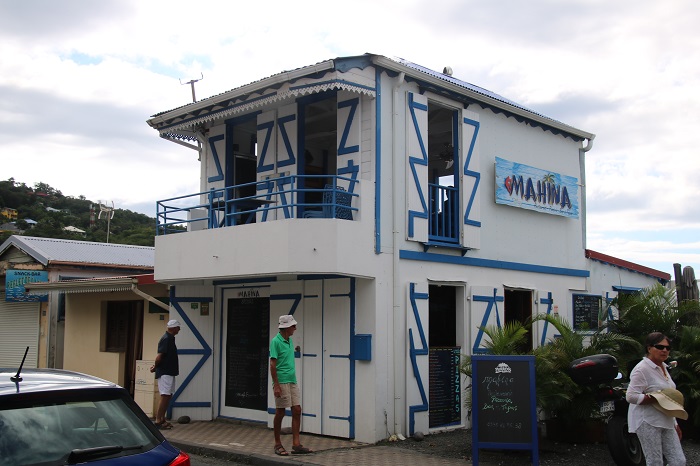
  We had a terrific meal, French of course, here with some cruiser friends.
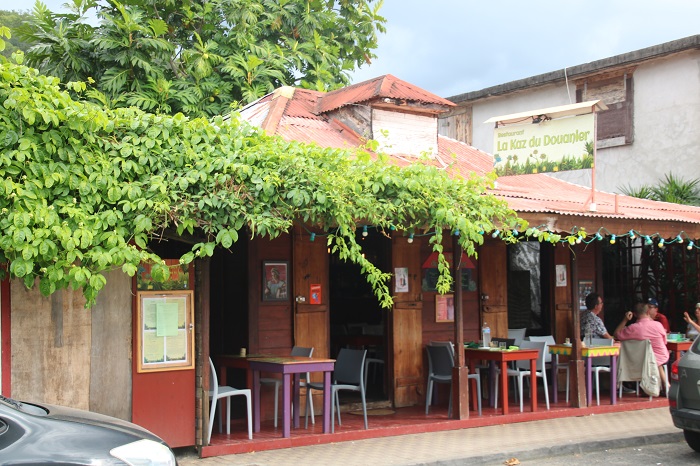
  Each restaurant is more charming than the next. This particular one is featured in the TV series, Death in Paradise.
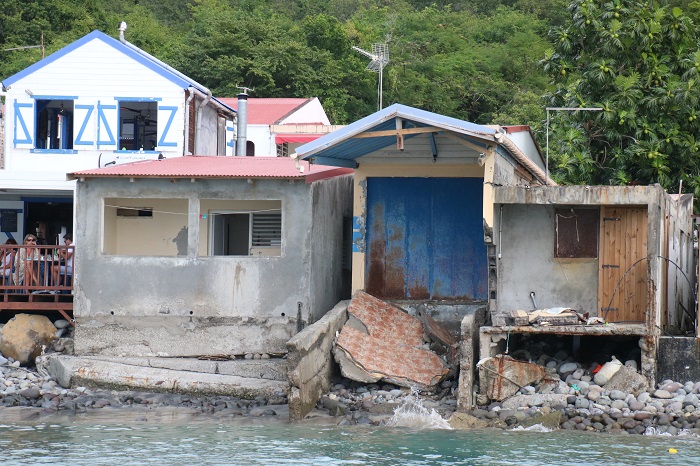
  Buildings on the waterfront are beaten up from time to time in storms. I guess this one hasn’t been repaired quite yet.
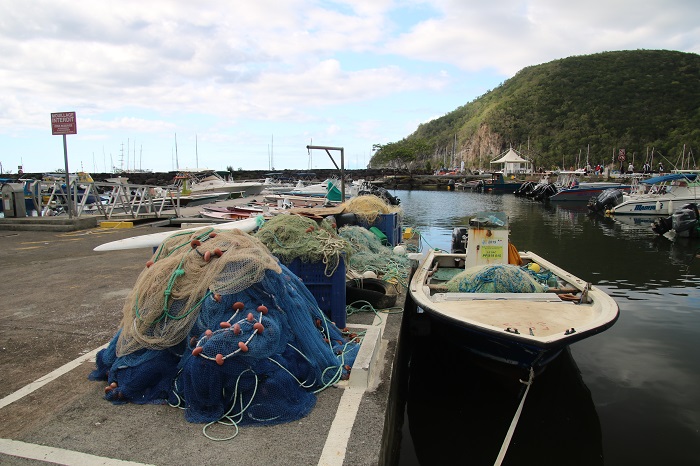
  Fishing is a big part of what goes on in Deshais and every evening and into the early morning before dawn we were rocking and rolling as the fisherman headed out and returned with their days catch.
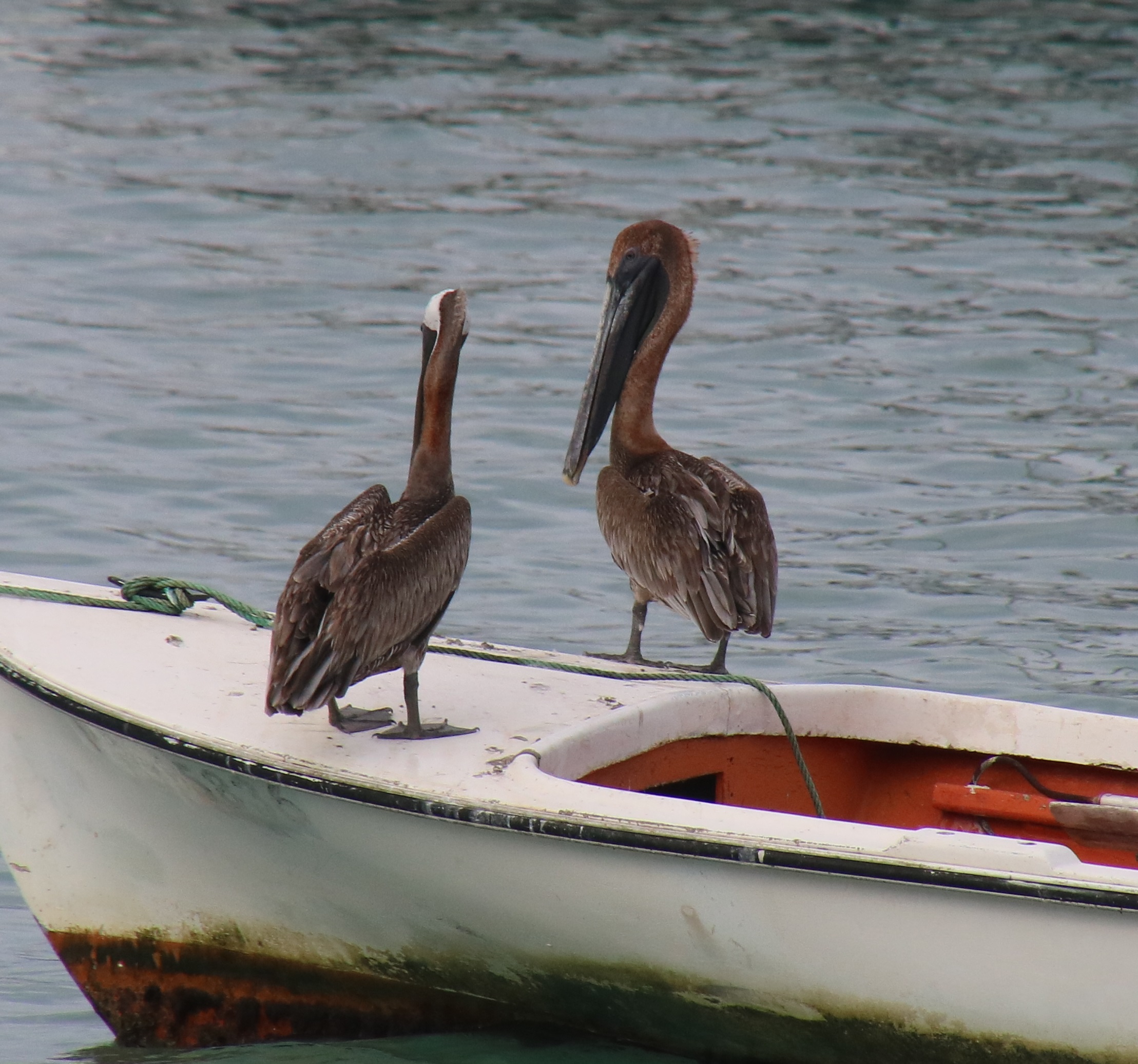
 And, of course, where there are fish there are pelicans looking to find a way to prove that their “mouth can hold more than their belly can.” I was just happy that they weren’t killing time waiting for their next meal aboard Pandora.
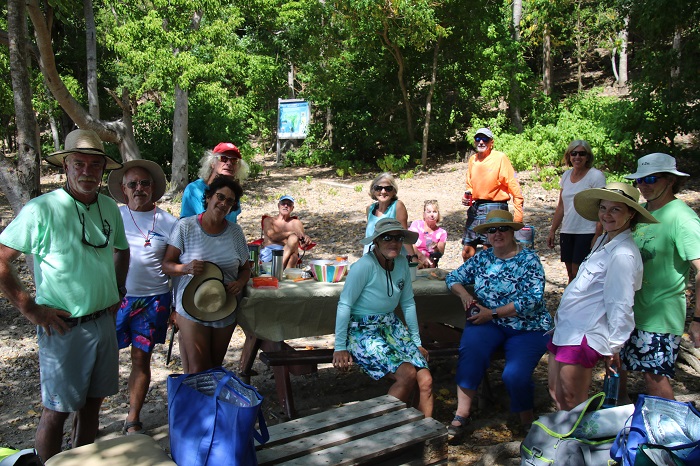
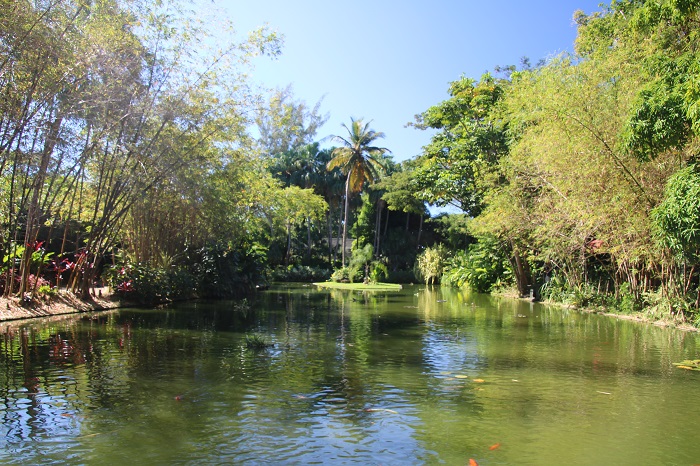
 Brenda and I spent a day with some friends from a boat Billy Ruffin and toured the nearby botanical gardens, one of the best in the Caribbean. The view from the visitors center is first rate.
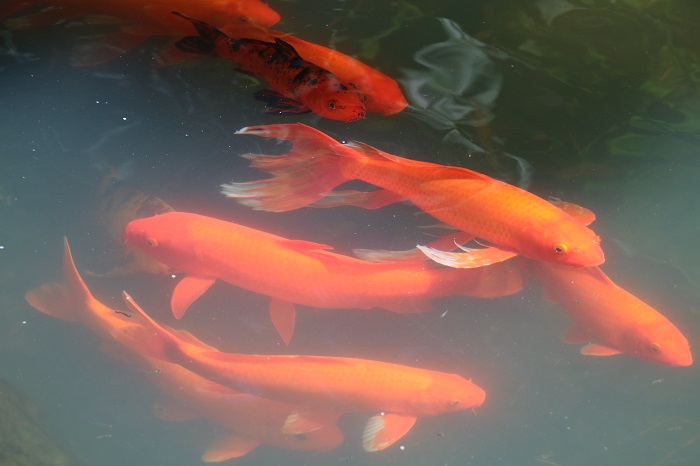
 They have a large collection of koi that are always ready for a handout.
 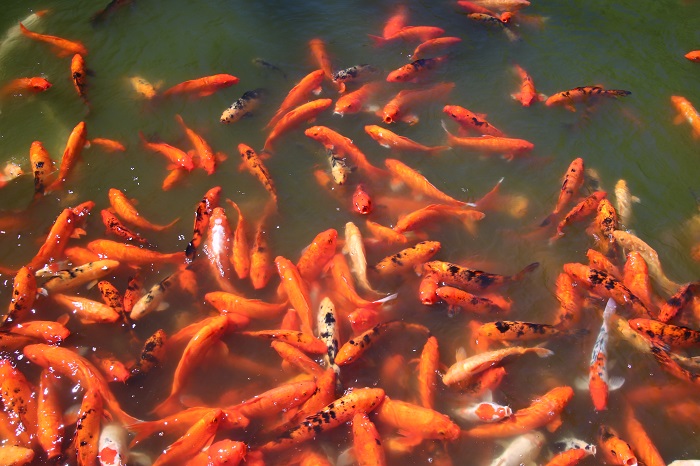 All of these fish, and there are hundreds of them, are up to two feet long.
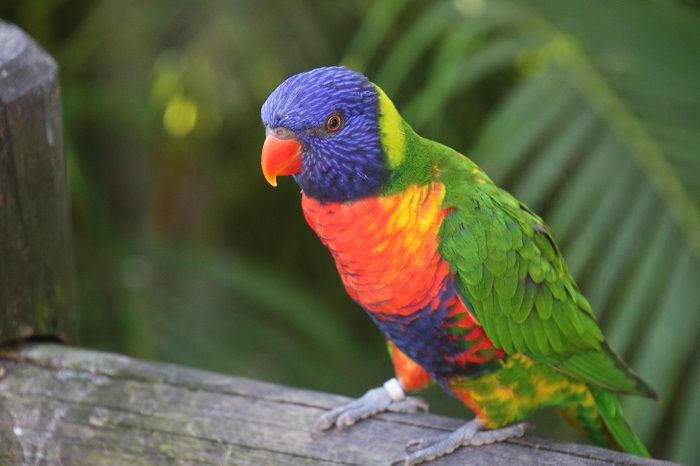
  While the gardens are mostly focused on plants, there are a number of birds to enjoy including these beautiful parrots that live in a large open air aviary that you can enter and see up close.
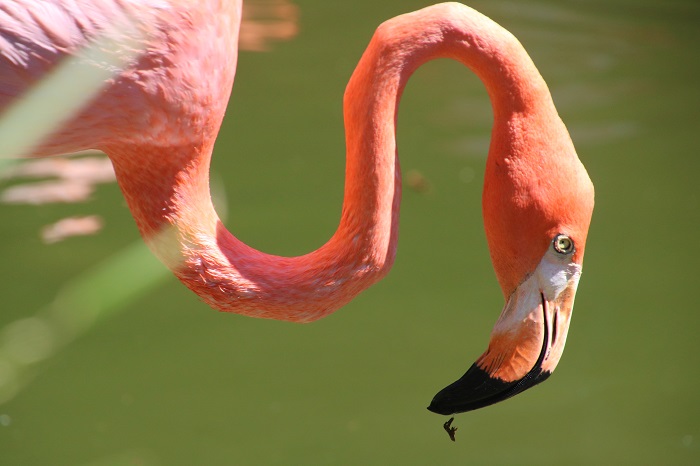
  And who doesn’t like flamingos?
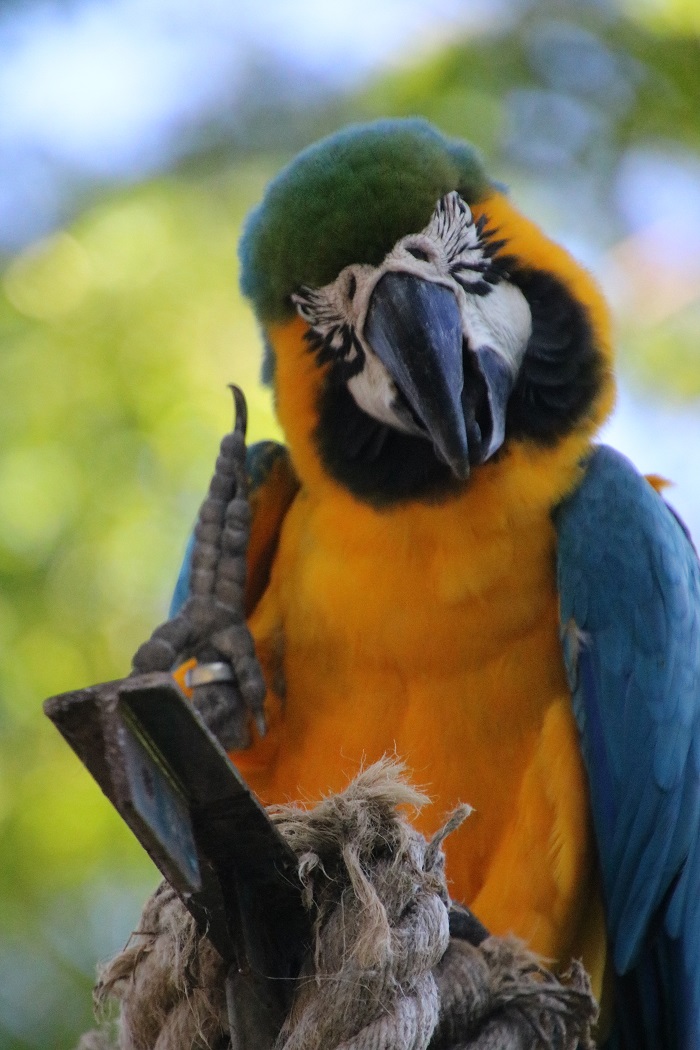
 This big macaw, seeming to challenge “what you lookin at?”
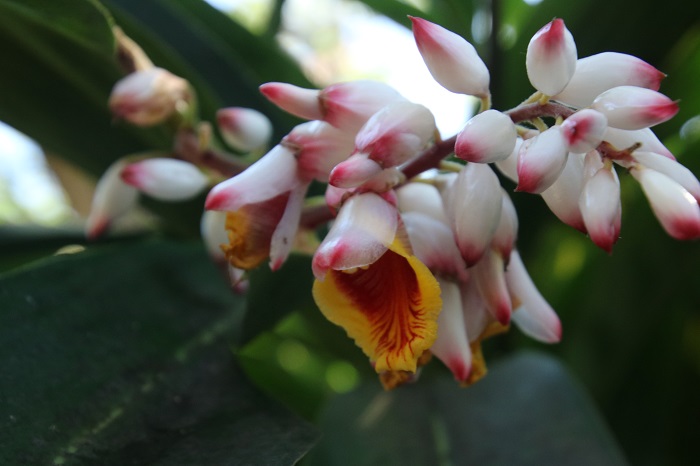
  And, of course, lots of plants and flowers, far too many to show here.
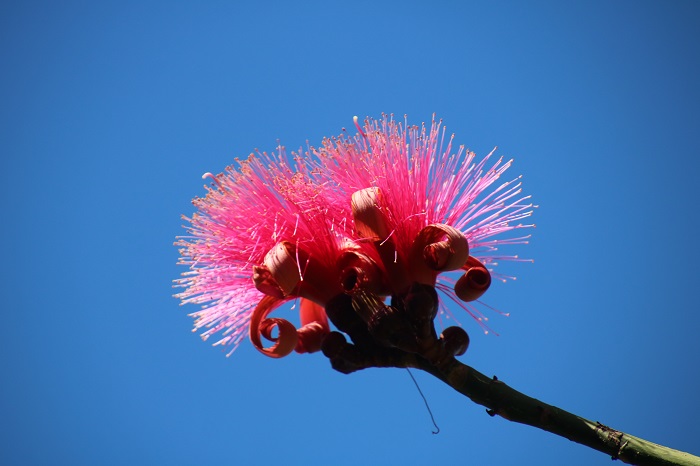
  These puffy flowers show up before the leaves on this tree. They are 10′ puffs of pink against a perfect blue sky.
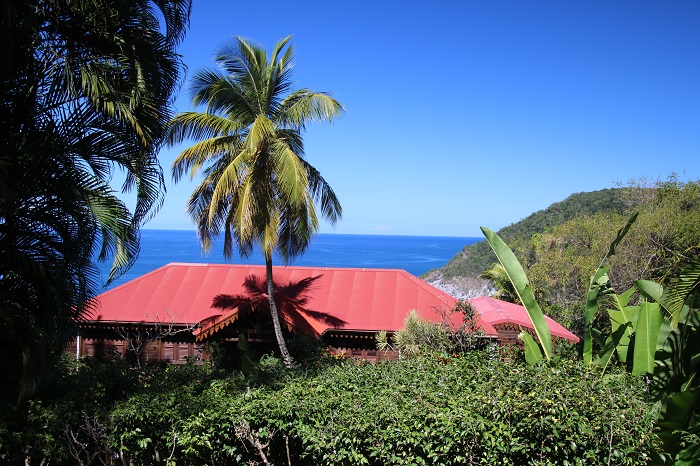
  I love the contrast of the red roofs, a signature style here, against the clear blue tropical sky and even bluer ocean.
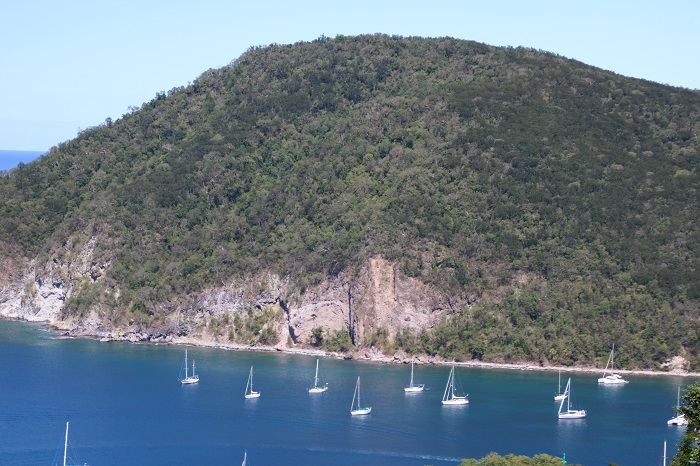
  From the edge of the property, a view of the boats in the harbor. That’s Pandora, third from the right.
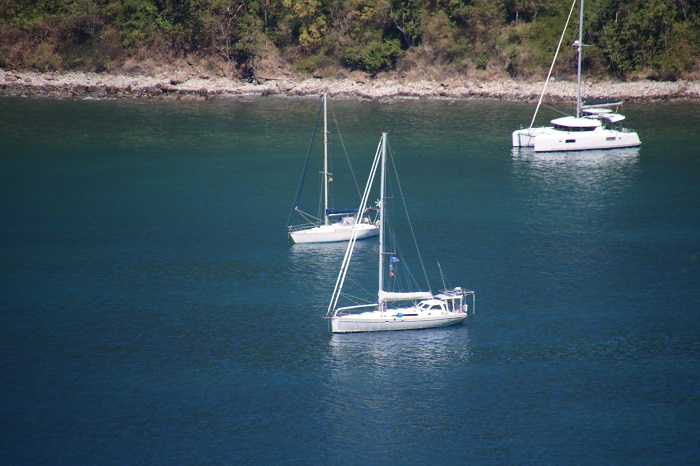
  Pandora up close.
  So here we are in Les Saintes, one of our favorite spots to spend time. We’ve taken a mooring for a week but it looks like we may have to make a run to Martinique soon as the winds are likely to pick up quite a bit and we need to be there or in St Lucia in a few weeks when we hope that the new compressor for our fridge will arrive and none too soon as it’s sounding worse each day. I sure hope that it doesn’t give up the ghost before the new one arrives.