


2020, the year that changed everything.
Here I sit, finishing up this post on the very last day of 2020, wondering what the coming year will bring. By any measure, 2020 has been one that will go down in the record books, perhaps as the most unsettling and challenging in our lifetimes. It’s hard to imagine a year that would include a once in a century pandemic killing countless thousands here in the US, many in their prime of life, nationwide racial strife and unprecedented government disfunction. I, for one, will be happy to close the books on this year.
2020 had a very uneventful start with Brenda and me ringing in the new year together in English Harbor, Antigua. When the clock struck midnight we sat on Pandora’s deck and watched fireworks explode over the old fort, following a wonderful dinner at the Admiral’s Inn. I’ll admit that the dinner was one of the most expensive meals ever for us but it was a wonderful way to close out the year and ring in the new. 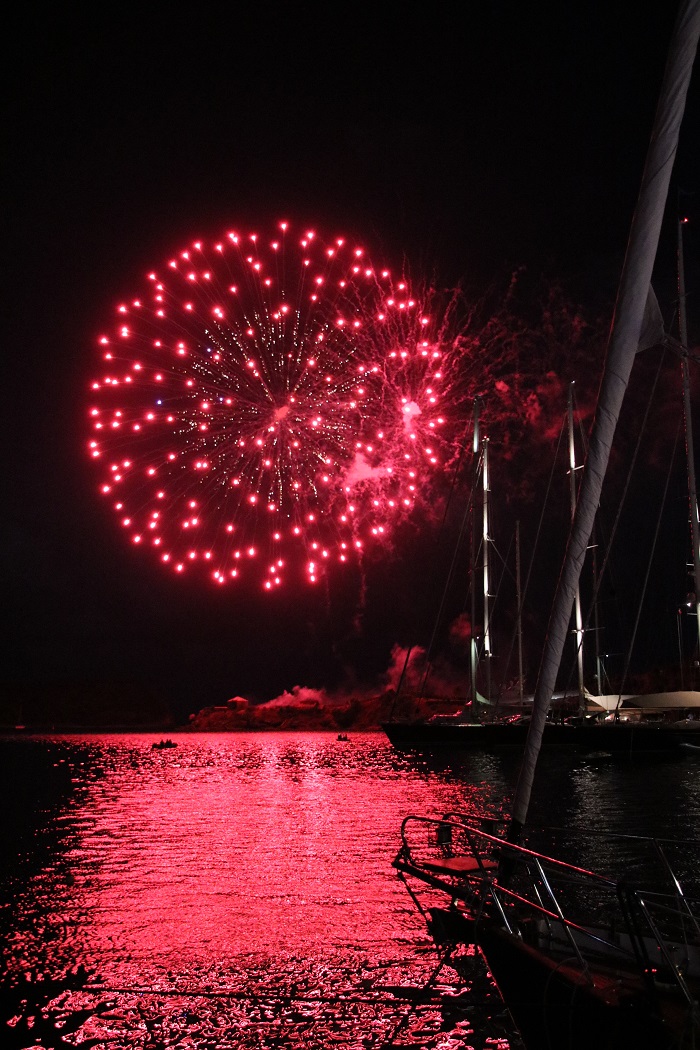 Aside from a failing refrigeration compressor that dogged us for months before I was finally able to fly in a replacement from the US, there was nothing on the horizon suggesting that the year would be any different than others we have spent aboard Pandora for a winter of cruising.
Later today, with our son Christopher, his partner Melody and their dog Mila, and the only person outside of our four walls that is part our bubble, our friend Craig, we will celebrate the end of the year and look forward to 2021 being more, dare I say “normal” 2021.
Many share an annual “holiday letter” with friends and family at this time of year. These are most often heartfelt tributes to family but there is also the occasional letter sounding more like a “brag book” of the year’s accomplishments and victories, sometimes detailing legal cases won, a “who’s who” of celebrities met and accomplishments made that you surely must wish you had. Not to be left out of the “can you top this”, I had a lovely lunch with Raquel Welsh years ago. It’s totally true, but that’s a story for another day. And, when I was in high school, where I also met Brenda, I worked in a hardware store and once sold a bird feeder to Dustin Hoffman. So there, top that!
2020 was indeed a year that has changed everything. Happily, our family has been spared much of the unhappiness wrought on so many.
My mother died recently but her passing was the natural progression of a life well lived. The nursing home where she lived for her final years, was spared all but a few deaths by the virus, a remarkable achievement and a testimony to their remarkably effective infection control. While I miss her terribly, as I do my father who died in 2013, I feel good about the wonderful life that she lived and the graceful way that she left us. I won’t repeat any more here as I wrote at length about her passing in my last post if you missed it.
It is no exaggeration to say that 2020 has been a year that changed just about everything in ways that we could never have imagined. I still remember how awkward I felt the first time I wore a mask in public earlier this year and now, I’d feel terribly exposed without one. That moment was in St Lucia, where we were, when the virus arrived in the Islands.
We had to make due with what we had on board, with Brenda hand sewing a mask out of an old handkerchief, a bilge “diaper” normally used to sop up oil, and some very stylish green ribbon. It was a pretty good mask but it was quite uncomfortable in the tropical heat, especially as I stood in long lines trying to buy increasingly scarce provisions.
Forget finding anything that resembled an N95 mask, much less hand sanitizer or denatured alcohol. Of course, the local rum, some varieties, plenty stiff at 85% alcohol, would do the trick in a pinch and a lot more pleasant than injecting bleach.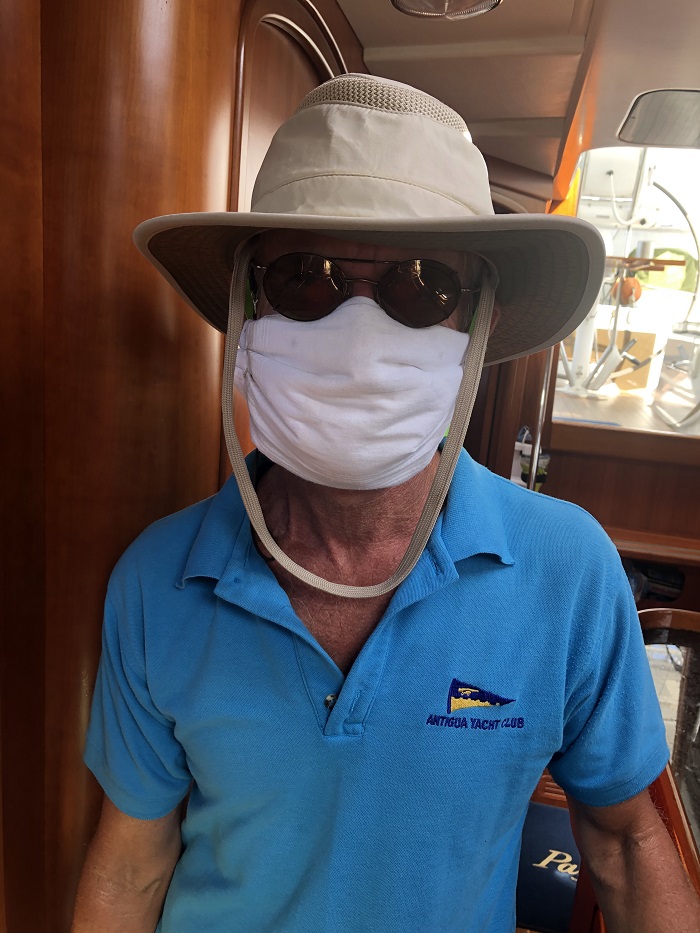 Our world is very different now and the risks are real. At this point we are doubly focused on staying safe with only a few months ahead of us until we hope to get the vaccine. I guess being in the over 65 crowd does have some benefit.
As just one example of how being responsible can hold the virus at bay, this fall, the annual Salty Dawg Rally to Antigua was successfully completed with 50 boats and crew heading south. With strict quarantine, testing and safety measures in place, there was no illness among the 200 skippers and crew.
Last year’s “normal” arrival in Antigua seems like a different world, everyone cheek to jowl, sans mask. Indoors or outdoors, imagine being shoulder to shoulder with so many now. Being in groups maskless is sadly still the norm, especially in “red states”, but not in our little “bubble”.
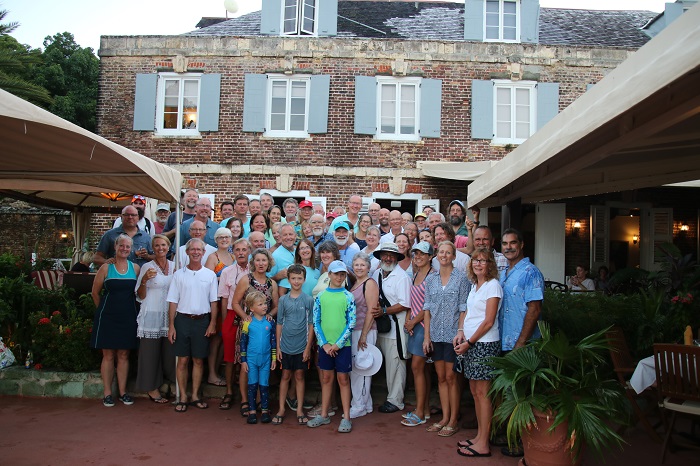 In normal years, day after day for more than a week, we attended parties, without a care in the world. How I long for that freedom again.
 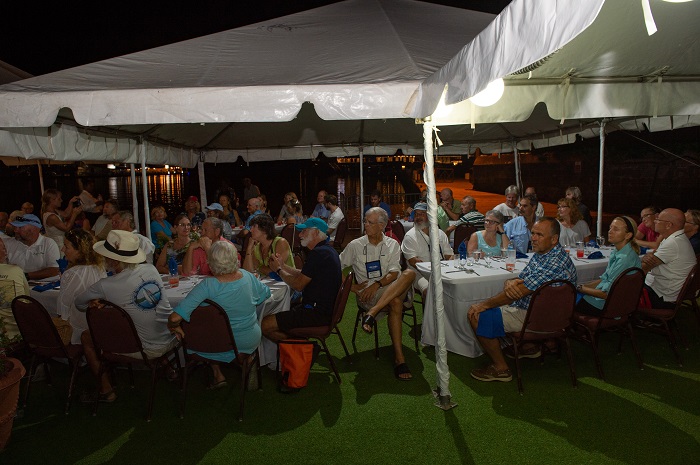 We jammed down below on Pandora for loud parties with friends. Imagine doing that now? Not likely.
 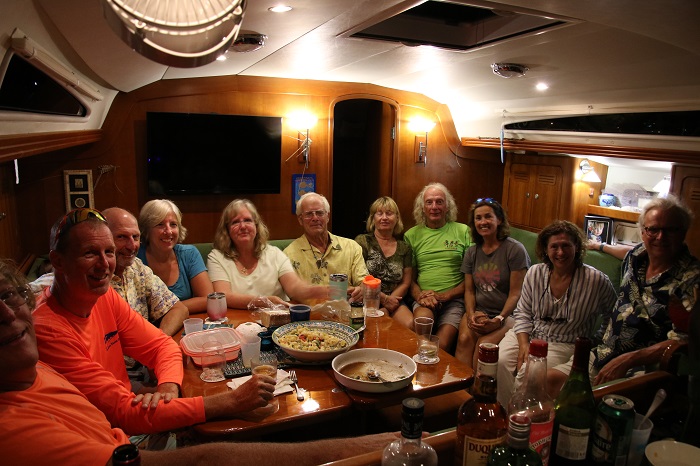 Last season, after ringing in the new year and after the strong Christmas Winds began to die down in mid January, we began our annual pilgrimage down island, working our way south, visiting many islands along the way.
Life was easy, with days shared with friends sightseeing on the islands and evenings aboard toasting the sunset with friends.
We visited Fort de France during Carnival, the largest annual celebration in that country, rubbing elbows with literally thousands. It seemed like everyone on the entire island descended on the capital for day after day of parties and parades. The crowds were just staggering. 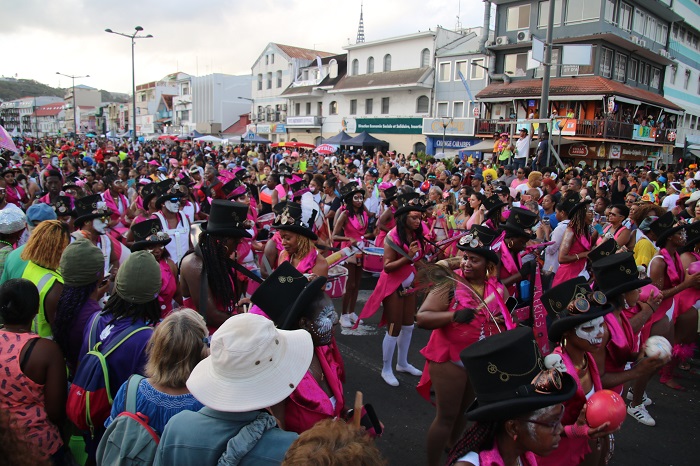 Then, less than two weeks later, the virus struck and in the blink of an eye, “open” became “closed” and everything changed. I recall reading a quote from Dr Fauci, in the early days of the pandemic, where he marveled at the unprecedented rapidity with which the virus enveloped the globe. In a single month, the virus was literally everywhere and in a world where suddenly every encounter with another person was a possible threat.
Imagine if the virus had arrived in Martinique, during Carnival. Fortunately, It didn’t and surely thousands were spared, perhaps including us. One skipper who had participated in the fall rally last year, a retired physician, contracted the virus while in St Martin and became so sick that he had to be evacuated from his boat, flown to Guadaloupe and ultimately to Florida where he died a few weeks later.
Even the closest of friends became potential “foe” and from that point on we never set foot on any boat except our own. For a full two months, Brenda only went ashore a single time.
And, in some cases, this forced isolation caused friction with friends who viewed the threat as questionable, “it’s just a bad flu”, and the local governments’ total lockdown was overblown. We still did some socializing but at a distance kept reasonably safe by the constant trade-winds. 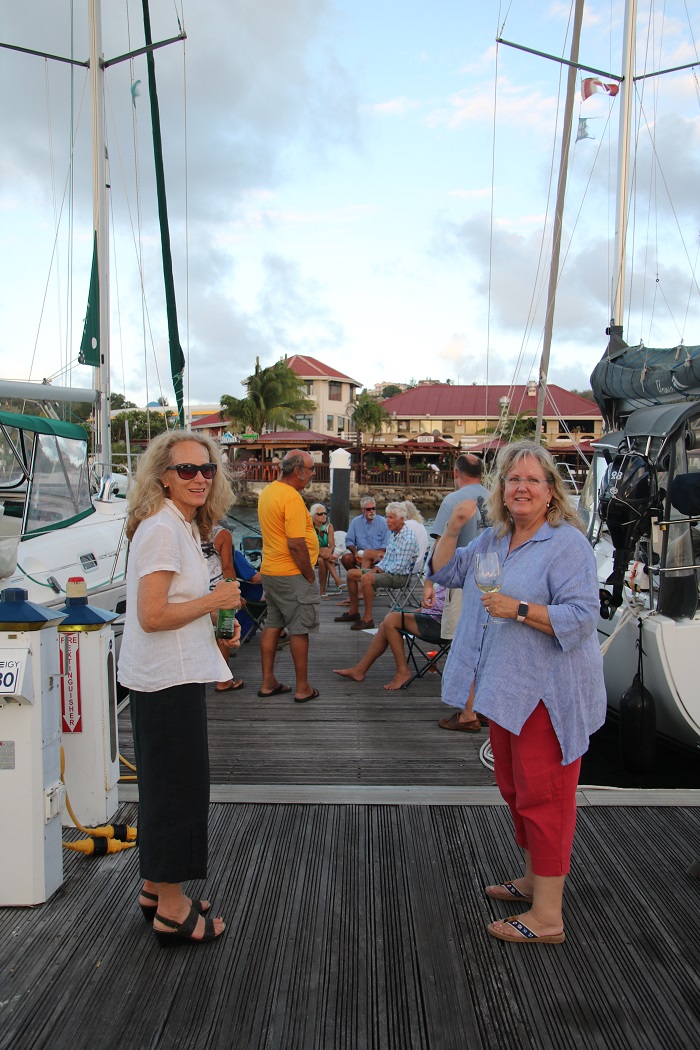 In reality, the risk in the islands was quite low but only because of the aggressive steps taken by local governments to isolate even a single case. Quarantine was never voluntary and those who broke it, were fined or worse. That approach worked well and most islands can now point to infection rates far less than the US and other “developed” nations.
To that point, the fatality rate in Antigua is about 1/20th per thousand than it is here in the United States, where things have been everything but “united”. The current death rate here is now approaching 4,000 per day with estimates predicting that another 100,000 may die in the next few weeks alone. That’s particularly sad given the fact that a vaccine is now available and on the near horizon for many.
Given the ongoing problems with Pandora’s refrigeration we had made plans to put Pandora in a marina for a week in St Lucia, while we waited for a new unit to be shipped from the US. The compressor assembly finally arrived and less than a week later, when we were still in the marina, Covid-19 arrived and shut down the island. Our week long stay stretched to a month and during the height of the lockdown even the “essential” businesses were closed.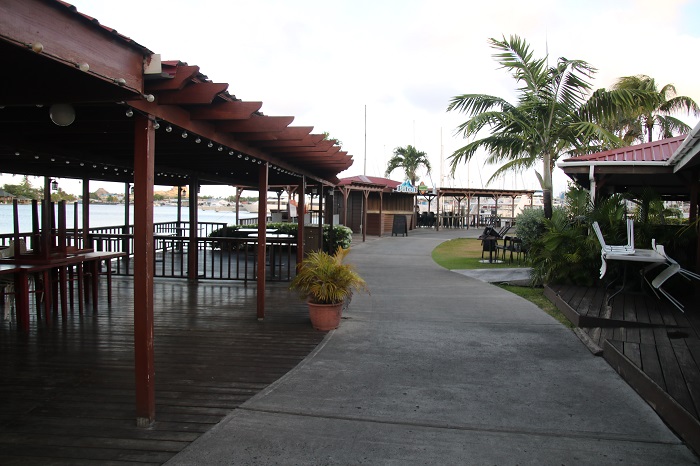 As soon as things began to get dicey, some of our friends left the island on the next available flight, fearful that if they didn’t go NOW, they would not get out. With only a day or two of preparation, they tossed their food, shut down systems and made arrangements for someone put their boats into storage.
Others opted to stay aboard and hunker down, ultimately remaining in the marina for the entire summer, unable to head elsewhere with every other island closed. As they were now stuck in the “hurricane zone” they followed the progress of every tropical storm with trepidation, wishing and hoping that the storm would not cross “their” island and destroy their boat, their home.
Resorts emptied out as vacationers scrambled to return home. One after another, commercial flights were canceled and some friends chartered small planes to fly them to Puerto Rico with the hope that they could connect to US bound flights. At least one couple ended up having to fly from the islands to Canada and finally home to the US after a circuitous route that took what seemed like forever.
After regularly scheduled flights were history, others booked seats on “repatriation flights” at double the normal rate, $500 or more, per person, one way, to Puerto Rico where they connected to the US. Planes arrived completely empty and left without an open seat.
Another cruising couple, who had left their boat in Antigua to fly home for a family ski trip in Europe, right before the pandemic struck, were unable to return to Antigua. They had to pay over $17k just to insure their boat for the summer as as Antigua falls right in the middle of the “hurricane zone” and is deemed a big risk by insurers.
In “normal” years I had crew, who would fly into Antigua, to help bring Pandora home. Getting crew has always been fairly easy but suddenly, those who had signed up to make the run were unwilling to get on a flight. I’ll admit I too was concerned about crew arriving, appearing to be “safe”, only to become ill once aboard. And the thought of having to wait two weeks once they arrived, just to be sure everyone was well, meant that crew signing up for the run home would have to commit up to a month onboard and that assumed that nobody got sick. That would be a tough request to make of anyone, especially when so much remained uncertain at home.
In the end, Brenda and I decided to make the run to the US together and I won’t repeat all that as I have written about the trip in nauseating detail in past posts. It was a challenging trip spanning several months and one that we have no interest in repeating.
The virus has indeed changed everything and even more so given a president that continually preached/tweated “hoax”, he himself became a “super spreader” and by some definitions, “the viruses ‘best friend”. Whether you think that the virus is a hoax or not, entire industries have been laid flat, countless thousands have died and nearly 4,000 are now dying every day as we close out the year.
Video calls, long a staple of movies about interstellar travel, are now routine, Zoom entered our lexicon, and what was once science fiction has become the default way to keep in touch with groups of family and friends for millions.
Overripe bananas, once relegated to the trash, are no longer tossed and are now a vital ingredient needed to make banana bread with everyone stuck at home and plenty of time on their hands.
Wine consumption is up just about everywhere with endless Zoom happy-hours to break up the sameness of each day. Home life is beginning to look a lot like the cruising lifestyle on small boars, with daily sundowners in your own tiny spaces, virtual or not.
And that’s nothing compared to y0ung parents trying to juggle work with the demands of child care. To that point, we have hardly seen our three grandchildren in months. Thanks to Facetime, we have “seen” them nearly every day but it’s just not the same.
Boating, after years of decline, is booming with marinas full to capacity and boat brokers struggling to find enough inventory to satisfy customer demand. Everyone suddenly decided that being on the water is safe with others fleeing the city for the “country”. Even here in our little town, here in eastern CT, home prices are up by double digits after years of stagnant prices.
2020 has indeed been a year to shatter norms with everyone forced to revaluate their lives and what is important to them. It’s hard to imagine that after decades of “remote work” being talked about, it’s now here and perhaps will be with many of us forever.
And, speaking of work, a number of our friends are now contemplating retiring in the coming year. They are taking seriously the adage we have often heard from fellow cruisers that “you will never be any younger or healthier”. A travel editor for the New York times recently encouraged that we resume travel as soon as it was safe as there is no way to know if by delaying we might find ourselves in the clutches of yet another pandemic when we finally decide it’s time to broaden our horizons.
Whatever good will arrive with the new year is darkened by the reality that in 2020, there have been so many deaths, many unnecessary. So many have died from the virus and in staggering numbers, with more than a death every 90 seconds, 24 hours a day for the year. It’s hard to wrap your head around numbers like that and it is particularly pathetic that the US, long the envy of the world leads with more deaths per capita than nearly any other nation on the planet.
So, here we are, on the precipice of the new year with everyone struggling to see what that future holds. How quickly will we receive the vaccine? How long will the vaccine keep us immune from infection? Can we eradicate the disease? How many will avoid vaccination, clinging to conspiracy theories, viewing the virus as a hoax? So many questions.
like so many others, I am focused on what cruising will be like for next year and am excited about being part of a post-pandemic Caribbean where travel between islands will once again be as simple as going into a T-shirt shop in Guadeloupe, filling out information on a computer kiosk, paying 3 Euros and heading off to buy a nice bottle of French wine, cheese and, of course, a warm baguette.
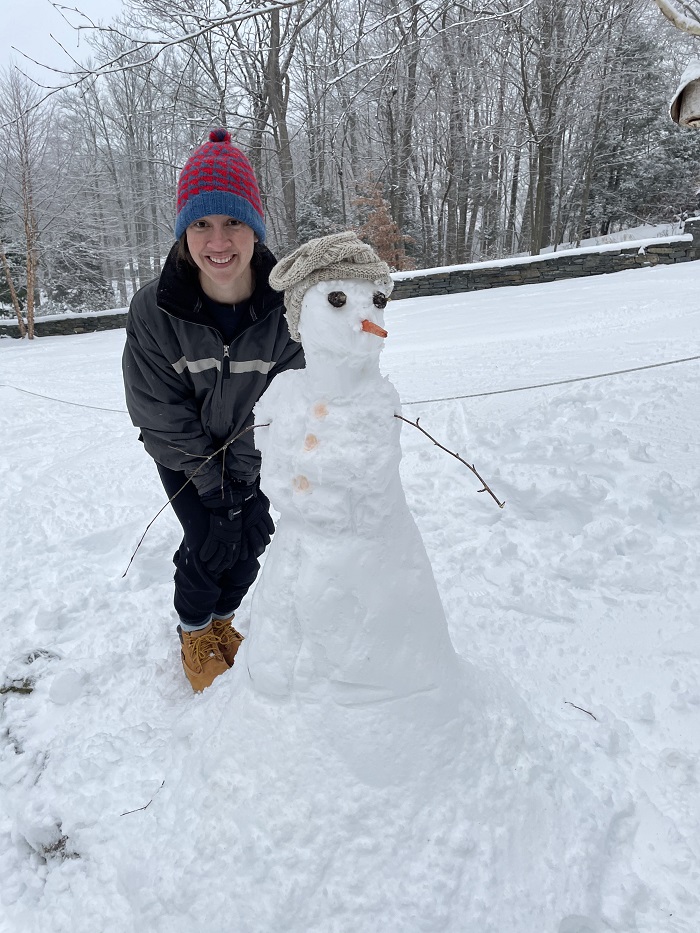
Here in CT, it looks a lot different than the Caribbean where an early snowstorm blanketing everything recently. The snow is gone now, save a small pile or two, but it was sure fun while it lasted. 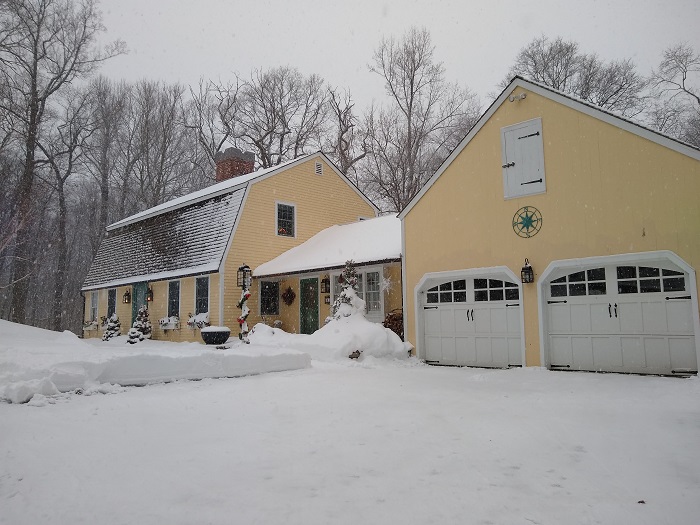 Melody and Mila, who had never seen a real snow storm just loved building a snowlady, running in the snow and doing a bit of sledding.
 I cling with hope to what Dr. Fauci is right and that most of us will have been vaccinated by the middle of next year. Fingers crossed. I can hardly wait.
With some luck, next summer will begin looking something like “normal” again. Although, I am struggling to imagine exactly what normal will be like. For sure, I can’t wait to eat out again with Brenda or go to the Club for a drink with friends and stand around the bar talking boats.
After enduring the last four years of, conspiracy theories and crazy stuff about how the virus is just going to disappear I am looking forward to once again living in a country where science is fact.
In a somewhat depressing way, all this sort of sums up a year with so many believing that somehow they could not be harmed by a virus that has claimed so many lives.
I guess all of this should not be much of a surprise when you think about the quote often attributed, probably incorrectly, to the famed circus entertainer P.T. Barnum who is said to have uttered “no one ever went broke underestimating the intelligence of the American public”.
The big question is what will be learned from all this and what will the “new normal” look like? Time will tell as it always does.
Recently, with the hope of better understanding the science behind the virus and vaccine, I watched a fascinating presentation by Dr Denison, at Vanderbilt University Medical Center. Dr Denison is a prominent and leading researcher who has spent the last 35 years studying Corona viruses and is perhaps the world’s leading authority on the subject. He talks about Covid-19, why it is so dangerous and the remarkably fast development of an effective vaccine against a virus that has spread to every continent and country, a feat unprecedented in recorded history. It’s worth watching but I warn you, it’s quite detailed and runs an hour.Well, that’s about it and later today we will close the books on 2020, a year that even those of us that were spared the worse, will not soon forget.
Let’s hope that when we think back on 2020, the year that changed everything, that much of what has changed will be for the better.
I had better signt off now as I have to punch down Brenda’s sourdough. Yes, she, like so many others, is baking up a storm. We are even baking with those overripe bananas.
Happy New Year!
We deserve it.
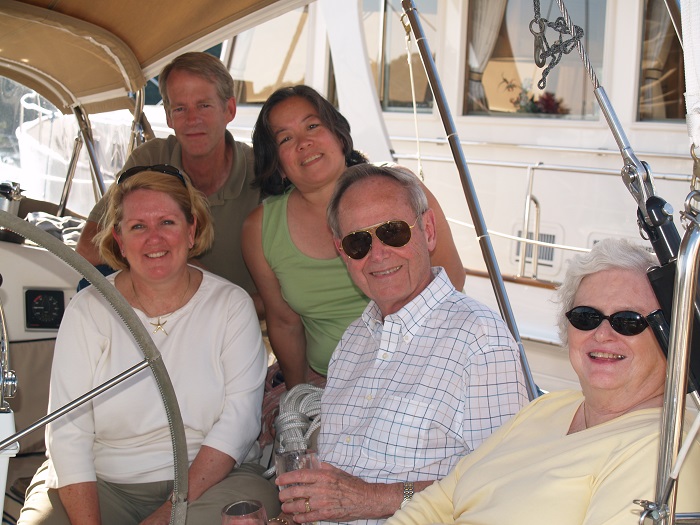 It’s a very sad day when a parent dies but I believe that the timing was good for my mom and it was a relief to know that there were none of the heroics that so often play out in the last days and hours of someone’s life with test upon test, taking blood and whatever else is recommended by well intentioned doctors and caregivers.
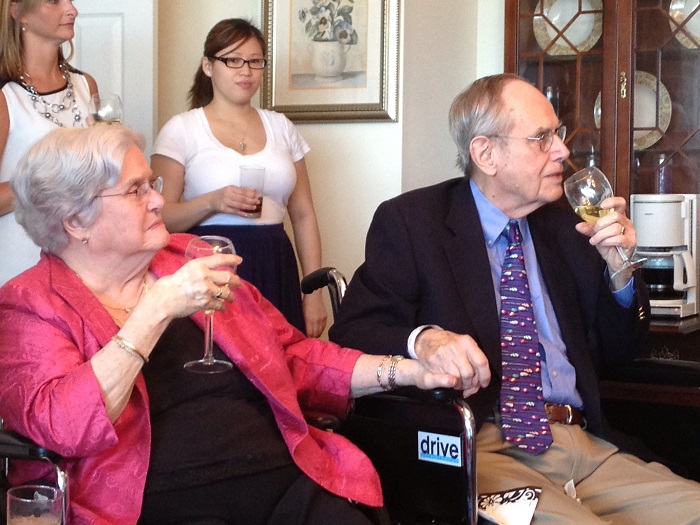 Including fully half of their wedding party. A really remarkable turnout that after all those years and a testament to what friendship meant to both of them.
 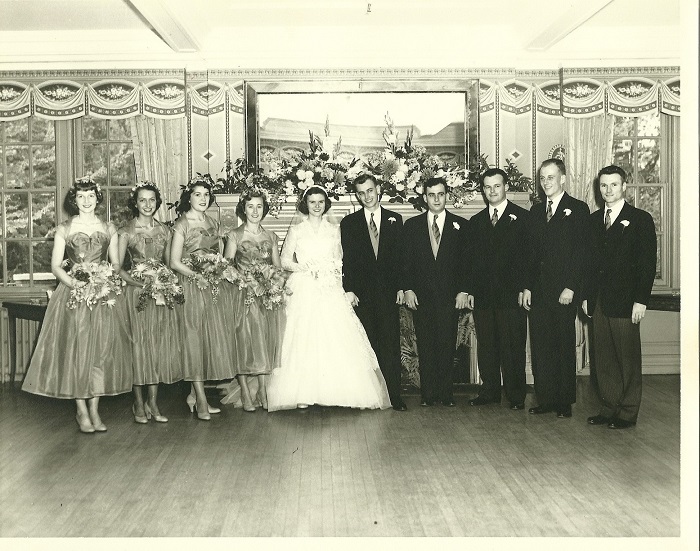 Legend has it that my father, after a particularly rough time out the night before, their wedding, compliments of my mother’s brother, my father fainted at the alter and while he was “out” she is rumored to have added a few clauses to the wedding vows. Whatever they were, I guess dad stuck to the agreement.
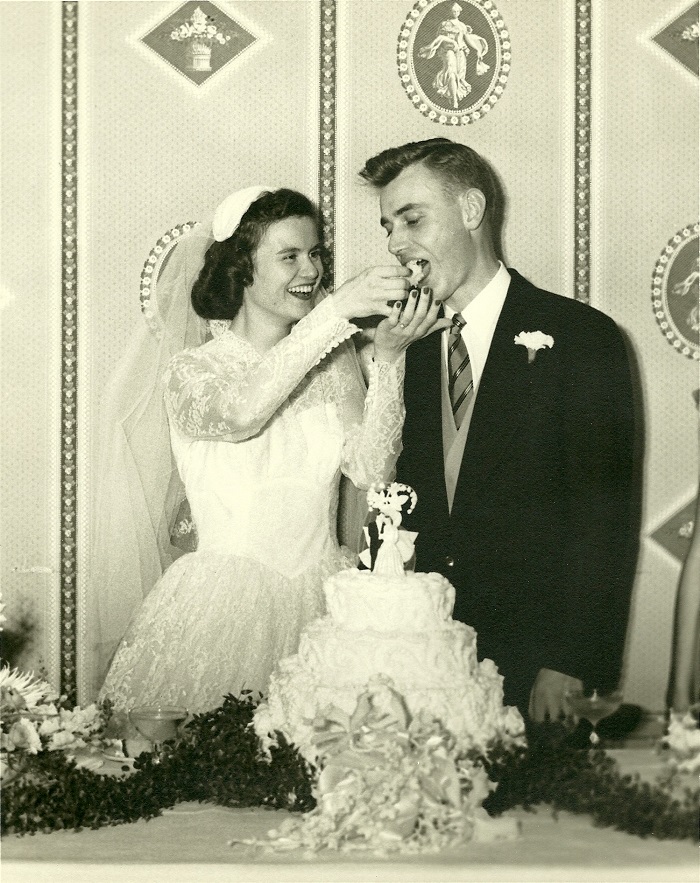 Yes my mother could be quite a character and I recall distinctly, when Brenda and I were visiting them at their home many years ago, for some holiday, she picked up the vegetable sprayer by the kitchen sink (remember those hose sprayers that you pulled up from the back of the sink?) and doused the lot of us, with a laugh, telling us to stay out of her kitchen. They did love a party.
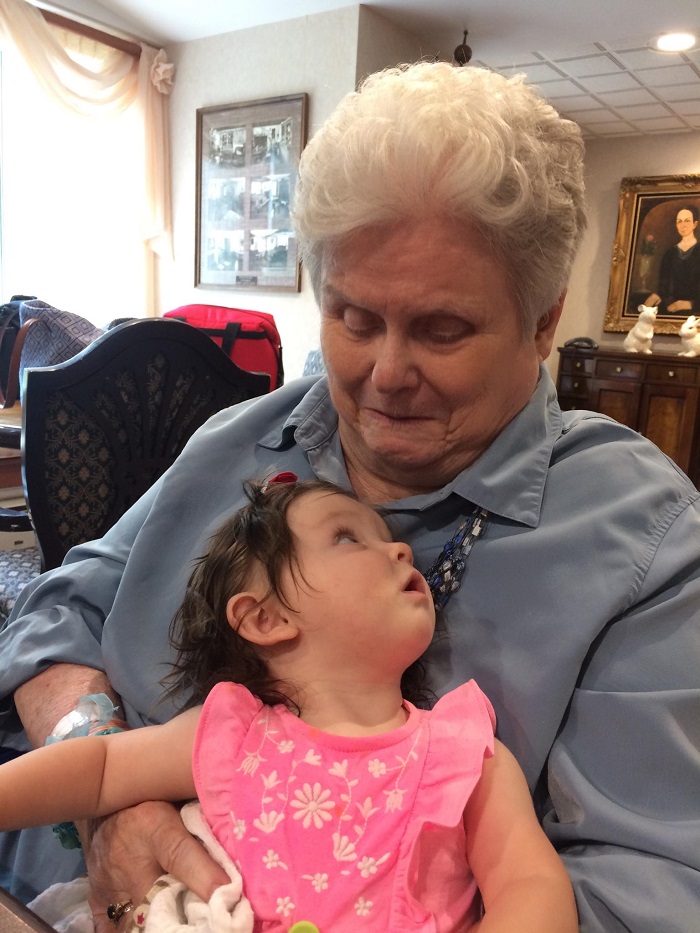
 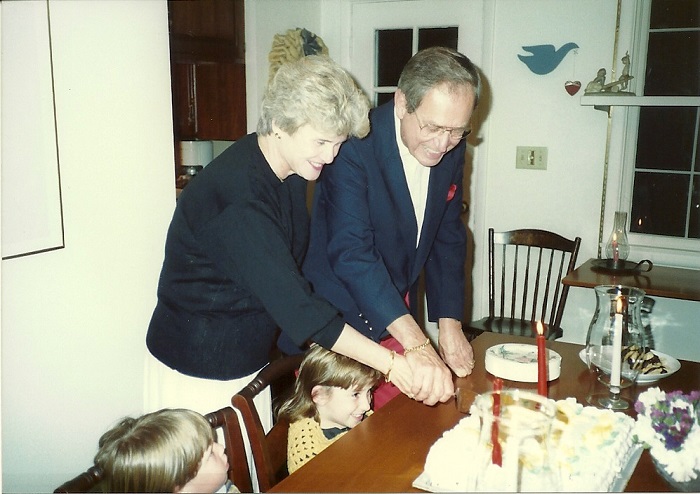 Mom and dad were devoted to family and friends, especially grandchildren and great-grandchildren. I have always been particularly moved by this photo of mom with our first grandchild Tori. Tori is now 4 and quite the pistol. Mom would surely have loved her even more now.
  Shortly after our youngest, Chris, defended his physics dissertation at Columbia, he visited my parents with us. I recall mom and dad listening intently as Chris described the intricate details of his thesis on cold trapping of atoms and quantum molecular optics. Like the rest of us, mom and dad had absolutely no clue about what he was saying but were completely thrilled to hear all about it, never the less.
 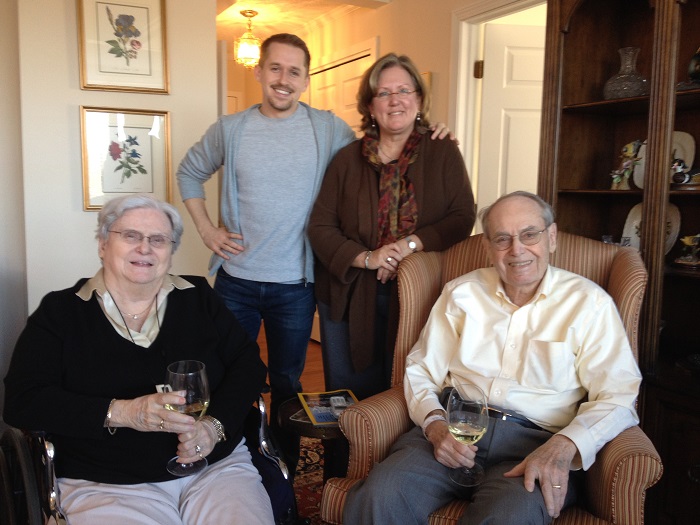 So many years have passed and as my brother said to me when I called him with the sad news, “It’s the end of an era.” Yes it is and what a wonderful era it has been.
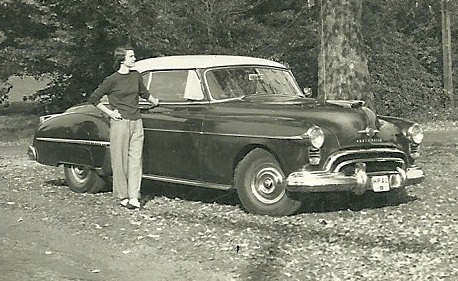 She always told me I had good genes.
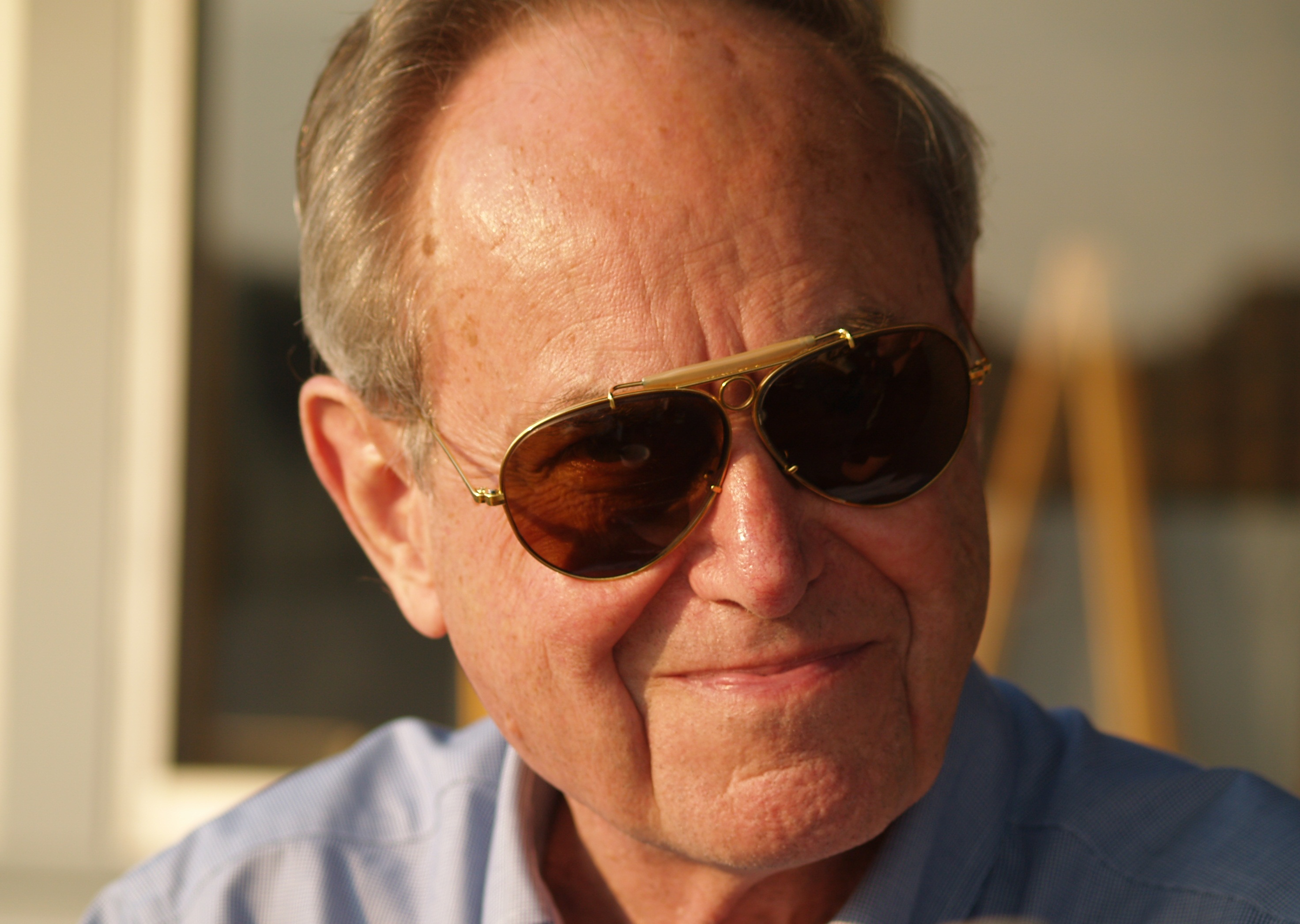 It is said that the greatest gift parents can give their children is a good marriage. On their grave marker we had inscribed “their marriage was an inspiration to us all”.
 Maintaining a near double digit average speeds over the nearly 1,500 miles to Antigua was impressive, especially given that for most of the trip this year, boats had the wind forward of the beam. By the time that Iain arrived in Antigua he was hundreds of miles in front of any other boat in the rally.
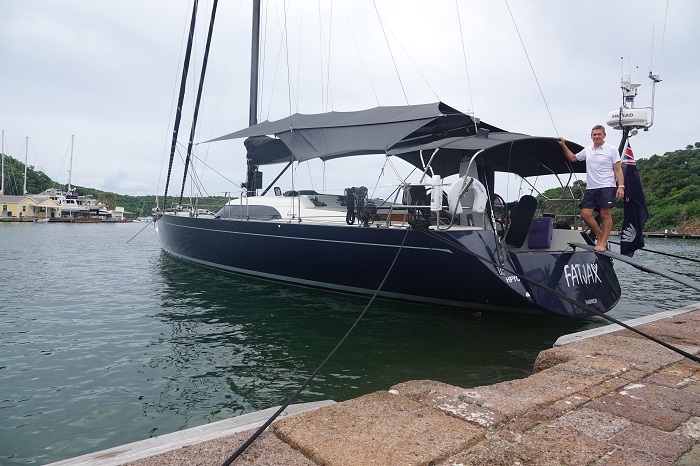 Last fall, Iain and his wife Jacqueline, both from the UK, sailed Fatjax to the Caribbean from the Canaries, landing in St Lucia. Like so many cruisers, me and Brenda included, they suddenly found themselves locked down due to the virus a few months later.
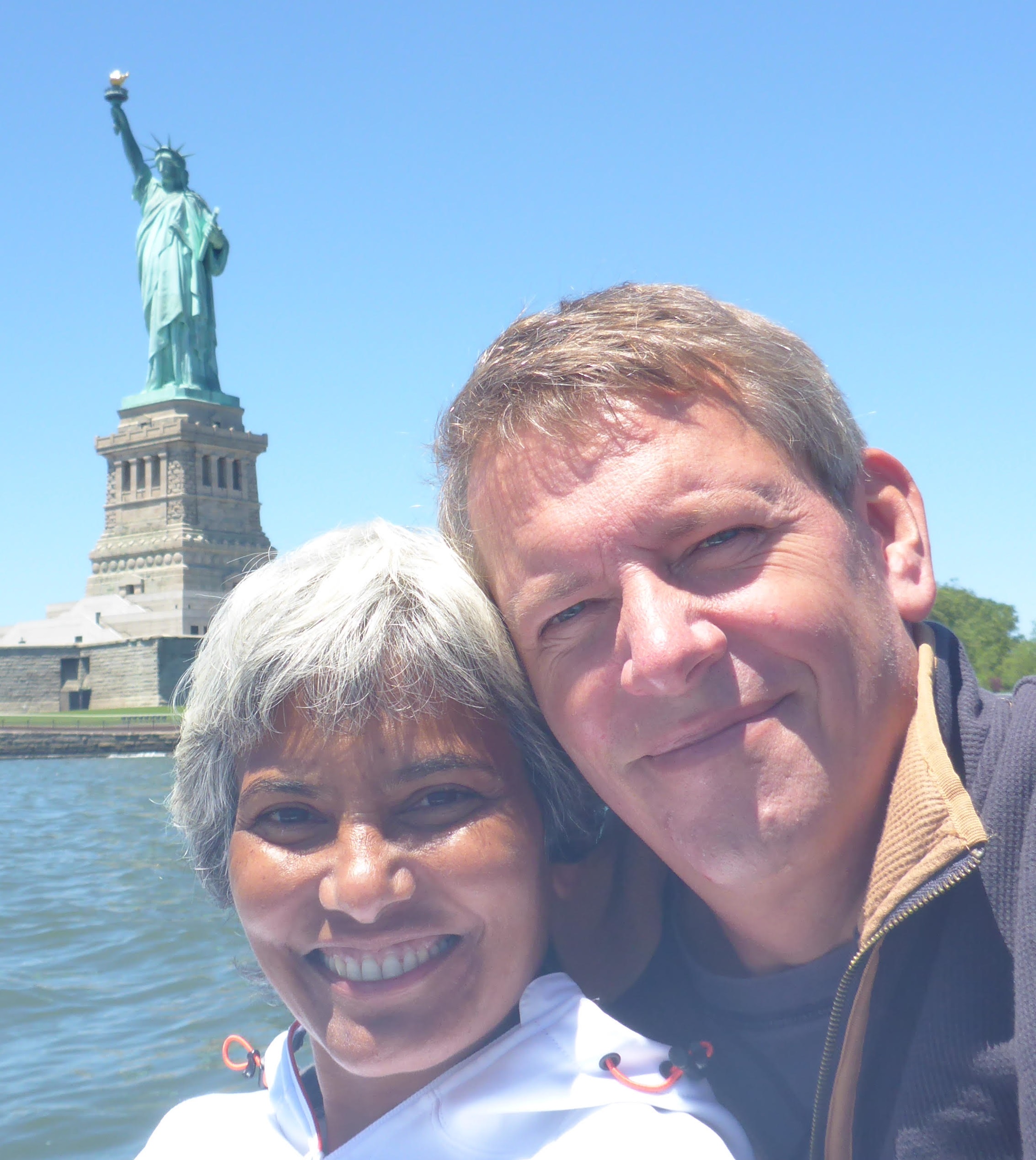 They cruised the US east coast and made their way to Newport where Iain spent much of the summer alone after Jacqueline flew home to the UK only to learn that she was unable to return due to pandemic travel restrictions.
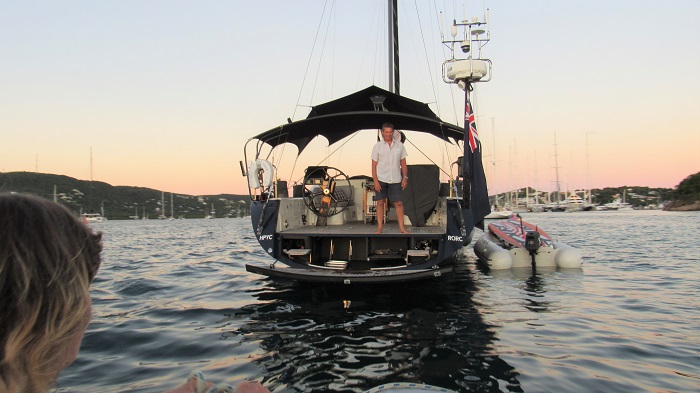 Huge cockpit.
 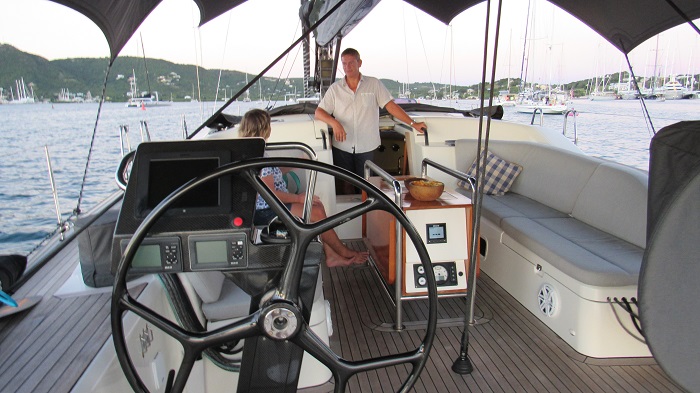 Maureen, AKA: Vana White of Kalunamoo, taking a tour below.
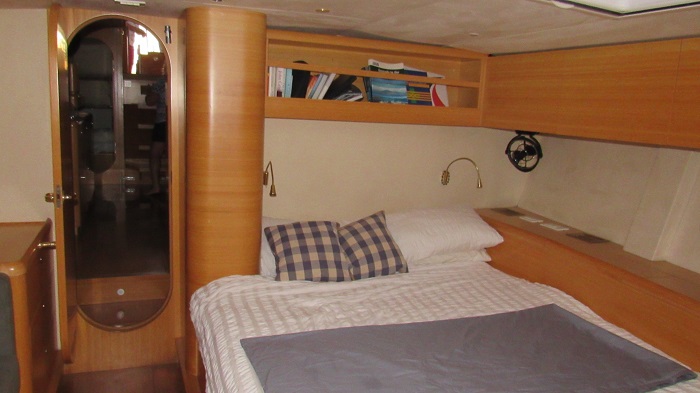
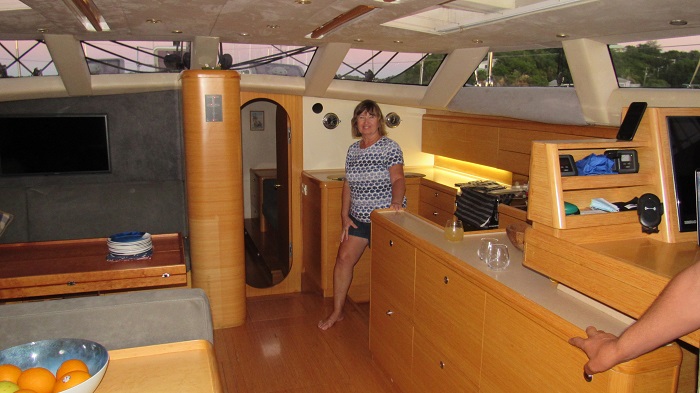 Nice spot to take a nap.
  Yum… So wish Brenda and I were there… In case you are wondering about social distancing. Remember, Fatjax is open to the air, alfresco as it were… Just wait till the Christmas winds kick in in a few weeks.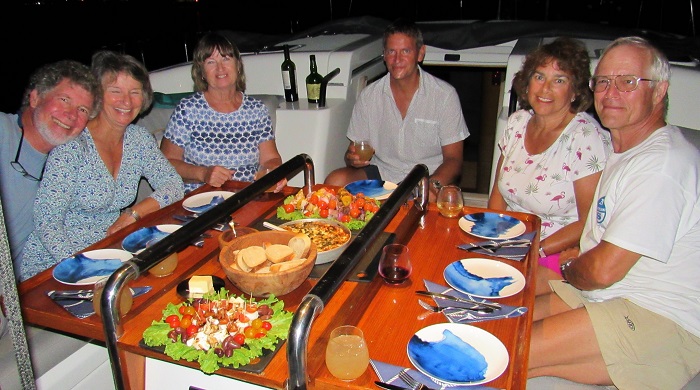
 A number of boats stopped in Bermuda, one in Puerto Rico and several in the USVI, only long enough to fix stuff and lick their wounds before pulling up their shorts and heading out yet again for Antigua, their destination.
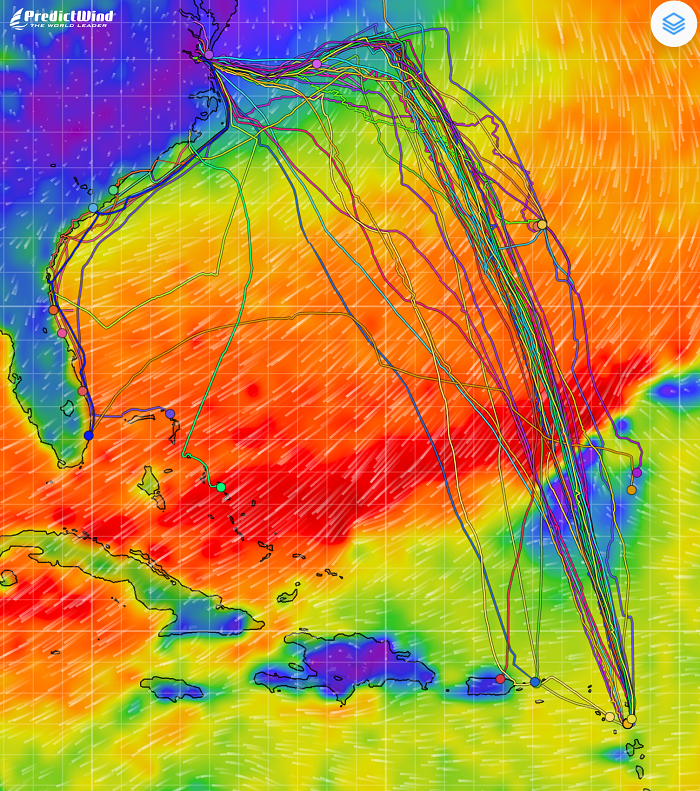 Hopefully, things will improve but the waters of the coastal US and Bahamas have been particularly hard hit by the remnants of a parade of hurricanes and tropical storms in what has been the busiest year on record.
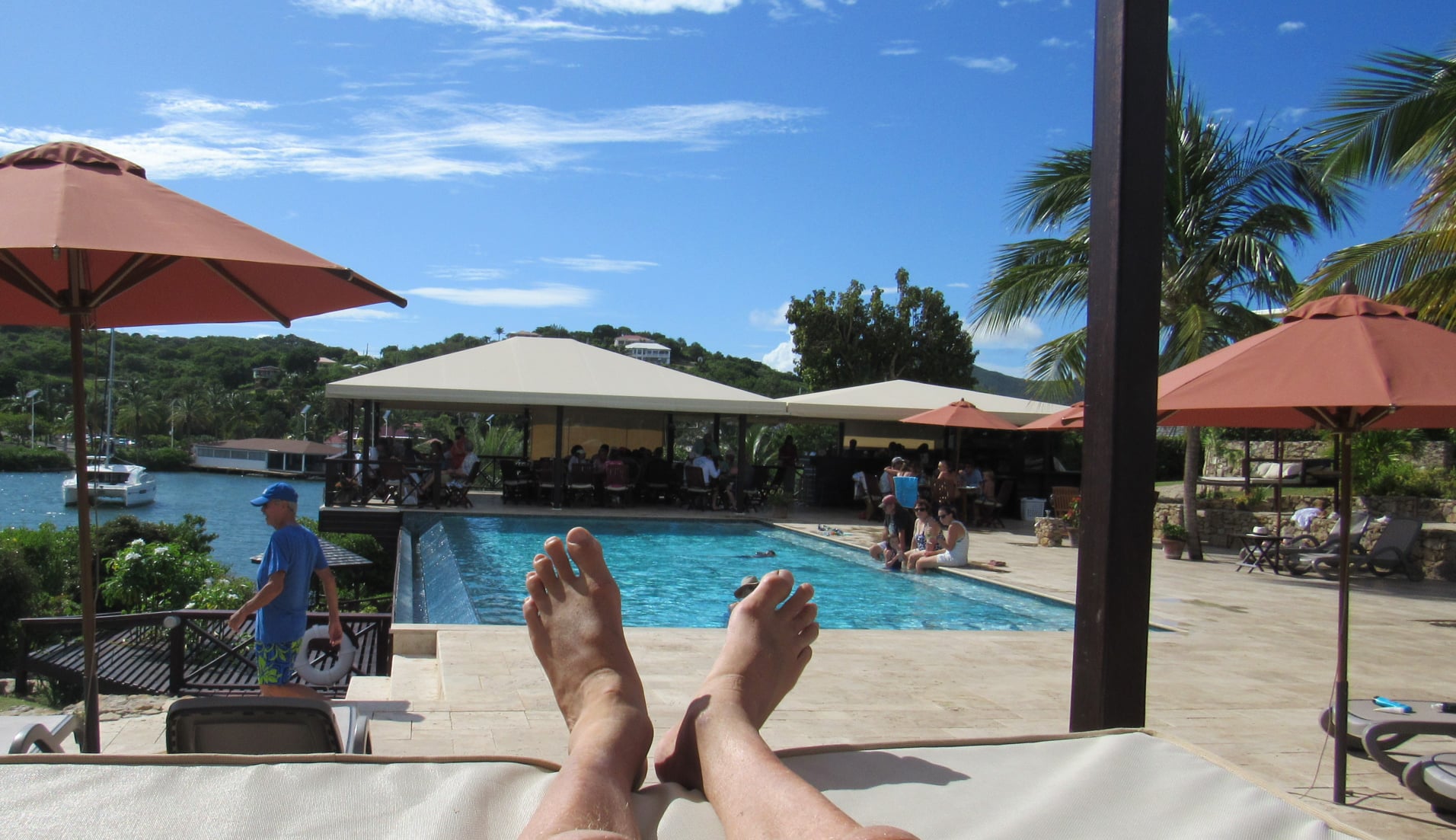
 Bill’s view as he surveyed the activities and slept off lunch I expect.
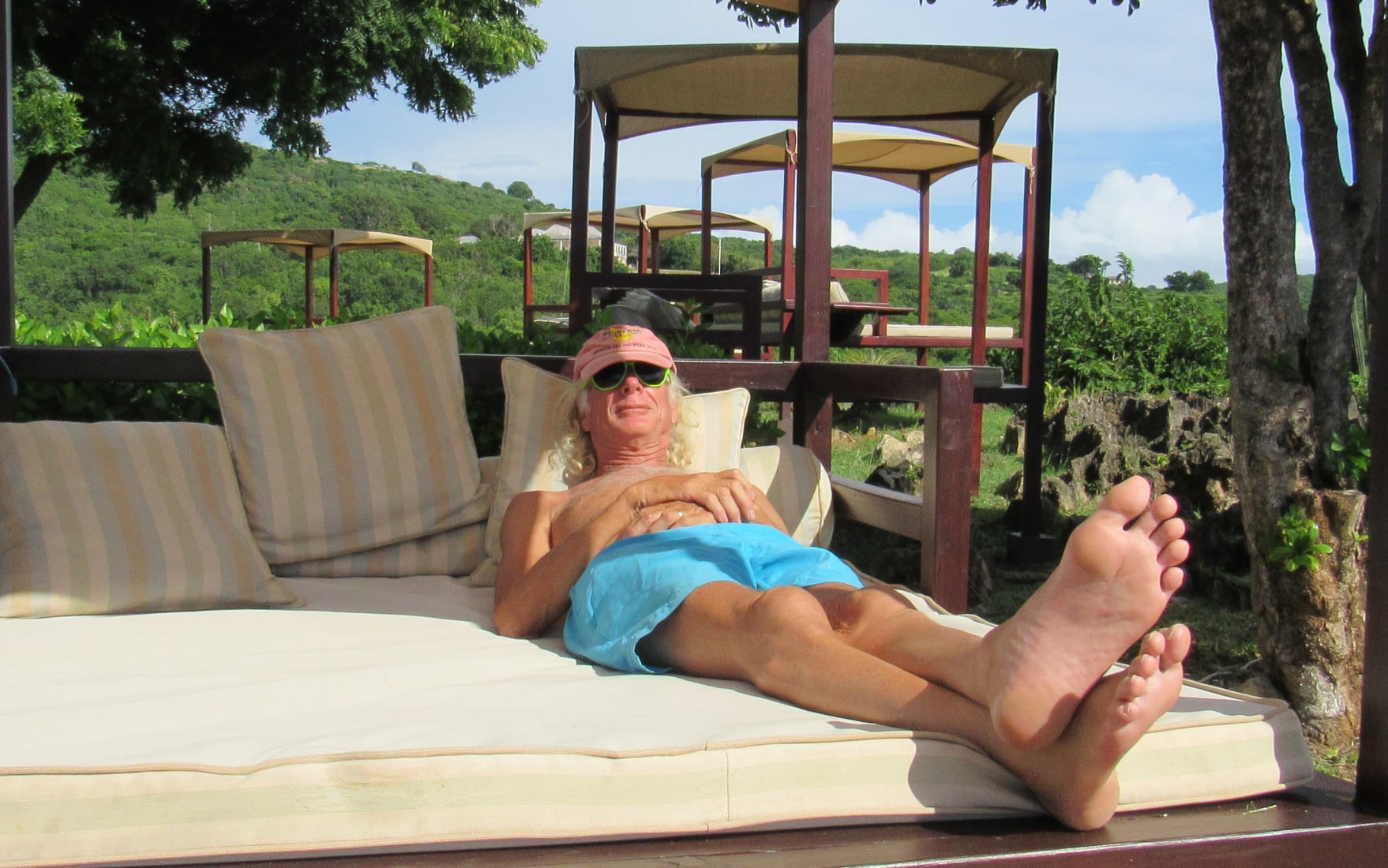
  Yup, that’s Bill, the guy.
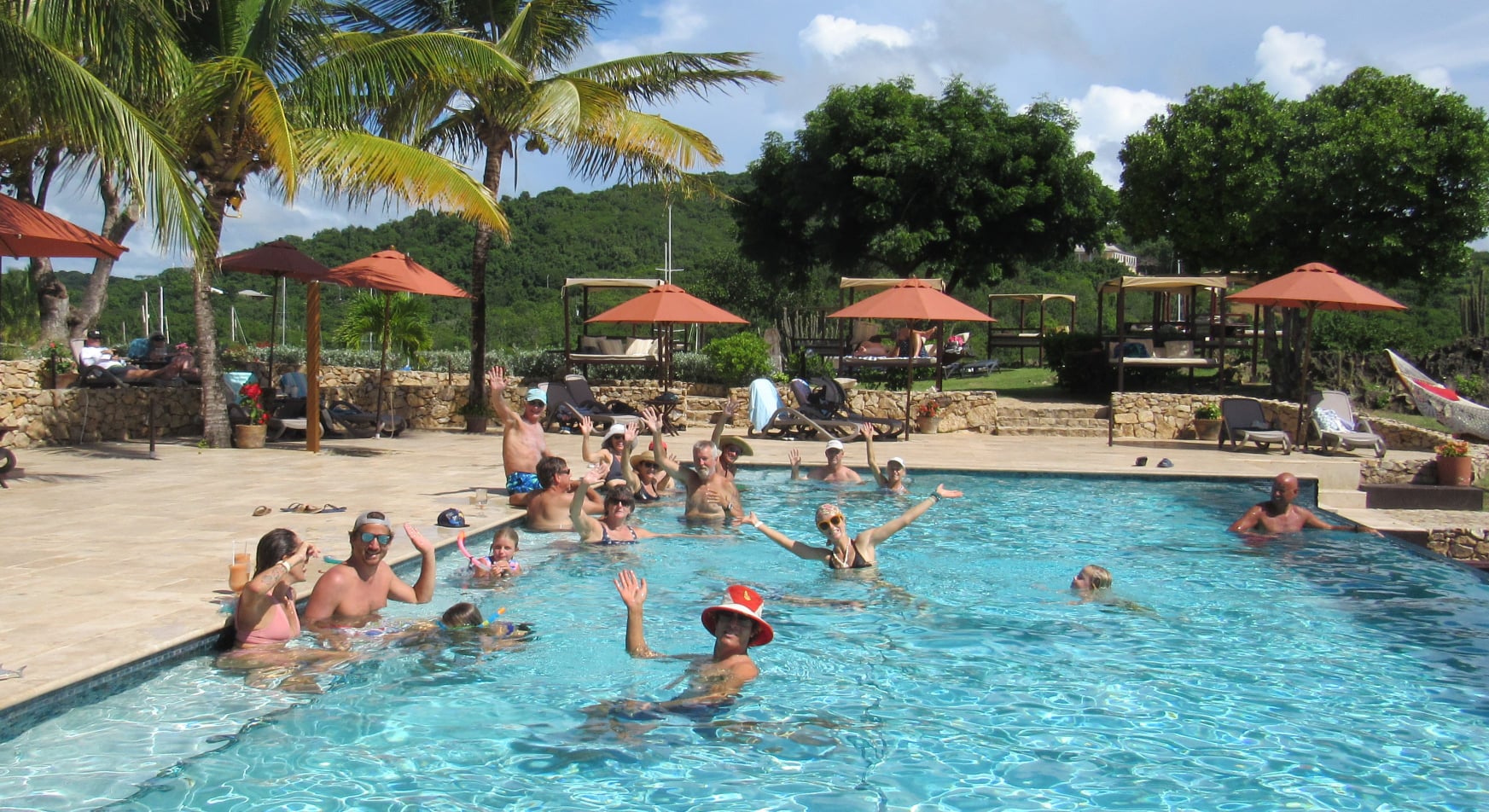
  And, just to prove that all the folks in the rally aren’t as old as Bill (it takes one to know one), some younger Dawgs enjoying the day.
 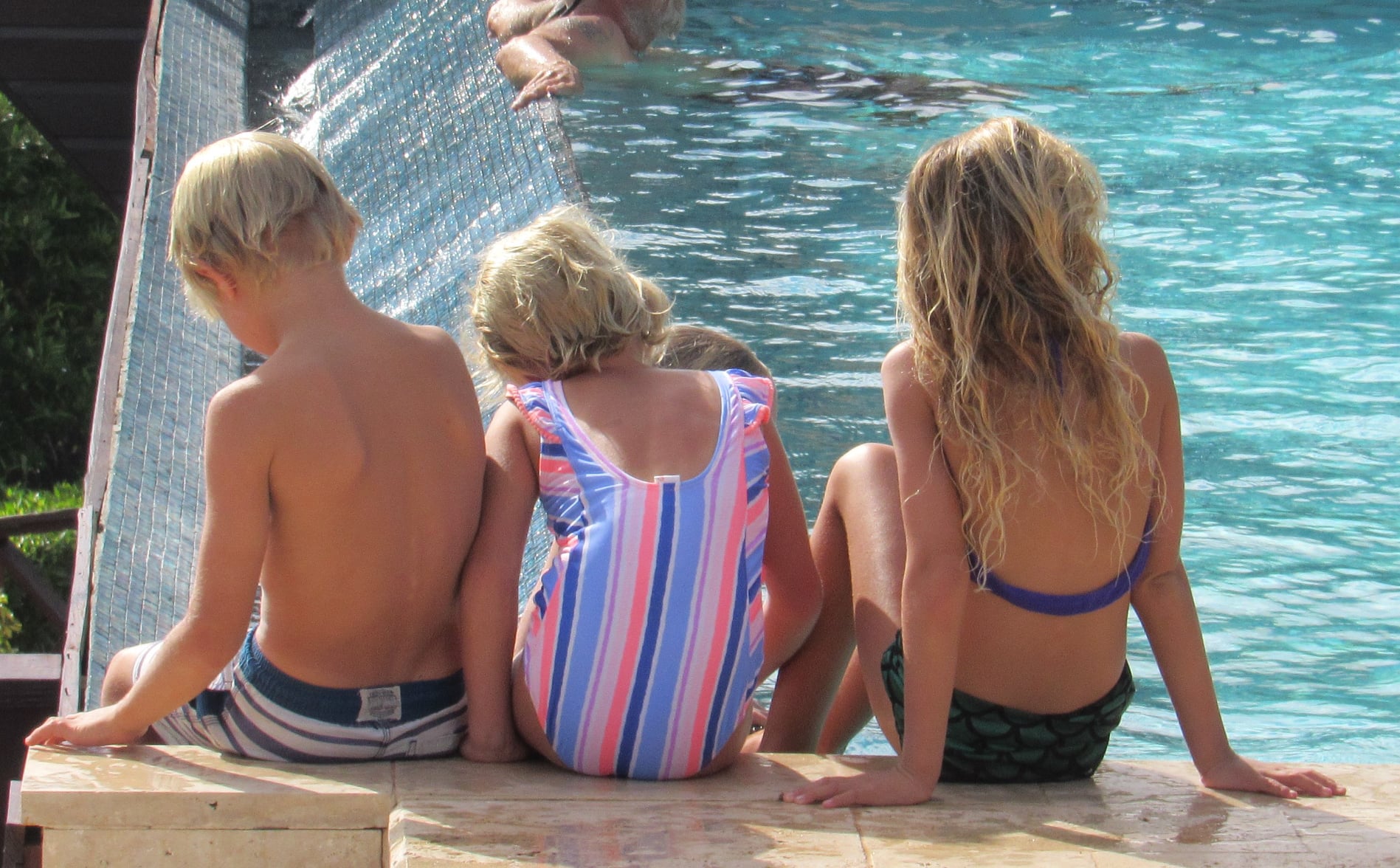 Of course, one of the key questions you have to ask yourself about is the wisdom of being in a country like Antigua, with very limited medical facilities, if you were to fall ill. When the rally was preparing for departure, everyone was very aware of the possibility of infection and the importance of staying safe. Now that they are in Antigua and likely free of infection because of their time at sea, they are once again ashore and it is possible that they will come in contact with someone who is ill. At least those who made the run are part of a large “Dawg Bubble” and probably safe.
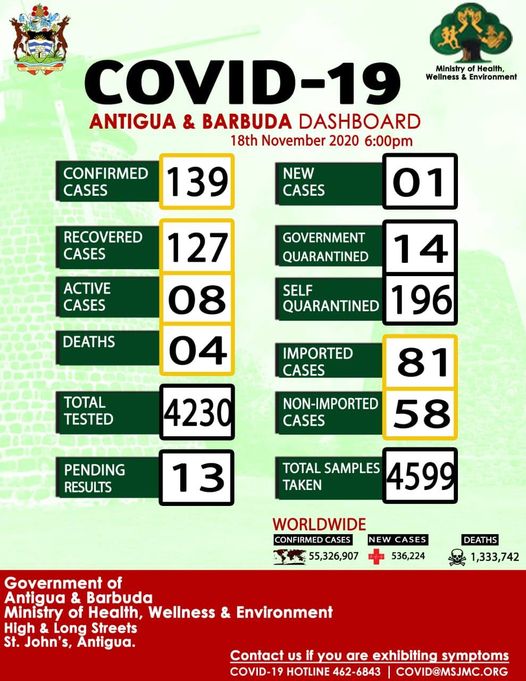 In the last two months, the number of confirmed cases has increased from 95 to 139 and there have been a total of three deaths. In spite of all that, the death rate by thousand residents is still a fraction of that in the US. As of yesterday we passed the sobering milestone of 250,00o deaths, with some experts predicting that we could log yet another 200,000 deaths before a vaccine is widely available.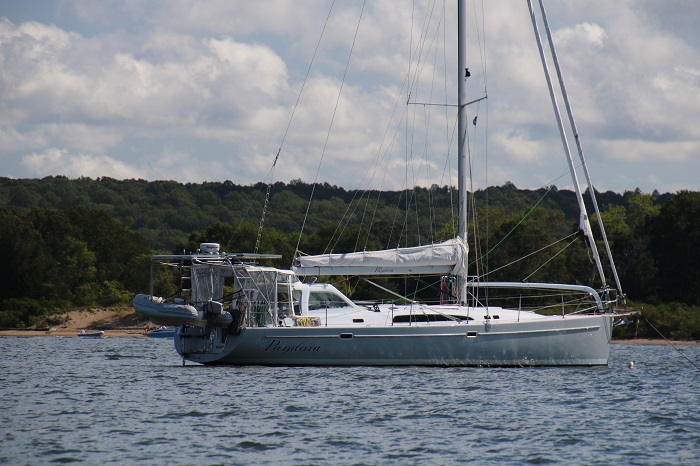
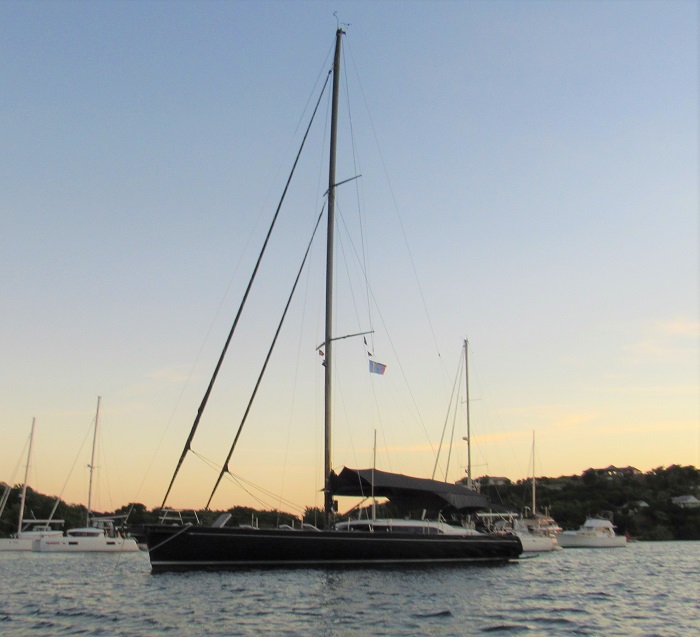
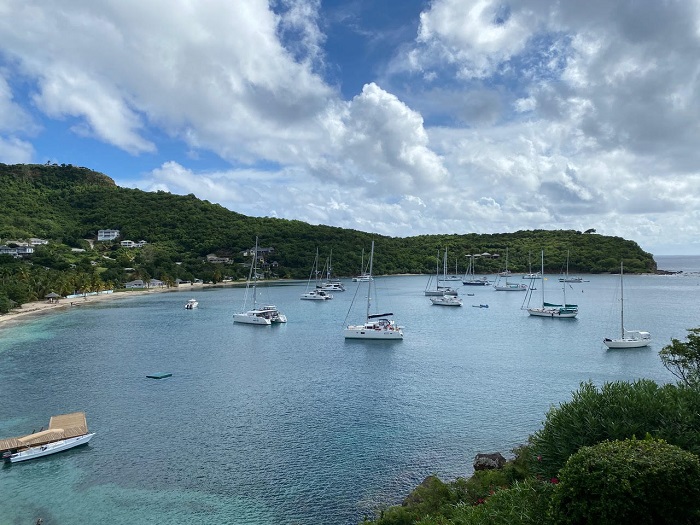
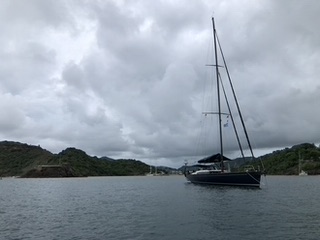
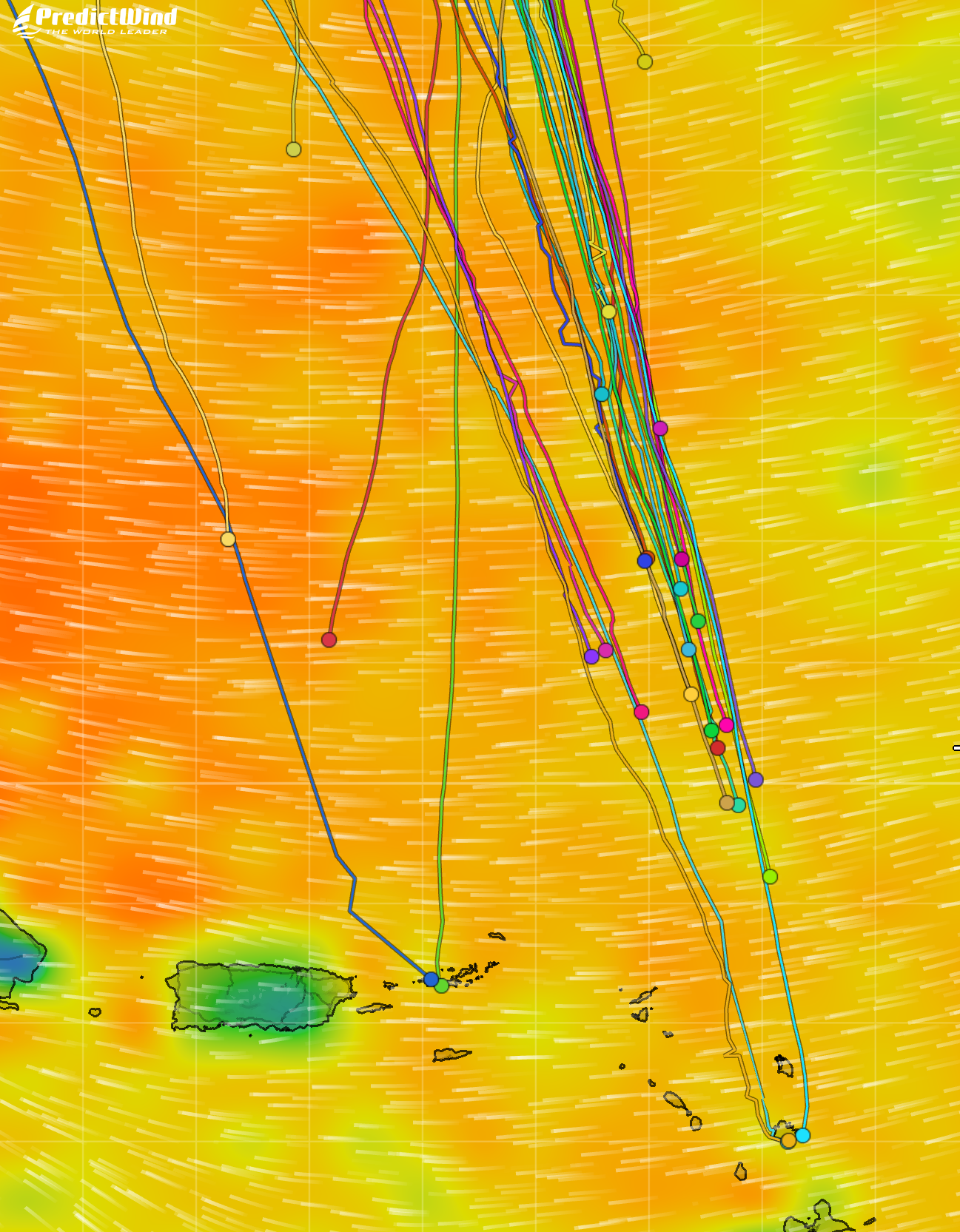 And, when it comes to crew, the bulk of boats in the rally take on extra hands for the run. Remarkably, Iain on Fatjax, a go-fast carbon flyer, made his run as a single hander and arrived only a week after leaving Hampton, a remarkable accomplishment. I caught up with Iain earlier today on a call and learned more about him and Fatjax. I’ll be sharing what we talked about in a few days so stay tuned. For now, here’s a shot of Fatjax anchored in English Harbor awaiting clearance.
  Ocean voyaging is a big deal and to sail alone around the world, like the boats competing in the Vendee Globe, especially without stopping, is a very big deal.