


Starboard tack from now on.
Well, that’s it. We are officially heading north and home to CT as of two days ago. While we didn’t make it all the way to Grenada, our plan early in the season, we made it very close, less than 50 miles. Next year, perhaps.
With the consistent easterly trades, we have spent most of the winter on a port tack, always heading south. So, now it’s time to “tack” and head north again.
As if to say “don’t forget us”, we were greeted by a fabulous rainbow in Bequia as we left to head north yesterday after clearing out. 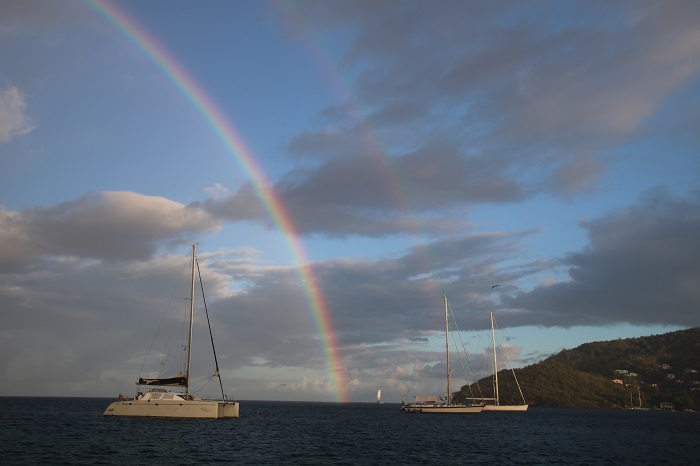 As I write this we are on a mooring in Marigot, St Lucia, where Brenda will head out on Friday and my friend Craig will join me for ten days. Craig and I will make our way up to Antigua and I’ll be joined by crew for the run home.
It’s going to be tough for me to be left behind when Brenda heads home as it will be about 6 weeks until I arrive home. It’s too early to head north with Pandora, it snowed in CT last week, I am told, so I have to hang around for a few weeks before heading out. To head north any sooner would be dangerous, with the threat of strong late season “nor’easters”. Not my first choice.
However, on a positive note, it’s been great visiting so many new places which will make our run south next winter easier as we will already have a better feel for which spots to visit again.
One of the best spots where we spent time was surely Bequia, with many places to eat out as well as being a terrific spot to have work done on the boat. We will surely be back next season to have more varnishing work done by Winfield and perhaps some more canvas work too.
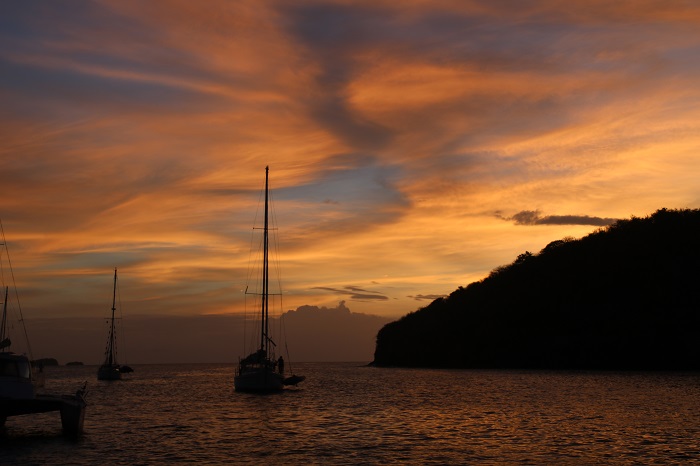
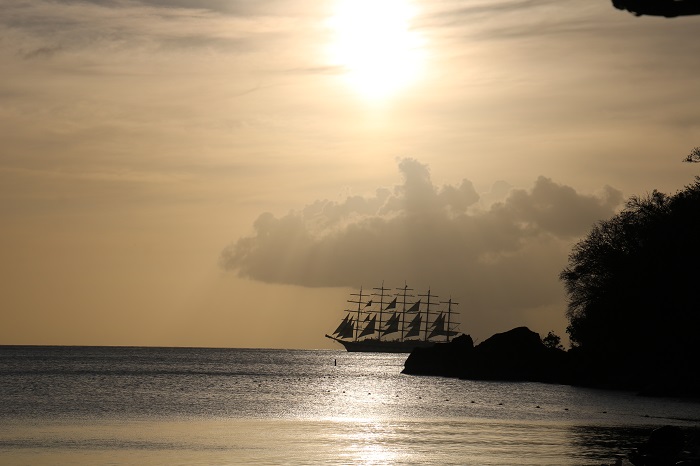
We enjoyed our time meeting up with the many couples that we met through the Salty Dawg Rally. In Bequia we participated in a “dinghy drift” organized by fellow “Dawg” Lynn on Roxy. She’s a high energy girl and to spend time with her is always fun. Alas, she’s not in this photo. 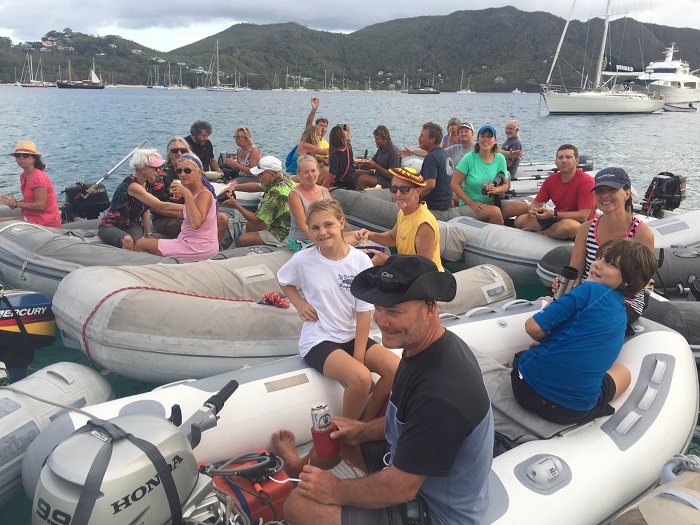 As if the evening wasn’t fun enough already, we were treated to perhaps the most spectacular tropical sunset of the season.
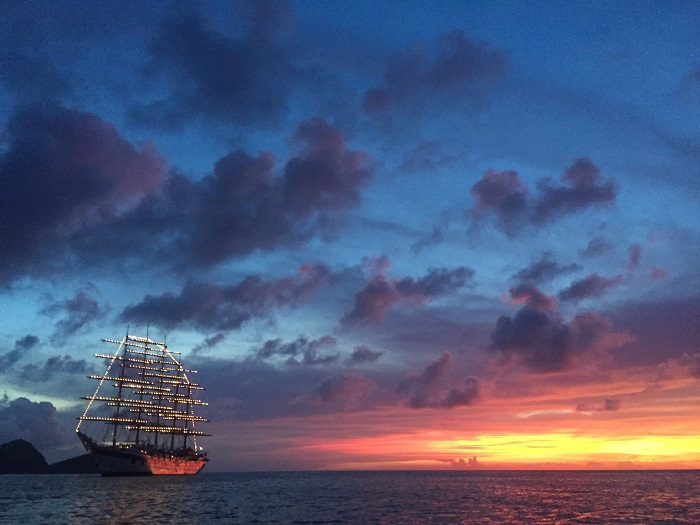
 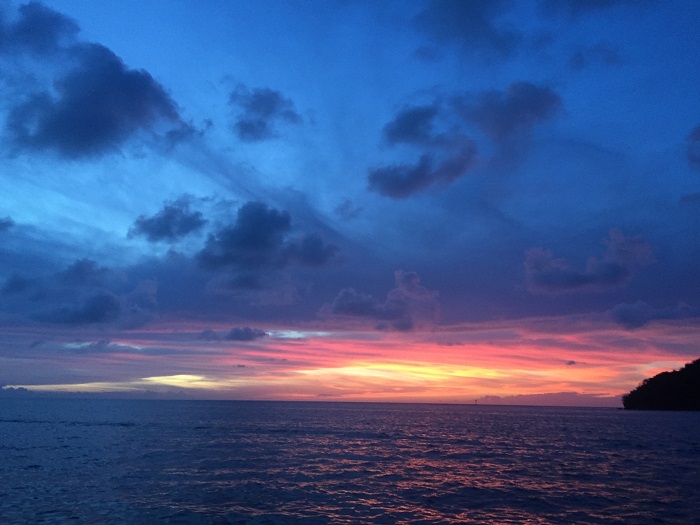 Made even better with Sea Cloud II in the frame.
  After a bitAfter Bequia we headed south to the Tobago Cays, described by some as a lot like the Bahamas with beautiful turquoise waters.
 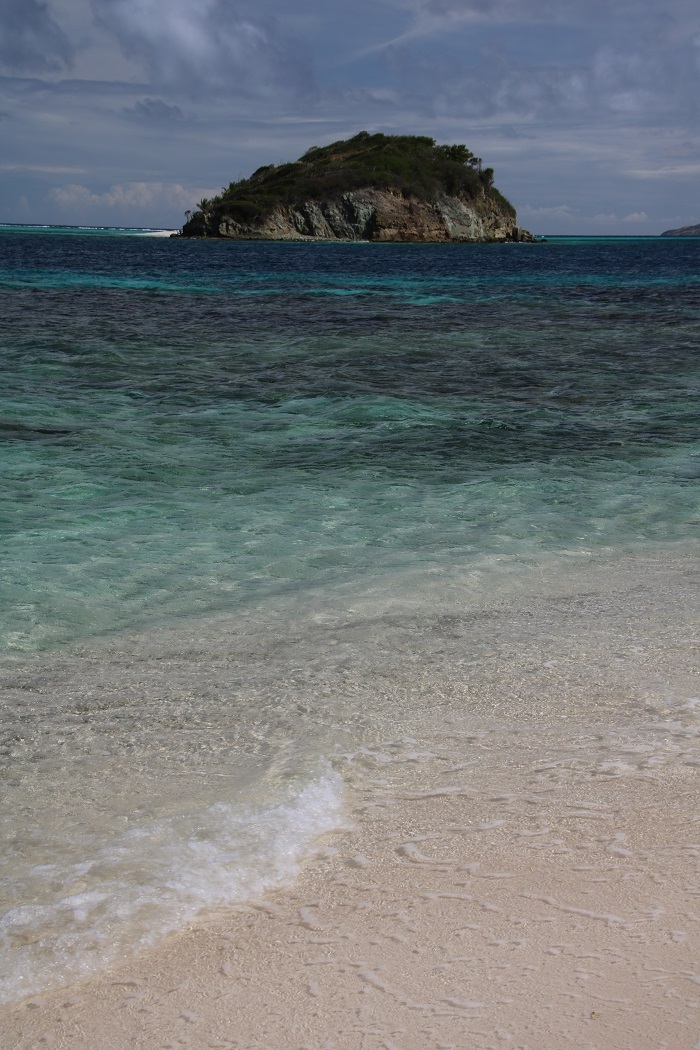 And great snorkeling, if not great pictures. I guess it’s time for a new underwater camera. With this camera I guess I have to say “you had to be there”.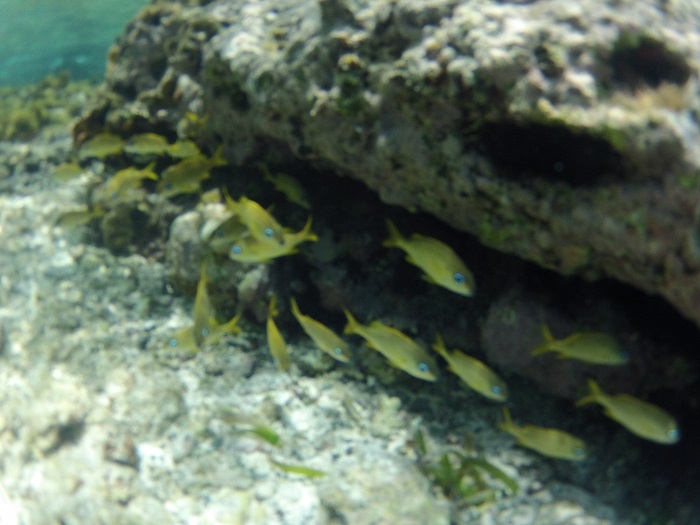
Iguanas guarding their turf. 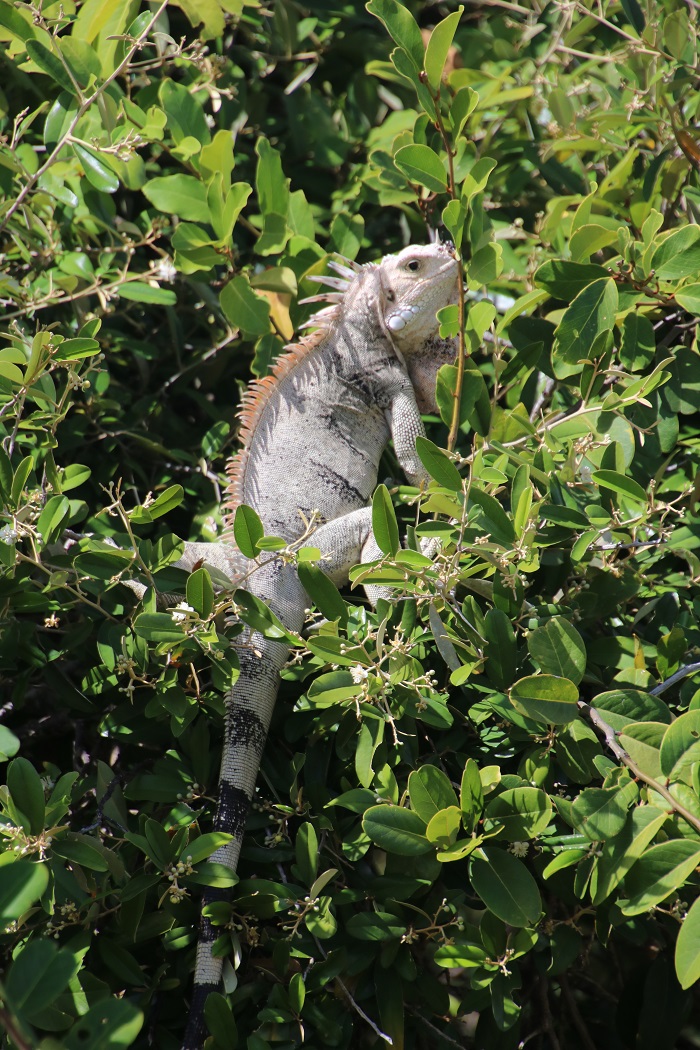 This guy stuck his head up near Pandora as we were weighing anchor as if to say “see yah!”
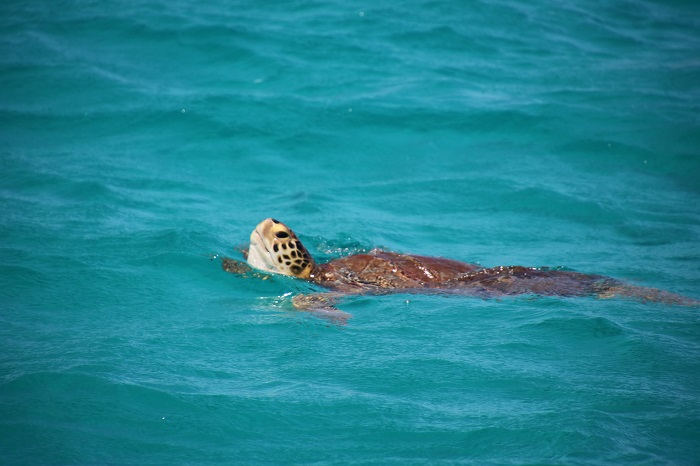 We also visited nearby Mayreau, an island that I had never heard of, ,like many in the Greandines, until we decided to head the short distance there from the Tobago Cays. It’s a tiny island with lovely brightly painted homes on the steep hillside.
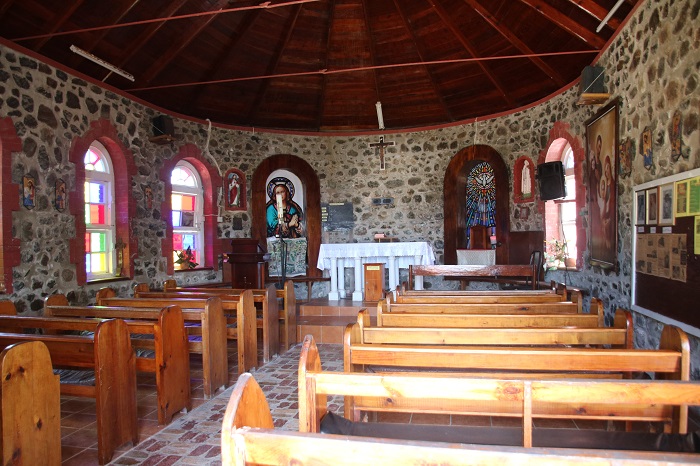
 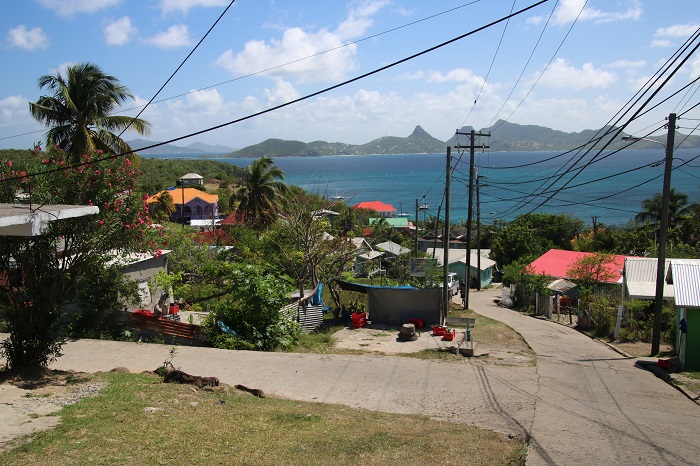 A Catholic church occupies the highest point on the island.
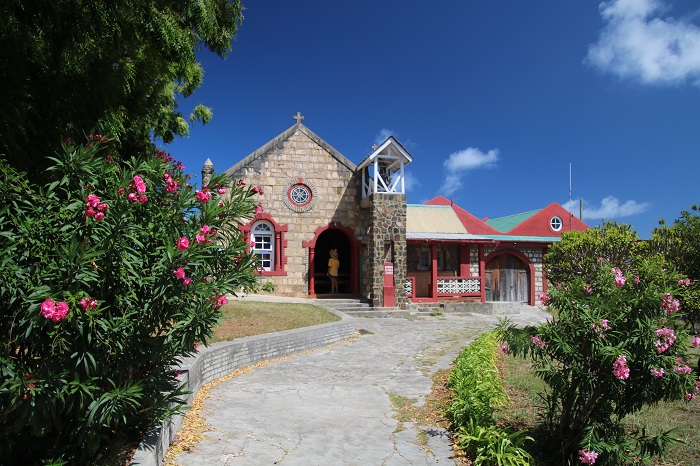 Charming.
  The view of the Cays from the back of the church was fabulous.
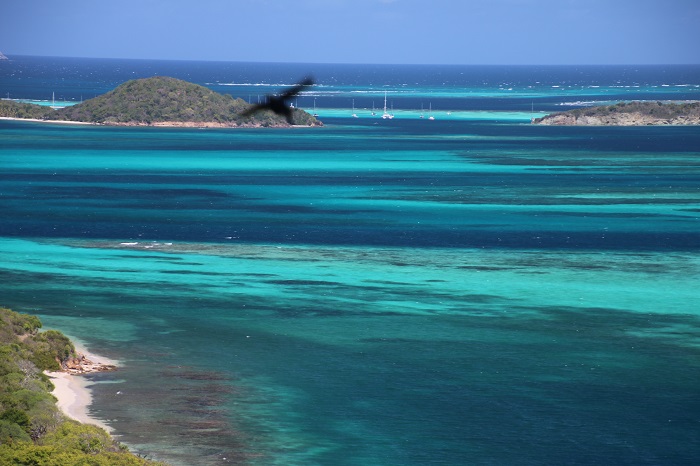 And south toward Union Island and Carriacou beckon for next season.
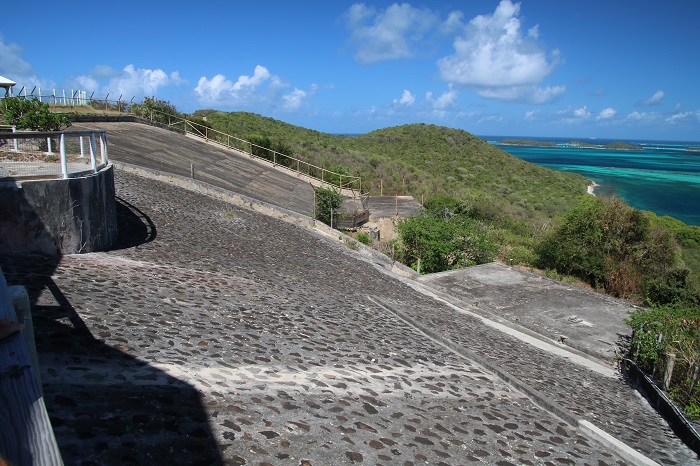
 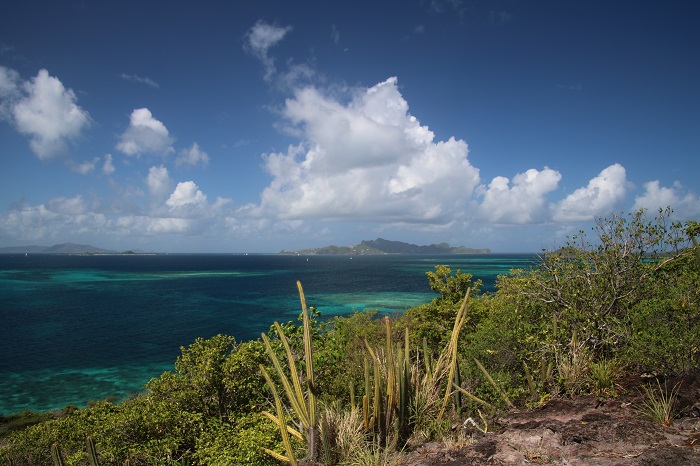 While nearby mountainous St Vincent gets lots of rain, only a few miles south, Mayreau is very arid. The locals work hard to collect water in cisterns, this one behind the church is the largest I have seen. The runoff collects at the bottom of the half acre stone and cement catchment area.
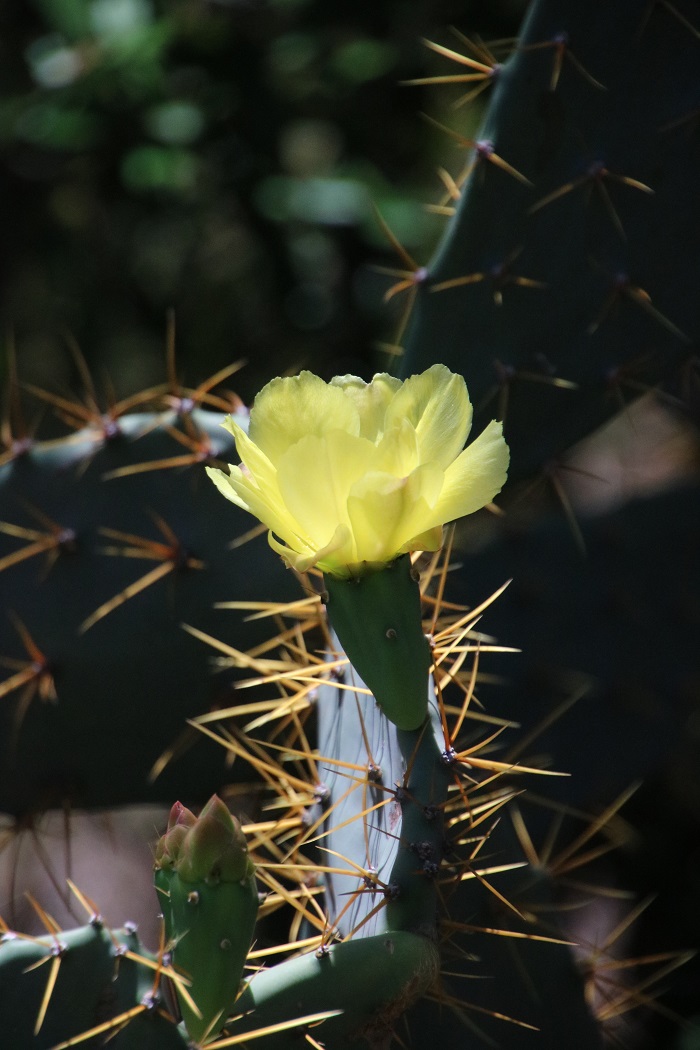
  In this arid climate cactus was everywhere. These flowers were very showy and fist size. Nothing says “I am not for lunch” like a cactus.
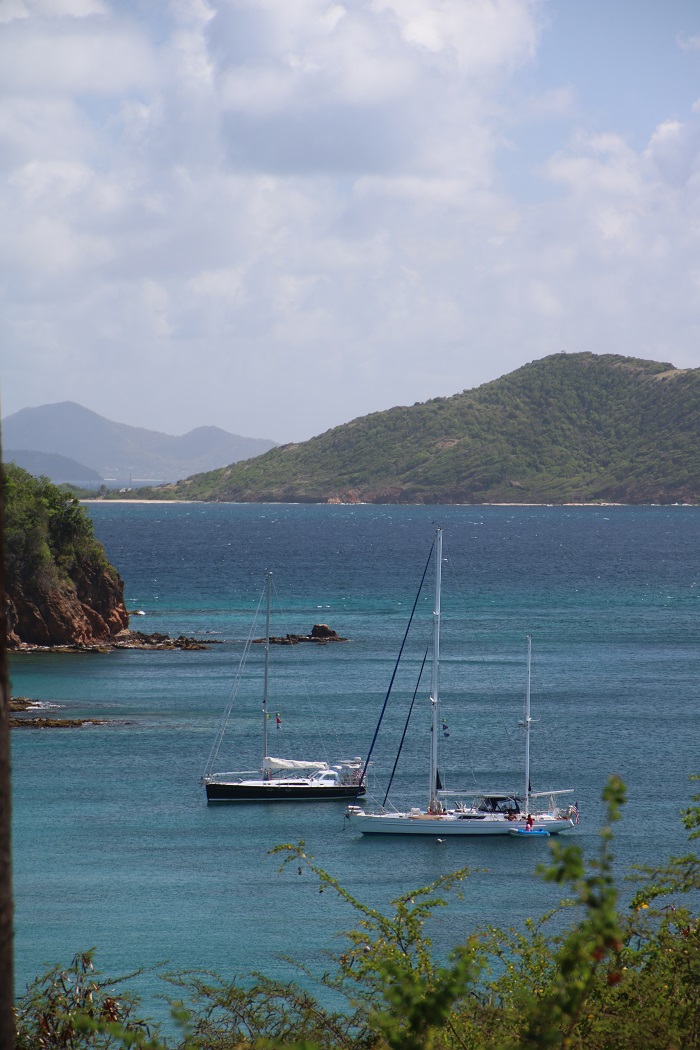
  Of course, what’s a post without a view of Pandora in the harbor? We were anchored with “buddy-boat” Roxy, home to our friends Lynn and Mark. They plan to summer in Trinidad and head to the western Caribbean next winter. We hope to see them again soon.
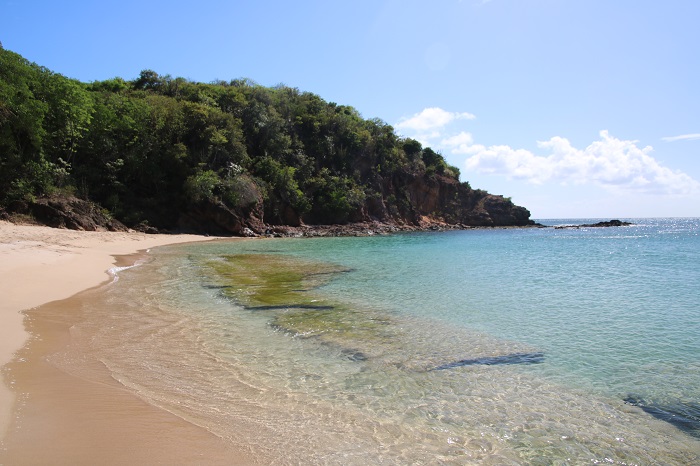
 This is the view of the nearby beach, the best we have seen in the Caribbean. We had it all to ourselves.
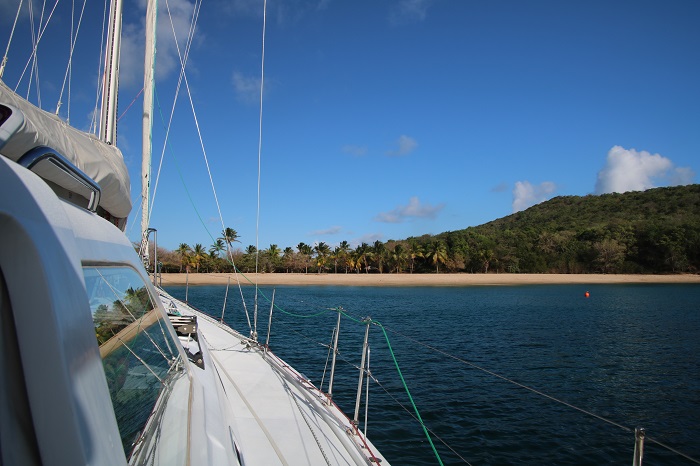 The beach was well kept, free of litter and wonderful soft sand. The four of us spent a long time soaking in the clear water off of the beach.
  We decided to break up the 80 mile run from Mayreau back to Marigot into two legs. We had to return to Bequia to check out and then continue on to Marigot, another 60 miles north. We had heard that the run between St Vincent and St Lucia is among the roughest in the islands and yesterday’s passage was true to that legend as it was when we headed south. As we made our way north, we encountered steep waves on a close reach. The relentless trade winds push water past the islands, into the Caribbean sea at speeds of up to two knots and always to the west.
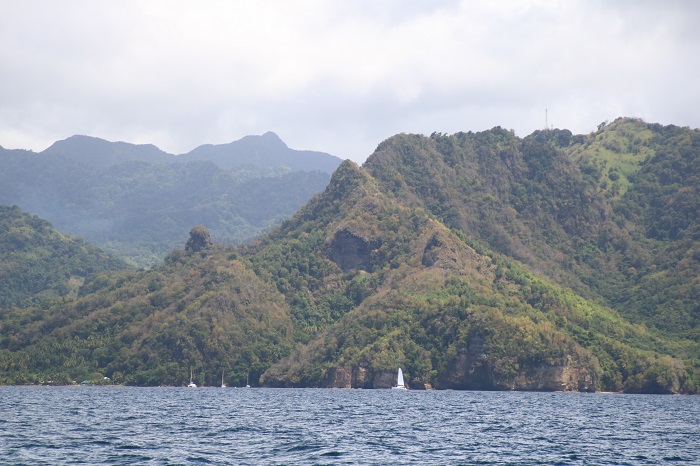
Fortunately, in the lee of St Vincent the waters were calm. It’s a beautiful island but crime is a problem so almost nobody stops there. It’s unfortunate that the authorities are unable to do anything to make it safer. The nearby mountainside was spectacular and lush. 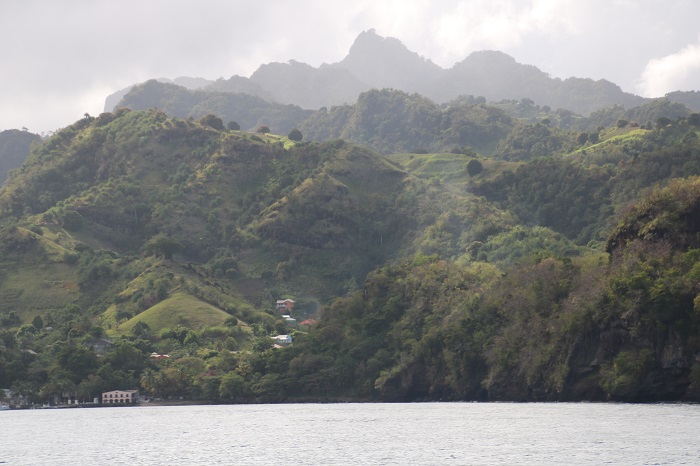 It was alarming to see this boat, with what looked like a machine gun go roaring by. It looked like a harpoon. Glad that they didn’t come close. I know that they do hunt whales in St Vincent but thought that the weren’t able to use motorized boats, only rowing and sail. Hmm. I wonder what else they can hunt that needs that sort of firepower?
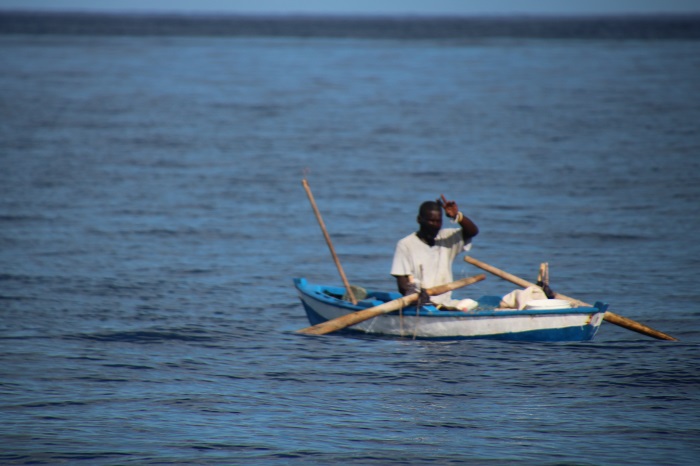
  On the other hand, this fisherman, a long way from shore, was decidedly low tech. He waved as we passed him.
  One of the best parts of cruising the eastern Caribbean is that the wind, while pretty strong at times, amd consistently from the east. Sometimes ENE or ESE but just about always from the east. So, as we headed south we were ALWAYS on a port tack.
So now, on a starboard tack. I guess we must be heading home. Time to move all the loose stuff down below to the leeward side. Well, at least until we get far enough north to loose the trades.
Brenda hasn’t even gone yet and I am feeling a bit “peckish”. I’ll miss here.
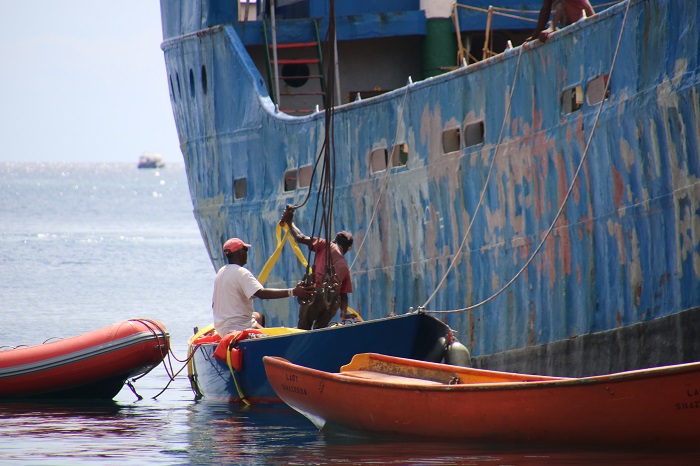
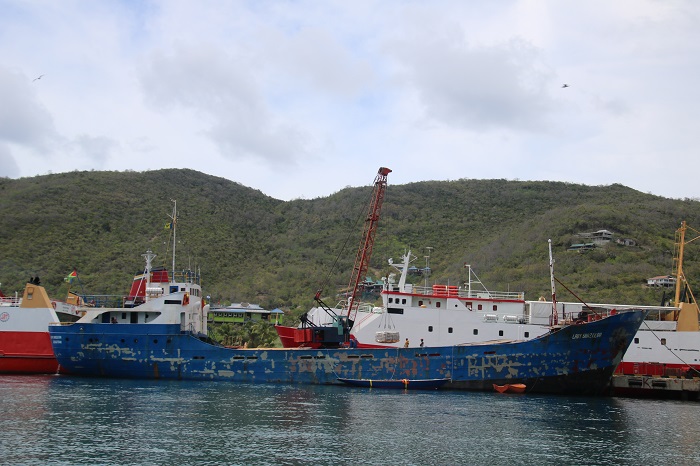 A little while later they fitted her with lifting straps.
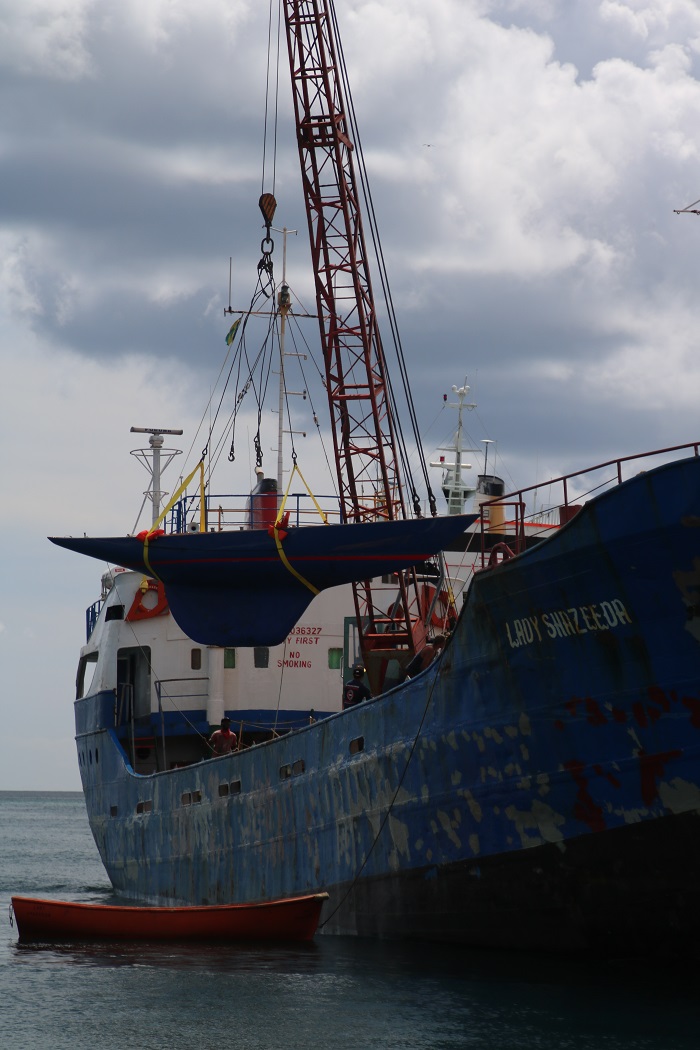
  And up she went.
  And speaking of going places, I have mentioned in past posts that my plan is to run Pandora north for the summer and do the Salty Dawg rally to Antigua again this November.
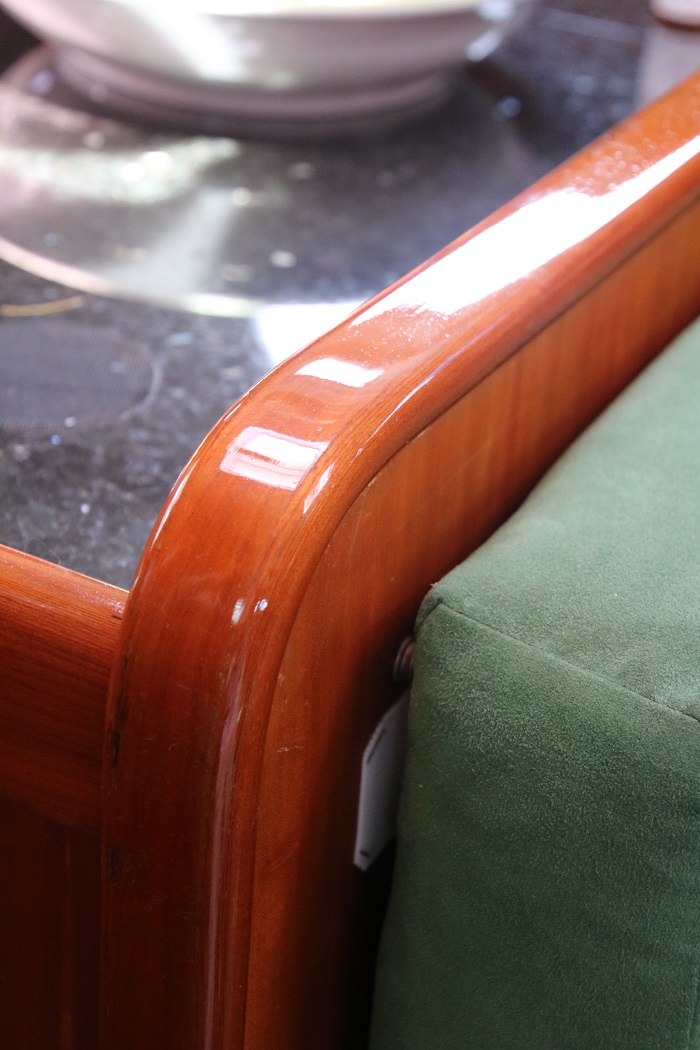 The chart table is so shiny I am afraid to use it.
 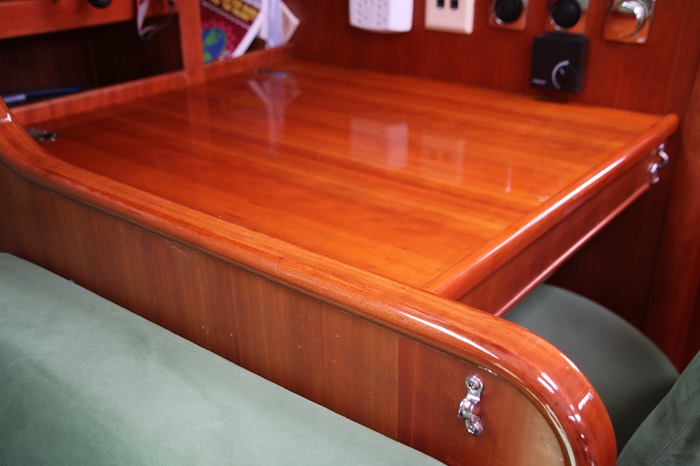 And, now a shiny compaionway that was looking very scruffy.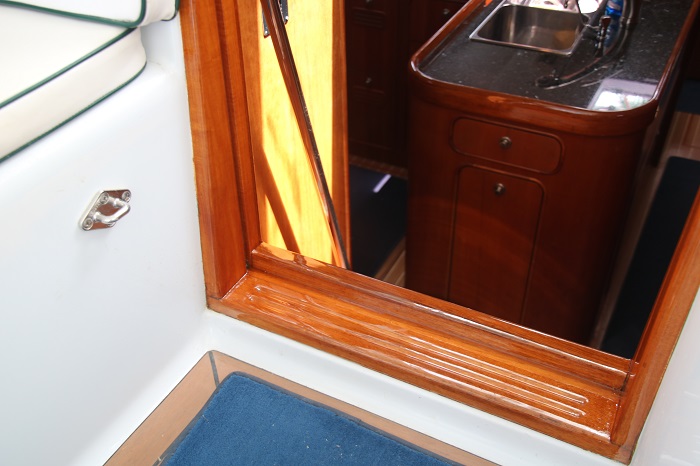
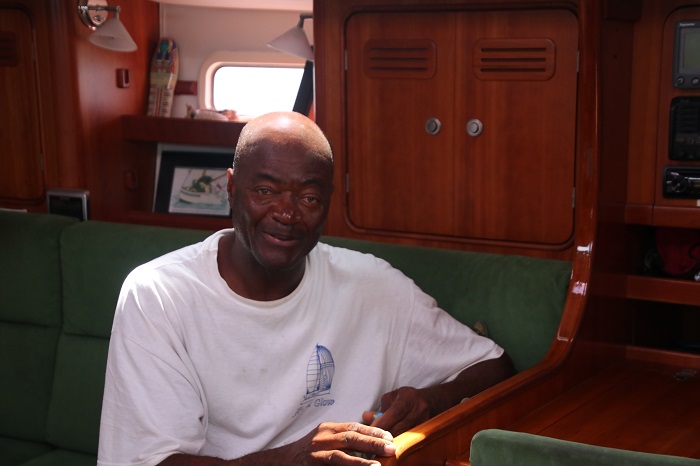 And, speaking of varnish. I expect that this beautiful grand lady, Shemara, circa 1938, has plenty.
 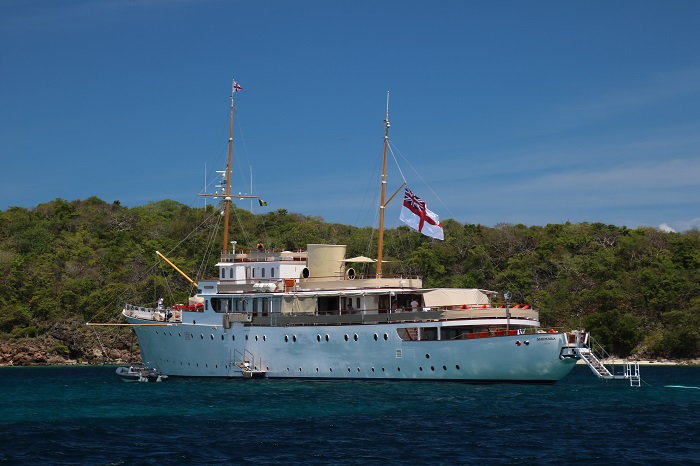 At over 200′ long she surely has plenty to keep her crew hopping. Love the classic canoe stern. How’s that for a swim platform?
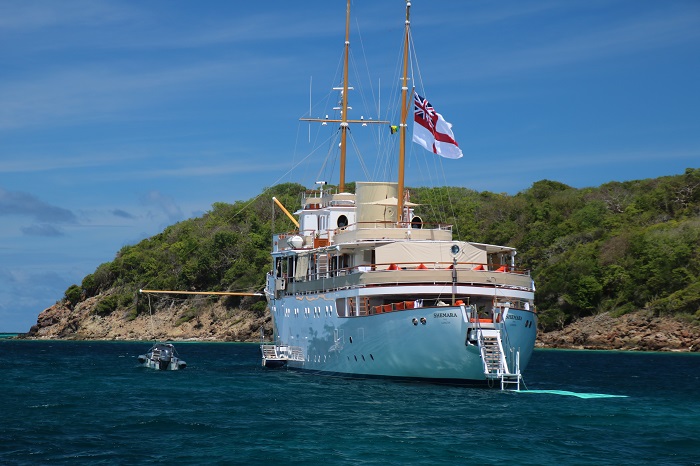 The refit consumed one million hours of labor over several years. That’s a big number and it doesn’t even count the massive amount of “stuff” that went into the job. She’s still a real throwback to a different era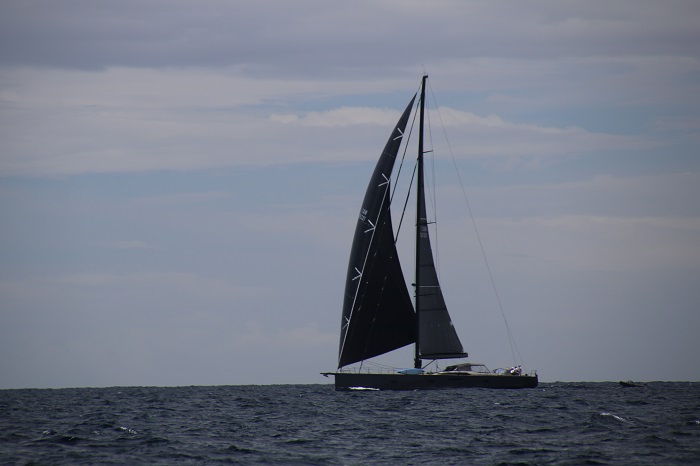
 This morning I went snorkeling with some friends. I took lots of photos and videos with my GoPro but, as usual, I was disappointed with the results. Somehow, the “high resolution” is anything but. I saw lots of turtles.
 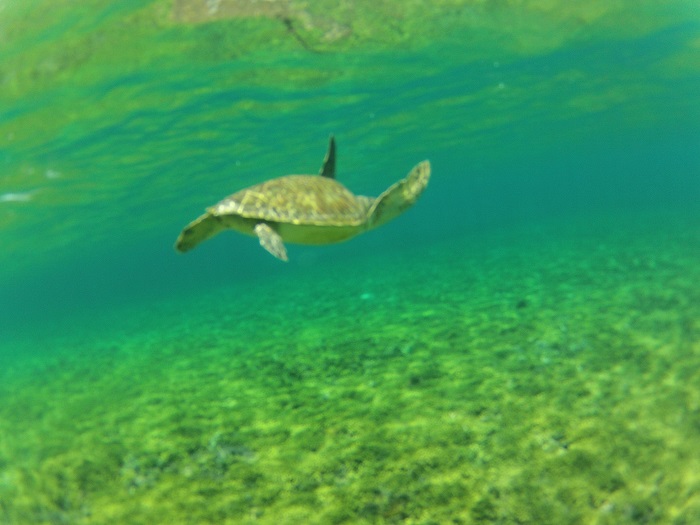 This is a beautiful spot and I expect that we will stick around for a few days and then begin our run back up to St Lucia where Brenda will head home. My friend Craig will join me there for the run to Antigua where I will meet up with my crew for the run north to CT.
 After the war she was returned to Post and converted back to a sailing yacht. However, the cost of the yacht, with her 72 full time crew members proved to be a bit much for her to keep up so Post sold the yacht.
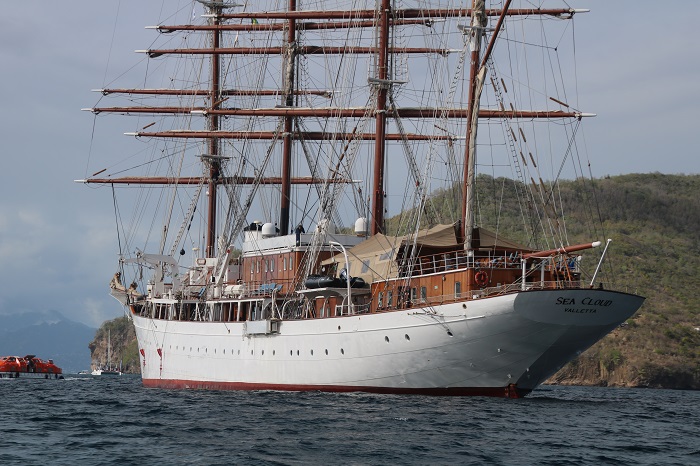 Her bowsprit goes on and on.
 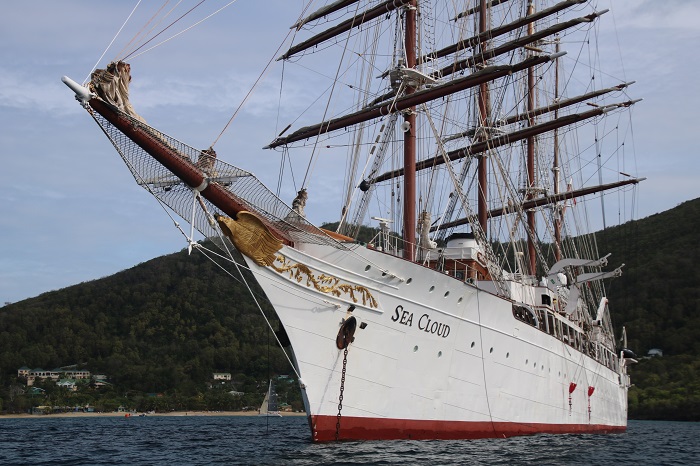 If you want to learn
 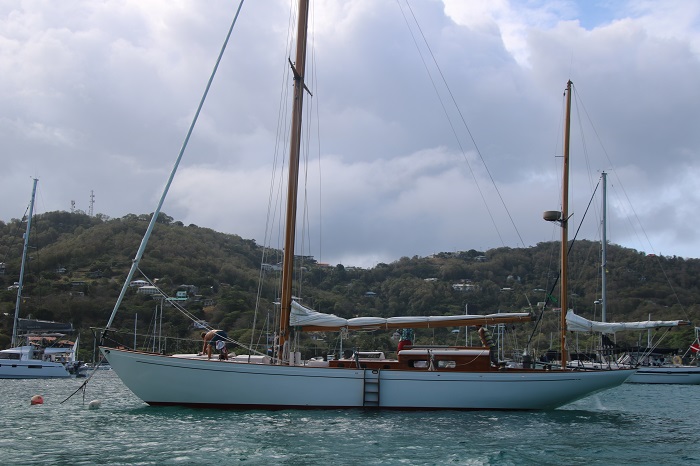 What a lovely stern.
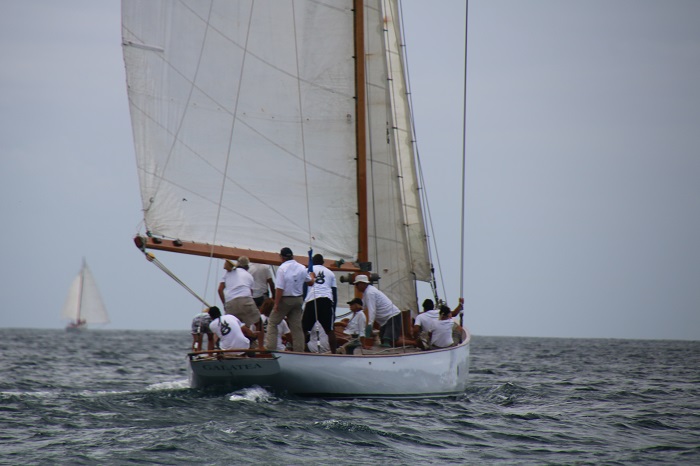
 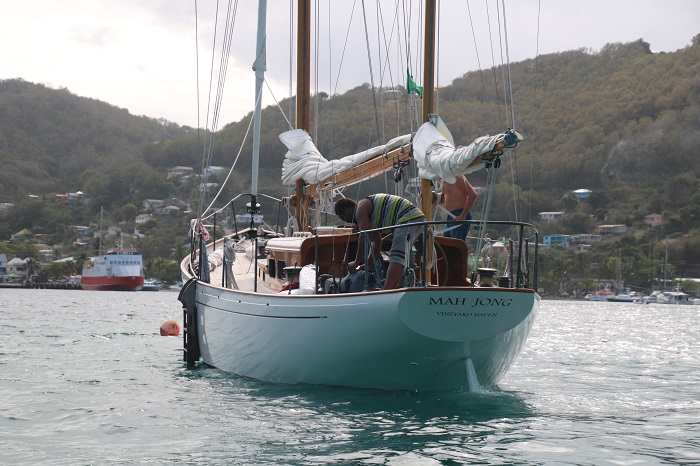 I caught her rounding the weather mark today just behind another classic, Galatea.
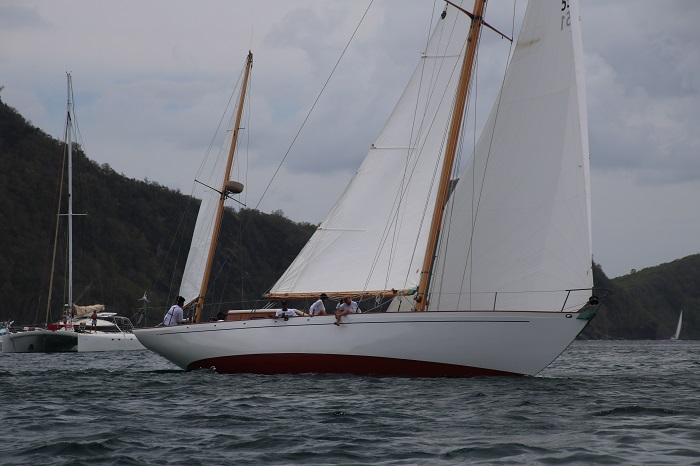 And around she went.
 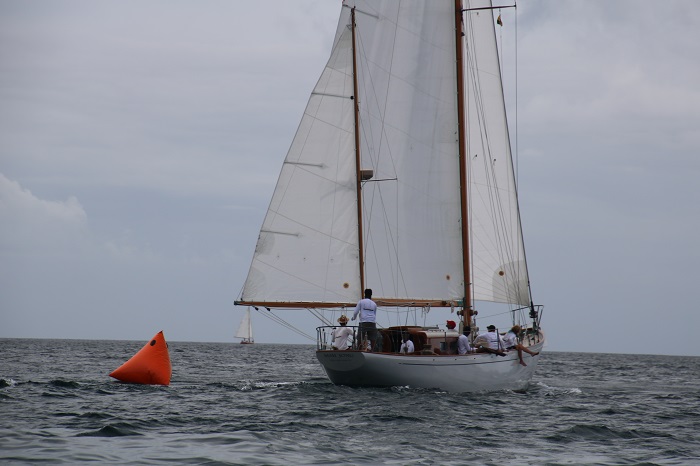 She was hot on the tail of Galatea and they approached the mark, twice that I saw, and still very close together after miles of racing.
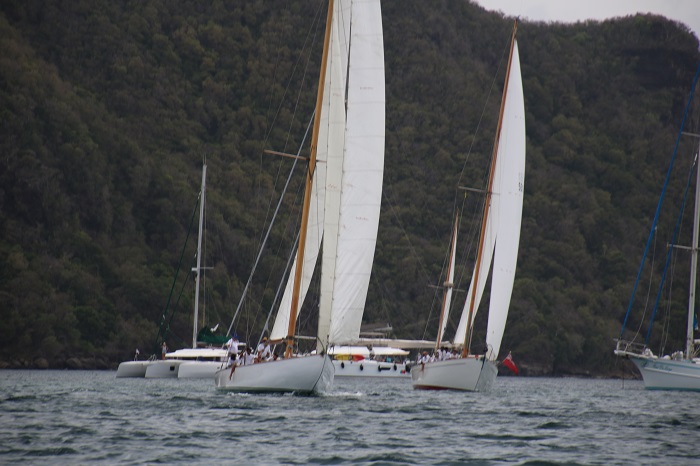 It was quite a site to see Galatea pass me by. I don’t know much about her but she’s a beauty. There are many classics by that name and without fast WiFi I ran out of patience trying to find out more about her history.
 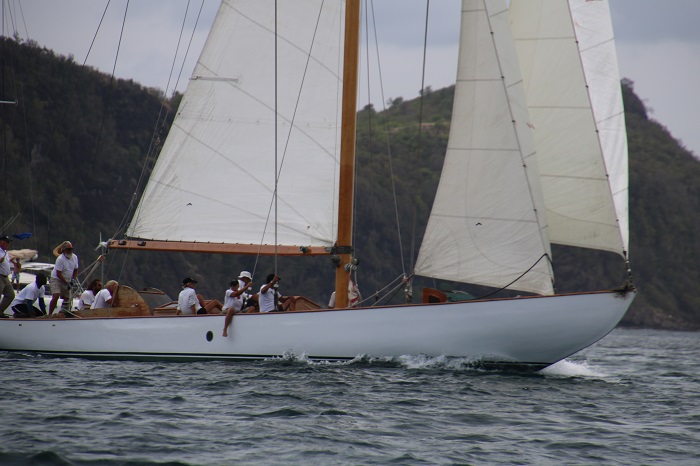 And off she went to turn down wind. She’s a lot bigger than she looks in this shot, probably about 80′.
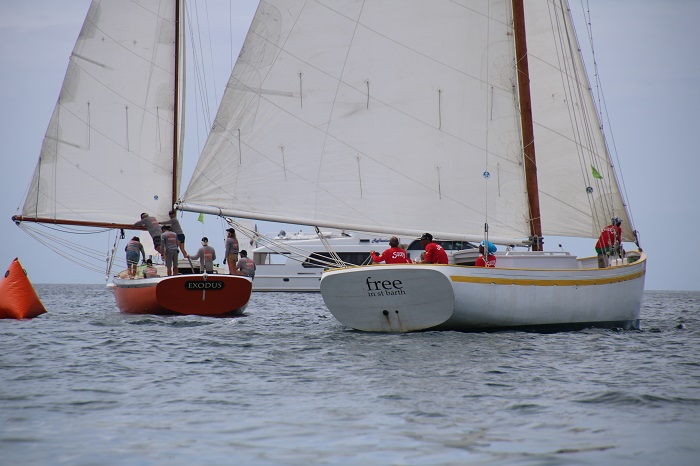
  Just behind them were a few of the Carriacou sloops. These are traditional fishing boats in the Grenadines and are still raced as yachts today.
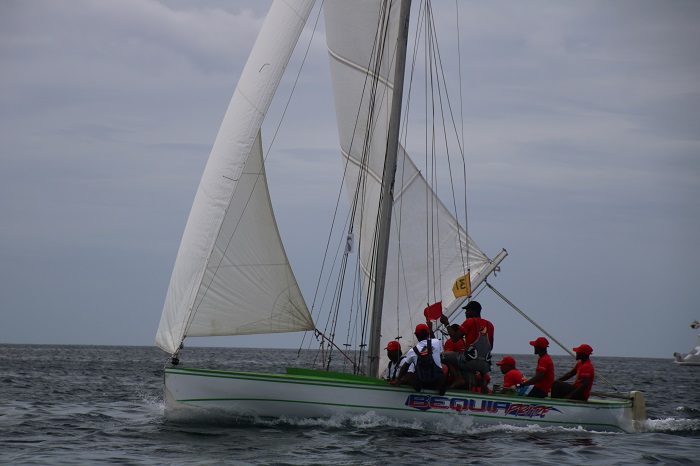
  This is a go-fast locally built double ender. Impressive speed with big sails and a large crew to serve as “rail meat” to keep them upright.
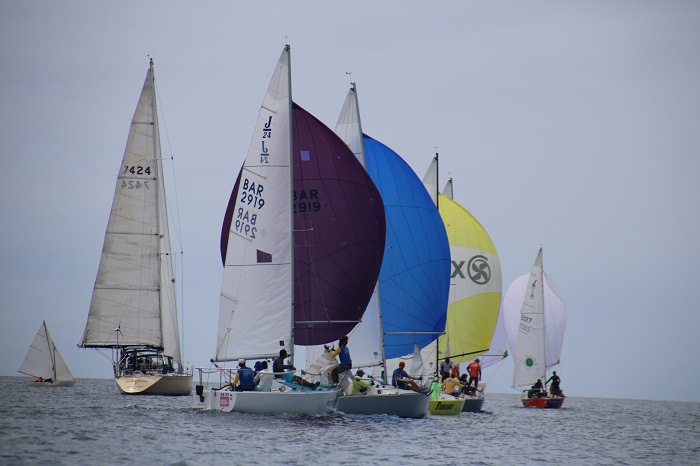
  And, of course, no race is complete with out the classic J24s and there were plenty racing today.
  Ok, enough of the race stuff for now.
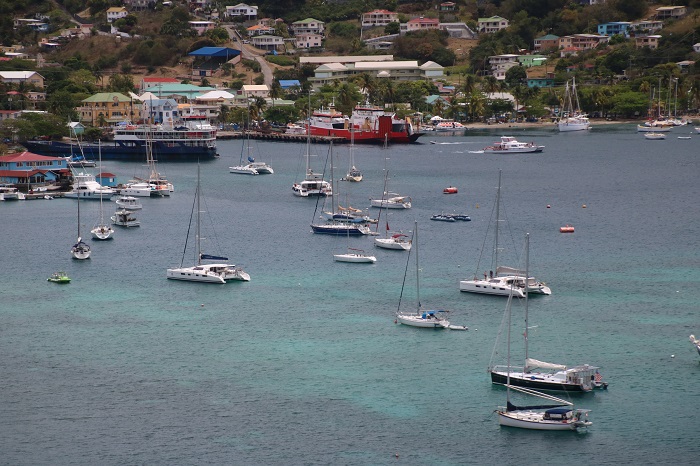
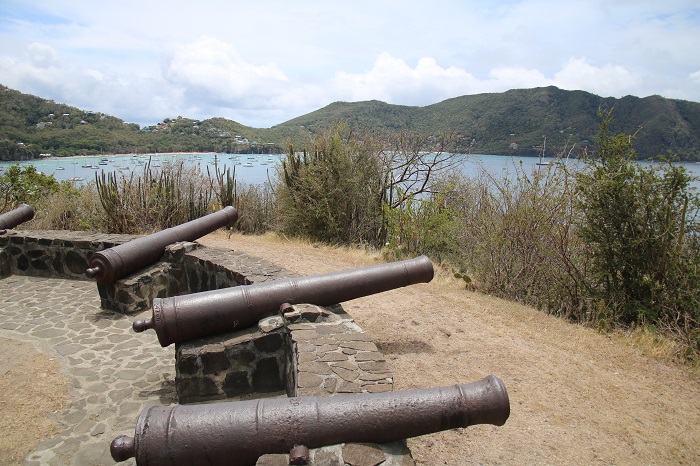 The view was impressive. This is the western part of a large harbor with room for hundreds of boats. There’s Pandora in the lower right.
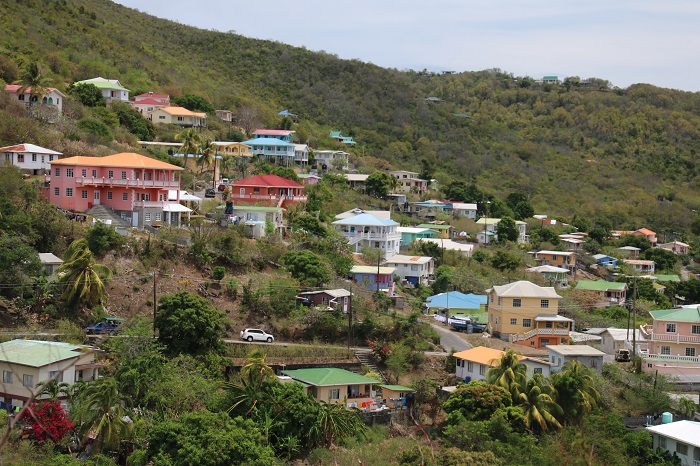
  The homes on the hill overlooking the harbor are brightly painted in Caribbean colors.
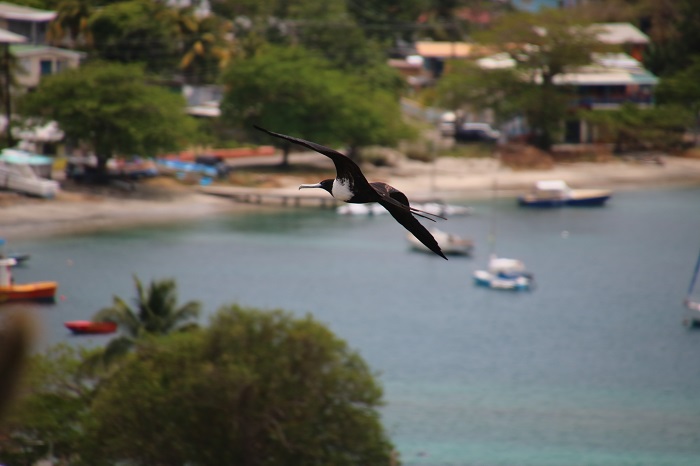
  I always get a thrill out of watching the Frigate birds fly by. They have a huge wingspan, in excess of 6′, the longest of any bird, relative to their size. I understand that they can sleep while they fly and although they can be seen great distances from land they are unable to land and take off from the water.
  One thing is certain, if you love boats and being on the water, Bequia and especially the Easter Regatta, is the place to be.
 No wait, it’s May. No more snow up north and I am looking forward to being back in New England for the summer. Winter in the Caribbean, summers in New England.
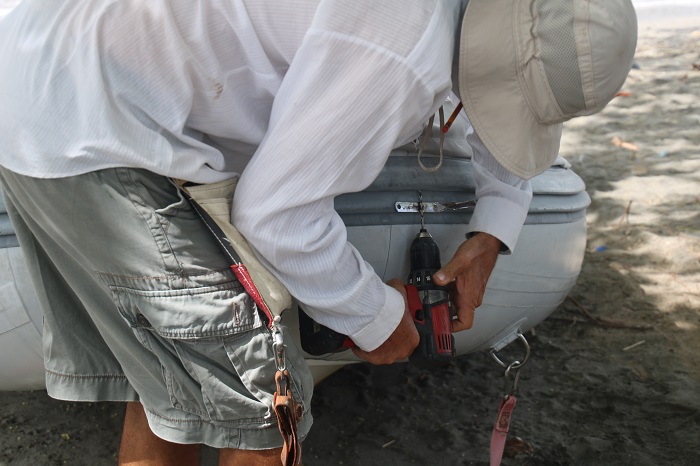
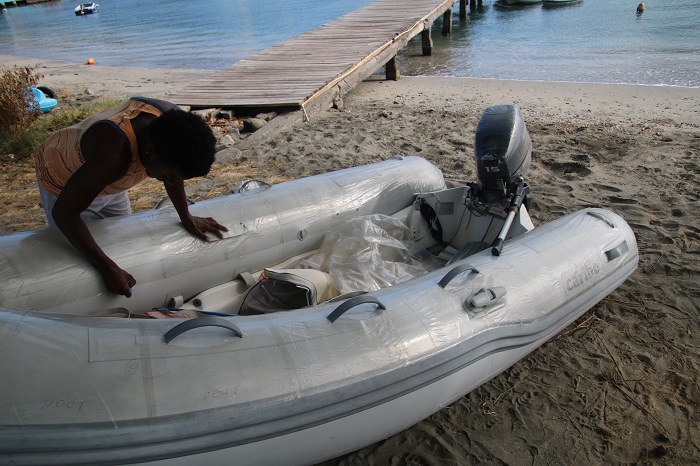 The next day I went back and they installed the finished product, a perfect fit. The canvas is held in place by a combination of velcro straps and lines. I had two close my eyes and turn away as he went at the rub rail with an electric drill to make holes that hold the lines that tie the canvas securely to the dink. I asked him how many times he had slipped and punctured a boat. He smiled and continued drilling holes.
  However, it all worked out and the finished job, chaps, engine cover and new seat cover. The guys posed for a shot with the finished job. Nice work.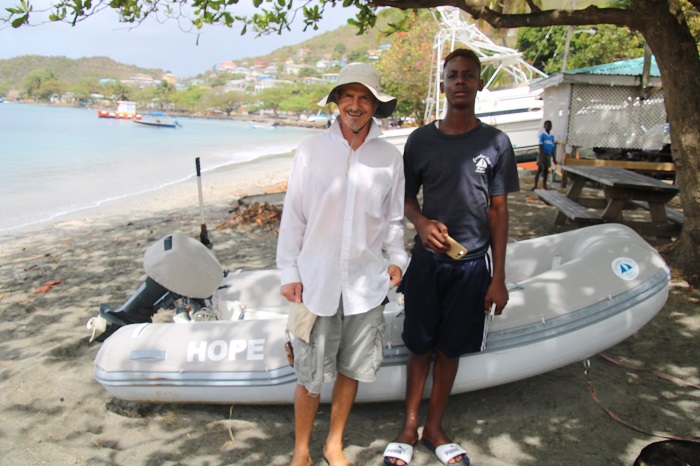
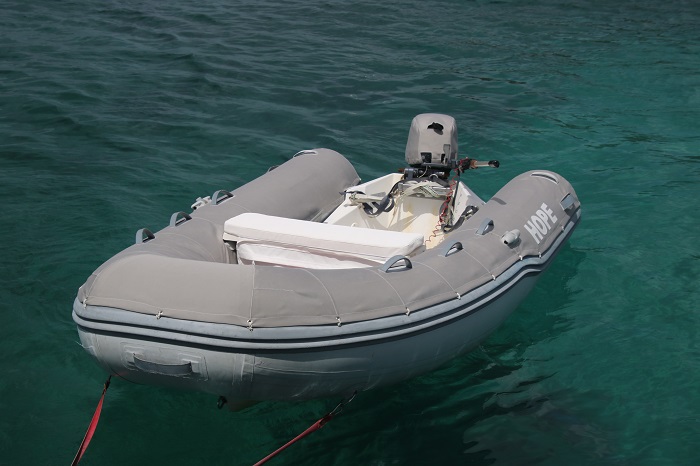 Ok, so remember the whole “Pandora’s Box” thing? You know, she opened the box and let out all the evils of the world? Well, according to legend, all that was left in the box was Hope. Get it? Pandora’s Box, Hope? Pretty clever? So, our dink is now officially Little Hope. However, that was just too many letters to fit so Hope it is.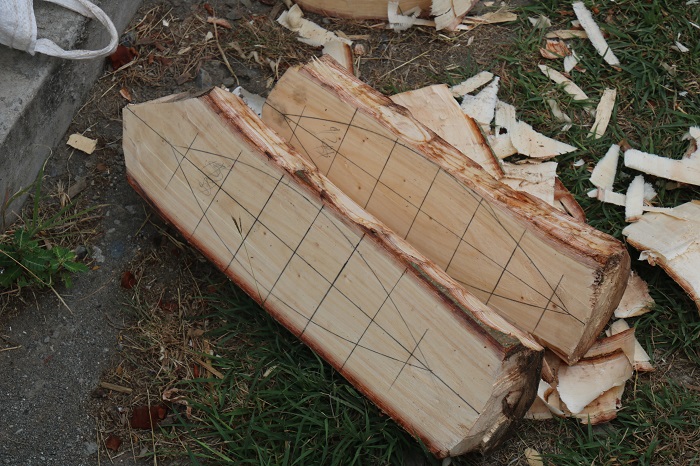
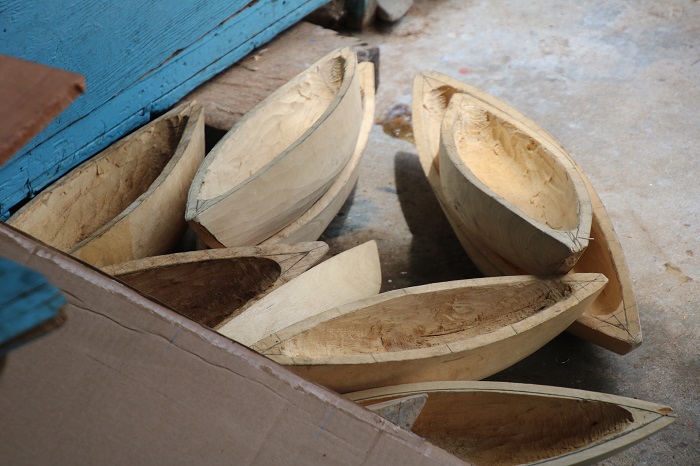
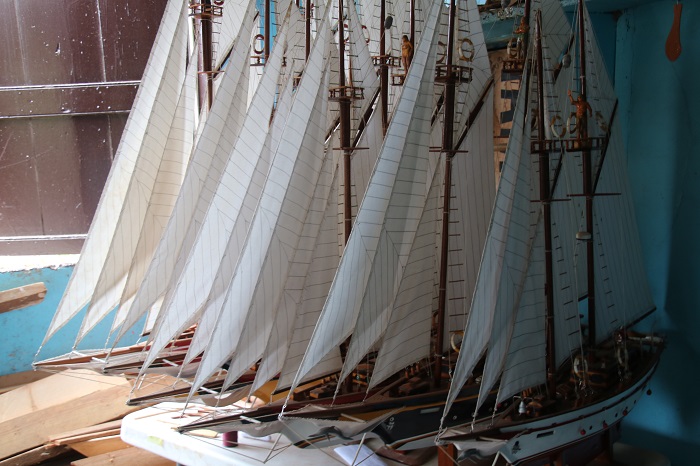 However, the bulk pf the models are of the traditional working boats of Bequia, in particular, those used to hunt whales, which is still legal, if tightly controlled. They hunt, using only sail powered boats, and harpoon a few humpback whales each year along with a number of smaller pilot whales.
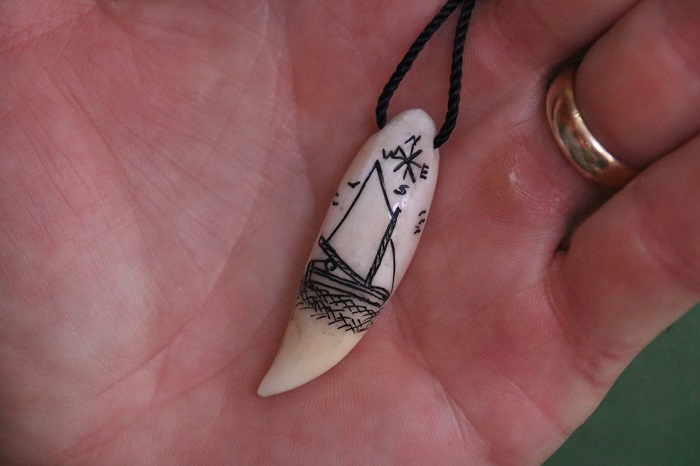 There is tradition of boat building and they still race them aggressively. Nice looking boats.
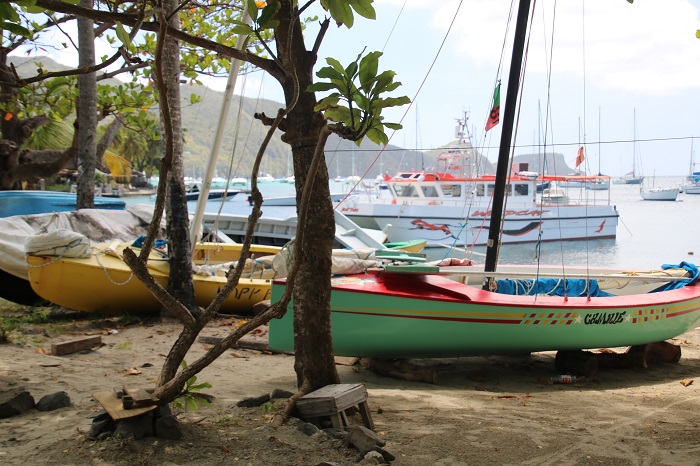 Now for a few random items.
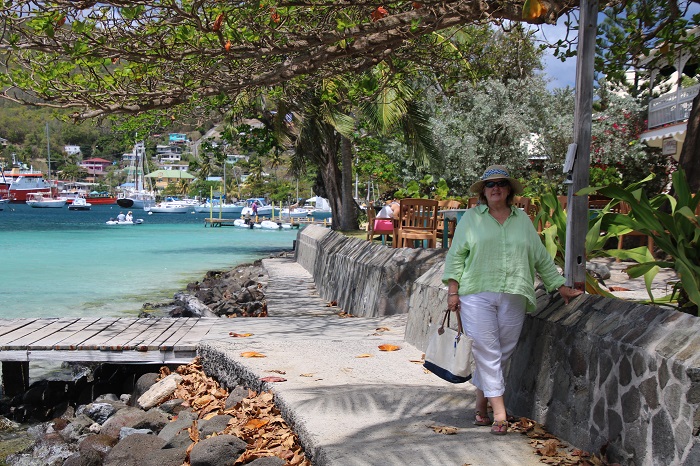
 Brenda and I enjoyed walking along the seawall. There are a number of nice places to eat along the way.
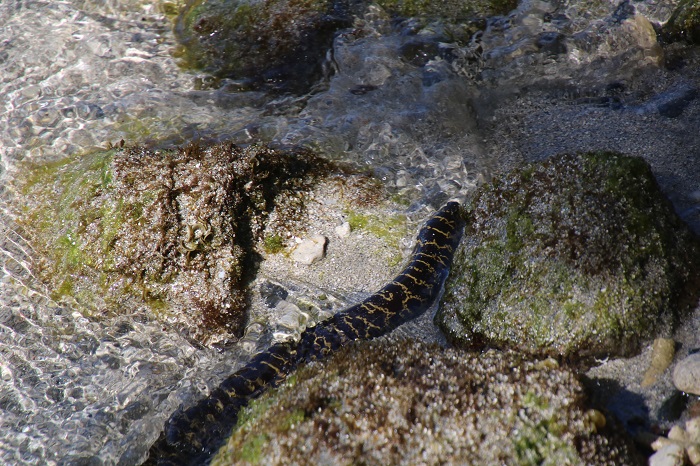
  Right near the walkway we spied this moray eel swimming in the shallows. The water in the harbor is quite clear.
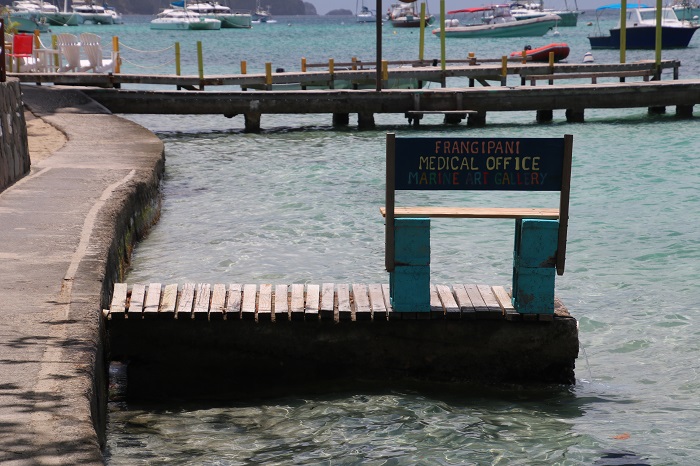
 And, under the category of “multi-talented”. How about this sign for an gallery/doctor office? The same guy, BTW.
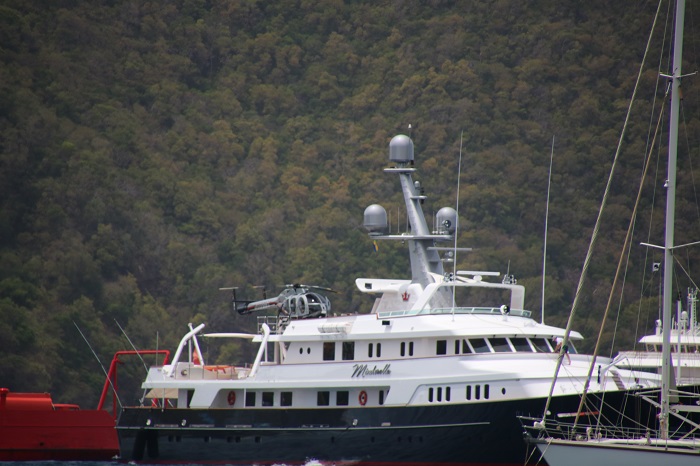
 I wonder if this guy’s dink has new chaps? Canvas covers for his helicopter, more likely? For sure.
 Several years ago we sailed on this huge ketch Marie. She’s here too, along with a few other massive sailboats. It seems that she was here for some informal racing against several other “big girls” today as they all left at the same time and milled around for a while before they took off.
 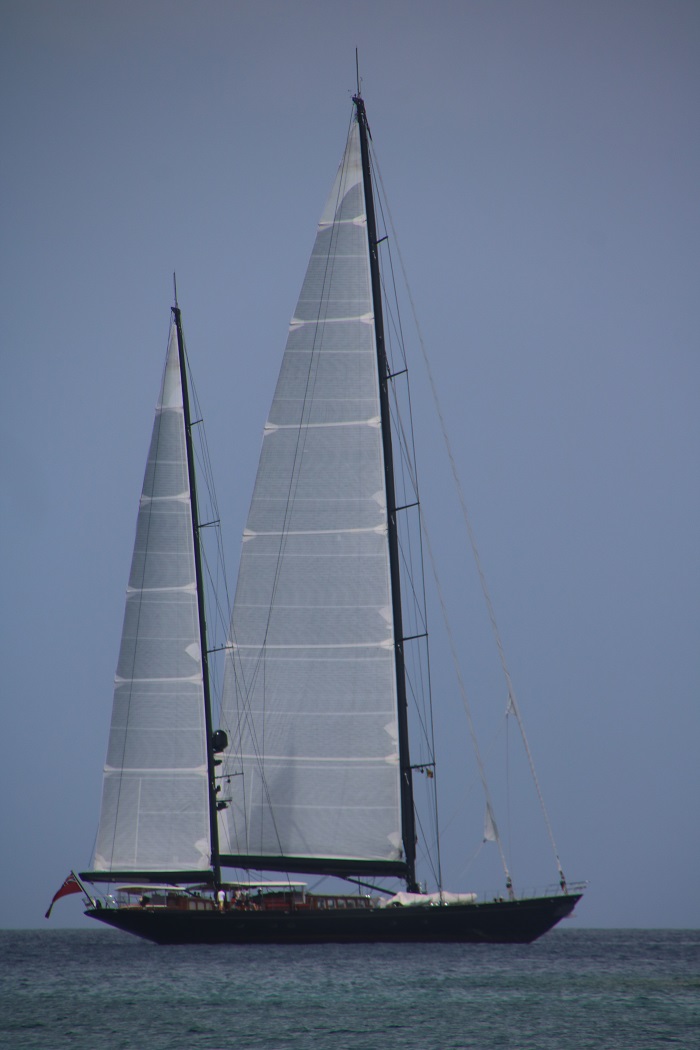 I was hoping to stop by later and see if any of the crew that we met are still around. The experience of sailing on such a magnificent yacht was something else, let me tell you. You can see a number of posts about this experience but
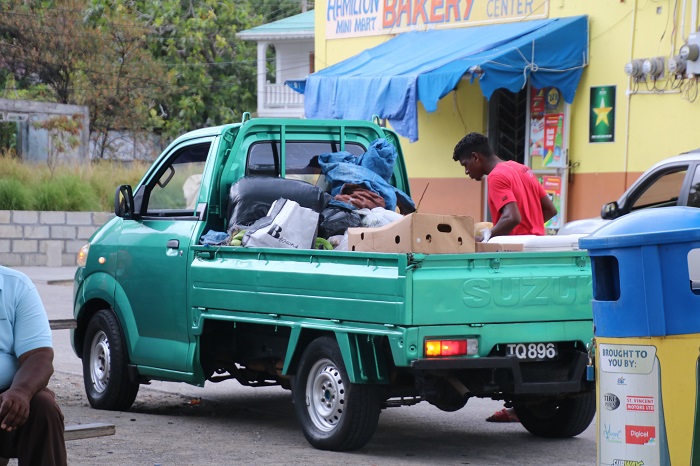
  And, finally, for those who follow this blog, you’ll recognize this Suzuki Carry truck below as similar to one that I have at home and use to get around town. Mine, new in 1992, is registered as an antique, and is more than 25 years old.
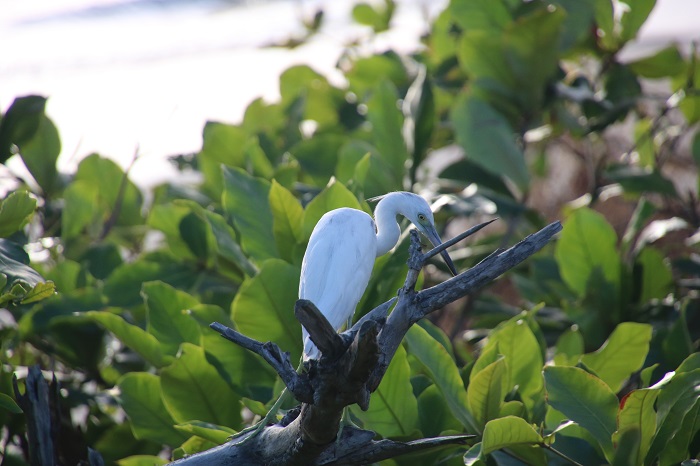
  Well, I guess that’s about all for now, an odd mix of stuff to be sure. However, one thing that carries through, I hope, is that Bequia is the place to go if you are drawn to things made by people who take pride in their work. All that with the possible exception of a bird, a few yachts and an odd truck thrown in for good measure.
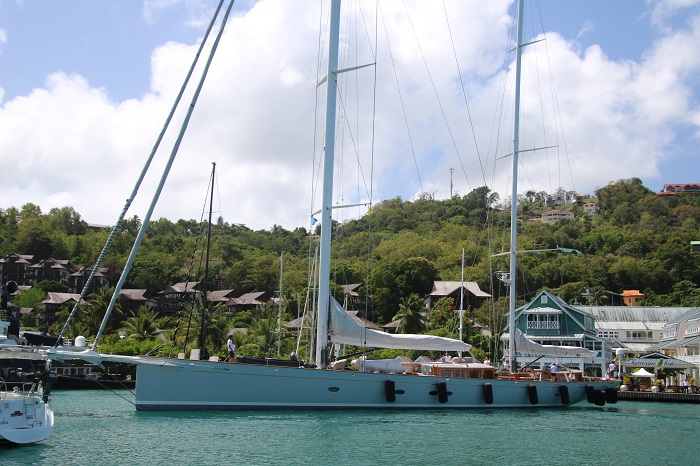 And, speaking of varnish, which I was, she has plenty along with a large enough crew to keep up with it. I love the color of the boat, Columbia Grey, I am told. Pandora’s dark green is very hot in the tropical sun and we are considering having her repainted in Antigua, perhaps a medium grey. Changing her color is complicated and more expensive than just going with the same color again, so we’ll have to see what comes of that. I have lined up someone to do it when I get to Antigua in mid April but it’s unclear if there will be time to get the job done before I leave to head to New England in early May.
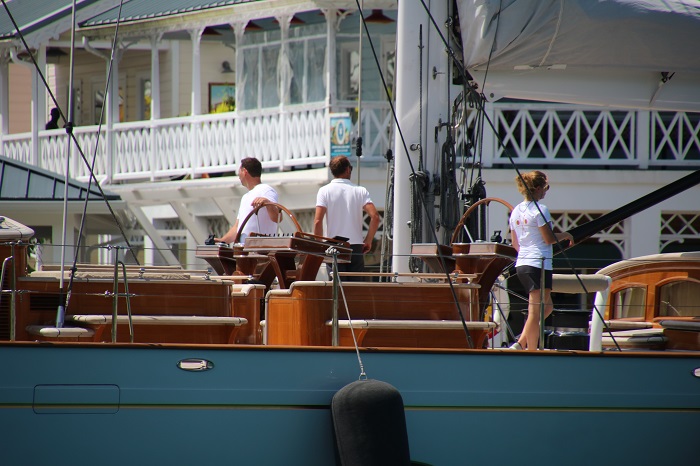 She looks enormous on the dock compared with Pandora out in the harbor.
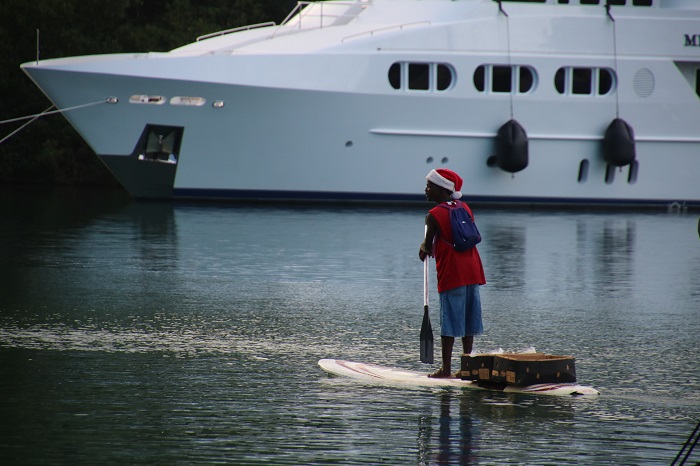
  Just about everywhere you go in the southeast Caribbean, “boat boys” approach you selling something. This guy was selling bananas. We bought some and paid too much. He reminded us of the Grinch, in looks, not temperament.
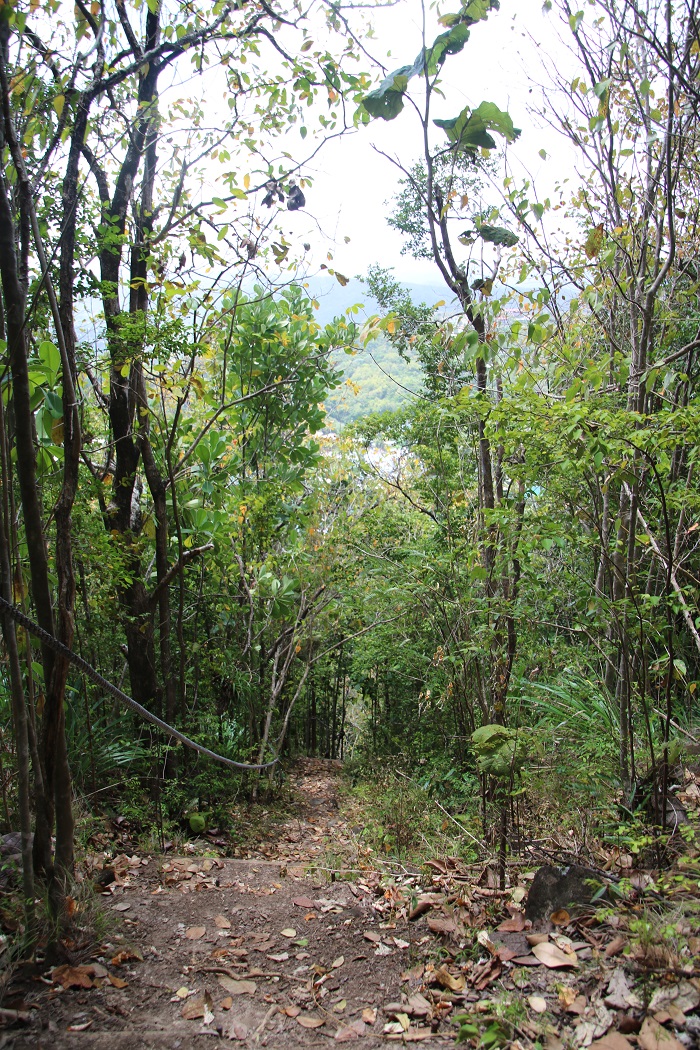
  Across the harbor was a trail that led up to the top of the hill. I climbed up the impossibly steep trail, complete with installed ropes to hold as you pulled yourself up. I didn’t think I’d make it. Later I was told that many 20 somethings turn back because it’s so steep. Go me! Trust me, it was way, way steeper than it looks in this photo.
 At the top, after many stops to catch my breath along the way, I was told to look for the “meditation platform”. By the time I got there it looked more like a “recovery platform” to me, a place to lay down to listen to my pounding heart as it slowed to normal. Most of the time really steep paths have many switchbacks to make the climb easier. Not here.
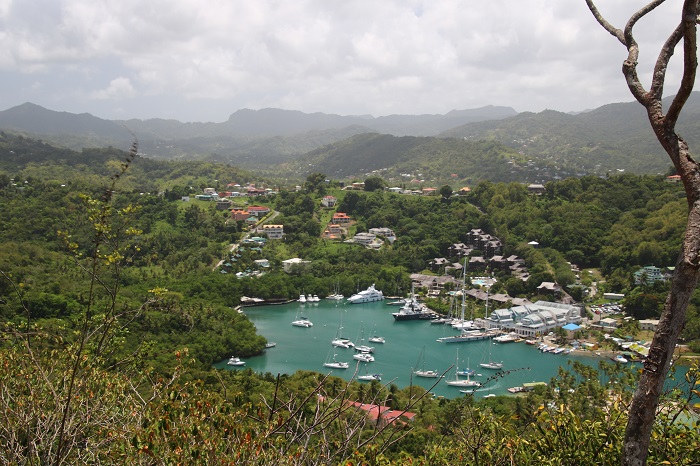 There’s little Pandora way down below.
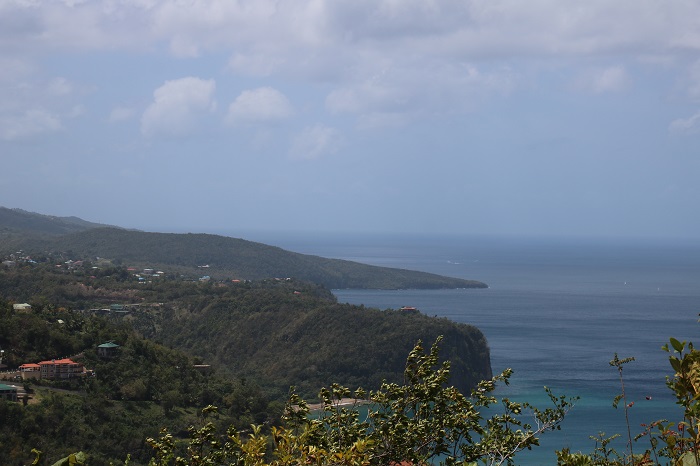
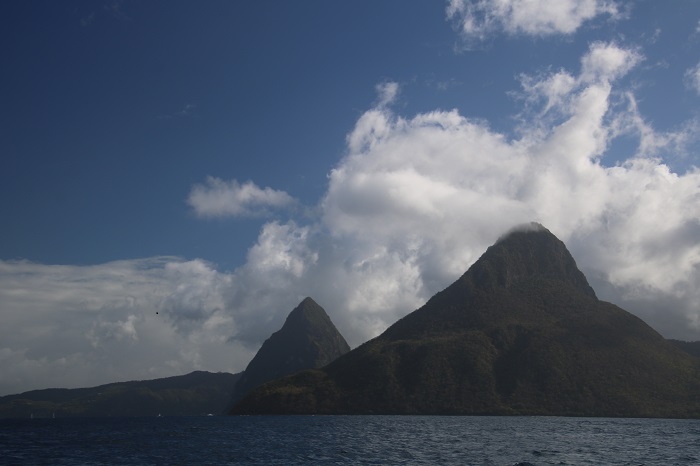
 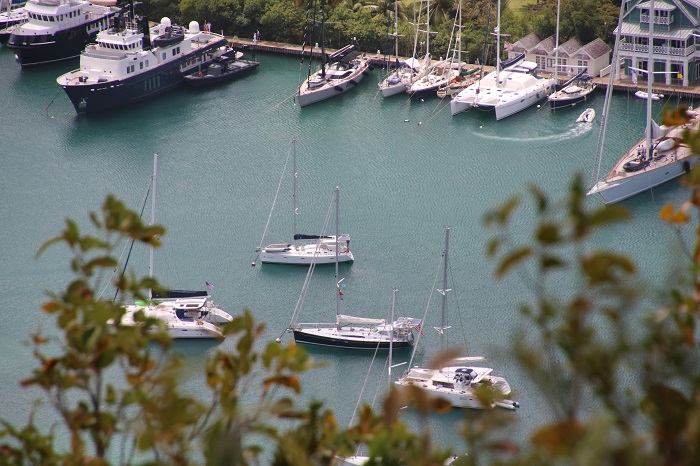 And the view south toward the Pitons, the short run to where we were headed the next day.
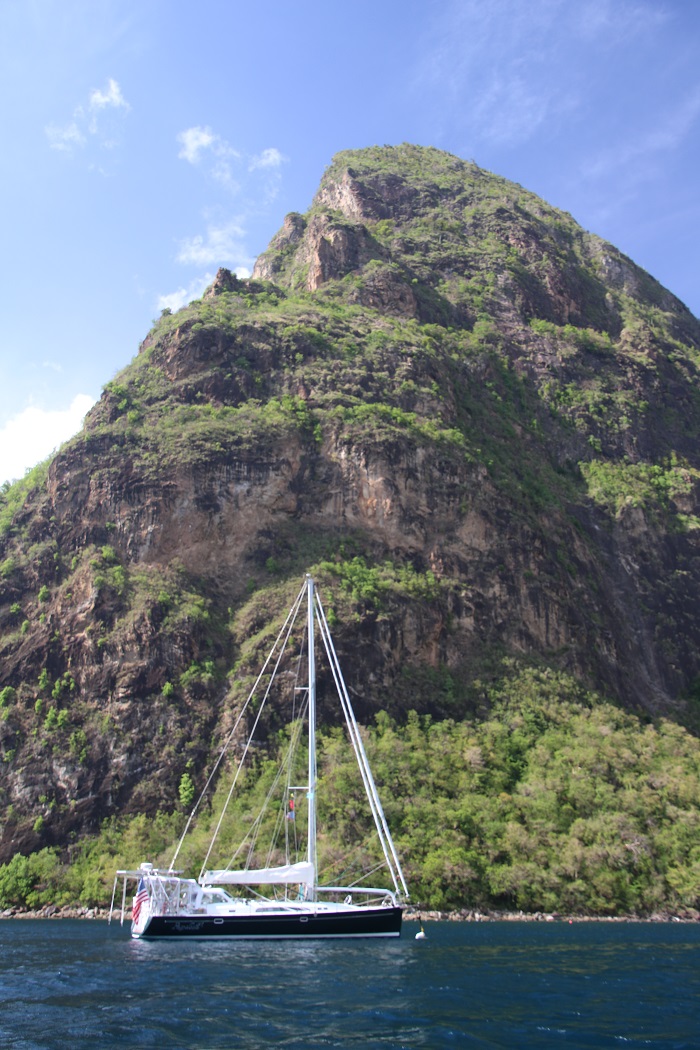
  The Pitons, one of the most photographed sites in the Caribbean, are two 1,000′ tall cones from long extinct volcanoes. They are impossibly steep and the ocean drops off quickly to more than a mile deep very close to the shore.
 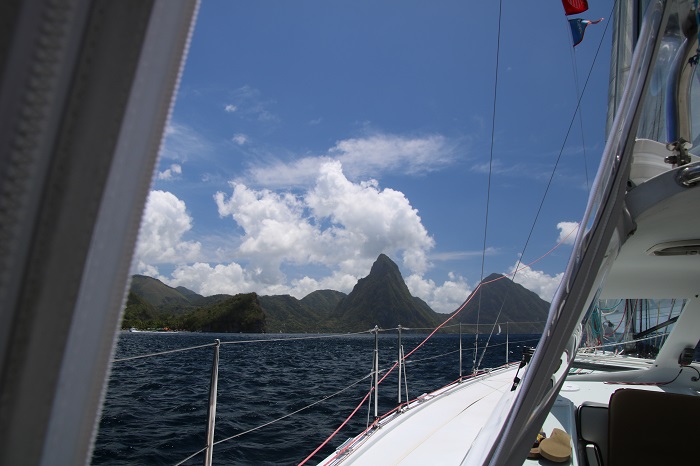 We took a mooring in 140′ because of the dropoff. I have never taken a mooring in that much water. The gusty winds swirled around us we swung one way or the other by 100′ or more because of the impossibly long scope on the mooring. It was gusty there, so close to the rising mountains so we had to get help from one of the local “boat boys” to tie up. As high as the “hill” looks, its actually a lot higher. As they say, “you had to be there”.
  We headed ashore to a very fancy resort on the beach and enjoyed the setting sun from our table under the palms. It was a “million dollar view” and the bar tab was right in line. How about $100 for two glasses of wine each and a single appetizer?
  The next day we dropped the mooring first thing and headed south to Bequia. As we rounded the southern tip of St Lucia the seas were very confused with a strong western setting current pushing against us. That combined with the wind funneling around the headlands made for some pretty “sporty” conditions for the first hour. In spite of my having carefully secured the dink I was concerned about how much it was moving around in the davits. Fortunately, no damage.
 It was a long day, nearly 60 miles, as we could not stop in St Vincent, a large island just north of here as it’s not safe. Too bad that some bad actors have scared off all the cruisers.
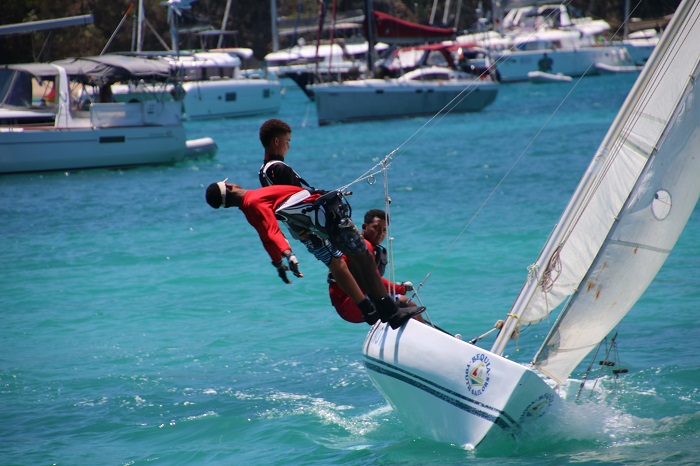
  Bequia is truly an island of boaters and there is a very active junior sailing program with some really nice boats. They sailed right by us through the turquoise waters.
 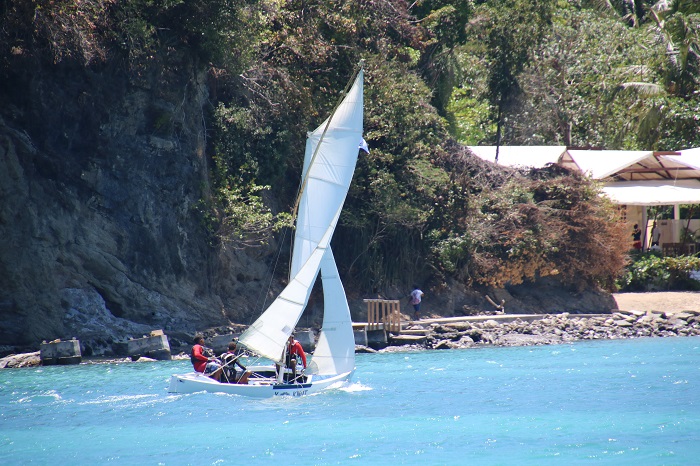 Heading back up wind, they looked like they were having a wonderful time. To me, this picture just speaks to the exuberance of kids out sailing for an afternoon as they tacked through the anchored boats.
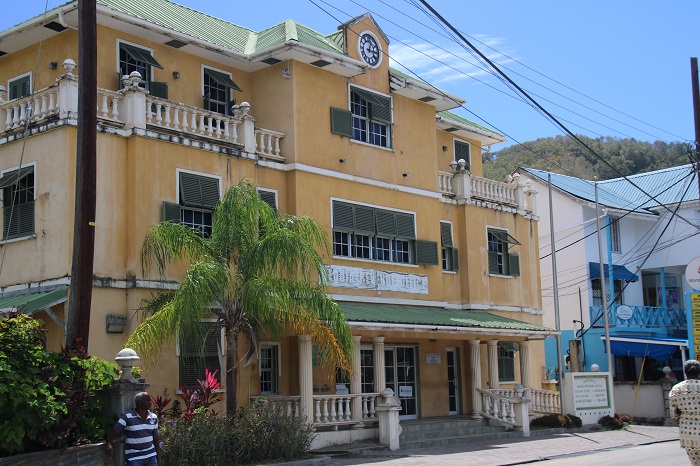
  The customs house is right near the dinghy dock. Very Caribbean. True to form, with it’s English heritage, clearing in was much more complicated than the French islands.
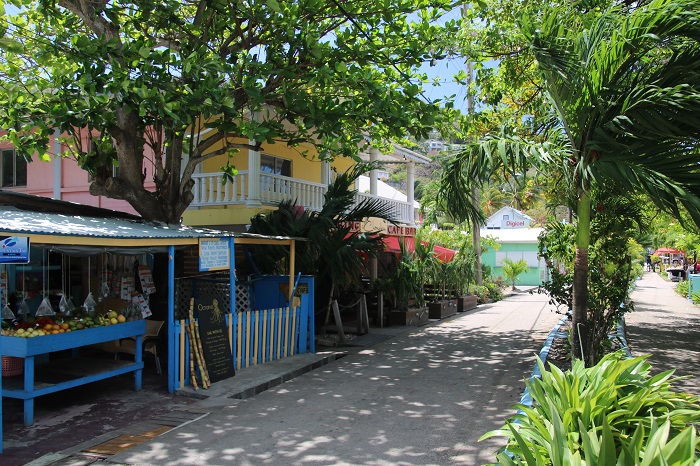
 Main street in the village is tree lined and very quaint.
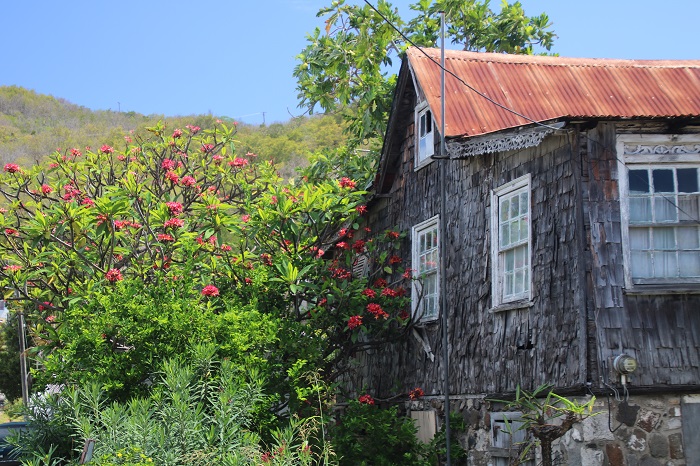
  I liked this scruffy building framed in flowers.
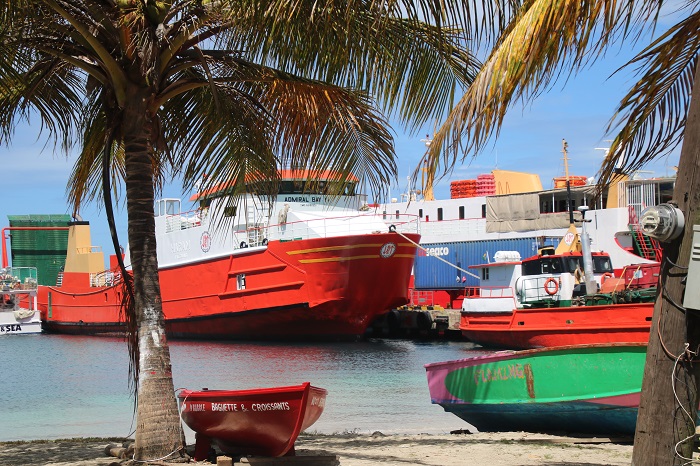
  Everything here is very colorful, even the ferry boats lined up at the dock.
  Well, I guess that’s about it for today. The WiFi is really slow and doing this post has taken me FOR EVER.