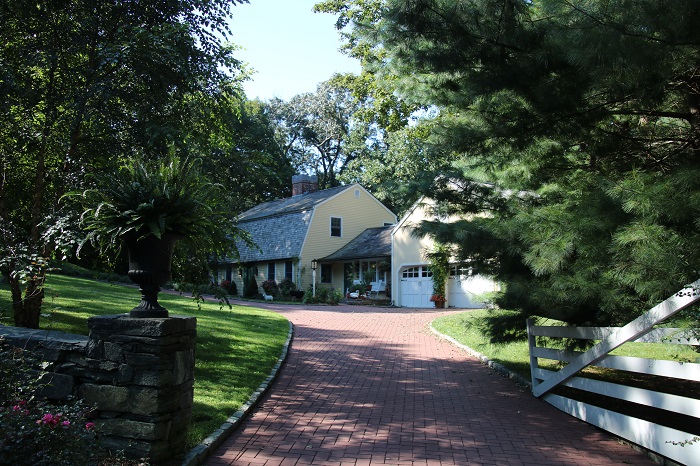
Now, that’s something you don’t see every day!
As I write this, Brenda and I are aboard Pandora in Sag Harbor. This is perhaps our favorite place to visit and being so close to home, it’s a double treat. In particular, as members of our yacht club, we are able to use a mooring here for free. And, that’s saying a lot as moorings in Sag are perhaps the most expensive of any place we have visited at $2/ft, nearly $100/day for Pandora.
Contrast that to the $20-$25/day that we have paid in the Caribbean for the rare times we opt to use a mooring. And, at $375/month for the slip we were on in Annapolis, just picking up a mooring here is nearly $3,000/month. Crazy!
I guess the town fathers, if they are all men, would take the position “if you can’t afford it, we don’t want you here”. Clearly, as the best harbor in the Hamptons, there is plenty of money to go around so they don’t need folks like us. Some of the yachts, and there are dozens in the harbor, are pretty amazing. I have always had a soft spot for yachts painted black. What a beautiful shape.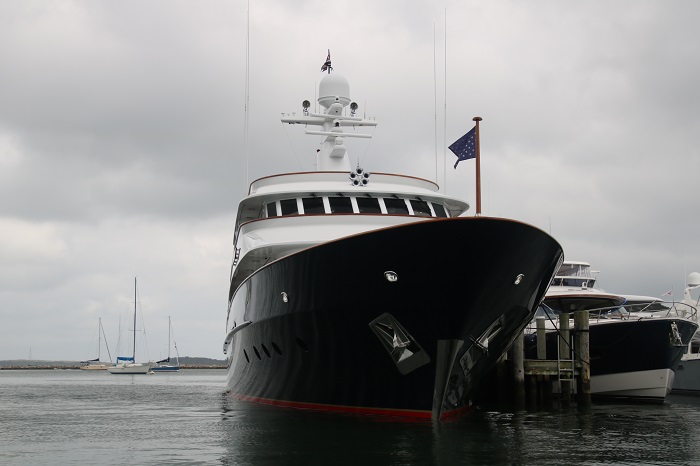 I often wonder what it takes to accumulate enough wealth to buy such a large “toy”. Perhaps the name of this one, Indiscretion, offers a clue.
 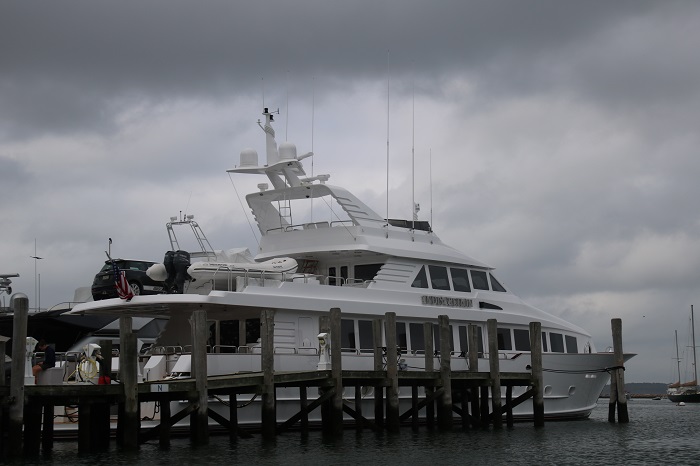 Brenda and I have at least one thing in common with the owners. They keep a Mini Cooper on deck. “Oh Reginald, can I have a Mini? They re just so cute.”, “Of course, what a lovely idea Chrystal, have James order one post haste!”
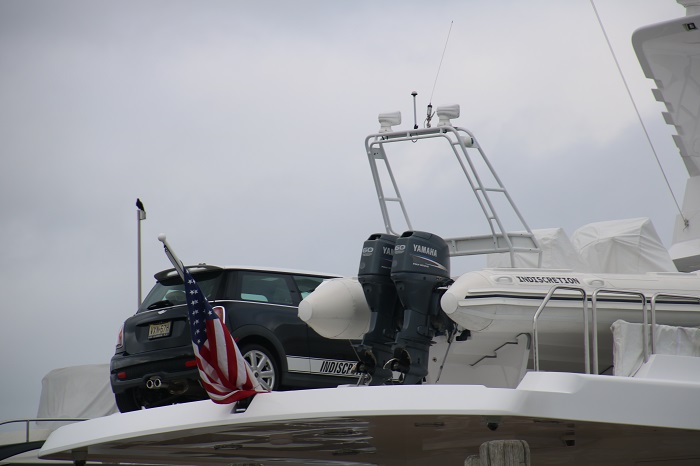 In order to fit a Mini in board Pandora, it would have to be a really mini Mini. A “micro, mini, Mini” perhaps. Note the white stripe on the side announcing the name of the Mother Ship.
While some of the yachts, many actually, are mega, some are exclusive in their own way. This one surely shouts “I don’t care what it costs, mine is the only one”.
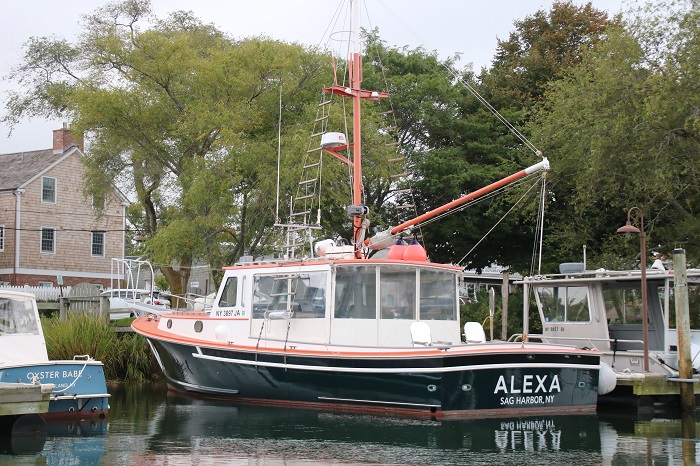
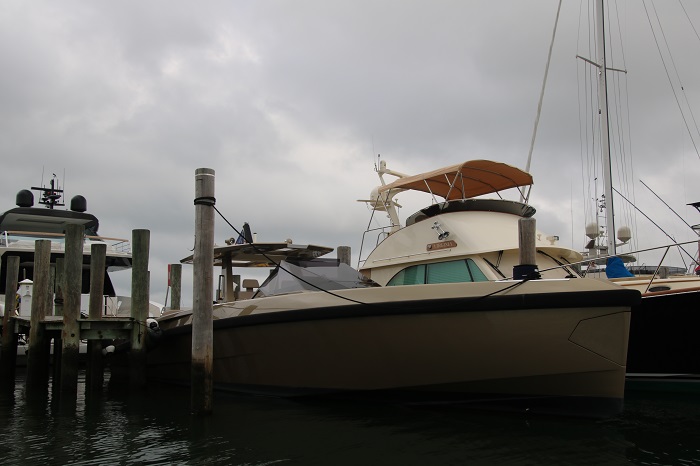 The Hamptons have long been the playground of the rich and famous. Many are merely rich but some, like the owner of Alexa, are both. She is one of Billy Joel’s boats, named after his daughter. Alexa, the boat at least, has been a fixture on the Sag Harbor waterfront for years. She’s quite a looker with classic lines.
  In addition to beautiful yachts, the town of Sag Harbor has some beautiful buildings, many dating back to a time when this was a major whaling port. This elaborately decorated gem, is now a store. I’ll bet that the bill for the silk flowers surrounding the entrance alone would set you back thousands. Very tastefully arranged. Love the yellow chairs. I wonder what would happen if I plunked myself down with a cup of coffee there. “Sir, can I please seem some form of identification documenting that you are “sheltering legally” in Sag Harbor.”
 Speaking of Sag Harbor and whaling, that brings me to the highlight of Brenda’s and my time aboard Pandora, so read on…
A few days ago, we decided to head from Block Island to Sag and headed out in nearly windless conditions. We had hoped for a nice breeze to move us along but instead motored the entire distance. As we passed Montauk and approached Gardner’s Island, I saw a huge splash a few miles off. At first I thought it might be a wave breaking on the reef off of Gull Island, on the eastern end of Plum Island.
It was hard to tell what was going on but as we got closer, a geyser of foam leapt up again and again. Finally, I realized it was a breaching whale when I saw this enormous dark bulk shoot up nearly clear of the water, only to land with an enormous splash.
As she/he? came closer, there were a few more leaps out of the water and then she continued her slow trek toward Pandora.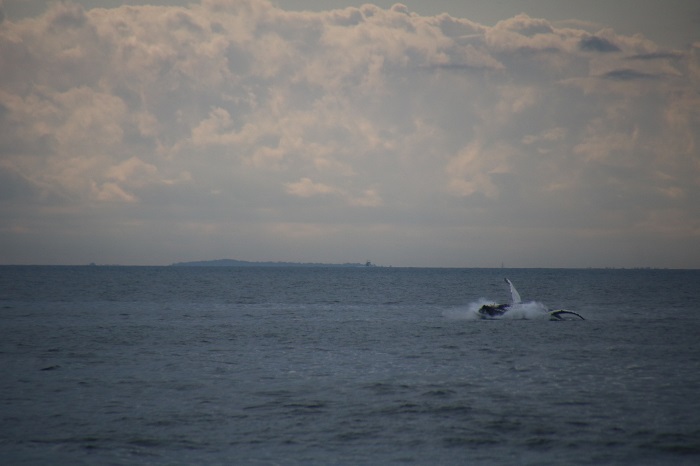 I took dozens of photos as she came closer and closer. We never changed course but were careful to slow down to a crawl and stay out of her way. Perhaps she was feeding as her mouth was agape as she rose up. You can be certain that we were seeing a Humpback because of the long black and white pectoral fins, unique to this species.
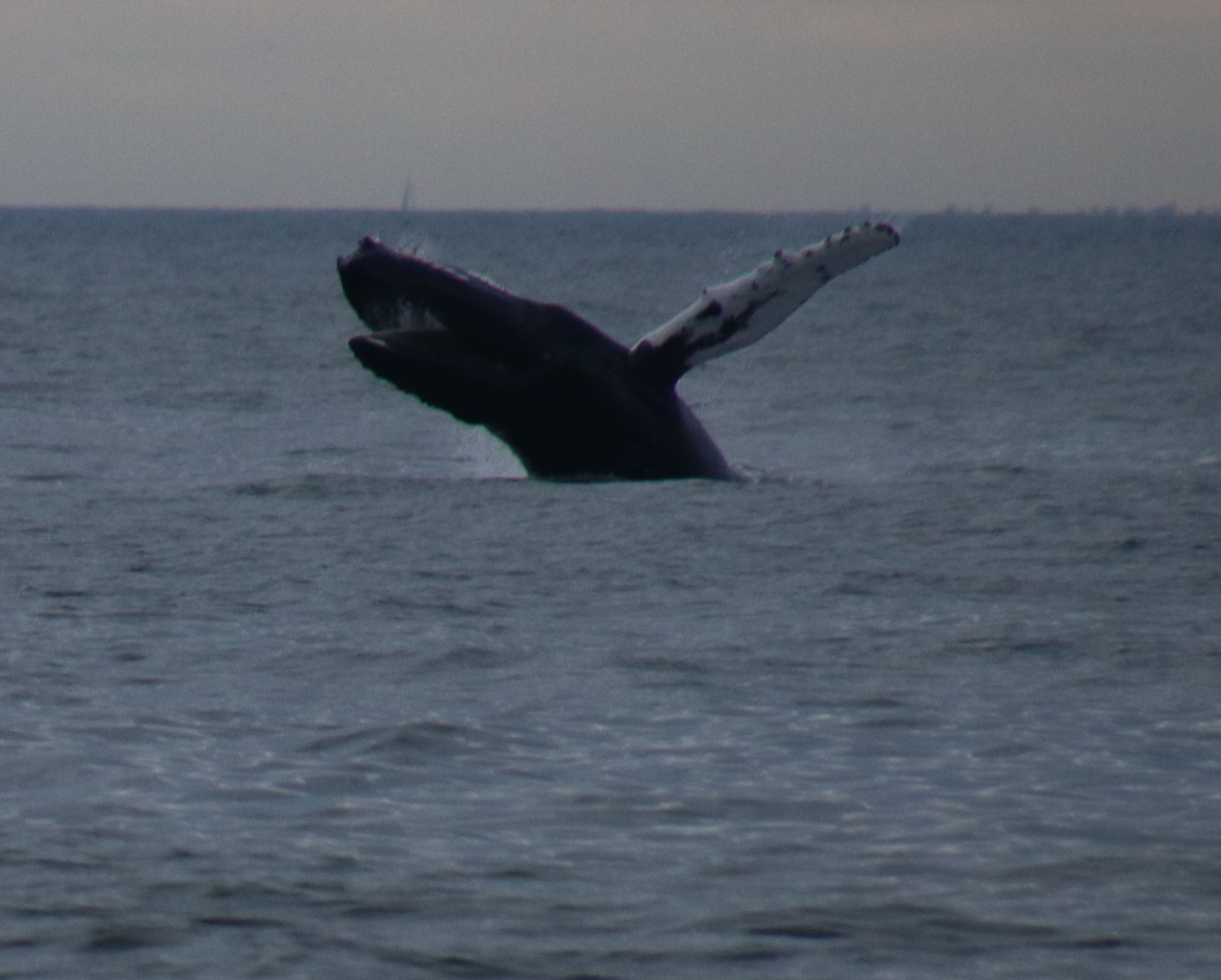 We never changed course but she came closer and closer, passing within about 100′ of Pandora. She wacked her fin hard on the water, making a loud slapping sound, again and again. We were awestruck. I could hear her breathing. What a moment.
 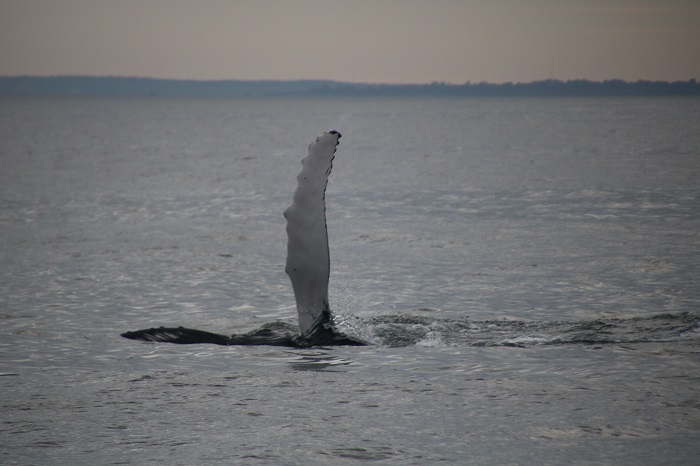 From start to finish, we were with her for perhaps 20-30 minutes. And, all of a sudden, she was gone.
 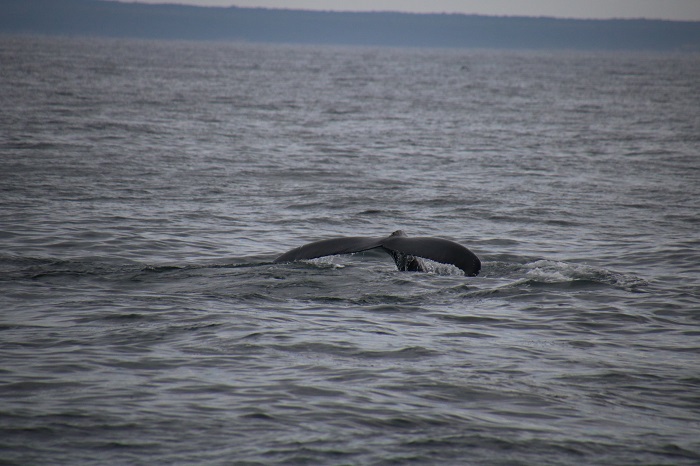 It is very unusual to see a whale in Block Island Sound as for much of the summer, they congregate in the Gulf of Maine. I do wonder if she was lost as this area isn’t known as a good place to feed. They eat tons of plankton every day, and that sort of food is much more common in the colder waters north of here.
There is so much boat traffic here that the risk of collision is high. These beautiful creatures swim very slowly and are often struck by ships, causing perhaps more deaths than by most any other cause. I called the USCG to report her position which they repeated as a notice to mariners.
In the 40 years that Brenda and I have spent cruising this area, it’s the first time we have ever encountered a whale together and while I have seen quite a few off of Provincetown over the years, this was Brenda’s first time to see such a show.
Setting aside the fact that a sighting in our home waters is so rare, to see a breaching whale from the deck of our own boat, with no other boats for miles in every direction, was an experience that we will remember for many years.
So, there you have it, visiting Sag Harbor, once a major whaling port and now the final stop on what may very well be our last cruise of the season before Pandora goes on the hard until next spring, and a whale sighting.
When we arrived in Wickford about a week ago, it really felt like winter was coming and with a cold front coming through on Wednesday, I guess it’s time to head home tomorrow.
The good news is that while it’s pretty cloudy today, it’s warm and a nice day to eat outside on the patio of a lovely spot we have been wanting to try for a while.
While our cruise is nearly over, one way or the other, Brenda and I will have something to talk about as seeing a whale in Block Island Sound, now that’s something you just don’t see every day.
Perhaps I’ll close with a shot of Pandora, snug on her mooring here in Sag Harbor. 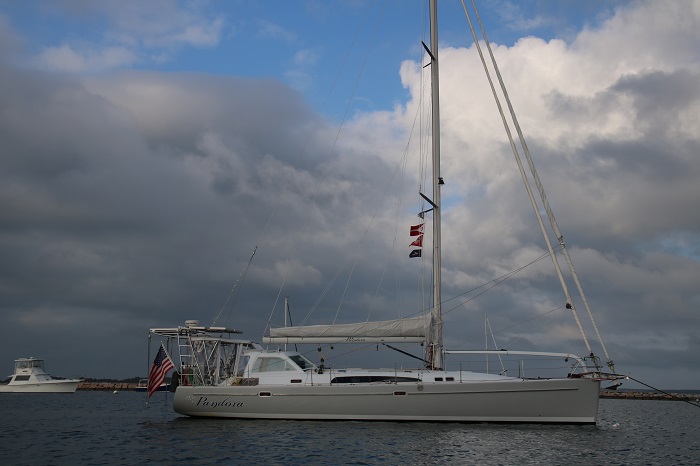 I’ll sign off for now. It’s time to head ashore to lunch. Socially distanced, of course.
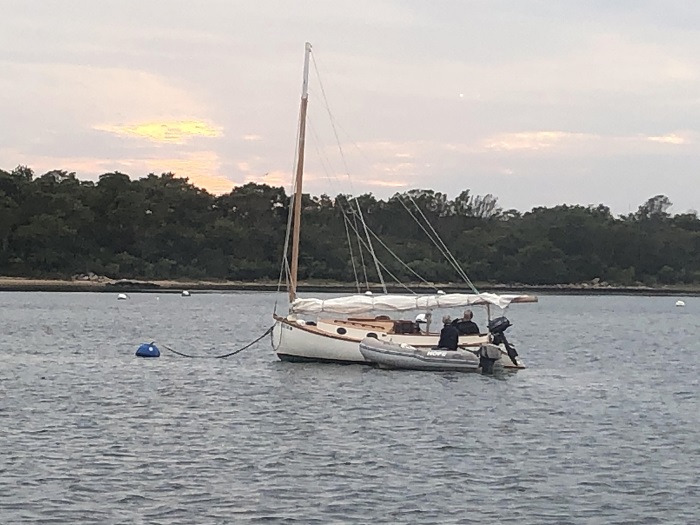 Hard to believe that Pandora’s dink is half the length of our first boat.
 When Craig and I sailed from Block Island to Newport last week, we had a wonderful downwind sail and after days of strong north winds in Wickford, wouldn’t you know that Brenda and I had to motor directly into a south wind? Such is life.
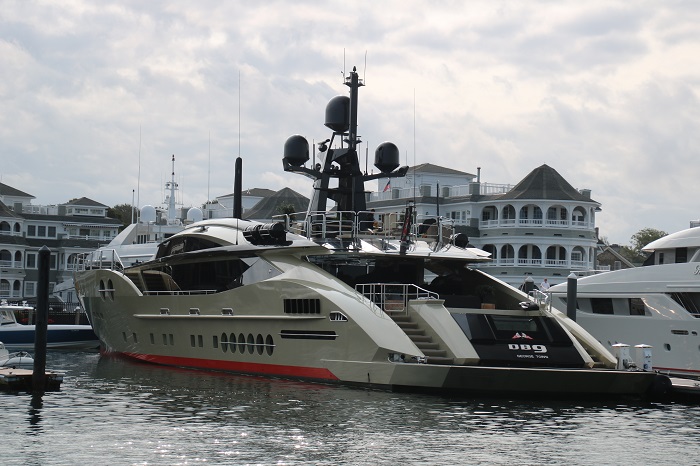 I expect that he burns more fuel in an hour than we burn in a whole year. And I mean more even if you combine all that we use in our cars, boat and at home. With a burn rate, of as much as 1,000 gallons per hour when she’s speeding along at 30+ kts, a lot more. Talk about a carbon footprint.
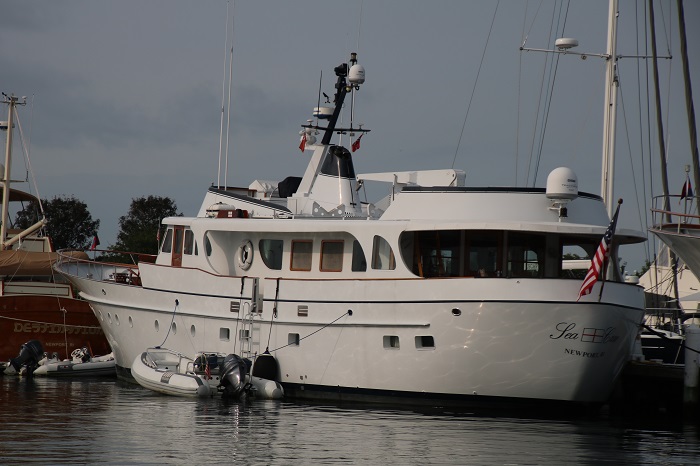 Or, if I couldn’t stand the idea of a power boat, something like this beauty.
 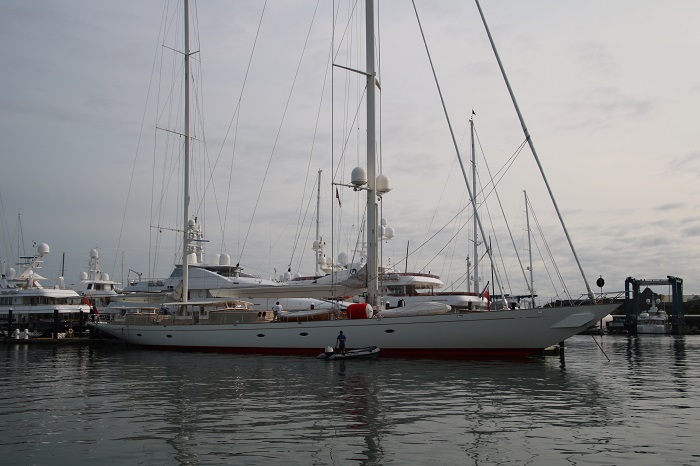 Call me a carbon footprint hypocrite but I do love beautiful yachts and if I had the coin…
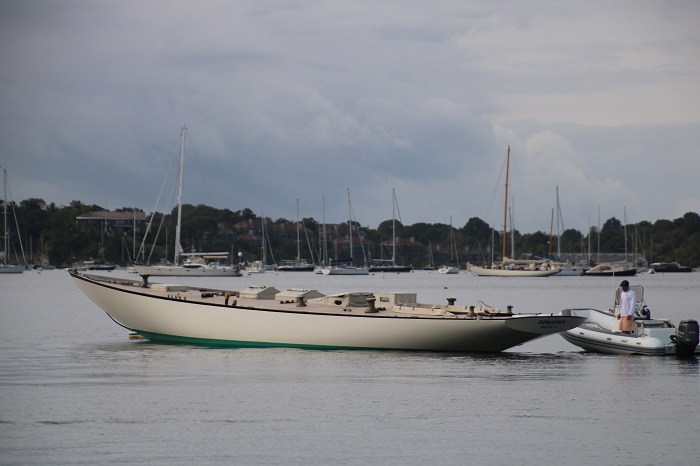 Here’s Spartan under sail. I first saw her when she was on display at the Wooden Boat Show in Mystic a number of years ago. For some reason, I can’t find that photo?
 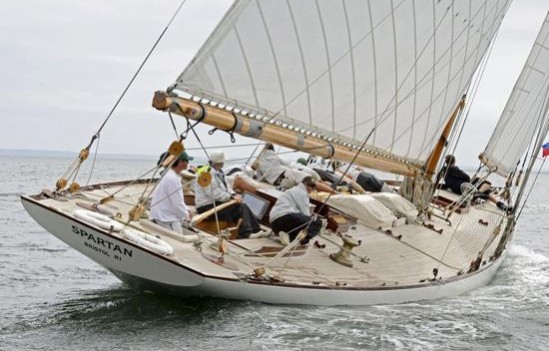 Pretty remarkable and at more than 70′ long, she is primarily a day sailor and a big one at that. However, by today’s standards, a small yacht.
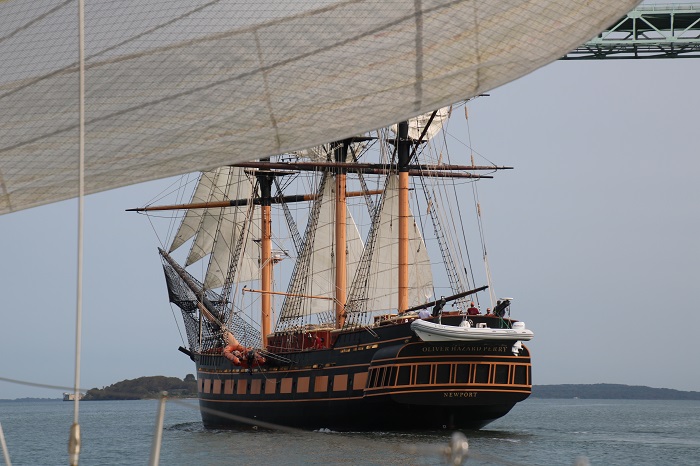 She is quite a contrast to Pandora but an even greater contrast in designs was when Enterprise, one of the 12 meter yachts built to compete for the America’s Cup. She is still sailed out of Newport as one of a number of 12s that have been kept in sailing trim.
 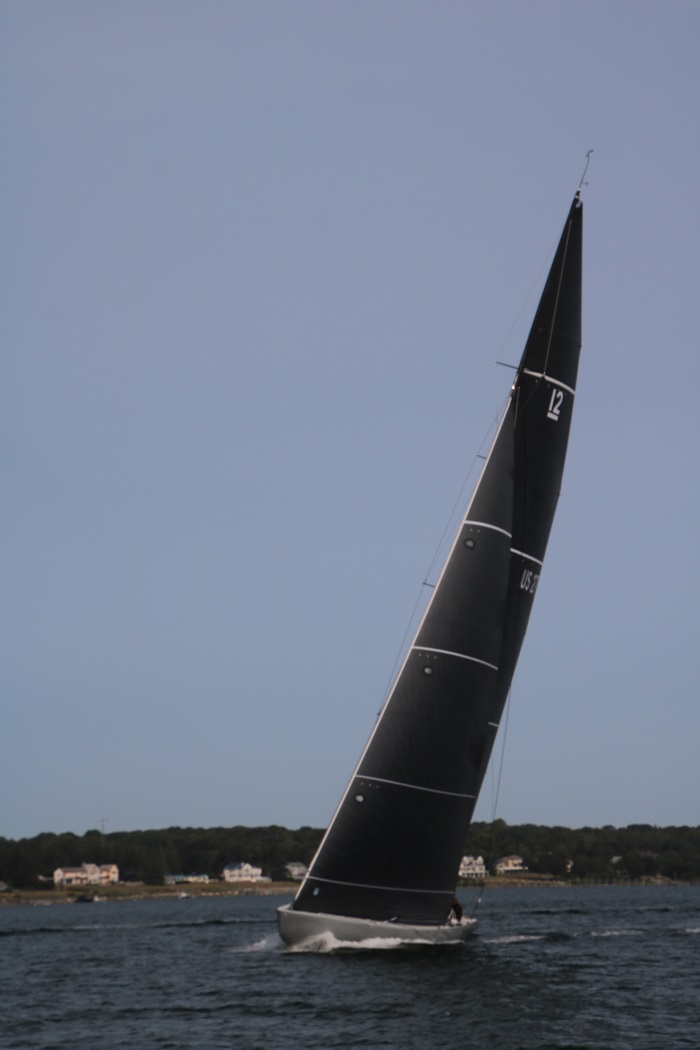 She passed us like we were standing still.
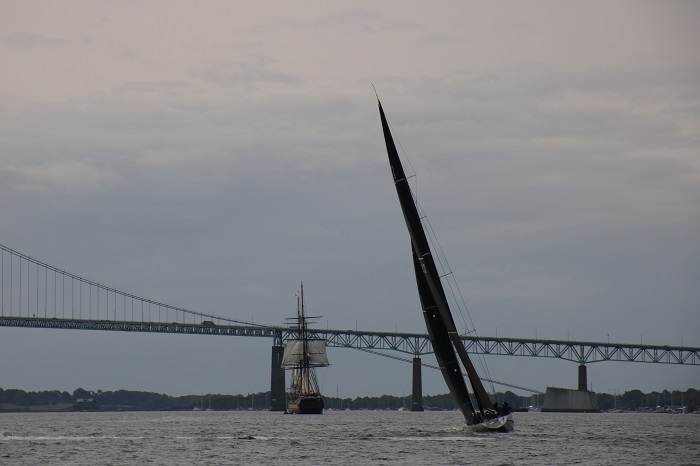
 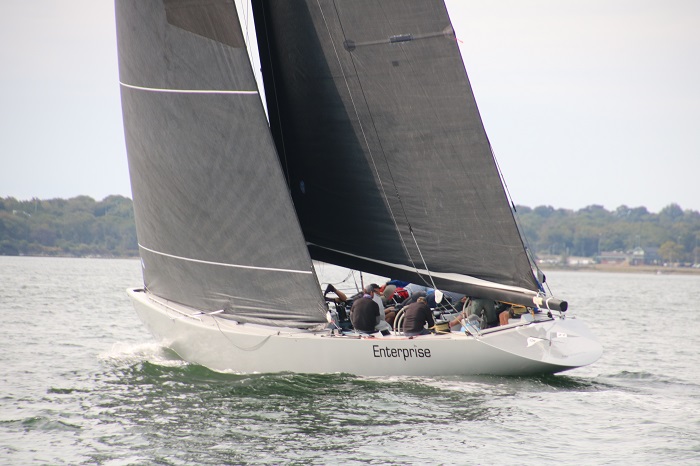 What a contrast to see her and the Perry in the same frame. Escapees from such different times.
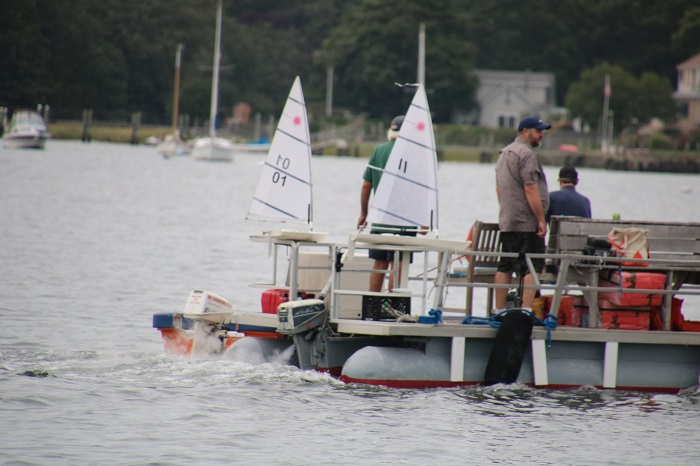
 And speaking of yacht racing, Brenda and I got a kick out of this boat load of guys heading out with their RC boats for an evening of racing. Love the dual engine pontoon boat. Actually, the motor on the left is on a “chase boat”, I guess to retrieve errant yachts. They seemed to be having a very nice time, no doubt helped along with cans of beer.
  I was struck by this Buddha, guarding Wickford harbor, a sort of silent guardian of the people of Wickford. I’ll go with that. In these days of pandemic and the polarization of our country, we need all the help we can get.
 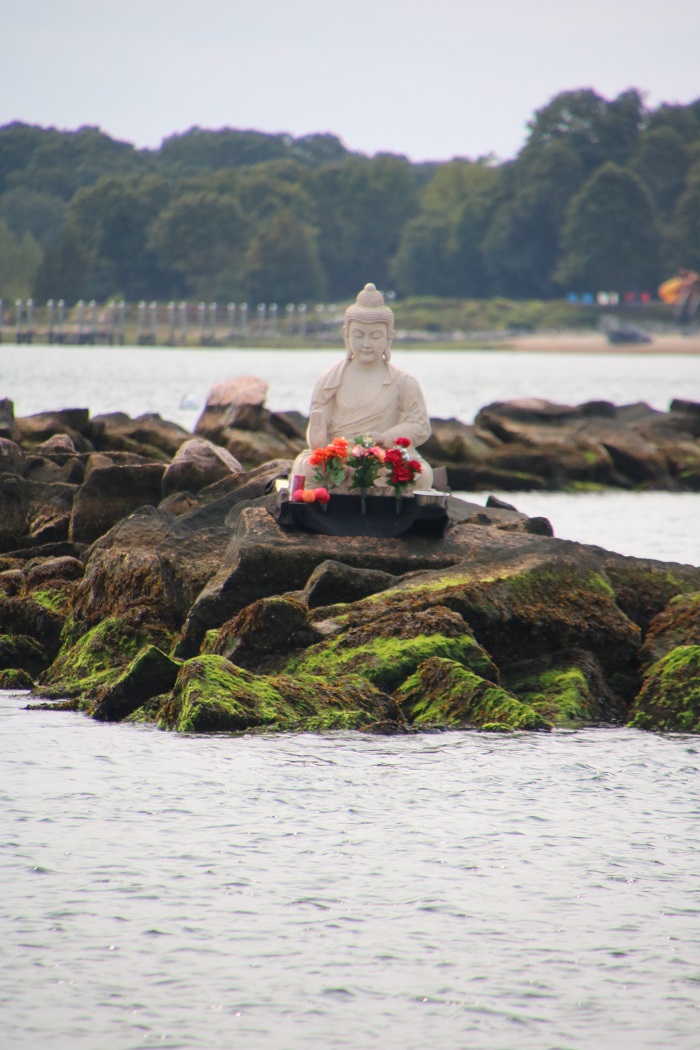 Unfortunately, during a particularly high tide, while were there, the water was right up to his chin, yet another metaphor for what many of us are feeling these days as we all work hard to keep our heads above high water.
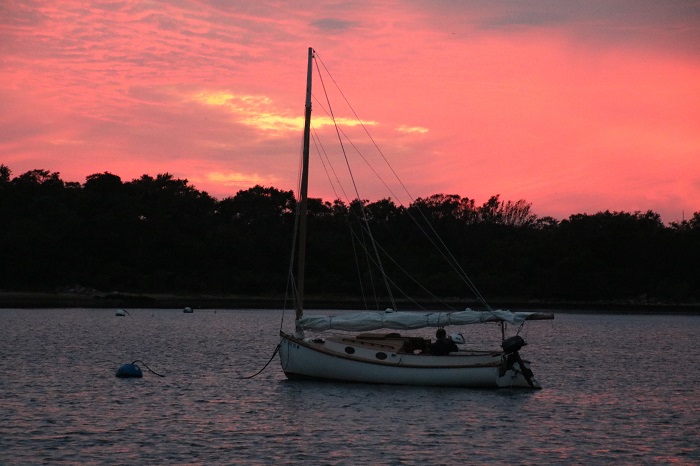 Yes, the sun will come up again but I fear that there are going to be a number of nasty gales along the way.
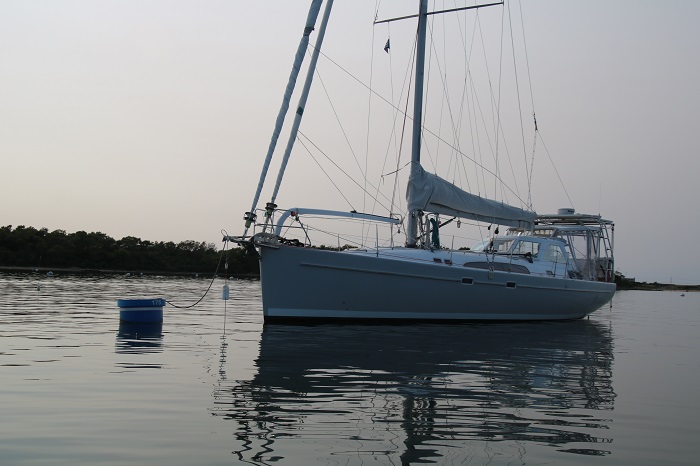 It’s not uncommon, during the high season, for every mooring to be occupied. Not so now.
 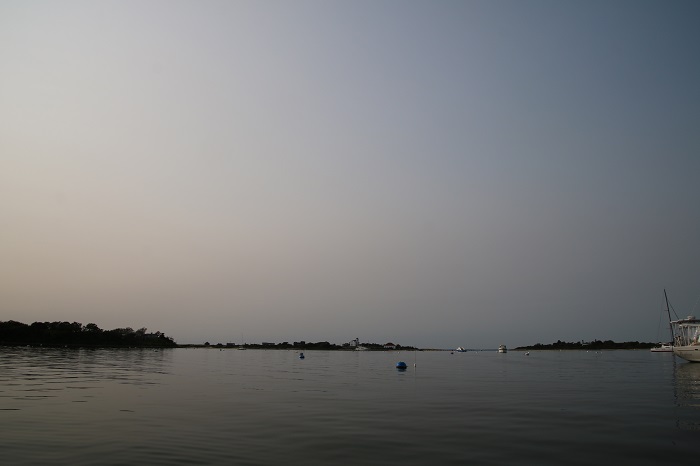 Champlins Marina, a very popular spot had only a single boat. I am told that if you want a spot on the dock during their busy time you have to book and pay by March. Even with a reservation, you had better be prepared to raft up with other boats on the dock.
 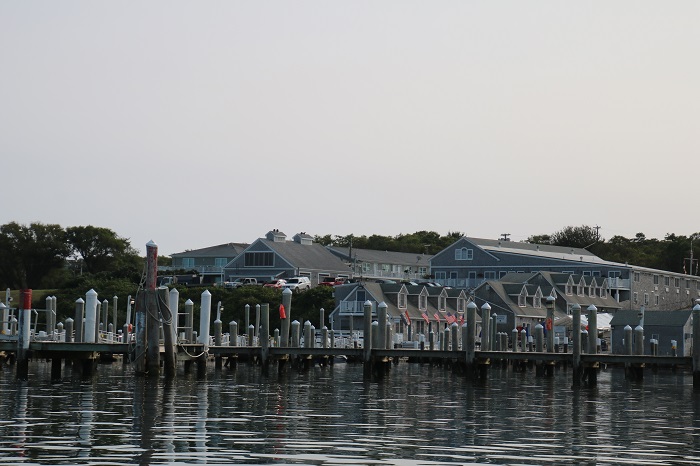 At another marina, nearly all of the floating docks were already out of the water, and it’s only one week past Labor Day.
 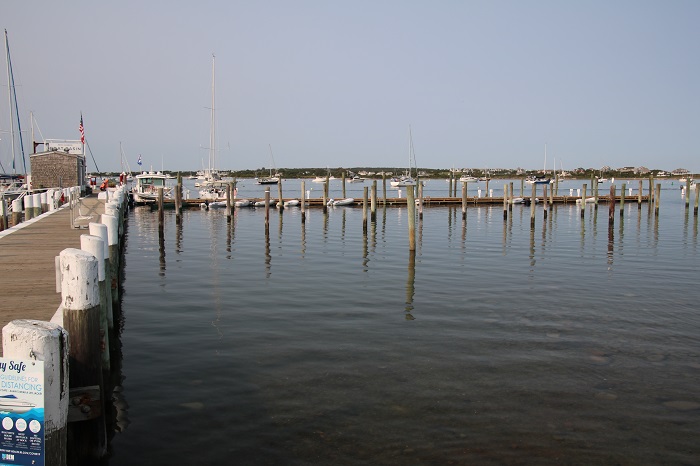 Craig and I sat out on a patio on the dock overlooking a sparsely occupied marina. I was impressed with all of the safety precautions in place. At the Oar, a popular spot, we had to sign our names and list phone numbers in the event that any infection broke out and they had to trace who’d been there. The place was very lightly attended and tables were widely spaced in a fresh breeze. We felt safe.
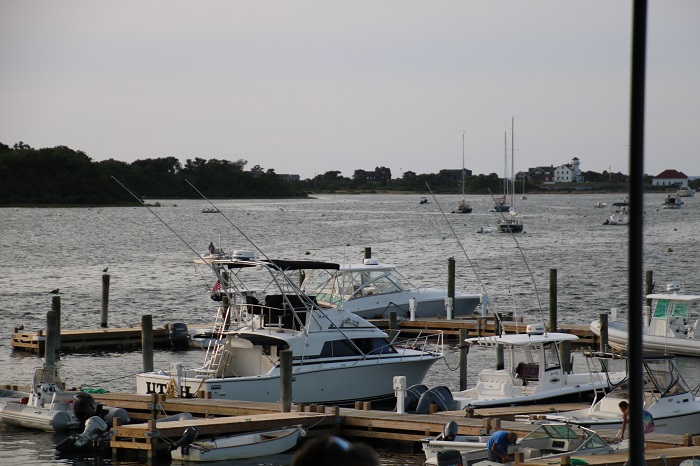
 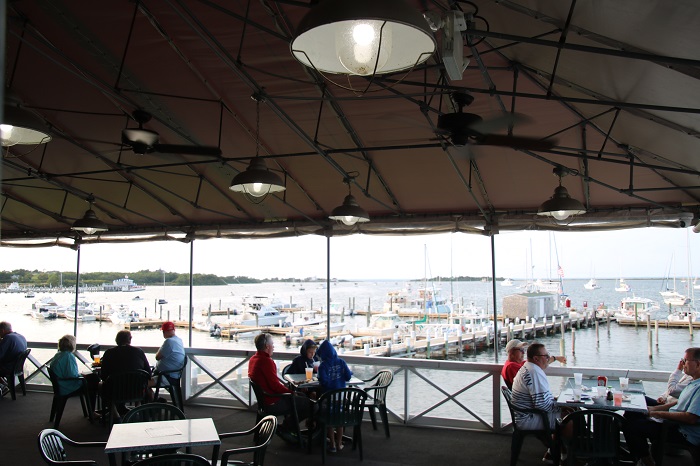 So many open moorings. No surprise given the fact we are well into cooler weather. These same moorings, during high season, are so scarce that anxious boaters hover nearby with a dink every morning so that they can race to claim a mooring when someone drops off.
  We went for a walk and while there were plenty of tourists around, it was not crowded at all and we only saw a few mopeds, the usual scourge of summer. The constant buzzing of racing mopeds, was nowhere to be seen.
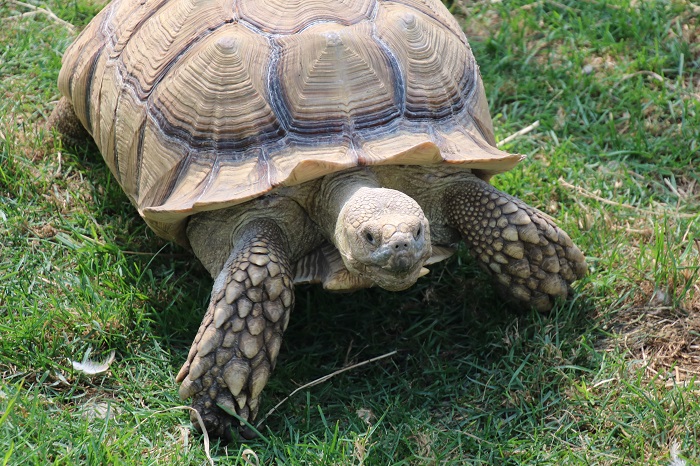
 I have always loved turtles and this one is a big boy, upwards of 40lbs. He was quite interested in getting some sort of handout and raced, as much as a tortoise can race, over to greet me.
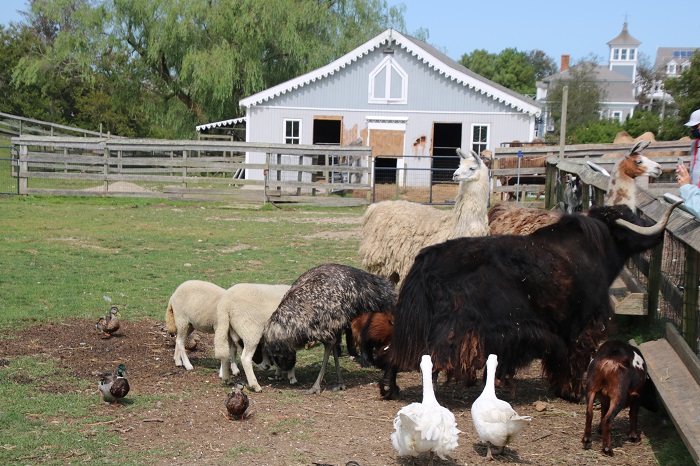
  How about these horns?
 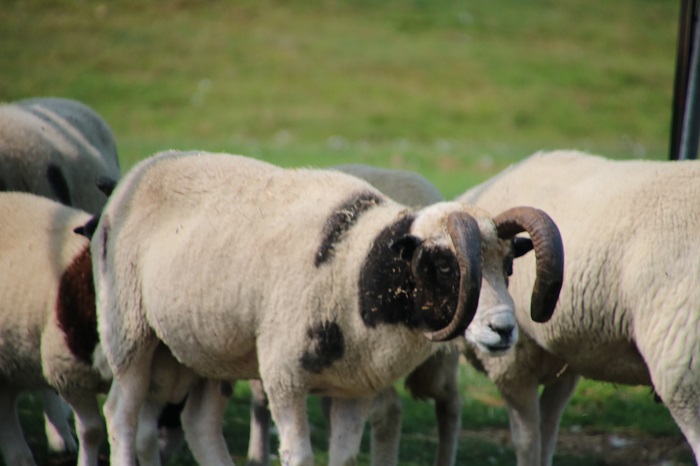 Reminds me of one of the characters in the movie by Monty Python. Not sure but I seem to recall his name as Kim.
  Of course, what zoo is complete without a camel?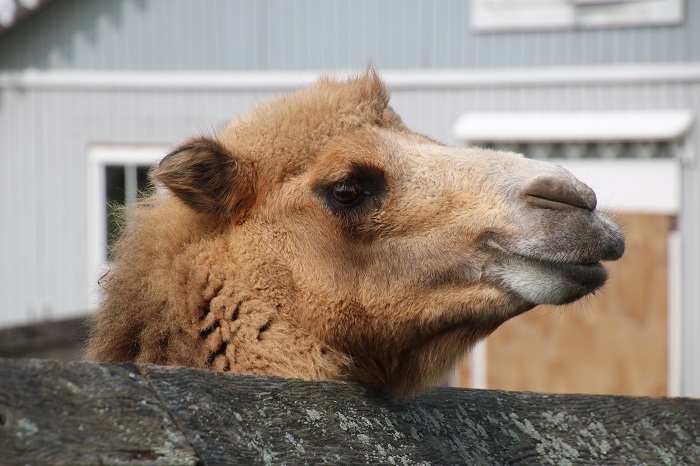
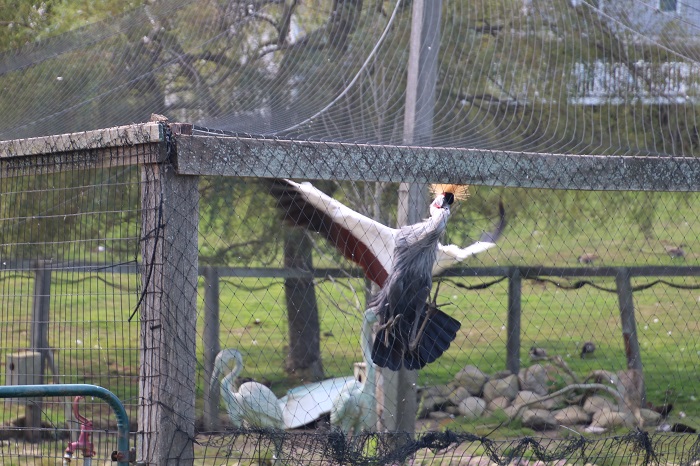
 Unfortunately, all is not peaches and cream at the zoo. This crane, was being tormented by a particularly aggressive goose who kept bugging him, squawked and flapped noisily.
  Later, a much happier egret, checking us out on the dock.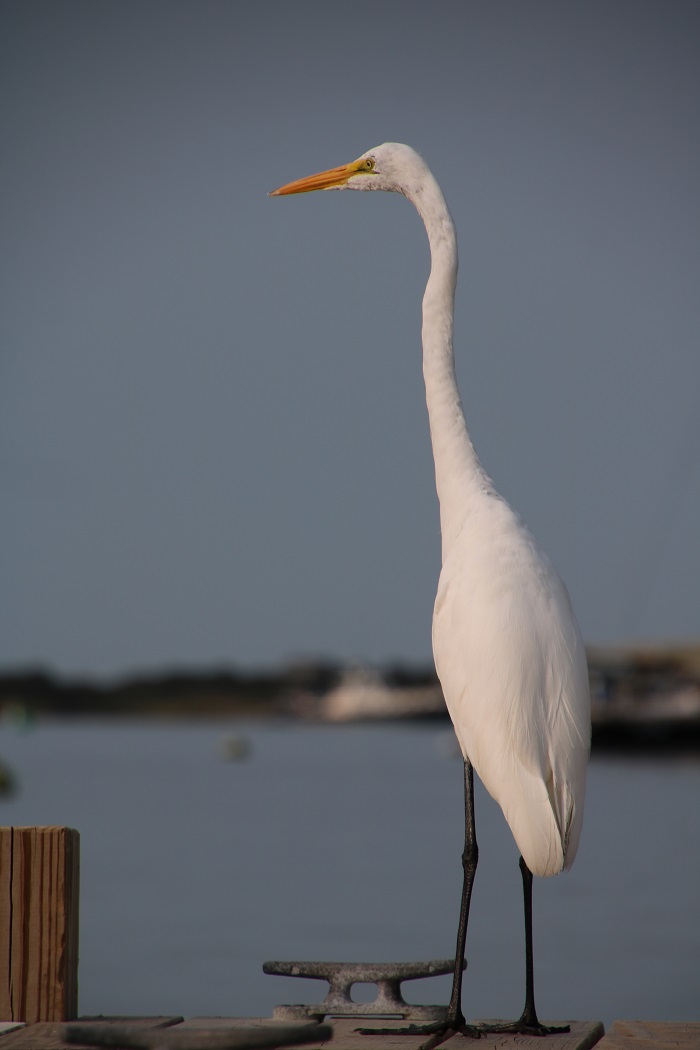
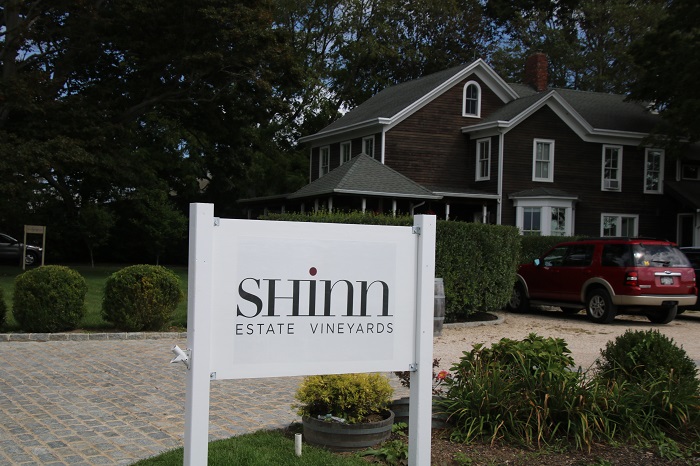
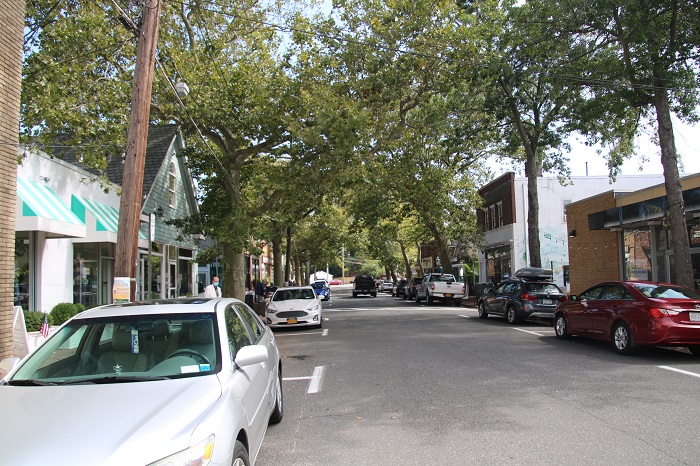 Years ago Brenda and I had “discovered” nearby Shinn Vineyards, about a 1.5 mile walk outside of town on lovely country roads. We have visited the vineyard by boat a few times. We also stayed in their B&B for a long weekend during a snowstorm once, taking advantage of a winter special, complete with wine, of course, and wonderful food. The vineyard has changed hands now and much has been done to make it even nicer.
  Craig and I ordered a bottle of wine, cheese and bread. All the basic food groups.
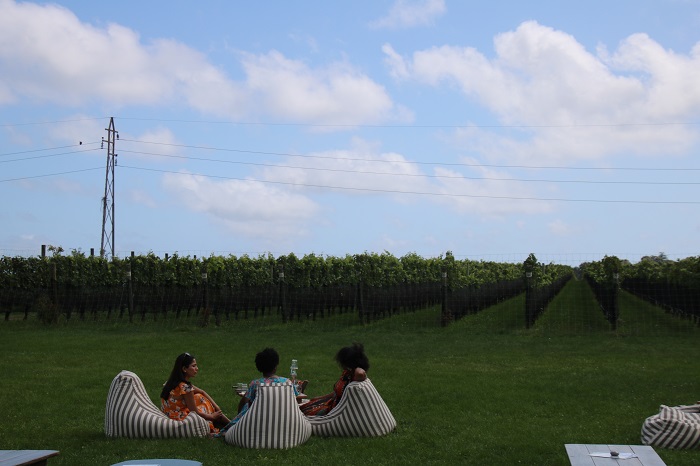
 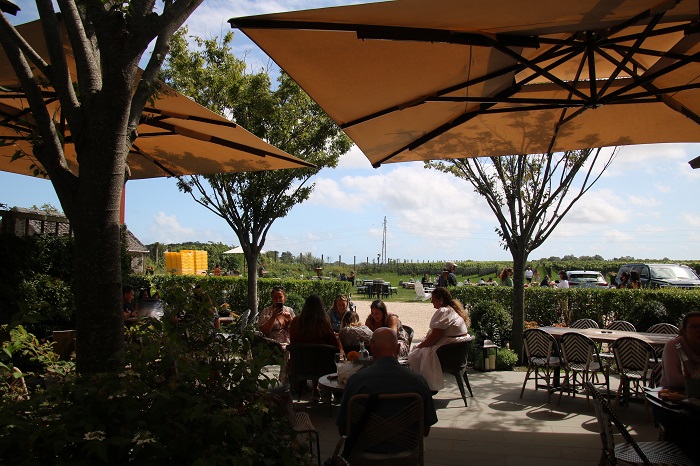 I thought that these chairs were pretty neat. Wonder how they keep them from getting filthy on the lawn.
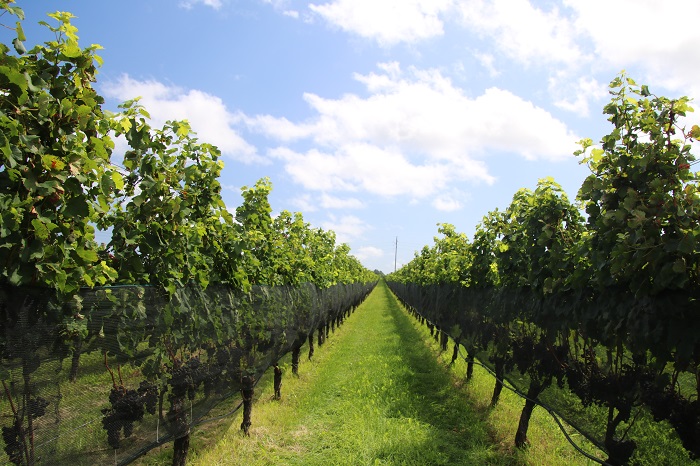
  The rows of grape vines were meticulously trimmed and shielded with webbing from marauding birds. The amount of labor that goes into producing wine is remarkable. And, to make things even more complicated, Shinn is an organic vineyard. Having seen so many vineyards in CA that had no grass or weeds at all between the vines, everything burned out by herbicide, made me appreciate the difference here.
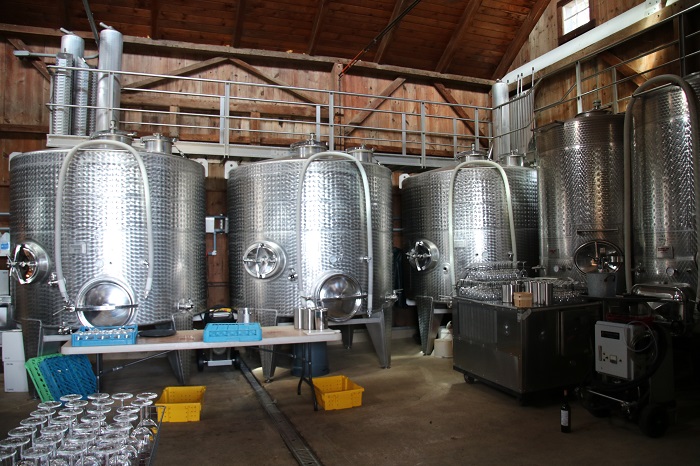
  Nothing quite says clean like glistening stainless steel.
  Tonight Newport and Thursday off to Wickford and a mooring at the Wickford Yacht Club where I will leave Pandora while we head home in a rental car. On Monday, Brenda and I will head back to Pandora for the last hurrah before Pandora is hauled for the winter. I have written in past posts about all the projects that are lined up for the winter, both aboard Pandora and at home. It’s going to be a busy winter.
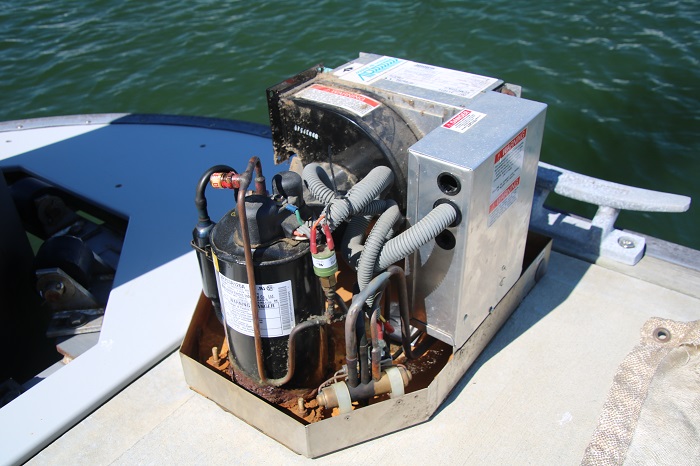 The forward unit, a 6,500 BTU Dometic unit was very easy to get at, located in the back of a roomy forward hanging locker. Getting to the unit was very simple and yet the installation still took the tech nearly two days.
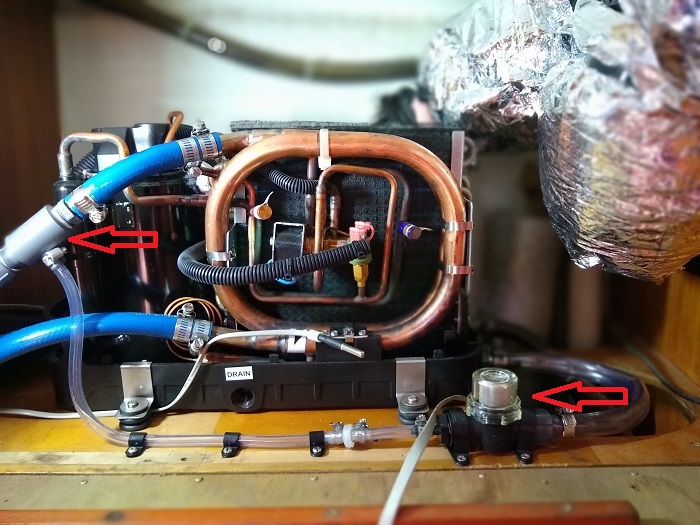
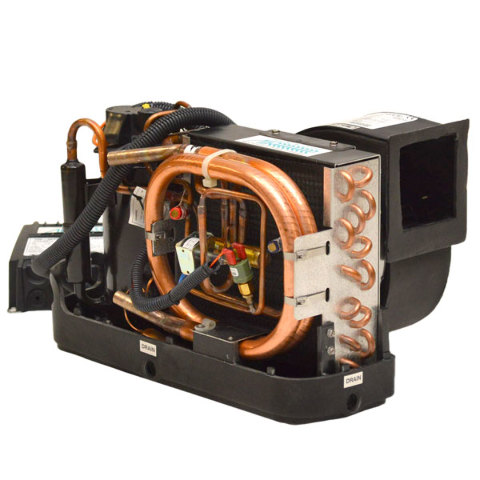 One issue with any AC unit is that they give off a lot of water that drips off of the condenser and can add up to several gallons per day, per unit. Normally, this water drains into the bilge, which isn’t ideal. In this case, the tech recommended that I add a special positive drainage device that installs into the cooling water exit line. It is the grey unit with the red arrow. It also has a small strainer to the right to be sure that nothing can be sucked into the unit and block the tiny exit hole.
  The principle behind this active condensate drain is that when the water is forced through the narrow part of the fitting, it passes a small hole on the bottom, causing a vacuum that sucks out the condensate and evacuates it overboard as part of the cooling water. The suction is caused by the venturi principle where a fluid is passed horizontally, constricted as it passes a hole, causing the formation of a vacuum.
 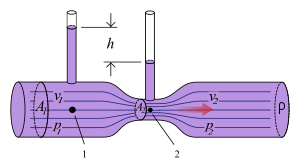 It’s a simple, elegant approach and works very well. I installed one on both units. I’d put in a link but could not find one on the Dometic site.
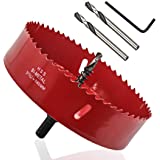 I’ll admit that I really took a deep breath when I started to cut that 12″ square hole in a cherry bulkhead, but it turned out well.
 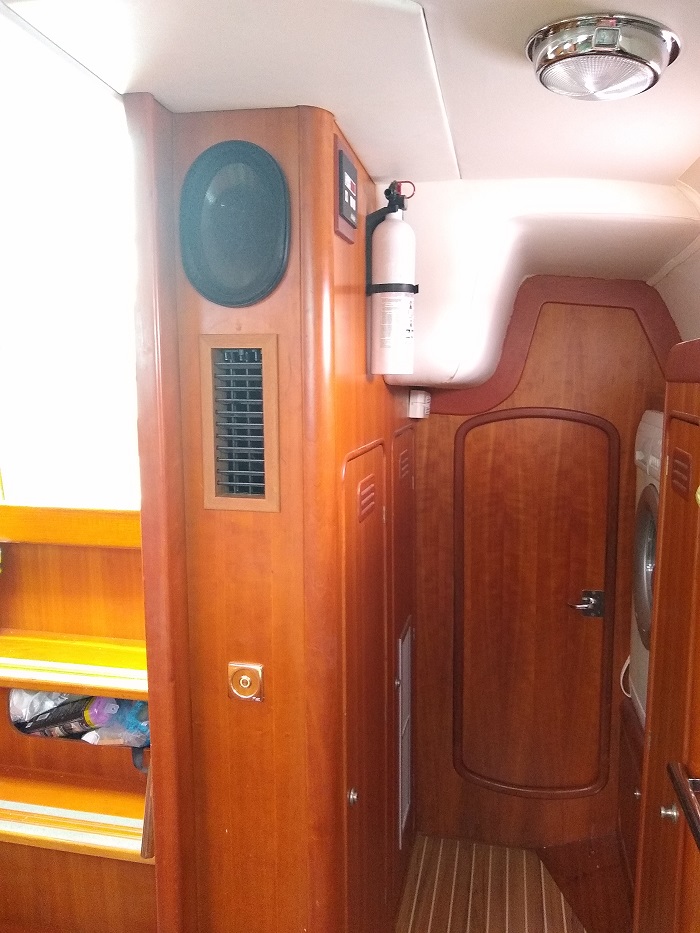 What a difference it the extra air flow has made and basically doubled the cooling capacity of the system. The original ducts included a 4″ duct with a very long run, in the main cabin and a 3″ vent in the aft cabin. It was not practical to change the main cabin duct but I upgraded the aft cabin duct to 4″ and the new duct in the galley at 5″, allowed for a substantial increase in capacity, matched to the system.
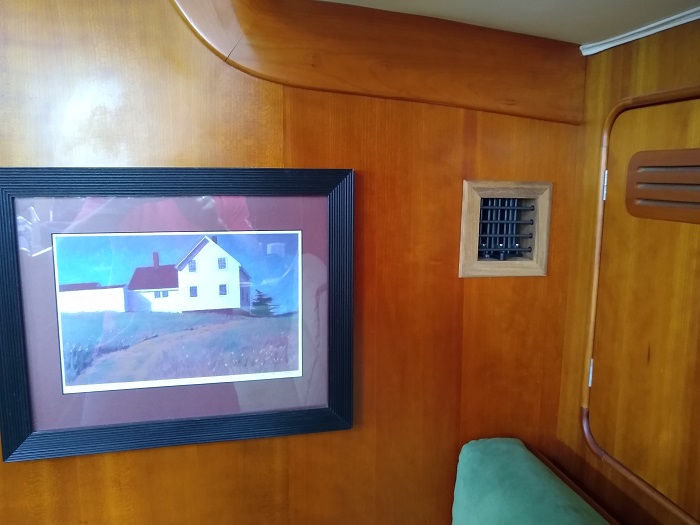 The unfortunate reality is that we had not been able to use our AC at all at anchor as Pandora does not have a built in generator. As I mentioned, previously, we have not felt a need to use the AC at anchor, when there is a breeze, but summers in the Chesapeake or New England, south of Maine can be stifling at night when the breeze dies.
 I understand that the Easy Start’s magic is that it “learns” the momentary peak draw of the starting compressor and somehow smooths out the load so the generator is not hit with a sudden jolt.
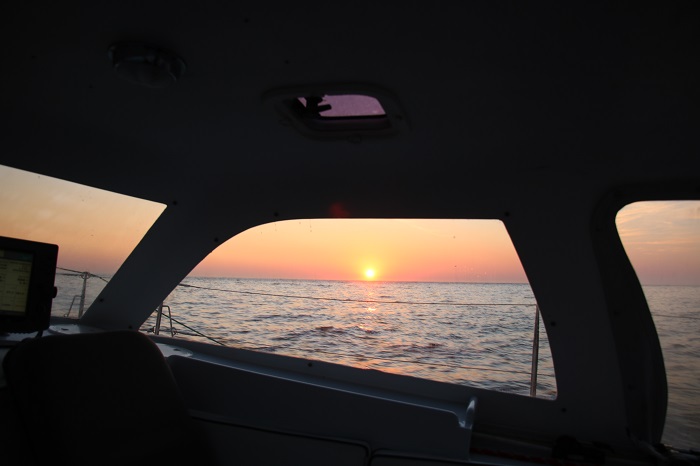 Pretty impressive glow in the east.
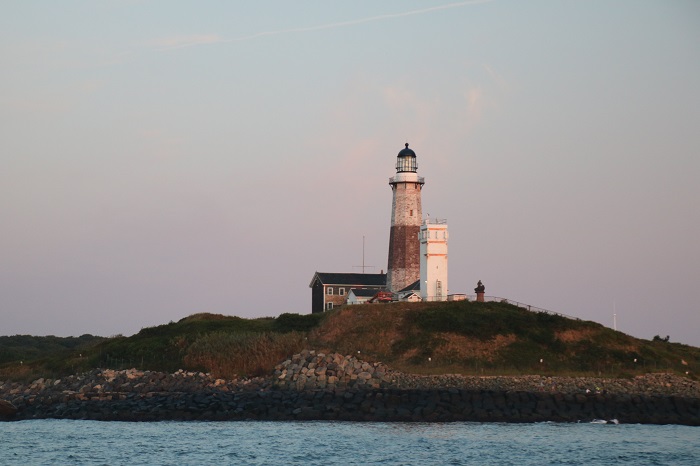
 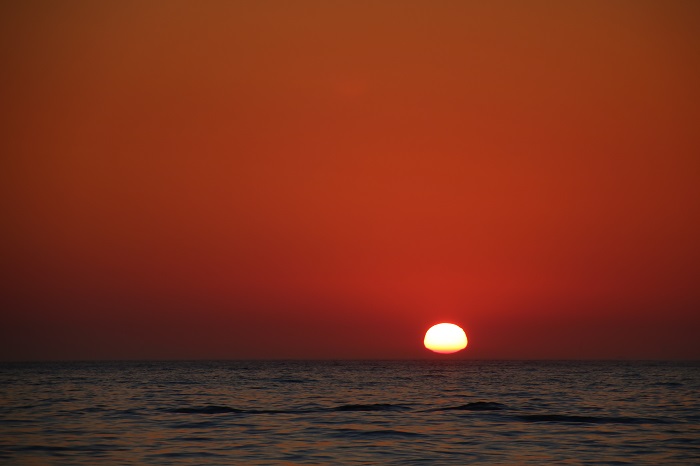 Montauk light showing the way.
  As we headed down the Delaware river we were passed by many ships. It’s hard to get a real feel for how big these ships really are.
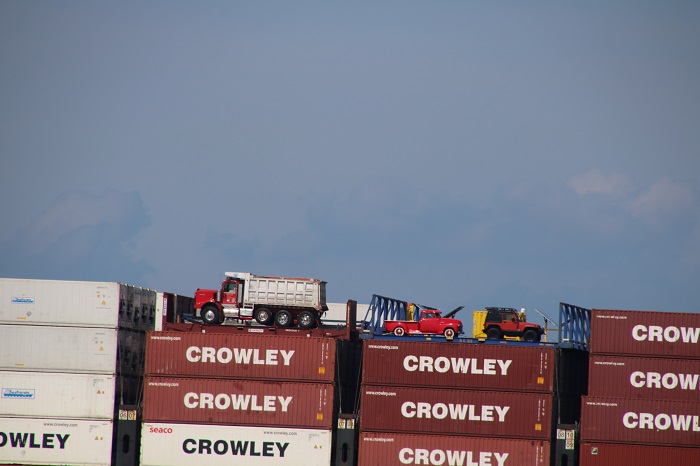
 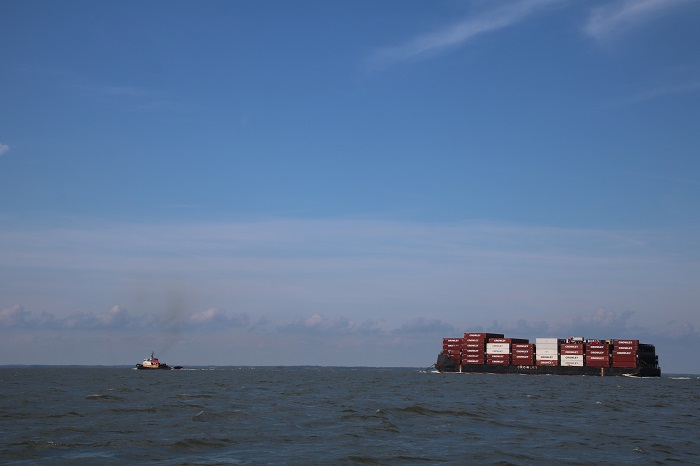 Well, at least until you see how big these “tiny trucks” are, secured on deck.
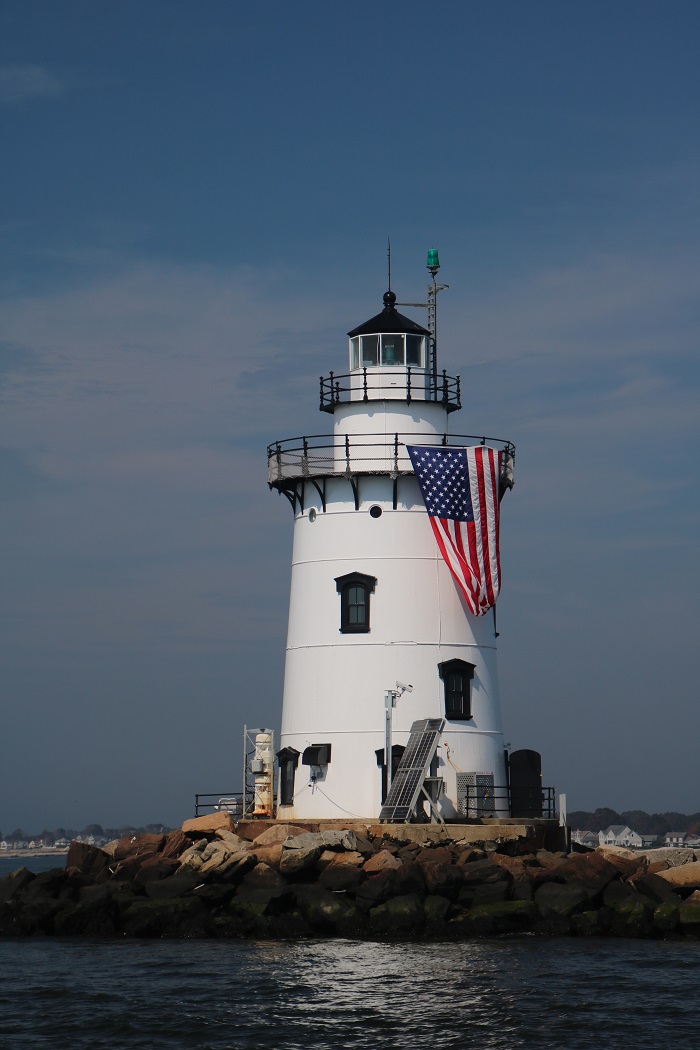
  And, the final view, one of my favorite lighthouses. Saybrook Point light at the mouth of the CT River, freshly painted.
 So, home we are, me and Pandora. And me, pining for the warm tropical winter that will not be. I’ll admit that I am quite anxious about what life will be like here in the US when the weather turns cold. Gone will be the outdoor dining options and combined with a desire to be with family for the holidays, I fear that many will let their guard down and infections will skyrocket. Medical experts are also sounding the alarm, in particular, about what will happen this Labor Day weekend when party-goers throw caution to the wind and gather together for one last fling of summer.