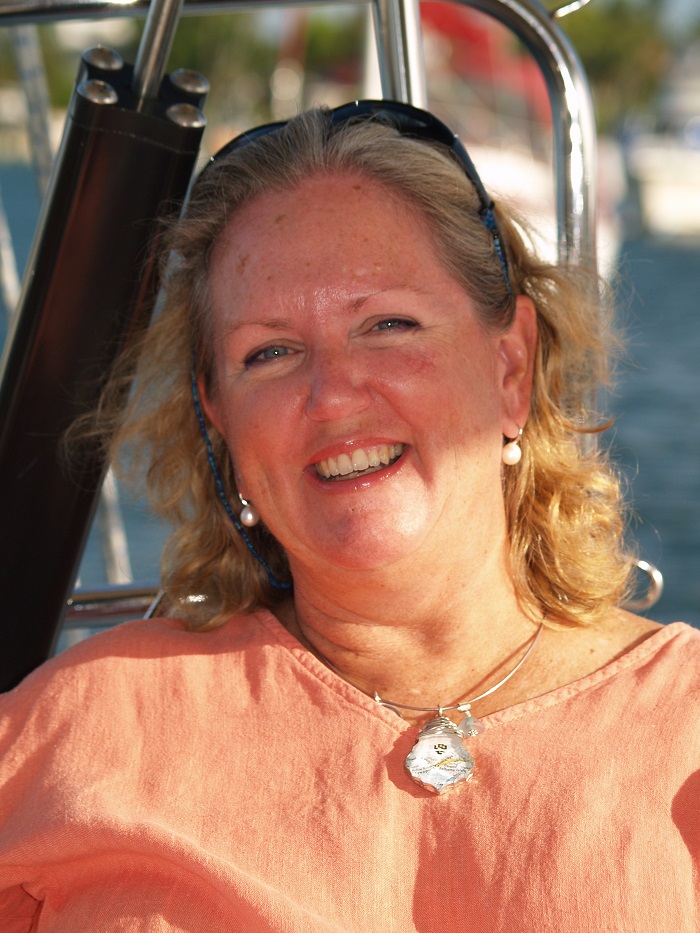
Sag Harbor. Where the glitterati go to, well, glitter.
My friend Ken joined me on Thursday and we headed over to Sag Harbor on Friday morning with the goal of snagging one of the two Essex Yacht Club moorings in the harbor. Those moorings are perhaps the best deal going as if you must rent one, if there is one available, will set you back several dollars a foot.
We spent Thursday night on the EYC dock so I could get provisions aboard and clean her up before heading out. The morning was clear and dry, a big change from the humidity and heat of late. That’s Pandora on the face dock to the left, the one with the double headstay. 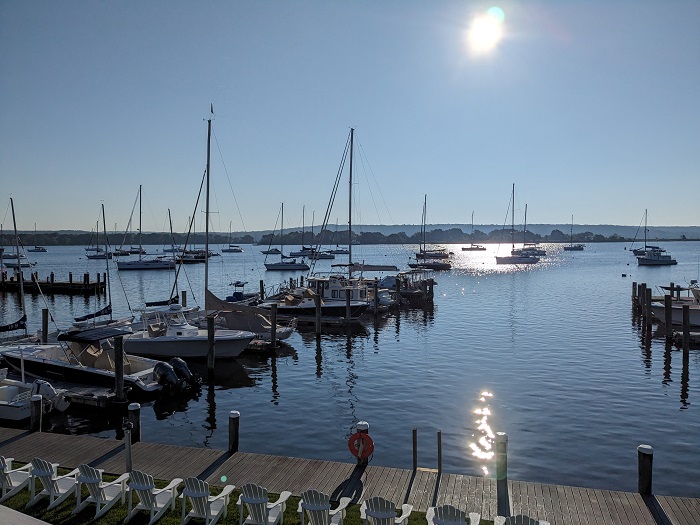 It was the first time I have left the River, and only the second time I’ve been off of the mooring since bringing Pandora back from the Caribbean in May.
Aside from a a short run up to nearby Hamburg cove for a raft up with some Salty Dawgs, this run is my first opportunity to try out the new propeller. It seems that my speed in calm conditions is a bit slower than before but I do like the the fact that there are two settings, with a lower one for greater thrust if needed.
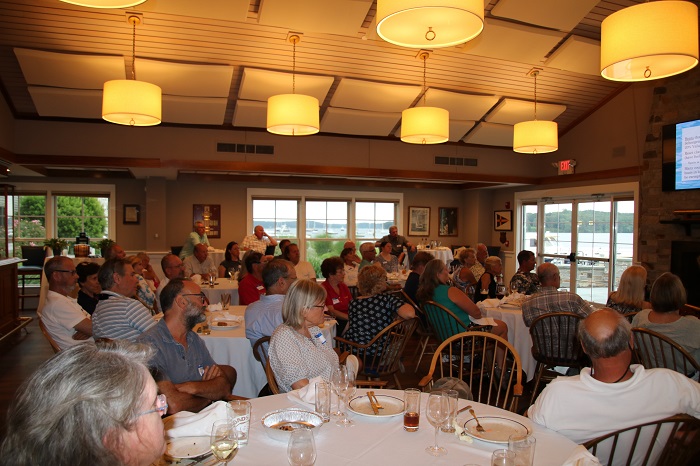
And, speaking of the Salty Dawg group, I arranged for the Down East Rally to Maine to stop in Essex as their first landfall after leaving Hampton. The skippers and crew, along with a number of other boats that came to enjoy the visit, stopped at EYC for a few days.
We had a very nice lunch and dinner supplied by Chef at the club and spent the afternoon talking about issues that matter to the cruising set, a good back and forth between those with a lot of experience and those eager to learn more on their first big adventure.
Ted and Barbara of Raven provided after-dinner entertainment, sharing their experience of spending time cruising the Med. Brenda and I got to know them a few years ago when they too were cruising the Caribbean. We will see them again this coming winter, which will be fun. 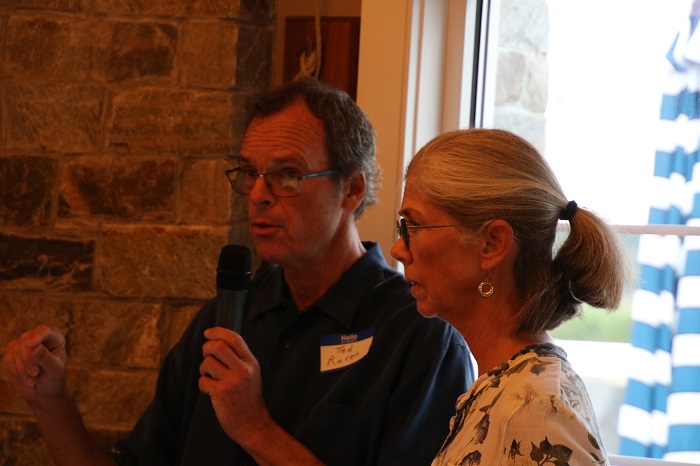 The audience enjoyed the “show” and seemed to like the back and forth questions and shared experiences.
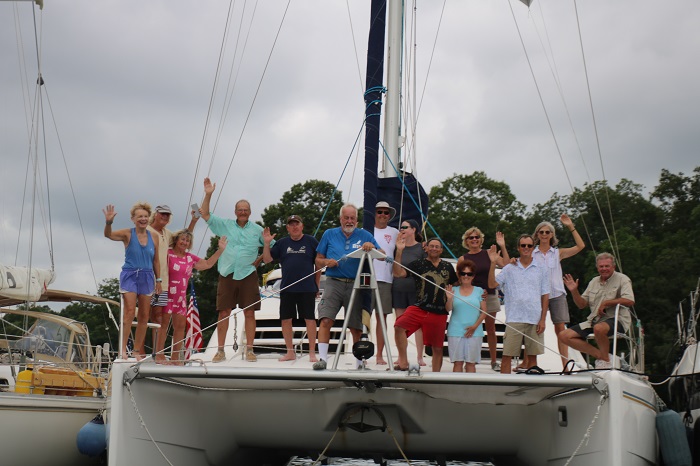
  The next day a number of boats headed up to Hamburg Cove for a raftup. Most cruisers never raft, or tie up together, as most harbors are just not settled enough so this was a novel experience. When we were young and new to boating, Brenda and I rafted with friends nearly every weekend. Because of the great width of the two cats, the raft was nearly 100′ from end to end and required two moorings to hold the group.
 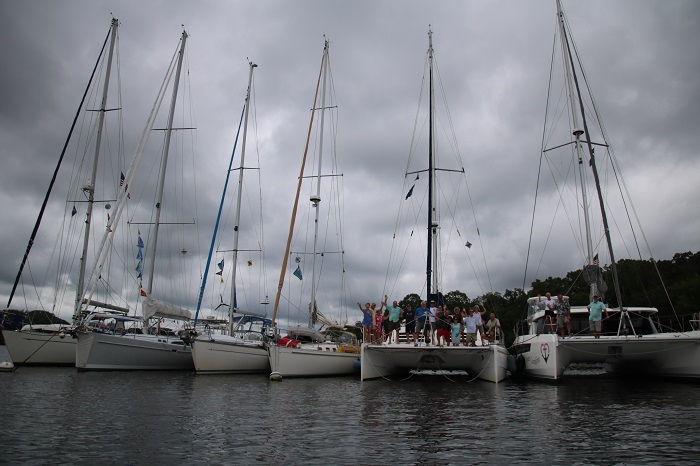 Smile for the camera!
  So, back to Ken and our first stop on our week out.
Not to digress, but after seeing the Barbie movie with Brenda, I will never think of “Ken” the same way. If you haven’t seen Barbie, the movie, love or hate Barbie, this is a very fun movie. The promo for the movie said “if you love Barbie, see this movie” and “if you hate Barbie, see this movie”. So true. But I will never think of “Ken” the same way again. Perhaps this has ruined Ken for me as Jaws did for swimming in the ocean. Anyway, back to our adventure.
The wind was out of the west and we had a very nice ride, arriving in Sag mid afternoon. The harbor master guards the moorings with great gusto and we hadn’t pulled up the mooring lines for more than about 5 minutes before he pulled up along side to shoo us off. I explained that I had not yet put up my EYC burgee so he left.
The sort of “saved seat” mentality is so typical of the North East and the lack of same is so refreshing in the Caribbean. Well, at least in the Caribbean south of the BVIs where mooring use is vigorously policed.
Setting that aside, Sag Harbor is a beautiful spot and where else can you spend $40lb on cheese? Oh yeah, Ken and I had a nice glass of wine yesterday at a bar and it set each of us back about $25/glass. As the say, “If you have to ask, you can’t afford it.”
I am always interested in the local free magazines and Sag is loaded with more than most options than any other place we visit. And there appear to be just a few categories of advertising that dominate them, beginning with plastic surgery. Some are generalist and some focus on, well you can imagine what they focus on. I think Ken and I saw a number of “enhancements” as we strolled along main street. Actually, kind of like Barbie, now that I think of it.
Not a lot of old clunkers here in the Hamptons and those that are old are well preserved. Sort of like their owners, I expect. Love this Porche. 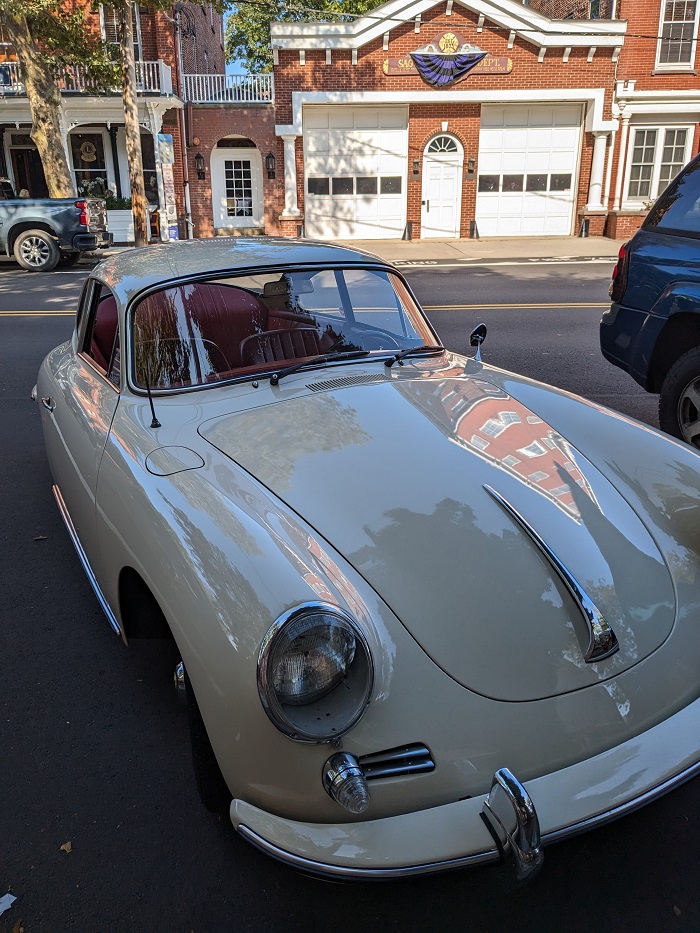 And speaking of well preserved “old stuff”, and I don’t just mean women of a certain age. The homes are amazing. I’ll bet that a paintjob on this home cost more than our car, no make that all the cars we have ever owned, combined.
 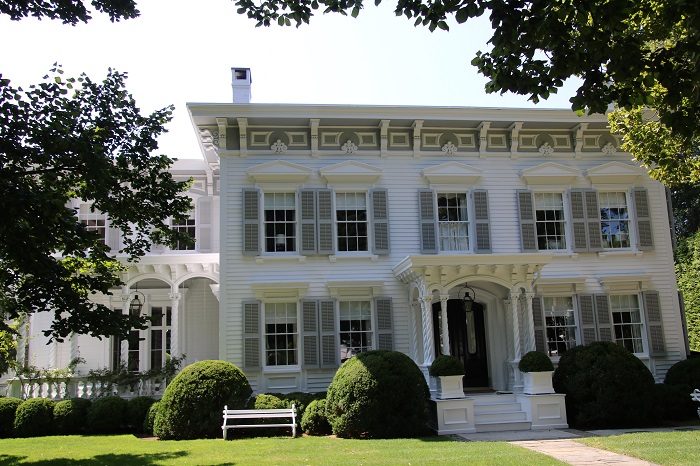 In spite of all this, I do enjoy visiting here if for no other reason than people watching, each more put together than the last.
The club mooring is right in the middle of the action. And, here on Saturday, there is a lot of action. Sad that this boat only has three outboards. 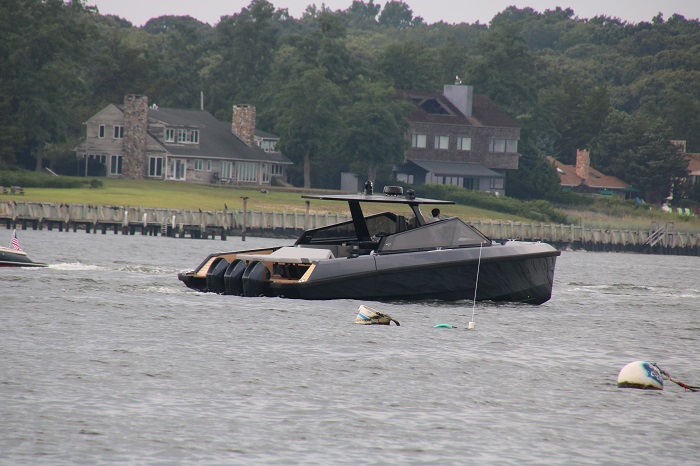 However, he’s not alone with boat that is a “severe” design. If Darth Vador went boat shopping, this one would surely catch his attention.
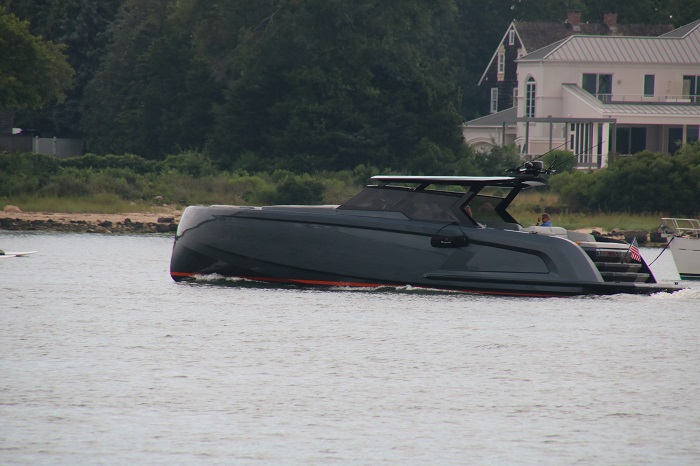 Well, at least before he looked 100′ back and saw another trailing in it’s wake.
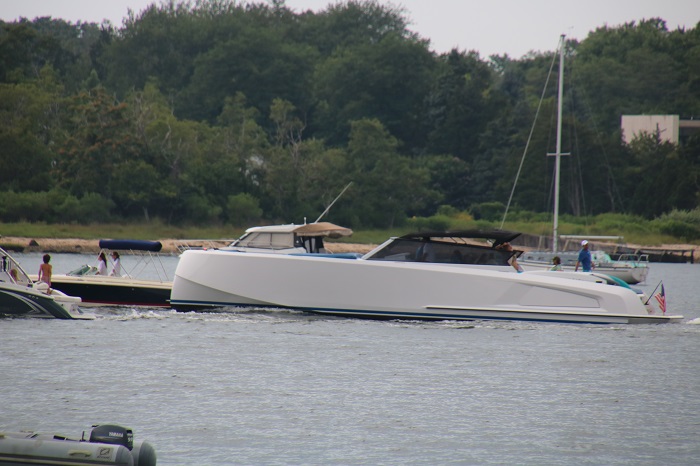
 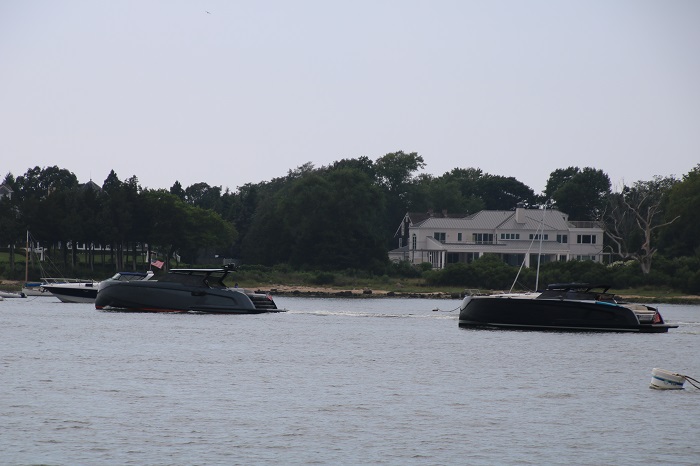 Or, perhaps if he wanted to change his image. Perhaps white…
 Don’t like edgy design? Perhaps this classic John Alden schooner.
 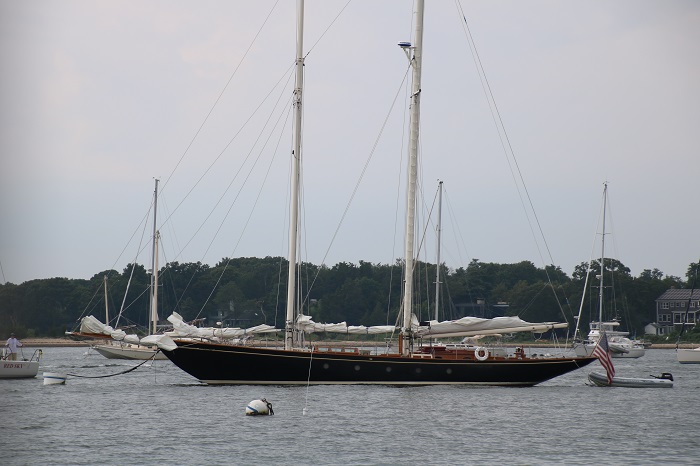 Of this lovely Friendship sloop, the brand of that name made in New Zealand.
 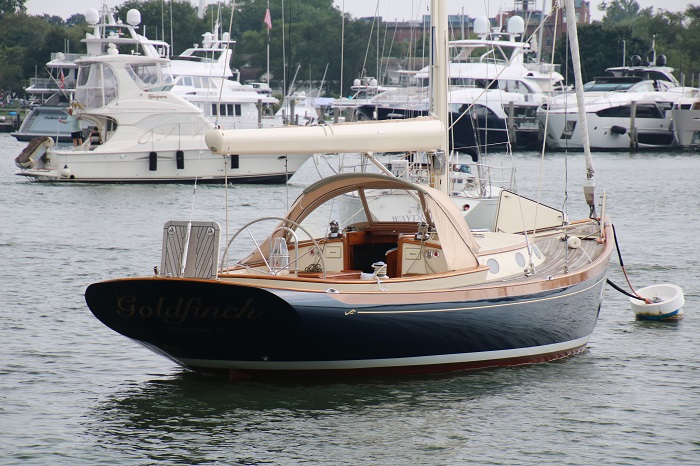 Goldfinch is aptly named as you’d have to have a few gold coins to purchase such a lovely “gentleman’s daysailor.
Or, perhaps this lovely Morris, made in Maine. 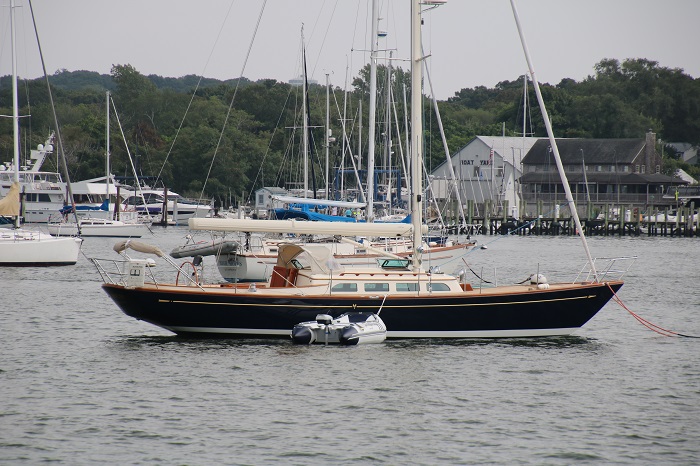 And speaking of coin. This chart from the Wall Street Journal today.
 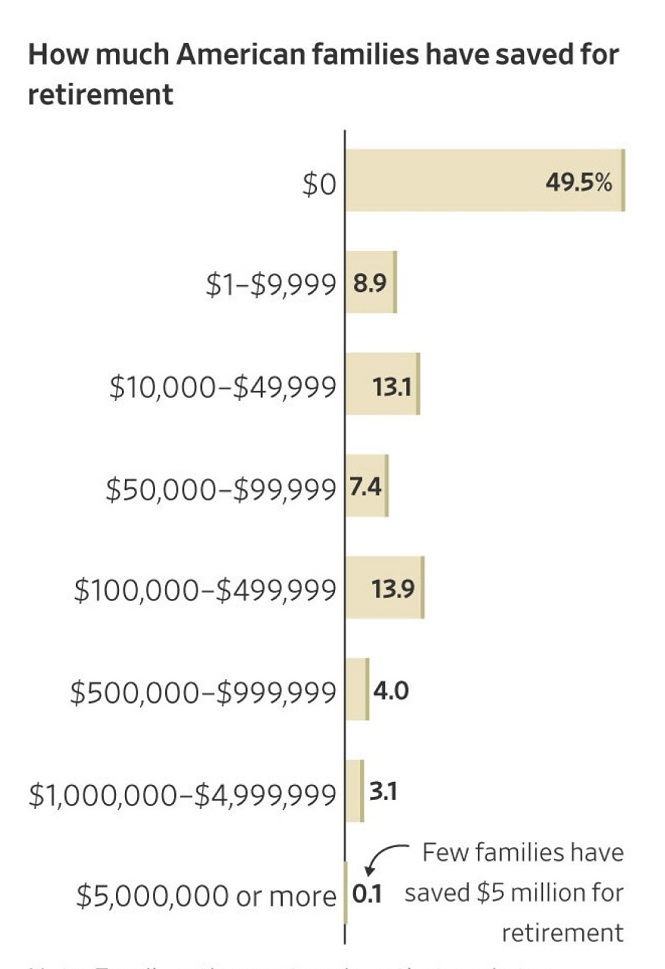 I’m thinkin that a measly $5M wouldn’t even keep someone out of the red for more than a week in these parts. Here the .1% is more like .001% and that might be understating things a lot.
And, if you have coin to spend, Sag is a hotspot for art. Ken and I toured a number of galleries yesterday, along with one that had a show dedicated to a boxing theme. Not sure why I photographed this one in particular. Actually I do know as I was publisher of a gynecology magazine for many years.
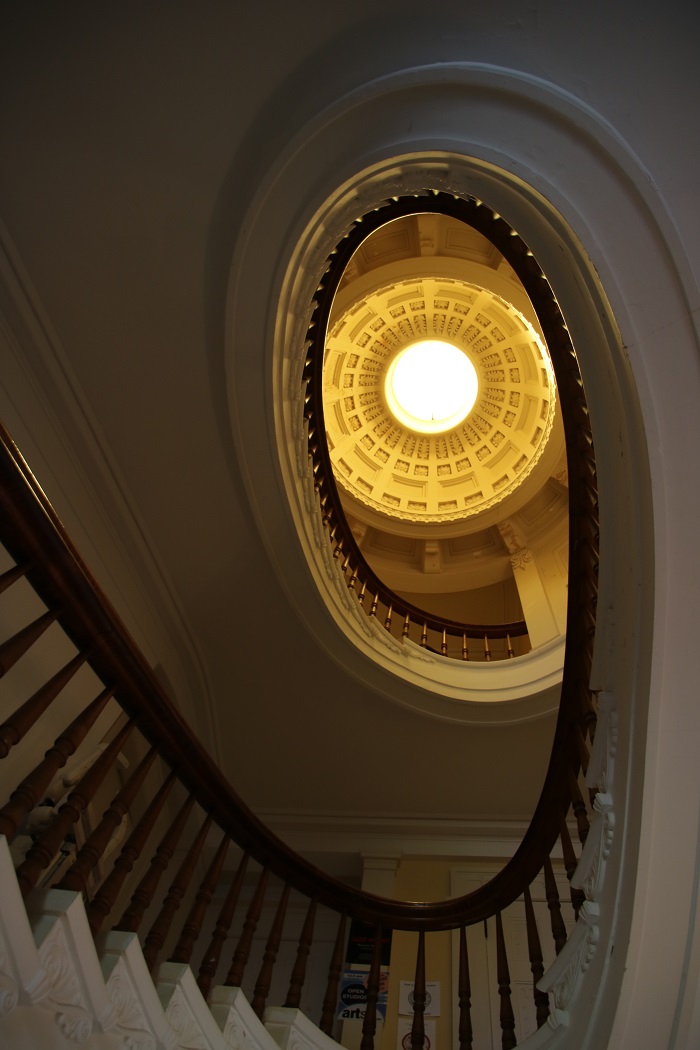
What does it mean? Perhaps, something about “punch me I’m a woman”. Perhaps more PC, “I’m a woman. Mess with me and I’ll punch your (neon) lights out.” 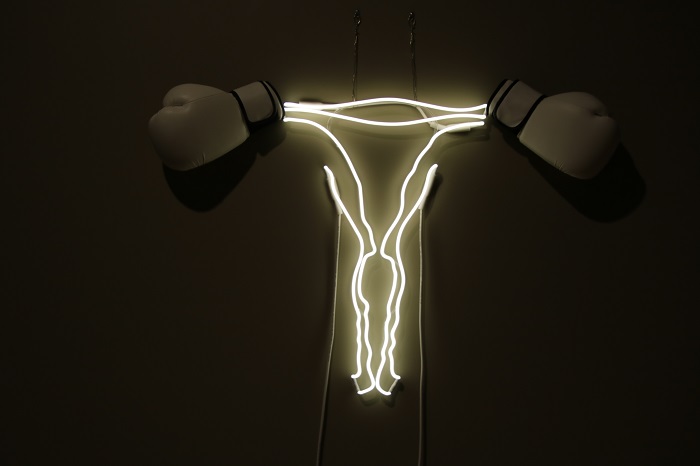 And speaking of things spiraling out of control, how about this staircase in the Sag Harbor Whaling museum?
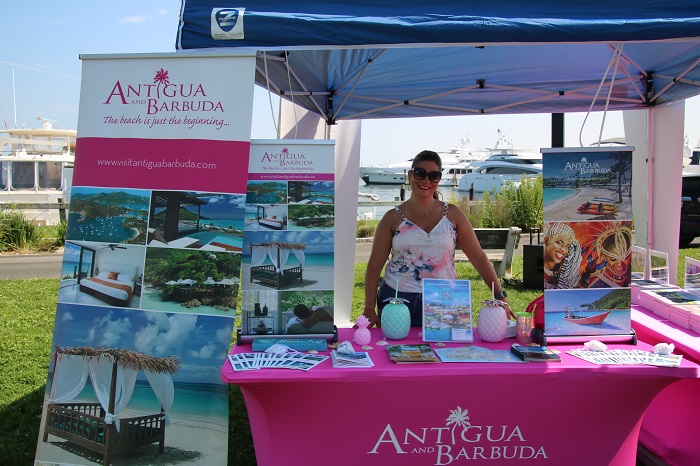
 Ok, I mentioned Salty Dawg earlier in this post and one of the primary reasons that I decided to head over to Sag this weekend is because there is a benefit going on co-sponsored by the Antigua Tourist Bureau and I thought that it would be good to meet up with some of the folks visiting that I know from my time on the Island.
The Minister of tourism Max Fernandez, will be here along with his wife Jill and others and it would be nice to catch up with them. There is a race today and after the sailors get back ashore there will be a reception on the town green. Earlier today we toured some of the booths that were set up.  Including one from the Department of Tourism.
  Well, I guess that about covers it for now as I have to get ready and put on my Antigua Yacht Club shirt and head to the fun ashore.
So, there you have it, a rendezvous in Essex, cruise with my new propeller, how the .001% live and a touch of gynecology. Oh yeah, a bit of Barbie too.
All the basic food groups in a single post.
Off to Cuttyhunk tomorrow, bright an early. But not before we enjoy a lovely scone.
No question, Sag Harbor is the place where the glitterati go to glitter in the summer.
Don’t forget your sunglasses. If you do, you will be the only one.
 I have also spent a lot of time helping Brenda with some of her weaving projects and doing chores to help her prepare for some teaching in the fall.
 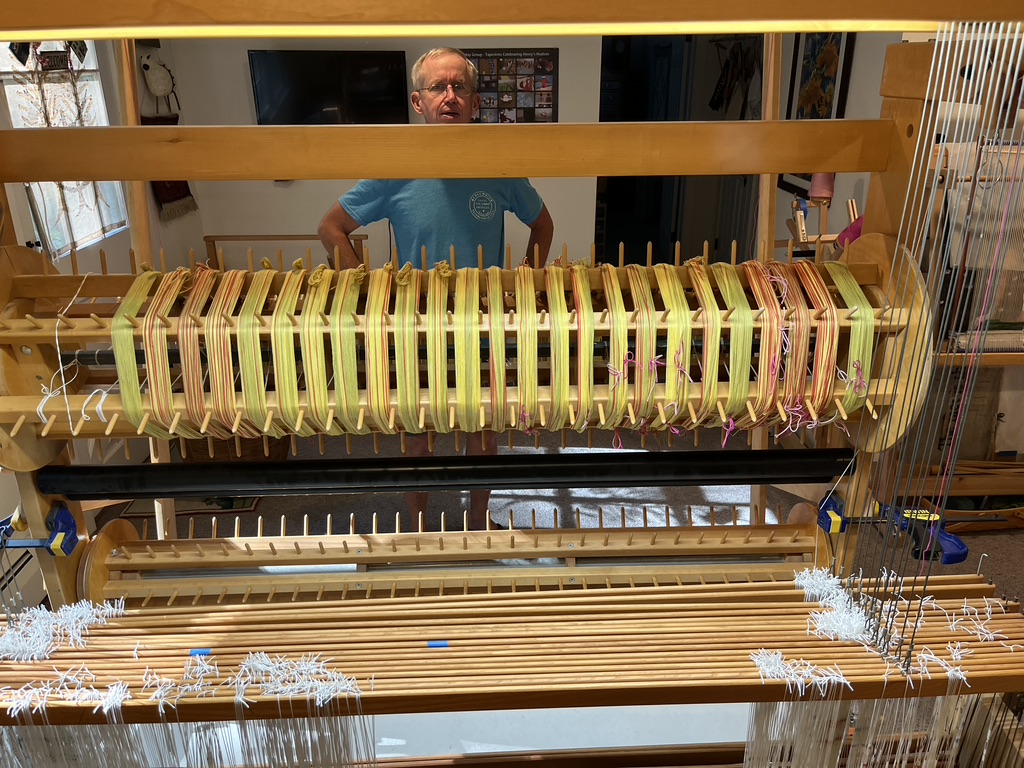 If it looks complicated, that’s because it is. Over 1000 threads and that’s why Brenda was watching me to be certain that I didn’t mess things up. And, with that in mind, she wasn’t always smiling.
 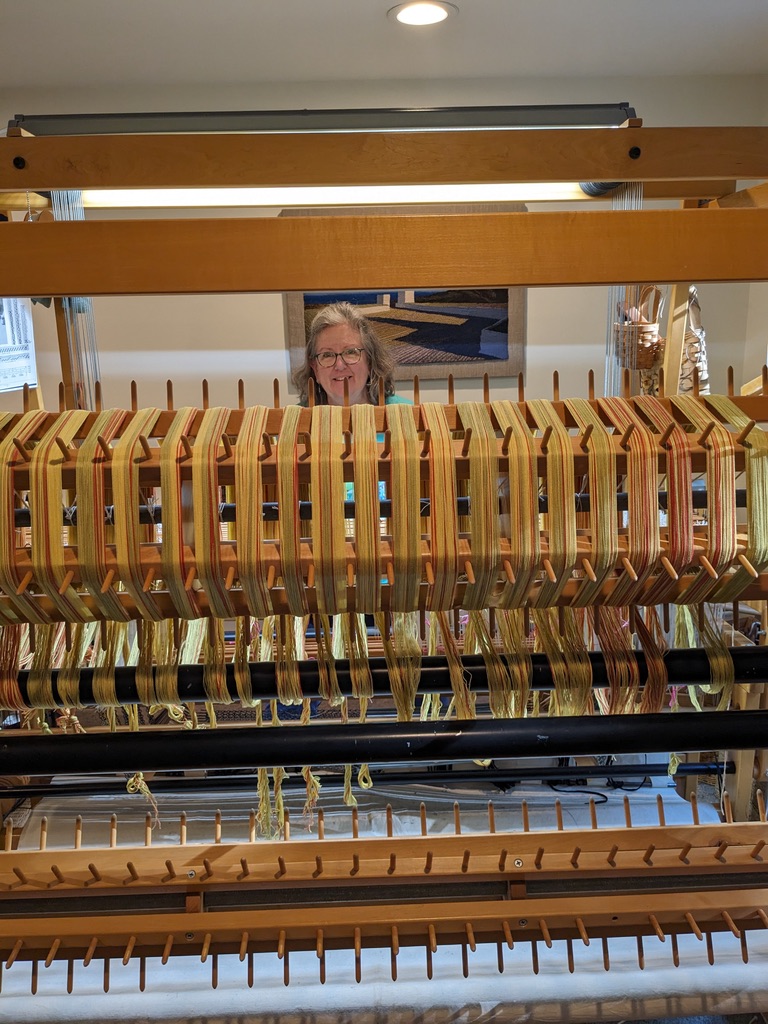 And, of course, working hard to be sure that there is a way for her to bring meaningful projects aboard Pandora for the winter.
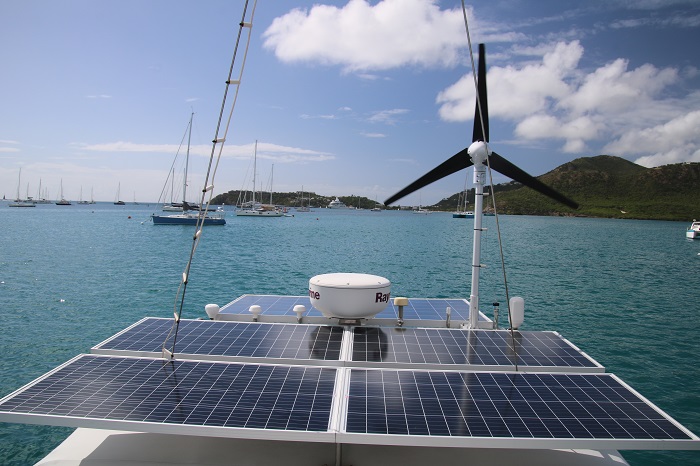 The new panels just came today and when installed will be oriented fore and aft. The total width of the three panels will be about 4″ wider and the length, just under 6″ longer. With the new panels the array is huge relative to the space available when compared to what was possible just a few years ago. And with the overall increase in capacity, plus the output of the wind generator, it’s an amazing upgrade.
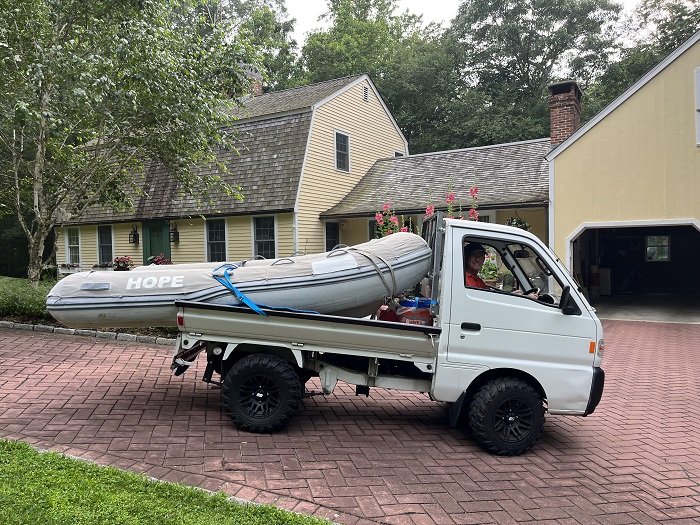 And pretty small compared to my dink, which is also small… Yup, my truck is clearly “horizontally challenged”. As an additional insult, Brenda refers to it, delivered with a sneer, as “your LITTLE truck”.
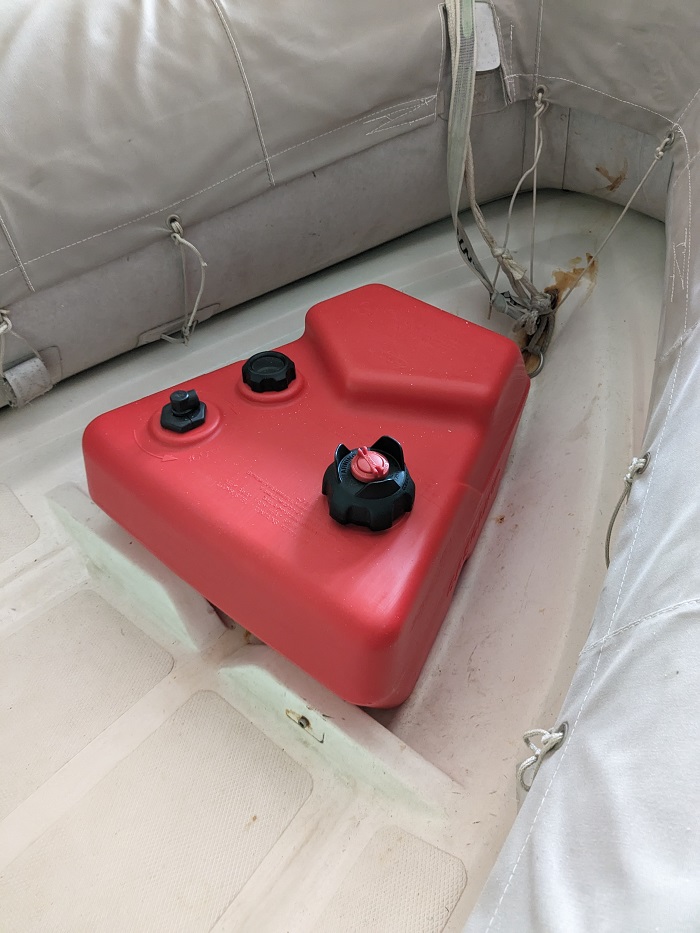 Here’s an idea! I’ll cover the tank…
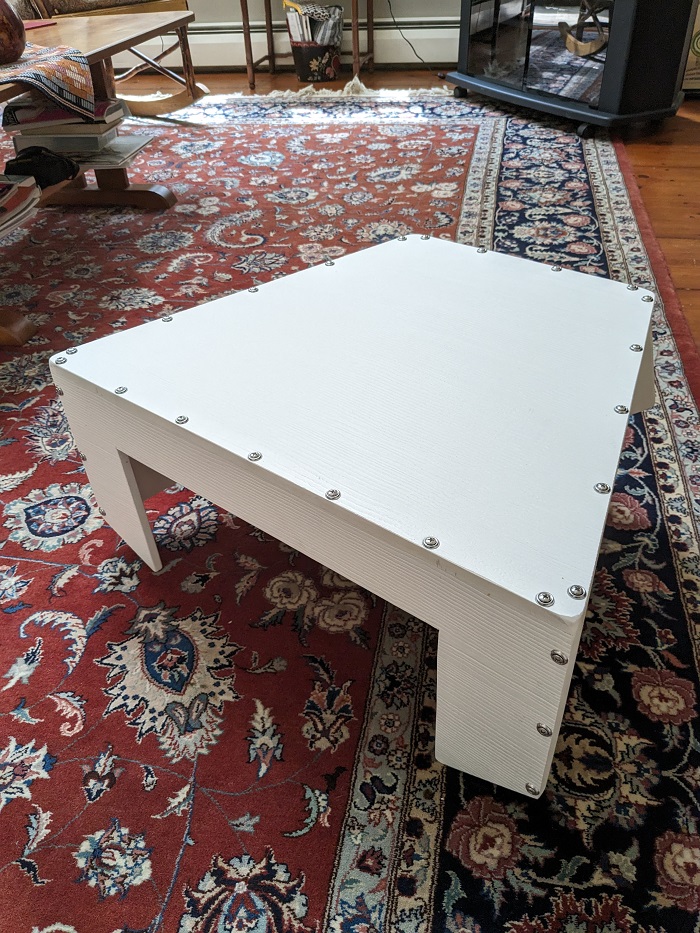 Forward view.
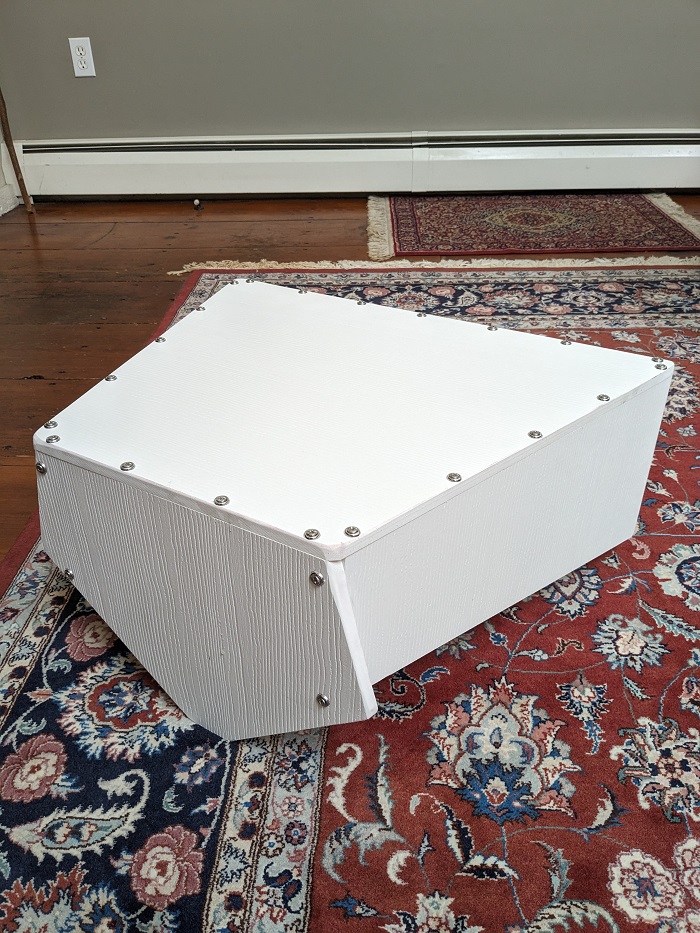 If the shots suggest that the front and back are not symmetrical, that’s because they aren’t.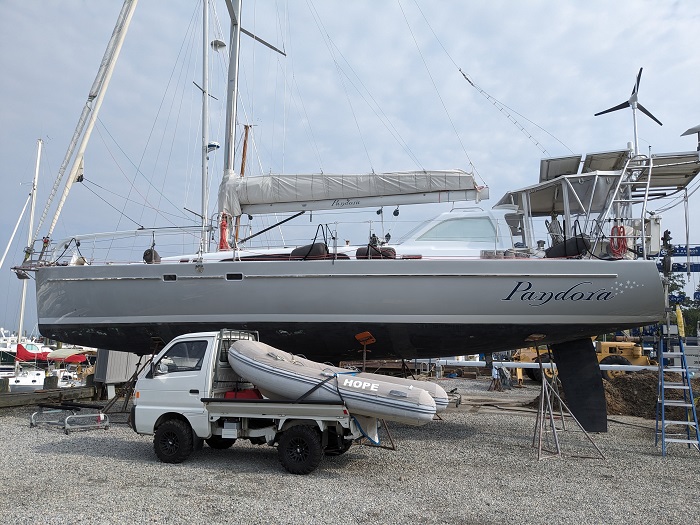
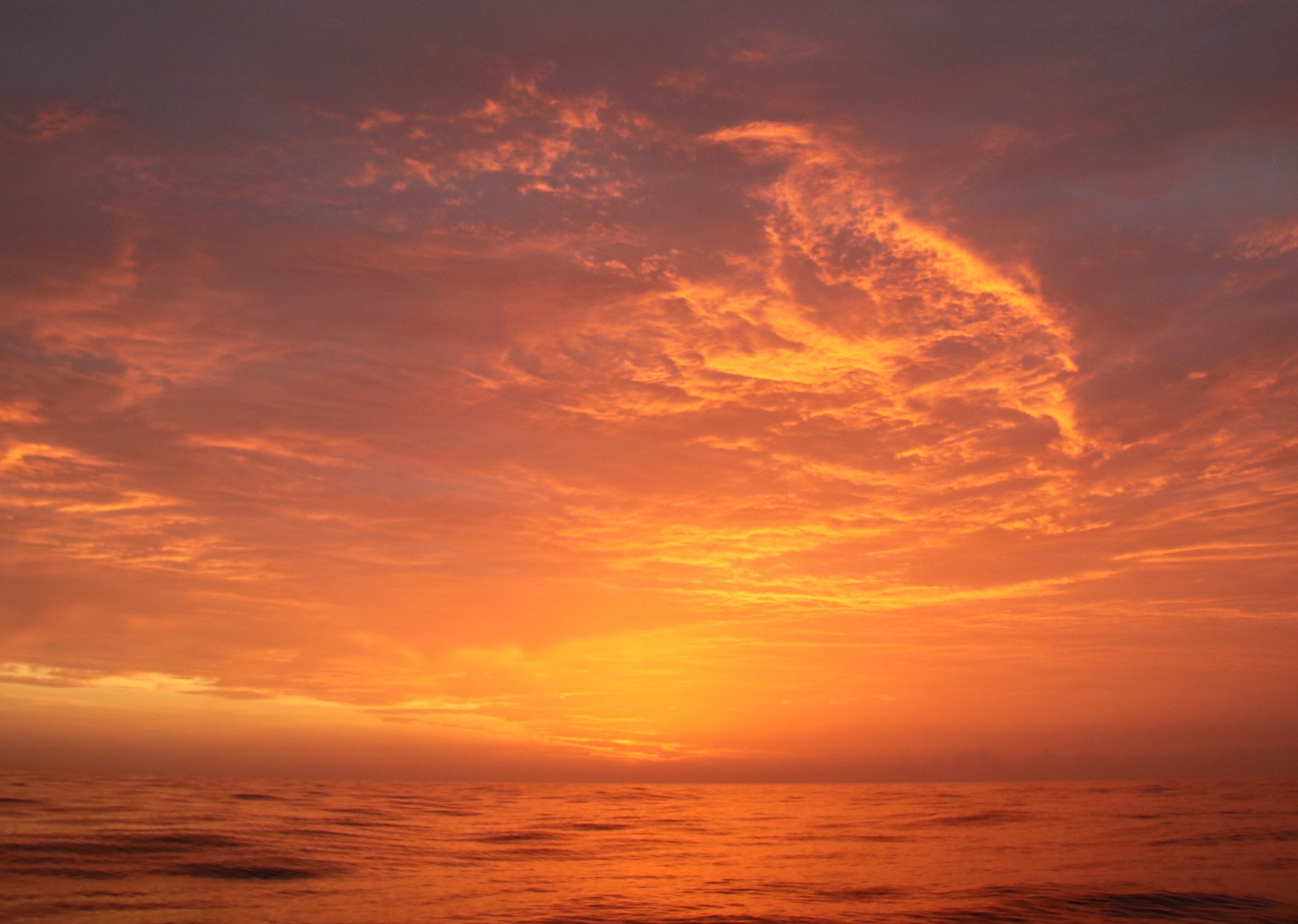 And, here is what the Cloud Appreciation Society had to say about “my cloud”.
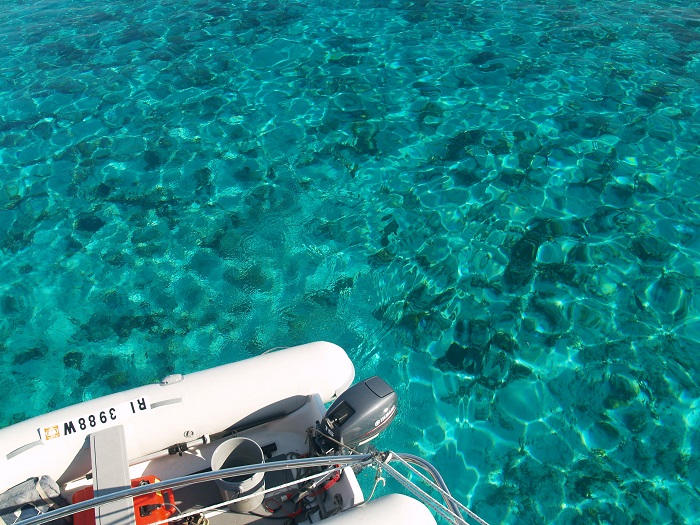 We sailed over 1,000 miles in the Bahamas that first year. That was partly because every few days a cold front would come crashing down from the north bringing unfavorable winds so we had to move somewhere else and scramble for cover as there is very little in the way of 360 degree shelter in the Bahamas.
 Brenda is still creative aboard and completes projects afloat every season.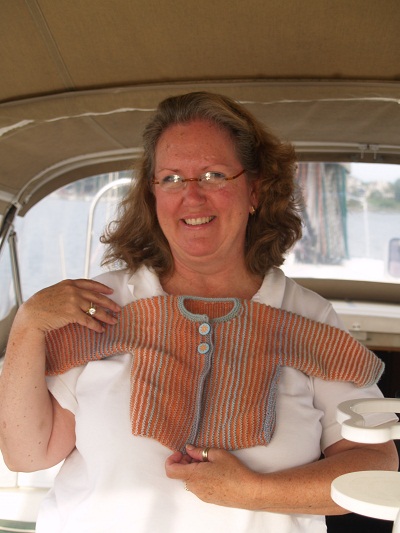
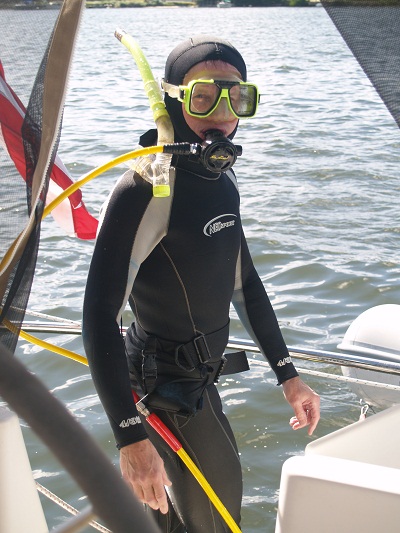
![]</p](https://www.sailpandora.com/wp-content/uploads/2023/06/2-25-13a-072.jpg) Not sure about this shot but it seemed like a good idea at the time.
Not sure about this shot but it seemed like a good idea at the time.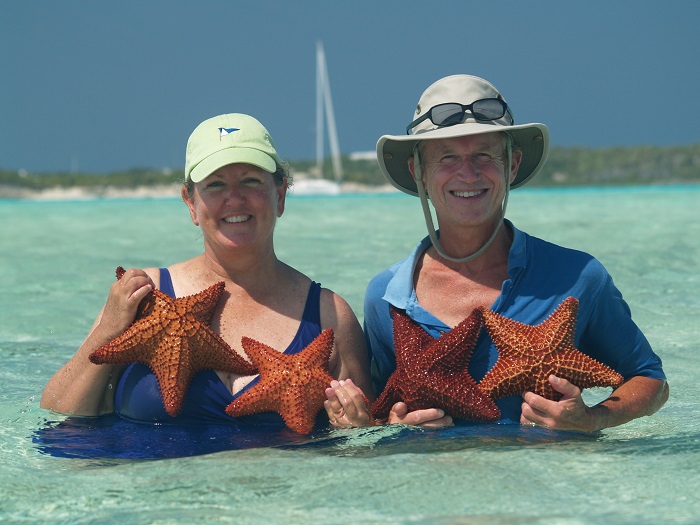 We also got to know the owners of Ariel, now our Pandora. After years of arriving in port hours after them we now own her and beat most other boats to anchor. She’s now a lovely grey color but still the same great boat.
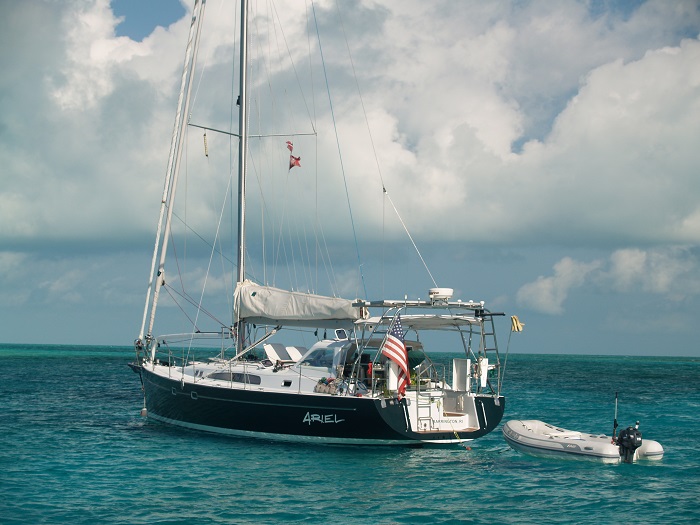 The biggest problem with cruising the Bahamas is that when a cold front exits the US it comes crashing to the south, bringing with it clocking winds that force everyone to run for cover lest they find themselves on a lee shore. There are very few places in the Bahamas that have protection from the west winds that follow a cold front.
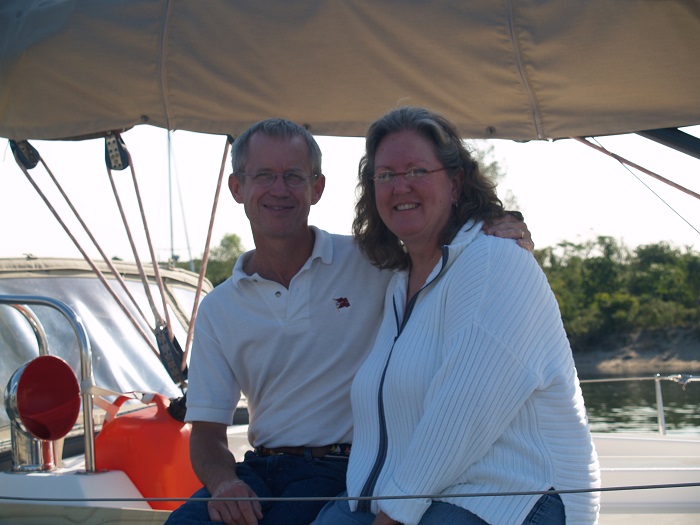 I only regret is that I am now 68 which seems pretty old to me. Or, at least a lot older than when we used to go sailing on Tao, our 20′ catboat.