


A job I could never have. Lighthouse keeper in Uruguay.
Those that know me would probably agree that there is no job that I would be more ill suited for than that of a lighthouse keeper. By definition, lighthouses are located in remote, hard to get to areas and while most have been automated, some still require the constant attention of someone who lives on site to be sure that everything is in working order. And, any mariner would agree that it’s a really good thing when lighthouses are working as they are supposed to.
To that point, the Bahamas are famous or lights on charts that haven’t worked, often for decades. Not so, it seems, in Uruguay.
I subscribe to a daily (I think I get it daily) e-mail newsletter from Soundings, a terrific boating publication that I worked for as a sales rep for short time years ago. However, that was a long time ago and is a story for another time perhaps.
Anyway, this newsletter titled “Soundings Dispatches” is free and is worth signing up for. Of course, some of the videos that they feature, and they send a lot out in the course of a year. Yes, some are pretty lame but once in a while a real gem shows up in my inbox and today was one of those days. To be fair, it’s probably not too easy to come up with really good daily videos. Trust me on that as it sometimes takes me hours to wade through many clips to find something worth sharing.
So, back to my story… The joke in our family, well at least I think it’s pretty funny, is that “dad doesn’t EVER want to be alone, except perhaps when he’s going in the bathroom, and that assumes that it’s a quick trip”. Ok, ok, perhaps it’s my joke but it’s pretty much true.
So, today’s piece from Soundings, and it’s only a bit longer than 3 minutes, is a real gem. The editor of the newsletter describes the short documentary…
“To the south of Brazil is Uruguay, a relatively small country on South America’s eastern coast that experiences heavy ship traffic along its 410-mile shoreline.
Twenty-three active lighthouses protect ships along Uruguay’s ocean borders, all built between the late 1800s and the early 1900s. They are owned and operated by Uruguay’s navy, the Armada Nacional.
Cabo Polonio Faro (faro is the Spanish word for lighthouse) was built in 1881 on a remote peninsula on Uruguay’s eastern shore. Leonardo da Costa is one of two keepers who alternate two-week-long shifts manning the lighthouse.
Like any lighthouse, Cabo Polonio Faro requires daily maintenance. When Costa is on duty he is solely responsible for repairs and for operating the lighthouse manually if it loses power.
Costa’s neighbors are few. Seal colonies live on nearby islands, and the remote village of Cabo Polonio, about a half-mile away to the west, is home to fewer than 100 people. Solar panels and wind turbines power their homes, and they lack running water.
Cabo Polonio can only be reached by walking or by using four-wheel-drive trucks to cross dunes of sand to the road nearest the village; no public roads reach the lighthouse or the village. Life on the secluded cape is quiet and solitary.”
There isn’t a single word spoken in the documentary which I suppose is the point, actually.For sure, I just can’t imagine a job that I would be more ill-suited for. However, I thought that the piece was just mesmerizing and hope that you agree.
The group that produced this video has a number of other short documentaries on YouTube including this charming piece about bikes in Cuba. It’s in Spanish but it has subtitles.
We visited Cuba for two months aboard Pandora last winter I am compelled to share this one too. It provides a very good feel for the resourcefulness of the Cuban people and the story would be pretty much the same with regards to cars as well as bikes. Make do with what you have. That’s the rule in Cuba. Amazon Prime? Not likely. So, there you have it, two really nice short pieces that made my day. I hope you enjoyed them too.
I guess that it’s time to move along with my day and get something done or Brenda will ship me off to some remote lighthouse.
The “honey do list” isn’t getting any shorter.
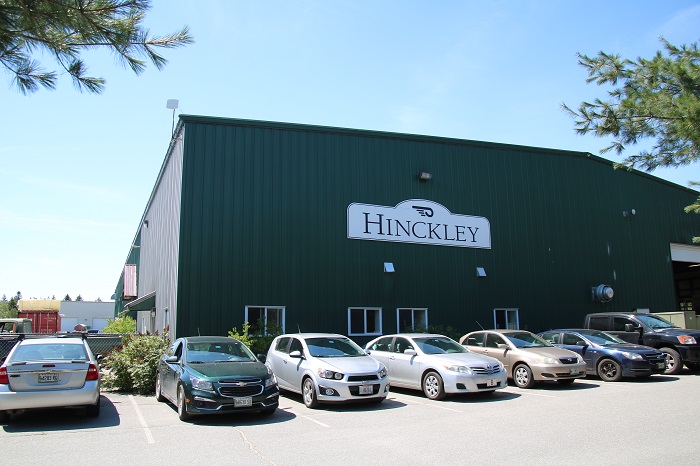 There is an amazing amount of hand labor that goes into one of their boats. Each little piece of fiberglass is hand cut and put into place.
 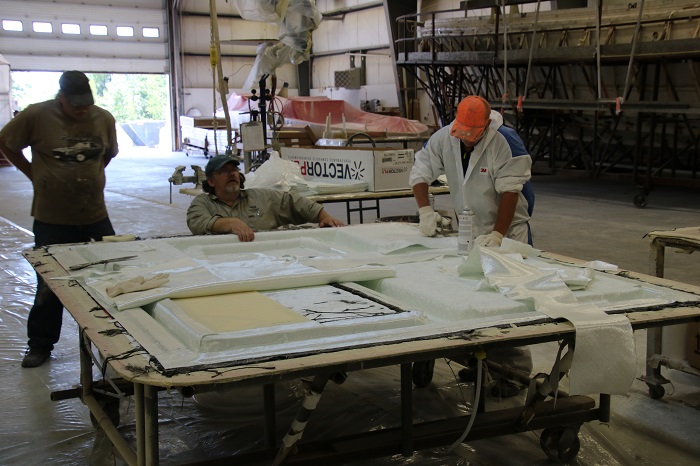 Interestingly, they don’t steam bend any materials, even the most complex curves. This was our guide explaining the way that they form the most demanding shapes using very thin veneer type “flitches” with glue between each “slice” and then they clamp the glued up part into a special form and left there until the epoxy sets. Don’t try this at home. Well, you could actually. The concept is simple, but like much in life, complicated to do when you get right down to it.
 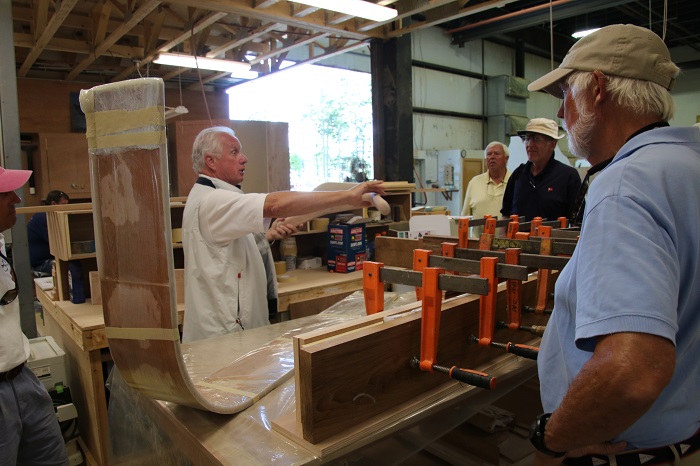 Many of the most complex assemblies are cut out on a computer controlled milling machine. This is a remarkable piece of work, the dashboard to go into a
  And, speaking of Picnic Boats, and they coined the name, even Martha Stewart has one. Reportedly, this is a shot of her cockpit.
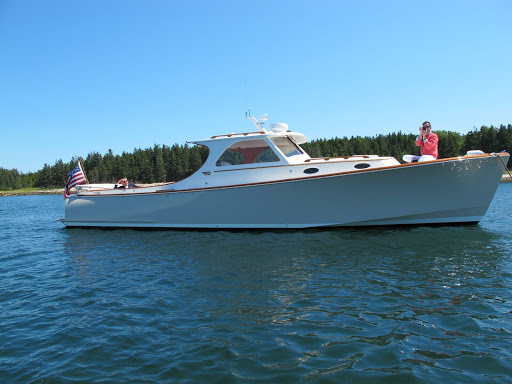
 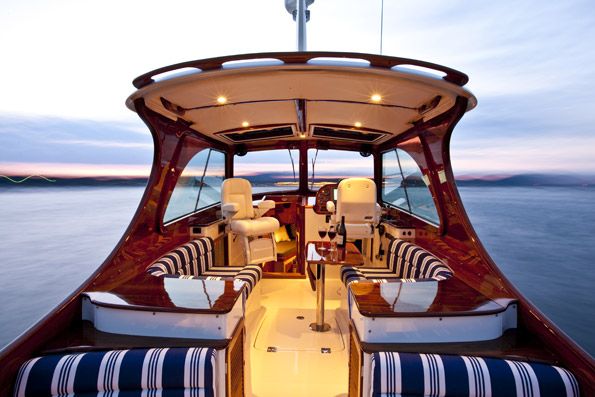 Her boat is a lovely tasteful light green. Would you expect anything less from the “queen of style”? Personally, I was hoping for a more “stylish” photo from Martha herself. I snagged this from a 2010 post on a blog that she keeps. I wonder if she employs someone to write her blog.
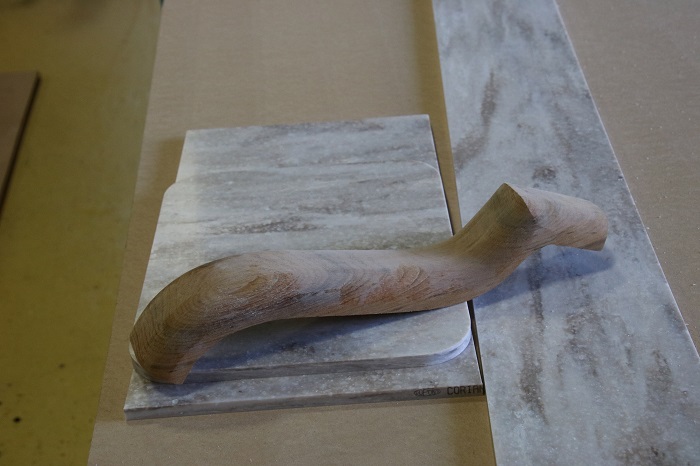
  Anyway, I digress. Back to how they make these beautiful boats. Where was I? Oh yeah, about making parts with a computer controlled milling machine. As I was saying, even parts with very complicated compound curves are possible. It would take days to carve something like this out by hand. And they can make a shape like this out of most any material, granite, plastic and metal along with wood.
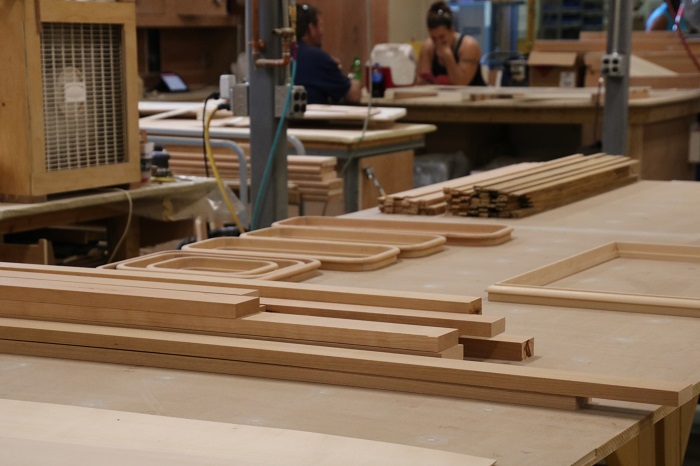
  These are port hole trim pieces. There is no way that an owner would be capable of maintaining a boat with this much wood unless they never used the boat and kept it under cover all of the time. Even then, I doubt that anyone would be willing to take the time to keep it just so.
 Even keeping the cabin sole in this sort of perfect condition would be tough.
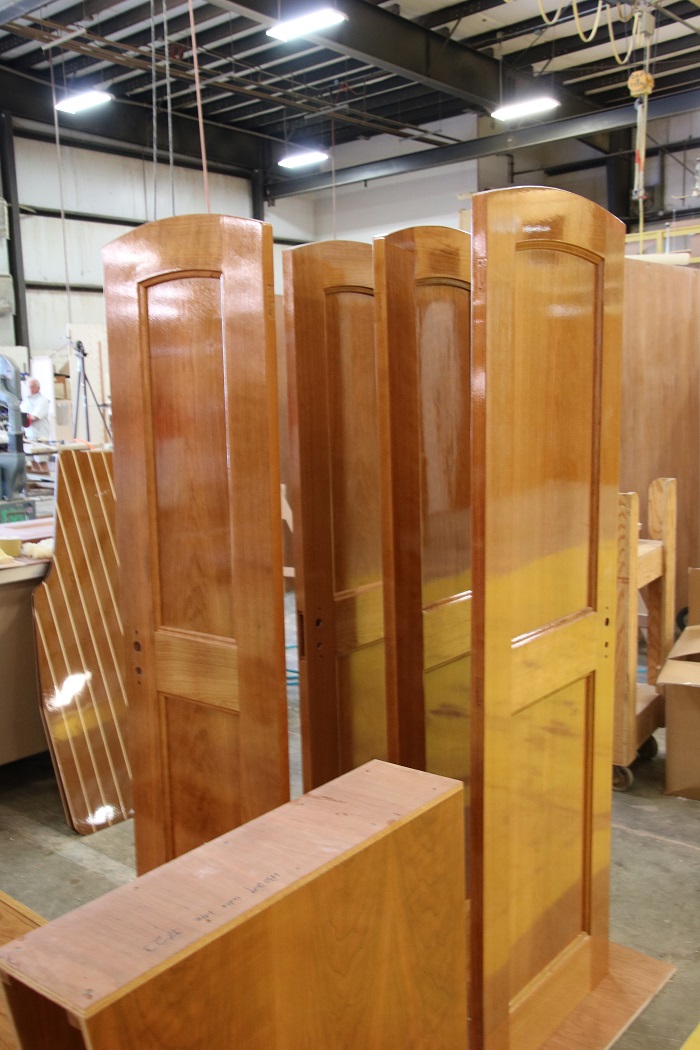
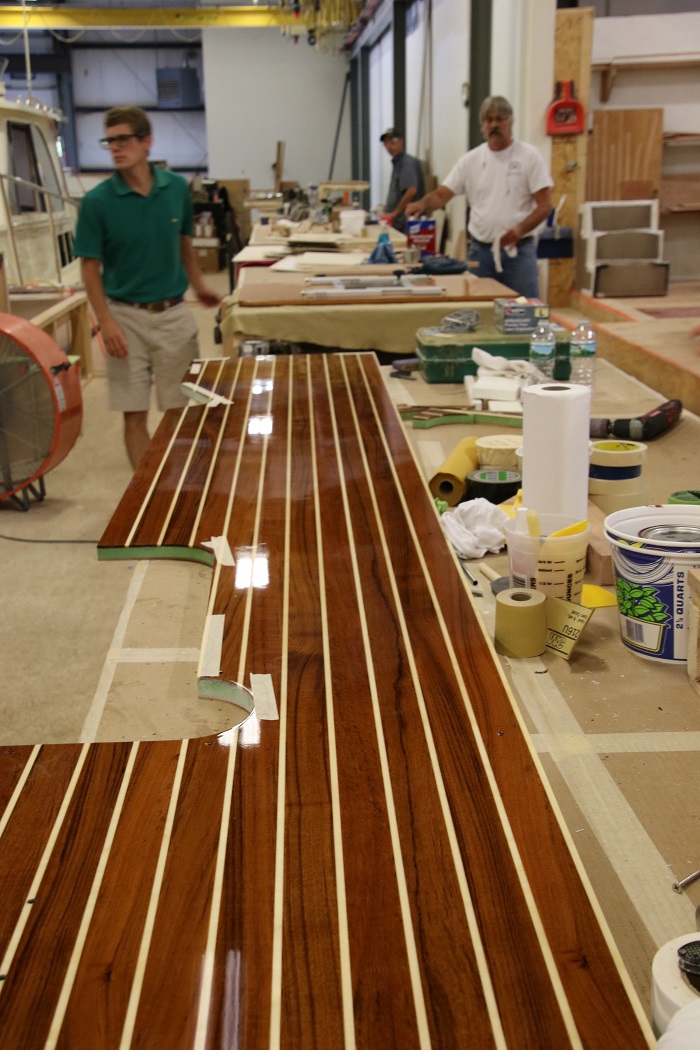 I don’t know how many coats of varnish they use. Our guide described the number of coats of varnish needed as “enough”. These doors clearly don’t have enough quite yet.
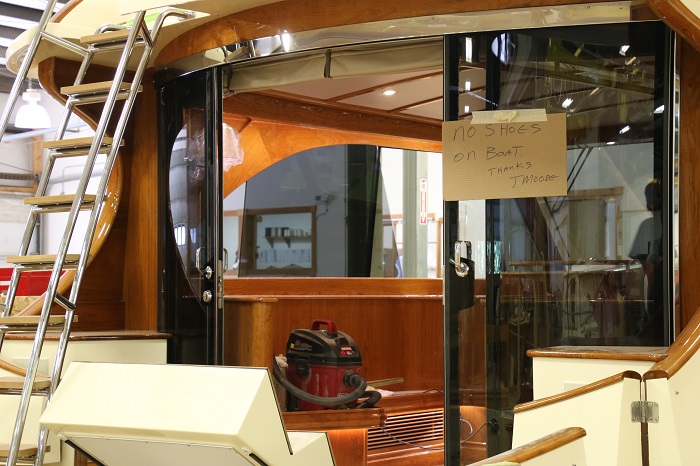
  Notice the sign on this boat under construction.. “no shoes on board”. For some reason, even when I ask, most guests aboard Pandora seem to forget that street shoes are for streets. To me, boat shoes don’t belong on Pandora if they have been worn on shore. Perhaps Pandora just doesn’t look yachty enough. This one clearly does or at least the Hinckley folks think so. I expect part of it is that if things get messed up they have to fix it themselves. Perhaps I should hand a vacuum cleaner to anyone that tries to come aboard with shoes.
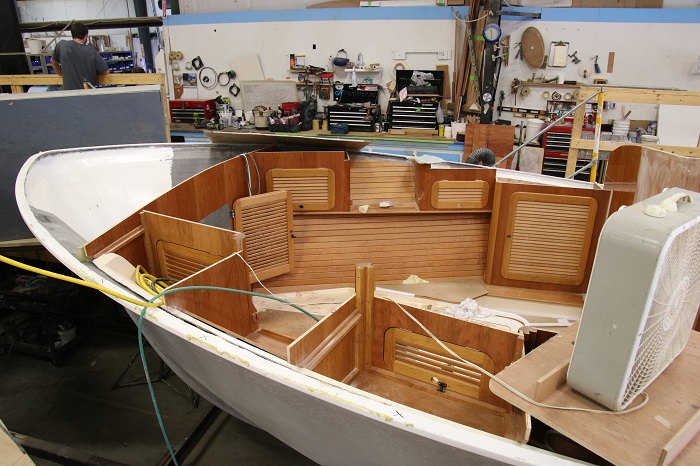
  Each job has to begin somewhere. The interior panels are composite materials to keep weight low. Pandora’s interior is constructed in the very same way. It makes a very sturdy, light but very expensive boat.
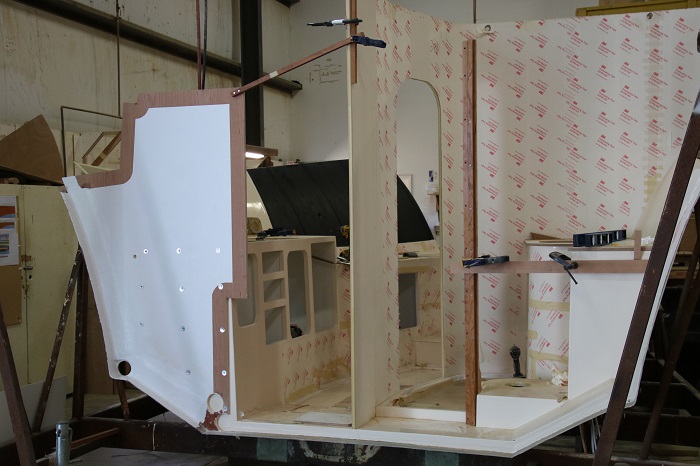 Then all of the interior is put together and finished prior to the deck being put on. That makes sense as it makes moving things around much easier than having to cram everything in through the cabin door or through a hatch. They also make sure that there is a way to get every piece of equipment out of the boat for repair down the road. I recall trying to get an old water heater out of my Tartan 37 and having to cut the tank up to get it through the aft hatch. Ditto for fixing a leaky water tank. I had to cut the bunk open with a saw. Not a very elegant process on a “yacht”.
 They swear by the water jet propulsion system. It’s a hallmark of Hinckley. Certainly in Maine, with all those lobster pot buoys, it’s good to avoid the exposed propeller. Their “jet” propulsion is made by Hamilton Standard. I can only imagine what these cost.
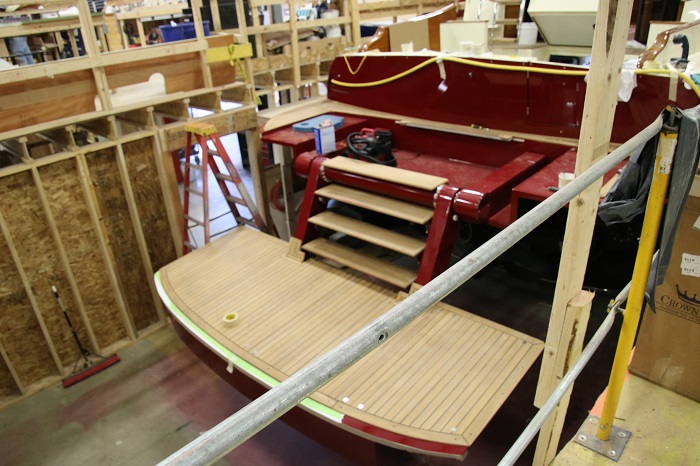
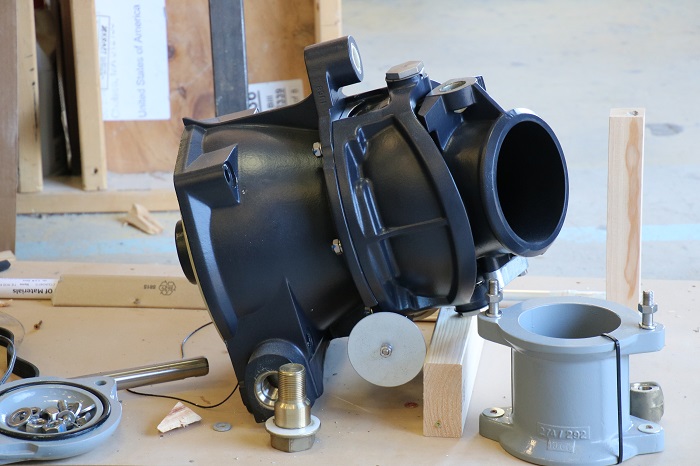 Curious how one of these pumps work? Hamilton Standard, the author of this video, is happy to share. The entire video may be more than you want to know? It’s probably better for inquiring minds, like mine. Some remarkably beautiful engineering goes into the boats. I don’t know how this swim platform/boat lift, works but it sure looks complicated. I think it folds onto the upper platform with the steps in the inset section. You tell me.
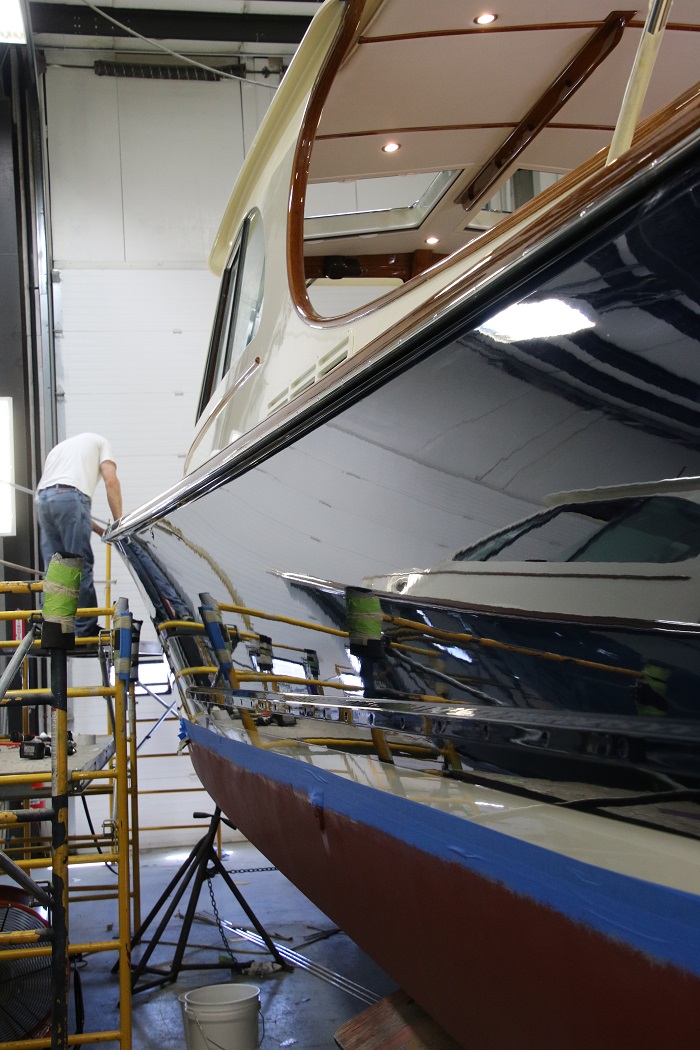
 When it’s all done and finished with it’s sea trials, the boat goes back into the shop for a final “million dollar paint job” as they call it. I wonder how long it takes for a new owner to give it a first scratch. Alas, not to worry, if you can afford a Hinkley, you can afford to have it fixed.
 On the last night of our cruise, we enjoyed a jacket and tie affair. I was ready to go and sporting one of my favorite bow ties as documented by my crew Rodney. Don’t I look like a guy who should have a Hinckley? Never mind, Pandora can outrun most any of them.
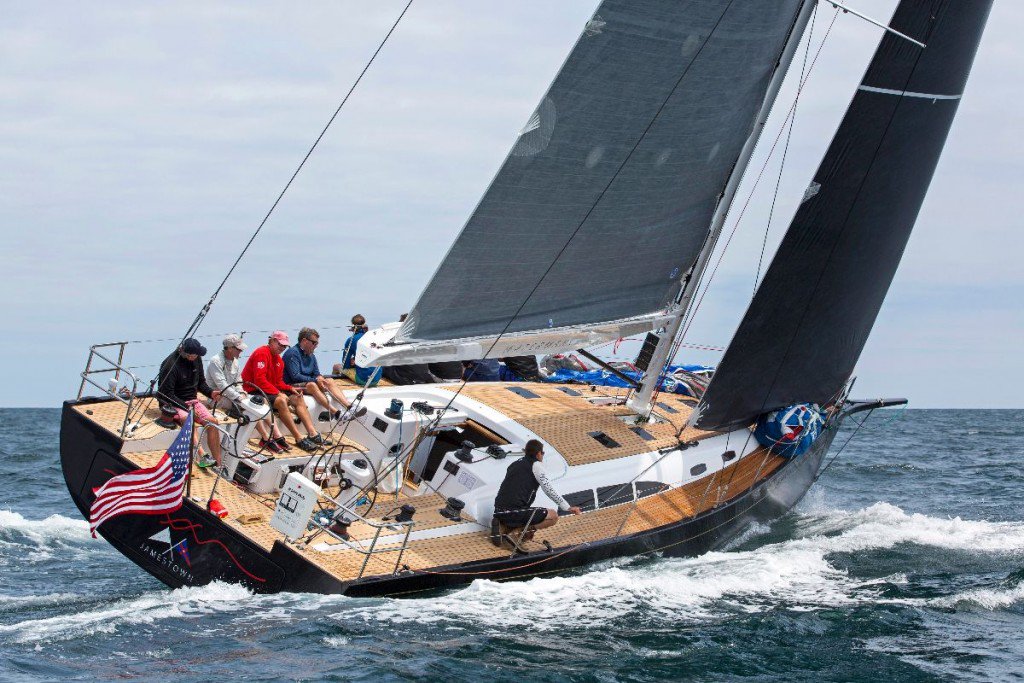
  Well, not every one. This new Hinckley 50 design would certainly leave me in her wake.
  Sadly, in spite of many boats under construction at the shop, every last one was a powerboat.
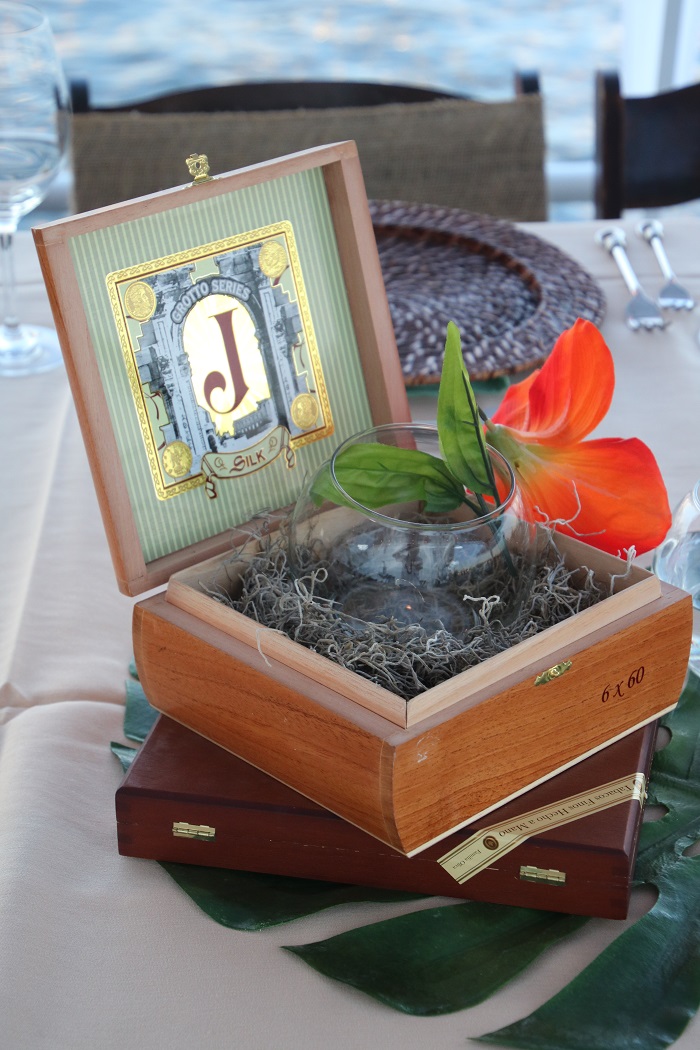
 The table was set up banquet style and was beautifully appointed with decorations evoking Cuba.
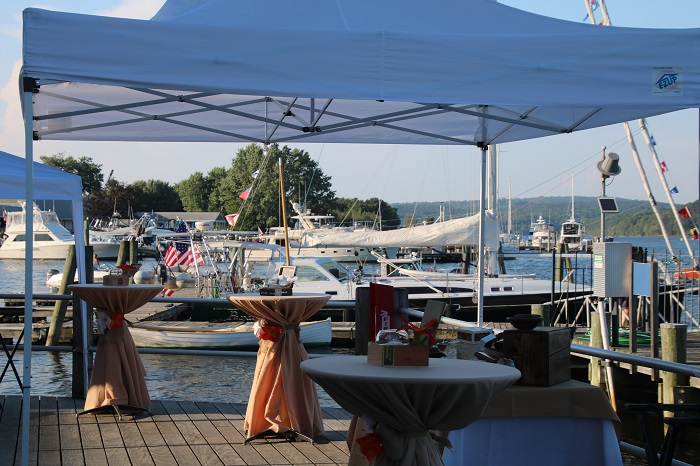
  What a lovely view.
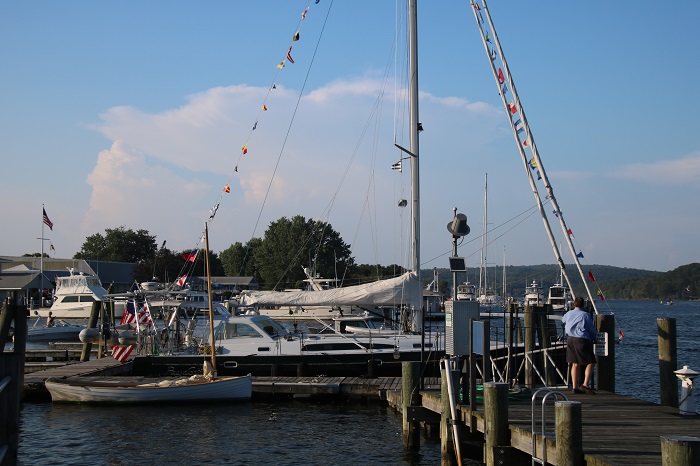
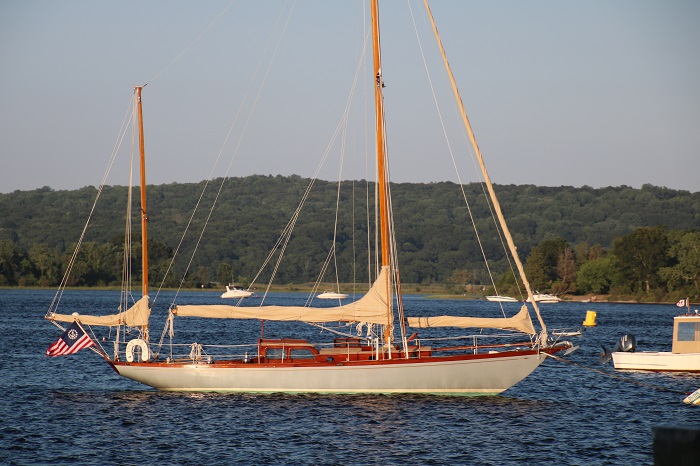
  Pandora wasn’t alone looking fabulous in the sunset glow. I just love this lovely yawl. However, I can’t say that I have ever seen her off of her mooring. She’s a looker to be sure.
  It was an intimate gathering and everyone seemed to have a great time. I was touched that they paid a “pretty penny” to raise funds for the museum and came out on a sultry summer night to hear our story.
 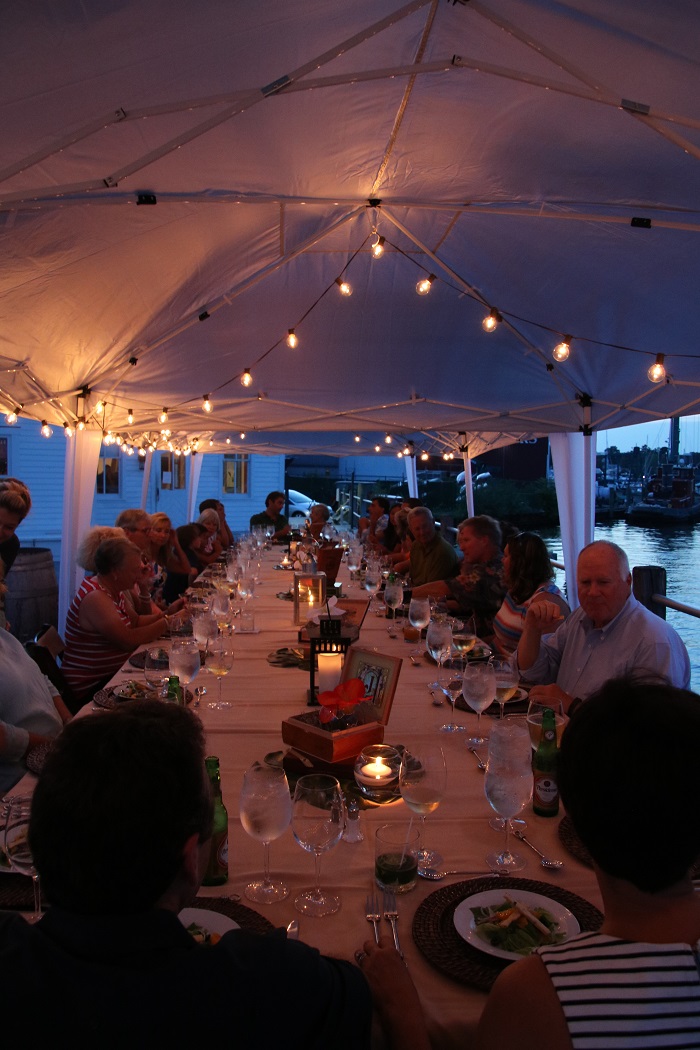 All and all it was a perfect evening and one that Brenda and I were honored to be a part of it. Oh yeah, and nobody fell asleep during my talk. Whew!
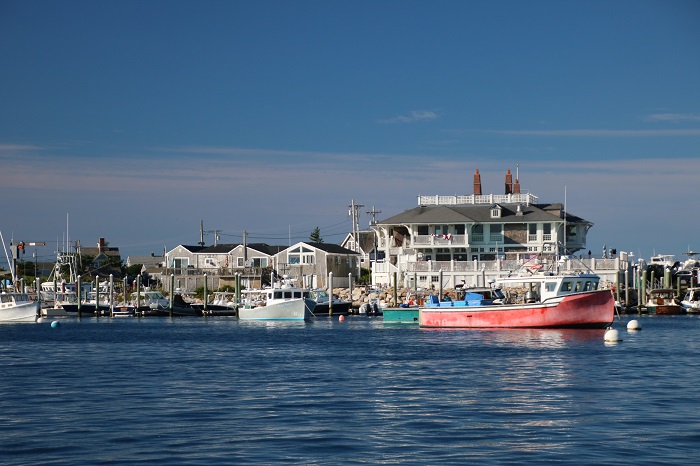 They seem to take their commercial fishing seriously.
 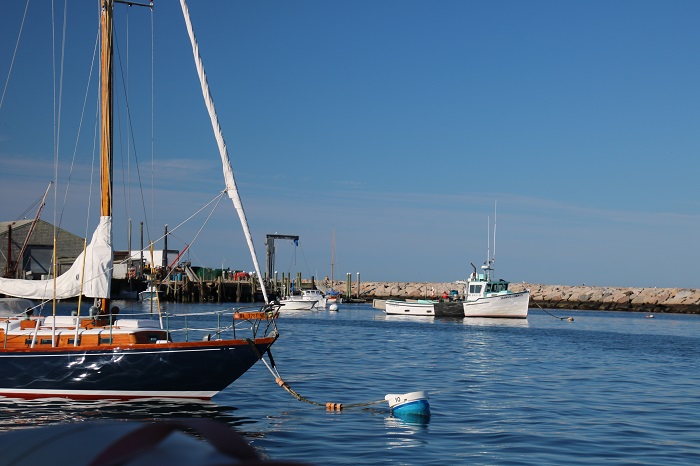 Sorry no obligatory shot of today’s sunrise although it was a stunner.
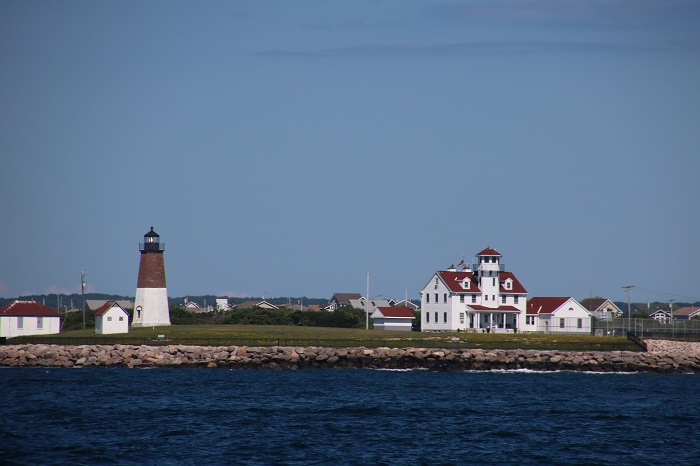
 And, the light at Pt Judith. Back in home waters.
 Did I mention that the lawn needs cutting? Oh yeah, and there’s a bathroom to finish remodeling.