


Our time in Martinique is coming to an end.
Tomorrow Brenda and I hope to head south to St Lucia, our next to last stop before we begin thinking about the end of the season and a return to CT. I say “we hope” as the wind is expected to be a bit “sporty” which will make for a difficult run but it’s not all that far, about 25 miles. And the wind will be from the beam so Pandora should ride fairly well with a reef in the main, or perhaps two.
An additional complicating fact is that we have to have a rapid Covid test before we leave here and can’t arrive at the marina more than 24 hours after testing. We can’t wait till tomorrow to see what the wind is like as the pharmacy isn’t open on Sunday. While the wind should be less than the winds today, gusting near 30kts, it will still be in the high teens with gusts into the 20s, more wind than I’d like. That’s not particularly fun so we will have to see how it goes. Fortunately, bad or not so bad, it’s not all that far to where we will be in the lee of St Lucia.
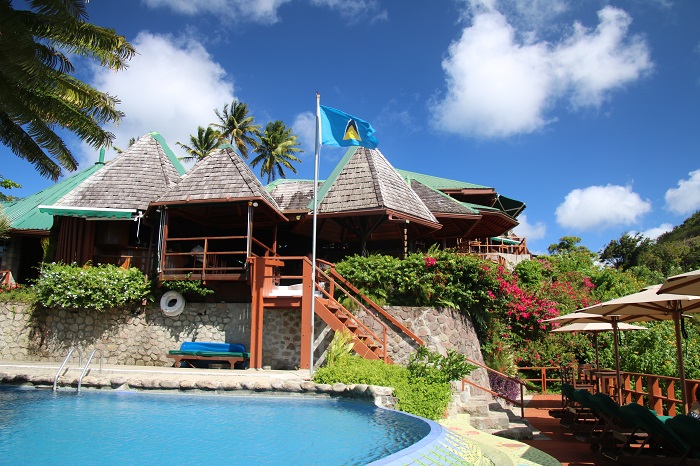
At this point, Brenda and I are pretty much ready for some pampering at the Marigot Bay Resort, our destination, and are also looking forward to being in a more protected area out of the relentless winds that we’ve seen since we arrived in St Anne.
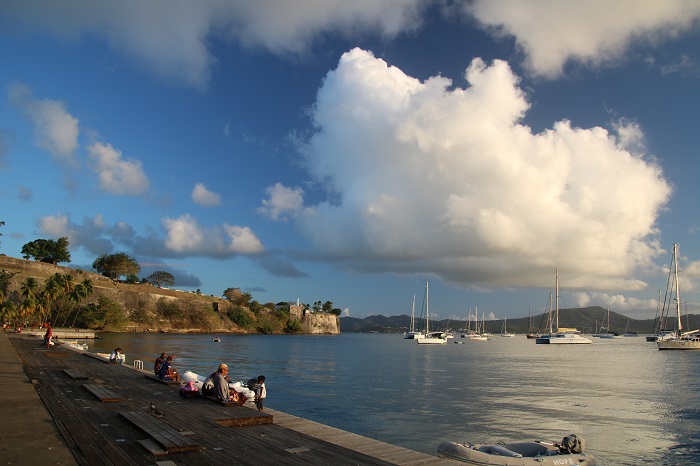
In the evenings the wind is generally a bit calmer and we always enjoy watching the sunsets. A few nights ago the view from Pandora’s cockpit was particularly dramatic following a squall that had passed us earlier in the evening.
Behold the glory of nature! You can almost hear the choir of angels belting out a dramatic chorus. Always on the lookout for great cloud photos, I summitted this one to the Cloud Appreciation Society to be considered as one of their “Cloud a Day” images. They share a photo of a cloud every day to their 55,000+ members. 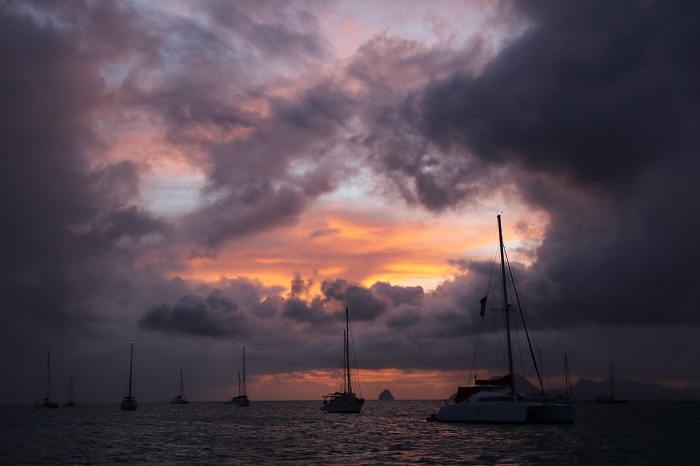 I have submitted a number of photos this season and most were rejected. However, I learned a few weeks ago that they will be sending out one of my images next Sunday, my second. When you consider how many members there are and they can only use 365 photos a year, getting mine chosen is a pretty big deal.
We are now into the last month of our cruising season here and we began talking about what we would do with Pandora at the end of the season, shortly after arriving in Antigua. I was only about half of the way to Antigua last fall when I decided that I needed a break from the slog back and forth and we thought taking her to Trinidad made sense.
That all seemed like a good idea but as we began to think about all the details and costs associated with having someone else do so many of the jobs on Pandora it began to be less of an obvious decision. I won’t go into all the details that went into our decision but Pandora’s heading north yet again.
So, off we head tomorrow, I hope, to Marigot Bay resort for some luxury time on the dock at a four star resort, time at the pool and to enjoy some meals out. All, while the AC hums away aboard Panodra and we have unlimited water, hot and cold.
We’ve been there before and for the budget minded, taking a mooring for $30/day gives you the run of the place. We are going to splurge and go on the dock at about $1/ft per day. It’s still a steal and less than a mooring most anywhere in New England. They even have room service on the dock and I expect good wifi. Movie time anyone? Take a look at this place?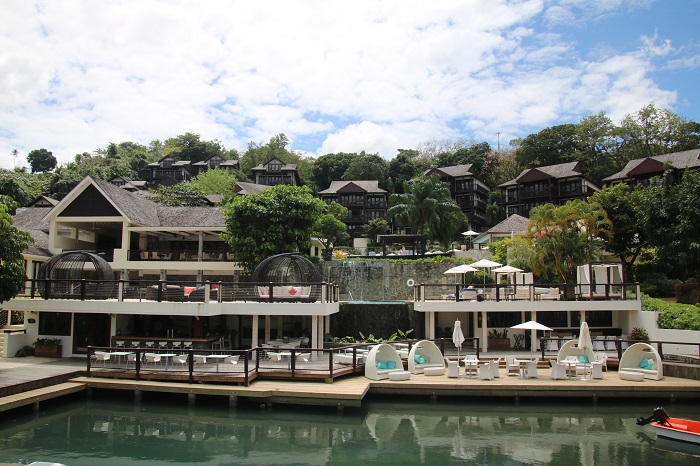 We also hope head a bit farther south to Bequia (pronounced Bekway) for a bit and then return to Marigot in early April where we will leave Pandora for a few weeks. At that point, both Brenda and I will head back home, open up the house and get the kitchen stuff moved to prepare for the renovation to begin. New floors, counter tops and painted cabinets are on the list. It’s going to take a few months to complete the job so we want to get going in early May with the hope that it doesn’t take the entire summer to complete the job.
After a few weeks in CT, I will head back to St Lucia in late April or early May to rejoin Pandora and begin the run north. My friend Craig will fly back with me and we will make our way north to where we will hook up Alex, my other crew for the run north with the Rally. The rally is expected to depart from St John this year on May 10th, when we hope to head north to the Chesapeake.
I have mentioned in previous posts that I need to replace the house battery bank and want to upgrade from AGM lead acid to lithium. This is a fairly big deal as the new batteries will require some different charging equipment and they are also slightly different in dimensions. The good news is that by replacing the four 8D AGM batteries with Lithium will actually save some 500 lbs and offer us more usable power.
I am told that these batteries, current state of the art, will likely last for longer than I will own the boat, and that assumes that I live to be quite old. I do hope to live a long time but I am realistic about the number of years I will still be sailing. Well, perhaps not all that realistic but the good news is that the next owner will have a functional bank with lots of remaining life.
Our time in Martinique has been more than a month and we have seen more of the island than during any other past visit.
A few days ago we rented a car with our friends Jim and Stephanie on Hero.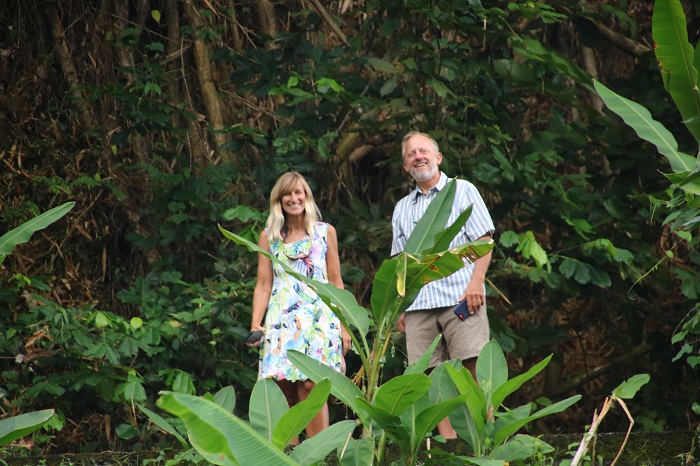 They moved aboard last May and will be sailing the southern Caribbean this coming summer, south of the Hurricane belt and expect to be back in Antigua next November when the fall Rally fleet returns. Me too…
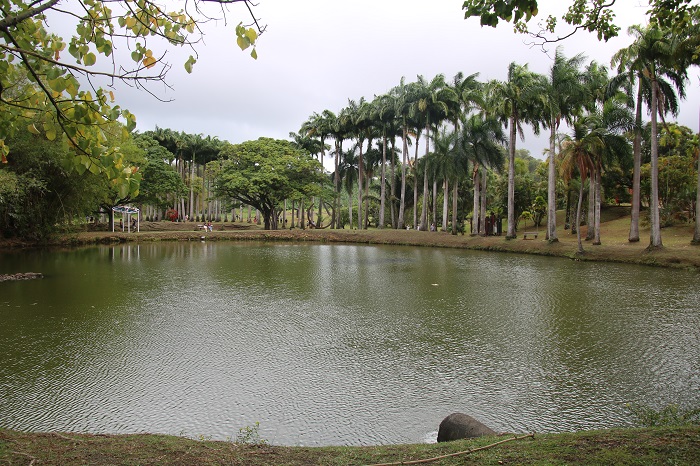
We visited one of our favorite distilleries, Clement. It’s quite a place with an elaborate sculpture garden. As you enter the grounds you are greeted by a dramatic row of palms. 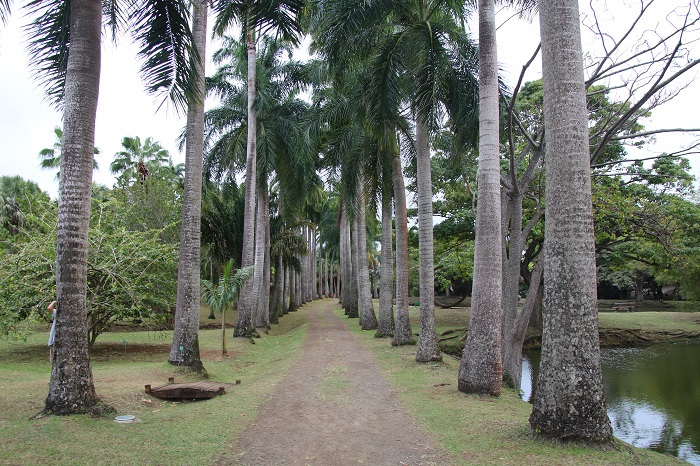 As you wander, you pass a reflecting pond.
  The sculptures that are placed on the grounds are quite large, like this 8′ tall mask beautifully sited on the edge of the pond.
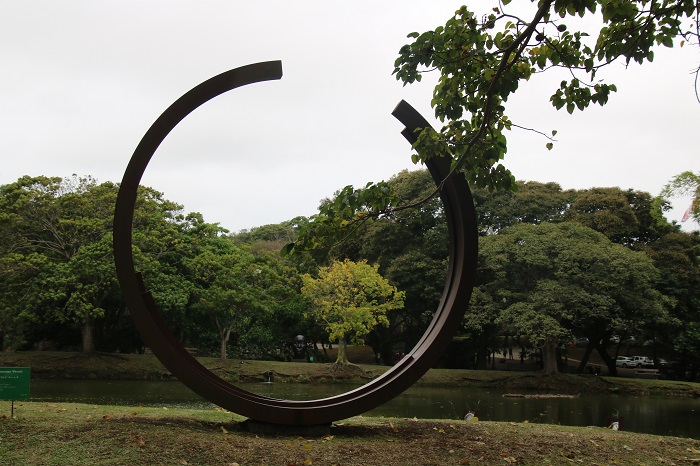
 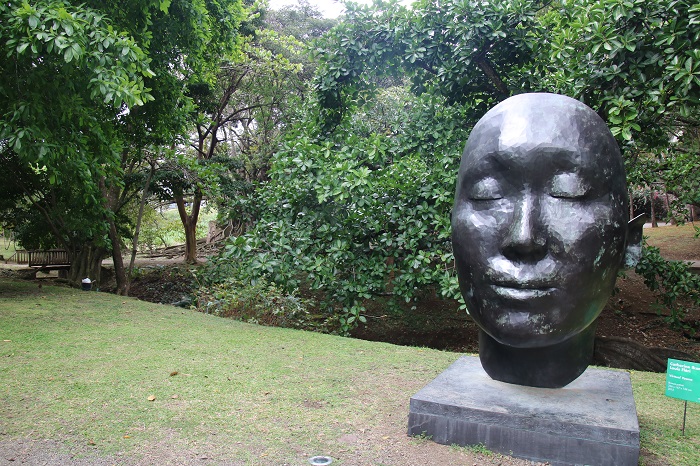 From across the way, the “mask”, in the distance, is framed by this piece.
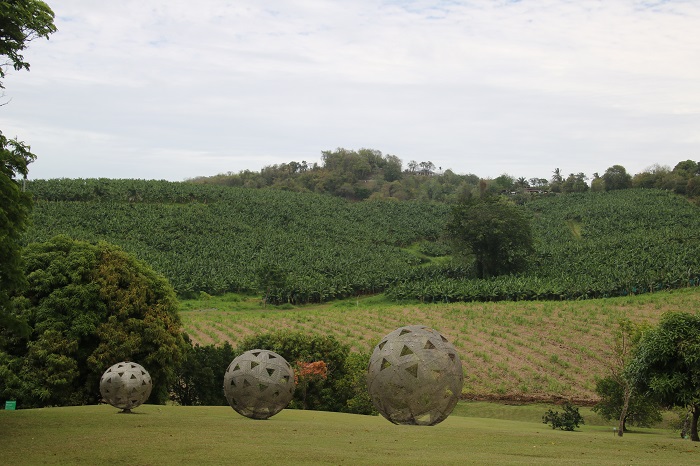
  I thought that the siting for this trio was perfect. I understand that the crops in the distance are rotated between bananas and sugar cane to keep yields high.
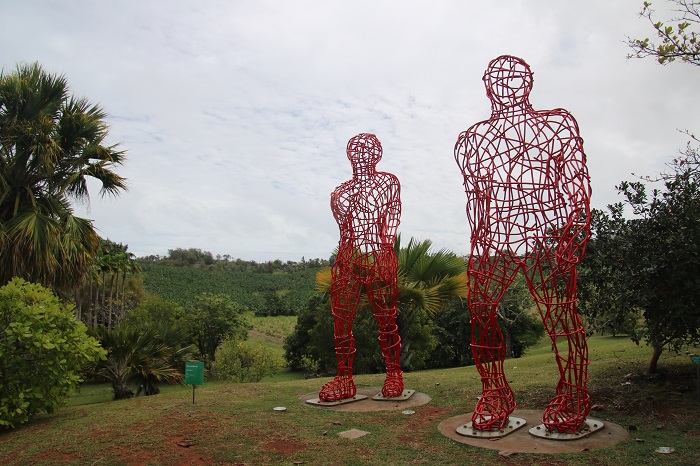
  Another dramatic view was these two 12-15′ high wire pieces.
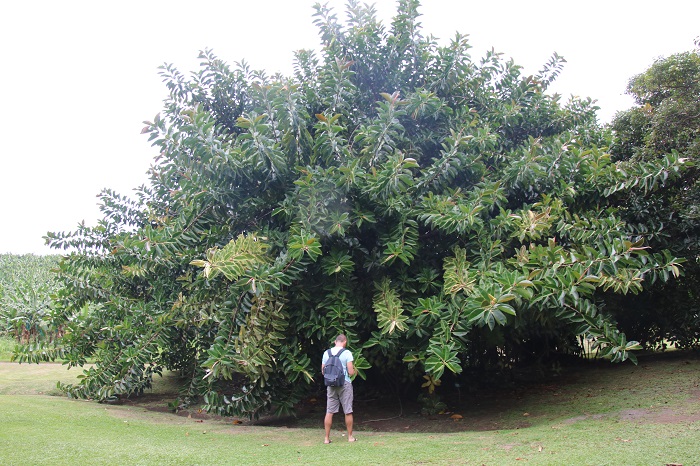
 Thinking about that ficus plant you left in your office at the beginning of the pandemic? I expect that it didn’t fare as well as this one.
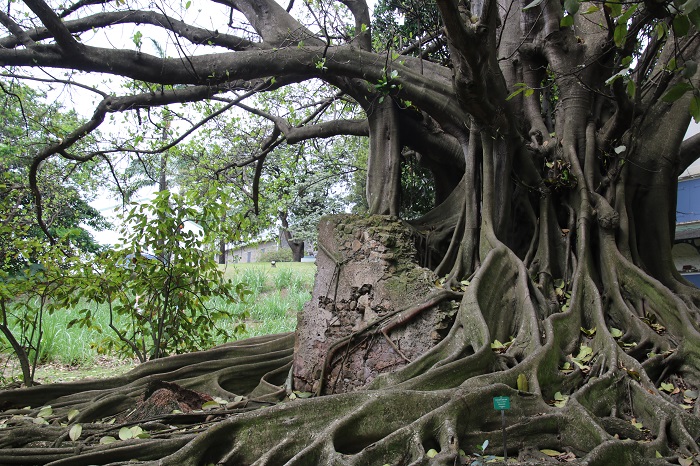
  And, speaking of “house plants gone wild”, how about this strangling fig? It’s certainly living up to it’s name.
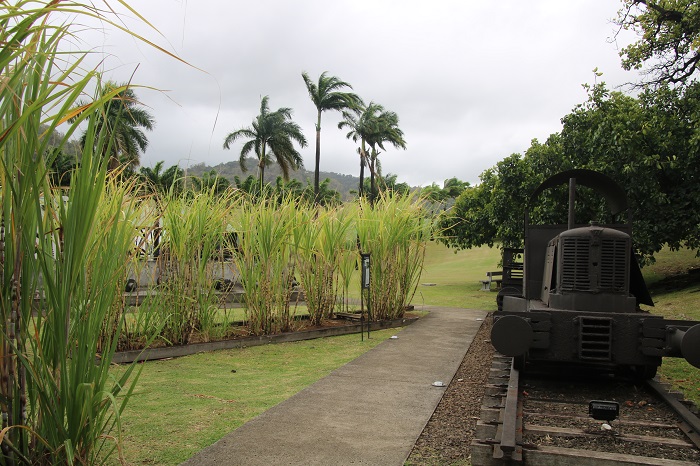
  A display garden, with sugar cane and an old narrow gauge steam engine once used to move freshly cut cane to the factory. It’s always a rush to process cane as it begins to ferment within hours of being cut.
  And, speaking of the factory, this equipment has been long abandoned with production now in nearby modern buildings. The old steam machinery and distillery are still open for viewing. These gears once connected a huge steam engine to the cane crushers and other equipment connected by long belts that snaked through the building.
Being around all this exposed equipment must have been hugely dangerous. I read that when working near a cane crushing machine there was always an ax handy just in case someone got their hand in the gears, so that the arm could be swiftly cut off to avoid being fully pulled into the machine and crushed. What an image.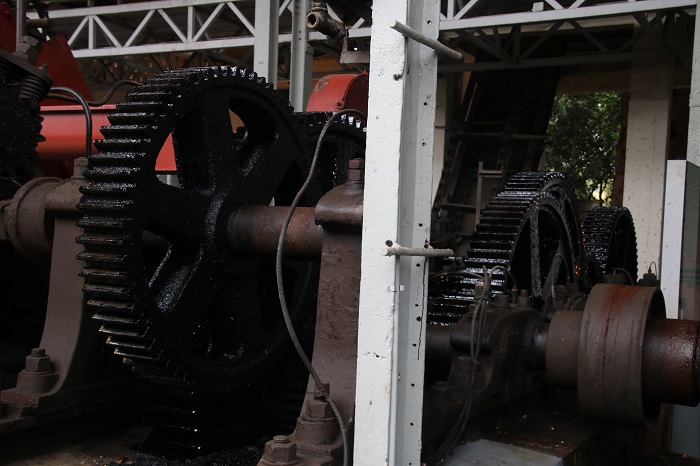 A riot of pipes and pulleys.
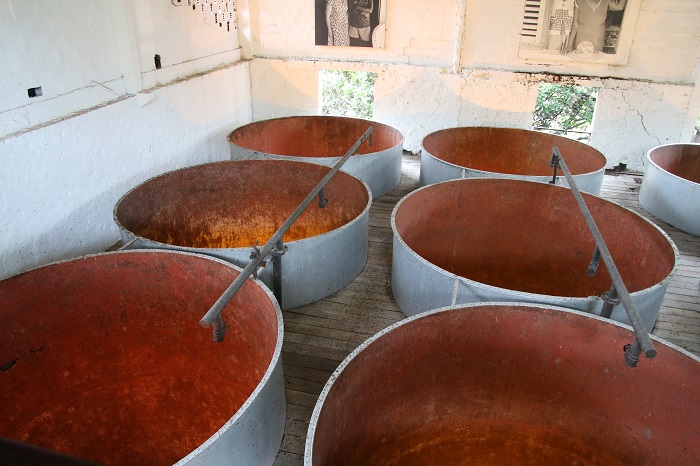
 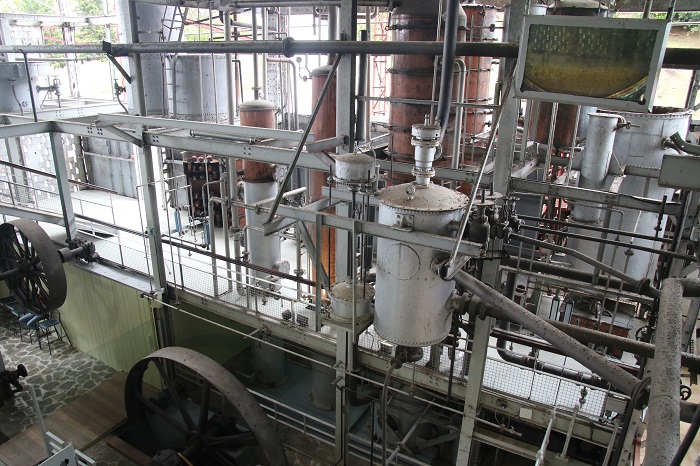 The huge fermentation vats, each a dozen feet across.
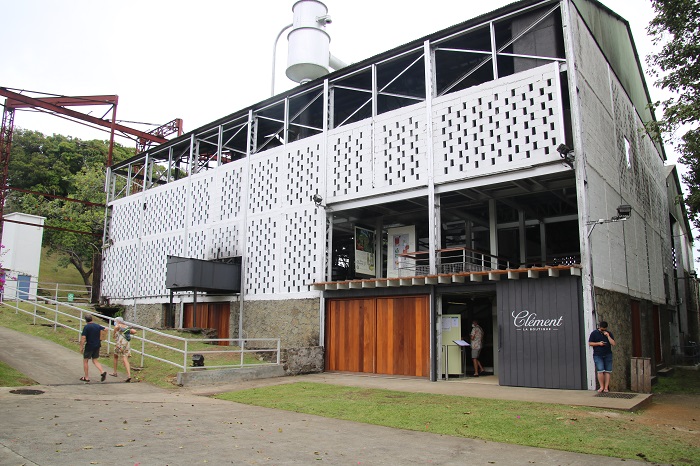
  Below the building displaying the old factory equipment, a tasting room. Try all you like at no charge but be prepared to elbow your way to the bar. Not a lot of social distancing.
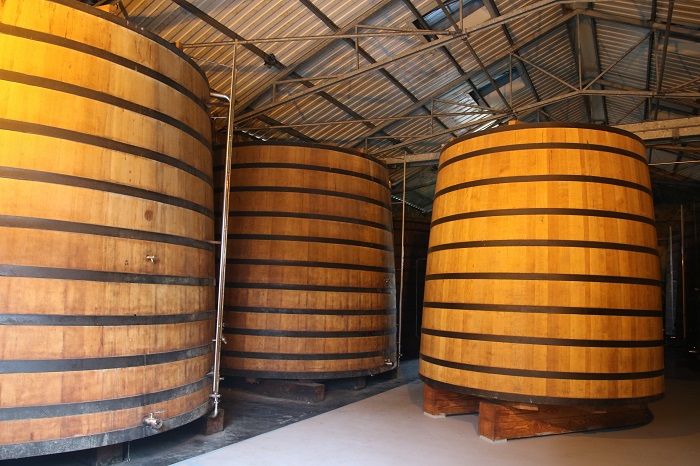
  And some huge warehouses with giant wood barrels for the early aging of the rum. I have no idea how many barrels one of these holds but they were perhaps 20′ tall. That’s a lot of rum.
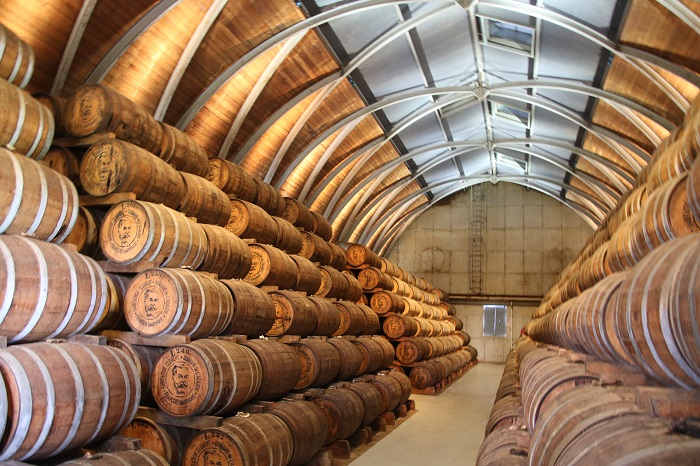
 Later the rum is transferred into smaller barrels where the rum ages for years and sometimes decades.
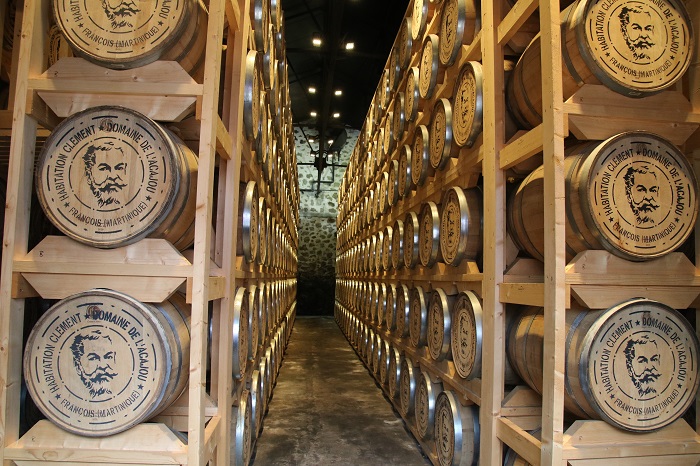
  A lot of rum being prepared for market.
  As you can imagine, this sort of production was a source of great wealth and the Clement family was quite well off. This was the family home up until the middle of of the 20th century.
 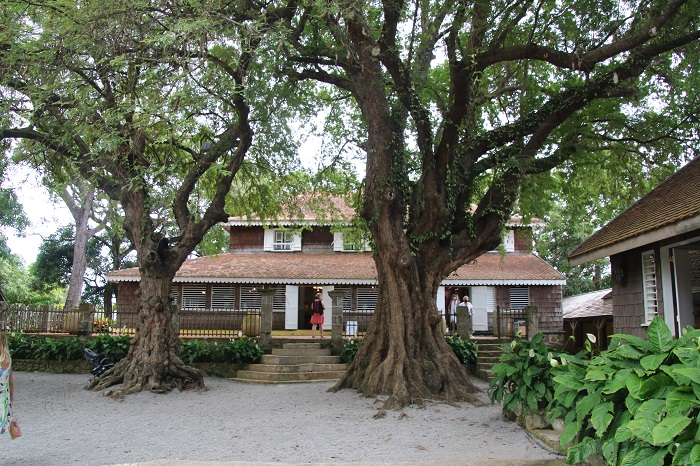 The place is a picture of elegant tropical living.
 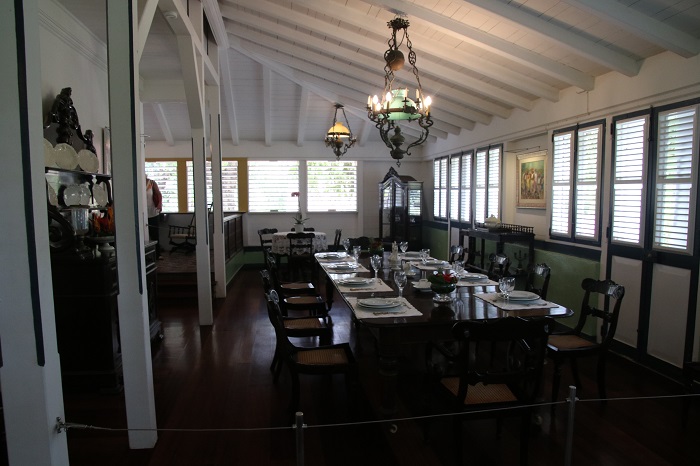 With beautiful plantings all around. Of course, their home was up-wind from the factory.
 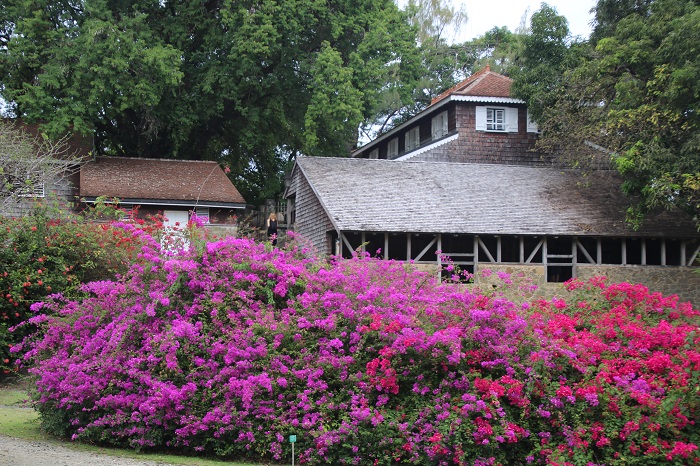 We purchased a good stash to share with friends. “would you care for a tot of rum, imported to the US aboard SV Pandora?”
A friend suggested that we visit the banana museum, and we did. I’ll admit that I was skeptical but we went anyway and it was very interesting. I won’t bore you with a litany of how many types there are except to say “I had n0 idea”.
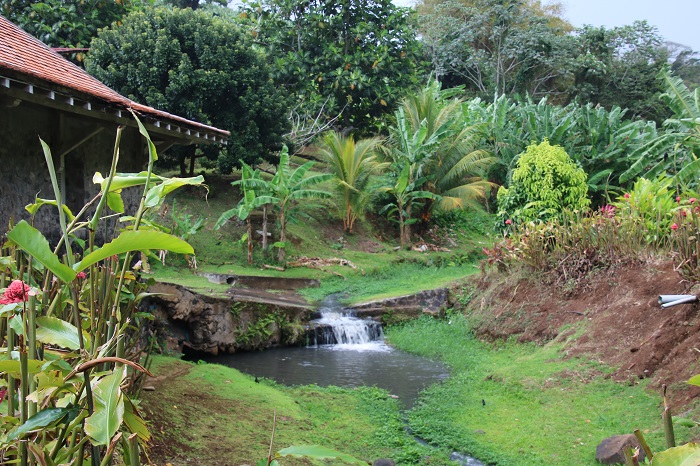
They have a very nice garden with many varieties represented.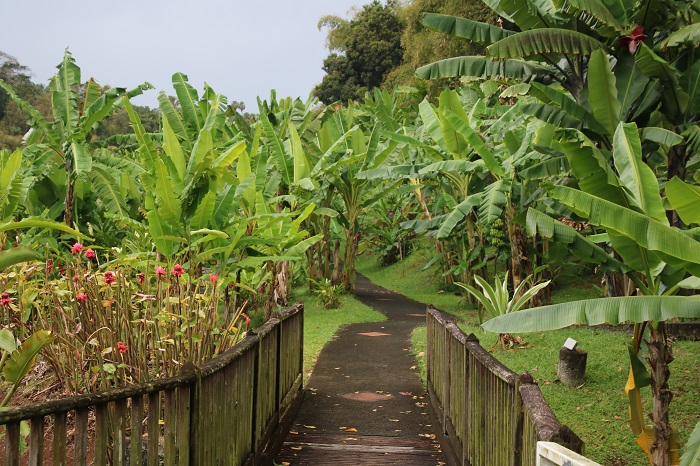 Well maintained cement pathways winding through a variety of bananas from all over.
 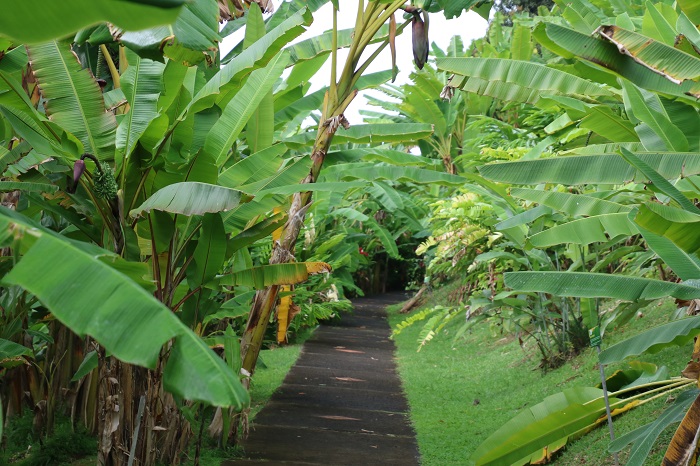 The views were really beautiful and very lush.
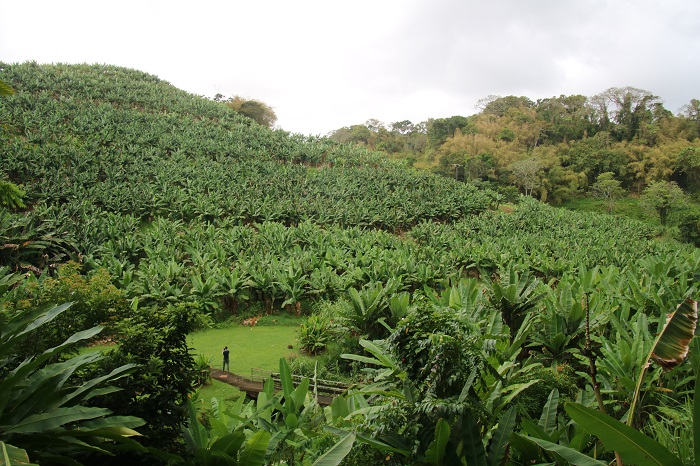
 On the nearby hillside, many, many bananas.
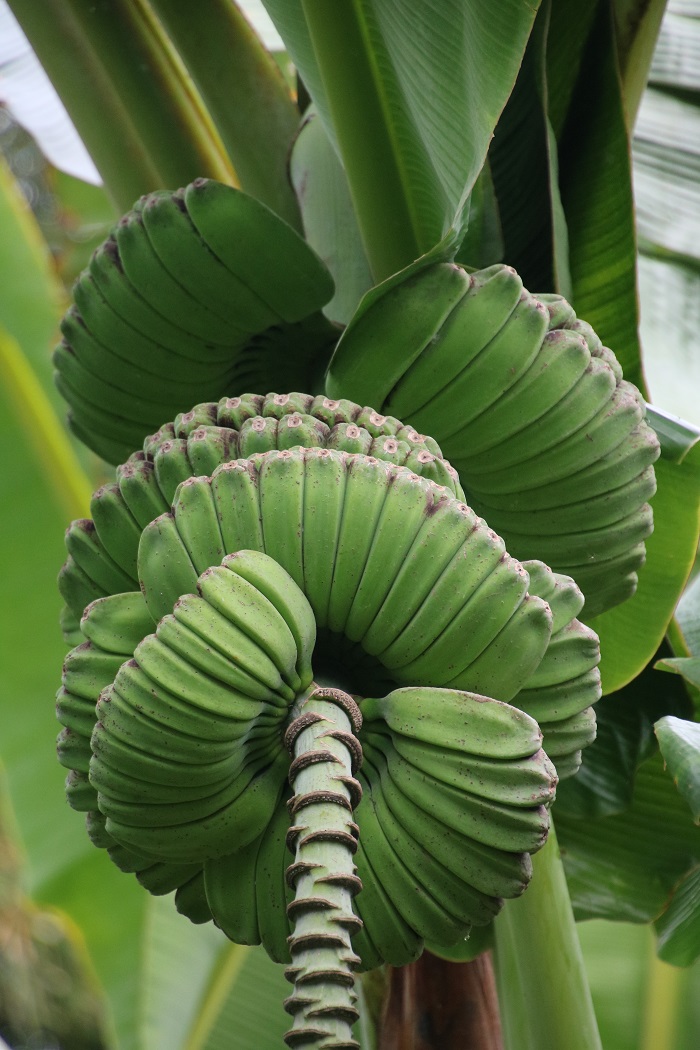
  Bananas that set their fruit in a remarkable spiral.
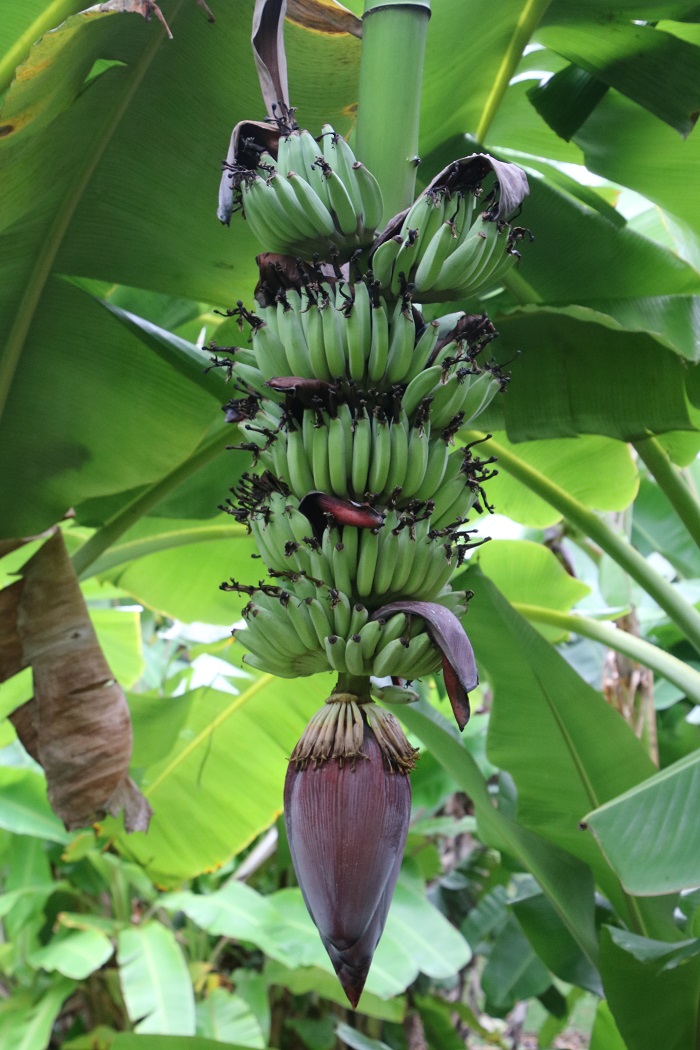
  I was struck by the way the fruit grew on this variety. Sort of like an upside down layer cake.
  Many bananas that are only eaten cooked. Actually, that’s the bulk of the types. Not sweet. The type we see in our markets is plantain. They look like the sweet ones but taste like a raw potato unless cooked.
Some are very tiny.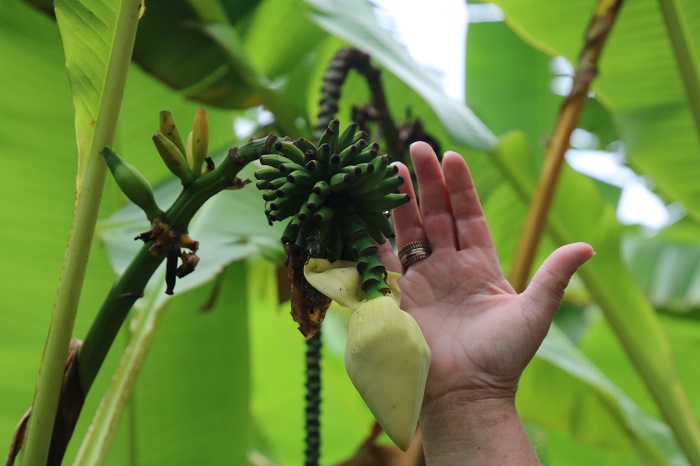 The type that is most commonly grown and the vast bulk sold worldwide are Cavendish. They are actually clones, all genetically identical and set fruit asexually meaning that they do not need to be pollinated and never develop seeds.
Each stalk is individually wrapped in a plastic bag to protect them from insects and to promote faster growth. When the fruit is ripe the part of the plant that bloomed dies and is replaced by a sucker that grows up from the bottom bulb. 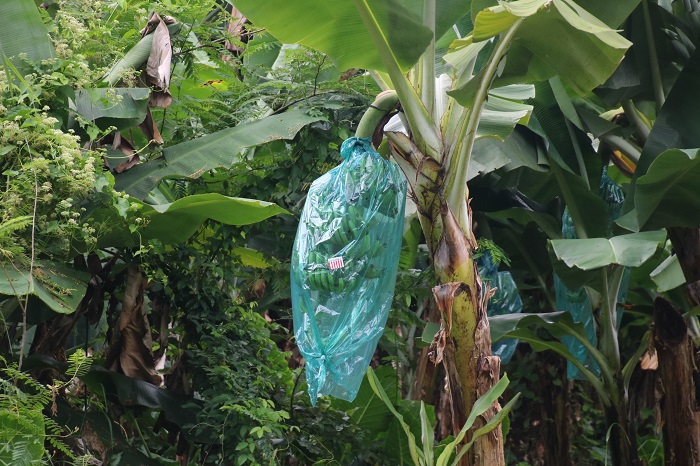 Along with the Marigot Bay Resort, we are looking forward to touring St Lucia and again visiting a restaurant that has arguably among the best views anywhere.
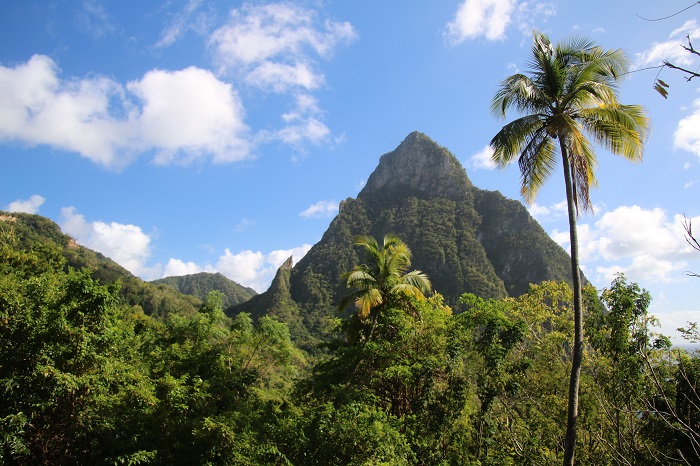
  It overlooks the Pitons, long extinct volcanic cones that rise up dramatically, dominating the landscape.
  It’s been great visiting Martinique but it’s time to move on.
Let’s hope that the run isn’t all that sporty after all. Good luck with that!
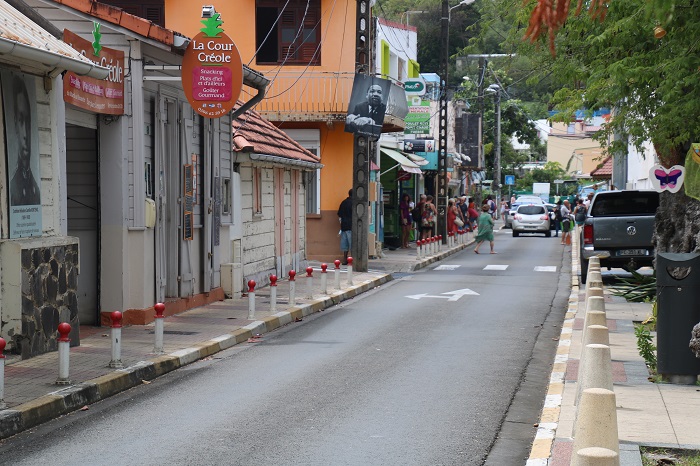
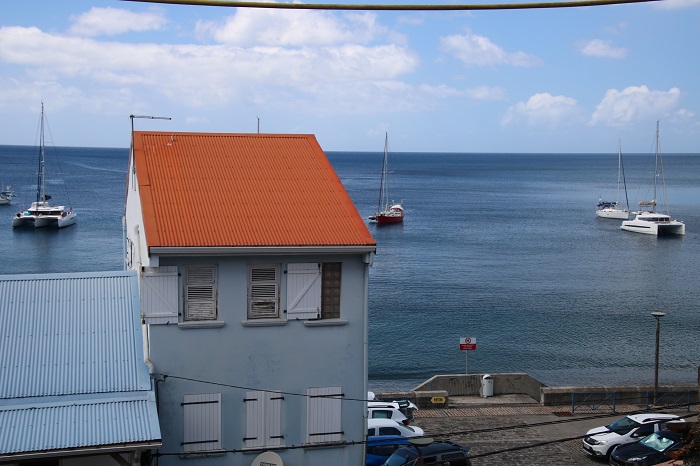
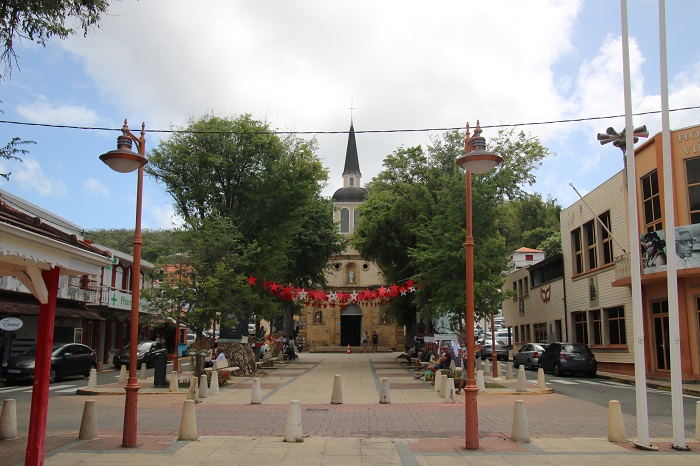 To call it a “town” perhaps overstates things a bit. This is just about all of it and after dark, it’s even smaller when many of the businesses close.
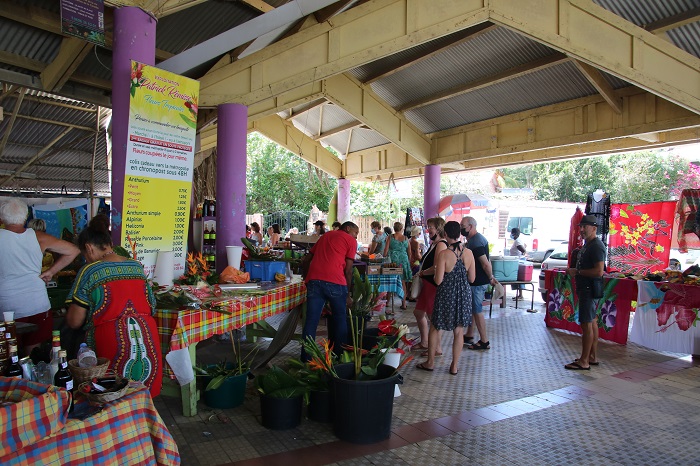
  Saturday, yesterday, is market day, with all sorts of vendors showing their wares.
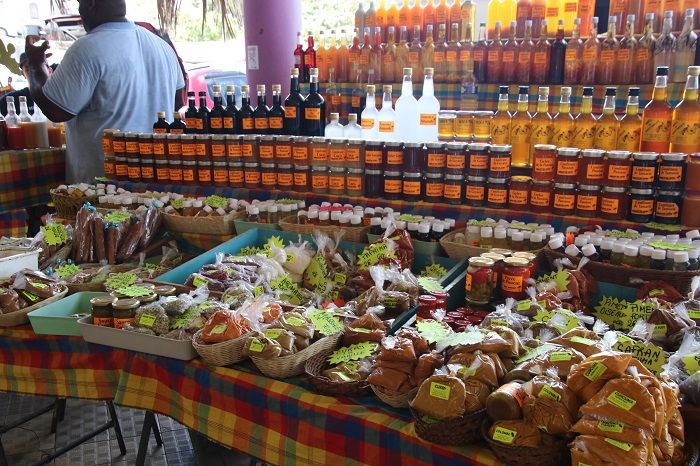
  The Caribbean is known as the “spice islands” and the vendors do not disappoint with a huge variety to choose from.
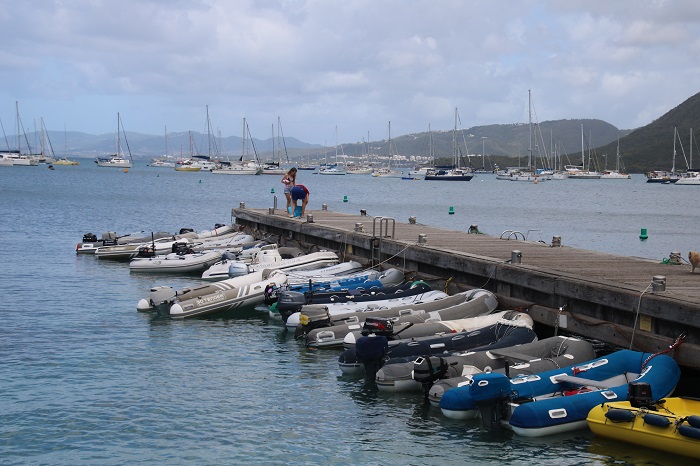
  The diminutive scale of the town is not proportional to the size of the harbor, perhaps the largest anchorage in the Caribbean, about 1.5 miles long and a half mile wide. Without a panorama to show all the boats, perhaps a shot of the town dock gives a feel for how many boats there are. You can’t see the other side, but it’s just as packed. In the distance, part of the fleet, several hundred strong. I’d guess that this view is about 10% of the total.
  Nearby, perhaps a 30 minute run in a dink at high speed, is La Marin, home to a huge marina with more than 1,000 slips. The number of charter boats is daunting.
 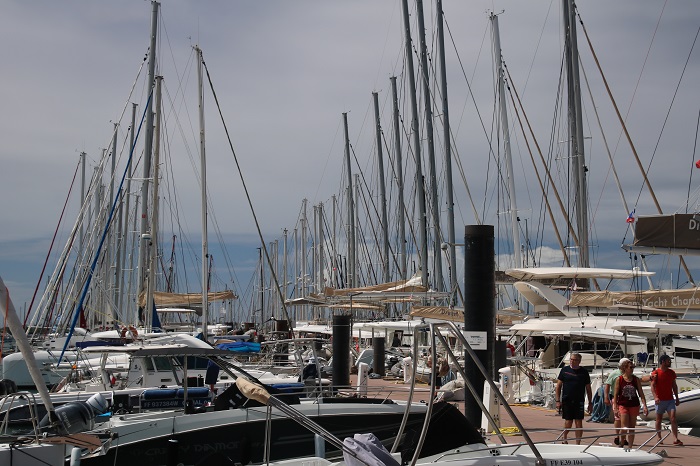 Just one of many piers lined with dozens, no hundreds, of cats and monohulls, standing by and ready for you to jump on board and head out on holiday.
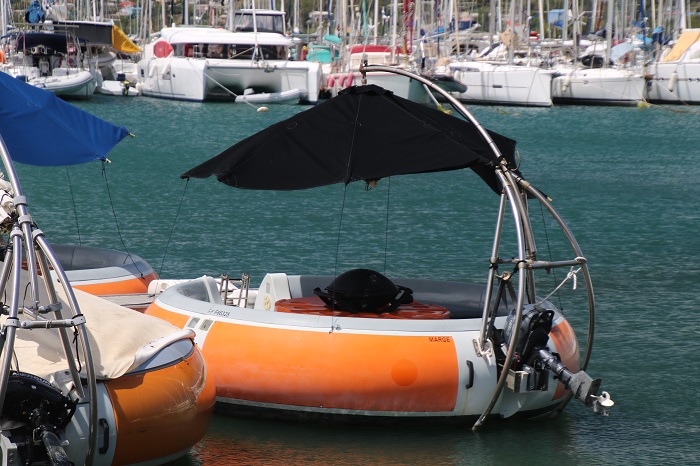 Don’t like the idea of a black umbrella in the tropical heat? There are other colors to choose from. Problem solved, or as some local T shirts advertise, “Pani Pwoblem”. I am trying to imagine what happens if the grill won’t light. “Roberto, just squirt more lighter fluid on those, sort of smoldering coals. ” Wooosh!!!! Run away! Run? On second thought, SWIM AWAYYYYY!
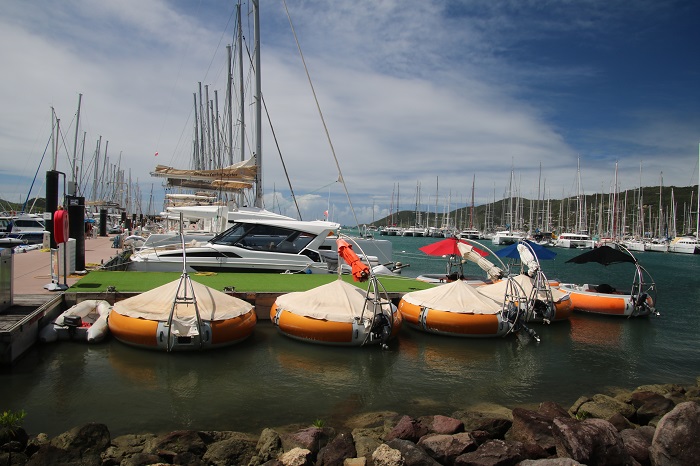 Anyway, St Anne is a nice place to hang out in a less commercial environment and yet still close enough to La Marin to be able to buy most anything you might need.
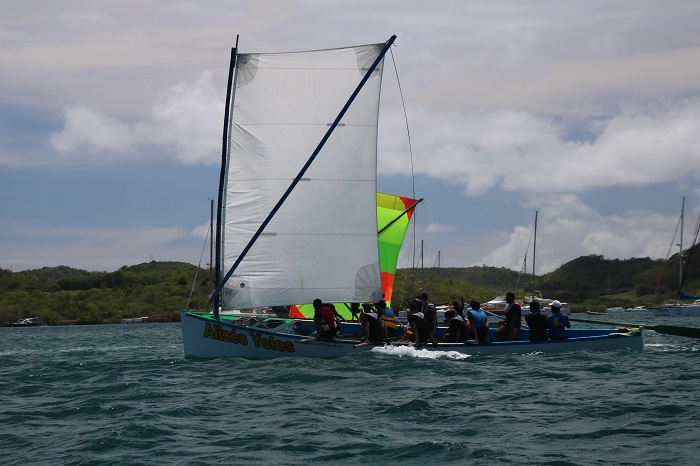 Note how they are steered. No fancy rudder, just an oar sticking way out the back. With all that sail way up in the bow, I expect that the boat has a lot of weather helm so having the long oar way out back will give it a lot of leverage.
 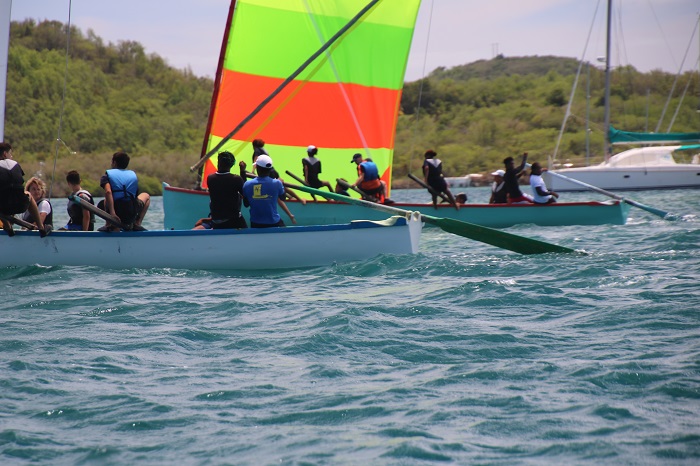 Better yet, check out this brief video that gives a pretty good feel for how exciting the races are.And finally, to the topic of this post…
 For now, we are making the best of what we have and are enjoying sharing video calls with family, especially our three grandchildren Tori, Rhette and Emme.
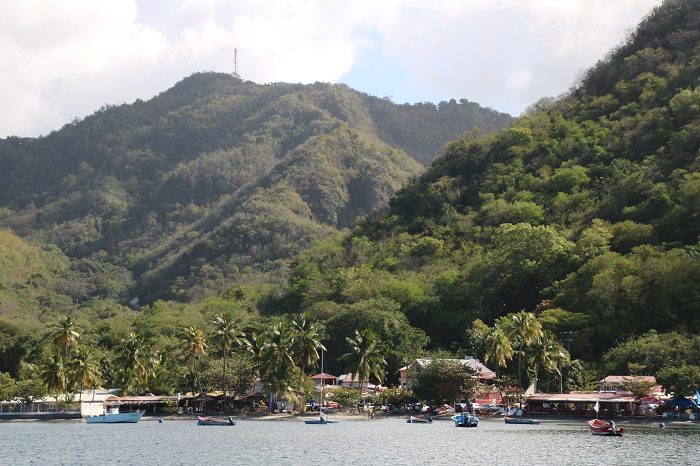 Our time in Fort de France was punctuated by constant rolling by passing ferries so it’s nice to be away from that.
 A particular highlight of this area is that there are loads of turtles. Yesterday I was swimming under Pandora and saw one, perhaps 20′ in diameter, munching away on grass under the boat in about 15′ of water. I swam down and was able to touch, more like pet him on his/her shell. He didn’t seem to be particularly alarmed by my attention and slowly swam away. It was quite thrilling, I’ll admit.
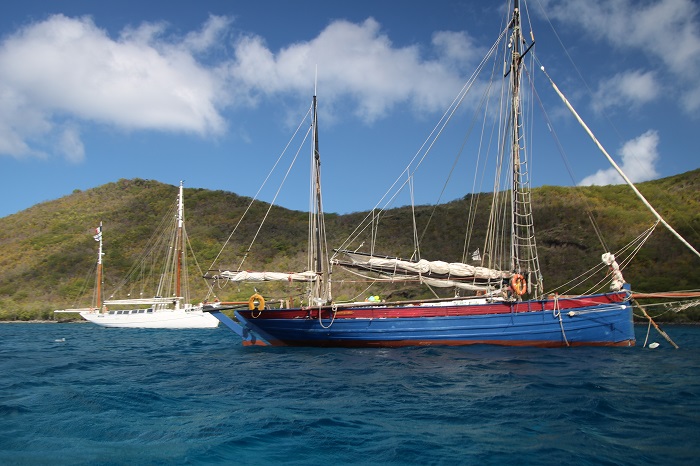
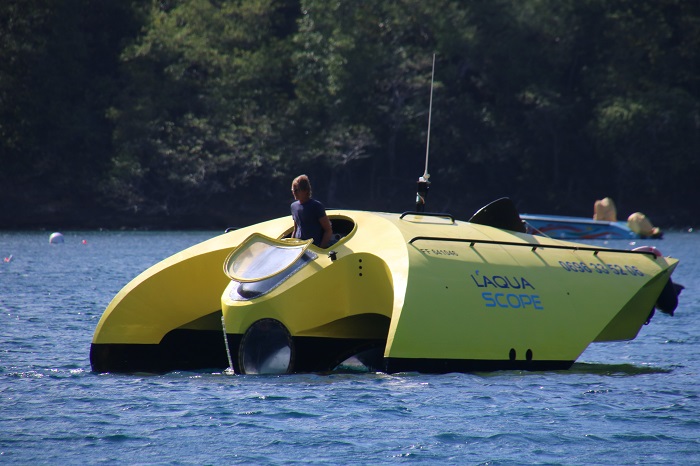 There are also a number of pretty amazing boats here, including two restored French fishing boats. Biche, is the last surviving traditional tuna boat. She was brought back from an abandoned hulk a number of years ago when she was restored in France. She’s quite impressive with her unusual yawl rig.
 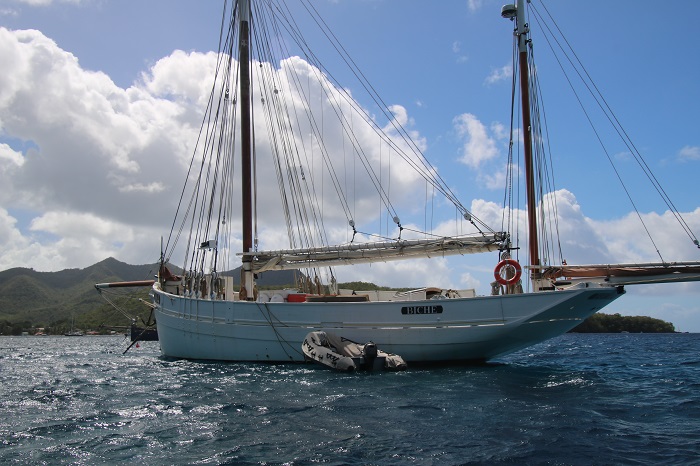 We had seen her sailing in Les Saintes a few weeks ago.
 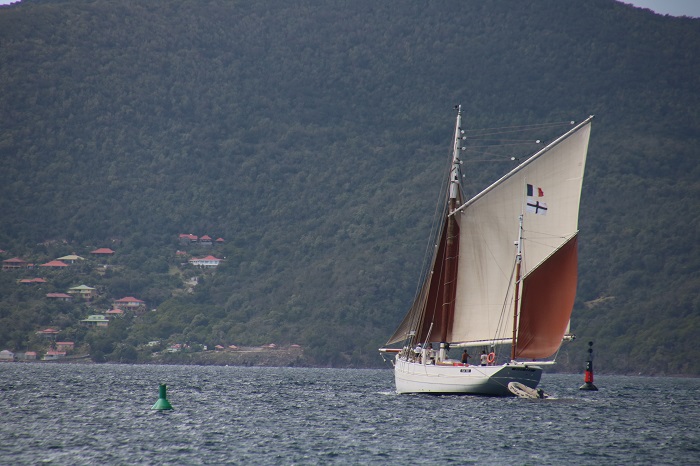 She is accompanied by a smaller and not quite as well maintained cousin, on a nearby mooring.
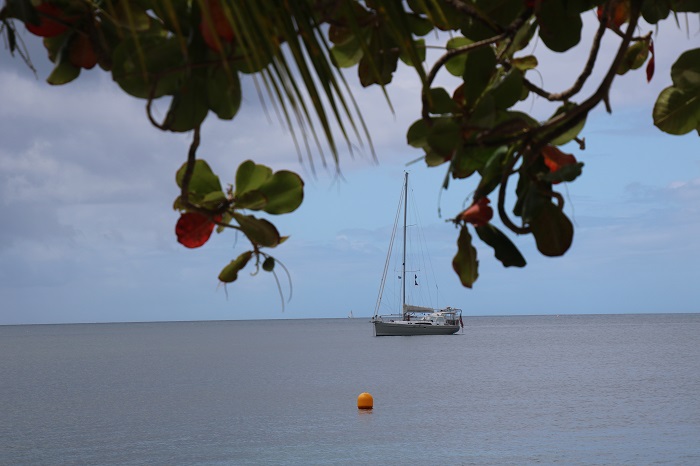
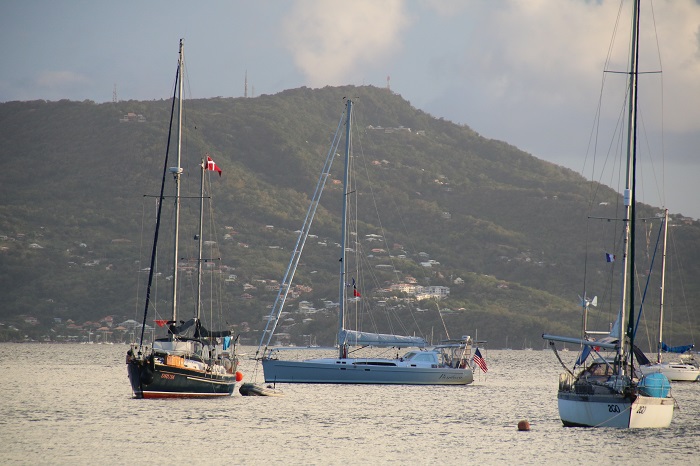
  Of course, Pandora looks ok herself, framed by trees on the beach.
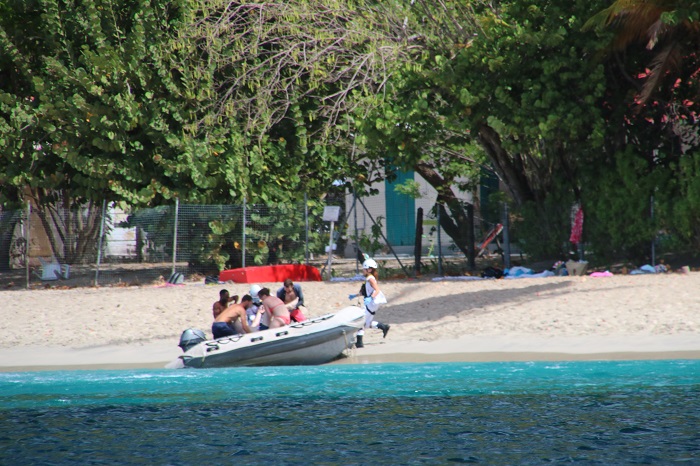
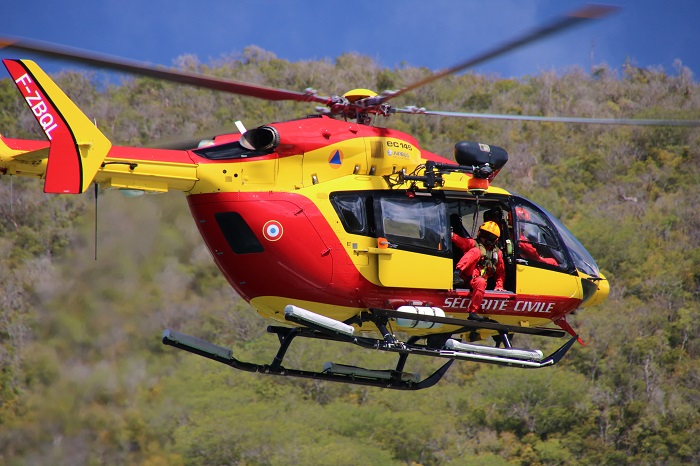
  There are a lot of folks snorkeling in the bay with dive boats heading out multiple times a day. Some are heading far afield with others just bringing folks to nearby rocky beaches. Yesterday, when I was talking photos of those two classics, I saw a group on the beach nearby, waving wildly to a dive boat and. A short time later a rescue chopper appeared.
 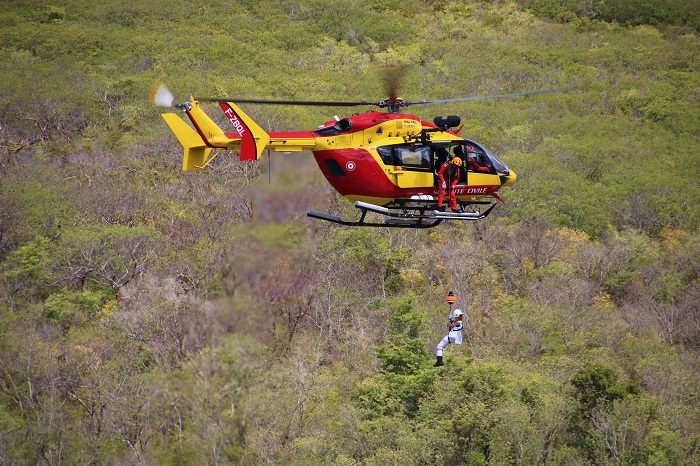 They hovered over the beach and dropped two EMTs while an inflatable launch ran up on the beach at high speed, delivering a patient.
 The chopper continued to circle around the area, kicking up sand and spray before landing in a nearby field.
 The took the stricken swimmer up under some trees and for what seemed like way too long, they worked aggressively to revive him with a series of techs applying CPR.
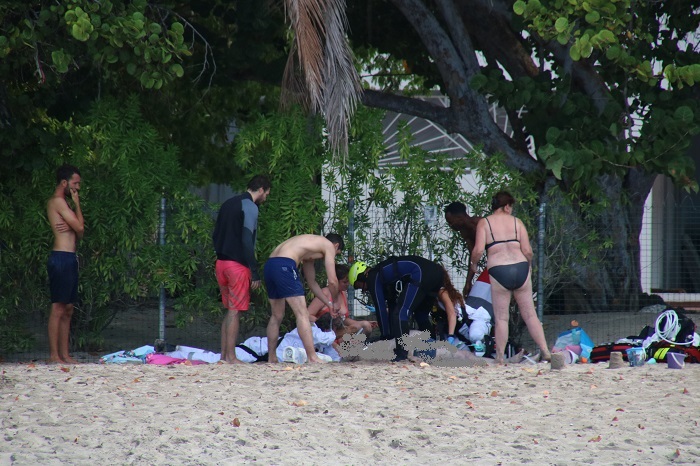 Eventually, an ambulance arrived but there didn’t seem to be any urgency at that point to transport the patient to the hospital. I am guessing that the outcome wasn’t good.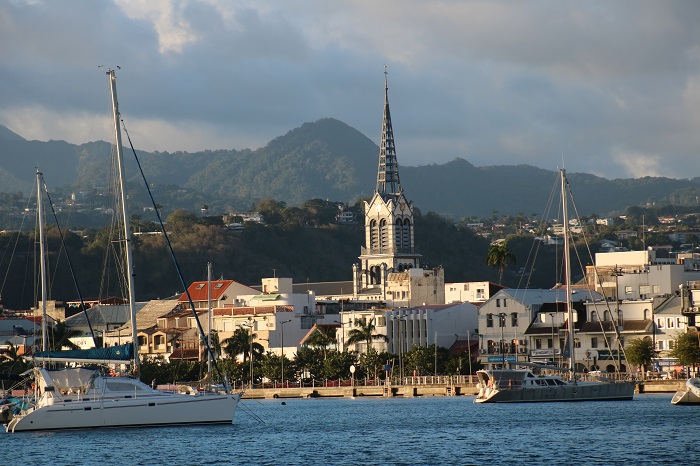
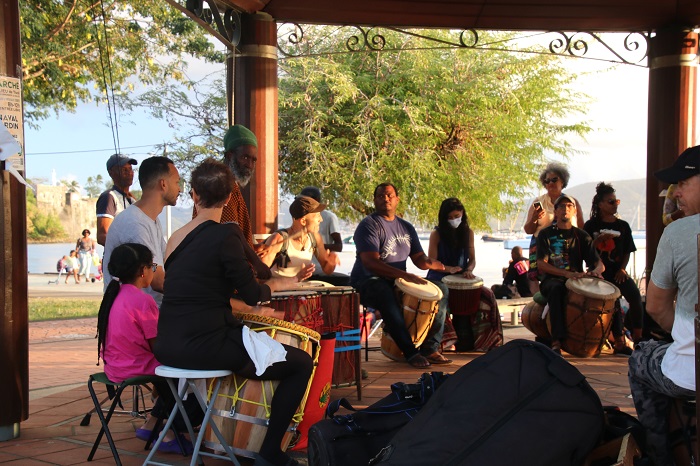
 And, with Carnival beginning later this week, it’s getting busier every day. Most nights there are local groups practicing drumming, the constant beat that is so much a part of the celebrations.
  Brenda and I went out on Sunday evening for a drink and watched as a truck holding dozens of huge speakers made it’s way past us.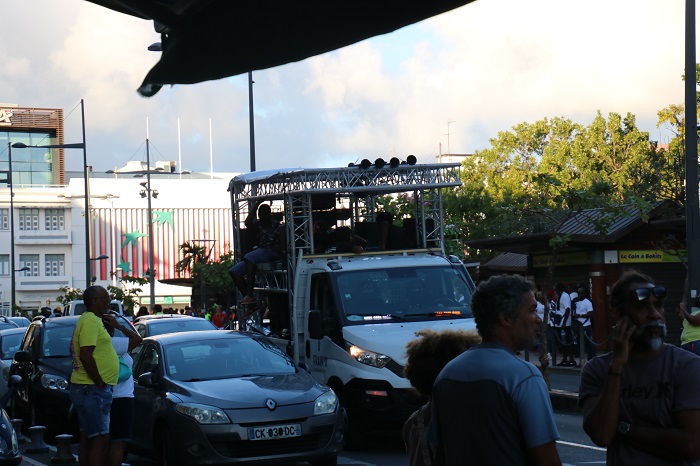
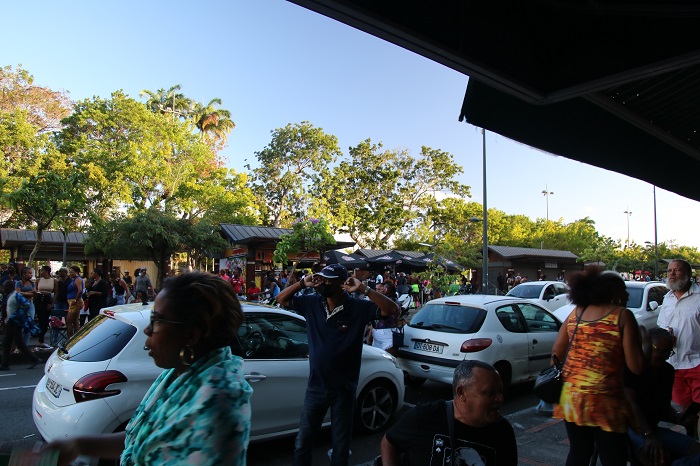
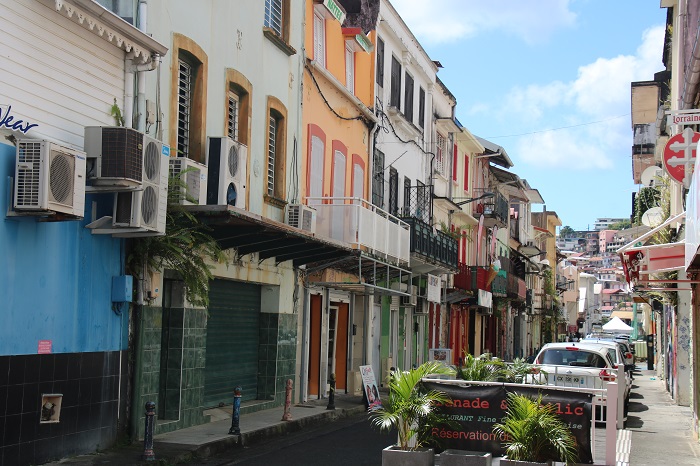
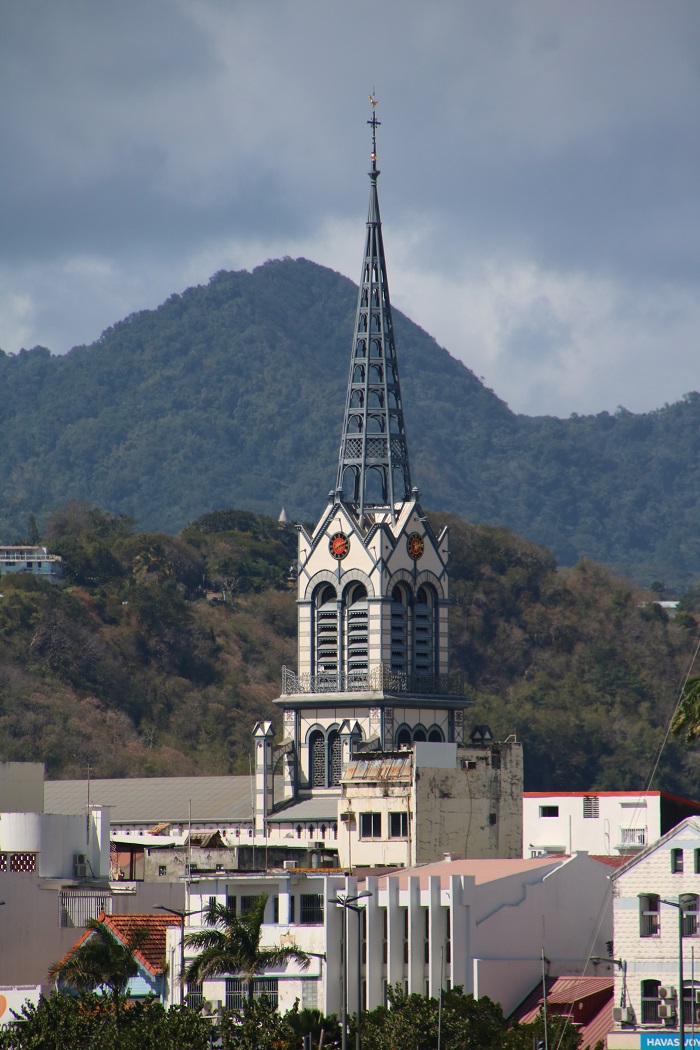
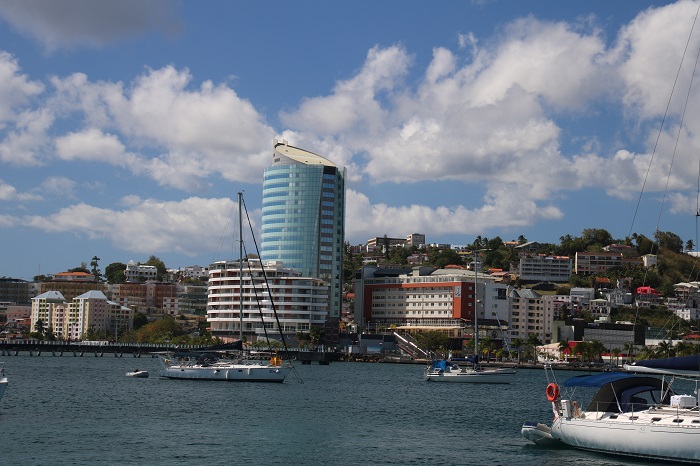
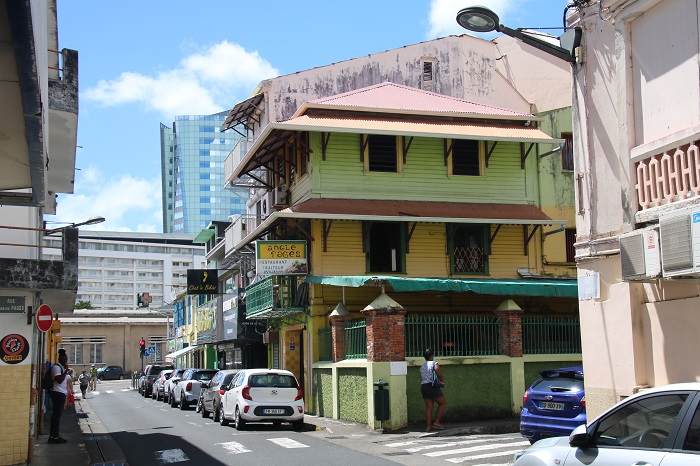
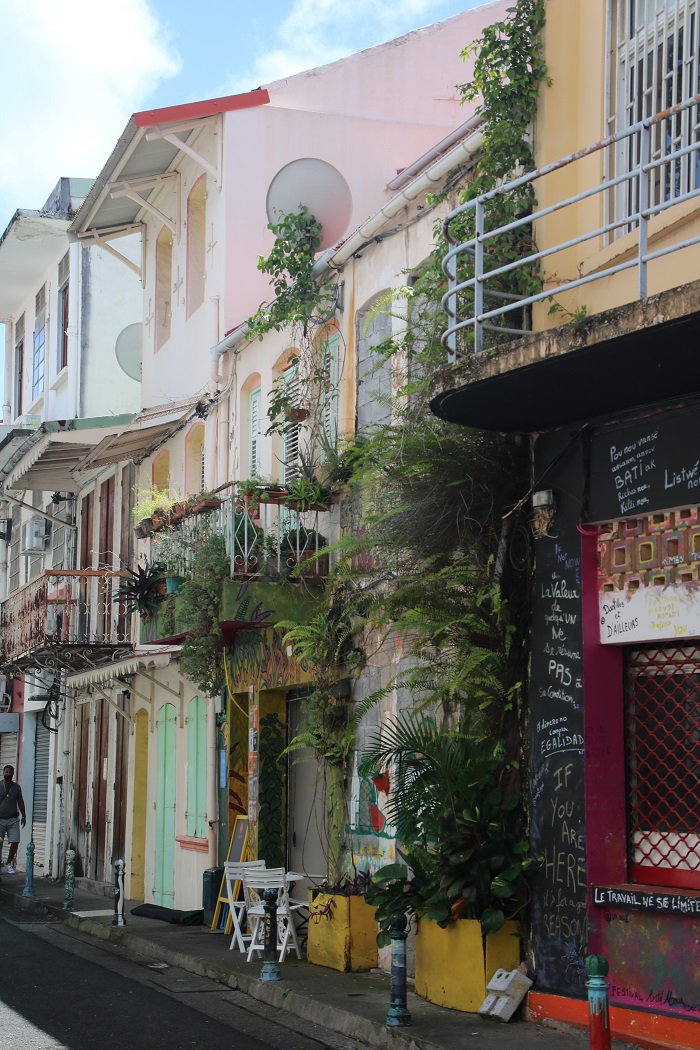 I thought that this building had some interesting details. Note the contrast of the modern office building in the distance.
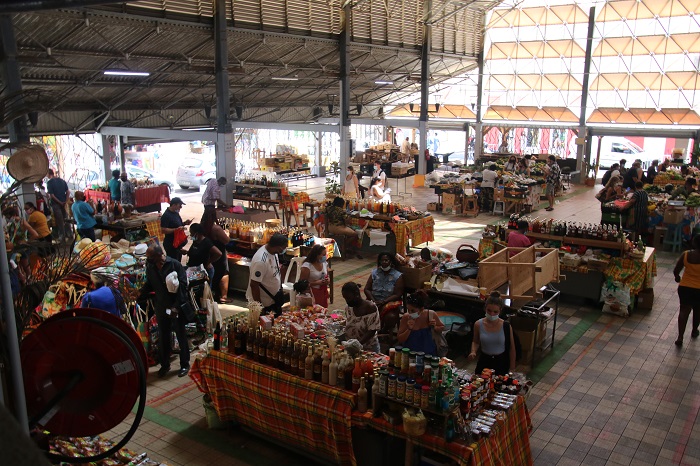
 There is also a large daily green market, likely where I lost my wallet. I could have purchased a lot of bananas with all the money in that I was carrying. I sure hope whoever picked up the cash had a lot of trouble converting those US dollars.
 As of today we aren’t sure if we plan on staying here in Ft de France for Carnival but I’ll admit that it is tempting. I guess that depends on how confident we are that our two vaccine doses and booster will be in keeping us safe.
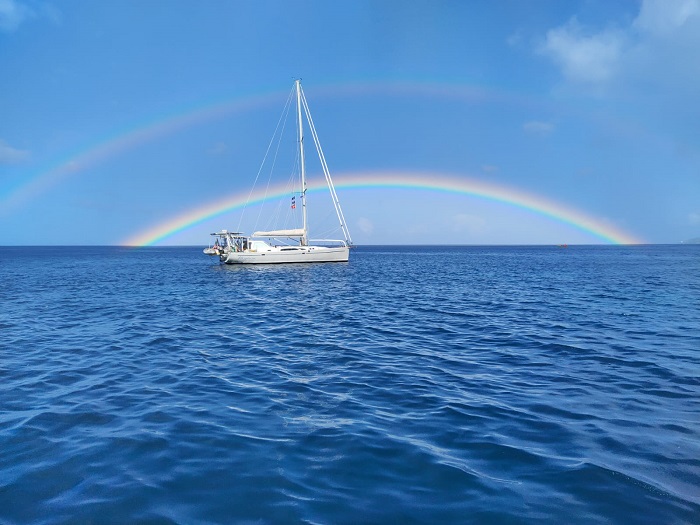 No wait, is it here aboard, at the end of the rainbow?
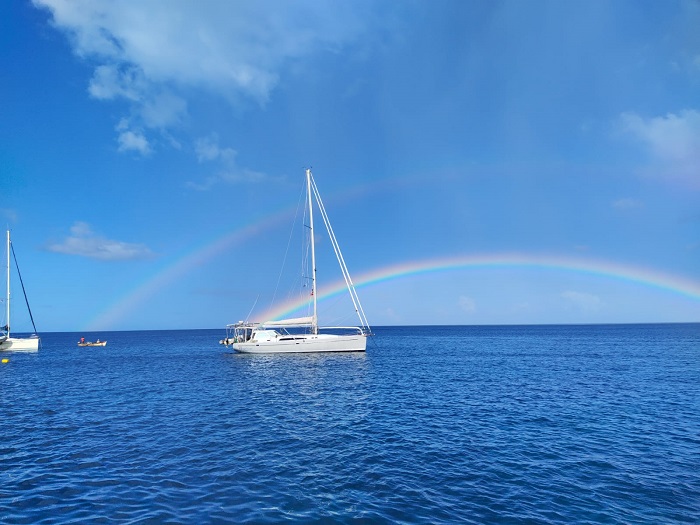 There you go again Bob, betting on leprechauns. Don’t forget, you are in France, not Ireland so it’s not likely.
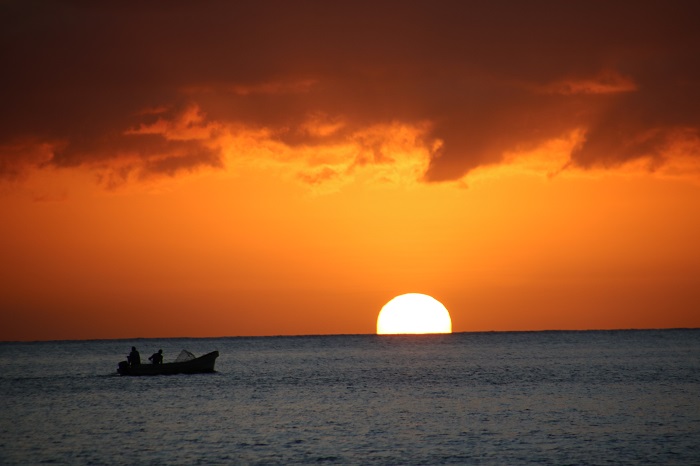 Of course, as Brenda and I sit in the cockpit or up on deck with a glass of wine, we wonder if we will see the elusive green flash, a momentary pulse of bright green as the sun sets below the horizon. This phenomenon only happens when the horizon is perfectly clear and lasts less than a second. Last night was one of those nights and while I sort of missed the “flash” by a fraction of a second, we got it, a green flash! If you don’t see it in this image, I guess you just had to be there, and we were.
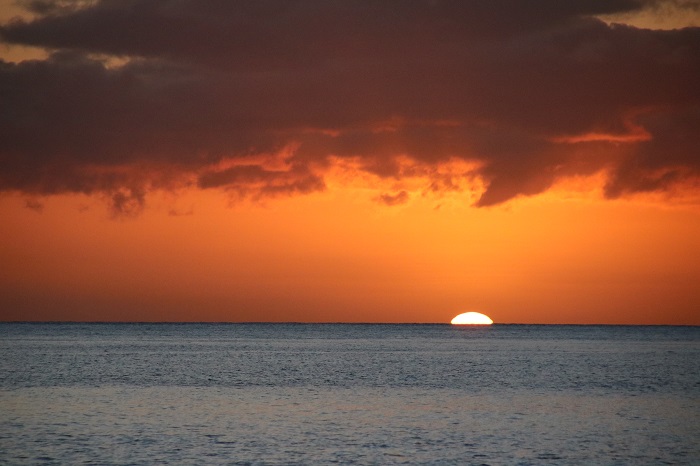 And, that iconic flash that, I almost, caught. I’ve done better but you can sort of see the change of color.
 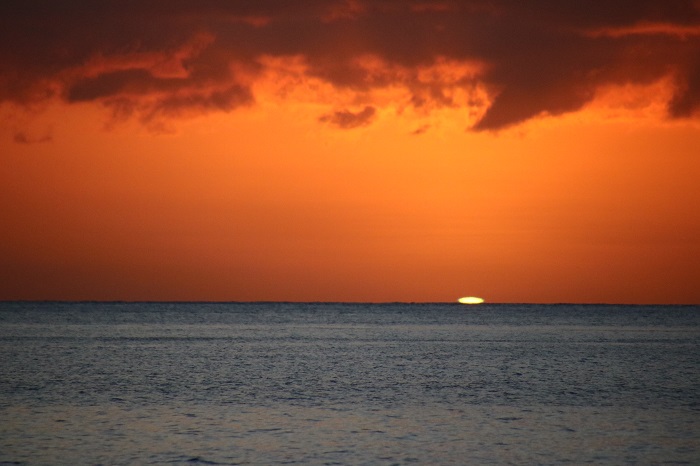 It was beautiful and a perfect way to end the day.
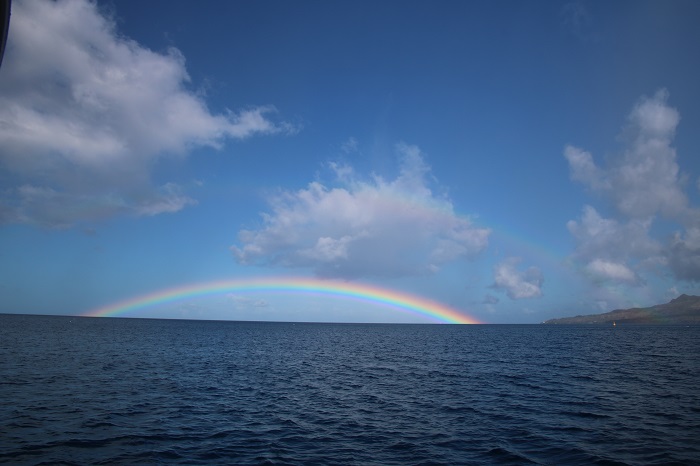
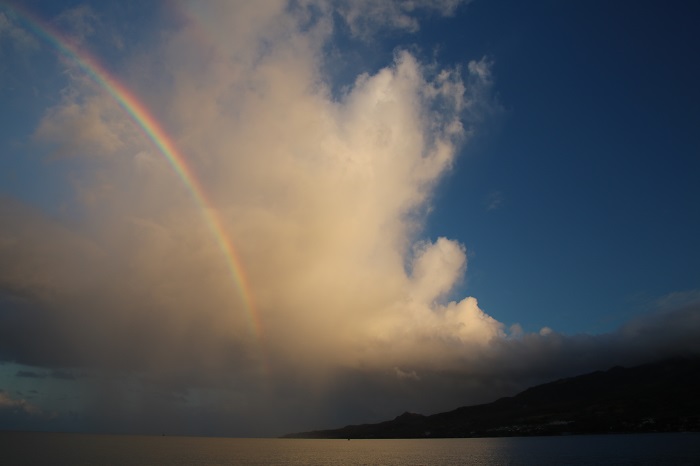 A bit later, a full rainbow. This photo doesn’t really give a sense of the scale. It was really huge.
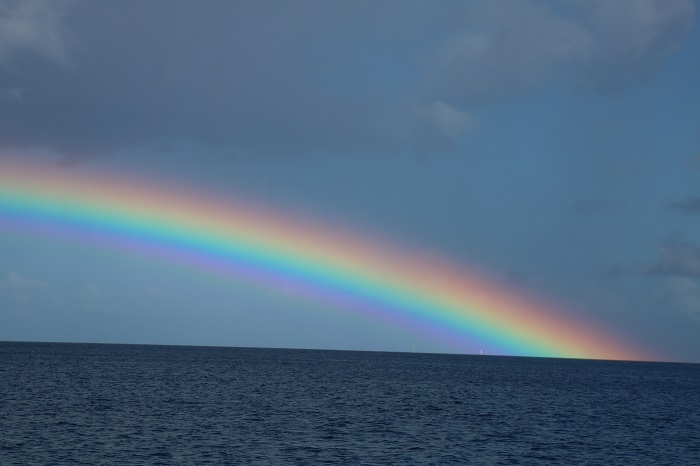
  And the colors looked brighter in “real life”. This close up gives a better feel for how bright it was.
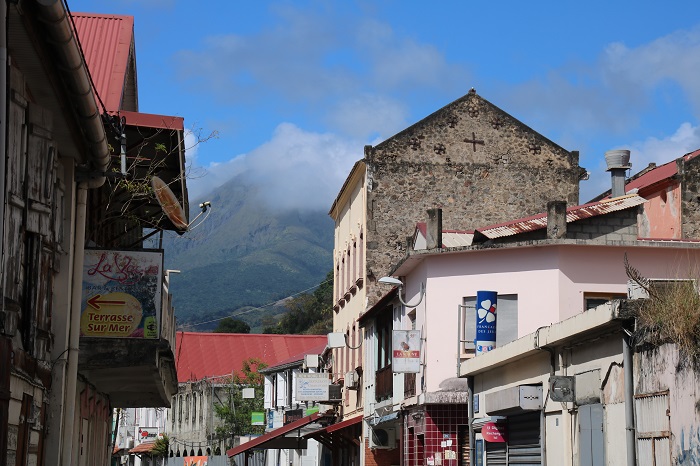
  The streets in St Pierre, once the capital of Martinique, are a mix of old and really old. In 1902, Mt Pele, in the distance, capped in clouds, exploded with little warning, leveling the city and killing some 30,000 in a brief moment as superheated gas and ash, in excess of 1,000 degrees, rushed down the mountain.
 In the aftermath of destruction, not a building was standing, only charred ruins. Some of the remains of these ruined buildings are left as a memorial to that fateful day.
 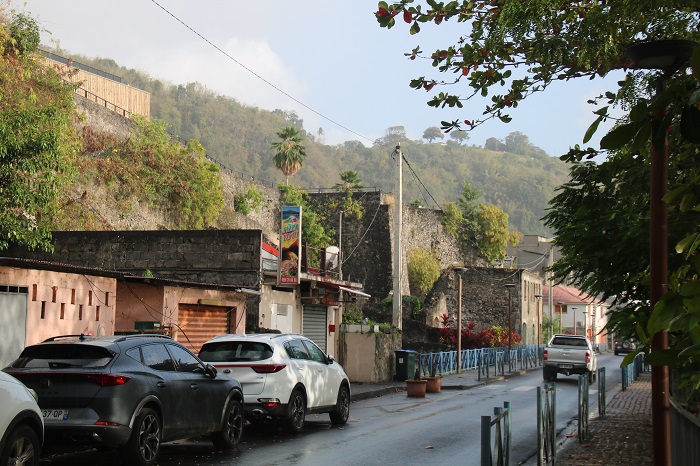 The destruction was total, leaving not a single building standing.
 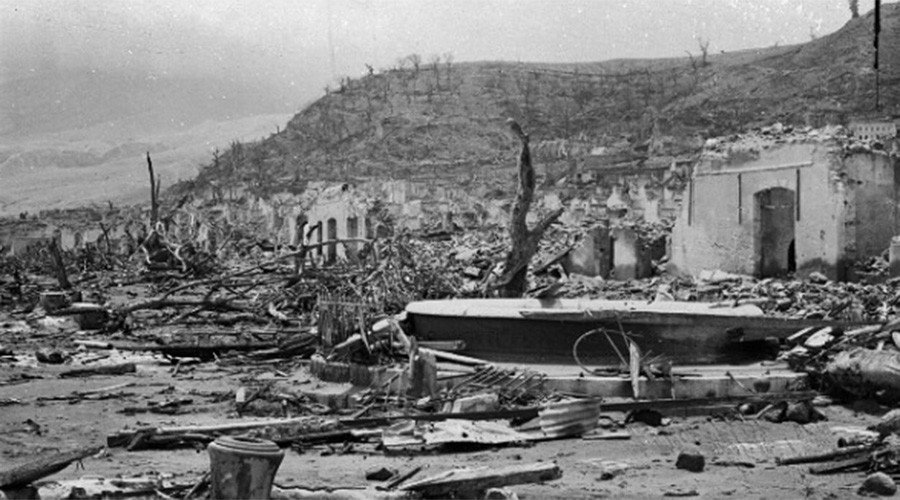 Every person in the city perished except a single very lucky guy who happened to be in jail when Pele exploded, and survived. Check out this three minute video of the story of the destruction of St Pierre and one man’s very lucky day.Following the eruption, the capital was moved south to Ft de France, which remains the capital to this day. We will be heading there, I expect, within the next few days so stay tuned on that front.
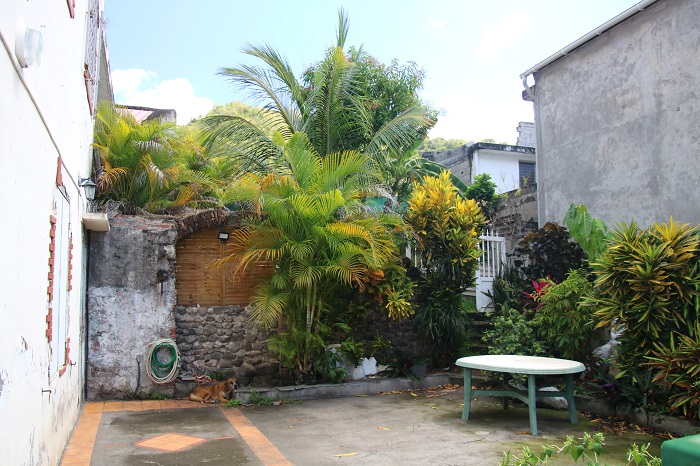
 There are many spots in the ruins in the city that offer a juxtaposition of old and older like this lovely courtyard. Notice the sleeping dog near the back wall. Happy Rover.
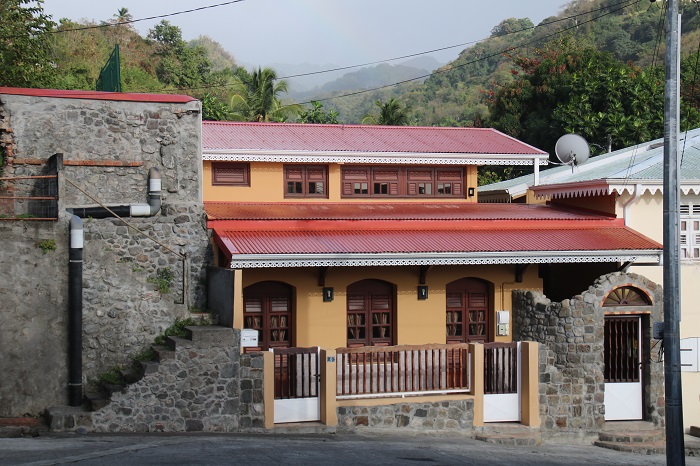
 I particularly liked the way that this home was built into a stretch of old stone wall. Nicely done.
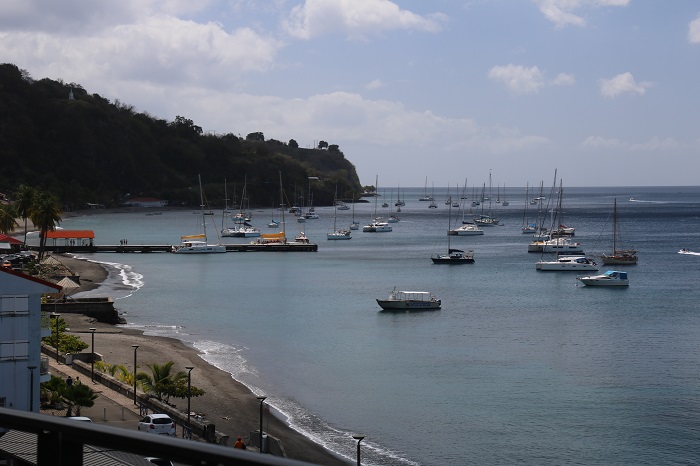
  And, a view of the water over the rooftop. I love steel roofs.
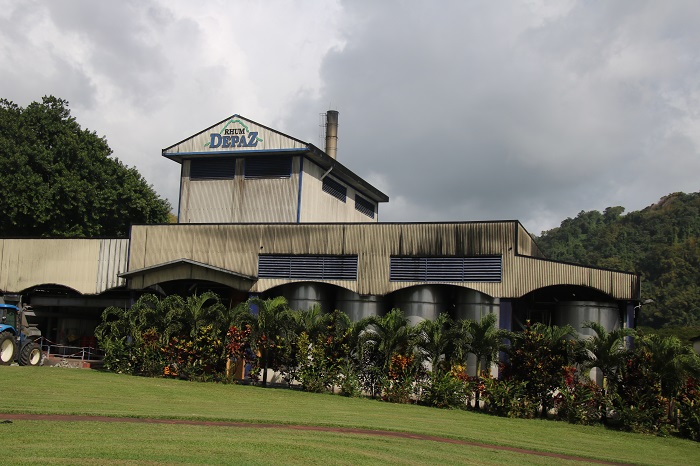
  A few days ago we visited what has become our favorite distillery, Depaz, built into the foothills of Pele. The facility is the only steam powered distillery, I think in the Caribbean if not the world. It sits on the edge of thousands of acres of cane fields.
  Heavy machinery is used to move the ground up cane into the crusher which extracts the juice.
 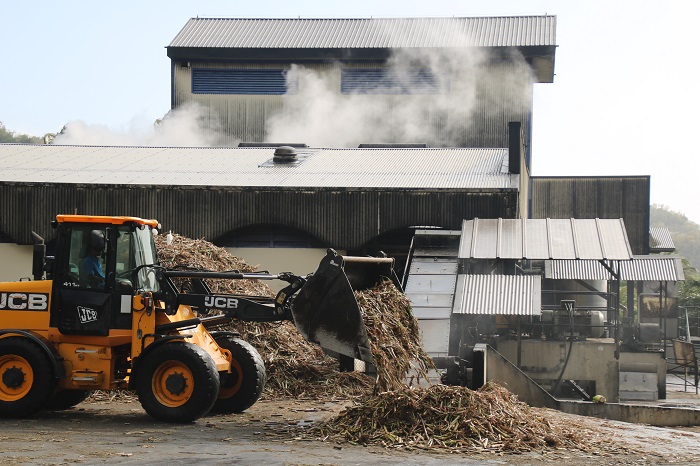 After the cane is crushed and juice extracted, the remainder is set aside and fed into the boiler that provides steam to the engine that powers the plant.
 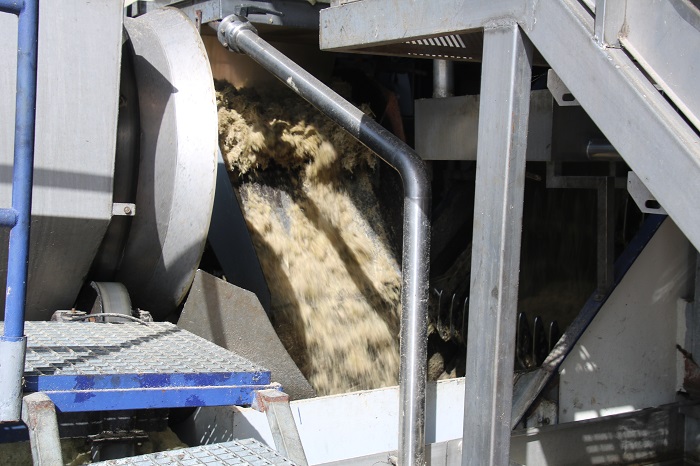 If a picture is worth a thousand words, nothing can do justice to this wonderful steam engine like this little video that I shot of the machine at work. At less than 30 seconds, it gives a real sense of this wonderful piece of engineering in action. Enjoy…After extracting the sugar juice it is fermented for two days and then put into a distillation tower that gasses off and then collects the alcohol.
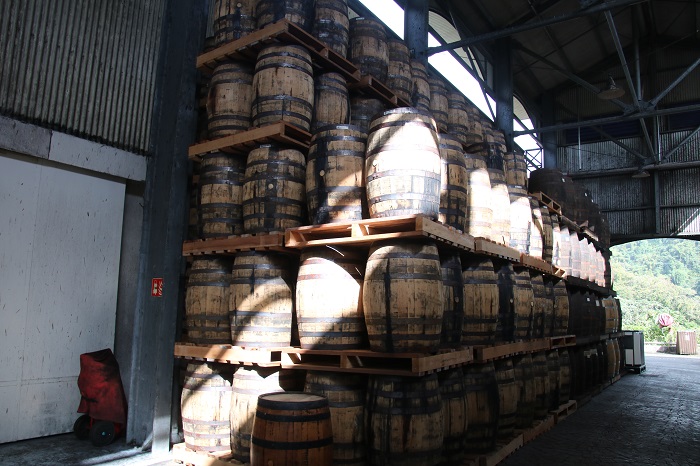
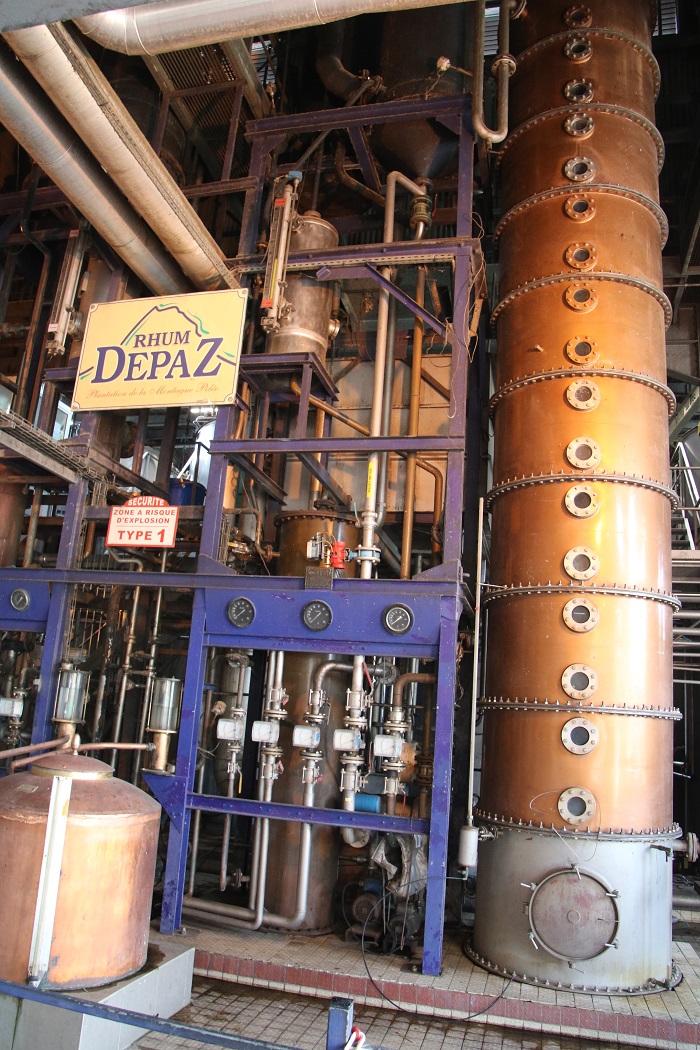 Then the distilled alcohol is put into oak barrels and aged, in some cases for a decade before being bottled. Each year about 10% of the rum evaporates from the barrels, an amount called “the angel’s share”. As a result of this, a bit more is added each year to top up the barrel. So, if you purchase a rum that has been aged for a number of years, some of the rum has been added on a yearly basis to keep the barrel full. In some cases, the barrels that the rum is aged in are discarded Port barrels or other types from the US and Europe. The use of old barrels gives rums a special taste.
 The rum business has always been profitable as witnessed by this impressive manor home, once the home of the owners of Depaz.
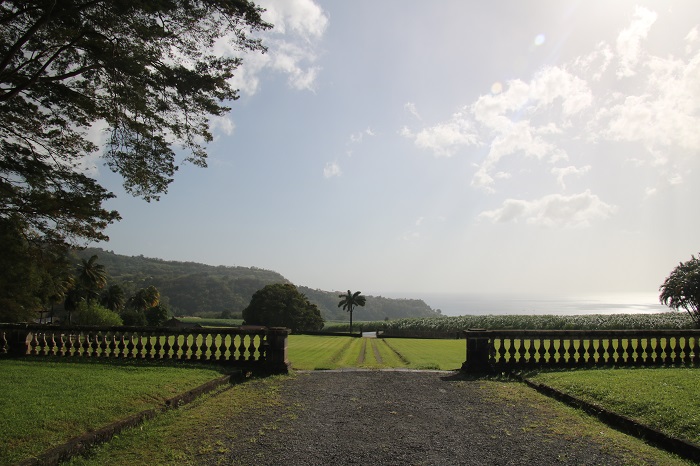
 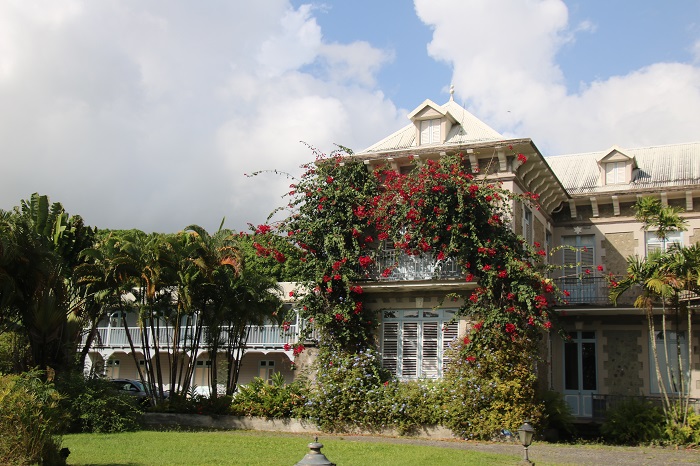 Nice view. I can imagine Mr Depaz sitting on the front porch, perhaps sipping an old fashioned rum punch, feeling pretty proud of himself, master of all he can see and such. The manor homes on these estates are always sited upwind from the factory. As you can imagine, boiling sugar water and the near constant crushing of the cane gives off a sickly sweet smell of molasses. Not something that you’d want wafting into your home, day and night.
  Following lunch at the Depaz restaurant with some friends, Brenda and I opted to walk the 1.5 miles back to town. Down hill all the way and rain showers kept us from getting too hot. It was a very nice walk.
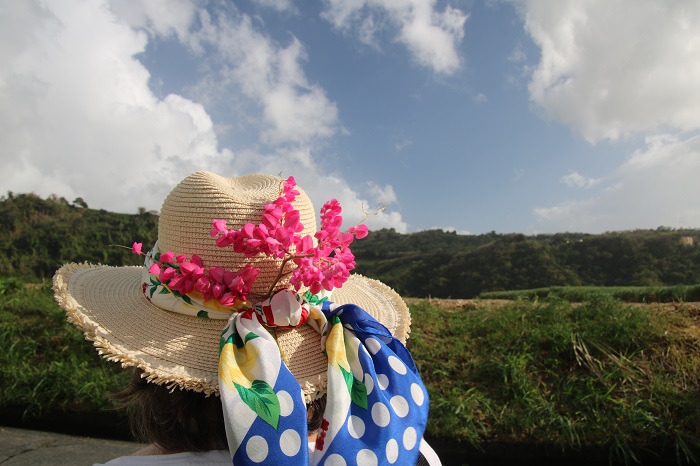
  Brenda has a new straw hat that she has decorated with a lovely scarf. I finished the ensemble with some fresh flowers plucked along the side of the road.
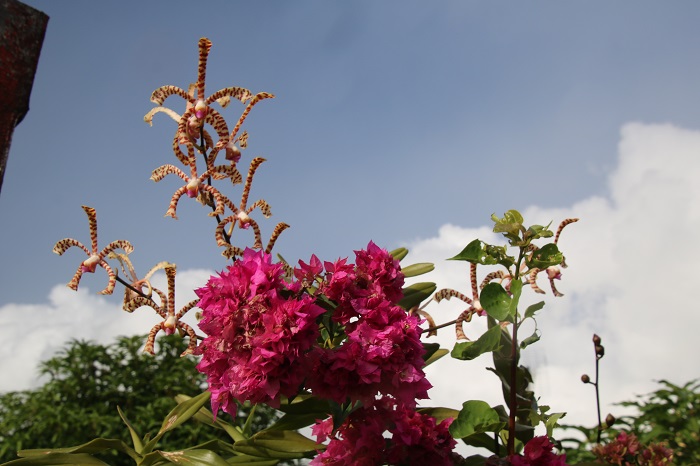
 It’s always a treat to see what grows in people’s gardens and long the roadside. How about a mix of orchids and bougainvillea?
 Ok, so back to the fisherman I mentioned at the beginning of this post.
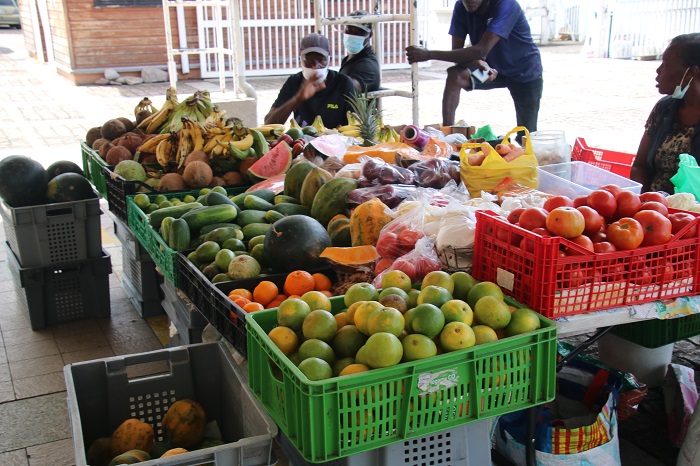
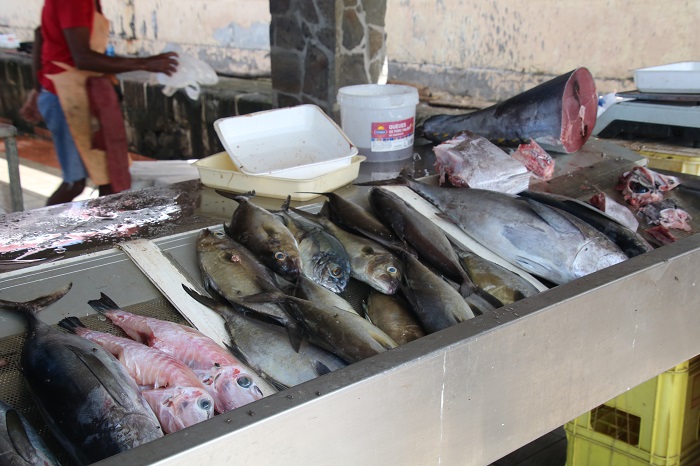 Also in the market, a huge variety of local vegetables. We are particularly fond of the tomatoes, very different from the bio-engineered tasteless variety that are available in the US during the winter.
  So, these small boats head out to fish, early in the morning, often very close to where we are anchored. The boats generally have two fisherman on board. First they toss bits of palm fronds onto the water which will bring the fish to the surface.
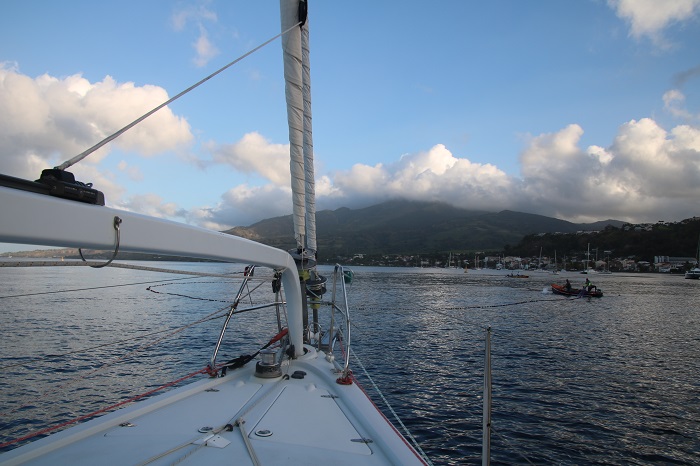
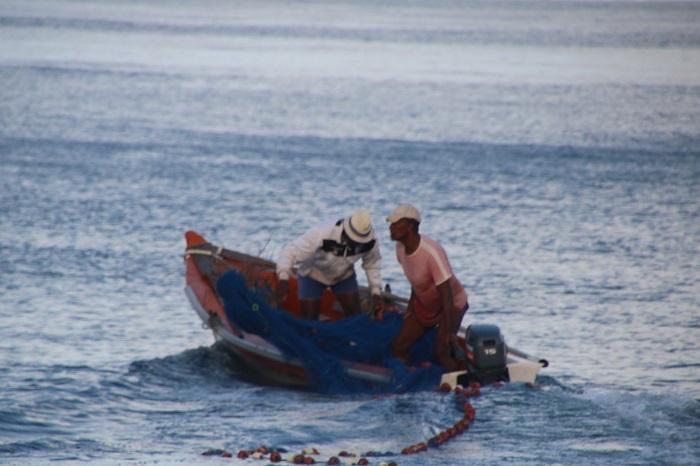 This boat did their work right in front of anchored Pandora.
  After securing both ends of the long net together, they pull on the draw string that closes up the bottom of the next, trapping their catch. Notice the guy on the left who is beating the water with an oar, to scare the fish back into the middle of the net to keep them from escaping under their boat before the net is fully secured.
 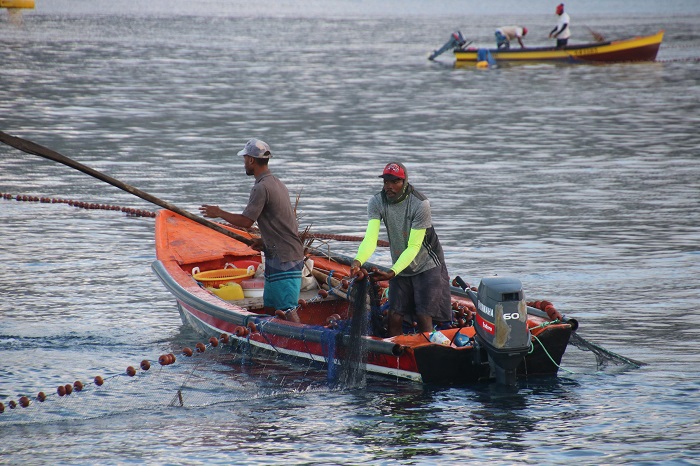 They then pull one end of the net back aboard, slowly closing in on the school.
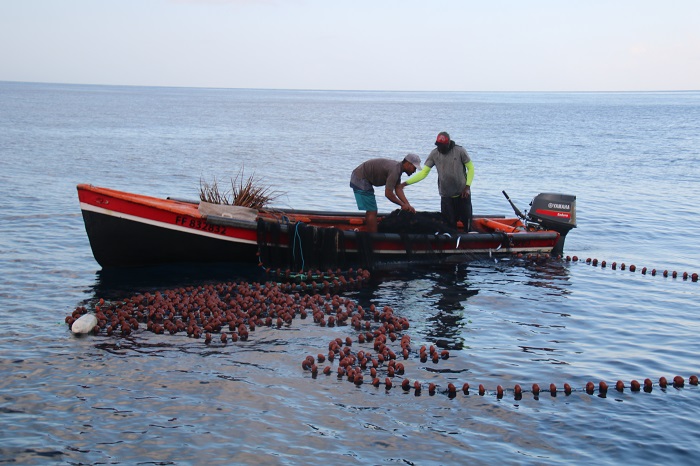 The net gets smaller and smaller as they draw it aboard.
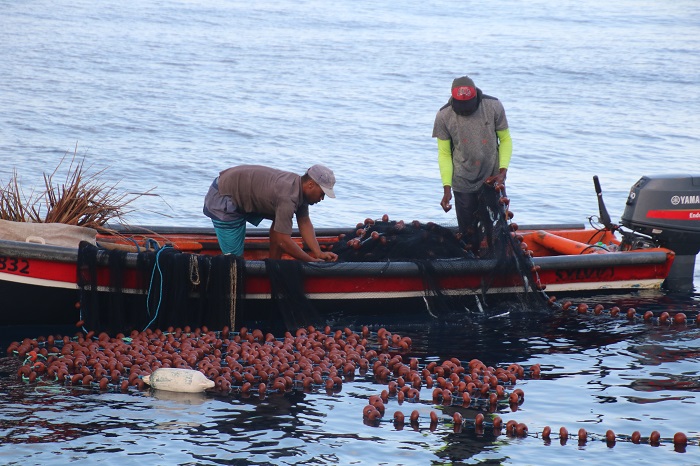 As the net is brought back aboard they carefully pull the individual fish and toss them into a basket.
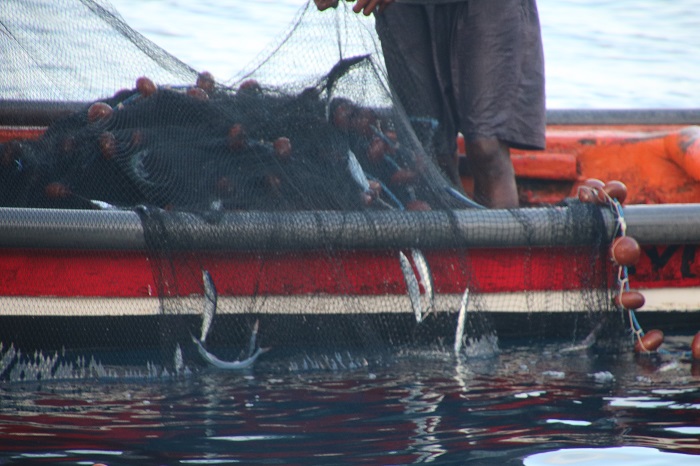 It is an amazing process to watch these fisherman pursue their craft. I expect that with the exception of using outboard motors, not much has changed for generations.